


A tongue web piercing needs less handling, not more. If soreness or swelling has you checking the jewelry repeatedly, it’s understandable to wonder whether what you’re seeing is normal. This webbing piercing healing guide explains how to care for the area gently, what changes to track, and why repeatedly adjusting the jewelry can add irritation.
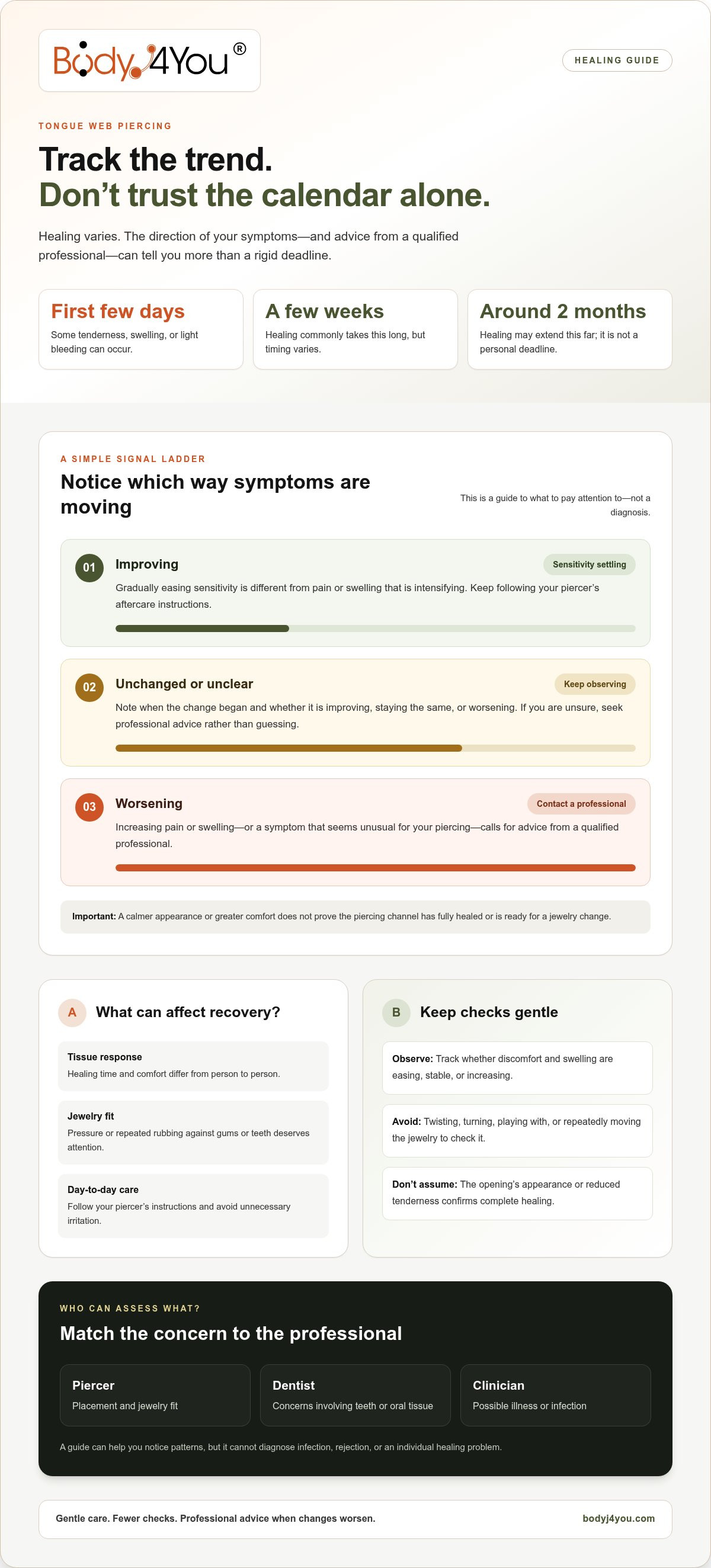
Some tenderness, swelling, or light bleeding can occur during the first few days. Healing commonly takes a few weeks and may extend to around two months, but the timeline varies. This guide covers a simple routine for rinsing after meals, what to avoid while tissue heals, and which changes call for prompt professional attention.
Because the piercing is inside the mouth, products made for external skin aren’t suitable for oral care. This guide explains the limits of topical aftercare products, so you can keep them separate from mouth rinses and care for the area without unnecessary irritation.
Key Takeaways
- This webbing piercing healing guide explains why healing varies and how to track progress without relying on a rigid timeline.
- Learn to distinguish mild, improving sensitivity from changes that may need prompt medical advice.
- Build a simple day-to-day routine that supports oral hygiene while minimizing irritation and jewelry handling.
- Know when to seek help from a piercer, dentist, or clinician, and which symptoms call for urgent evaluation.
- Understand why topical aftercare products intended for external use aren’t suitable for a piercing inside the mouth.
What Is a Tongue Web Piercing, and What Does Healing Involve?
A tongue web piercing passes through the lingual frenulum, the thin band of tissue connecting the underside of the tongue to the floor of the mouth. It’s also called a tongue frenulum piercing. This is different from a smiley piercing, which passes through the upper-lip frenulum, and a frowny piercing, which is placed through tissue behind the lower lip. Because the locations differ, care guidance for one piercing shouldn’t automatically be applied to another.
The mouth is moist and active. Talking, eating, swallowing, and routine oral hygiene involve nearby tissue, while jewelry may shift and touch the floor of the mouth, gums, or teeth. Contact doesn’t mean damage is inevitable, but placement and jewelry fit matter. A general Tongue Frenulum Piercing overview can help clarify the placement; assessing your individual anatomy requires an in-person evaluation.
Tongue web anatomy and nearby oral structures
The lingual frenulum varies from person to person in shape, length, and flexibility. A professional piercer experienced with oral piercings should assess whether the tissue can support the piercing and consider how the jewelry sits during normal tongue movement. Placement that looks suitable when your tongue is still may feel different when you speak, swallow, or move it.
Jewelry that repeatedly presses or rubs against nearby gums or teeth deserves attention. Notice where it rests during ordinary movement, but don’t test the contact by playing with or turning the jewelry. If it snags, presses persistently, or sits differently as swelling changes, have a piercer assess the fit. A professional evaluation can help identify mechanical irritation without assuming that every sore spot signals a serious problem.
What a healing guide can, and cannot, tell you
A webbing piercing healing guide can explain common patterns and help you track changes, but it can’t diagnose infection, rejection, or another individual healing problem. Healing time and comfort vary. Anatomy, jewelry fit, general health, and how the area responds all influence recovery, so a calendar estimate can’t confirm that tissue is ready for a jewelry change or that every symptom is harmless.
Follow the aftercare instructions given by your piercer. When you notice a symptom, consider whether it’s easing, staying the same, or worsening. Sensitivity that gradually improves is different from increasing pain or swelling. If you’re unsure, seek an assessment instead of trying to diagnose the piercing yourself or repeatedly handling the jewelry.
This guide offers general education, not a substitute for care from a qualified professional. A piercer can assess placement and jewelry fit; a dentist can evaluate concerns involving teeth or oral tissue; and a clinician can assess possible illness or infection. Knowing which professional to see can help you respond calmly and promptly if healing doesn’t seem to be progressing as expected.
How Does Tongue Web Piercing Healing Progress?
Healing is gradual, not a countdown. A tongue web piercing may feel more comfortable before the tissue has finished healing, and there isn’t one schedule that applies to everyone. The Association of Professional Piercers (APP) notes that healing times vary between people. Tissue response, jewelry fit, and day-to-day care can all affect recovery.
Some published estimates place tongue web healing within a span of weeks, while complete healing may take longer. Treat those figures as general context, not a personal deadline. The appearance of the opening can’t confirm that the full piercing channel, or fistula, has healed. Use symptoms and professional advice alongside time rather than relying on the calendar alone.
Early healing: observe changes without disturbing jewelry
In the early period, tenderness or some swelling may occur. Consider symptoms in context and compare them with your piercer’s instructions. Notice whether discomfort is settling or intensifying, and whether swelling is easing or increasing. Avoid repeatedly checking the site by moving the jewelry. Twisting, turning, or playing with it can irritate healing tissue and make it harder to tell whether a change is part of recovery or needs attention.
Keep observations simple: note when a change began and whether it’s improving, stable, or worsening. Don’t try to diagnose infection or another complication from appearance alone. If pain or swelling is getting worse, or a symptom seems unusual for your piercing, contact a qualified professional for advice. A prompt assessment is more useful than trying a new product or changing your routine based on guesswork.
Later healing: why comfort is not the only measure
As irritation settles, talking and eating may become more comfortable, and the area may look calmer. That’s encouraging, but it doesn’t prove that the inside of the piercing channel is ready for a jewelry change or less careful aftercare. Tissue can look settled before it has fully healed. Keep following your piercer’s instructions throughout recovery, even when the piercing feels normal during everyday activities.
Don’t remove or change the jewelry just because tenderness has faded. If a fit adjustment or jewelry change seems necessary, have a qualified piercer assess it and advise you. A poor fit can contribute to pressure or friction, while handling the jewelry yourself may add irritation. When in doubt, rely on an assessment rather than comfort alone.
The APP’s aftercare guidance reinforces that healing varies, so let your symptoms and professional advice guide your expectations. If you’re caring for a separate, external piercing, you can also explore BodyJ4You’s piercing aftercare products. These topical products are for external use only and aren’t for a piercing inside the mouth.
Which Symptoms Are Expected, and Which Need Attention?
Pay attention to the direction symptoms are moving. Mild tenderness or sensitivity that gradually eases can be part of early healing. Pain, swelling, or irritation that becomes more intense deserves attention. A single symptom can’t confirm an infection, and a calm-looking piercing doesn’t rule out a problem. This guide can help you decide what to do next, but it can’t diagnose the cause.
Professional health guidance treats increasing pain, heat, redness, swelling, discharge, or feeling unwell as possible signs of infection. The NHS advises seeking medical advice if you think a piercing may be infected. In or around the mouth, be especially alert to spreading swelling, pus, fever, severe pain, or trouble swallowing. Contact a clinician promptly rather than waiting to see if these symptoms pass.
Changes that warrant a piercer or clinician's assessment
Use the pattern and severity of symptoms to guide your response:
- Mild and improving: Keep observing and follow your piercer’s aftercare instructions.
- Persistent, worsening, or unusual: Seek prompt advice from a clinician, especially for spreading swelling, pus, fever, severe pain, or difficulty swallowing.
- Breathing difficulty or rapidly increasing swelling: Treat this as an emergency and contact local emergency services immediately.
A professional piercer can assess jewelry fit, placement, or mechanical irritation. They don’t diagnose or treat a medical infection. If infection is possible, seek medical advice. Don’t remove the jewelry or apply a treatment on your own unless a clinician advises you to. Removing it without professional guidance may complicate assessment or care.
Dental and gum concerns around tongue web jewelry
Repeated pressure or rubbing from jewelry may irritate nearby gums or contribute to tooth damage, but these outcomes aren’t inevitable. Watch for ongoing soreness where the jewelry touches, gum changes, new tooth sensitivity, or a chipped or rough-feeling tooth. Don’t repeatedly move the jewelry to test the contact. Persistent contact is a reason to arrange a review, not simply get used to it.
A piercer can assess whether jewelry fit or placement may be contributing to friction. A dentist can examine gum changes, tooth sensitivity, or suspected enamel damage and recommend appropriate care. If a bump appears near the piercing, its appearance alone can’t establish the cause. Avoid treating it as a diagnosis or assuming it’s harmless. Seek an appropriate professional assessment if it persists, worsens, or comes with other concerning symptoms.
Trust the trend, not just the appearance: easing sensitivity is different from worsening pain or swelling. If you’re uncertain, getting the right professional assessment is safer than self-diagnosing or changing the jewelry yourself.
How to Care for a Tongue Web Piercing Day to Day
A simple routine is easier to follow and less likely to irritate healing tissue. Keep oral hygiene consistent, rinse gently, and leave the jewelry alone. The Association of Professional Piercers (APP) recommends rinsing the mouth with clean water or an alcohol-free mouth rinse after eating and drinking. Follow your piercer’s specific instructions if they differ from general guidance, and seek professional advice if you’re unsure about a change in symptoms.
A gentle routine that avoids unnecessary irritation
Keep care calm and consistent:
- After meals: Gently rinse with clean, bottled, or filtered water, or use an alcohol-free mouthwash. The APP advises rinsing after eating. Don’t scrub the piercing or vigorously swish if that causes discomfort.
- Brush and floss: Maintain your usual oral hygiene with care. A soft-bristled toothbrush can help clean your teeth without scraping the jewelry or piercing site. Floss gently, and don’t use the jewelry as a point to push against.
- Choose foods thoughtfully: Soft foods may be easier if the area is tender. Avoid foods that sting or irritate, such as very hot, spicy, salty, or acidic choices, and return to your usual diet as comfort allows.
- Keep hands and objects away: Don’t twist, turn, or play with the jewelry. Avoid harsh mouthwashes, homemade salt mixtures, and unverified home remedies that may irritate tissue.
Rinsing is meant to clear the mouth, not to forcefully clean the piercing channel. Use a light touch, and don’t add extra cleaning steps simply because the jewelry looks different from one day to the next. For practical background, see the APP’s professional piercing aftercare guidance.
Why external aftercare products are not oral-piercing care
BodyJ4You topical aftercare products are for external use only. Don’t spray, apply, or place them inside the mouth, and don’t use the Saline Piercing Aftercare Spray on an open wound. A product intended for external skin isn’t a substitute for an oral rinse, even if its name includes “saline.” Follow the product label and keep external aftercare separate from care for tongue tissue.
If you’re caring for a separate external piercing, you can shop BodyJ4You’s external piercing aftercare. For any product, follow its label: For external use only. Avoid eye contact. Discontinue if irritation occurs. Keep out of reach of children.
Keep the routine steady, not intensive. If a step causes sharp discomfort or symptoms worsen, pause unnecessary handling and seek advice from your piercer or a clinician. A webbing piercing healing guide can support your daily decisions, but it can’t replace individualized professional care.
When to Get Professional Help, and What to Do Next
Choose the right kind of help for the concern. A piercer can assess jewelry fit and placement; a dentist can examine teeth and gums; a medical professional can evaluate possible infection or illness. If you’re unsure which applies, worsening symptoms or feeling unwell are reasons to seek medical advice rather than relying on an online guide to identify the cause.
Who to contact for different concerns
- Jewelry fit, placement, or movement: Contact a reputable professional piercer for an assessment. They can look for fit or positioning issues, but they can’t diagnose or treat a medical infection.
- Persistent gum or tooth concerns: Arrange a dental assessment for ongoing gum changes, tooth sensitivity, pain where jewelry contacts a tooth, or suspected enamel damage.
- Possible infection or illness: Contact a medical professional for fever, pus, worsening pain or swelling, or other symptoms that concern you. Trouble swallowing also needs prompt medical advice.
- Breathing difficulty or rapidly increasing swelling: Seek urgent evaluation through local emergency services. Don’t wait for a routine appointment or a reply from a piercer.
A safe, low-pressure next step
If sensitivity is mild and improving, continue the aftercare instructions from your piercer and watch for changes. If a symptom persists, worsens, or seems unusual, arrange an assessment with the professional best suited to the concern. For urgent signs, act promptly. These categories guide next steps; they aren’t a diagnosis.
Before an appointment, write down when the symptom began, whether it has changed, and what you’ve noticed. Include the jewelry type or any recent jewelry changes, your usual oral-care routine, and anything you’ve applied or used as a rinse. Clear details help the professional understand the timeline and decide what needs attention. Don’t delay urgent care to gather information.
This webbing piercing healing guide can help you organize your next step, but it can’t assess your anatomy or examine the piercing. A professional assessment can bring clarity, even when the cause isn’t obvious. For a separate external piercing, you can explore external piercing aftercare products. They’re not for use on a tongue web piercing or inside the mouth.
Make Your Next Step a Confident One
Give yourself room to heal without turning every small change into a reason to worry. Use this webbing piercing healing guide as a reference, and let your symptoms and a qualified professional’s advice shape your next step. If something feels wrong or is getting worse, seeking an assessment is a calm, practical choice.
For concerns about fit, teeth, gums, or illness, choose the professional best suited to assess them. For a separate external piercing, BodyJ4You brings over 20 years of expert piercer experience to its aftercare range, with products made in the USA. Keep the distinction clear: these products are for external use only and must not be used inside the mouth or on a tongue web piercing.
Explore BodyJ4You aftercare products for external piercings when you’re caring for an external piercing. Your tongue web deserves gentle care, informed decisions, and timely support when you need it.
Frequently Asked Questions
How long does a tongue web piercing take to heal?
Healing estimates commonly range from 2 to 8 weeks, but that isn’t a deadline. Some sources describe full healing as taking two months or longer, and individual recovery can vary. Feeling comfortable sooner doesn’t confirm that the channel has healed. Keep following your piercer’s aftercare instructions, and get advice before changing jewelry or stopping care.
Is swelling normal after a tongue web piercing?
Some swelling can happen early, but consider it alongside how you feel and whether it’s improving. If swelling is increasing, spreading, or still pronounced after the first week, contact a medical professional for advice rather than assuming it’s routine. Fever, pus, severe pain, or trouble swallowing also warrant prompt medical attention. Breathing difficulty or rapidly increasing swelling calls for emergency help.
Can I use saline spray on a tongue web piercing?
No. BodyJ4You’s Saline Piercing Aftercare Spray is for external use only, so don’t spray or apply it inside your mouth, and don’t use it on an open wound. For oral care, follow your piercer’s instructions about rinsing. For the spray, follow the label: For external use only. Avoid eye contact. Discontinue if irritation occurs. Keep out of reach of children.
What should I avoid while a tongue web piercing heals?
Don’t twist, turn, or play with the jewelry, even to check whether it moves freely. Avoid alcohol-based mouthwash and harsh home remedies, which can irritate oral tissue. If a food stings, such as a very spicy or acidic dish, choose something gentler while the area is sensitive. Avoid sharing utensils and oral contact during healing, and ask your piercer if you’re unsure about a specific activity.
Can a tongue web piercing damage your teeth or gums?
Repeated jewelry contact may irritate gums or contribute to tooth damage, though problems aren’t inevitable. Watch for persistent rubbing, a sore spot on the gum, new tooth sensitivity, or a rough or chipped tooth. Don’t keep moving the jewelry to test where it touches. Ask a dentist to assess ongoing gum or tooth changes, and have a piercer review jewelry fit if it appears to press or snag.
Should I remove my tongue web jewelry if it looks infected?
Don’t remove it yourself if you suspect infection. Contact a medical professional for assessment, especially if pain or swelling is worsening, there’s pus or fever, or swallowing is difficult. A piercer can advise on jewelry fit, but they can’t diagnose or treat an infection. If you have trouble breathing or rapidly increasing swelling, seek emergency help immediately rather than waiting for a routine appointment.


