

Did you know that 35% of individuals with new piercings report at least one complication during the healing process? It's a startling figure that often stems from a single, overlooked source: the very bottle sitting on your bathroom counter. You want your new jewelry to be a symbol of self-expression, not a source of persistent irritation or redness. It's frustrating to navigate a sea of conflicting advice while your skin feels vulnerable and raw.
We believe your aftercare should be safe, high-quality, and affordable. In this 2026 safety guide, you'll discover the specific piercing aftercare spray ingredients to avoid that frequently stall your biological progress. We'll provide a definitive blacklist of common additives, explain the science of why they fail, and identify the only sterile solution that truly supports your recovery. You deserve a routine that offers clinical precision and nurturing care, ensuring your journey toward aesthetic refinement is fast and complication-free.
Key Takeaways
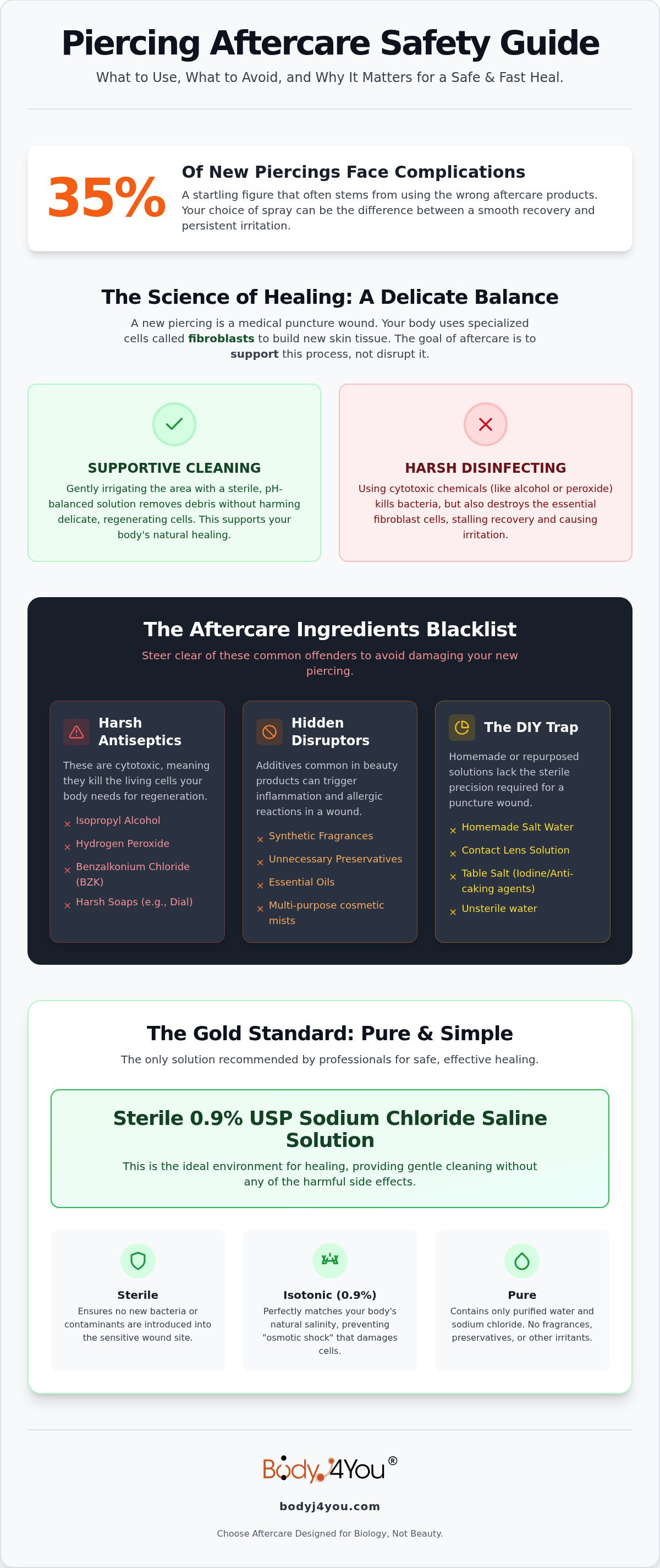
- Understand your piercing as a delicate biological wound that requires specific cellular support from fibroblasts to rebuild healthy skin tissue.
- Identify the definitive piercing aftercare spray ingredients to avoid, including cytotoxic chemicals like isopropyl alcohol and hydrogen peroxide that kill healing cells.
- Learn to spot hidden disruptors such as synthetic fragrances and preservatives that frequently trigger contact dermatitis and persistent irritation.
- Discover why homemade salt water solutions often cause osmotic shock and why sterile 0.9% USP sodium chloride is the only safe, high-quality standard.
The Biology of Healing: Why Aftercare Ingredients Matter
A new piercing is more than a creative statement; it's a medical-grade puncture wound. From the moment the needle passes through your skin, your body initiates a complex recovery sequence known as The Biology of Healing. This process requires a sterile, protected environment to succeed. Unlike a surface scrape, a piercing is a deep channel that needs to heal from the inside out. Your body relies on fibroblasts, specialized cells that act as microscopic construction workers, to create the new skin tissue that will eventually line the piercing tract. When you apply the wrong substances, you don't just "clean" the area; you potentially liquidate the very cells working to close the wound.
Success in aftercare follows a "Less is More" philosophy. Your body is biologically programmed to heal itself if left undisturbed. There is a critical distinction between cleaning and disinfecting. Cleaning involves the gentle removal of cellular debris and "crusties" through irrigation. Disinfecting, however, often involves harsh agents that kill all bacteria along with your healthy, regenerating tissue. To ensure a smooth recovery, you must be vigilant about the piercing aftercare spray ingredients to avoid, as many commercial products prioritize shelf life over your skin's biological integrity.
The Fragile Ecosystem of a New Piercing
The ultimate goal of aftercare is epithelialization, the process where your body grows a "tube" of skin through the piercing site. This ecosystem is incredibly fragile. Your skin maintains a specific pH balance that acts as a natural barrier against pathogens. Harsh chemicals or complex formulas can strip this barrier, leaving you vulnerable to irritation. Purity, precision, and protection are the three pillars of a healthy routine. This is why "sterile" is the most vital word on any label. A sterile solution ensures you aren't introducing new contaminants into a wound that is already struggling to stabilize its own environment.
The Trap of Multi-Purpose Beauty Sprays
It's easy to mistake a high-end cosmetic "skin mist" for a legitimate aftercare product. Many beauty sprays prioritize aesthetic appeal, using essential oils or synthetic fragrances to create a pleasant "scent" or "feel." While these might be fine for intact skin, they are disastrous for an open wound. Medical-grade aftercare is designed for biology, not beauty. Using products with hidden additives can lead to persistent inflammation or the development of unsightly piercing bumps. These bumps are often the body's way of reacting to chemical trauma. By choosing a solution that is safe, high-quality, and affordable, you protect your investment and your health.
The Harsh Offenders: Alcohol, Peroxide, and Antiseptics
When you notice redness or swelling, the instinct is often to reach for the strongest bottle in the medicine cabinet. This is where most healing journeys go off course. Isopropyl alcohol and hydrogen peroxide are the top piercing aftercare spray ingredients to avoid because they are designed for surface sterilization, not deep cellular regeneration. Alcohol is a powerful desiccant. It strips moisture and kills the fibroblasts your body needs to heal. Hydrogen peroxide is equally damaging. While that familiar bubbling sensation looks like it's working, it's actually an oxidative reaction that destroys healthy tissue alongside bacteria.
Other popular drugstore options like Bactine contain Benzalkonium Chloride (BZK). While marketed as no-sting, BZK isn't intended for the long-term care of deep puncture wounds. Similarly, using Dial soap or other harsh surfactants introduces aggressive detergents that strip the skin's natural protective oils. These products are simply too abrasive for the delicate task of building new skin. If you want to avoid these chemical pitfalls, choosing a dedicated saline spray ensures you're supporting your body with a solution that is Safe, High-Quality, and Affordable.
Why Antiseptics Stall Your Progress
The primary reason these chemicals fail is cytotoxicity. Cytotoxicity refers to the ability of a substance to kill or damage living cells. When you apply an antiseptic to a new piercing, you're essentially poisoning the very cells trying to knit your skin back together. This creates a frustrating cycle of irritation, chronic scabbing, and delayed healing. According to current research, up to 35% of individuals with piercings report complications, and many of these issues stem from the skin being trapped in an inflammatory phase. This persistent redness is often a direct result of old school cleaning methods that prioritize destruction over development.
The Myth of "The Stronger, The Better"
There's a common misconception that a strong cleaner is more effective. In reality, a piercing doesn't need to be sterilized daily; it needs to be kept clean and saline-balanced. The kill everything approach is counterproductive to human biology. According to professional aftercare standards, harsh soaps and ointments are explicitly discouraged because they can trap bacteria and suffocate the wound. Cytotoxicity is the primary reason to avoid drugstore antiseptics. True care is about being a wise guardian for your skin, prioritizing biological integrity over aggressive chemistry.
Hidden Disruptors: Fragrances, Preservatives, and Essential Oils
Not all irritants announce themselves with a sting. While the damage of alcohol is immediate, many products contain subtler piercing aftercare spray ingredients to avoid that masquerade as "soothing" agents. Synthetic fragrances are a primary offender. They are the leading cause of contact dermatitis in new piercings, triggering immune responses that manifest as persistent itching and localized swelling. Preservatives like Parabens and Sodium Benzoate are equally problematic. These chemicals extend a product's shelf life but offer zero benefit to your healing tissue. They can disrupt the delicate work of fibroblasts, stalling the vital epithelialization process required to close the wound.
Even well-intentioned additives like Aloe Vera or heavy moisturizers can be detrimental during the early stages of healing. These substances often create a film over the entry and exit points, trapping bacteria inside the piercing channel. This film prevents the oxygen flow necessary for aerobic healing, essentially suffocating the tissue. For a routine that is safe, high-quality, and affordable, you must look past the marketing claims and focus on the biological reality of the ingredients.
Essential Oils: Natural Does Not Mean Safe
There is a common misconception that "natural" equals "gentle." Tea tree oil is often cited as a miracle cure, but on a fresh piercing, it is dangerously potent. Undiluted essential oils can cause severe chemical burns on raw tissue. This risk is amplified for septum piercings and other mucosal membranes where the skin is exceptionally thin and absorbent. Essential oils should generally be reserved for fully healed piercings or targeted bump treatments once the initial wound has closed. Applying them too early is a recipe for chemical trauma and delayed recovery.
Decoding the Label: What to Look For
Protecting your piercing requires becoming a discerning reader of labels. If an aftercare spray contains a long list of complex chemical names, it likely contains piercing aftercare spray ingredients to avoid. A high-quality saline solution follows the two-ingredient rule: purified water and 0.9% USP sodium chloride. This simplicity is the gold standard for safety. It ensures that every application delivers only what your body needs without the risk of hidden irritants. If you cannot pronounce the ingredients, your piercing likely doesn't want them. By choosing products that prioritize purity and ethical manufacturing, you provide your skin with a stabilizing force that supports long-term wellness.
The DIY Trap: Why Homemade Salt Water and Contact Solutions Fail
The convenience of a kitchen-made remedy often masks a series of biological risks. While the concept of salt water seems simple, homemade solutions are a primary source of piercing aftercare spray ingredients to avoid. Tap water, even when filtered, contains microscopic contaminants and minerals that can irritate a fresh wound. Kitchen salt is equally problematic. Most table salts contain iodine or anti-caking agents like sodium ferrocyanide. These additives are fine for consumption but act as aggressive irritants when introduced to a healing piercing channel.
The "more is better" mentality leads many to create solutions that are far too concentrated. This results in osmotic shock. When the salinity of your spray exceeds the natural balance of your cells, it draws moisture out of the tissue, effectively dehydrating the very fibroblasts trying to repair the skin. Similarly, repurposing other saline products is a dangerous shortcut. Contact lens solutions contain buffers and cleaning agents that are toxic to open flesh. Nasal sprays are even worse; they often contain decongestants that cause vasoconstriction. By narrowing blood vessels, these sprays restrict the flow of oxygen-rich blood, significantly slowing the healing process. To avoid these risks, it's best to choose a laboratory-grade solution specifically designed for body modification.
The Science of 0.9% Sodium Chloride
True healing requires an isotonic environment. Isotonic saline contains exactly 0.9% sodium chloride, matching the salt concentration of human blood and tears. This precise balance ensures that your cells are neither bloated with excess water nor shriveled by salt. It provides the perfect medium for cellular migration, allowing skin cells to move across the wound and close the piercing. Homemade solutions are never truly isotonic or sterile, making them an unreliable choice for high-stakes healing.
Why Your Kitchen Salt is Not "Sea Salt"
Even if you use "pure" sea salt, the environment of your kitchen is not controlled. Measuring a precise 0.9% concentration with a household teaspoon is virtually impossible. Professional sterile saline spray for piercings is manufactured in a clean-room environment to ensure absolute purity. This eliminates the risk of introducing bacteria or chemical irritants found in grocery store salt. When you prioritize a professional-grade product, you are acting as a wise guardian for your body, ensuring a recovery that is safe, high-quality, and affordable.
The Gold Standard: Choosing a Pure Saline Solution
Achieving a complication-free healing process doesn't require a complex cocktail of chemicals. In fact, the most effective solution is the simplest. The medical gold standard follows a strict two-ingredient rule: purified water and 0.9% USP sodium chloride. This specific concentration mimics your body’s natural chemistry, providing a stabilizing environment for new skin cells to flourish. When you eliminate the long list of piercing aftercare spray ingredients to avoid, you remove the primary barriers to your body’s innate recovery. Purity is the ultimate protection.
Modern aftercare also relies on advanced delivery systems. Pressurized "Bag-on-Valve" (BOV) technology is a significant innovation in sterile care. Unlike traditional pump sprays that can suck bacteria back into the bottle, BOV systems keep the saline completely separate from the propellant. This ensures that the solution remains sterile from the first mist to the very last drop. It provides a consistent, gentle stream that flushes away debris without the need for painful scrubbing or physical trauma to the wound site.
Application is a vital part of the ritual. Simply spray the area, allow the saline to sit for approximately 30 to 60 seconds to soften any cellular buildup, and then gently pat the surrounding skin dry. For precision cleaning around delicate jewelry, use specialized piercing cleaning swabs. This method maintains the integrity of the healing tissue while ensuring the area remains clean and dry, preventing the moisture-related issues discussed in previous sections.
Why BodyJ4You Aftercare is Different
We approach aftercare with the perspective of a Wise Guardian. Our formulation is backed by more than 20 years of modification expertise and a deep understanding of the piercing community's needs. Every bottle is manufactured in the United States, ensuring strict quality control and regulatory trust that generic imports cannot match. We adhere to a fundamental Rule of Three for our products: they must be Pure, Effective, and Trusted. By prioritizing these standards, we provide a solution that is safe, high-quality, and affordable for every enthusiast.
Your New Daily Ritual
Consistency is the heartbeat of successful healing. A 30-second cleaning routine twice a day is all your body needs to thrive. Trust in the biological process. When you provide the right tools and remove chemical irritants, your piercing will heal with the vibrancy and precision you envisioned. Take control of your recovery today. Shop BodyJ4You Saline Aftercare Spray for a safer healing journey.
Empower Your Healing Journey with Pure Care
You now possess the clarity to navigate aftercare with absolute confidence. By identifying the specific piercing aftercare spray ingredients to avoid, you've removed the primary obstacles to your body’s natural recovery. True healing is a partnership between your biology and the environment you provide. Choosing purity over complexity ensures that your fibroblasts can work undisturbed to create healthy, lasting tissue. Skip the chemical trauma of "old school" antiseptics and trust in the science of isotonic saline.
We take pride in being a supportive specialist for your self-expression. With 20+ years of industry experience and a commitment to US-based manufacturing, we offer solutions that are Safe, High-Quality, and Affordable. Our formulas feature dermatologically safe ingredients designed to stabilize and protect your new aesthetic investment. You deserve a recovery process that is as seamless as your style. Protect your piercing with BodyJ4You Sterile Saline Spray. Your body is ready to heal; give it the pure foundation it needs to thrive.
Frequently Asked Questions
Can I use contact lens saline to clean my piercing?
No, you should never use contact lens saline on a new piercing. While it contains salt, it also includes preservatives, buffers, and enzymatic cleaners designed for ocular safety, not open wounds. These extra chemicals represent common piercing aftercare spray ingredients to avoid because they can irritate the delicate fibroblasts trying to close your piercing. Stick to a medical-grade saline spray that contains only purified water and 0.9% sodium chloride.
Is it okay to use unscented soap on a new piercing?
Most professionals advise against using any soap, even unscented varieties, on a fresh piercing. Soaps contain surfactants and detergents that strip the skin’s natural oils and can disrupt the pH balance of the healing site. This often leads to excessive dryness or localized irritation. For the first few months, a sterile saline mist is the only cleaning agent your body requires to maintain a healthy, stabilized environment for tissue regeneration.
Why does my piercing spray have so many ingredients?
A long ingredient list is often a red flag for quality. If your product contains more than purified water and 0.9% sodium chloride, it likely includes several piercing aftercare spray ingredients to avoid, such as preservatives or fragrances. These additives are often included to extend shelf life or improve the feel of the product, but they offer no biological benefit to an open wound. True medical-grade aftercare prioritizes purity over complex marketing formulations.
Can I use tea tree oil if it is diluted?
You should avoid tea tree oil until the piercing is fully epithelialized. Even when diluted, essential oils are highly potent and can cause chemical trauma to raw, internal tissue. These oils are better suited for specific bump treatments on established piercings rather than daily care for a new wound. Trusting in a simple, sterile saline routine during the initial phase prevents the risk of accidental burns or persistent inflammation.
What happens if I use alcohol on my piercing just once?
Using alcohol just once won't permanently ruin your piercing, but it will immediately stall the healing process. Isopropyl alcohol is cytotoxic, meaning it kills the living cells responsible for rebuilding your skin. A single application causes significant dehydration and can lead to a cycle of scabbing and redness. If you’ve made this mistake, simply flush the area with sterile saline and return to a gentle, non-destructive care routine.
How do I know if my aftercare spray is causing an allergic reaction?
Signs of an allergic reaction include persistent itching, localized hives, or a raised red rash around the piercing site. This contact dermatitis is frequently triggered by synthetic fragrances or preservatives found in lower-quality sprays. If you experience these symptoms, stop using the product immediately. Transitioning to a two-ingredient, US-manufactured saline spray usually resolves the irritation by removing the chemical triggers while providing necessary hydration to the area.
Is "Wound Wash" from the pharmacy the same as piercing spray?
Pharmacy-grade wound wash is often the same as piercing spray, provided the label lists only purified water and 0.9% sodium chloride. Many of these products use the same pressurized delivery systems that keep the solution sterile. However, you must verify that there are no added decongestants or moisturizers. Choosing a specialized brand ensures the product is specifically tailored for body modification standards and long-term tissue health.
Should I stop using a spray if it stings?
Yes, you should stop using any aftercare spray that causes a stinging sensation. A proper isotonic saline solution matches the salt concentration of your blood and should feel completely neutral on the skin. Stinging is a clear signal that the product contains harsh antiseptics, alcohol, or an incorrect salt concentration. Listen to your body’s feedback; persistent discomfort is often a warning that your current routine is harming rather than helping.


