

That sterile saline spray you’ve been using religiously is an incredible cleaner, but it might not be the cure for the persistent bump clouding your self-expression. When it comes to the debate of piercing bump oil vs saline spray, the truth is that cleaning a wound and treating irritated tissue are two distinct stages of the healing journey. We understand the frustration of seeing an unsightly mark on a piercing you love. It’s natural to feel concerned about infection or permanent scarring. You deserve an aftercare routine that is safe, non-toxic, and rooted in dermatological integrity.
This guide will help you discover the critical differences between saline sprays and treatment oils to choose the right solution for clearing piercing bumps. We draw on over two decades of industry experience to provide a clear, logical path toward recovery. You’ll learn exactly how these formulas work, how often to apply them, and how to tell which one your skin is actually craving. By the end, you’ll have the confidence to manage your healing with the precision of a specialist and the care your body deserves.
Key Takeaways
- Understand why sterile saline spray is the biological gold standard for daily hygiene and removing debris without causing trauma.
- Learn how botanical ingredients like Jojoba and Rosehip oils work to soften tissue and reduce the redness of persistent irritation.
- Resolve the piercing bump oil vs saline spray debate by identifying which solution matches your current stage of healing.
- Master the "Duo Strategy" to safely combine cleaning and treatment for a clear, flat, and beautiful piercing site.
- Gain confidence in your recovery with expert-backed routines that prioritize ingredient integrity and long-term skin health.
The Piercing Bump Dilemma: Understanding Saline Spray and Treatment Oil
A piercing bump is your body's silent signal for help. It is a common hurdle, yet it often leads to confusion about the best course of action. When deciding between piercing bump oil vs saline spray, you must first understand that these products serve entirely different biological functions. One cleans; the other treats. One maintains hygiene; the other manages tissue stress. Confusing these roles is often why bumps persist despite your best efforts.
Sterile saline spray acts as your primary defense. It is a gentle irrigator designed to sweep away bacteria, sweat, and cellular debris without damaging delicate new skin. Understanding what saline solution is helps clarify its role: a sterile, isotonic mixture that matches your body’s natural chemistry. It prevents the wound from becoming a breeding ground for pathogens. However, saline is a cleanser, not a moisturizer or a scar treatment.
A piercing bump treatment oil is a secondary, targeted solution. It focuses on the skin's integrity, softening the tissue and calming the inflammatory response that creates the "bump" appearance. While saline keeps the environment sterile, the oil addresses the physical irritation and dryness that saline alone cannot fix. It is also important to distinguish these temporary irritation bumps from keloids. Keloids are firm, permanent overgrowths of scar tissue often linked to genetics, whereas irritation bumps are fluid-filled or inflammatory responses that typically resolve with proper care.
Why Bumps Happen: The Body's Defense Mechanism
Bumps often manifest as a granuloma, which is your body’s attempt to wall off an area experiencing constant micro-trauma. This usually happens because of friction, improper jewelry angles, or excessive movement. In nose and cartilage piercings, even a slight shift can trigger this defense. Choosing high-quality jewelry like internal threaded labret studs is a critical preventative step. The smooth exterior of the post minimizes trauma to the internal piercing canal, reducing the likelihood of the "defense mechanism" being triggered in the first place.
The Role of Aftercare in Aesthetic Refinement
We believe that safe healing is the foundation of beautiful self-expression. Your aftercare routine should be a protective, stabilizing force that ensures your piercing remains a source of pride, not a source of stress. We embrace the "Wise Guardian" philosophy: we protect your skin, prioritize your health, and support your journey. Aftercare is not a quick fix; it is a supportive routine that respects your body’s natural timing and biological needs. By using the right tools at the right stage, you ensure the longevity and elegance of your aesthetic choices.
Sterile Saline Spray: The Foundation of Piercing Hygiene
Success in body modification begins with purity. A 0.9% sodium chloride solution is the biological gold standard for wound irrigation. This specific concentration matches your body's natural chemistry, creating an environment where cells can regenerate without the stress of chemical burns or dehydration. When navigating the choice of piercing bump oil vs saline spray, it's vital to recognize that saline is your first line of defense. It flushes, it protects, and it stabilizes.
A pressurized delivery system is essential for maintaining a sterile environment. Unlike open containers or DIY mixtures, a pressurized spray prevents cross-contamination by ensuring the solution inside never touches external bacteria. It also provides the mechanical force needed to remove "crusties," or dried lymph fluid, without physical contact. This no-touch approach is crucial for healing tissue because it avoids the micro-tears caused by picking or rubbing. Our sterile saline spray for piercings follows these rigorous standards to ensure your self-expression remains safe and vibrant.
Why Saline is Non-Negotiable for New Piercings
Saline mimics your body's natural fluids to promote isotonic healing. It's a gentle, effective, and reliable cleanser. You should never use harsh chemicals like alcohol or hydrogen peroxide; these substances destroy healthy cells and significantly delay the healing process. Saline acts as a mechanical cleanser that flushes bacteria away from the wound site while preserving the delicate balance of the skin. Following the Association of Professional Piercers (APP) guidelines ensures you're using the most current, science-backed methods for maintaining your new jewelry.
Application Best Practices: Mist, Don't Soak
The key to effective cleaning is a gentle mist rather than a heavy soak. Spray the area twice daily, allowing the solution to air dry or patting it gently with a disposable paper product. For hard-to-reach areas like the back of a conch or a tight forward helix, using specialized piercing cleaning swabs allows for precision without excessive movement. Precision, patience, and consistency are your best allies. Remember that over-cleaning can be just as damaging as neglect. Too much saline can lead to excessive dryness, which often triggers the very irritation bumps you're trying to avoid. If you're looking for the right tools to start your journey, consider our Saline Piercing Aftercare Spray for a professional-grade experience.
Piercing Bump Treatment Oil: Targeted Relief for Stubborn Irritation
A piercing bump often signals that the skin is under physical stress. While saline spray is your essential cleaner, a specialized treatment oil acts as your restorative therapist. When comparing piercing bump oil vs saline spray, think of it as the difference between washing a wound and applying a healing balm. High-quality oils focus on softening scar tissue, reducing redness, and calming the inflammatory response that leads to unsightly protrusions. They provide the targeted relief necessary for stubborn irritation that hygiene alone cannot resolve.
Botanical oils work by penetrating the upper layers of the dermis to deliver concentrated nutrients directly to the source of the trauma. Unlike harsh chemicals that can strip the skin of its natural defenses, these oils support the skin's barrier. They are specifically formulated as treatments for established bumps rather than cleaners for open wounds. This distinction is vital; using a treatment oil at the right time can mean the difference between a flat, healthy piercing and a permanent scar.
The Power of Ingredient Integrity: Jojoba, Rosehip, and Castor
The efficacy of a treatment oil depends entirely on its molecular structure. We prioritize jojoba oil because it is a biomimetic liquid wax that closely mimics the body's natural sebum. This allows it to penetrate deeply without clogging pores or trapping bacteria. Rosehip oil complements this by providing essential fatty acids and antioxidants that promote cellular regeneration and fade discoloration. Castor oil adds a protective, antimicrobial layer that keeps the area hydrated while delivering ricinoleic acid to reduce swelling.
Every bottle we provide is manufactured in the USA. This domestic production ensures strict quality control and ingredient purity that generic imports often lack. We avoid the "tea tree trap" where undiluted essential oils are applied directly to the skin, which frequently leads to chemical burns. Instead, we use balanced, professional-grade blends designed for physical vulnerability. Our commitment to natural origins means you are supporting your body’s self-expression with the cleanest, most ethical ingredients available.
When to Introduce Oil to Your Routine
Timing is everything in the healing journey. You should wait to introduce treatment oils until the piercing canal is "seasoned," meaning it is no longer a fresh, bleeding, or weeping wound. During the initial weeks, you should strictly follow Mayo Clinic aftercare guidelines by using sterile saline for primary hygiene. Once the initial inflammatory phase has passed and a bump appears, you can safely pivot to a more intensive treatment. Always perform a patch test on your inner arm to ensure your skin is compatible with the botanical blend.
We recommend the "Rule of Three" for consistent results. First, apply a single drop of oil to a clean swab. Second, gently massage the oil into the bump for thirty seconds if the piercing is sufficiently healed and stable. Third, monitor the site daily for changes in size or texture. This rhythmic approach ensures the tissue remains supple and responsive, allowing the bump to flatten naturally over time without causing further trauma to the piercing site.
The Comparison: Choosing Between Spray, Oil, or a Combined Routine
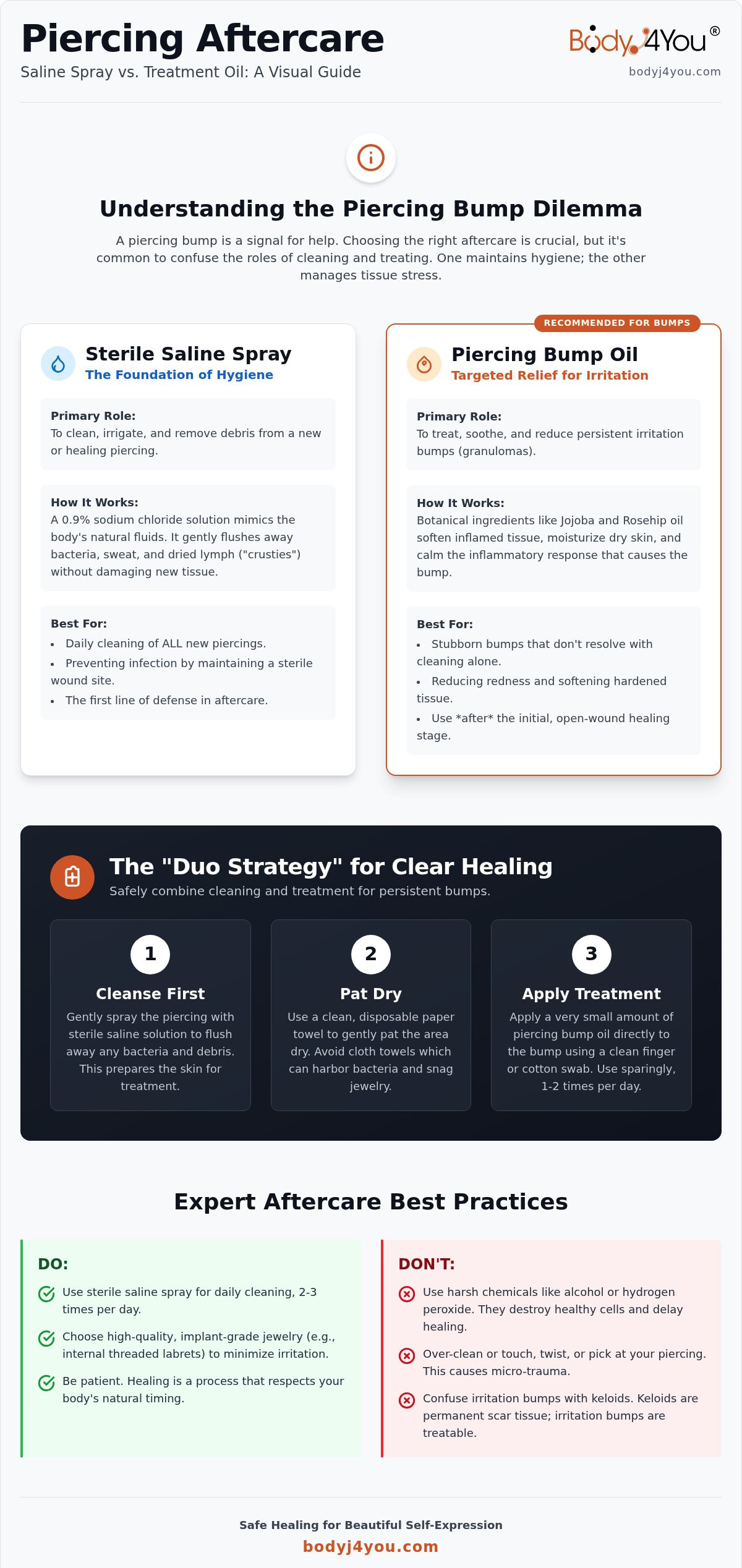
Choosing between piercing bump oil vs saline spray isn't about finding a winner; it's about identifying your current stage of healing. Many enthusiasts view these products as competitors, but they are actually partners in your recovery. Saline manages the environment while oil manages the tissue. If you only use saline on a friction-induced bump, you are cleaning a wound that is actually suffering from mechanical stress and dehydration. Conversely, applying oil to a dirty, "crusty" piercing can trap debris against the skin. Success lies in knowing when to use each or how to combine them into a high-performance routine.
Spray vs. Oil: A Functional Comparison
- Saline Spray: Purpose is to cleanse and irrigate; best for new piercings and daily hygiene; active ingredient is 0.9% Sodium Chloride; targets bacteria and debris.
- Treatment Oil: Purpose is to soothe and regenerate; best for established bumps and redness; active ingredients include Jojoba and Rosehip; targets inflammation and scar tissue.
Saline remains the gold standard for preventing infection, but it often fails to resolve "friction bumps" on its own because it lacks the emollient properties needed to soften hardened tissue. When a bump appears, your skin is often tight, dry, and reactive. A botanical oil provides the elasticity the skin needs to flatten back down. It acts as a protective, stabilizing force that allows the dermis to recover from the trauma of jewelry movement or accidental snags.
The Step-By-Step Recovery Protocol
If you are struggling with a persistent bump, we recommend the "Duo Strategy." This method ensures the site is perfectly clean before any treatment is applied, addressing the common fear that oil might trap bacteria. By following a specific order, you maintain biological integrity while accelerating tissue repair. You should expect to see a visible reduction in bump size within a 2-4 week timeline of consistent application.
- Step 1: Mist the area with saline spray to soften and flush away any cellular debris or "crusties."
- Step 2: Gently pat the site completely dry with a non-woven gauze or a clean, disposable paper towel. This drying phase is the most critical step to prevent trapping moisture.
- Step 3: Apply a small drop of treatment oil specifically to the bump itself, avoiding the actual piercing hole if possible.
This rhythmic approach respects the skin's natural barrier while providing the targeted nutrients required for aesthetic refinement. If you're ready to upgrade your healing kit, you can find both essentials in our complete piercing aftercare collection to ensure your journey is safe and beautiful.
Safe Healing with BodyJ4You: Expert Aftercare for Every Journey
For over two decades, BodyJ4You has stood as a protective and stabilizing force for the piercing community. We don't just provide products; we offer a legacy of industry expertise built on a foundation of safety and aesthetic refinement. When you navigate the choice of piercing bump oil vs saline spray, you aren't just choosing a solution; you're choosing a partner that understands the delicate balance between biology and beauty. Our US-manufactured aftercare line is born from the same rigorous standards we apply to our jewelry, ensuring that every drop of oil and every mist of saline supports your body's natural healing rhythm.
Buying your aftercare from the same specialists who design your jewelry provides a unique advantage. We understand the physical vulnerability of a new piercing because we know exactly how the materials interact with your skin. Our commitment to ingredient integrity means you never have to worry about hidden toxins or harsh additives. We prioritize natural origins, ethical production, and clinical precision to help you achieve a clear, flat, and beautiful piercing site. If you've tried the basics and still face challenges, our comprehensive how to get rid of piercing bump guide offers the deeper troubleshooting you need for stubborn cases.
Beyond Aftercare: The Quality Jewelry Connection
A common oversight in the piercing bump oil vs saline spray discussion is the jewelry itself. Often, the bumps that aftercare tries to fix are caused by low-quality materials that leach nickel or other irritants into the skin. Choosing biocompatible metals like titanium or surgical steel acts as a vital preventative measure. These materials offer the stability your body needs to heal without constant immune system triggers. We provide a diverse selection of high-quality jewelry designed to minimize internal canal irritation, allowing your aftercare routine to work more effectively. Safe healing begins with the right jewelry and continues with the right care.
Your Partner in Piercing Success
Bumps are a common part of the journey, but they don't have to be permanent. With the right tools and a disciplined routine, you can regain the smooth, elegant look you intended for your piercing. We are here to act as your expert mentor, providing the knowledge and products necessary for a successful recovery. Our brand philosophy is summarized in our tripartite promise to every customer: Safe, High-Quality, and Affordable solutions. These three pillars ensure that your journey toward self-expression is never compromised by poor standards or inaccessible care.
You have the power to transform your healing experience. By choosing products that respect your skin's integrity and your body's timing, you ensure a lifetime of beautiful, comfortable wear. We invite you to explore our full collection of aftercare essentials and high-end jewelry to find the perfect match for your unique style. Trust in our twenty years of heritage, our domestic production, and our unwavering commitment to your well-being. Your self-expression deserves nothing less than the specialized care of a true industry guardian.
Master Your Healing Journey
Achieving a clear, flat piercing site is a journey of patience and precision. You now understand that the piercing bump oil vs saline spray debate isn't about choosing one over the other; it's about using each at the right biological moment. Sterile saline provides the essential hygiene required for the initial heal. Targeted treatment oils offer the restorative botanical power needed to calm established irritation. By combining these two tools, you protect your skin's integrity while supporting your personal aesthetic refinement.
BodyJ4You brings over 20 years of industry expertise to your aftercare routine. Our US-manufactured skincare ensures guaranteed purity and safety for your most vulnerable tissue. We are a brand trusted by professional piercers and beginners alike because we prioritize your long-term wellness. Your self-expression is a powerful form of growth, and it deserves the highest standard of protection.
Ready to reclaim your confidence? Shop the BodyJ4You Aftercare Collection for Faster Healing. You have the knowledge and the tools to ensure your piercing remains a beautiful, stable part of your identity. Trust the process, stay consistent, and enjoy the beautiful results you deserve.
Frequently Asked Questions
Can I use piercing bump oil on a brand-new piercing?
No, you should avoid applying treatment oils to fresh, open wounds. During the first few weeks, your focus must be on sterile irrigation to prevent infection. You should wait until the piercing canal has "seasoned" and is no longer weeping or bleeding before introducing botanical blends. Using oil too early can interfere with the initial wound closure that requires a clean, oxygenated environment.
How many times a day should I use saline spray if I have a bump?
You should use saline spray twice daily, once in the morning and once in the evening. Cleaning more frequently can lead to excessive dryness, which often aggravates existing bumps rather than healing them. Consistency is more important than frequency. A steady rhythm of care provides the stability your skin needs to recover without the stress of over-manipulation or chemical dehydration.
Is a piercing bump the same thing as a keloid?
No, irritation bumps and keloids are fundamentally different biological responses. Most bumps are temporary inflammatory responses or granulomas caused by friction, jewelry material, or trauma. Keloids are permanent, firm overgrowths of scar tissue that are usually linked to genetics. While irritation bumps typically flatten with proper aftercare, true keloids often require professional medical intervention to resolve or remove.
Can I mix tea tree oil with my saline spray?
You should never mix essential oils directly into your saline spray. Saline must remain at a specific 0.9% concentration to be isotonic and sterile. Adding undiluted oils like tea tree can cause chemical burns on sensitive healing tissue and compromises the sterility of your cleanser. It's better to use a professionally balanced, pre-mixed treatment oil that has been specifically formulated for skin safety.
What should I do if my piercing bump starts bleeding or oozing pus?
Bleeding or pus may indicate significant trauma or the onset of a localized infection. You should continue cleaning gently with sterile saline and avoid touching, picking, or rotating the jewelry. If the area feels hot to the touch, the redness begins to spread, or you develop a fever, you should consult a professional piercer or a healthcare provider immediately for expert guidance.
How long does it take for a nose piercing bump to go away with oil?
You can typically expect to see a visible reduction in bump size within two to four weeks of consistent application. Healing is a biological process that cannot be rushed by aggressive treatment. The exact timeline depends on your body's unique regenerative speed and whether you have successfully removed the original source of irritation, such as ill-fitting jewelry or accidental snags.
Can I use saline spray and bump oil at the same time?
Yes, you can use both products as part of a complementary routine to maximize your recovery. Clean the area first with saline spray to remove debris, then pat it completely dry before applying a small drop of oil. This ensures the piercing bump oil vs saline spray combination works to both clean the environment and treat the underlying tissue inflammation effectively.
Why is my piercing bump getting worse even though I'm cleaning it?
Bumps often worsen due to over-cleaning, poor jewelry quality, or hidden friction. If you are cleaning more than twice a day, you may be drying out the skin and causing excessive stress to the tissue. Ensure you are wearing high-quality metals like titanium or surgical steel. You should also avoid sleeping on the piercing or touching it with unwashed hands to allow the inflammatory response to subside.


