

What if your favorite facial modification was actually a silent threat to your dental health? Choosing the right labret piercing jewelry is about more than just finding a stunning aesthetic. It is a critical decision that impacts your gum integrity and enamel safety. You shouldn't have to choose between your personal style and your biological well-being.
We understand the fear of metal contact causing long-term damage or the confusion that comes with technical specs like threading and post lengths. It's a common concern for anyone who values their smile as much as their self-expression. This guide offers the definitive framework for choosing safe, stylish labret jewelry that protects your oral health and expresses your unique aesthetic.
We will explore the vital standards of material biocompatibility, the mechanical precision of internal threading, and the exact sizing needed for a comfortable, lifelong fit. From understanding the importance of implant-grade metals to learning how to prevent irritation bumps, you'll gain the confidence to curate a look that is both beautiful and biologically sound. Your journey toward a safe and sophisticated aesthetic starts here.
Key Takeaways
- Master the three core components of a labret stud to ensure your jewelry provides a seamless fit that protects your dental enamel and gum health.
- Evaluate the biocompatibility of materials like implant-grade titanium and surgical steel to select labret piercing jewelry that supports your body’s natural healing.
- Determine your ideal gauge and learn why downsizing your post length is a non-negotiable step for preventing irritation and unsightly piercing bumps.
- Establish a professional-grade maintenance routine using the synergy of saline solutions and specialized oils for lasting piercing integrity.
- Gain the confidence to prioritize internal threading over external designs to safeguard your delicate tissue from unnecessary trauma during every style transition.
The Labret Jewelry Landscape: Styles, Anatomy, and Placements
Precision defines the world of facial modification. A Labret stud is a flat-backed post designed specifically for lip and facial piercings to minimize oral irritation. While many beginners view jewelry as a simple aesthetic choice, the mechanical design of labret piercing jewelry is a sophisticated tool for health. The flat-back disc is the primary reason this style is the gold standard for oral piercings. By sitting flush against the inner tissue, it reduces the risk of jewelry catching on teeth or causing painful gum recession. It's a balance of biological safety and personal expression.
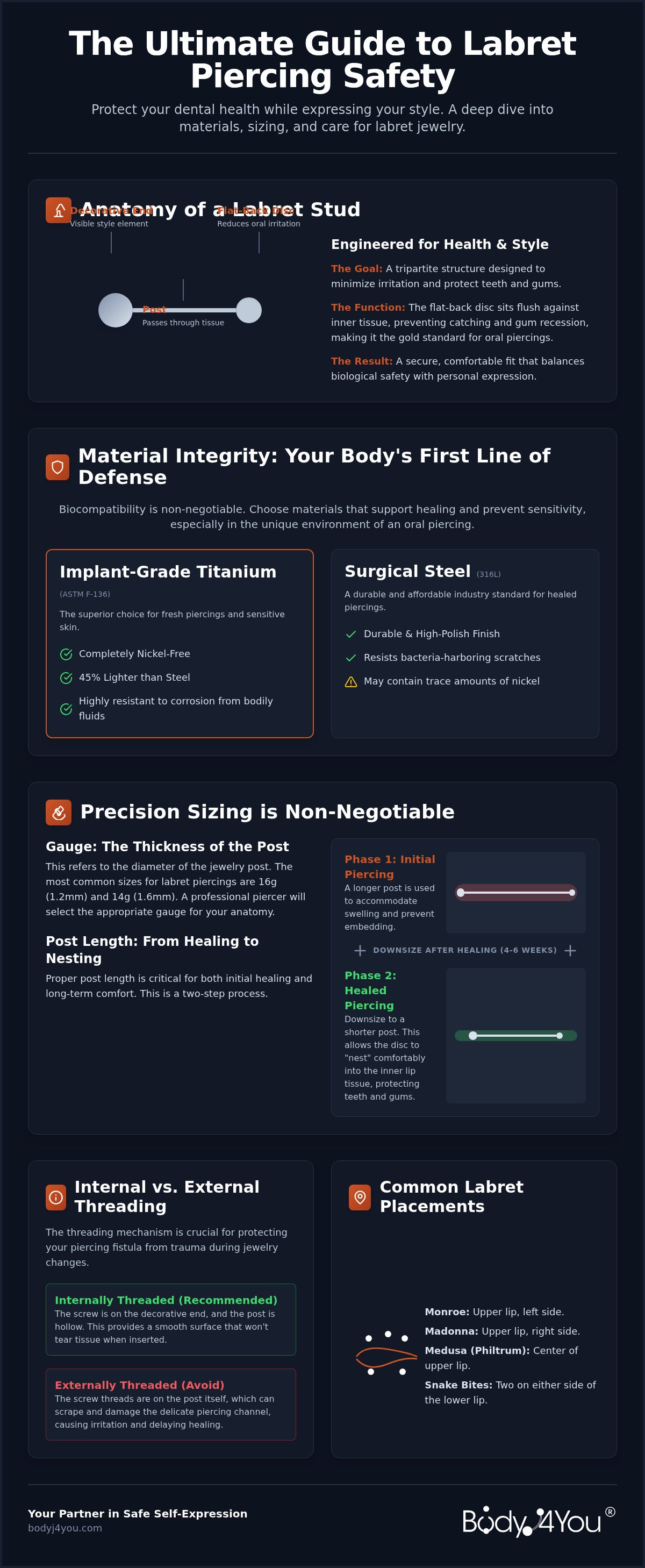
The engineering of these pieces follows a logical tripartite structure. First, the decorative end provides the visible portion that expresses your unique style. Second, the post acts as the shaft that passes through the tissue, available in varying lengths and gauges to suit your anatomy. Third, the flat-back disc serves as the stabilizing base that rests inside the mouth or against the skin. This combination ensures that the jewelry remains secure while prioritizing the integrity of your oral environment.
The Anatomy of a Labret Stud
Stability is the foundation of a successful piercing. The diameter of the flat-back disc plays a vital role in preventing the jewelry from sinking into the lip during the early stages of healing. If the disc is too small, it can cause irritation or even become embedded in the tissue. The post length is equally critical. A fresh piercing requires a longer post to allow for natural swelling without constriction. Once the initial healing phase passes, you must switch to a shorter post to encourage nesting. This is where the disc creates a small, comfortable pocket in the inner lip tissue, which is essential for long-term dental safety.
Versatile Placements for Labret Jewelry
Modern aesthetics offer a wide range of placements for the classic labret stud. The Monroe and Madonna placements sit on the upper lip, off-center to the left or right, respectively. These positions offer a timeless, sophisticated look that mirrors a natural beauty mark. The Medusa, or Philtrum piercing, is centered in the upper lip's dip, creating a striking focal point for the face. For those seeking a symmetrical or bold look, snake bites piercing styles utilize two studs on either side of the lower lip. It's important to note that while the flat-back stud is versatile, a vertical labret is a different anatomical challenge. Because it passes vertically through the lip and exits through the skin below, it requires a curved barbell rather than a flat-back design.
Material Integrity: Selecting the Safest Metals for Lip Piercings
Biocompatibility is the cornerstone of piercing safety. Oral piercings exist in a unique environment characterized by constant moisture, enzymatic activity, and movement. Choosing low-quality alloys can lead to nickel sensitivity, chronic inflammation, or systemic irritation. The Association of Professional Piercers emphasizes that the materials used for initial and long-term wear must be non-reactive to support the body's natural healing process. We advocate for a "Rule of Three" approach to material selection: Titanium for purity, Surgical Steel for durability, and Bioflex for flexibility.
Selecting the right labret piercing jewelry is about more than just finding a beautiful design. It is a commitment to your long-term wellness. High-grade materials ensure that your piercing remains a source of pride rather than a source of medical concern. By prioritizing material integrity, you create a stable foundation for self-expression that respects your body's biological boundaries.
Surgical Steel vs. Titanium
Surgical Steel (316L) remains a popular industry standard for healed piercings. It's durable, affordable, and features a high-polish finish that resists the microscopic scratches where bacteria often hide. However, for those with sensitive skin or fresh piercings, Titanium (ASTM F-136) is the superior choice. It is entirely nickel-free, 45% lighter than steel, and highly resistant to corrosion from bodily fluids. While some brands focus exclusively on high-cost precious metals, we believe these high-performance materials provide the most reliable protection for the modern enthusiast.
The Importance of Internal Threading
Mechanical precision is just as vital as the metal itself. Internal threading is the mechanism where the decorative end screws into a hollow, smooth post. This design is significantly safer than external threading, where the screw threads are located on the post itself. When externally threaded jewelry passes through a piercing, those sharp threads can cause micro-tears in the delicate tissue. This trauma often leads to irritation or the formation of unsightly piercing bumps. Choosing internally threaded pieces ensures a smooth, seamless transition during every jewelry change.
BodyJ4You has spent over two decades refining our collection to meet these clinical standards. We prioritize safety by specializing in Internal Threaded Labret Studs that protect your piercing tract from unnecessary friction. It's a simple change in design that makes a profound difference in your comfort and healing trajectory. By choosing precision-engineered jewelry, you don't just upgrade your look; you safeguard your health.
Precision Sizing: Finding Your Perfect Gauge and Post Length
Precision is a form of protection. When you select labret piercing jewelry, the aesthetic appeal is only half the equation. The other half is anatomical accuracy. An ill-fitting post can lead to migration, chronic irritation, or long-term dental damage. You must understand the specific measurements of your own body to ensure your jewelry remains a source of empowerment rather than a source of pain. Finding the "sweet spot" requires a balance of thickness, length, and timing.
Sizing standards are not arbitrary. The Oregon Health Authority outlines specific mandated standards for body jewelry to ensure safety and biocompatibility. These regulations exist to protect you from the physical trauma caused by improper fit or substandard materials. By following these clinical guidelines, you ensure that your self-expression never comes at the cost of your physical integrity.
Standard Gauge Sizes for Labrets
The gauge refers to the thickness of the jewelry post. Choosing the correct gauge is essential for the stability of the piercing tract. Most modern facial piercings utilize three primary sizes:
- 16 Gauge (1.2mm): This is the universal standard for most contemporary lip and facial piercings. It offers a perfect balance of durability and a delicate appearance.
- 14 Gauge (1.6mm): A slightly thicker option often used for larger anatomy or when a piercer determines that extra stability is needed to prevent jewelry from shifting.
- 18 Gauge (1.0mm): A thinner, more subtle choice frequently used for Monroe or Philtrum piercings where a minimalist aesthetic is desired.
If you are transitioning from different types of body modifications, you may find it helpful to reference a broader ear gauge size chart. This helps you visualize how gauge increments change and ensures you remain consistent with your jewelry collection.
Calculating Post Length for Comfort
Length is the most common variable that leads to piercing complications. During the initial healing phase, your piercer will typically use a post between 10mm and 12mm. This extra length is mandatory to accommodate the natural swelling that occurs in the first few weeks. However, once the swelling subsides, you must "downsize" to a shorter post. A healed piercing generally thrives with a length of 6mm to 8mm, which provides a snug, "no-click" fit against the teeth. A post that is too long is a liability; it can lead to chipped tooth enamel, gum erosion, and accidental snagging. Measuring your lip thickness with a clean ruler or a piece of paper can help you identify your perfect healed length. You want the jewelry to sit flush against the skin without digging in, creating a seamless and secure profile.
Aftercare and Maintenance: Ensuring a Lifetime of Healthy Piercings
High-quality labret piercing jewelry is only as effective as the environment it lives in. A professional-grade stud provides the mechanical foundation, but a disciplined aftercare routine provides the biological support. Because oral piercings traverse two distinct biological landscapes, they require a dual-action approach to hygiene. You must manage the internal environment with alcohol-free mouthwash and the external environment with a dedicated saline solution. Neglecting either side of this boundary can lead to prolonged healing, localized inflammation, or the development of unsightly tissue responses. It's a balance of discipline, patience, and purity.
Distinguishing between normal irritation and a true infection is a vital skill for any enthusiast. Initial redness, clear discharge, and slight swelling are standard parts of the inflammatory phase. However, you should monitor for the "Rule of Three" signs of infection: persistent heat, thick yellow or green discharge, and throbbing pain. If you notice localized swelling or a persistent raised area around the entry point, consult our expert guide on how to get rid of piercing bump to address the issue before it affects your jewelry fit.
The Role of Sterile Saline Spray
Cleanliness requires a gentle touch. Using a sterile saline spray for piercings is the only recommended method for external cleansing. Saline mirrors the body's natural fluids to promote isotonic healing. For stubborn "crusties" or lymph buildup, perform a saline soak by saturated a clean gauze pad and holding it against the site for five minutes. This softens debris without the need for manual picking, which can cause micro-tears in the healing tissue. Never remove your jewelry during the cleaning process, as the tract can begin to close in mere minutes.
Managing Piercing Bumps with Natural Oils
Once the initial wound has closed, the focus shifts to skin elasticity and scar prevention. Our Piercing Bump Treatment Oil is formulated to soothe hypertrophic scarring and keep the surrounding tissue supple. We utilize a blend of Jojoba and Rosehip oils to mirror the skin's natural sebum, providing a protective barrier that encourages healthy cell regeneration. You must avoid harsh chemicals like rubbing alcohol, hydrogen peroxide, or scented soaps. These substances are too aggressive for facial tissue; they strip away beneficial bacteria and delay the regeneration of healthy skin cells. We manufacture our skincare line in the US to ensure every drop meets our 25-year standards of purity and efficacy.
Ready to upgrade your aftercare kit? You can shop our US-made saline sprays and healing oils to give your piercing the professional support it deserves.
Why BodyJ4You is the Premier Choice for Labret Jewelry
BodyJ4You stands at the intersection of clinical safety and vibrant self-expression. Since our founding in 2001, we have dedicated 25 years to mastering the nuances of labret piercing jewelry. We understand that your choice of jewelry is deeply personal. It's an extension of your identity that requires absolute trust in the materials you wear. As a "Supportive Specialist," we prioritize your long-term wellness by providing precision-engineered pieces that respect your body's biology.
We act as a protective force in an industry often filled with fleeting trends. Our focus remains on the integrity of the individual. By bridging the gap between high-end aesthetics and dermatological standards, we offer a curated experience that feels both safe and aspirational. Our heritage is built on reliability, transparency, and a quiet pride in regional manufacturing. This experience allows us to guide you toward choices that protect your health while celebrating your style.
Quality Manufacturing Standards
Purity is our baseline. We maintain strict oversight of all metal compositions to ensure every piece is hypoallergenic and non-reactive. Our specialization in internal threading isn't just a design choice; it's a safety mandate. This precision engineering ensures a secure, long-lasting fit that eliminates the trauma associated with external threads. When you choose our pieces, you're choosing mechanical excellence designed for the human body.
Our commitment to your health extends beyond the jewelry itself. We manufacture our dedicated skincare line right here in the US. This allows for rigorous quality control that guarantees the efficacy of our saline sprays and healing oils. Ethical production standards are non-negotiable for us. We prioritize your tissue regeneration by excluding harsh chemicals from our aftercare, focusing instead on natural origins and ingredient integrity. We believe that what you put on your body is just as important as what you put through it.
A Collection for Every Expression
Diversity drives our collection. Whether you seek the understated elegance of a high-polish titanium disc or the vibrant energy of CZ prong tops, our range supports every aesthetic journey. We provide the tools for self-expression without the prohibitive costs often found in boutique environments. Our collection is designed to be comprehensive, offering:
- High-grade titanium and surgical steel studs for maximum biocompatibility.
- Internal threaded designs that ensure a smooth, irritation-free experience.
- All-in-one kits that combine professional jewelry with US-made maintenance essentials.
This direct-to-consumer approach ensures you receive professional-grade standards that fit your lifestyle. We provide the expertise of a mentor and the products of a specialist. We believe in a simple philosophy: Precision. Purity. Personalization. This tripartite commitment ensures that every enthusiast has access to the tools they need for a lifetime of healthy, stylish piercings. We invite you to explore a collection where your safety is never sacrificed for your style.
Elevate Your Expression with Precision and Safety
Your journey toward a healthy, vibrant piercing relies on the harmony of three essential pillars: superior materials, anatomical precision, and disciplined aftercare. Choosing high-grade labret piercing jewelry is the first step in protecting your oral health while showcasing your unique aesthetic. By prioritizing internal threading and biocompatible metals, you eliminate the risks of tissue trauma and chronic irritation. Don't forget that downsizing your post length is a non-negotiable phase of the healing process. This simple adjustment prevents long-term dental complications and ensures your jewelry sits flush against your skin for a seamless profile.
At BodyJ4You, we combine 25 years of industry expertise with a commitment to clinical standards. Our US-manufactured aftercare line and high-grade internal threaded studs act as a protective force for your body. We believe that self-expression should feel both safe and aspirational. It's about more than just a look; it's about the integrity of your wellness. You now have the professional framework to navigate your modification journey with total confidence.
Shop BodyJ4You's Collection of Safe and Stylish Labret Jewelry
Your aesthetic evolution is a powerful testament to your personal growth. Wear your new style with pride and the peace of mind that comes from professional-grade care.
Frequently Asked Questions
What is the best material for labret piercing jewelry?
Implant-grade titanium and 316L surgical steel are the premier choices for safety and longevity. Titanium (ASTM F136) is entirely nickel-free, making it the gold standard for sensitive skin and fresh piercings. Surgical steel offers a durable, high-polish alternative for healed sites. Both materials support biological health by resisting bacterial buildup and corrosion while maintaining a high-end aesthetic.
How do I know what gauge my labret piercing is?
Most contemporary lip piercings utilize a 16-gauge (1.2mm) or 14-gauge (1.6mm) post. You can determine your size by using a digital caliper or comparing your current piece to a standardized gauge card. If the jewelry feels significantly thicker than a standard earring, it's likely a 14G. When you're in doubt, your professional piercer can confirm your specific anatomy requirements during a check-up.
Can I use a labret stud in my cartilage piercing?
Flat-back labret piercing jewelry is a versatile choice for cartilage placements like the tragus, helix, or conch. The flat disc provides a low-profile fit that reduces snagging on hair or clothing. It's also much more comfortable for sleeping than traditional butterfly backs or barbells. This design promotes a clean, wellness-oriented aesthetic while protecting the delicate cartilage tissue from unnecessary pressure.
What is the difference between internal and external threading?
Internal threading features a smooth post where the decorative end screws into a hollow shaft. This is the safest mechanism because it prevents sharp threads from passing through your piercing tract. External threading has the screw threads on the post itself, which can cause micro-tears and irritation. We always recommend internal threading to maintain the integrity of your skin and ensure a seamless, trauma-free jewelry change.
How long should a labret post be for a healed piercing?
A healed piercing typically requires a post length of 6mm (1/4") or 8mm (5/16") for a secure fit. This "snug" length prevents the jewelry from moving excessively, which protects your tooth enamel and gum tissue. You should transition to these shorter lengths only after the initial swelling has completely subsided. A well-fitted post sits flush against the skin without digging in, providing a stable and comfortable profile.
Is it normal for my labret jewelry to 'nest' into my lip?
Nesting is a normal and often desirable process where a small pocket forms in the inner lip tissue. This allows the flat-back disc to sit flush, reducing contact with your teeth and gums. It's a sign of a well-fitted piercing as long as the tissue isn't growing over the jewelry. If the disc becomes difficult to see or painful, it may be embedding, which requires immediate attention from a professional specialist.
How often should I clean my labret jewelry?
You should clean your labret piercing jewelry twice daily during the healing phase and at least once daily once it's fully healed. Use a sterile saline spray to rinse the external site and an alcohol-free mouthwash for the internal disc. Regular maintenance prevents the buildup of plaque and bacteria. Consistent care is the foundation of a lifetime of healthy, vibrant piercings that support your self-expression.
Can labret jewelry cause gum recession?
Gum recession is a potential risk if the jewelry is sized incorrectly or made of aggressive materials. A post that is too long can rub against the gums, leading to permanent tissue loss over time. You can mitigate this risk by choosing the correct post length and allowing the jewelry to nest properly. Monitoring your oral health regularly ensures that your aesthetic choices never compromise your dental integrity or long-term wellness.


