

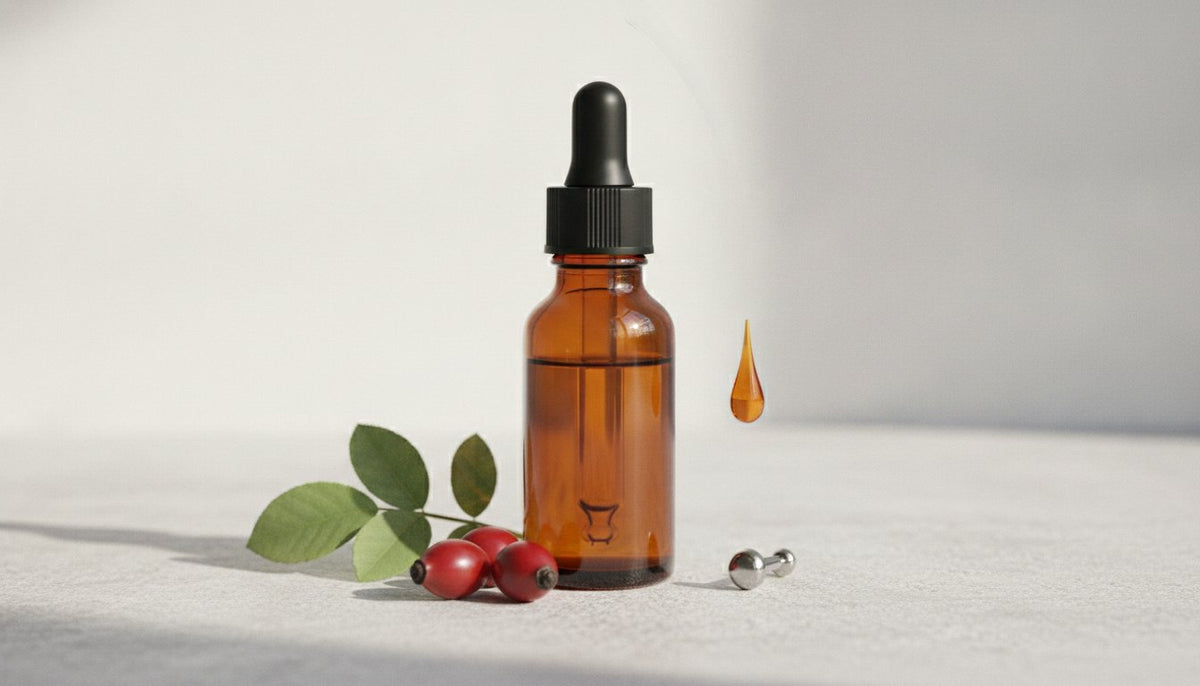
What if the secret to vanishing a stubborn piercing bump isn't more cleaning, but targeted structural rebuilding? You've likely followed every saline soak protocol and "don't touch it" rule, yet you're still facing dry, flaky skin or a persistent red mark that won't fade. It's frustrating when your journey toward self-expression is stalled by irritation or visible scarring. We understand that physical vulnerability requires a protective, stabilizing force. Using rosehip oil for piercings offers a sophisticated bridge between beauty and biology, acting as a biological architect for your skin. Purity. Integrity. Results.
Discover how this potent botanical can safely accelerate healing, flatten bumps, and restore healthy elasticity to your tissue. With over 20 years of industry expertise and a commitment to US-based manufacturing, we've seen how the right ingredient integrity can transform recovery. This guide explores the science of skin regeneration, the role of essential fatty acids, and the professional way to integrate oils as a supplement to your saline aftercare. We'll show you how to move beyond basic maintenance to reach a state of true aesthetic refinement.
Key Takeaways
- Learn how the essential fatty acids in rosehip oil act as a biological architect to break down stubborn hypertrophic scars and piercing bumps.
- Understand why rosehip oil for piercings is considered nature’s retinol for its unique ability to accelerate skin regeneration and reduce angry redness.
- Discover the critical differences between rosehip and jojoba oil to determine which specialist is right for your specific healing stage.
- Master a safe, two-step application process that combines sterile saline spray with targeted oil treatment to protect your piercing's integrity.
- Find out why the cold-pressed, amber-hued potency of professional-grade oils is essential for achieving visible results in scar softening.
What is Rosehip Oil and Why is it Used for Piercings?
Rosehip oil is a specialized botanical extract harvested from the seeds of the Rosa canina bush. Unlike rose essential oil, which is distilled from petals and can be highly irritating to sensitive skin, this is a cold-pressed carrier oil. It is dense, nutrient-rich, and incredibly gentle. Scientifically known as Rose seed oil, this substance has gained prestige in the piercing community for its ability to bridge the gap between basic hygiene and advanced skin recovery. It doesn't just sit on the surface. It penetrates. It rebuilds. It restores.
The shift toward using rosehip oil for piercings represents a sophisticated evolution in aftercare philosophy. For years, the focus remained solely on disinfection. While keeping a piercing clean is vital, modern enthusiasts now prioritize long-term skin health and the prevention of permanent scarring. Many professionals refer to rosehip oil as "nature's retinol." This is due to its high concentration of provitamin A, also known as beta-carotene. This specific component encourages the skin to regenerate at a cellular level, making it a powerful ally against the stubborn bumps that often plague cartilage piercings. Professional. Pure. Proven.
The Nutrient Profile of Rosehip Oil
Is it Safe for All Piercings?
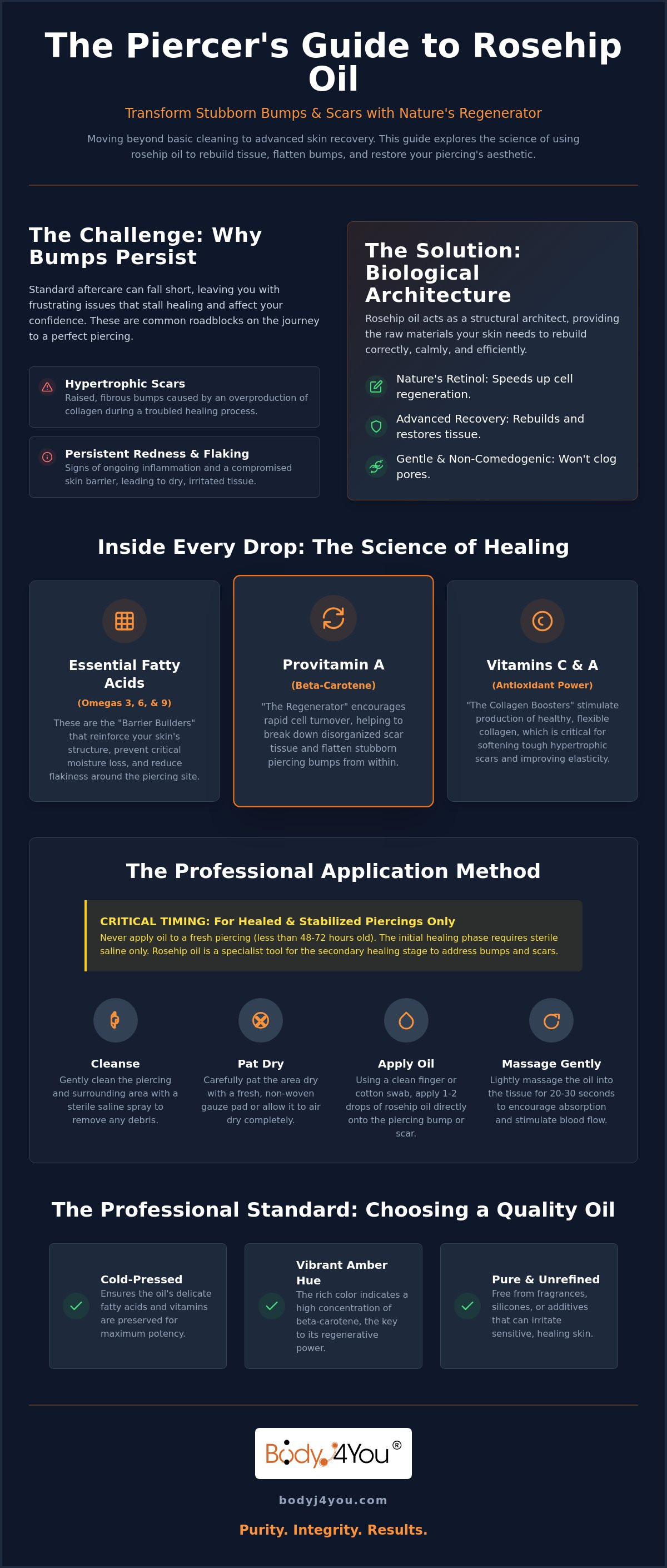
Safety is our primary discipline. The benefits of rosehip oil for piercings extend to almost all body placements because the oil is non-comedogenic. It has a low molecular weight that allows it to absorb quickly without clogging pores or trapping bacteria. This makes it ideal for nose and ear piercings where the skin is naturally oilier. However, timing is everything. You should never apply oil to a fresh piercing that is less than 48 to 72 hours old. During this initial window, the site is an open wound that requires sterile saline solution to close. Once the initial "wet" healing phase concludes and the skin begins to stabilize, you can introduce rosehip oil to maintain elasticity and prevent the formation of unsightly bumps. It is a specialist tool for a specific stage of your journey.
The Biological Benefits: How Rosehip Oil Heals Piercing Bumps
A piercing bump isn't just a surface irritation. It is often the result of an overactive healing response where the body produces excess collagen, leading to a raised, fibrous lump known as a hypertrophic scar. Using rosehip oil for piercings targets this biological process directly. Research has shown that the specific lipid profile found in this botanical extract has promoted wound healing by regulating how the skin repairs itself. It acts as a stabilizer. It calms. It corrects.
One of the most immediate benefits is the reduction of "angry" redness. Fresh irritation bumps are often vascular and inflamed, signaling that the skin is in a state of constant stress. The oil's high concentration of antioxidants and essential fatty acids works to soothe the skin barrier, effectively cooling the localized heat associated with a flare-up. Beyond the aesthetic improvement, this oil prevents the dreaded "crusty" buildup. By maintaining a consistent level of moisture, it ensures that lymph fluid doesn't dry into jagged crystals that re-traumatize the fistula every time the jewelry moves. Once the bump recedes, the oil’s natural retinoids begin fading hyperpigmentation, ensuring the skin returns to its original tone without leaving a dark shadow behind.
Tissue Remodeling and Collagen Regulation
True healing happens through tissue remodeling. When a fistula forms, the body is essentially creating a tunnel of skin. If this process is interrupted by trauma or friction, the collagen fibers can become disorganized and bunched. Rosehip oil encourages these fibers to lay flat and remain flexible. Linoleic acid plays a pivotal role in modulating the skin’s inflammatory response to accelerate the reduction of localized swelling. This creates a smoother, more resilient piercing site that can withstand the weight of high-end jewelry. It is a disciplined approach to long-term care that prioritizes the structural integrity of your skin over quick, temporary fixes.
Rosehip Oil for Stretched Ears (Gauges)
For those in the stretching community, skin integrity is the difference between a successful jump and a painful blowout. The lobes must remain thick, elastic, and hydrated to accommodate larger diameters. rosehip oil for piercings is an exceptional tool for this journey because it penetrates deeper than many traditional lubricants. It keeps the tissue supple under tension, which is vital for preventing the micro-tears that lead to scarring. While many users rely on a dedicated gauges balm for daily maintenance, incorporating pure rosehip oil during your massage routine provides a regenerative boost. Supple skin is safe skin. By keeping the tissue healthy and elastic, you ensure your stretching journey remains a form of beautiful self-expression rather than a source of physical stress.
Rosehip vs. Jojoba and Tea Tree Oil: The Ultimate Comparison
Choosing the right botanical support for your piercing requires understanding the chemical personality of each oil. Grouping all "natural oils" together is a common mistake that can lead to stalled healing or increased irritation. Each substance serves a distinct biological function. Using rosehip oil for piercings acts as a specialist for tissue remodeling and scar reduction. Jojoba oil functions as a liquid wax that mimics human sebum for daily hydration. Tea tree oil serves as a potent antiseptic to combat bacteria. Knowledge. Precision. Results.
Understanding when to reach for each oil depends on the current state of your skin. If you are dealing with a raised bump or a dark scar, rosehip is the superior choice. If your piercing is healthy but feels dry or tight, jojoba provides the necessary moisture. If you suspect a minor surface irritation from bacteria, a heavily diluted tea tree application might be warranted, though it requires extreme caution. We prioritize the long-term integrity of your skin over aggressive, short-term fixes.
Why Rosehip Wins for Post-Healing Scars
The primary advantage of rosehip oil lies in its high concentration of provitamin A. While jojoba oil is rich in wax esters that protect the skin surface, it lacks the regenerative power of retinoids. Scientific reviews on rosehip oil health benefits highlight its ability to improve skin texture and reduce the visibility of established scars. This makes it significantly more effective than jojoba for flattening hypertrophic bumps. For the best results, we recommend a layered approach. Always begin by cleansing the area with a sterile saline spray for piercings to remove debris. Applying rosehip oil to a clean, slightly damp surface allows the fatty acids to penetrate deeper into the fistula, maximizing the remodeling effect.
The Danger of Over-Drying
A common pitfall in the piercing community is the over-use of tea tree oil. Because it is a powerful antiseptic, it can strip the skin of its natural protective lipids. This leads to extreme dryness, cracking, and "rebound" inflammation that actually makes piercing bumps larger. Rosehip oil acts as the biological antidote to this over-cleaning. It helps balance the skin's pH levels and restores the moisture barrier without clogging pores. If your piercing feels "angry" and parched from too many harsh treatments, switching to a high-purity rosehip oil for piercings can stabilize the site. It provides the nurturing care needed to move from a state of irritation to a state of aesthetic refinement.
How to Safely Apply Rosehip Oil to Your Piercing
Applying rosehip oil for piercings is more than a beauty routine. It is a precise dermatological protocol designed to stabilize vulnerable tissue. While social media trends often show individuals rubbing oils directly onto their skin with their fingers, this is a major hygiene risk that can introduce bacteria into the fistula. A disciplined, sterile approach ensures you achieve the desired remodeling without causing a secondary infection. Cleanse. Dry. Rebuild.
Follow this four-step professional method for the best results:
- Step 1: Cleanse. Use a saline aftercare spray to flush the area. This removes environmental debris and softens any "crusties" that have formed around the jewelry.
- Step 2: Dry. Moisture trapped under oil can breed bacteria. Use sterile piercing cleaning swabs to pat the area completely dry. These swabs are designed to reach tight spaces without leaving behind irritating lint or fibers.
- Step 3: Apply. Place 1-2 drops of pure rosehip oil onto a fresh, clean applicator. Never touch the glass dropper directly to your skin, as this contaminates the entire bottle with skin cells and bacteria.
- Step 4: Massage. Gently massage the bump or scar tissue for 30 seconds. This physical stimulation increases localized blood flow, which helps the skin absorb the fatty acids and move through the remodeling phase.
Frequency and Timing
Consistency is the foundation of recovery. For most skin types, a once-daily application is sufficient to maintain elasticity. If your skin is naturally dry or the piercing site is particularly flaky, you may increase this to twice daily. The most effective time for application is immediately after a warm shower. The steam helps soften the tissue and slightly opens the pores, allowing the oil to penetrate deeper into the hypertrophic scar. If you notice any sudden itching, increased redness, or a "mushy" texture to the skin, stop application for 48 hours to allow the site to breathe. Balance is key to long-term health.
Application by Piercing Type
Different placements require specific maneuvers. For nose piercings, bumps can form both internally and externally. Use a swab to apply the oil to the outside, but stick to saline for the internal mucosal tissue unless directed otherwise by a professional. Industrial and cartilage piercings often have difficult "nooks and crannies" where oil can pool. Ensure you are using a very small amount to avoid over-saturation in these folds. For navel piercings, friction is your biggest enemy. After applying your rosehip oil for piercings, wait five minutes for full absorption before putting on high-waisted clothing. Protecting the site from physical stress allows the oil to work its biological magic. To ensure you have the right tools for this process, browse our specialized piercing aftercare oils and start your journey toward smoother skin today.
Choosing Quality: Why BodyJ4You Piercing Oils Stand Out
BodyJ4You has spent over two decades acting as a protective and stabilizing force in the piercing community. Our 20-year legacy is built on a deep understanding of physical vulnerability and the vibrant world of personal aesthetics. When you choose our rosehip oil for piercings, you aren't just buying a product. You are investing in a specialized tool refined by years of industry experience. Purity. Integrity. Results.
The quality of your oil is visible in its hue. Our rosehip oil is cold-pressed and unrefined, retaining a deep amber color that signals its high potency. Clear, refined oils often found in generic retail settings have been stripped of the very vitamins and fatty acids required for tissue remodeling. By maintaining domestic, US-based manufacturing, we ensure that every bottle is free from synthetic fragrances or cheap fillers that could irritate a healing fistula. We prioritize the biological health of your skin over fleeting market trends.
The 'Problem-Solution-Proof' of Our Aftercare
We identify a specific physical need: the stubborn, raised irritation bump. Our solution is the specialized Piercing Bump Treatment Oil, a targeted blend that utilizes the regenerative power of rosehip to soften fibrous tissue. The proof lies in our community. Over 20 years, we have heard from thousands of individuals who successfully flattened hypertrophic scars and restored their skin's natural elasticity using our expert formulations. This isn't a generic beauty oil; it is a professional-grade supplement to your daily hygiene routine. It works because it was designed for the unique biology of a piercing.
Next Steps for Your Healing Journey
Achieving a perfectly healed piercing requires a holistic approach. While rosehip oil for piercings addresses the skin's structural needs, you must also consider the mechanical stress on the site. If your jewelry is too long, the constant movement will continue to cause trauma. We recommend downsizing to shorter bars once the initial swelling subsides. Pairing our aftercare oils with high-quality internal threaded labret studs can significantly reduce friction and prevent new bumps from forming.
Your journey toward self-expression should be safe and empowering. By combining expert aftercare with superior jewelry standards, you provide your body with the stability it needs to heal beautifully. We invite you to explore our curated collection of solutions designed for your long-term well-being. Shop the BodyJ4You Aftercare Collection and experience the difference that specialized expertise makes in your recovery.
Elevate Your Aftercare Standards
Your journey toward aesthetic refinement shouldn't be stalled by temporary setbacks. By understanding the biological benefits of rosehip oil for piercings, you move from reactive cleaning to proactive skin regeneration. You've learned how cold-pressed nutrients regulate collagen, why unrefined amber oils maintain potency, and how a disciplined application method protects your piercing's integrity. This is the bridge between beauty and biology, a standard also upheld by professionals like Sash Tattoo in the world of custom body art. Safety. Purity. Empowerment.
BodyJ4You brings over 20 years of industry expertise to your daily routine. Our oils are manufactured in the USA for maximum safety and remain trusted by professional piercers worldwide. We identify your physical needs, offer targeted botanical solutions, and provide the proof of efficacy through decades of community trust. It's time to restore your skin to its most resilient, healthy state. Heal your piercing bumps with BodyJ4You's Pure Rosehip Oil. Your commitment to proper care ensures your body art remains a source of confidence and pride for years to come. You deserve a healing process as beautiful as the jewelry you wear.
Frequently Asked Questions
Can I use rosehip oil on a fresh piercing?
No, you should not apply rosehip oil to a fresh piercing that is less than 72 hours old. During this initial phase, the site is an open wound that requires sterile saline to close safely. Applying oil too early can trap bacteria and hinder the natural air circulation needed for the fistula to form. Once the skin has stabilized and the initial healing phase ends, you can introduce oils to maintain elasticity.
Will rosehip oil get rid of a keloid?
No, rosehip oil will not remove a true keloid. These are systemic medical conditions that require professional dermatological intervention like steroid injections or laser therapy. However, rosehip oil for piercings is exceptionally effective for hypertrophic scars. These are the common, raised irritation bumps that enthusiasts often misidentify. By breaking down excess collagen, the oil encourages the skin to lay flat and smooth. It is a specialist tool for localized tissue management.
How long does it take for rosehip oil to shrink a piercing bump?
Results typically manifest within two to four weeks of consistent daily application. Skin regeneration is a biological process that requires discipline and patience. While redness may fade quickly, the structural remodeling of a bump takes time. Stay patient. Stay consistent. Stay focused. The essential fatty acids must penetrate the deep tissue to reorganize the collagen fibers. Rushing the process often leads to further irritation rather than a smoother, flatter piercing site.
Does rosehip oil cause infections in piercings?
Rosehip oil does not cause infections when applied using a sterile protocol. Problems usually arise from unsanitary application methods, such as using unwashed fingers or touching the bottle's dropper directly to your skin. These actions introduce harmful pathogens into the oil. Always use a clean, disposable applicator to maintain the purity of the product. Cleanse. Apply. Protect. This ensures your healing journey remains safe, productive, and irritation-free.
Can I mix rosehip oil with tea tree oil for my piercing?
You can mix these oils, but you must prioritize extreme dilution. Tea tree oil is a potent antiseptic that can easily burn delicate piercing tissue if used at full strength. We recommend a ratio of one drop of tea tree to a full teaspoon of rosehip oil. The rosehip acts as a nurturing carrier that counteracts the drying nature of the tea tree. This combination provides both antibacterial protection and deep tissue hydration for stubborn bumps.
Is rosehip oil better than jojoba oil for ear stretching?
Rosehip oil is superior for repairing damaged tissue, while jojoba is better for daily maintenance. If your stretched lobes have developed thin spots or stubborn scar tissue, the Vitamin A in rosehip provides the regenerative boost you need. For general lubrication during a stretch, jojoba's similarity to natural sebum makes it the standard choice. Use rosehip as a specialist treatment to ensure your lobes remain thick, healthy, and elastic throughout your journey.
What should I do if my piercing bump gets worse after using oil?
Cease application immediately and return to a sterile saline routine. While individual reactions are rare, your skin may be signaling an over-saturation or a specific sensitivity. Flush the site with Saline Aftercare Spray to remove all oil residue and allow the tissue to stabilize. If you notice spreading redness, localized heat, or persistent discharge, consult a healthcare provider. Protecting the integrity of your body remains our primary discipline when using rosehip oil for piercings.
Can I use rosehip oil on a septum piercing?
Use rosehip oil only on the external skin surrounding the septum if an irritation bump occurs. You should never apply oils to the internal mucosal tissue inside your nostrils. The internal environment of the nose is self-regulating and sensitive; introducing oils can disrupt the natural balance and cause further irritation. For internal healing, stick to sterile saline soaks. Reserve the oil for external scar management to maintain your aesthetic refinement and skin health.


