

What if the aggressive routine you're using to "sterilize" your new piercing is the exact reason it won't stop throbbing? It is incredibly frustrating to deal with persistent irritation bumps and redness, especially when you are trying your hardest to follow conflicting internet advice. You want your jewelry to look intentional, beautiful, and refined. Instead, you are stuck worrying about infection or rejection. Many common piercing aftercare mistakes stem from a "more is better" mindset that treats your body like a battlefield rather than a delicate ecosystem.
Healing is a process of biological stabilization. It requires patience, precision, and purity. In this guide, you will discover how to transition from a sterilization mission to the expert-backed "Wise Guardian" approach. We will identify the pitfalls sabotaging your progress and provide a clear roadmap for irritation-free healing. You will gain the confidence to manage your routine and know exactly when it is finally safe to swap your jewelry for something new. Let's replace the confusion with clinical-grade clarity and aesthetic excellence.
Key Takeaways
- Understand the biological goal of healing—the formation of a healthy fistula—to better support your body’s natural recovery process.
- Identify and eliminate common piercing aftercare mistakes, such as applying harsh chemicals or thick ointments that disrupt cellular repair.
- Abandon the outdated "twist and turn" myth to prevent micro-tears and minimize the risk of bacterial introduction.
- Learn how to select biocompatible materials that prevent nickel sensitivity and chronic irritation bumps.
- Master a simplified recovery roadmap that prioritizes sterile saline solutions and minimal interference for a flawless result.
The Biology of a Piercing: Why Your Aftercare Routine Matters
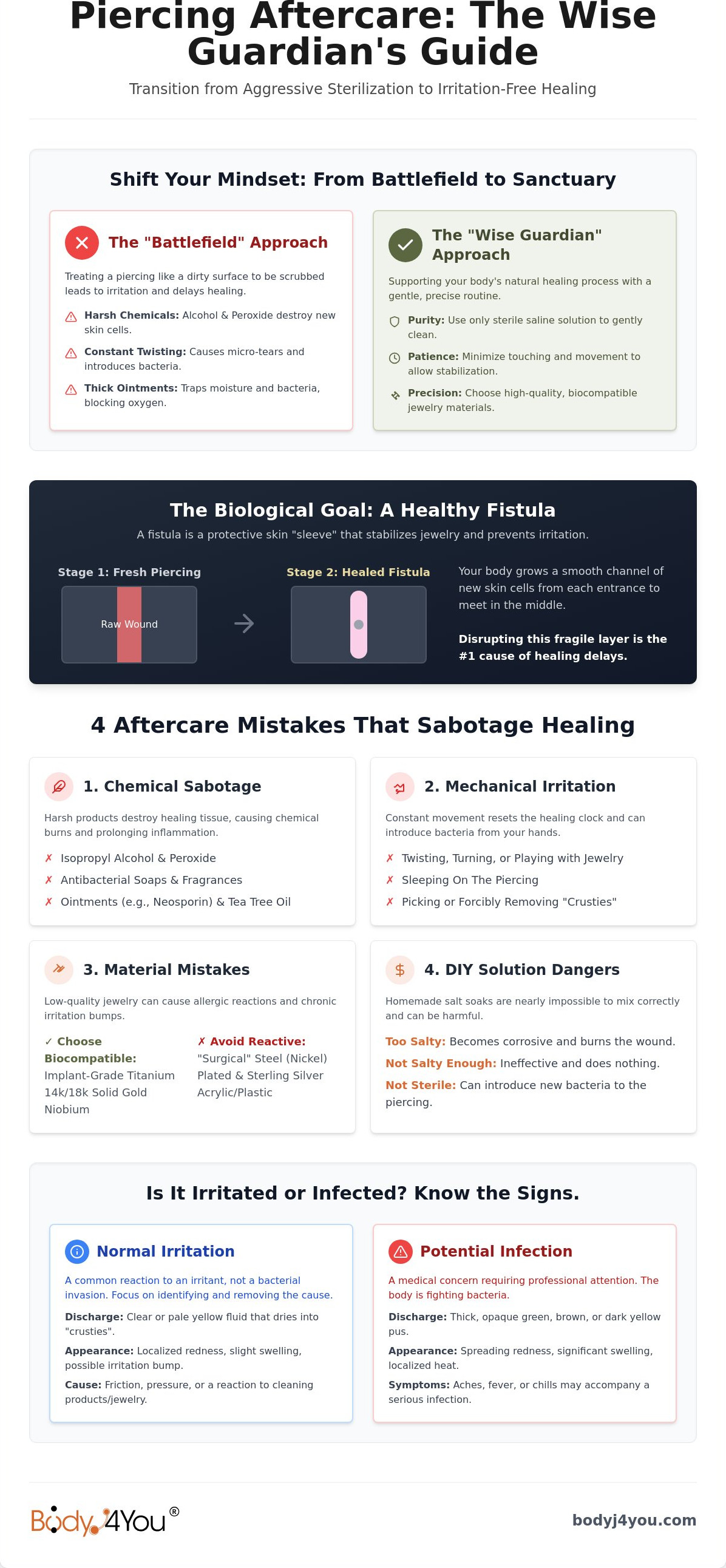
A new piercing is more than a style choice. It is a controlled wound. Your body doesn't see a beautiful piece of jewelry; it sees a foreign object puncturing its primary defense system. Naturally, your body's first instinct is to close the gap as quickly as possible. Successful healing is a delicate negotiation between your jewelry and your immune system. Most piercing aftercare mistakes occur because people treat the area like a dirty surface that needs scrubbing, rather than a living wound that requires stabilization.
The "Wise Guardian" approach shifts the focus from aggressive intervention to supportive care. Instead of attacking the site with harsh chemicals, you must provide the precise environment needed for cellular repair. Understanding The Biology of a Piercing helps you realize that your body is working to build a permanent, protective structure. During the first 30 days, your immune system is on high alert. Every time you touch or move the jewelry, you risk resetting the clock on this intricate biological construction project. Stability, patience, and purity are your three greatest allies.
The Fistula: Your Piercing’s Protective Shield
The ultimate goal of aftercare is the formation of a fistula. This is a tube of epithelial skin cells that grows from each entrance of the wound to meet in the middle. Once complete, it creates a smooth, waterproof channel that protects your internal tissues from the jewelry. A fistula is the biological "sleeve" that stabilizes body jewelry and prevents long-term irritation. Disrupting this fragile skin layer is the root of most healing delays. If you peel away "crusties" or move the jewelry prematurely, you tear these new cells. This leads to unnecessary scar tissue, prolonged soreness, and a cycle of constant inflammation.
Irritation vs. Infection: How to Tell the Difference
Distinguishing between a standard healing response and a medical concern is vital for your peace of mind. During the early stages, it's normal to see lymph fluid. This is a clear or pale yellow discharge that dries into a crust; it's a sign of a healthy immune system at work. However, if you notice localized heat, thick green or brown pus, or a spreading red rash, you may be facing an actual infection. Knowing how to get rid of piercing bump formations starts with identifying the source of the distress. Most bumps are not infections. Instead, they are "angry" reactions to friction, poor jewelry quality, or chemical burns from improper cleaning products. Focus on identifying the irritant rather than just treating the symptom.
Chemical Sabotage: The Mistake of Using Harsh Products
Cleaning a piercing is not an act of sterilization. It is an act of preservation. One of the most damaging piercing aftercare mistakes is the belief that "stronger is better." When you apply Isopropyl alcohol or Hydrogen Peroxide to a fresh piercing, you aren't just killing bacteria. You are also destroying the very fibroblasts and skin cells your body is working to produce. These harsh chemicals cause chemical burns, prolong inflammation, and effectively reset your healing timeline. The piercing aftercare mistakes often cited by professionals involve these aggressive substances that strip the body of its natural defenses.
Ointments and thick creams present a different danger. While they may seem protective, products like Neosporin or heavy balms create an occlusive seal. This seal traps heat, moisture, and anaerobic bacteria against the wound. It prevents the piercing from "breathing," which is essential for the formation of the fistula. Similarly, while tea tree oil is often praised for its antiseptic properties, it is incredibly dehydrating. Applying it to an open wound can lead to localized dermatitis and severe irritation. Stability, purity, and precision are the requirements for success.
Kitchen-table chemistry is another common pitfall. DIY salt water soaks are notoriously difficult to get right. If the solution is too salty, it becomes hypertonic and corrosive. If it isn't salty enough, it does nothing. Without a sterile environment, your homemade solution could even introduce new pathogens into the site. True healing requires a balanced environment that respects your body's chemistry.
The Problem with Antibacterial Soaps
Many people reach for antibacterial soaps, thinking they are being proactive. However, these soaps contain harsh surfactants and artificial fragrances. These ingredients strip away the natural lipids that keep your skin elastic and resilient. When the skin becomes dry and brittle, it is more prone to cracking and migration. For new modifications, the goal is "sterile," not "antibacterial." A clean environment supports the immune system without overwhelming it with unnecessary toxins.
The Gold Standard: Sterile Saline Spray
The modern industry standard is 0.9% sodium chloride. This concentration is isotonic, meaning it perfectly matches the salinity of your own blood and cells. Using a pressurized sterile saline spray for piercings allows you to flush away debris and lymph fluid without ever touching the jewelry. This hands-off approach maintains the stability of the wound. If you've been struggling with irritation, returning to a simple, clinical-grade routine is the fastest way to restore your skin's integrity and aesthetic health.
Mechanical Irritation: Stop Touching, Twisting, and Rotating
Physical trauma is often the silent killer of a successful modification. One of the most persistent piercing aftercare mistakes is the outdated 1990s advice to "twist the jewelry so it doesn’t stick." This myth suggests that skin will grow onto the metal if it remains stationary. In reality, modern implant-grade materials are non-porous. Your skin cannot fuse to them. When you twist or rotate your jewelry, you aren't preventing sticking; you are tearing the delicate new cells trying to form the fistula. Every time you touch your piercing with unwashed hands, you risk introducing pathogens, as hands are responsible for nearly 90% of piercing-related bacterial transfers.
Sleeping habits also play a critical role in mechanical irritation. Pressure and friction are the enemies of stability. If you are a side-sleeper with a fresh cartilage or industrial piercing, you are likely crushing the site for hours every night. This constant pressure can lead to "angle migration," where the piercing actually shifts position, or the development of stubborn irritation bumps. To combat this, many professionals recommend the LITHA method: Leave It The Hell Alone. It is a legitimate clinical strategy that prioritizes non-interference above all else. Your body is a self-healing organism; your job is to provide the environment and then step out of the way.
Finding a way to sleep comfortably without putting pressure on a new modification is a common challenge. To optimize your recovery environment and maintain proper spinal alignment, you can visit Gurum Pillow for ergonomic support that helps you rest without aggravating sensitive areas.
Why Rotating Jewelry Damages the Fistula
Think of dried lymph as biological sandpaper. As your piercing heals, it naturally produces "crusties." If you rotate the jewelry, you pull these sharp, dried particles directly into the open wound. This creates micro-tears along the internal channel, causing pain and localized bleeding. It is a cycle of self-inflicted trauma. Every rotation resets the healing clock by 24 to 48 hours. By leaving the jewelry stationary, you allow the skin to migrate smoothly and form a resilient, protective barrier without being shredded by its own secretions.
Clothing and Accessory Snags
Daily life is full of mechanical hazards. Loofahs, towels, and high-waisted pants are notorious for catching on captive bead rings and barbells. For those with ear modifications, hairbrushes and glasses pose a constant threat. Protecting your investment requires a "shielding" mindset. You should use your hand to cover the piercing when pulling a shirt over your head. Switch to a microfiber towel to avoid the loops of traditional terry cloth. These small, disciplined adjustments prevent the sudden, sharp snags that cause long-term scarring. Awareness, restraint, and protection are your three best defenses against accidental injury.
Material Mistakes: Choosing the Wrong Jewelry for Healing
Your jewelry is a guest in your body. If that guest is made of low-quality materials, your immune system will treat it like an intruder. One of the most overlooked piercing aftercare mistakes is failing to prioritize the chemical composition of your jewelry. "Mystery metals" often contain high levels of nickel, which is the leading cause of allergic contact dermatitis in piercings. Under current 2026 REACH regulations, nickel migration in new piercings is strictly limited to 0.2 µg/cm²/week to prevent these reactions. When you wear unverified alloys, you risk chronic inflammation, persistent weeping, and the development of stubborn granulomas or irritation bumps.
Material integrity matters just as much as cleanliness. Surgical steel is a reliable industry standard for many; however, those with extreme sensitivities often require implant-grade titanium for its superior biocompatibility. You should also avoid plated or painted jewelry during the initial healing phase. These coatings can crack, flake, or peel inside the wound, leaving raw edges that trap bacteria and shred the developing fistula. Purity, stability, and polish are the three pillars of a safe healing environment.
The "too tight" mistake is another mechanical failure that masquerades as an aftercare issue. Swelling is a natural biological response during the first few weeks. If your jewelry is too short, it leaves no room for this expansion. This can lead to embedding, where the skin begins to grow over the ends of the jewelry. Always ensure your initial jewelry is long enough to accommodate this temporary volume increase. If the ends start to sink into the skin, see a professional immediately for a longer post to avoid permanent scarring.
Implant-Grade vs. Fashion Jewelry
Smooth, non-porous surfaces are essential for preventing bacterial adhesion. Fashion jewelry often has microscopic pits and scratches that act as breeding grounds for pathogens. Furthermore, the mechanics of the jewelry itself play a role. Internally threaded or threadless pieces are preferred because they don't have the "saw-tooth" threads that can tear the fistula during insertion or removal. This is especially critical for a septum piercing, where the jewelry must be high-polish to avoid irritating the delicate mucous membranes. For your safety, always choose high-quality surgical steel jewelry that meets clinical standards.
The Dangers of Premature Jewelry Changes
The "honeymoon phase" is a dangerous time for any new modification. Your piercing might look beautiful and feel painless on the outside after just a few weeks, but the internal fistula is still incredibly fragile. Changing jewelry too early can cause the channel to collapse or tear, leading to immediate swelling and potential infection. You must respect the biological timeline. Before you even think about swapping your piece or beginning a stretching journey, consult an ear gauge size chart to understand the dimensions and timing required for a safe transition. Patience is the ultimate guardian of your aesthetic goals.
The Recovery Roadmap: How to Fix Aftercare Mistakes
Next, you must assess your jewelry. If your skin is reacting to a "mystery metal" or if the piece is too tight to allow for natural swelling, see a professional piercer for a sterile swap. High-quality materials like surgical steel or implant-grade titanium provide the inert surface your cells need to thrive. Once the physical irritant is removed, the body can shift from a state of defense to a state of repair. Healing is not a sprint; it is a steady, logical, and organized process of reconstruction.
Knowing when to seek medical intervention is the final part of your roadmap. While most bumps are just signs of irritation, you should watch for the "Red Line" of actual infection. If you experience spreading red streaks, localized heat that radiates, or a fever, these are signs that the immune system is overwhelmed. While we provide the tools for aesthetic maintenance, true infections require a doctor's diagnosis and potential antibiotics. Always prioritize your long-term health over the immediate look of the piercing.
Implementing a Nurturing Routine
Transitioning to a supportive routine requires a gentle touch. Use the "Spray and Pat" technique to manage the area without causing trauma. Saturate the site with saline, then use piercing cleaning swabs to delicately remove softened debris from hard-to-reach crevices. Once the initial wound has fully closed and the skin is no longer raw, you can introduce Jojoba or Rosehip oil to maintain elasticity. These natural oils mimic your skin's sebum, preventing the area from becoming brittle or prone to cracking. Support your "Wise Guardian" repair mode from the inside out with proper hydration, balanced nutrition, and adequate rest.
The BodyJ4You Commitment to Your Journey
We believe that self-expression should never come at the cost of your physical integrity. Our US-manufactured aftercare line is formulated with the clinical precision your body deserves. We prioritize ingredient purity, ethical production, and domestic quality control to ensure every product supports your healing journey. Whether you are nurturing a new lobe or using our ear stretching kits to expand your aesthetic, we provide the expert tools needed to avoid common pitfalls like blowouts or chronic inflammation. Your journey toward a refined, beautiful look starts with a commitment to safe practices.
Explore the BodyJ4You Aftercare Collection for a safer healing journey.
Secure Your Journey Toward Flawless Self-Expression
Healing is a journey of patience, biological precision, and unwavering stability. By understanding the delicate formation of the fistula and rejecting the urge for constant intervention, you protect your body's natural repair process. Avoiding common piercing aftercare mistakes like harsh chemical applications and mechanical trauma ensures your new jewelry remains a beautiful statement rather than a source of chronic distress. Your self-expression deserves a foundation of purity, safety, and clinical-grade care.
BodyJ4You brings over 20 years of expertise to your daily routine. Our US-based manufacturing ensures strict quality control, providing dermatologically minded solutions that prioritize your skin's long-term integrity. We bridge the gap between beauty and biology to offer products that are both safe and aspirational. Don't settle for kitchen-table chemistry when you can use professional-grade tools designed for your wellness. Confidence comes from knowing you're treating your body with the respect it deserves.
Shop the BodyJ4You Sterile Saline Aftercare Spray for gentle, effective healing.
Your body is an incredible, self-healing organism that thrives under the right conditions. Provide it with the purity it needs, and enjoy the vibrant world of personal aesthetics with total peace of mind.
Frequently Asked Questions
How many times a day should I really clean my piercing?
You should clean your piercing exactly twice a day. Many people believe that more cleaning leads to faster healing, but over-cleaning is a frequent error in many routines. Use a sterile saline spray once in the morning and once before bed. This frequency maintains a clean environment without stripping the skin of the natural oils necessary for elasticity. If you clean the area too often, you risk delaying the stabilization of the new fistula.
Is it okay to use Q-tips to clean my new piercing?
It is best to avoid standard cotton swabs because they often shed microscopic fibers. These fibers can become trapped in the piercing channel and cause persistent irritation or even infection. Instead, use specialized piercing cleaning swabs designed for precision and purity. If you must use a cotton product, ensure it is fully saturated with saline to minimize friction and prevent fibers from snagging on your jewelry.
What should I do if my piercing jewelry feels too tight?
You should visit a professional piercer immediately to request a longer piece of jewelry. Swelling is a biological certainty during the first few weeks of healing. If your jewelry feels tight or the ends are sinking into the skin, it is likely too short to accommodate this volume. A professional can safely swap the piece to prevent the jewelry from becoming embedded, which avoids permanent scarring and pain.
Can I go swimming in a pool or the ocean with a new piercing?
You must avoid swimming in pools, oceans, or hot tubs for at least eight weeks. These environments are breeding grounds for bacteria and contain harsh chemicals like chlorine that irritate open wounds. If accidental submersion occurs, you should flush the area immediately with sterile saline spray. Protecting your piercing from contaminated water is essential for preventing serious infections and ensuring a smooth recovery process.
Why does my piercing have a small bump next to it?
Small bumps are typically irritation reactions rather than infections. they are often caused by poor jewelry quality, sleeping on the site, or other piercing aftercare mistakes. To resolve the issue, identify the source of the friction or pressure. Once you remove the irritant and return to a simple saline routine, the bump will generally subside as the tissue stabilizes and the internal channel matures.
How long should I wait before I can change my jewelry for the first time?
You should wait a minimum of six to eight weeks for earlobes and up to a year for cartilage piercings. Even if the site looks beautiful on the surface, the internal fistula requires months to become fully resilient. Changing jewelry prematurely is one of the primary piercing aftercare mistakes that leads to collapsed channels. Always consult a professional before making your first jewelry change to ensure the site is ready.
Is it normal for a new piercing to bleed or itch?
Minor bleeding and localized itching are standard parts of the early healing process. Itching is frequently a sign that your body is successfully regenerating skin cells and the wound is closing. However, if you notice a spreading rash or if the itching becomes unbearable, it may indicate a sensitivity to your jewelry material. Monitor the site closely and maintain your clinical cleaning routine to support the immune system.
Can I use tea tree oil to get rid of a piercing bump?
You should avoid applying pure tea tree oil to an active piercing bump. While it has antiseptic properties, it is far too aggressive for a healing wound and can cause painful chemical burns. If you are struggling with a persistent bump, it is safer to use a dedicated piercing bump treatment oil. These formulations provide the necessary support and soothing properties without compromising the integrity of your new skin cells.


