

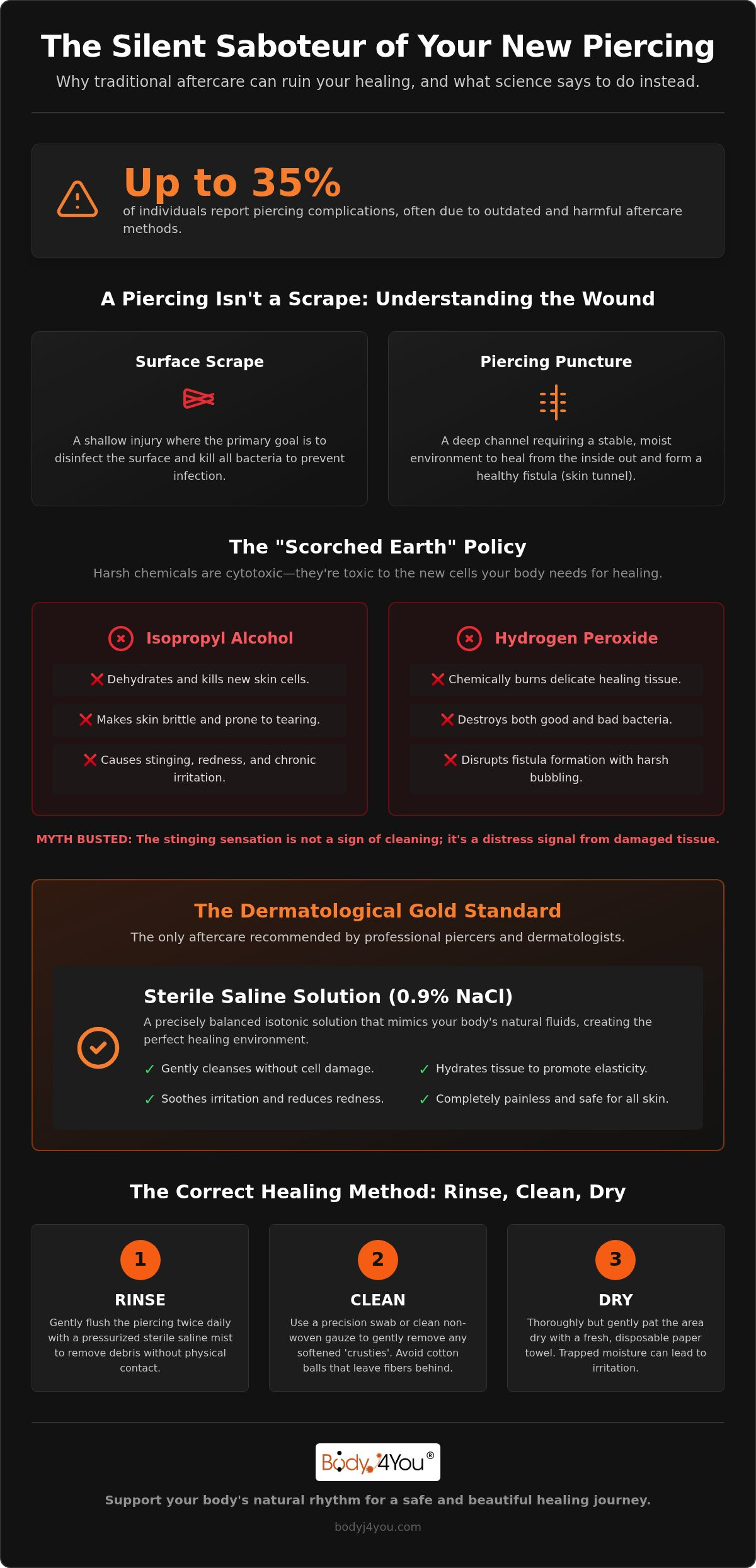
What if the contents of your medicine cabinet are actually the biggest threat to your new aesthetic? For decades, the instinct has been to reach for the strongest antiseptic available, but using alcohol or peroxide on piercings is now considered a biological scorched earth policy. While these chemicals kill bacteria, they also destroy the delicate new cells your body is working so hard to create. Research shows that up to 35% of individuals report piercing complications, often because they’re unknowingly sabotaging their recovery with these outdated, cytotoxic methods.
It’s frustrating to deal with a piercing that stays red, angry, and flaky despite your best efforts to maintain it. You deserve a healing process that is as refined, intentional, and effortless as the jewelry you’ve chosen to wear. This guide explores the clinical reasons why these harsh liquids fail and introduces you to the science-backed, painless alternatives that support your body’s natural rhythm. We will show you how to achieve faster healing times, maintain skin purity, and avoid the common pitfalls of traditional aftercare to ensure your self-expression remains beautiful and healthy.
Key Takeaways
- Understand the biological difference between a surface scrape and a puncture wound to protect your delicate healing tissue.
- Learn why using alcohol or peroxide on piercings triggers cytotoxicity, a process that kills the very cells required for a healthy recovery.
- Discover the science of isotonic saline and why a 0.9% sodium chloride concentration remains the only dermatological gold standard for aftercare.
- Identify how professional-grade tools like pressurized saline mists and precision swabs prevent the irritation and flaking caused by cotton balls.
- Master the "Rinse, Clean, Dry" method to ensure your journey of self-expression is safe, painless, and permanent.
Why Alcohol and Peroxide are Outdated Piercing Advice
For generations, the immediate reaction to any skin injury was a bottle of rubbing alcohol or a bubbling capful of hydrogen peroxide. These liquids were originally formulated for surface abrasions, like a scraped knee or a shallow cut, where the goal was to kill every living organism on the surface. However, a piercing is not a surface wound. It is a deep, narrow puncture that creates a channel through multiple layers of tissue. This distinction is critical because the environment inside that channel must remain moist and stable to form a healthy fistula, the tunnel of skin that houses your jewelry.
Professional piercers and dermatologists now recognize the dangers of alcohol and peroxide when applied to these specialized wounds. These substances are non-discriminatory; they kill harmful bacteria, but they also liquidate the healthy fibroblasts your body needs to close the wound. Chemical cauterization in piercing care is the process where harsh liquids burn away the delicate, microscopic layers of new skin, effectively stalling the healing process through repetitive chemical trauma.
The Myth of the Stinging Sensation
Many of us grew up believing that if a cleaner stings, it's working. This is a persistent medical fallacy. That sharp, burning sensation is actually a distress signal from your nervous system, indicating that the solution is damaging your healthy tissue. When you are using alcohol or peroxide on piercings, you aren't just cleaning; you're attacking. This aggressive approach leads to chronic irritation, persistent redness, and a heightened risk of developing unsightly piercing bumps. Switching to a painless saline solution can feel counterintuitive at first, but your body rewards this gentleness with a much faster recovery.
Traditional Medicine Cabinet Habits vs. Modern Aftercare
While your parents might have used harsh chemicals on their earlobes decades ago, the industry has moved toward a wellness-oriented approach. Modern jewelry materials like surgical steel and titanium are designed to be inert, but they can't protect the wound from the drying effects of isopropyl alcohol. This is especially true for those exploring more complex modifications. If you are planning to stretch your lobes, referencing an ear gauge size chart is a vital step for safety, but the foundation of that safety is a healthy, hydrated piercing site. Using alcohol or peroxide on piercings strips away the natural oils and acid mantle of your skin, leaving it brittle and prone to tearing. Modern aftercare is about supporting biology, not fighting it.
Cell Toxicity: How Harsh Chemicals Attack New Piercings
To understand why your piercing is struggling, you must look at the microscopic level. Healing is a biological construction project led by fibroblasts and keratinocytes. Fibroblasts produce the collagen framework, while keratinocytes create the protective skin barrier within the piercing channel. When you are using alcohol or peroxide on piercings, you are essentially firing the construction crew. These chemicals are cytotoxic, meaning they are toxic to living cells. Isopropyl alcohol acts as a powerful desiccant, instantly dehydrating these new cells until they shrivel and die, leaving your piercing unable to form a stable fistula.
This "scorched earth" approach is fundamentally flawed because it ignores the body's natural microbiome. While you might intend to kill harmful pathogens, these harsh liquids also eliminate the beneficial bacteria that help regulate your skin's health. This imbalance, combined with constant chemical trauma, is the primary reason for persistent inflammation. In fact, chronic chemical irritation is widely recognized as the leading cause of piercing bumps, which are often the body's defensive response to repetitive injury.
Delayed Healing and Tissue Trauma
Consistent use of harsh chemicals creates a cycle of re-opening wounds. Alcohol makes the skin brittle and inelastic, which is the opposite of what a healing puncture requires. Brittle tissue is far more prone to microscopic tearing during jewelry movement, which can lead to migration or even full jewelry rejection. If your skin feels tight, flaky, or looks translucent, it is likely a sign of moisture loss. Supporting the area with a specialized Piercing Bump Treatment Oil can help restore the lipid barrier that chemicals have stripped away.
The Risk of Chemical Burns
Many people mistake a chemical burn for a simple infection. Over-using 70% isopropyl alcohol can lead to localized "burn" symptoms, including extreme redness, peeling, and a leather-like texture on the skin surface. Hydrogen peroxide presents a different danger. According to professional piercing aftercare guidelines, the "fizzing" action of peroxide is actually oxygen being released. While it looks like it is cleaning, these oxygen bubbles can actually force debris and bacteria deeper into the puncture channel where they become trapped. If you notice persistent stinging or the skin around your jewelry looks "bleached," it is time to stop using alcohol or peroxide on piercings and switch to a biocompatible alternative.
Alcohol vs. Hydrogen Peroxide: Comparing the Damage
Choosing between these two common chemicals is effectively a choice between two distinct forms of tissue trauma. Isopropyl alcohol is a solvent; hydrogen peroxide is a powerful oxidant. Neither respects the delicate biological chemistry of your skin. While sterile saline sits at a biocompatible pH that matches your body, using alcohol or peroxide on piercings aggressively disrupts the skin’s acid mantle. This thin, acidic film is your primary defense against pathogens. When you dissolve this barrier, you don't just kill bacteria; you leave the site vulnerable, dry, and incapable of defending itself.
This chemical interference is particularly dangerous for an industrial piercing or other cartilage work. Because cartilage has significantly less blood flow than earlobes, it relies on a stable, non-toxic environment to heal. Harsh chemicals can cause permanent tissue thinning or "cauliflower" scarring in these areas because the body cannot easily repair the chemical burns inflicted on the avascular tissue.
Isopropyl Alcohol: The Dehydrator
Isopropyl alcohol is a master dehydrator. It doesn't stop at killing surface microbes; it strips away the essential sebum and natural lipids that keep your skin elastic. When skin loses its elasticity, it becomes brittle and cracks. These microscopic fissures are not just painful; they are entry points for new bacteria, often leading to a frustrating cycle of bleeding and scabbing. If you are following a septum piercing guide, you'll know that facial tissue is uniquely sensitive. Alcohol fumes can irritate the respiratory lining, while the liquid itself can cause the internal mucosal membranes to shrivel, making every movement of your jewelry feel like a sharp pinch.
Hydrogen Peroxide: The Collagen Destroyer
The "fizzing" of hydrogen peroxide is one of the most persistent myths in first aid. Many people believe that white foam means the product is "working" to lift out infection. In reality, that reaction is the enzyme catalase in your own healthy cells being destroyed by oxidation. Peroxide is a known collagen inhibitor. It actively prevents the formation of the structural proteins your body needs to build the piercing channel. This is a disaster for oral or nipple piercings, where the tissue is already under constant stress from movement. By destroying collagen, peroxide ensures the wound remains raw, weak, and prone to migration for months longer than necessary.
The Gold Standard: Why Sterile Saline is the Only Safe Choice
Modern aftercare has moved beyond the era of harsh antiseptics. The current gold standard is isotonic saline, a 0.9% sodium chloride solution that perfectly mirrors the salt concentration of your own blood and tears. Because it is biocompatible, it doesn't trigger the defensive inflammation or stinging caused by using alcohol or peroxide on piercings. Instead, it works mechanically. It gently flushes away debris, softens crusting, and hydrates the site without the risk of chemical burns or cellular death. It is a protective, stabilizing force that respects your body’s natural chemistry.
Choosing a sterile saline spray for piercings is the professional choice because it ensures the solution remains pure from the first application to the last. Homemade sea salt mixtures are notoriously difficult to balance. Too much salt creates a hypertonic environment that dehydrates the skin, while too little fails to provide the necessary osmotic pressure. Most importantly, a kitchen-mixed solution isn't sterile. This introduces unnecessary bacteria and potential irritants to a vulnerable puncture wound.
How to Properly Clean Your Piercing
Maintaining a new piercing requires precision and patience. Follow these three essential steps to ensure your jewelry site remains healthy and vibrant:
- Step 1: Wash your hands thoroughly with antimicrobial soap before touching the area to prevent cross-contamination.
- Step 2: Spray the saline solution directly onto the piercing or use a saturated Piercing Cleaning Swab for targeted application in hard-to-reach areas.
- Step 3: Gently pat the area dry with a clean paper towel or non-woven gauze. Avoid cloth towels, as they harbor bacteria and can snag on your jewelry.
The LITHA Method (Leave It The Hell Alone)
In the world of professional body art, the LITHA philosophy is a core pillar of success. It suggests that once you have cleaned the area, you should stop touching, rotating, or checking the jewelry. Over-cleaning is just as destructive as neglect. It disrupts the formation of the fistula and keeps the wound in a state of perpetual trauma. By using a gentle saline mist twice per day, you support the LITHA method by providing necessary hygiene without the invasive scrubbing associated with using alcohol or peroxide on piercings. Trust the process and let your body do what it does best. For a reliable, pharmaceutical-grade experience, you can explore our professional collection at BodyJ4You to ensure your healing journey stays on track.
BodyJ4You Aftercare: Supporting Your Natural Healing
Your journey of self-expression is an investment in your identity. It requires a stabilization force that respects your body’s vulnerability. While the biological trauma caused by using alcohol or peroxide on piercings can set you back weeks, our BodyJ4You Saline Piercing Aftercare Spray offers a refined, clinical alternative. Formulated with 0.9% sodium chloride and manufactured under strict dermatological standards in the USA, this spray provides the purity and safety your skin demands. It is clean, professional, and safe.
The pressurized mist technology is a game-changer for complex anatomy. It flushes debris from the deepest corners of an industrial barbell or the tight folds of a daith piercing without the need for painful manual rotation. For those who require even more precision, our Piercing Cleaning Swabs offer a lint-free application. Unlike standard cotton balls that leave fibers behind to irritate the wound, these swabs ensure every cleaning session is clean, targeted, and professional. This precision prevents the accidental irritation that leads to prolonged redness and swelling.
Advanced Healing Solutions
Sometimes, even with perfect care, the body needs extra support. Our Piercing Bump Treatment Oil is designed to work in harmony with our saline spray. It features a potent blend of Jojoba and Rosehip oil to maintain skin elasticity and prevent the brittle texture that often leads to jewelry rejection. These oils act as a protective shield, nurturing the skin and soothing the angry redness often associated with chemical irritation. It is about empowering your body to heal itself through high-end, natural ingredients that bridge the gap between beauty and biology.
Your Journey to a Healed Piercing
The final stage of a successful heal is the transition to long-term jewelry. Once the fistula is stable and healthy, you can explore our curated collection of Internal Threaded Labret Studs, Captive Bead Rings, or Industrial Barbells. We prioritize materials like surgical steel and titanium because they are inert and biocompatible. This commitment to quality ensures that once you move past the initial aftercare phase, your piercing remains a permanent, beautiful part of your aesthetic. Stop using alcohol or peroxide on piercings and start your journey with a specialist you can trust. Your body deserves the expertise we have cultivated over 20 years in the industry.
Shop the BodyJ4You Aftercare Collection for a safer heal
Elevate Your Aftercare Standards
Your piercing is more than a wound; it's a deliberate act of self-expression that deserves a sophisticated recovery plan. Protecting this investment means moving beyond the biological trauma caused by using alcohol or peroxide on piercings. You now understand that these harsh chemicals don't just kill bacteria; they destroy the vital fibroblasts and keratinocytes your body needs to build a healthy piercing channel. By choosing sterile, isotonic saline, you align your routine with modern dermatological standards and provide the stable environment necessary for success.
BodyJ4You brings over 20 years of industry expertise to your healing journey. Our USA-made skincare line is built on three core pillars: purity, safety, and dermatological integrity. We provide the professional tools you need to move from a vulnerable new puncture to a fully healed, vibrant aesthetic. Trust the science of biocompatibility and let your body heal without the interference of outdated medicine cabinet staples.
Switch to Gentle Care with BodyJ4You Saline Spray and experience the difference of professional-grade healing. Stay confident in your journey and let your new aesthetic shine.
Piercing Aftercare: Frequently Asked Questions
Can I use alcohol on a piercing if I think it is infected?
No, you should never use alcohol on a suspected infection. While it kills bacteria, it also destroys the healthy tissue trying to fight the infection, which can lead to further complications. If you notice signs of a true infection like green discharge, heat, or fever, consult a medical professional immediately. Continuing with gentle saline care is the safest way to support your immune system's localized response without causing unnecessary chemical trauma.
What happens if I already used peroxide on my new piercing?
If you've already used peroxide, the best course of action is to stop immediately and switch to a sterile saline spray. You may notice some dryness, flaking, or a slight bleached appearance around the site. This is a common reaction to chemical oxidation. Hydrating the area with a specialized aftercare oil can help restore the skin's moisture barrier and get your healing process back on track as quickly as possible.
Is it okay to use antibacterial soap instead of alcohol?
Antibacterial soaps are generally not recommended for new piercings because they contain harsh chemicals, fragrances, and dyes that can cause contact dermatitis. These soaps often strip the skin of its natural oils, leading to irritation similar to that caused by using alcohol or peroxide on piercings. Stick to a 0.9% sterile saline solution to ensure you're cleaning the area without disrupting the delicate biological balance of your healing tissue.
How can I tell the difference between irritation and infection?
Irritation typically presents as localized redness, swelling, or itching, often caused by friction or improper cleaning. An infection is more severe and usually includes symptoms like thick yellow discharge, skin that feels hot to the touch, and persistent throbbing pain. If the redness begins to spread away from the piercing site or you develop a fever, it's a clear sign that you need professional medical intervention rather than just standard aftercare.
Why does my piercer say only to use saline spray?
Your piercer recommends saline because it's the only solution that's truly biocompatible with your body's internal chemistry. Sterile saline at a 0.9% concentration effectively flushes out debris and bacteria without killing the new skin cells required for healing. It's a non-invasive, safe, and effective way to maintain hygiene throughout the entire recovery period, ensuring your jewelry remains a stable and beautiful part of your self-expression and personal growth.
Can I make my own saline solution at home with table salt?
Creating your own solution at home is risky because it's nearly impossible to achieve the exact 0.9% concentration required for safety. Table salt often contains anti-caking agents or iodine, which can irritate the wound. A kitchen-mixed solution also isn't sterile, which can introduce new bacteria to your piercing. Using a professional, USA-made saline spray ensures you're providing purity, safety, and precision without the dangerous guesswork of DIY mixtures.
How long should I continue using saline spray on a new piercing?
You should continue your saline routine for the entire duration of the initial healing period, which can range from six weeks to several months. Even if the piercing looks healed on the surface, the internal channel takes much longer to fully mature. Consistency is key to preventing late-stage complications, so maintain your twice-daily cleaning until your piercer confirms the site is stable enough for a jewelry change or a more advanced aesthetic.
Will alcohol make my piercing bump go away faster?
No, alcohol will likely make a piercing bump worse by increasing local inflammation and dryness. Most bumps are a defensive response to trauma or chemical irritation, so using alcohol or peroxide on piercings only adds more stress to the tissue. Instead of reaching for harsh antiseptics, identify the source of the irritation and switch to a soothing treatment oil designed to calm the skin and support natural cell regeneration during your recovery.


