

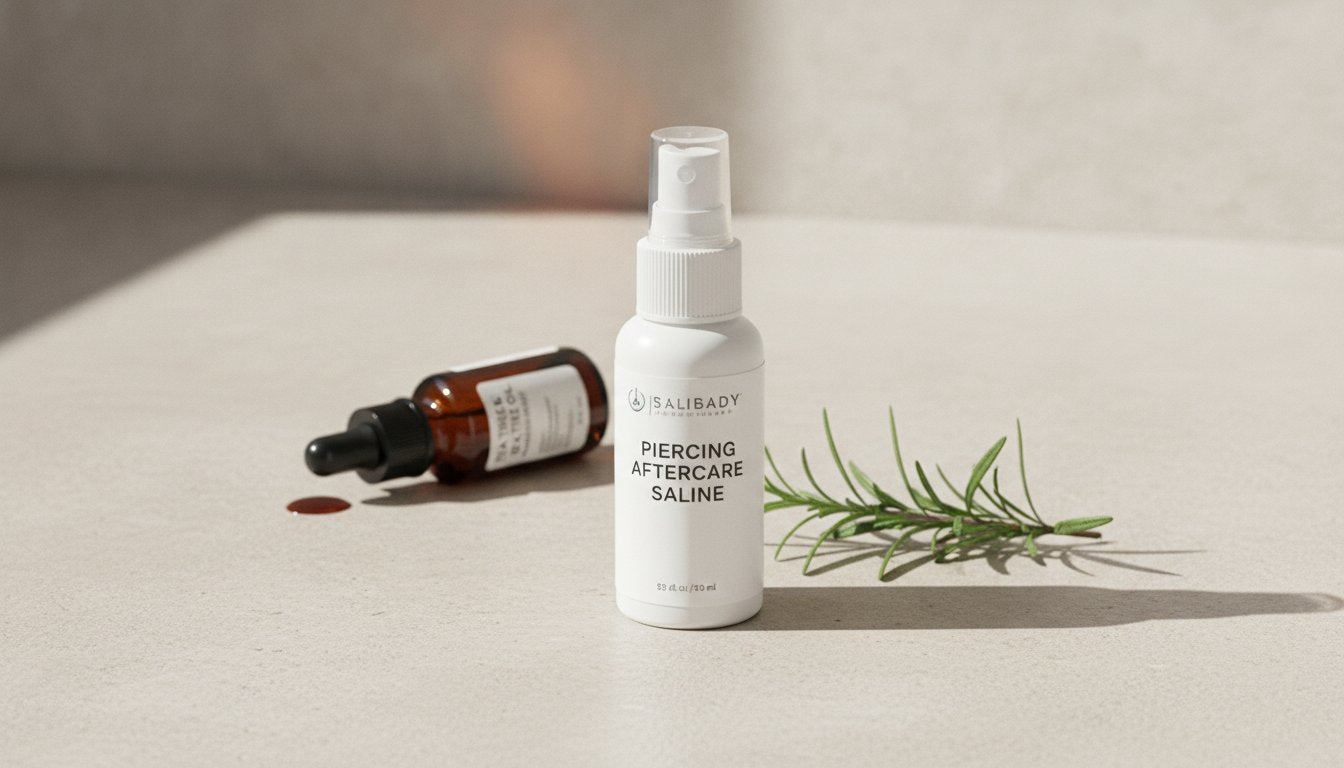
The "natural" miracle cure you found on social media might actually be the very thing keeping your piercing from healing. It is a common, frustrating cycle: you notice a small, red bump and reach for an essential oil bottle, hoping for a quick fix. However, the tea tree oil for piercing bumps myth persists because we often mistake "natural" for "gentle." In reality, applying undiluted, industrial-strength antiseptics to a healing wound is like trying to clean a silk scarf with bleach; it prioritizes harsh disinfection over biological stability and tissue integrity.
We understand the frustration of a persistent, unsightly bump that refuses to fade despite your best efforts. You deserve a flat, healthy piercing site that reflects your personal style with confidence, safety, and grace. This article explores why aggressive remedies sabotage your body's recovery process and reveals the professional standards for true healing. You will learn to distinguish between irritation and infection, understand the risks of chemical dehydration, and discover a reliable, dermatologically safe aftercare routine that supports your skin's natural ability to repair itself.
Key Takeaways
- Uncover the truth behind the tea tree oil for piercing bumps myth and why "natural" ingredients often lead to severe chemical irritation.
- Identify the specific biological markers that distinguish a common irritation bump from a serious infection or a keloid.
- Learn why 0.9% sterile saline is the non-negotiable gold standard for stabilizing a piercing and supporting cellular repair.
- Discover how the "Leave It Alone" method prevents further trauma to delicate new skin cells and stops the cycle of inflammation.
- Gain insights into using professionally diluted, precision-formulated treatments that protect your piercing’s integrity while promoting a smooth finish.
The Origin of the Tea Tree Oil Myth in Piercing Care
It's easy to see why the tea tree oil for piercing bumps myth gained such a foothold in the body modification community. We live in an era where "natural" is often synonymous with "safe," leading many to believe that plant-derived substances are inherently gentler than laboratory-formulated solutions. This is a dangerous oversimplification. Tea tree oil is a potent, industrial-strength antiseptic with a chemical profile designed to combat bacteria, not to nurture delicate, recovering tissue. While it serves a purpose in household cleaning or treating robust fungal infections, its application to a fresh piercing wound is often catastrophic for the skin's barrier.
Social media echo chambers have only worsened the problem. Viral videos showing "overnight" results provide a dopamine hit of hope for those struggling with persistent irritation. These clips rarely show the long-term consequences, such as chemical burns or permanent scarring. Because the oil is widely available and inexpensive, it has become the default "magic cure" for those who prioritize speed over safety. Professional piercers are increasingly vocal against this practice, advocating for a return to evidence-based care that respects the body's natural healing rhythm.
The Allure of the "Quick Fix" Culture
The immediate drying effect of tea tree oil creates a convincing visual illusion of progress. When a bump appears to shrink because it's being dehydrated, the brain interprets this as healing. In reality, you're mummifying the tissue. This psychological trap is difficult to escape. When the bump inevitably returns or becomes more inflamed, many people respond by applying even more oil. Drying out a bump is often the worst possible choice, as it causes the skin to crack, bleed, and lose the elasticity required for a healthy piercing site. True healing requires moisture balance, not chemical desiccation.
The Professional Consensus vs. Internet Advice
The Association of Professional Piercers (APP) maintains a clear standard: sterile saline is the only non-negotiable requirement for wound wash. Modern aftercare has shifted away from antiseptic-based "cleaning" toward biological stabilization. While an internet stranger might suggest a "natural" home remedy, a professional piercer understands the biology of wound healing. They prioritize the long-term integrity of your skin over fleeting trends. Trusting a 60-second viral video over decades of industry experience often leads to painful setbacks that could've been avoided with a simple, saline-focused routine. Your piercer's advice is a stabilizing force in your journey toward self-expression.
Why Tea Tree Oil Often Makes Piercing Bumps Worse
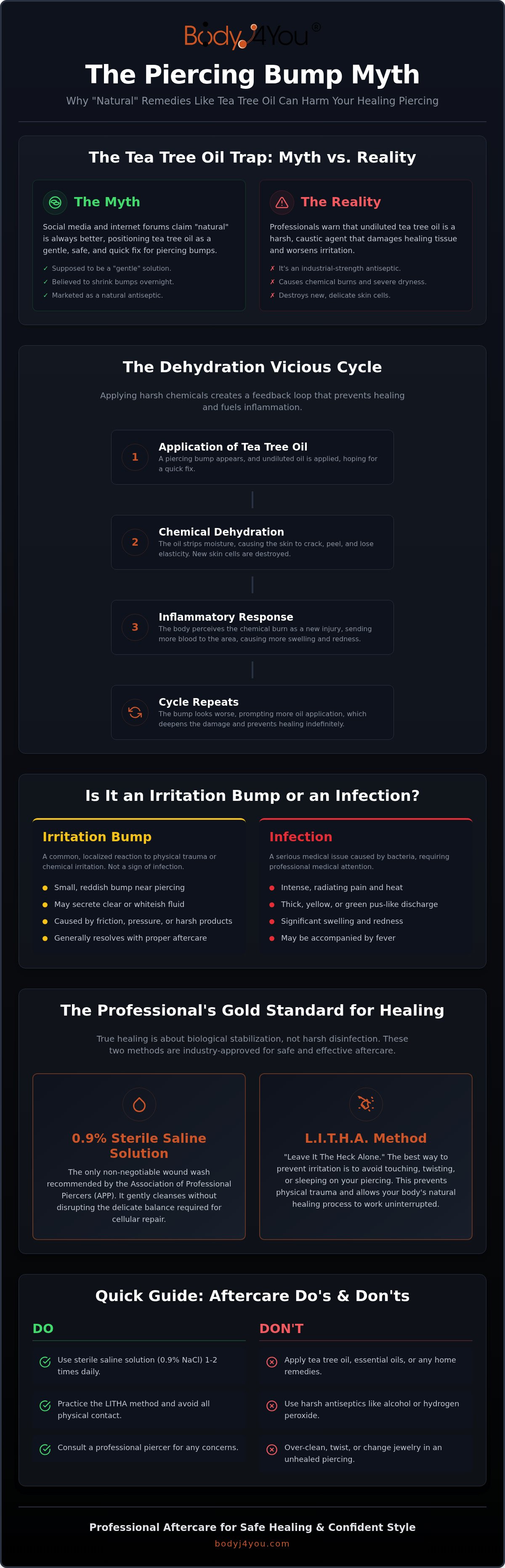
The primary culprit behind the tea tree oil for piercing bumps myth is a compound called Terpinen-4-ol. This chemical is a powerful antimicrobial, but on a healing piercing, it acts as a caustic agent. Applying this oil "neat," which means undiluted, directly to a puncture wound is a recipe for disaster. It doesn't just target bacteria; it indiscriminately destroys the delicate new skin cells your body is working hard to produce. When you strip away these cells, you're not helping the piercing heal. You're resetting the clock on your recovery.
The paradox of dehydration is a cruel cycle. Many people believe that "drying out" a bump will make it disappear. However, according to the National Center for Complementary and Integrative Health, tea tree oil is a known skin irritant that can lead to allergic contact dermatitis. When the skin becomes excessively dry, it loses its elastic integrity. The body responds to this perceived threat by rushing blood to the area, which creates more swelling, more heat, and more pressure. This inflammatory response is often what caused the bump in the first place, meaning the "remedy" is actually fueling the fire.
The Mechanism of a Chemical Burn
Essential oils are lipophilic, meaning they easily penetrate the skin's lipid barrier. Once they reach the deeper layers of healing tissue, they can destroy fibroblasts. These are the specific cells responsible for collagen production and closing your piercing. If you notice persistent redness, peeling skin, or increased throbbing after application, you're likely experiencing a chemical burn. This damage compromises the local immune response, making the site more vulnerable to the very infections you were trying to avoid. If you're seeking a way to soothe the area without the risk of caustic damage, consider a professional Piercing Bump Treatment Oil that uses safe, diluted concentrations.
The Scarring Risk: From Bump to Keloid
Chronic irritation is the primary catalyst for permanent tissue changes. When you repeatedly "attack" a bump with harsh oils, you force the body into a defensive state. This constant chemical trauma can cause the healing process to go into overdrive, leading to hypertrophic scarring. Unlike a temporary irritation bump caused by jewelry movement, these scars involve the permanent thickening of tissue. In some individuals, this persistent irritation can even trigger the formation of a keloid, a much more serious and permanent growth. Protecting your piercing requires a stabilizing force, not a chemical assault that risks lifelong scarring.
Irritation Bump vs. Infection: Identifying the Real Issue
Distinguishing between a standard irritation bump and a clinical infection is the first step toward effective recovery. The tea tree oil for piercing bumps myth often leads people to treat a physical trauma issue with a chemical antiseptic. If your bump is caused by jewelry friction or poor sleeping habits, killing bacteria won't solve the problem. It just adds chemical stress to an already traumatized site. Data from Poison Control highlights that the adverse effects of essential oils often mimic the very irritation people are trying to cure.
Most piercing bumps are either granulomas or hypertrophic scars. A granuloma is your body's attempt to wall off an irritant; this is often caused by the jewelry moving too much within the channel. Hypertrophic scarring happens when the healing process goes into overdrive, creating a firm, raised area of tissue. These are physiological responses to pressure and friction, not signs of a bacterial invasion. Treating these with harsh oils is like trying to put out a fire with gasoline.
Jewelry quality plays a massive role in this delicate balance. Many "mystery metal" pieces contain high levels of nickel, a common allergen that triggers chronic swelling. Switching to high-quality materials like surgical steel can often resolve a bump that tea tree oil would only worsen. By removing the source of the allergy, you allow the skin to stabilize naturally. Quality matters. Safety matters. Your skin's integrity matters.
Signs of a True Piercing Infection
True infections are less common than general irritation, but they require immediate attention. Look for localized heat, throbbing pain that worsens over time, and a fever. While clear or white lymph fluid is a normal part of healing, discharge that is thick, green, or yellow usually indicates an infection. If the redness starts spreading away from the piercing site in streaks, stop reading and consult a medical professional immediately. Your health is the priority.
Signs of Simple Irritation (The "Bump")
Irritation bumps are usually confined to the entry and exit points of the piercing. They often appear after you've snagged the jewelry, slept on it, or used harsh cleaning products. The "pressure factor" is a leading cause of these growths. Sometimes, the issue is structural. You might be dealing with an angle-related bump caused by poor placement or a piercing that was not set perpendicular to the tissue. In these cases, the jewelry rests at a tilt, creating constant tension that no amount of oil can fix. Stabilization and proper jewelry alignment are your best allies.
Safe Alternatives: The Biological Path to Smooth Healing
Moving beyond the tea tree oil for piercing bumps myth means embracing a philosophy of biological rest. Your body doesn't need harsh chemicals to heal; it needs a stable environment and the absence of trauma. The most effective path to a bump-free piercing is often the simplest one. By prioritizing isotonic solutions and minimizing physical contact, you allow the skin's natural defense mechanisms to take the lead. This approach respects the delicate biology of wound repair rather than trying to force it with caustic substances.
The gold standard for professional aftercare is 0.9% sodium chloride, also known as isotonic saline. It mirrors the salt concentration of your blood and tears, ensuring that it cleanses without dehydrating the delicate tissue. Along with this, the "Leave It Alone" (LITHA) method is crucial. Every time you twist, turn, or touch your jewelry, you create micro-tears in the healing channel. Rest is a biological requirement, not a suggestion. True healing is a quiet, internal process that happens best when we stop interfering.
The Science of Isotonic Solutions
While many are tempted to create homemade salt water, this often results in solutions that are too concentrated or contaminated with bacteria. A professional sterile saline spray for piercings provides a consistent, pressurized mist that removes crust and debris without the need for abrasive cotton swabs. For delicate cartilage, a gentle mist is always superior to a heavy soak. It prevents the tissue from becoming waterlogged and vulnerable to pressure while maintaining the sterile environment required for cellular growth.
Supporting the Skin Barrier with Safe Oils
Once the initial wound has stabilized, you can support the skin's elasticity with gentle botanicals. Jojoba oil is a favorite among professionals because its molecular structure is the closest botanical match to human sebum. This allows it to hydrate without clogging pores. Other beneficial options include:
- Rosehip oil for natural tissue regeneration
- Castor oil for deep, protective moisture
- Jojoba oil for barrier stabilization and softness
It's vital to remember the golden rule: only apply oils to skin that has already closed. Applying any oil to an open, weeping wound can trap bacteria and lead to further irritation. For a precision-formulated solution that balances safety with efficacy, explore the BodyJ4You aftercare collection. Purity. Precision. Protection.
The BodyJ4You Approach to Professional Aftercare
BodyJ4You has spent over 20 years refining the science of body modification aftercare. We believe that your journey toward self-expression requires a stabilizing, protective force. While the tea tree oil for piercing bumps myth suggests a "natural" shortcut, our experience proves that true healing comes from precision-formulated support. We prioritize ingredient integrity and dermatological standards to ensure your piercing remains a source of pride rather than a source of pain. Our commitment to debunking the tea tree oil for piercing bumps myth is rooted in our desire to protect our community from avoidable scarring and chemical trauma.
Our Saline Aftercare Spray serves as the non-negotiable foundation of this process. It is a sterile, isotonic solution designed to flush away debris without disturbing the delicate cellular work happening beneath the surface. By manufacturing our skincare line locally in the USA, we maintain strict quality control that DIY remedies simply cannot match. We don't just sell products; we offer a curated path to wellness that respects your body's biological requirements. This professional-grade approach ensures that your skin receives the clinical precision it deserves.
Targeted Solutions for Stubborn Bumps
When a bump appears, the instinct to reach for a harsh antiseptic is strong. We developed our Piercing Bump Treatment Oil specifically to counteract the dangerous trend of using undiluted, caustic essential oils. It is a safe, professionally diluted alternative that balances soothing botanicals with healing support. For the most effective results, use our piercing cleaning swabs for precise application. This ensures the treatment reaches the irritation site without causing unnecessary trauma to the surrounding skin. Our formulas are designed to stabilize, protect, and restore.
The Importance of Material Integrity
The best aftercare routine cannot overcome poor-quality jewelry. Irritation bumps are often a physical reaction to low-grade metals or improper jewelry design. We recommend switching to internal threaded labret studs to minimize the friction that triggers tissue overgrowth. High-polish surgical steel is another essential pillar of our approach. Its ultra-smooth surface prevents the "Velcro effect," where healing tissue sticks to the jewelry and tears during movement. This smooth finish is critical for maintaining the integrity of the piercing channel.
Material matters. Precision matters. Your health matters. By combining high-grade jewelry with scientifically backed aftercare, you create the optimal environment for a flat, healthy piercing site. Shop the BodyJ4You Aftercare Collection for safe, effective healing.
Stabilize Your Journey Toward Healthy Healing
Your piercing is a powerful form of self-expression. It deserves a healing process that respects your body's biology. Moving past the tea tree oil for piercing bumps myth is the first step toward reclaiming the health of your skin. By choosing isotonic saline and high-quality surgical steel, you provide a stable environment where your cells can thrive without chemical interference. You've already done the hard work of choosing your style; now it's time to protect it.
BodyJ4You brings over 20 years of industry expertise to every solution we offer. Our locally manufactured, USA-made skincare line is built on dermatologically minded standards that prioritize safety, purity, and long-term results. We believe in empowering your aesthetic journey with products that stabilize rather than stress. Trust the science of professional aftercare to help you achieve the smooth, healthy finish you intended.
Restore Your Piercing with Professional Aftercare
You are on the path to a beautiful, bump-free piercing. Stay patient, stay informed, and let your body's natural resilience lead the way.
Frequently Asked Questions
Can I dilute tea tree oil to make it safe for my piercing?
While you can dilute tea tree oil with a carrier oil, it remains an unpredictable and often dangerous home remedy for healing tissue. Most people struggle to achieve a safe or consistent ratio, which frequently leads to accidental chemical burns. Instead of experimenting with DIY mixtures, choose a precision-formulated product like our Piercing Bump Treatment Oil. This ensures you receive the benefits of botanicals without the risk of caustic damage.
How long does it take for a piercing bump to go away with saline?
A piercing bump typically begins to flatten within two to four weeks of consistent saline use, provided the source of primary irritation is removed. You must address the root cause, such as poor jewelry quality or accidental snagging, for the saline to be effective. Sterile 0.9% sodium chloride stabilizes the area, allowing your body's natural defenses to resolve the tissue overgrowth at a steady, healthy, and biological pace.
Will tea tree oil help if my piercing is actually infected?
No, tea tree oil is not a substitute for medical treatment and often worsens an active infection by trapping bacteria or causing further inflammation. If you experience fever, spreading redness, or green discharge, you require professional medical intervention. Relying on the tea tree oil for piercing bumps myth during a true infection delays necessary care and increases the risk of permanent tissue damage or systemic illness.
Why did my piercing bump get bigger after using tea tree oil?
Your bump likely grew larger because the undiluted oil caused contact dermatitis or a localized chemical burn. When the skin's lipid barrier is destroyed by harsh antiseptics, the body responds with massive inflammation to protect the area. This increased blood flow and swelling are defensive reactions to the oil itself, proving that aggressive "natural" treatments often fuel the very problem they aim to solve.
What is the best oil for piercing bumps if tea tree is too harsh?
Jojoba oil is the superior choice for piercing care because its molecular structure closely mimics human sebum. It provides essential moisture and encourages elasticity without the caustic risk associated with essential oils. For those needing targeted help, our Piercing Bump Treatment Oil offers a safe, dermatologically minded blend that supports the skin barrier while soothing the redness associated with friction and pressure.
Can I use tea tree oil on an old, fully healed piercing bump?
Tea tree oil is ineffective on old, fully healed bumps because these are usually permanent scar tissue rather than active irritation. Once the skin has completely closed and the bump has hardened, it is likely a hypertrophic scar or a keloid. These structural changes to the tissue require professional dermatological treatments, such as massage or medical procedures, rather than topical home remedies that only dry out the surface.
How do I know if my piercing bump is a keloid or just irritation?
Irritation bumps are usually soft, localized to the piercing site, and fluctuate in size based on your activity. Keloids are firm, often darker than the surrounding skin, and grow beyond the boundaries of the original wound. If your bump continues to expand months after the piercing has stabilized, consult a doctor. Understanding the tea tree oil for piercing bumps myth helps you avoid treatments that could aggravate a potential keloid.
Is it safe to use tea tree oil on a nose piercing bump?
It is not safe to use tea tree oil on a nose piercing because the surrounding mucous membranes are exceptionally sensitive to chemical irritants. The skin inside and around the nostril is thinner than the earlobe, making it highly susceptible to painful chemical burns and respiratory irritation from the strong fumes. Stick to sterile saline mists to maintain a clean, stable environment for your nasal jewelry.


