


If you’re wondering what to expect when stretching your septum, the most useful thing to know is when to stop. Mild pressure may happen, but sharp pain, resistance, or worsening discomfort are reasons not to continue. Septum stretching is a gradual change that gives tissue time to adapt, not a quick jewelry swap. Forcing a larger piece through can cause tears, irritation, or other lasting problems.
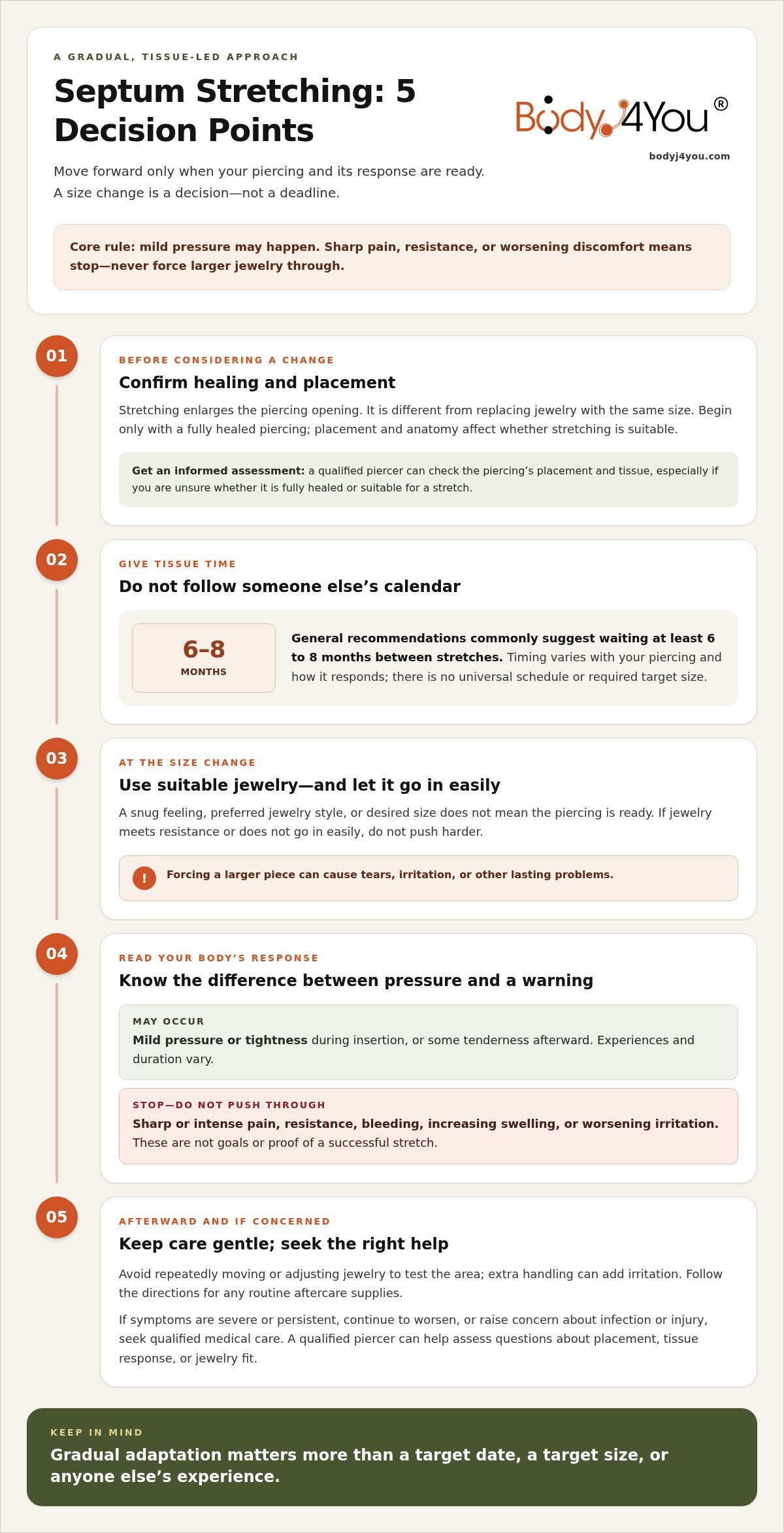
This guide explains how to tell mild tightness or tenderness from warning signs, why placement and anatomy matter, and how gradual progression and aftercare fit into the process. General recommendations commonly suggest waiting at least 6 to 8 months between stretches, but timing varies with your piercing and how it responds. There’s no need to aim for a particular size or follow someone else’s schedule. Understanding the sensations and risks can help you make a calm, informed choice about what feels right for you.
Key Takeaways
- Learn what to expect when stretching your septum, including how mild pressure differs from sharp or worsening pain.
- Understand why placement, anatomy, and tissue response make another person’s timeline a poor guide for your own.
- See why a fully healed piercing, suitable jewelry, and advice from a qualified piercer matter before changing sizes.
- Know how to approach routine care and which fit concerns or symptoms call for professional attention.
What to Expect When Stretching Your Septum: The Basics Before You Begin
If you’re researching what to expect when stretching your septum, begin with one basic rule: don’t push larger jewelry through a piercing that isn’t ready. Stretching gradually changes the size of a healed piercing, giving the tissue time to adapt between changes. The goal is comfortable, steady progress, not reaching a particular size quickly.
Septum stretching is the gradual enlargement of a fully healed piercing, allowing the tissue to adapt between size changes rather than forcing larger jewelry through it. That’s different from changing jewelry for a new look. The Stretching (body piercing) overview describes stretching as a body-modification practice and outlines methods and potential complications. Whether stretching is suitable for you depends on your piercing and anatomy.
What tissue is involved in a septum stretch?
Septum piercings don’t all pass through identical tissue or sit in exactly the same position. Placement and anatomy can affect whether a piercing is suitable for stretching and how it responds. A qualified piercer can assess the placement and tissue before you consider changing sizes. Don’t use another person’s results, or the appearance of their piercing, as a guide to what’s appropriate for yours.
How stretching differs from changing septum jewelry
A same-size jewelry change replaces the jewelry without intentionally enlarging the piercing. Stretching changes the opening itself, so it requires patience and attention to how the tissue responds. A snug feeling, a preferred jewelry style, or a desired size doesn’t mean the piercing is ready to move up. If jewelry doesn’t go in easily, don’t force it.
There isn’t one sensation or recovery timeline that applies to everyone. You may notice tightness or tenderness, or have a different experience. Placement, healing, and individual tissue response all matter. A qualified piercer can assess your piercing before you proceed, especially if you’re unsure whether it’s fully healed or positioned in a way that can accommodate a stretch.
Consider each size change a decision point, not an automatic step on a schedule. Your tissue’s condition matters more than a target date or the size someone else has reached. As you learn what to expect when stretching your septum, keep the essentials in mind: gradual adaptation, informed assessment, and no forcing.
How Septum Stretching Feels: Pressure, Tenderness, and Tissue Response
There’s no single sensation everyone should expect. Anatomy, piercing placement, tissue condition, and jewelry fit can all affect how a size change feels. Mild pressure or tightness may occur, and the area might feel tender afterward, but discomfort isn’t a measure of success. Don’t force a stretch to achieve a particular feeling or result.
What sensations might happen during and after a size change?
Gentle pressure may be noticeable as jewelry is inserted. Sharp or intense pain is different: stop rather than pushing the jewelry farther. Some tenderness or sensitivity afterward may occur, but the experience and duration vary. Bleeding, significant swelling, or pain aren’t required signs of a successful stretch. Equally, feeling little discomfort doesn’t prove the tissue is ready for another size change.
Mild pressure may be a sensation to monitor; sharp, intense, or worsening pain is a reason to stop, not push through. Treat your body’s response as useful information. If the jewelry meets resistance, don’t use more force or assume pain means the stretch is working. A qualified piercer can help assess concerns about placement, tissue response, or jewelry fit.
When pressure becomes a warning sign
Stop if you notice sharp pain, bleeding, increasing swelling, or irritation that’s getting worse. Avoid repeatedly moving or adjusting the jewelry to test the area, since extra handling can add irritation. If a size change causes a concerning reaction, don’t try to solve it by forcing the jewelry in or out. Seek qualified medical care for severe or persistent symptoms, or if you’re worried about possible infection or injury.
The Government of Western Australia’s Department of Health outlines potential physical risks of body art, including infection, scarring, and excessive bleeding. This broader guidance is a reminder to take warning signs seriously, not an indication that complications are inevitable. If symptoms feel urgent or continue to worsen, seek medical assessment rather than relying on general piercing advice.
When considering what to expect when stretching your septum, focus on the difference between mild pressure and signs of tissue distress. You don’t need to meet a schedule or prove your tolerance. For routine piercing-care supplies, BodyJ4You carries saline piercing aftercare spray. Use aftercare according to its directions, and seek medical advice for concerning symptoms.
Septum Stretching Myths: Why Pain and Fast Progress Are Not Goals
It’s easy to mistake discomfort for progress, especially when personal stories describe painful stretches or quick size changes. Pain isn’t a milestone, and someone else’s experience can’t set a reliable standard for your body. The Association of Professional Piercers’ safe stretching guidelines also emphasize patience and caution rather than forcing a piercing to accept a larger size.
Does septum stretching have to hurt?
No. Pain isn’t a required part of stretching and doesn’t show that a size change has worked. You may notice mild pressure, but experiences vary. Sharp, intense, or increasing pain is a reason to stop, not a sensation to push through. Bleeding and swelling aren’t goals either. If you’re unsure whether a sensation is ordinary tenderness or a warning sign, pause and seek qualified advice instead of relying on someone else’s account.
Is there one safe timeline for everyone?
No calendar can account for every difference in anatomy, piercing placement, healing, and tissue response. A piercing that seems ready on a certain date may not be ready for a larger size. A qualified piercer can assess your piercing and help you decide whether to wait. A target date or another person’s progress isn’t a substitute for that assessment.
- Myth: “If it hurts, the stretch is working.” Reality: Pain isn’t proof of progress. Stop if pain is sharp, intense, or worsening.
- Myth: “My jewelry feels snug, so I’m ready to size up.” Reality: A snug fit alone doesn’t establish that the tissue can safely accommodate a larger size.
- Myth: “I can follow someone else’s timeline.” Reality: Their anatomy and tissue response may differ from yours.
These myths can make stretching feel like a test of commitment or tolerance. It isn’t. When deciding what to expect when stretching your septum, pay more attention to comfort and tissue response than to speed, pressure to reach a goal, or comparisons online. If jewelry doesn’t fit without force, don’t try to make it fit. Waiting for an individual assessment is a sensible next step, not a setback.
How to Approach Septum Stretching Gradually and More Safely
A safer approach starts with assessment, not with inserting larger jewelry. Septum placement and anatomy vary, so advice online can’t establish whether your piercing is ready or which jewelry will fit. A qualified piercer can assess healing and placement, discuss suitability, and help you understand what to consider before a size change.
What to consider before attempting a size change
Consider stretching only when the piercing is fully healed and settled. If it’s irritated, tender, or otherwise unsettled, pause and seek qualified guidance rather than attempting a larger size. Discuss jewelry fit and material with a qualified piercing professional. Smooth, well-finished jewelry matters; professional guidance commonly favors appropriate non-porous materials such as implant-grade titanium or glass for stretching. The right choice depends on your piercing, so don’t rely on a product label alone.
- Assess first: Have a qualified piercer consider placement, healing, and individual anatomy.
- Choose carefully: Discuss jewelry fit, finish, and material before deciding on a size change.
- Let tissue guide timing: Don’t size up just because a date has arrived or a particular look is your goal.
A stretching schedule doesn’t need to become a deadline. Tissue response matters more than the calendar, and a snug-fitting piece of jewelry doesn’t show by itself that a larger size is appropriate. If jewelry meets resistance, stop. Don’t force it, repeatedly try to push it through, or use improvised tools. A taper shouldn’t be treated as jewelry to wear because its shape can place uneven pressure on tissue.
What to do if the stretch feels wrong
Stop if you feel sharp pain or meet resistance. Don’t keep trying in the hope that the tissue will give way. If there’s significant bleeding, severe pain, or symptoms that persist, seek medical advice. For non-urgent concerns about jewelry fit or piercing placement, a qualified piercer can assess the situation. When deciding what to expect when stretching your septum, patience and professional assessment are safer guides than force.
For general piercing-care and jewelry options, browse body jewelry and aftercare products. Choose items for your piercing’s specific needs rather than assuming a product intended for one type of piercing is suitable for another.
After a Septum Stretch: Care, Warning Signs, and Your Next Step
After a size change, keep care simple and follow aftercare advice from a qualified piercing professional. Wash your hands before touching the area. Avoid twisting, pulling, or repeatedly removing jewelry, especially if the tissue feels irritated. Unnecessary handling can add irritation rather than help you assess how the piercing is doing.
Basic care and jewelry awareness after stretching
Gentle cleaning with sterile saline may be part of routine piercing aftercare. Follow professional guidance and the product directions. Avoid harsh products such as alcohol or hydrogen peroxide, which can irritate healing tissue. Aftercare can support cleanliness, but it can’t make a forced or premature stretch safe. If jewelry feels uncomfortable or seems to press on the tissue, don’t keep adjusting it. A qualified piercer can assess concerns about fit.
BodyJ4You carries saline piercing aftercare spray for routine piercing care. Use an aftercare product only as directed, and don’t treat it as a solution for pain, injury, or a stretch that wasn’t ready.
When to seek help and what to learn next
Pay attention to changes rather than repeatedly testing the area. Worsening pain, persistent swelling, unusual discharge, or symptoms that don’t settle deserve attention. These signs don’t confirm a particular cause, but they shouldn’t be dismissed. A qualified piercer can advise on jewelry fit and routine piercing concerns. For severe, persistent, or concerning symptoms, seek assessment from an appropriate healthcare professional.
- Pause and get advice if jewelry feels like it’s pressing, shifting, or irritating the tissue.
- Seek medical assessment for severe or persistent pain, increasing swelling, unusual discharge, or other worrying changes.
- Avoid self-treatment with harsh products or repeated jewelry changes while the area is irritated.
If you’re considering another size change, take time to understand your piercing’s anatomy, placement, and aftercare needs before deciding what comes next. A qualified piercer can provide an individual assessment, while a healthcare professional is the right resource for symptoms that may need medical attention. A saline aftercare product can be part of gentle routine care, but let the tissue’s response, not a target size or timeline, guide your next step.
Make Your Next Step a Thoughtful One
Understanding what to expect when stretching your septum starts with recognizing that every piercing and tissue response is different. Mild pressure may occur, but pain isn’t a goal. Sharp or worsening discomfort means it’s time to stop. A qualified piercer can assess placement, healing, and jewelry fit before you consider a size change.
Afterward, keep care gentle: follow professional aftercare guidance, avoid unnecessary handling, and seek medical advice for severe or persistent symptoms. There’s no need to rush toward a target size. A patient, informed choice supports your comfort and self-expression.
BodyJ4You brings more than two decades of body jewelry and aftercare retail experience, with saline piercing aftercare spray among its offerings. For general piercing-care essentials, explore BodyJ4You’s piercing aftercare essentials.
Take your time, listen to your body, and choose the next step that feels right for you. Explore BodyJ4You’s saline piercing aftercare spray for a routine-care option.
Frequently Asked Questions
Does stretching your septum hurt?
Septum stretching shouldn’t be sharply painful, though you may feel mild pressure during a size change or tenderness afterward. Sensations vary with placement, anatomy, tissue condition, and jewelry fit, so pain isn’t a sign of success. Stop if insertion causes sharp or intense pain, bleeding, or increasing swelling. Don’t force jewelry through resistance, and seek medical advice for severe or persistent symptoms.
How long should you wait before stretching your septum again?
General guidance recommends waiting at least 6 to 8 months between size changes, but a calendar alone can’t confirm readiness. The tissue should be settled, and your anatomy and healing matter. Ask a qualified piercer to assess your piercing and advise on timing. If it’s irritated or still tender, wait and get guidance rather than sizing up to meet a planned date.
What should septum stretching feel like?
What to expect when stretching your septum differs from person to person. You might notice mild pressure as jewelry is inserted or tenderness afterward, but neither sensation follows a universal pattern or schedule. Sharp pain, increasing discomfort, bleeding, or swelling are reasons to stop, not signs to push through. If you feel resistance, don’t force the jewelry; seek advice from a qualified piercer.
Can you stretch a septum piercing at home?
Some people attempt stretching at home, but an in-person assessment by a qualified piercer is a prudent first step because placement, anatomy, and tissue condition vary. A professional can assess suitability and discuss jewelry fit. If jewelry meets resistance or causes sharp pain, stop rather than trying again with more force. Avoid improvised tools, and seek medical care for severe or persistent symptoms.
What happens if you stretch your septum too quickly?
Stretching too quickly can injure the piercing tissue. Possible complications include a tear, irritation, excessive scar tissue, or a blowout, where tissue is pushed out around the piercing. Injury may also increase the risk of infection. Don’t treat pain, bleeding, or swelling as proof of progress. Stop if you notice concerning symptoms, and seek medical advice for severe or persistent pain, bleeding, or swelling.
How do you care for a septum piercing after stretching?
Wash your hands before touching the area and follow aftercare guidance from a qualified piercing professional. Gentle cleaning with sterile saline may be recommended; follow the product directions and avoid harsh products such as alcohol or hydrogen peroxide. Don’t twist, pull, or repeatedly remove jewelry from irritated tissue. Aftercare can support routine cleanliness, but it can’t make a forced or premature stretch safe.


