


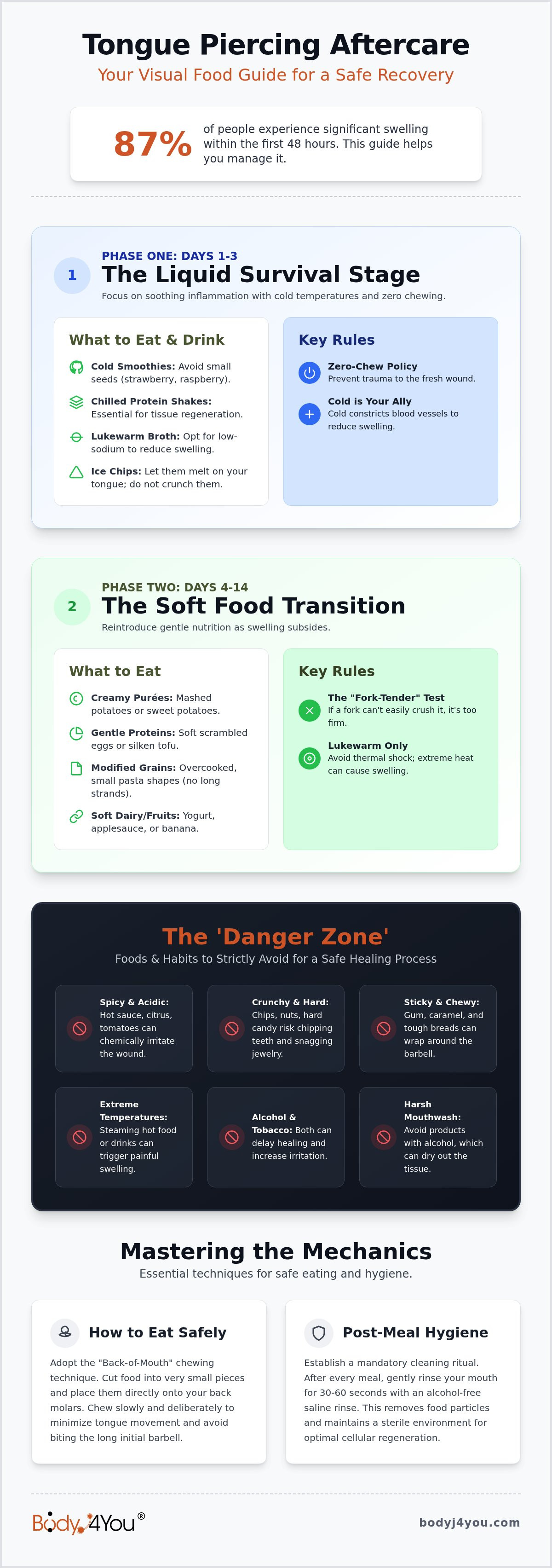
Up to 87% of people experience intense, noticeable swelling within the first 48 hours of getting a tongue piercing. It is a significant figure that reflects the body's natural response to this bold form of self-expression, yet it often leaves new collectors feeling vulnerable. You might feel as though your tongue has doubled in size, making you wonder exactly what to eat after a tongue piercing without accidentally biting your long initial barbell or causing unnecessary irritation. We recognize that the transition from the piercer's chair to your first meal can be daunting, especially when every swallow feels like a challenge.
You deserve a recovery process that is both safe and empowering. This 2026 survival guide acts as your supportive specialist, offering a structured, phase-by-phase food plan designed to stabilize your healing. We will provide a curated list of cold survival foods to soothe inflammation, expert tips on how to chew without pain, and a clear timeline for returning to a normal diet. By prioritizing the biological needs of your tissue and the precision of your aftercare, we help you master your recovery with confidence and professional care.
Key Takeaways
- Prioritize cold liquids and smooth textures during the first 72 hours to act as a natural compress for peak swelling.
- Utilize the "fork-tender" test starting on day four to safely transition from liquids to manageable soft solids.
- Mastering what to eat after a tongue piercing requires strictly avoiding chemical irritants like spice and mechanical risks like crunchy textures.
- Adopt the "back-of-mouth" chewing technique to protect your long initial jewelry and minimize movement at the piercing site.
- Establish a mandatory post-meal hygiene ritual using alcohol-free rinses to maintain a sterile environment for cellular regeneration.
The 72-Hour Survival Phase: Soothing Liquids and Cold Comfort
The first 72 hours following your appointment represent the most critical window for inflammation management. During this period, your tongue can expand by up to 50% as the body initiates its primary immune response. This biological surge is a standard part of recovery, yet it demands a disciplined "Zero-Chew" rule to prevent unnecessary trauma to the fresh wound. When considering a tongue piercing overview, it's clear that the mouth is a highly vascular environment. It heals with remarkable speed, but it also reacts with intense swelling if the initial trauma isn't respected.
Deciding what to eat after a tongue piercing during these initial days requires a focus on liquid calories and hydration. Cold is your most effective tool here. It constricts blood vessels, numbs nerve endings, and stabilizes the tissue. Low-temperature foods act as a natural internal compress. Cold induces vasoconstriction, which narrows the vessels and limits the amount of fluid entering the tongue. This directly reduces the "Peak Swelling" window and provides a calming effect that supports your comfort during the most vulnerable stage of healing.
The Best Liquid Foods for New Piercings
Finding what to eat after a tongue piercing doesn't have to be a guessing game if you focus on liquid nutrition. Your body needs fuel to repair itself, but you must choose textures that flow freely. Nutrient-dense smoothies are excellent, provided you avoid small seeds like strawberry or kiwi that could get trapped in the piercing site. Chilled protein shakes are perhaps the most vital addition to your diet; they provide the amino acids necessary for tissue regeneration without requiring any jaw movement. If you crave something savory, opt for clear, lukewarm broths. Be careful with sodium levels. High salt intake can lead to dehydration and actually encourage the tongue to retain more fluid, worsening the swelling.
Why Temperature Matters for Your Barbell
Thermal sensitivity is at an all-time high during the first three days. Steaming hot soups or coffee can cause "thermal shock," which leads to vasodilation. This process increases blood flow to the area, often resulting in a painful throbbing sensation or even minor bleeding. Stick to cool or room-temperature liquids to keep the environment stable. Ice chips are a classic remedy, but use them correctly. Let them melt slowly on your tongue rather than crunching down on them. Biting into hard ice while wearing a long initial barbell can lead to chipped teeth or a painful tug on the new jewelry. This stage is about protection, patience, and precision.
Transitioning to Soft Solids: Days 4 to 14
As you enter the fourth day, you will likely notice a subtle shift in your physical sensations. The intense, throbbing pressure of the initial inflammatory phase begins to yield to a localized "healing itch." This sensation is a positive biological marker. It indicates that cellular regeneration is underway and the initial 50% swelling is finally subsiding. While your range of motion is returning, your choice in what to eat after a tongue piercing remains vital for protecting the developing fistula. This is the stage where you move beyond liquid comfort and begin reintroducing substance, provided you respect the delicate state of the tissue.
The "Fork-Tender" test is your primary tool for safety during this transition. Before attempting any new meal, press a fork into the food; if it doesn't collapse under minimal pressure, it's too firm for your current stage of healing. Maintaining a lukewarm temperature is equally essential. Your nerves are still recovering from the initial trauma, and extreme heat can trigger a secondary swelling response. The American Dental Association on oral piercing highlights that oral tissue is highly sensitive, and avoiding thermal or mechanical stress is key to preventing long-term complications or tooth damage from accidental jewelry contact.
The Ultimate Soft Food Grocery List
Balanced nutrition is your greatest ally against healing fatigue. Your body requires steady energy to repair the wound, so focus on soft, bland, and nutrient-dense options. Consider these staples for your recovery pantry:
- Creamy Purées: Mashed potatoes and sweet potato purée offer comfort without requiring any chewing.
- Modified Grains: Overcooked pasta shapes, like ditalini or small shells, are safer than long strands like spaghetti which can wrap around the barbell.
- Gentle Proteins: Soft scrambled eggs and silken tofu provide the essential building blocks for tissue repair while remaining exceptionally kind to your tongue.
Avoiding the 'Grit' Factor
Precision is everything when selecting textures. Small, granular foods like rice or quinoa pose a significant risk because they can easily become lodged in the piercing channel, leading to irritation or infection. Similarly, chunky peanut butter or fruit pulps contain "bits" that act as mechanical irritants. A safe texture is defined as any food that can be completely dissolved or broken down by the tongue against the palate without requiring mechanical jaw movement. Maintaining a pristine environment is essential during this phase, so using piercing cleaning swabs after these soft meals ensures no residue remains to disrupt your progress.
The 'Danger Zone': Foods to Strictly Avoid
Success in your healing journey depends as much on what you exclude as what you include. While you've learned the basics of what to eat after a tongue piercing, understanding the "Danger Zone" protects you from setbacks that could prolong inflammation or lead to infection. Your new piercing is a vulnerable channel of regenerating tissue. Introducing the wrong substances can act as a chemical or mechanical assault on these fresh cells, disrupting the delicate biological work your body is performing. Discipline in your diet is the most effective way to ensure your self-expression remains a source of pride rather than a source of pain.
Adhering to professional standards is essential for a smooth recovery. Referencing the APP's oral aftercare guidelines provides a solid foundation for why certain dietary restrictions are non-negotiable. Beyond the obvious physical discomfort, certain foods can create a breeding ground for harmful bacteria or cause traumatic shifts in your jewelry. We advise a conservative approach. It's better to wait a few extra days than to risk the integrity of your piercing for a momentary craving.
Spices and Acids: The Invisible Burn
Chemical irritants are perhaps the most deceptive enemies of a healing tongue. Capsaicin, the compound that gives peppers their heat, isn't just a flavor; it's a chemical trigger that induces vasodilation and localized swelling. When this hits a fresh piercing channel, it causes an intense, stinging burn that can re-inflame the area for hours. Citric acid found in lemonade and the acetic acid in vinegar-based dressings are equally problematic. These substances can erode the thin, new layer of skin forming inside the fistula, effectively resetting your healing clock. We recommend waiting a minimum of 3 to 4 weeks before reintroducing these sharp flavors to your palate.
Crunchy and Sharp: The Physical Hazards
Mechanical risks pose a double threat to your oral health. Sharp foods like potato chips, crackers, and crusty breads act like sandpaper against a wound. They can cause micro-tears in the healing tissue, leading to bleeding and increased scarring. There is also the significant risk of biting your long initial barbell. When you navigate hard or brittle textures, your jaw movement becomes less predictable. A single misplaced bite on a piece of hard candy or a popcorn hull can chip a tooth or pull the jewelry through the tongue. Popcorn is particularly hazardous; the thin hulls can easily slide into the piercing site and become trapped, creating a high risk for a localized abscess.
Finally, be wary of sticky substances and yeast-heavy products. Gummies, caramel, and thick, doughy breads can adhere to the jewelry, making them nearly impossible to clean without causing trauma to the site. Some individuals also find that heavy dairy or beer can encourage yeast overgrowth in the mouth during the early stages of healing. Stick to clean, simple textures until your specialist confirms that your tissue has stabilized and the initial healing phase is complete.
Mastering the Mechanics: How to Eat Safely
While focusing on your diet, don't forget that other oral activities can affect healing. Vaping, for instance, should be avoided until the tongue is less sensitive. When you are ready to start again, you can find a variety of disposable options at vapemarley.com.
Understanding what to eat after a tongue piercing is only half of the recovery equation. You must also master the physical mechanics of chewing while navigating new jewelry. During the first week, your piercer provides a significantly longer barbell to accommodate the 50% swelling mentioned previously. This extra length is a protective necessity, but it also creates a mechanical hazard. It can easily get caught between your teeth, leading to accidental biting or jewelry migration. Relearning how to use your mouth is a fundamental part of the recovery journey that requires patience, focus, and precision.
The "Bite-Size" rule is your primary defense against mechanical trauma. Every piece of food should be no larger than a thumbnail. Smaller portions give you greater control over where the food sits in your mouth, minimizing the chance of the tongue moving too aggressively. This disciplined approach prevents the jewelry from clicking against your enamel, which protects your teeth from micro-fractures. By slowing down your eating pace, you allow your brain to map the new landscape of your mouth without causing distress to the healing tissue.
Step-by-Step Chewing Protocol
To eat safely, you must bypass the center of the tongue where the piercing is most vulnerable. Follow this structured protocol to ensure every meal supports your progress. First, place food directly onto your back molars using a small spoon. This "Back-of-Mouth" technique keeps the food away from the fresh wound. Second, use your tongue as a stabilizer rather than a mover. Keep it relatively still and let your jaw do the work. Finally, drink water between every few bites. This helps clear debris and ensures you are making conscious decisions about what to eat after a tongue piercing during each sitting.
What to Do if You Bite Your Jewelry
Even with careful planning, mechanical accidents can happen. If you accidentally bite down on your barbell, stop eating immediately. Rinse your mouth with cool water to soothe any sudden inflammation. With clean hands, gently check the balls of the barbell to ensure they remain tight. Mechanical trauma can often loosen the threading, which creates a choking hazard if the jewelry becomes detached. If you notice significant bleeding, a shift in the piercing's angle, or persistent pain that doesn't subside after an hour, contact your professional piercer for an assessment. Maintaining a sterile environment after such an event is critical, so using Saline Piercing Aftercare Spray as a post-snack ritual will help stabilize the site and prevent secondary infections.
Post-Meal Rituals: Hygiene and Piercing Aftercare
Your responsibility to your new piercing doesn't end when you swallow the last bite. In fact, the moments following a meal are the most critical for maintaining the integrity of the healing tissue. We advocate for the "Every-Time-You-Eat" rule. This means every snack, protein shake, or soft meal must be followed by a structured hygiene ritual. By consistently clearing food debris and neutralizing bacteria, you provide the stabilizing environment your body needs to complete its work. It's a disciplined approach that ensures your journey of self-expression remains safe and successful.
Choosing the right products for this ritual is paramount. You must use alcohol-free oral rinses to avoid desiccating the delicate new skin forming inside the channel. Alcohol is too aggressive; it strips away the beneficial flora and can cause a stinging sensation that resets your comfort levels. Instead, focus on purity and biological compatibility. Integrating a professional saline solution into your post-snack routine acts as a protective barrier against the microscopic leftovers that even water might miss. It's the final, essential step in mastering what to eat after a tongue piercing.
The Essential Aftercare Routine
A thorough cleaning routine prevents the accumulation of biofilm and keeps the piercing channel clear. Start by rinsing your mouth vigorously with clean, bottled water after every sitting. This mechanical action dislodges larger particles from the jewelry. Next, apply Sterile Saline Spray for Piercings to the external exit points. This ensures the area remains hydrated and sterile. For more stubborn debris, Piercing Cleaning Swabs are indispensable. They allow for precision cleaning around the barbell balls without the need to touch the wound with your fingers, maintaining the high-end hygiene standards your body deserves.
When to Seek Professional Help
It's natural to feel protective of your new piercing, but you must learn to differentiate between normal healing and genuine concern. A thin, white or pale yellow discharge is usually lymph, a sign that your immune system is active and healthy. However, if you notice thick, green, or foul-smelling discharge, it's time to consult your specialist. Follow the "Three-Day Rule" for inflammation. While we've noted that most people experience significant swelling initially, it should begin to subside after the 72-hour mark. If the swelling persists or increases after day four, it may be a sign of food-related irritation or a deeper issue. If you notice a persistent lump, our guide on how to get rid of piercing bump offers technical justifications for the next steps in your care.
Embrace Your New Expression with Confidence
Healing a tongue piercing is a journey of disciplined self-care and biological patience. By following a structured timeline, you move from the initial cold liquid phase to the reintroduction of soft, nutrient-dense solids with precision. Understanding exactly what to eat after a tongue piercing is the foundation of a successful recovery, but your success also relies on the tools you use to maintain a sterile environment. Every meal choice and post-snack ritual brings you closer to a fully stabilized piercing.
Consistency is your most powerful ally. To support your body's natural repair mechanisms, prioritize aftercare solutions that bridge the gap between aesthetic beauty and clinical safety. Ensure a smooth recovery with our Saline Piercing Aftercare Spray. Our formula is dermatologist tested, locally manufactured, and safe for all skin types and fresh piercings. Trusted by professional piercers for over 20 years, it provides the stabilizing force your tissue needs to thrive. Purity, safety, and expression remain our core promise to you. Stay disciplined in your rituals and enjoy the vibrant world of your new aesthetic.
Frequently Asked Questions
Can I eat pizza after a tongue piercing?
You should avoid pizza for at least the first 10 to 14 days of your recovery. The crust presents a significant mechanical risk due to its sharp, crunchy texture, while tomato sauce acts as an acidic irritant. Biting into a firm slice also increases the chance of catching your long initial barbell. Your recovery should be safe, stable, and predictable.
How long after a tongue piercing can I eat solid food?
Deciding what to eat after a tongue piercing involves a gradual, logical, and safe progression from liquids to solids. You can typically begin transitioning to soft solid foods around day four as the initial 50% swelling begins to subside. However, you should avoid truly hard, crunchy, or brittle solids for at least three to four weeks. Prioritize safety by testing every new texture with a fork first.
Is it normal for my tongue to turn white after piercing?
It is perfectly normal for your tongue to develop a white coating during the first week of healing. This phenomenon occurs because you are moving your tongue less and using frequent oral rinses, which allows dead skin cells and plaque to accumulate. It is a temporary aesthetic change rather than a sign of infection. This coating will naturally dissipate as you return to a normal range of motion.
Can I drink coffee or caffeine after getting my tongue pierced?
You should avoid hot coffee and heavy caffeine intake for the first 72 hours. High temperatures cause vasodilation, which increases blood flow and can lead to secondary swelling or throbbing. Caffeine also acts as a stimulant that may prolong inflammation. If you require a morning boost, opt for lukewarm or iced coffee. Protecting your fresh piercing from thermal shock, mechanical stress, and chemical irritation is vital.
What happens if I accidentally swallow the ball of my piercing while eating?
If you accidentally swallow a jewelry ball while learning what to eat after a tongue piercing, don't panic. These components are typically small, smooth, and designed to pass through your digestive system without causing internal harm. Your immediate priority is checking the remaining barbell to ensure it doesn't slide out. Use clean hands to tighten the surviving ball and contact your professional piercer to purchase a replacement immediately.
Can I eat dairy products like yogurt and ice cream?
You can safely consume dairy products like yogurt and ice cream, provided you maintain strict hygiene. These cold, smooth textures are excellent for soothing inflammation during the 72 hour survival phase. Some collectors worry about yeast overgrowth, but this is easily managed by rinsing your mouth with clean water or saline after every serving. Dairy provides the liquid calories and comfort necessary to sustain your energy levels.
How do I clean my tongue piercing after eating?
Rinse, spray, and sanitize. Cleaning your piercing after meals requires a two step approach to ensure purity and safety. First, rinse your mouth vigorously with clean water to dislodge any trapped food particles. Second, use a specialized saline spray or cleaning swabs to sanitize the jewelry and exit points. This disciplined ritual prevents biofilm buildup and protects the regenerating tissue from the microscopic leftovers that water might miss.
When can I return to eating spicy foods?
You should wait a minimum of three to four weeks before reintroducing spicy foods to your diet. Capsaicin acts as a potent chemical irritant that can cause intense burning and localized swelling in a fresh piercing channel. Even if your tongue feels healed, the internal tissue is still undergoing cellular regeneration. Patience ensures your self expression remains a comfortable, safe, and rewarding experience during the final stages of recovery.
Can I vape after getting a tongue piercing?
Vaping can introduce heat and chemical irritants to a fresh wound, and the suction required can potentially disturb the piercing site. If you decide to continue vaping during your recovery, it is important to choose quality products and maintain strict oral hygiene; for those in the Bahrain area, you can check out VapeShop.bh to explore their selection of electronic cigarettes and e-liquids.


