

The most affordable kit in your cart might actually be the most expensive mistake you make for your lobes. When you stand at the beginning of your journey, the debate between acrylic vs steel stretching kits is about much more than price; it's about the biological integrity of your skin. You want the style, the self-expression, and the empowerment that comes with a perfectly healed gauge. It is natural to feel a sense of hesitation when faced with the fear of painful blowouts, stubborn infections, or the persistent "gauge funk" that often accompanies improper material choices.
We believe in a journey defined by safety, clarity, and results. Your body is a delicate canvas, and choosing the right tools is the first step toward successful aesthetic refinement. This guide provides a definitive comparison of acrylic vs steel stretching kits to ensure you avoid common pitfalls and protect your long-term health. We will examine material porosity, sterilization standards, and the essential aftercare protocols needed for a seamless transition. You will gain the technical insight and the professional confidence required to reach your goal gauge while maintaining the health and purity of your skin.
Key Takeaways
- Understand the fundamental material differences in acrylic vs steel stretching kits to prevent common complications like blowouts or bacterial infections.
- Learn why non-porous surgical steel is the clinical standard for fresh stretches, providing a smooth, sterilizable surface that protects the healing channel.
- Discover the appropriate time to transition to lightweight acrylic kits for maximum comfort and creative self-expression in fully mature lobes.
- Identify the essential role of high-quality aftercare, such as saline sprays and botanical oils, in maintaining skin integrity throughout your journey.
- Utilize a professional 3-point checklist to confidently select the kit that aligns with your specific sensitivity, lifestyle, and aesthetic goals.
The Great Debate: Acrylic vs. Steel Stretching Kits
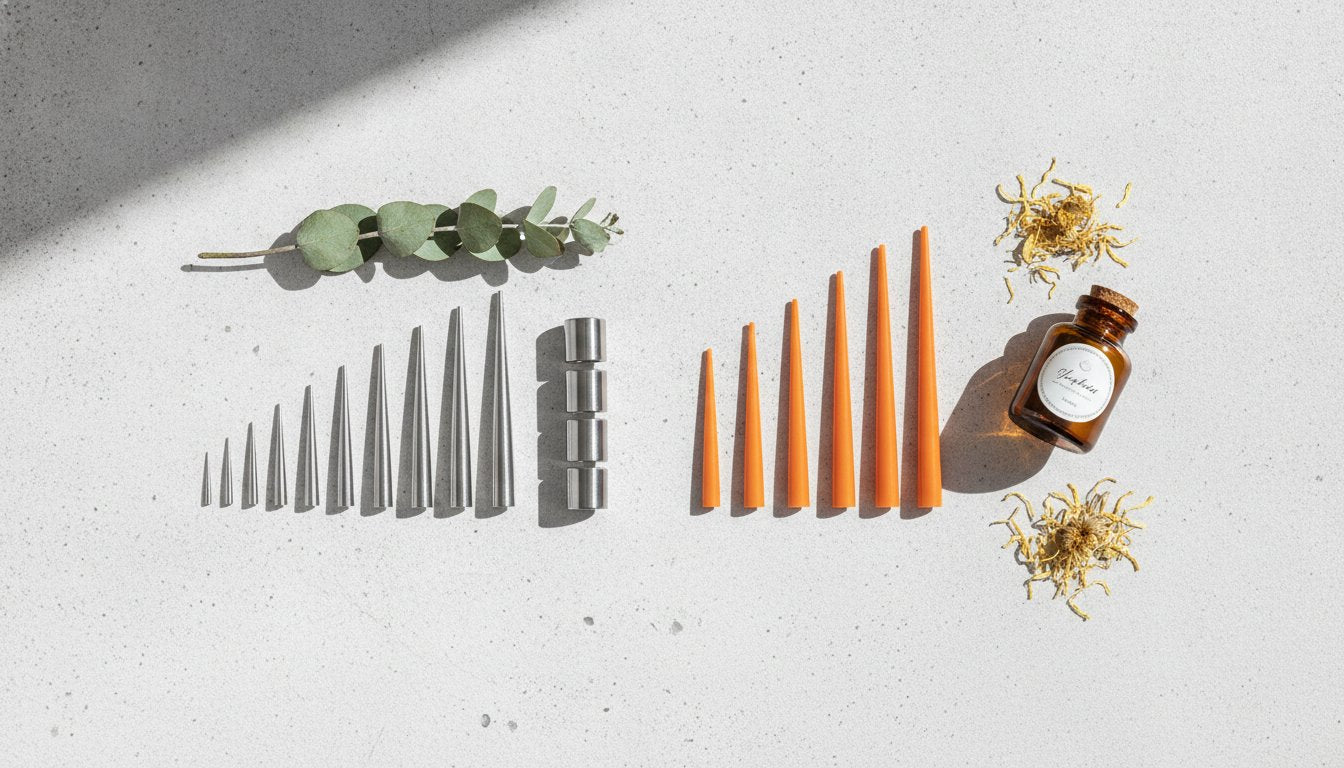
Starting your ear stretching journey is a transformative experience. It is a path toward self-expression that requires both patience and precision. A standard stretching kit serves as your toolkit for this evolution; it typically contains graduated tapers to gently expand the lobe, followed by plugs or tunnels to secure the new gauge. The central conflict for most beginners revolves around the choice between acrylic vs steel stretching kits. Each material offers distinct physical properties that interact with your skin in unique ways.
Our philosophy is built upon three non-negotiable standards: Safe, High-Quality, and Empowering. We believe that your aesthetic goals should never compromise your biological health. To ensure a successful journey, we recommend following our "Rule of Three" for kit selection: Material, Size, and Aftercare. By evaluating these three factors, you can avoid the common pitfalls of infection or tissue damage. Understanding the technical properties of various Body Jewelry Materials is essential for anyone serious about long-term ear health and comfort. Selecting between acrylic vs steel stretching kits is the first step in establishing a routine that respects your body’s natural healing process.
What is an Acrylic Stretching Kit?
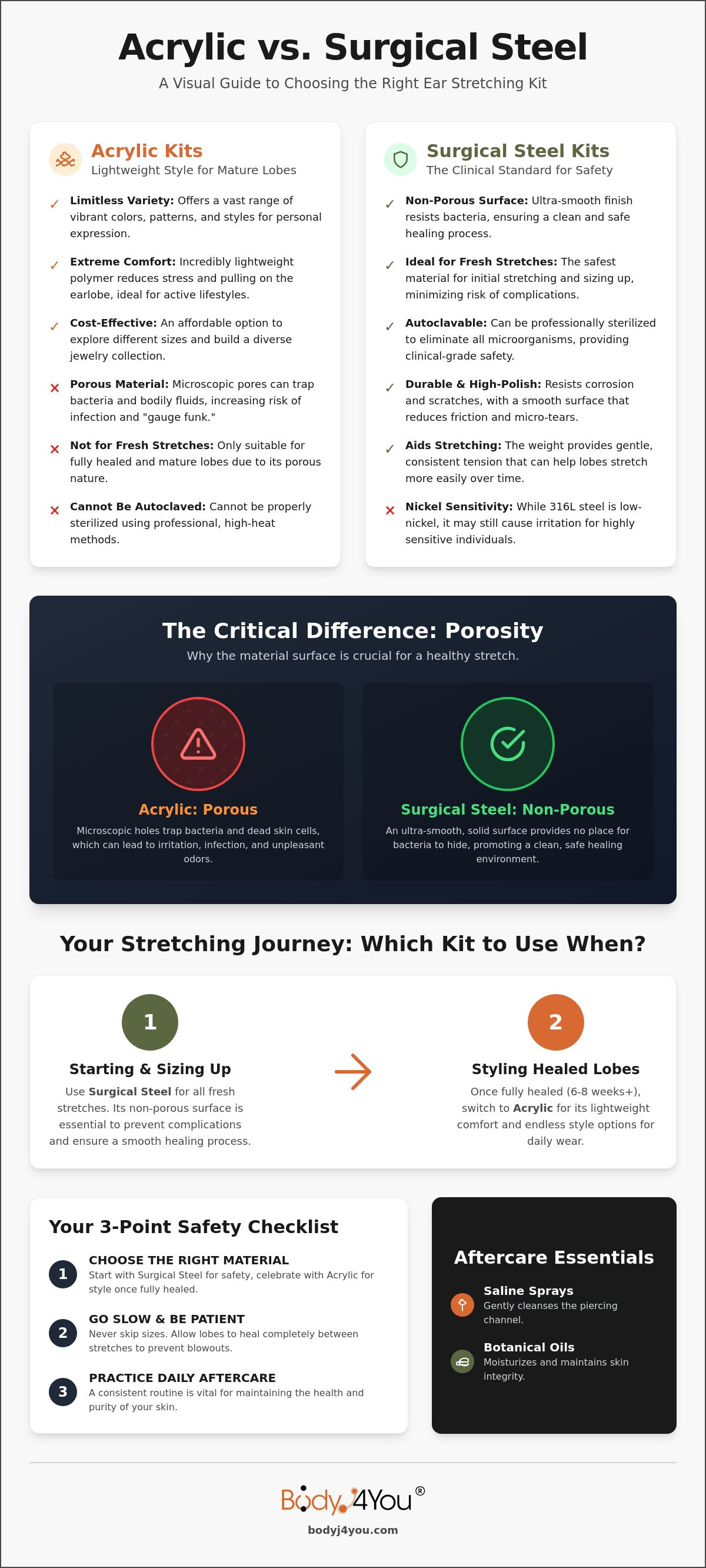
An Acrylic Ear Stretching Kit is composed of high-quality, lightweight polymers. These kits are celebrated for their incredible aesthetic range. They offer vibrant colors, intricate patterns, and even glow-in-the-dark options that allow for immediate personal flair. Beyond the visual appeal, acrylic is a functional, non-metallic alternative. It is an excellent choice for individuals with severe nickel sensitivities who find traditional metals irritating. Because the material is so light, it places minimal stress on the earlobe during daily wear. This makes it a popular selection for those who maintain an active lifestyle or prefer a "barely-there" feel for their jewelry.
What is a Surgical Steel Stretching Kit?
The Surgical Steel Taper and Plug Kit is often considered the clinical standard for durability and safety. These sets are crafted from 316L Surgical Steel; a material prized for its strength and resistance to corrosion. One of the primary benefits of steel is its high-polish finish. This ultra-smooth surface significantly minimizes friction during the stretching process, which helps prevent micro-tears in the delicate skin of the lobe. Weight also plays a vital role here. Steel is naturally heavier than polymer alternatives. This added mass provides a subtle, constant tension that can help your ears "dead stretch" naturally over time, making future transitions smoother and more comfortable for your skin.
Acrylic Stretching Kits: Lightweight Style for Mature Lobes
The visual appeal of an Acrylic Ear Stretching Kit is undeniable. For many, this material represents the gateway to a personalized aesthetic. It offers a spectrum of colors, patterns, and finishes that metal simply cannot replicate. While the debate over acrylic vs steel stretching kits often focuses on clinical safety, it's vital to acknowledge the role of self-expression in your journey. Acrylic provides a cost-effective path for those exploring body modification, allowing you to curate a diverse collection of jewelry without a significant financial commitment. We believe your journey should be as vibrant as it is safe.
Style should never be a burden. One of the most practical advantages of acrylic is its low density. For individuals with an active lifestyle, the weight of jewelry matters. Heavy materials can cause unwanted pulling or discomfort during physical activity or sleep. Acrylic remains the preferred choice for those seeking a "barely-there" sensation. However, as your Supportive Specialist, we must emphasize a critical distinction: acrylic is best suited for mature, fully healed lobes. It is a celebratory material rather than a foundational one. When you are ready to showcase your progress, our Acrylic Ear Stretching Kit collection offers the smooth, high-quality finish your skin deserves.
The Benefits of Going Acrylic
- Cost-Effective: Perfect for beginners who want to test different sizes and styles before investing in premium metals.
- Extreme Comfort: The lightweight polymer reduces the "pull" on the earlobe, preventing irritation during long days or intense workouts.
- Limitless Variety: From neon hues to classic black, acrylic allows you to match your jewelry to your evolving personal refinement.
Important Considerations for Plastic Jewelry
While acrylic offers freedom, it requires a disciplined approach to hygiene. This material is naturally porous. On a microscopic level, it contains tiny pits that can trap dead skin cells and moisture. If left unmanaged, this leads to the infamous "gauge funk," a common concern for many in the community. To maintain purity and skin health, frequent cleaning is non-negotiable. We recommend using a Saline Aftercare Spray daily to flush out debris and keep the area pristine. This proactive care ensures that your self-expression remains a source of pride, not a health risk.
Temperature sensitivity is another technical factor to respect. Unlike surgical steel, acrylic cannot withstand the extreme heat of an autoclave. It is also susceptible to cracking if exposed to harsh chemicals or extreme weather. When evaluating acrylic vs steel stretching kits, remember that the Florida Department of Health Piercing Regulations often highlight the importance of low-porosity materials for initial procedures. For this reason, we suggest using our acrylic options as your "goal jewelry" once your lobes have stabilized. By choosing the right material for the right stage of your journey, you empower yourself to achieve a look that is both striking and sustainable.
Surgical Steel Kits: The Clinical Standard for Safety
While acrylic offers a playground of color for fully healed lobes, the Surgical Steel Taper and Plug Kit represents the clinical precision required for a healthy foundation. Choosing between acrylic vs steel stretching kits often comes down to where you are in your journey. For those in the active stretching phase, steel is the gold standard. It's non-porous, meaning its surface remains completely solid and smooth even on a microscopic level. This density resists bacterial adhesion, which is the primary cause of infection, irritation, and the "gauge funk" that many beginners fear.
By adhering to APP material standards, we ensure that every piece of steel jewelry supports your body’s natural healing channel. Steel is safe, reliable, and professional. Unlike porous alternatives, steel can be thoroughly sanitized with medical-grade cleaners or autoclaved without deforming. This longevity makes it a sustainable investment; a single kit can be sanitized and reused for years as you progress through your stretching timeline. It is the choice of the disciplined stretcher who prioritizes long-term wellness over fleeting trends.
Why Professional Piercers Prefer Steel
Professional piercers consistently recommend 316L surgical steel due to its superior biocompatibility. It's designed to be well-tolerated by the vast majority of skin types, significantly reducing the risk of allergic reactions or sensitivity. The mirror-finish polish isn't just for aesthetics. This ultra-smooth surface provides a slick interface that reduces friction and prevents micro-tears during the insertion of a new gauge. Additionally, the natural weight of steel plugs performs a vital function. The subtle, constant pull of the metal helps the lobe tissue prepare for the next size up naturally, a process often called "dead stretching," which makes your future transitions much more comfortable.
Maximizing Steel Safety
To ensure a seamless experience with your steel kit, proper technique is essential. Never attempt to insert a steel taper into a dry lobe. We recommend using Jojoba Oil to provide a frictionless glide. This botanical lubrication protects the skin barrier and ensures the taper moves smoothly through the tissue without resistance. High-quality steel should always have a consistent, reflective finish. If a piece of jewelry feels unusually light or has a dull appearance, it may be a "mystery metal" with high nickel content. Always verify that your kit specifies 316L Surgical Steel to maintain the integrity of your skin. Finally, pay attention to the O-ring fit. These small silicone rings keep your plugs centered and stable, preventing the jewelry from sliding and causing uneven pressure on your healing tissue.
The Critical Comparison: Porosity, Bacteria, and Healing
Under a microscope, the surface of your jewelry tells a story of either protection or vulnerability. When evaluating acrylic vs steel stretching kits, you must consider how these materials interact with the "healing channel" of your earlobe. During the first 48 hours of a new stretch, your skin is in a state of high reactivity. Steel offers a glassy, impervious barrier that allows the tissue to slide and stabilize. Acrylic, by contrast, contains microscopic indentations that can disrupt this process. If the skin attempts to heal against a porous surface, it can result in minor adhesions that make jewelry rotation painful and difficult.
As your Wise Guardian, we must mention the "Point of No Return." For most individuals, this occurs between 2g and 00g. Once you pass this threshold, the lobe may never fully shrink back to a standard piercing size. To ensure you don't rush this permanent decision or skip essential steps, always consult our Ear Gauge Size Charts. This reference helps you visualize the physical jump between sizes; it's a vital tool for preventing the micro-tears and blowouts that lead to permanent scarring. Your journey is a marathon, not a sprint.
Bacteria and the Porosity Problem
Microscopic pits in acrylic act as reservoirs for sebum, sweat, and shed skin cells. This organic buildup is the primary cause of the "gauge funk" and localized inflammation. Steel’s non-porous surface makes it significantly easier to maintain a sterile environment during the vulnerable days following a stretch. For daily hygiene, using Piercing Cleaning Swabs allows you to reach behind the jewelry and clear away debris without removing the plug. This method protects the healing channel from unnecessary trauma while ensuring bacteria cannot take hold in the microscopic crevices of your jewelry.
Weight and Lobe Health
Weight is a functional tool for progress. The mass of a steel plug provides a gentle, consistent tension that encourages the skin to expand naturally over time. This "dead stretching" advantage makes the transition to your next size much simpler and less invasive. Acrylic tapers are often so light that they move excessively within the lobe during daily activities. This constant shifting can cause friction and delay the closure of the healing channel. A balanced approach involves using steel for the actual stretching phase and switching to acrylic only once the tissue is calm, mature, and ready for lightweight style.
Ready to begin your journey with the right foundation? Explore our professional Surgical Steel Taper and Plug Kit options to give your lobes the clinical precision they deserve.
Making Your Choice: Which Kit is Right for You?
Deciding between acrylic vs steel stretching kits is a pivotal moment in your aesthetic journey. We understand the conflict. You desire the vibrant, lightweight self-expression of acrylic, yet you respect the clinical safety of surgical steel. As your Supportive Specialist, we recommend a phased approach. Start with the precision of steel to establish a healthy foundation. Once your lobes have reached a state of mature refinement, transition to acrylic for comfort and style. This strategy ensures you never have to choose between your health and your identity.
To help you self-diagnose your current needs, consider this three-point checklist. First, identify your healing stage: are you making a fresh jump or maintaining a stable size? Second, assess your skin sensitivity: do you have a history of reacting to nickel or porous materials? Third, evaluate your daily lifestyle: are you looking for the "dead stretching" weight of metal or the feather-light feel of polymer? Answering these questions provides the clarity needed to proceed with confidence. Your body is a unique canvas, and your tools should reflect that individuality.
Choose Surgical Steel If...
- You are a total beginner: Steel provides the non-porous, glassy surface necessary for your very first stretch.
- You have sensitive skin: Our 316L surgical steel is specifically engineered to be biocompatible and hypoallergenic for most skin types.
- You prioritize longevity: A single steel kit offers the durability to guide you through your entire journey to 00g and beyond.
Choose Acrylic If...
- Your lobes are fully healed: Use acrylic as a lightweight reward for your patience and discipline once the healing channel is mature.
- You are on a strict budget: Acrylic is an accessible option for those committed to a rigorous Saline Spray cleaning routine.
- You crave variety: Experiment with neon colors, patterns, and glow finishes that metal cannot achieve.
The Ultimate Aftercare Duo
Material choice is only half of the equation. To maintain the elasticity and purity of your skin, the right botanical support is essential. Jojoba Oil acts as a vital lubricant for both materials, mimicking your skin's natural sebum to prevent dryness and cracking during a stretch. For those wearing acrylic, our Gauges Balm provides a protective barrier that helps mitigate the "porosity problem," sealing the jewelry surface and soothing the lobe. By combining high-quality hardware with dermatological-grade aftercare, you ensure a journey that is safe, comfortable, and stylish. We are here to support every millimeter of your progress.
Your evolution deserves the best tools available. Explore BodyJ4You Stretching Kits and Aftercare Essentials to find the perfect match for your next gauge.
Empower Your Aesthetic Evolution
Your journey toward self-expression is a profound testament to your personal growth. By mastering the technical nuances of acrylic vs steel stretching kits, you've equipped yourself with the knowledge to protect your skin's biological integrity. Remember that surgical steel provides the clinical foundation for fresh stretches. Acrylic offers a lightweight, stylish reward for your patience. True success lies in the balance of high-quality materials and disciplined aftercare. Your evolution starts here.
With over 20 years of industry expertise, we provide comprehensive kits tailored for every stage of your transformation. Our USA-made aftercare solutions ensure your lobes remain healthy, vibrant, and ready for the next gauge. You don't have to navigate this path alone. We act as your mentor and supportive specialist. Shop BodyJ4You Stretching Kits: Safe, Stylish, and Expert-Approved. Patience is your power. Step forward with confidence and embrace the version of yourself you've been waiting to reveal.
Frequently Asked Questions
Is acrylic or steel better for a first-time ear stretch?
Surgical steel is the superior choice for a first-time ear stretch due to its non-porous surface and clinical precision. It provides a stable, sterile environment that protects the fresh healing channel from bacterial intrusion. While the debate between acrylic vs steel stretching kits often highlights the affordability of polymers, steel remains the professional standard for foundational safety and long-term lobe health.
Can I leave acrylic tapers in my ears overnight?
You shouldn't leave acrylic tapers in your ears overnight or use them as long-term jewelry. Tapers are designed as tools to guide the stretch, not as balanced plugs for extended wear. Their uneven weight distribution can put localized pressure on your lobe, potentially causing thinning or irritation. Transition immediately to a balanced plug or tunnel once the stretch is complete to maintain the symmetry of your tissue.
Why do my ears smell when I use acrylic stretching kits?
The odor associated with acrylic stretching kits is caused by the material's microscopic porosity trapping dead skin cells and sebum. This biological buildup creates a breeding ground for bacteria, leading to the common "gauge funk." Regular maintenance is essential when wearing porous materials. Frequent cleaning with a saline spray helps flush out the debris that accumulates in these tiny surface pits, keeping your lobes fresh and healthy.
How do I clean my stretching kit properly?
Clean your stretching kit using mild, fragrance-free soap and warm water before and after every use. For surgical steel, you can utilize more intensive sterilization methods; however, acrylic requires a gentler approach to prevent the material from cracking or degrading. We recommend a daily routine using Saline Piercing Aftercare Spray and Piercing Cleaning Swabs. This protocol ensures you remove all biological residue without compromising the integrity of your jewelry.
Is surgical steel really nickel-free?
Surgical steel is not technically nickel-free, but it's engineered to be highly biocompatible and safe for most skin types. The 316L grade used in our kits binds nickel within the metal's molecular structure so it doesn't leach into your skin. Most individuals with minor sensitivities find it perfectly comfortable. If you have a severe, documented nickel allergy, you may need to wait until your lobes are fully healed before exploring non-metallic alternatives.
Can I use jojoba oil with an acrylic stretching kit?
You can and should use jojoba oil with an acrylic stretching kit to maintain essential skin elasticity. This botanical oil mimics your skin's natural sebum, providing a protective barrier and necessary moisture for the lobe tissue. It acts as a vital lubricant during the insertion process, reducing friction against the polymer surface. Applying a small amount daily helps keep the tissue supple and prevents the dryness that leads to micro-tears.
How long should I wait between stretches regardless of material?
You should wait a minimum of four to six weeks between stretches to allow the tissue to generate new skin cells. Larger gauges often require even more time to ensure the lobe remains thick and healthy. Rushing this timeline can lead to blowouts and permanent scarring, regardless of your material choice. Listen to your body; if you feel resistance or discomfort, your lobes aren't ready for the next step in your evolution.
What happens if my ear reacts poorly to acrylic?
If your ear reacts poorly to acrylic, remove the jewelry immediately and switch to a non-porous material like surgical steel. Symptoms typically include persistent redness, swelling, or an itchy sensation around the gauge. Clean the area thoroughly with saline spray to soothe the irritation and support the skin's recovery. This reaction is a clear signal that your healing channel requires a more stable, clinical environment to maintain its biological integrity.


