

Your skin is a living canvas, not a testing ground for inferior metals. It's natural to feel a mix of excitement and anxiety when shopping for belly rings, especially when you're balancing the desire for a new look with the very real need for biological safety. You deserve jewelry that honors your body's integrity while elevating your personal aesthetic.
We understand that the fear of nickel allergies or the confusion over gauge sizes can turn an empowering purchase into a stressful ordeal. This comprehensive guide is designed to replace that uncertainty with professional clarity and nurturing care. You'll learn how to identify high-quality materials, select the right bar length for your anatomy, and maintain a vibrant, healthy piercing for a lifetime.
We'll explore the latest 2026 trends like floating navel designs, explain the technical standards for surgical steel, and provide a disciplined aftercare roadmap using saline sprays and healing oils. From safety to style, we're here to guide your journey toward confident self-expression.
Key Takeaways
- Identify your specific navel anatomy to choose the placement that ensures long-term jewelry stability and physical comfort.
- Prioritize biological safety by selecting hypoallergenic materials like 316L surgical steel for your belly rings to prevent irritation.
- Balance form and function by learning when to wear foundational curved barbells versus more decorative dangle designs.
- Protect your healing piercing with a disciplined aftercare routine centered on sterile saline spray and the "LITHA" principle.
- Leverage twenty years of professional experience to make informed choices that support both your health and your aesthetic vision.
Anatomy of a Navel Piercing: Understanding Your Placement
Your navel is a unique biological landscape. It's more than just a site for jewelry; it's a technical interaction between your skin's elasticity and the jewelry's weight. While the history of navel piercing showcases its cultural evolution, the modern success of your piercing depends on finding the "sweet spot." This is the precise ridge of tissue at the top of the navel that provides maximum stability. If the jewelry is placed too shallow, it risks rejection. If it's too deep, the pressure can cause chronic irritation. Understanding these anatomical nuances ensures your belly rings remain a permanent part of your self-expression.
Standard Navel vs. Floating Navel
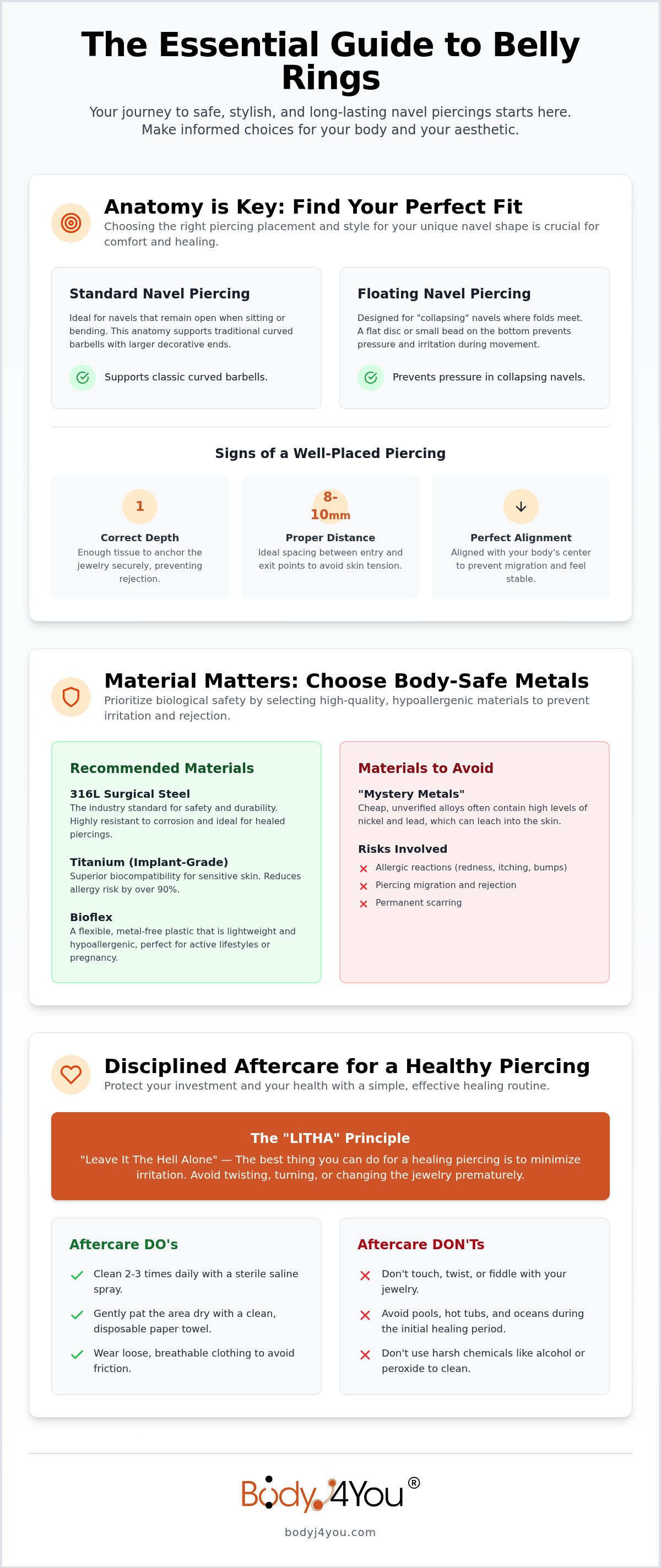
Not all navels are shaped the same. A standard navel remains open when you sit or bend. However, many people have a "collapsing" navel, where the top and bottom folds meet during movement. If you have this anatomy, a traditional barbell with a large bottom bead will be pushed upward constantly. This pressure leads to soreness, redness, and potential scarring. A floating navel piercing solves this by using a flat disc or a tiny bead on the bottom. This allows the jewelry to sit comfortably inside the fold without being displaced. Choosing the right bottom bead size is a balance of aesthetics, comfort, and biological compatibility.
Signs of a Well-Placed Navel Piercing
A successful piercing requires three core elements: depth, distance, and direction. Your piercer should ensure there's enough tissue behind the bar to anchor it securely. Ideally, the entry and exit points should be about 8mm to 10mm apart. This spacing prevents the skin from being stretched too thin over the bar. Piercing migration is the body's natural movement of jewelry toward the skin's surface. To avoid this, your jewelry must align perfectly with your body's natural center. A well-placed piercing feels integrated, stable, and secure.
Daily life puts stress on your jewelry. High-waisted jeans, seatbelts, and even your sleeping position apply localized pressure. This is why a professional assessment is vital before you graduate to heavy or oversized dangles. These styles add weight and leverage that can irritate a healing sweet spot. Start with lightweight, high-quality belly rings to establish a healthy foundation. Once your tissue has matured and strengthened, you can transition to more ornate pieces with confidence. To create a perfectly smooth canvas for your midriff jewelry, you might also consider professional electrolysis hair removal Petaluma to achieve a clean, permanent look.
Material Matters: Choosing Safe Metals for Your Belly Ring
Selecting belly rings requires a disciplined focus on biological compatibility. Your body is a temple, and the jewelry you choose should act as a protective adornment rather than a source of irritation. We adhere to the Rule of Three for jewelry safety: non-porous, hypoallergenic, and durable. These three pillars ensure that your skin remains healthy while your style remains vibrant. When you prioritize high-quality materials, you significantly reduce the risk of chronic inflammation, piercing bumps, and jewelry rejection.
The dangers of "mystery metals" cannot be overstated. Cheap, unverified jewelry often hides high concentrations of nickel and lead behind a shiny, deceptive exterior. These toxins leach into your system over time, triggering a defensive immune response. This reaction is what causes the body to push the jewelry toward the surface, resulting in permanent scarring. By choosing verified materials, you're not just buying an accessory; you're acting as a wise guardian of your own physical wellness.
Surgical Steel: The Gold Standard for Durability
316L surgical stainless steel remains the industry benchmark for affordable safety. This specific grade is prized for its extreme resistance to corrosion and its ability to withstand constant interaction with body fluids. It's a stabilizing force for your piercing. At BodyJ4You, we've spent over twenty years sourcing only high-grade metals to ensure every piece meets strict dermatological standards. Our commitment to quality control means we vet every batch for purity and integrity. This material is particularly effective for fully healed piercings or for those utilizing a Surgical Steel Taper and Plug Kit during initial stretching phases. While following professional piercing aftercare is vital, starting with the right metal provides the necessary foundation for a lifetime of healthy wear.
Hypoallergenic Alternatives for Sensitive Skin
Some individuals require an even higher level of biocompatibility due to extreme skin sensitivity. If you have a history of metal allergies, titanium or Bioflex are superior, high-end options. Titanium is implant-grade and can reduce the chances of an allergic reaction by over 90 percent. These materials are often paired with internal threading, where the screw is located on the bead rather than the bar. This design ensures a smoother insertion experience that doesn't scrape or irritate the delicate fistula. You can learn more about internal threaded labret studs to see how this precision engineering protects your skin's integrity. Precision, purity, and protection are the hallmarks of a truly sophisticated jewelry choice.
Belly Ring Styles: From Classic Barbells to Dangle Designs
The curved barbell is the essential foundation for any navel piercing. It follows the natural contour of your anatomy, ensuring even weight distribution and minimal friction against the delicate fistula. For those seeking variety, belly rings come in several specialized configurations to suit different lifestyles. Captive bead rings (CBRs) offer a versatile and secure option for active individuals who need jewelry that won't snag during physical movement. Reverse or top-down jewelry is a modern solution designed specifically for the upper rim of the navel, creating a unique visual flow that emphasizes the top gem.
Dangle belly rings add a touch of flair for special occasions without sacrificing your overall comfort. While these designs are visually striking, they require a disciplined approach to wear. The added weight and leverage of a dangle can pull on the skin, which is why we recommend saving these statement pieces for fully healed piercings. By alternating between foundational barbells and decorative dangles, you protect the long-term health of your tissue while celebrating your personal style.
Finding Your Aesthetic: Minimalist to Statement Pieces
Your choice of jewelry reflects your journey toward self-expression. Classic solitaire gems offer a timeless, clean, and wellness-oriented look that complements any attire. These minimalist pieces prioritize comfort and are ideal for daily wear. In contrast, intricate dangles allow for deep personal expression, perfect for night-out aesthetics. Just as a professional blowout at Hair Bar NYC can elevate your look for a special event, these statement pieces provide the final touch to your overall style. As your supportive specialist, our tip is simple: listen to your body. If a heavy design causes even slight discomfort, return to a lightweight barbell to allow the tissue to rest and recover.
Precision in sizing is a non-negotiable standard for physical safety. The industry standard for navel piercings is 14G. This thickness provides the necessary stability to prevent the "cheese-cutter effect," where a thin wire slowly migrates through the skin due to localized pressure. Measuring your bar length is equally critical. Most people find a perfect fit with 3/8 inch (10mm), though those with thicker tissue may require 7/16 inch (11mm). A bar that is too short will pinch the skin, while one that is too long will snag on clothing. You can check our ear gauge size chart for a general understanding of gauge measurements and how they relate to your specific anatomy. Finding the right fit is the final step in mastering the art of healthy adornment.
Healing and Maintenance: The BodyJ4You Guide to Aftercare
Mastering the art of wearing belly rings extends beyond the initial purchase. It requires a disciplined commitment to a healthy healing environment. Your body is a remarkable self-healing organism; your role is to provide the stability, purity, and precision it needs to thrive. The golden rule of professional aftercare is "LITHA," which stands for Leave It The Hell Alone. Excessive movement or unnecessary touching disrupts the formation of the delicate fistula, the internal tunnel of skin that anchors your jewelry. By respecting this biological process, you ensure a lifetime of healthy self-expression.
Precision is vital when choosing cleaning solutions. While homemade salt soaks were once common, they often suffer from inconsistent concentrations that can dehydrate the tissue. Sterile saline spray is superior because it maintains a perfect pH balance, mimicking your body's natural fluids. This clinical precision prevents the irritation that leads to jewelry migration. During the healing phase, you will notice small amounts of clear or pale yellow fluid that dries into "crusties." This is a normal sign of lymphatic activity. In contrast, signs of infection include thick green discharge, localized heat, or spreading redness. If you notice these symptoms, consult a professional immediately. Natural oils like jojoba and castor oil support the skin's barrier, preventing the dryness that makes piercings feel tight or itchy.
The Daily Cleaning Routine
Consistency is your foundation for success. Follow these steps twice daily to maintain a pristine environment for your piercing:
- Step 1: Wash your hands thoroughly with antibacterial soap before touching the area.
- Step 2: Apply Saline Piercing Aftercare Spray to a clean cotton swab until it's saturated.
- Step 3: Gently wipe away any debris or "crusties" around the entry and exit points of the jewelry.
- Step 4: Pat the area dry with a disposable paper towel. Avoid cloth towels, as they harbor bacteria and can snag on the bar.
Managing Piercing Bumps and Irritation
Localized swelling or small bumps can appear if the jewelry is snagged or bumped. Using Piercing Bump Treatment Oil provides a soothing, targeted solution for these common issues. The inclusion of tea tree oil offers natural purification, while jojoba oil mirrors the skin's natural sebum to encourage recovery. Piercing bumps are often a sign of irritation, not infection, and require gentle care rather than harsh chemicals. By acting as a wise guardian of your skin, you can resolve these minor setbacks before they impact your piercing's longevity. Protect your investment and your health by visiting BodyJ4You for professional-grade aftercare essentials.
Trusting Your Journey: Why BodyJ4You is Your Jewelry Partner
Safe. High-Quality. Affordable. These three pillars form the core of our brand philosophy and our commitment to your self-expression. BodyJ4You has spent over twenty years as a stabilizing force in the world of body modification. We understand that choosing belly rings is a deeply personal decision that involves both aesthetic desire and physical vulnerability. Our long-standing industry presence allows us to act as a wise guardian, ensuring that every piece of jewelry we offer meets the highest standards of biological safety and durability.
Our heritage is rooted in the professional wholesale market. This background means we've spent decades meeting the rigorous demands of professional piercers before bringing that same level of expertise directly to you. We don't just curate styles; we oversee the technical integrity of our materials. By maintaining a specialized focus on niche problem-solving, we've become a trusted specialist for those who prioritize their long-term well-being. Whether you're a first-time piercee or a seasoned enthusiast, you benefit from our two decades of disciplined quality control.
The BodyJ4You Difference
Quality control is not a suggestion; it's a requirement. We implement rigorous testing for all our surgical steel and acrylic products to ensure they remain non-porous and hypoallergenic. This clinical precision extends to our skincare line, which features wellness-centric formulations manufactured right here in the United States. By keeping our aftercare production domestic, we maintain total oversight of ingredient purity and ethical standards. Our community-focused approach empowers you to make informed decisions, treating you with the respect and transparency you deserve from a jewelry partner.
Your Next Steps for a Sparkling Navel
Your journey toward a healthy, vibrant piercing is a continuous process of care and refinement. Now that you understand the anatomy of your placement and the importance of material safety, you're ready to make a confident purchase. We invite you to browse our curated collection of belly rings to find the style that mirrors your personal growth. Remember to stock up on essential aftercare, such as our saline sprays and healing oils, to keep your piercing stable and comfortable. Join our community of piercing enthusiasts who have trusted our expertise for over twenty years. Your self-expression is an investment; we're here to help you protect it.
Elevate Your Aesthetic with Confidence
You've now mastered the technical essentials of navel anatomy and the biological requirements of material safety. By choosing high-quality belly rings, you protect your body's integrity while celebrating your unique path to self-expression. Successful healing is a sophisticated balance of biological patience and disciplined maintenance. Every choice you make, from selecting 316L surgical steel to following a clinical aftercare routine, acts as a stabilizing force for your long-term wellness.
Trusting your journey means choosing a partner with over 20 years of industry experience. We prioritize your health by providing safe and hypoallergenic materials that meet rigorous dermatological standards. Our U.S. manufactured aftercare solutions offer the purity and precision your skin deserves during every stage of recovery. We remain committed to our core philosophy: Safe. High-Quality. Affordable.
Your canvas is ready for its next upgrade. Shop BodyJ4You's High-Quality Belly Rings and Aftercare Essentials to find the perfect fusion of beauty and biology. We're here to support your transformation with the expertise and nurturing care you deserve. Let your confidence shine through every piece you wear.
Frequently Asked Questions
How long does a belly piercing take to fully heal?
A navel piercing typically takes six to twelve months to heal completely. While the surface may look healthy after a few weeks, the internal tissue requires a much longer duration to stabilize. Your individual health, activity levels, and aftercare discipline all influence this timeline. It's essential to continue your cleaning routine until a professional confirms the piercing is mature to avoid setbacks or internal irritation.
Can I change my belly ring during the healing process?
You should not change your initial jewelry until the piercing is fully healed, which usually takes at least six months. Removing the barbell early can cause the delicate internal tunnel to collapse or become irritated. If you must change your belly rings due to a material allergy or sizing issue, visit a professional piercer. They can safely swap the jewelry using sterile tools to minimize physical trauma.
Is surgical steel safe for a new navel piercing?
High-quality 316L surgical stainless steel is considered a safe and durable standard for most navel piercings. It is non-porous and highly resistant to corrosion from body fluids. For those with extreme nickel sensitivities, titanium is a superior alternative. We prioritize sourcing high-grade metals to ensure your self-expression remains safe and comfortable throughout the entire healing journey, providing a reliable foundation for your jewelry collection.
What should I do if my belly ring starts to migrate or reject?
If you notice your jewelry moving toward the skin's surface or the piercing site narrowing, consult a professional piercer immediately. Migration and rejection are often permanent once they begin. Removing the jewelry early can prevent severe scarring and allow the tissue to recover properly. Once the area has healed completely, you may be able to re-pierce the site using a different placement or a more biocompatible material.
Can I swim in a pool or the ocean with a new belly piercing?
You should avoid swimming in pools, oceans, or hot tubs for at least four to eight weeks after getting pierced. These bodies of water harbor bacteria and chemicals that can trigger severe infections or chronic irritation. If you cannot avoid the water, use a waterproof bandage to seal the area completely. Always rinse the site with sterile saline spray immediately after any accidental exposure to maintain proper hygiene.
What gauge size is a standard belly ring?
The industry standard for a navel piercing is 14 gauge, which measures approximately 1.6mm in thickness. This specific gauge provides the necessary stability to prevent the jewelry from migrating through the skin under localized pressure. Using a thinner wire increases the risk of the "cheese-cutter effect" where the jewelry slowly cuts through the tissue. Standard belly rings are designed to fit this 14G measurement for maximum safety.
How do I know if my belly piercing is infected or just irritated?
Irritation typically presents as localized redness or clear discharge and often results from friction or improper cleaning. Infection is characterized by thick green or yellow pus, radiating heat, and persistent throbbing pain. If you experience fever or red streaks emanating from the site, seek medical attention immediately. Managing irritation early with specialized bump treatment oils can often prevent a minor issue from becoming a serious clinical infection.
Can I wear a dangle belly ring every day?
Dangle designs are best reserved for special occasions or fully healed piercings rather than daily wear. The added weight and length of these pieces increase the likelihood of snagging on waistbands or towels. Constant pulling can irritate the internal fistula and lead to migration over time. For everyday comfort, we recommend foundational curved barbells that sit flush against your anatomy and support the long-term health of your skin.


