

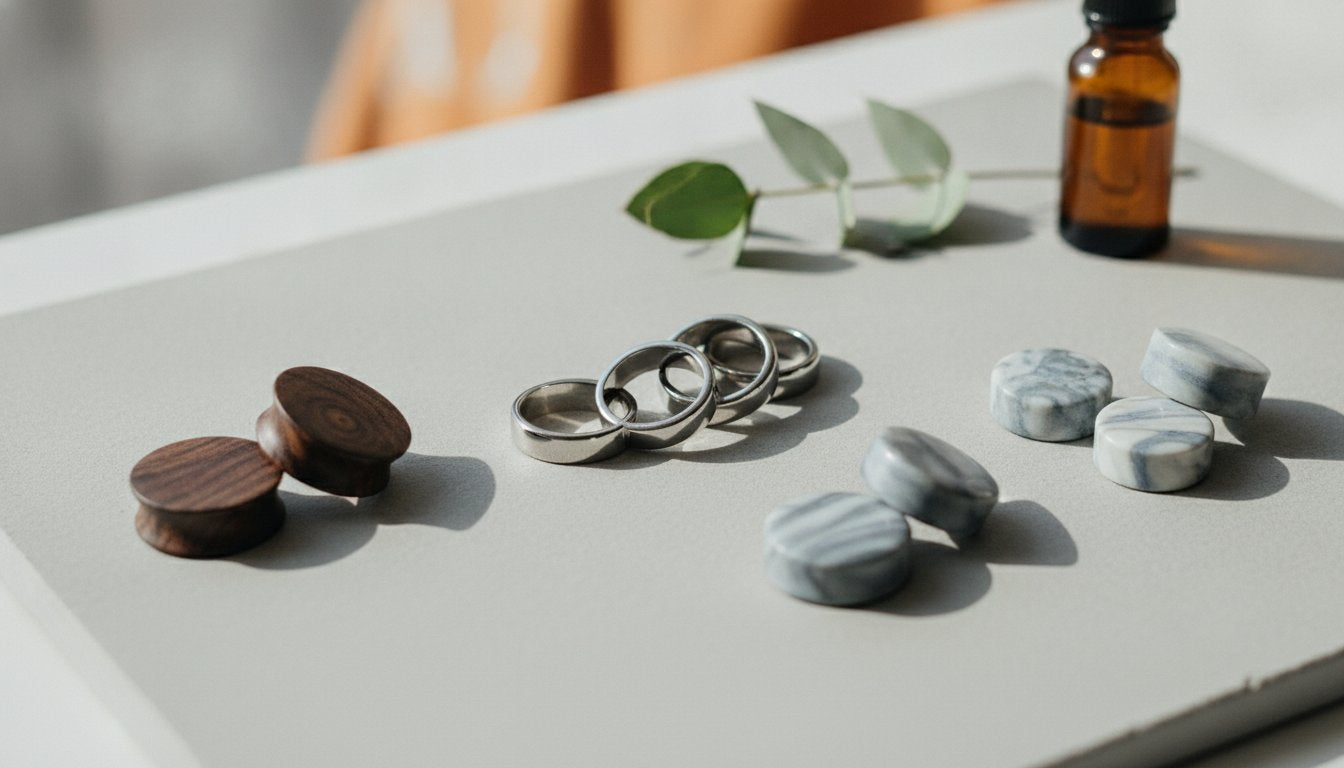
Nearly 20% of the population lives with a nickel allergy, meaning that for many, a new stretch often comes with unwanted swelling or irritation. You shouldn't have to choose between personal style and physical comfort. If you've ever dealt with persistent odors from porous plugs or the sudden heat of an allergic reaction, you know that your body demands better than mystery metals. Finding the best material for ear stretching is the most critical decision you'll make for your lobe health. It is the foundation of a clean, healthy, and pain-free journey.
We're here to help you make these choices with clinical precision and nurturing care. This 2026 guide explores the most biocompatible options to ensure your stretching process remains steady, safe, and sophisticated. You'll learn which materials facilitate healing, how to prevent the common issues of odor and swelling, and why the right jewelry makes every millimeter feel effortless. We will compare the professional standard of surgical steel, the lightweight accessibility of acrylic, and the essential aftercare routines that keep your skin resilient as you grow.
Key Takeaways
- Understand why biocompatibility is the clinical standard for preventing immune responses, ensuring safety, and supporting long-term comfort.
- Learn why 316L surgical steel remains the protective standard for stretching due to its high polish, durability, and superior corrosion resistance.
- Identify the best material for ear stretching by evaluating the specific benefits of surgical steel, acrylic, and organic options for different stages of healing.
- Uncover the secret to eliminating "ear cheese" and odors by switching to breathable organic materials like wood and stone for your fully healed lobes.
- Master the essential relationship between high-quality materials and professional aftercare lubricants to prevent friction, maintain elasticity, and support skin health.
Why Material Choice Matters: Porosity, Weight, and Biocompatibility
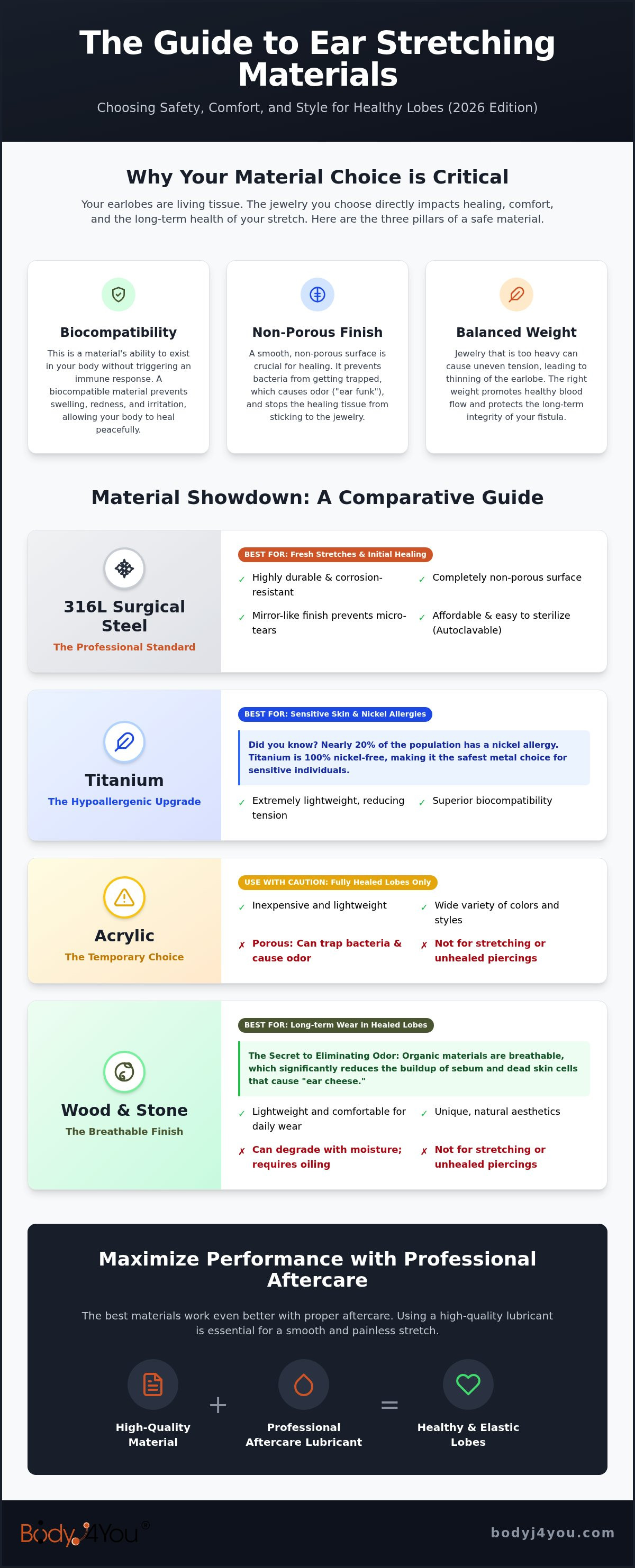
Choosing the best material for ear stretching is more than an aesthetic preference; it's a biological necessity. Your earlobes are living tissue, and the jewelry you select directly influences how that tissue heals and adapts. We prioritize three core pillars for every piece: Safety, Weight, and Finish. These factors determine whether your journey is a seamless progression or a cycle of irritation. Biocompatibility is the first hurdle. It defines a material's ability to exist within your body without triggering an immune response. When a material isn't biocompatible, your body treats it as an invader, leading to the swelling and redness many mistake for a normal part of the process.
Porosity presents a different danger. Materials with microscopic holes trap dead skin cells and moisture. This creates a breeding ground for bacteria, resulting in the persistent odor often called "ear funk." For a safe and predictable experience, starting with a Surgical Steel Taper and Plug Kit is the professional standard. It offers the non-porous surface required to protect your fistula during its most vulnerable state. By selecting materials that respect your body's chemistry, you ensure a journey that is as healthy as it is expressive.
The Science of Non-Porous Surfaces
Non-porous materials are vital because they don't allow the healing fistula to "stick" to the jewelry. When you use materials like high-grade steel, the surface remains smooth and inert. This significantly reduces friction during insertion, which prevents micro-tears in the skin. The historical context of Stretching (body piercing) highlights how far we've come in understanding these biological interactions. Unlike porous organics, these surfaces can be fully sterilized, ensuring that no dormant bacteria are introduced to your ear during a size increase. A smooth finish is your best defense against the "stiction" that causes pain during jewelry rotations.
Weight and Lobe Tension
Jewelry weight is a delicate balance. If a plug is too heavy, it can cause uneven tension, leading to thinning of the lower lobe or "thin spots" that jeopardize future stretches. Conversely, the best material for ear stretching during the first 48 hours is often something lightweight. This allows the tissue to stabilize without the constant pull of gravity. Balancing weight promotes healthy blood flow, which is the primary engine of skin elasticity and repair. By choosing the right mass for your current gauge, you protect the long-term integrity of your lobes and maintain a thick, healthy fistula.
Surgical Steel vs. Titanium: The Professional Standards
316L Surgical Steel acts as the "Wise Guardian" of your ear stretching journey. It provides a level of durability and clinical polish that few other materials can match. For many enthusiasts, this remains the best material for ear stretching because it balances high-end performance with accessibility. Professional-grade 316L steel is specifically engineered for corrosion resistance and hypoallergenic properties. These traits ensure the jewelry remains inert while your body adapts to a new size, providing a stable environment for tissue regeneration.
Distinguishing high-quality metal from cheap mystery alloys is vital for lobe safety. Authentic surgical steel features a mirror-like finish, whereas lower-grade metals often show visible scratches or a dull, greyish hue under close inspection. These microscopic imperfections can harbor bacteria or cause unnecessary friction against the healing fistula. Choosing a verified kit ensures you are using materials that meet 2026 ASTM standards for biocompatibility, protecting you from the "mystery metal" reactions that derail so many stretching journeys.
Benefits of Surgical Steel Kits
The hallmark of a professional steel kit is the highly polished surface. This finish is designed to minimize micro-tears as the taper guides the plug into place, creating a smooth transition between gauges. Maintenance is simple and effective. These pieces are easily cleaned using a sterile saline spray for piercings to remove debris without irritating the skin. When evaluating steel, remember our professional standard: Durable, Affordable, and Autoclavable. This tripartite profile makes it the most reliable choice for a structured, multi-step gauging process.
When to Choose Titanium
While surgical steel is safe for the majority of users, approximately 20% of the population experiences some level of nickel sensitivity. Titanium becomes the necessary alternative when your lobes show signs of distress. If you notice persistent redness, intense itching, or a weeping fistula after a fresh stretch, your body may be reacting to the trace amounts of nickel found in steel. Titanium is the gold standard for "angry" piercings that refuse to settle. It is entirely nickel-free and exceptionally lightweight, reducing the physical stress on your lobes. Though it requires a higher initial investment, the long-term benefit of a calm, healthy stretch is invaluable for those with sensitive skin.
Choosing the right metal is a commitment to your long-term aesthetic goals and physical well-being. If you're ready to start your journey with the industry standard, explore our professional-grade stretching collections to find a kit that supports your unique skin chemistry.
The Acrylic Debate: When Is It Safe for Your Ears?
The conversation around acrylic is often polarizing. Some industry voices claim it's universally harmful, while others ignore the risks entirely. We view high-quality acrylic as a specialized tool rather than a primary stretching material. While it isn't the best material for ear stretching during the initial "push" through tissue, it offers unique benefits once your lobes have stabilized. Acrylic Ear Stretching Kits serve as an ideal transition for those seeking a lightweight, budget-friendly option for daily wear. It's a material that is best described as versatile, vibrant, and accessible.
Our Golden Rule is absolute: never use acrylic on a fresh stretch or broken skin. Because acrylic is a type of plastic, it cannot be sterilized in an autoclave without melting or degrading. If you place it against a raw fistula, the material can trap bacteria against the wound, leading to irritation or infection. However, for a fully healed lobe, acrylic remains a favorite for large-gauge comfort. Its nearly weightless profile eliminates the ear fatigue that often comes with heavy metal or stone plugs. It allows you to express your aesthetic without the physical strain of gravity pulling on your lobes.
Best Practices for Acrylic Jewelry
You should only introduce acrylic jewelry to a fully healed fistula, typically at least 6-8 weeks after your last size increase. Before wearing, inspect your pieces for any burrs or sharp edges from the molding process. These tiny imperfections can scratch the delicate skin inside your lobe. Because plastic surfaces can develop a biofilm over time, frequent cleaning is mandatory. A simple routine of mild soap and warm water keeps your jewelry hygienic and your skin healthy. This proactive care ensures that your transition wear remains a safe part of your journey.
Acrylic vs. Steel for Beginners
We recommend a tiered approach to your stretching process. Use surgical steel for the active phase and initial healing because it is non-porous and easy to sterilize. Once your size is stable and the skin has thickened, switching to acrylic can reduce daily tension. This balance prevents the thinning of the lower lobe that sometimes occurs with prolonged wear of heavy metals. We offer both materials to support every stage of your progression. By matching the material to your current healing status, you ensure the best material for ear stretching is always the one that respects your body's immediate needs.
Organic Materials: Wood, Stone, and Silicone for Healed Lobes
Choosing the best material for ear stretching often depends on where you are in your journey. While surgical steel acts as the guardian of the active phase, organic materials are the reward for your patience. Wood, stone, and bone are naturally porous substances. They "breathe" with your skin, wicking away the moisture and oils that typically cause "ear cheese" odor. This biological interaction is what makes organics the premier choice for long-term wear in established fistulas. They represent a sophisticated intersection of biological harmony and aesthetic refinement.
Before transitioning to these natural wonders, you must verify your healing progress against the ear gauge size chart. Moving to organics too early can lead to complications because the skin needs to be fully keratinized and stable. Once you reach your milestone, these materials offer an earthy, high-end aesthetic that synthetic materials cannot replicate. They are defined by three core traits: Natural, Breathable, and Refined.
The Breathability of Wood and Bone
Wood and bone act as a natural filter for your lobes. Their porous nature allows air to circulate, which keeps the fistula dry and healthy. However, this porosity requires active maintenance. You must regularly massage your wood plugs with Jojoba oil to prevent them from drying out or becoming brittle. This also creates a moisture barrier that protects the integrity of the jewelry. Remember our golden rule for organics: never get wood jewelry wet. Wearing them in the shower or during a swim can cause the material to swell, crack, or harbor harmful bacteria within the grain.
Silicone Tunnels: Comfort vs. Risk
Silicone is often praised for its flexibility, particularly the "taco method" used to fold and insert tunnels into healed ears. It is incredibly comfortable for sleeping or active lifestyles. However, silicone is never the best material for ear stretching itself. If used on a fresh stretch, silicone can create a vacuum effect. This "suction" traps bacteria against unhealed tissue, which can lead to rapid infection or a painful blowout. Always prioritize medical-grade silicone over cheap, "sticky" alternatives that can fuse to the skin. To maintain your lobe's health and elasticity during these transitions, shop our natural healing oils and aftercare essentials.
Maximizing Material Performance with Professional Aftercare
The best material for ear stretching is only as effective as the routine you build around it. Your jewelry choice sets the stage; however, aftercare acts as the stabilizing force for your lobe health. Professional-grade surgical steel or medical-grade acrylic perform best when the surrounding tissue is clean, hydrated, and expertly lubricated. Proper lubrication prevents "stiction," a common issue where jewelry adheres to the fistula and causes micro-tears during daily movement. By maintaining a supple environment, you ensure your jewelry remains a supportive specialist in your journey rather than a source of friction.
Hygiene is the foundation of this process. We recommend BodyJ4You Saline Spray as the universal cleanser for all jewelry types. This locally manufactured formula provides the clinical precision needed to remove crust and debris without the harshness of alcohol or chemicals. Whether you're wearing steel or transition acrylic, a sterile saline rinse supports the body’s natural healing rhythm while protecting the integrity of the material's finish.
Oils for Elasticity and Maintenance
Natural oils are essential for maintaining the biological harmony of your lobes. They provide the deep hydration required for skin to stretch without thinning. We focus on three core botanical solutions:
- Jojoba Oil: This is the gold standard for daily lobe massages. Its molecular structure closely mirrors human sebum, making it highly compatible with your skin. It is also the essential conditioner for wood plugs to prevent cracking.
- Rosehip Oil: Rich in vitamins and essential fatty acids, rosehip oil is ideal for promoting tissue regeneration. It is particularly helpful after a difficult stretch where the skin feels tight or stressed.
- Castor Oil: Known for its density, castor oil provides a thick, protective barrier. It is a reliable choice for those with sensitive skin who need long-lasting moisture and protection against environmental irritants.
The Daily Maintenance Protocol
A consistent protocol ensures long-term success. You don't always need to remove your plugs to maintain hygiene; in fact, leaving them in during the first week of a new stretch is often safer. Use piercing cleaning swabs to reach behind flares and around intricate steel designs. These specialized tools allow for targeted cleaning without disturbing the healing fistula. Follow our tripartite rule for aftercare: Cleanse, Lubricate, and Monitor. By observing your lobes daily for changes in color or temperature, you act as the wise guardian of your own self-expression. This disciplined approach ensures that your journey remains as safe as it is aspirational.
Elevating Your Journey to Self-Expression
Your ear stretching journey is a unique fusion of biological patience and aesthetic vision. We've explored how non-porous surfaces like 316L surgical steel protect your lobes during active transitions, while breathable organics offer a refined solution for fully healed skin. It's clear that selecting the best material for ear stretching is only the first step; your long-term success depends on a disciplined routine of cleansing and lubrication. By prioritizing biocompatibility and skin elasticity, you ensure your progress remains pain-free and healthy.
With over 20 years of expertise in body modification, we prioritize your safety through high-polish jewelry and locally manufactured, dermatologist-tested aftercare oils. Whether you are reaching for your very first gauge or a large-scale milestone, our professional kits provide the stability and precision your body deserves. Shop our Professional Surgical Steel and Acrylic Stretching Kits to start your journey safely. You have the power to transform your look with confidence, knowing you've chosen a path built on clinical quality and nurturing care.
Frequently Asked Questions
What is the absolute safest material for a fresh ear stretch?
316L Surgical Steel is the clinical standard for a fresh stretch. This material is non-porous, highly polished, and fully autoclavable. It provides a smooth surface that prevents the healing fistula from adhering to the jewelry. Using surgical steel ensures you meet biocompatibility standards, reducing the risk of irritation. It remains the best material for ear stretching during the active phase. This choice is safe, predictable, and resilient.
Can I use acrylic tapers to stretch my ears if I'm on a budget?
You can use acrylic tapers for the physical transition, but they are not recommended for long term wear in fresh stretches. Acrylic cannot be sterilized in an autoclave, making it risky for broken skin. While an Acrylic Ear Stretching Kit is budget-friendly and lightweight, you should switch to steel or titanium plugs once the stretch is complete. This approach balances affordability with the clinical safety required to protect your delicate lobe tissue.
Why does my ear smell when I wear surgical steel plugs?
Odor occurs when sebum and dead skin cells accumulate on the surface of non-porous jewelry. While steel is hygienic, it doesn't "breathe" like organic materials. This buildup creates a biofilm that leads to the common "ear funk" smell. To prevent this, implement a daily protocol of cleansing with Saline Piercing Aftercare Spray. Regular cleaning of both the jewelry and the lobe is essential to maintain a fresh, healthy environment.
How long should I wait before wearing wood or stone jewelry?
You should wait at least 6 to 8 weeks before introducing organic materials like wood or stone. These substances are naturally porous and can harbor bacteria if the fistula is still an open wound. Waiting ensures the skin is fully keratinized and stable. Transitioning too early can lead to the jewelry "fusing" to the skin. Always verify your healing progress by monitoring for a lack of redness or swelling before making the switch.
Is silicone safe for stretching if I go slowly?
Silicone is never safe for the active stretching process, regardless of your pace. Because silicone is flexible and somewhat porous, it can create a suction effect against raw tissue. This traps bacteria and restricts blood flow, often leading to rapid infections or blowouts. Reserve medical-grade silicone tunnels for fully healed lobes only. For the actual increase in size, always rely on rigid, non-porous materials like surgical steel to ensure a professional result.
What should I do if I have a reaction to my stretching kit?
If you experience persistent itching, heat, or weeping, remove the jewelry immediately. These are common signs of a nickel allergy or material sensitivity. Clean the area with a sterile saline spray and switch to a more biocompatible option like implant-grade titanium. Monitoring your body's response is a core pillar of safe gauging. If the irritation persists for more than 48 hours, consult a medical professional to ensure the integrity of your lobe health.
Does the weight of the material matter for lobe health?
Weight is a critical factor in maintaining healthy blood flow and skin thickness. Excessively heavy jewelry can cause the lower lobe to thin out over time, which limits your ability to reach larger gauges safely. Conversely, lightweight materials like acrylic are excellent for reducing ear fatigue during long days. The best material for ear stretching provides a balanced mass that encourages natural elasticity without compromising the structural integrity of your fistula.
Can I sterilize acrylic jewelry in boiling water?
You should never use boiling water or an autoclave to sterilize acrylic jewelry. High temperatures will cause the plastic to warp, crack, or release potentially harmful chemicals. Instead, clean your acrylic pieces with mild, fragrance-free soap and lukewarm water. For a more thorough routine, use a saline spray to remove debris. This gentle approach preserves the smooth finish of the jewelry and ensures it remains safe for wear in your established piercings.


