

Why does your skin react to jewelry that claims to be safe? Most "hypoallergenic" labels are unregulated marketing terms that often hide low-grade alloys and trace amounts of nickel. You've likely experienced the heat, the itching, and the persistent redness that ruins a perfectly curated look. It's a common struggle for those who value both aesthetic refinement and dermatological health. You shouldn't have to choose between your personal style and your physical comfort.
Finding the best jewelry material for sensitive skin requires a shift from trend-chasing to biological integrity. We're here to help you understand the essential differences between surgical steel and titanium while exploring how high-quality finishes prevent piercing rejection. This 2026 guide provides the clarity you need to select pieces that are pure, protective, and professional. You'll learn how to identify truly biocompatible materials and discover the professional aftercare routines that keep your skin calm, clear, and comfortable.
Key Takeaways
- Identify the best jewelry material for sensitive skin by prioritizing clinical biocompatibility standards over vague, unregulated marketing labels.
- Understand why nickel remains the primary cause of contact dermatitis and how to choose alloys that safely isolate irritants from your body.
- Compare the distinct advantages of G23 Titanium and 316L Surgical Stainless Steel to find your perfect balance of safety and style.
- Learn to spot the warning signs of poor material quality to prevent piercing rejection and protect your long-term dermatological health.
Understanding Metal Sensitivities and Hypoallergenic Claims
Your skin is an intelligent, reactive barrier. It protects your internal systems while acting as a canvas for personal expression. When you search for the best jewelry material for sensitive skin, you're looking for more than a shiny accessory; you're seeking a material that respects your body's biological boundaries. Many consumers believe a "hypoallergenic" label is a medical guarantee. In reality, it's often a broad marketing term used to describe materials designed to minimize the risk of allergic reactions, though it doesn't eliminate them entirely.
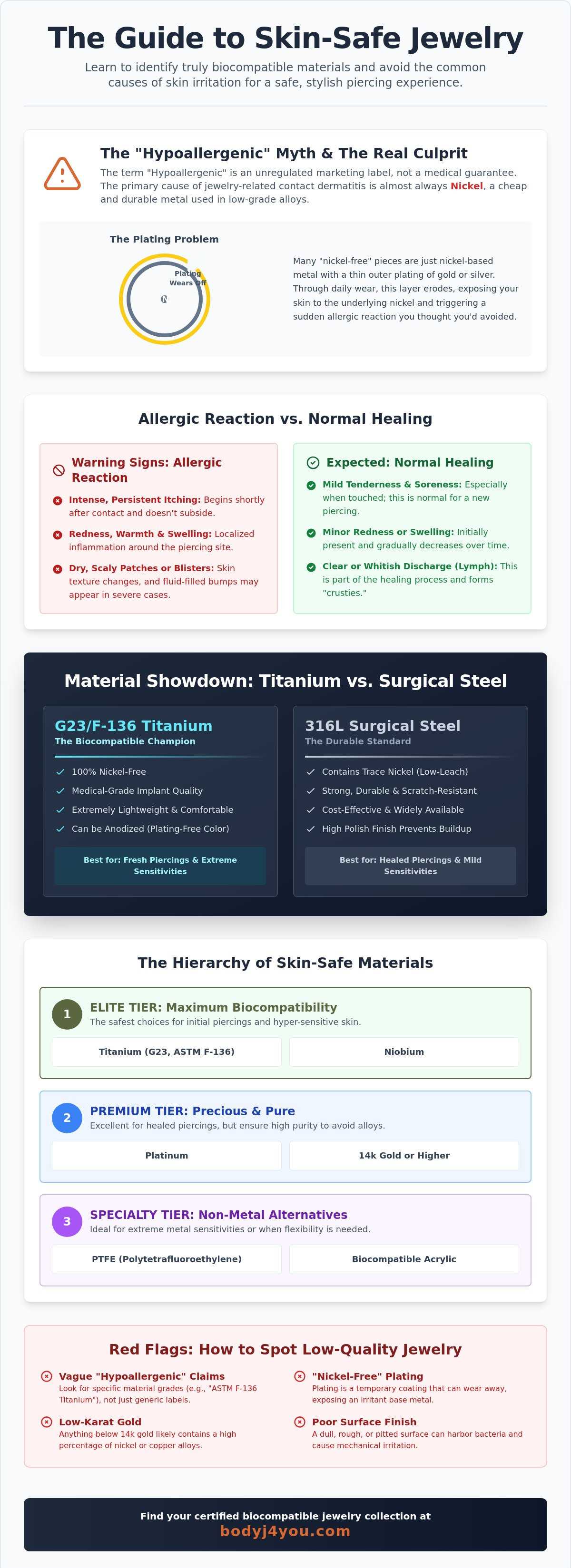
The primary source of jewelry-related irritation is almost always nickel. This ubiquitous metal is favored by manufacturers for its durability and low cost, but a Nickel allergy is the most common cause of contact dermatitis in the world. Even jewelry labeled as "nickel-free" can be misleading. Often, a base metal containing nickel is simply plated with a thin layer of gold or silver. As this plating wears down through daily use, the underlying nickel is exposed, leading to the sudden onset of itching and redness you thought you'd avoided.
What is Contact Dermatitis?
Contact dermatitis is an inflammatory skin condition that occurs when your immune system identifies a metal as a foreign invader. It's a physical protest against poor material quality. Distinguishing between a standard healing piercing and an allergic reaction is vital. While some tenderness is expected with new jewelry, an allergy typically presents with these distinct symptoms:
- Intense, persistent itching that begins shortly after contact.
- Localized redness, warmth, and swelling around the jewelry site.
- Dry, scaly patches or small, fluid-filled blisters in severe cases.
If you experience these signs, it's a clear signal that your jewelry lacks the necessary biocompatibility for your skin type. For chronic issues, a professional patch test can help pinpoint exactly which alloys your body rejects.
The Truth About Hypoallergenic Labels
Because the term "hypoallergenic" isn't regulated by a central medical authority, its meaning varies between brands. Truly safe jewelry focuses on biocompatibility. This technical standard ensures the material is chemically stable enough to remain in contact with human tissue without leaching harmful ions. We prioritize materials that are pure, tested, and reliable.
Beyond the metal itself, the physical finish of the jewelry is a critical factor. A mirror-smooth, high-polish finish eliminates the microscopic pits where bacteria, sweat, and dead skin cells accumulate. By choosing the best jewelry material for sensitive skin with a superior surface finish, you provide your body with a clean, stable environment. This approach bridges the gap between clinical safety and high-end aesthetic refinement.
The Top 4 Biocompatible Materials for Sensitive Skin
Selecting the best jewelry material for sensitive skin is a decision that impacts your long-term wellness. While high-street brands often focus on aesthetics, we prioritize the biological interaction between metal and tissue. The following four categories represent the peak of modern biocompatibility, offering safety without sacrificing your personal style.
Titanium: The Body-Safe Champion
Titanium is the undisputed gold standard for initial piercings and extreme sensitivities. Specifically, G23 and ASTM F136 grades are the same materials used for medical implants and heart valves. It's exceptionally lightweight. It's non-reactive to body fluids. It's naturally nickel-free. Unlike other metals that require a toxic plating to achieve color, titanium can be anodized. This electrochemical process creates a vibrant protective layer without introducing harmful irritants to your skin, ensuring your jewelry remains as pure as it is beautiful.
Niobium and Precious Metals
Niobium offers a similar level of purity to titanium but with a softer, more flexible physical profile. It's an elemental metal, meaning it's 99.9% pure and requires no alloys to maintain its structure. If you prefer traditional luxury, the "14K or Higher" rule is your safeguard. Low-karat gold often uses nickel or copper as fillers, which can trigger reactions. For those who demand the absolute peak of refinement, platinum remains the ultimate hypoallergenic choice, though its weight and cost are significantly higher than medical-grade alternatives.
Acrylic and PTFE for Extreme Sensitivity
Non-metal alternatives provide a unique solution for those whose skin rejects even the finest alloys. Biocompatible polymers like PTFE (Polytetrafluoroethylene) are flexible, heat-resistant, and entirely non-reactive. These materials are particularly useful for ear stretching kits, where the skin is under constant tension and requires a stable environment to heal. Acrylic is another excellent choice for healed piercings, offering a lightweight feel and a wide variety of styles. To maintain hygiene, simply clean these pieces regularly with a gentle saline solution to prevent the buildup of organic matter.
Surgical Stainless Steel: The Reliable Standard
For many, 316L Surgical Stainless Steel provides the ideal balance of durability and affordability. It's highly resistant to corrosion. It's easy to sterilize. It's remarkably strong. While it does contain trace amounts of nickel, the 316L grade is vacuum-melted to trap the nickel deep within the molecular structure, preventing it from leaching into your tissue. If you're looking for everyday reliability, our Internal Threaded Labret Studs crafted from this grade offer a secure, irritation-free experience for your daily rotation.
Surgical Steel vs. Titanium: Which is Better for Your Skin?
The debate between 316L Surgical Stainless Steel and G23 Titanium is a cornerstone of body modification culture. While both are considered high-tier options for the best jewelry material for sensitive skin, they serve distinct purposes based on the maturity of your piercing and your specific skin chemistry. Choosing between them isn't about finding a "winner," but about selecting the right tool for your body’s current healing phase. We believe in providing the technical clarity you need to make an informed, safe decision for your personal style.
316L Surgical Steel is the industry’s most trusted budget-friendly material. It’s durable. It’s lustrous. It’s remarkably resistant to corrosion. The secret to its safety lies in the vacuum-melting process, which traps nickel molecules deep within the alloy's molecular structure. This engineering feat prevents the metal from leaching into your tissue, making it a safe choice for the vast majority of users. However, because it technically contains trace amounts of nickel, it may still cause issues for those with extreme sensitivities or newly opened wounds.
Titanium stands apart for its incredible strength-to-weight ratio. It's approximately 45% lighter than steel, which is a significant advantage when wearing larger gauges or heavy styles that might otherwise pull on delicate tissue. For complex procedures like a septum piercing, titanium is often the preferred choice to minimize downward pressure and accelerate healing times. It provides a level of purity that steel simply cannot match, acting as a protective shield for your skin.
When to Choose Surgical Steel
Surgical steel is the ideal companion for fully healed piercings and those with only mild sensitivities. Its high-polish finish provides a sleek, clinical aesthetic that is perfect for long-term wear in industrial barbells. If you're beginning your stretching journey, a surgical steel taper and plug kit offers the weight and smoothness necessary for a gradual, comfortable transition. It's the practical, reliable choice for your daily jewelry rotation once your skin has established a healthy, healed barrier.
When Titanium is Mandatory
Fresh piercings require the uncompromising purity of ASTM F136 titanium. Professional piercers insist on this standard because it's entirely nickel-free, eliminating the risk of irritation during the most vulnerable stages of healing. We always recommend internally threaded designs for these pieces. This engineering choice ensures that the smooth post passes through your skin without the scraping effect of external threads, preserving the integrity of your new piercing and ensuring a seamless, irritation-free experience from day one.
How to Spot 'Fake' Hypoallergenic Jewelry and Prevent Irritation
Identifying the best jewelry material for sensitive skin is only half the battle. You must also learn to spot the deceptive marketing tactics that lead to irritation. Unbranded "mystery metals" sold at suspiciously low prices are the most common culprits. If a piece of body jewelry costs less than a cup of coffee, it's likely composed of reactive alloys like brass or copper hidden beneath a thin, temporary coating. These materials oxidize quickly, leading to the infamous "green finger" effect and persistent inflammation.
Quality is visible if you know where to look. Perform a physical inspection before inserting any new piece. Look for microscopic pits, scratches, or uneven surfaces. These imperfections act as breeding grounds for bacteria. Check the threading as well. High-quality pieces use internal threading, where the screw is on the ball, not the post. External threads are a hallmark of lower manufacturing standards. They can tear delicate tissue as they pass through your piercing, causing unnecessary trauma and prolonging the healing process.
Understanding Jewelry Plating and Coatings
"Gold-plated" jewelry often masks reactive base metals like nickel or lead. Flash plating is especially dangerous. This ultra-thin layer wears off within weeks, exposing your skin to the irritants underneath. For colored jewelry, we recommend PVD (Physical Vapor Deposition). This process bonds the color to the metal at a molecular level. It creates a durable, biocompatible finish that won't flake or peel into your piercing. This is the professional standard for safe, vibrant style that respects your body's integrity.
Maintenance to Reduce Skin Irritation
Sometimes, what looks like an allergy is actually a hygiene issue. Dead skin cells, sweat, and bacteria buildup can mimic the symptoms of a metal reaction. Regular cleaning is essential. Using a sterile saline spray for piercings ensures that your jewelry remains free of organic debris without introducing harsh chemicals. It's a simple, daily habit that protects your investment and your long-term dermatological health.
When swapping pieces, move slowly. Rushing the process can cause micro-tears. This often leads to a piercing bump that takes weeks of dedicated care to resolve. Always ensure your hands and the new jewelry are thoroughly sanitized before contact. Maintain your skin's health by selecting from our biocompatible jewelry and aftercare collections, designed for purity and performance.
Safe Self-Expression with BodyJ4You’s High-Quality Collections
Your jewelry is a reflection of your identity. It's a personal statement. It's a form of art. It's a part of who you are. Because we prioritize your physical safety as much as your aesthetic vision, we maintain rigorous standards for every piece in our collection. Our commitment to providing the best jewelry material for sensitive skin is evident in our strict adherence to 316L Surgical Steel and G23 Titanium specifications. We bridge the gap between clinical safety and vibrant self-expression; this ensures you never have to compromise your health for your style. Purity. Integrity. Expression.
Curated Materials for Every Piercing
Whether you're a seasoned enthusiast or beginning your first stretching journey, our materials are selected for their biological integrity. We offer specialized tools for every stage of your progress. Our surgical steel taper and plug kits provide the necessary weight and mirror-smooth finish for safe, gradual stretching. For those seeking non-metal alternatives during the healing process, our acrylic ear stretching kits offer a lightweight, non-porous option that is gentle on delicate tissue. We've made internal threading a standard for our labret studs and barbells. This design choice is a game-changer for sensitive ears, as it prevents the irritation often caused by the rough surfaces of external threads.
The BodyJ4You Aftercare Advantage
True safety extends beyond the metal itself; it involves the environment you create for your skin to thrive. Our locally manufactured aftercare line ensures purity from the very start of your journey. Using our saline spray keeps sensitive piercings calm, clear, and hydrated without the use of harsh additives. To support the skin's elasticity, our healing oils provide a protective barrier for stretched lobes. We utilize nutrient-dense ingredients like Jojoba, Castor, and Rosehip oil to stabilize the skin. These botanical solutions work in harmony with your body's natural chemistry to promote long-term resilience and comfort.
Empowering your journey means providing affordable quality for every skin type. We take pride in our heritage of regional manufacturing and transparent quality control. You deserve jewelry that feels as good as it looks. You deserve a brand that acts as a wise guardian for your wellness. By choosing the best jewelry material for sensitive skin and following a disciplined aftercare routine, you can express your unique style with absolute confidence. Explore our collections today and find the perfect balance of beauty and biology.
Elevate Your Style with Biological Integrity
Choosing jewelry should be an act of empowerment, not a risk to your dermatological health. You now have the knowledge to look beyond unregulated "hypoallergenic" labels and prioritize the clinical standards of G23 Titanium and 316L Surgical Steel. By focusing on biocompatibility, internal threading, and professional finishes, you ensure that your self-expression remains comfortable and clear. Identifying the best jewelry material for sensitive skin is a vital investment in your long-term wellness.
With over 20 years of industry experience, we are dedicated to providing the highest quality standards for the piercing community. Our specialized focus on medical-grade materials and US-based quality control for aftercare ensures a safe, sophisticated experience for every skin type. You don't have to choose between aesthetic refinement and physical safety. Shop BodyJ4You's Biocompatible Jewelry Collection to discover pieces that protect your body while celebrating your unique identity. Your journey toward irritation-free style starts with purity, safety, and confidence.
Frequently Asked Questions
Can I wear sterling silver if I have sensitive skin?
Sterling silver is often problematic for those seeking the best jewelry material for sensitive skin because it contains 7.5% copper. While beautiful, copper oxidizes when exposed to moisture and air, leading to skin discoloration and irritation. It is best reserved for fully healed piercings and occasional wear rather than long-term use in sensitive or vulnerable areas. For daily wear, prioritize metals with higher elemental purity.
Is 316L surgical steel actually nickel-free?
316L surgical steel is not technically nickel-free, but it is considered "nickel-safe" for the vast majority of users. The manufacturing process involves vacuum-melting the alloy to trap nickel molecules deep within the material’s structure. This engineering prevents the metal from leaching into your tissue. It remains a reliable, durable, and affordable standard for high-quality body jewelry that balances clinical safety with aesthetic appeal.
What is the safest metal for a new ear piercing?
ASTM F136 Titanium is the safest metal for any new piercing. This medical-grade material is entirely biocompatible and naturally nickel-free, which minimizes the risk of rejection or inflammation during the initial healing phase. Professional piercers prioritize this standard because it provides a stable, non-reactive environment for your body to recover. It is the gold standard for purity, safety, and long-term piercing success.
Why does my jewelry turn my skin green or black?
Skin discoloration is typically a chemical reaction between your skin’s natural oils and base metals like copper or brass. When these metals oxidize, they produce a green or black residue that transfers to your skin. This reaction is a clear indicator that your jewelry lacks the purity required for sensitive skin and may soon lead to more severe physical irritation, itching, or redness.
Is titanium better than gold for sensitive ears?
Titanium is generally superior to gold for those with extreme sensitivities. Even high-karat gold is an alloy that contains other metals to increase its strength. Titanium is a pure, elemental metal that offers uncompromising biocompatibility without the need for reactive fillers. It is lighter, stronger, and more resistant to body fluids, making it the more protective choice for your long-term dermatological health.
Can an old piercing suddenly become sensitive to metal?
You can develop a metal sensitivity at any time through a process called sensitization. Repeated exposure to low-grade alloys can eventually trigger an immune response, even in piercings you've had for years. If an old piercing suddenly feels itchy or inflamed, it's likely your body reacting to the gradual leaching of nickel or other irritants from poor-quality jewelry or degraded plating.
What should I do if my skin is reacting to my jewelry right now?
If your skin is reacting, you should remove the jewelry immediately and clean the area with a sterile saline spray. Avoid using harsh alcohols or peroxides, as these can further damage the sensitive tissue. Once the redness subsides, replace the piece with a high-quality G23 Titanium or 316L Surgical Steel alternative to ensure a stable and irritation-free recovery for your piercing.
Is plastic or acrylic jewelry safe for long-term wear?
Acrylic and plastic are safe for short-term wear in healed piercings, but they aren't ideal for long-term use. These materials are porous, meaning they can trap bacteria and organic matter over time. For stretching or temporary style changes, they are excellent, lightweight tools, but they require frequent cleaning to maintain a hygienic environment for the best jewelry material for sensitive skin.


