

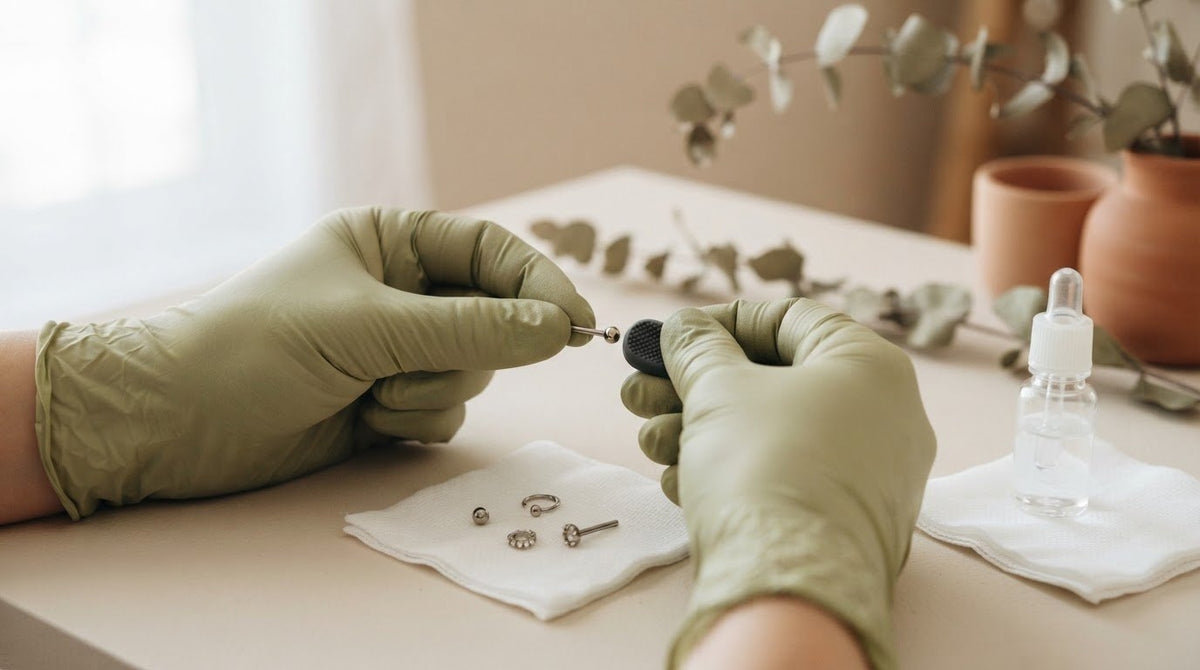
What if the piercing ball isn’t meant to unscrew at all? When it feels stuck, repeated twisting can irritate the piercing or damage the jewelry, especially if the closure works another way. The best way to unscrew a tight piercing ball is to identify the jewelry first, then improve your grip rather than apply more force. A careful pause is safer than a painful tug.
This guide explains how to distinguish threaded jewelry from threadless, press-fit pieces and captive bead rings before trying to remove anything. You’ll learn how to use clean, dry hands and a controlled approach, and when to stop if the jewelry won’t move or the piercing becomes sore or swollen.
First, check the closure and the condition of the piercing. Then, if it’s healed and the end is clearly threaded, try a gentle loosening step. The goal is to protect your piercing and jewelry, not to force a stubborn piece.
Key Takeaways
- Check for pain, swelling, bleeding, irritation, or signs of healing before attempting removal. If you notice any of these, stop.
- Identify whether the jewelry is threaded, threadless, or a captive bead ring. Not every end unscrews.
- The best way to unscrew a tight piercing ball is to improve your grip, stabilize the post, and gently turn only an end you’ve confirmed is threaded.
- Use clean hands, good visibility, and steady support. Don’t pull the jewelry or force a stuck closure.
- If you can’t identify the closure or it won’t loosen gently, leave it in place and have a professional piercer assess it.
Why a Piercing Ball Gets Stuck, and What to Check Before Trying
A stubborn piercing end can be frustrating, especially when it seems like one more turn should solve the problem. But a tight ball doesn’t necessarily need more force. You may not have enough grip, the end may use a different closure, or the piercing may not be ready for a jewelry change. Check both the piercing and the jewelry before trying to remove it.
An end that was tightened firmly can be difficult to grip. Swelling may put pressure on the jewelry, and dried natural secretions can collect around a closure. None of these possibilities means it’s safe to keep trying. Pulling, repeatedly turning the jewelry, or using tools without identifying the closure can irritate tissue or damage the jewelry. Stopping is a sensible choice.
Is the piercing ready for a jewelry change?
A piercing may look settled while it’s still healing. Don’t try to remove the jewelry yourself if the site is painful, swollen, bleeding, irritated, or still healing. Avoid moving or turning jewelry as part of aftercare. If you’re unsure whether a piercing is ready for a change, leave the jewelry in place and have a professional piercer assess it.
Before proceeding, pause and check for:
- New or increasing pain or tenderness
- Swelling, bleeding, or visible irritation
- Signs the piercing is still healing, even if the outside looks calm
If any of these apply, don’t tug or twist the jewelry through the piercing channel. Stop and get appropriate in-person guidance.
What kind of jewelry closure are you handling?
With clean hands and good lighting, look closely at the end and post without pulling or twisting the jewelry through tissue. Threaded jewelry has a removable end that screws onto the post. Threadless jewelry uses a press-fit end held by tension, while a captive bead ring holds its bead in place with the ring’s tension. A captive bead doesn’t unscrew like a threaded ball.
That distinction matters: turning a press-fit end or trying to unscrew a captive bead can add pressure without loosening anything. For broad background on jewelry and piercing types, see the Body Piercing Overview. Identify the closure by looking at the construction of your own jewelry rather than testing it with force.
Some threaded jewelry loosens by turning the removable end to the left while holding the post steady, but don’t assume that direction applies to every piece. BodyJ4You offers body jewelry including internal threaded labret studs and captive bead rings, which illustrate why it’s important to identify a closure before handling jewelry. The best way to unscrew a tight piercing ball starts with confirming that it’s threaded and that the piercing is ready for a change. If either is uncertain, stop rather than force it.
Identify the Closure: Threaded Balls, Threadless Ends, and Captive Beads
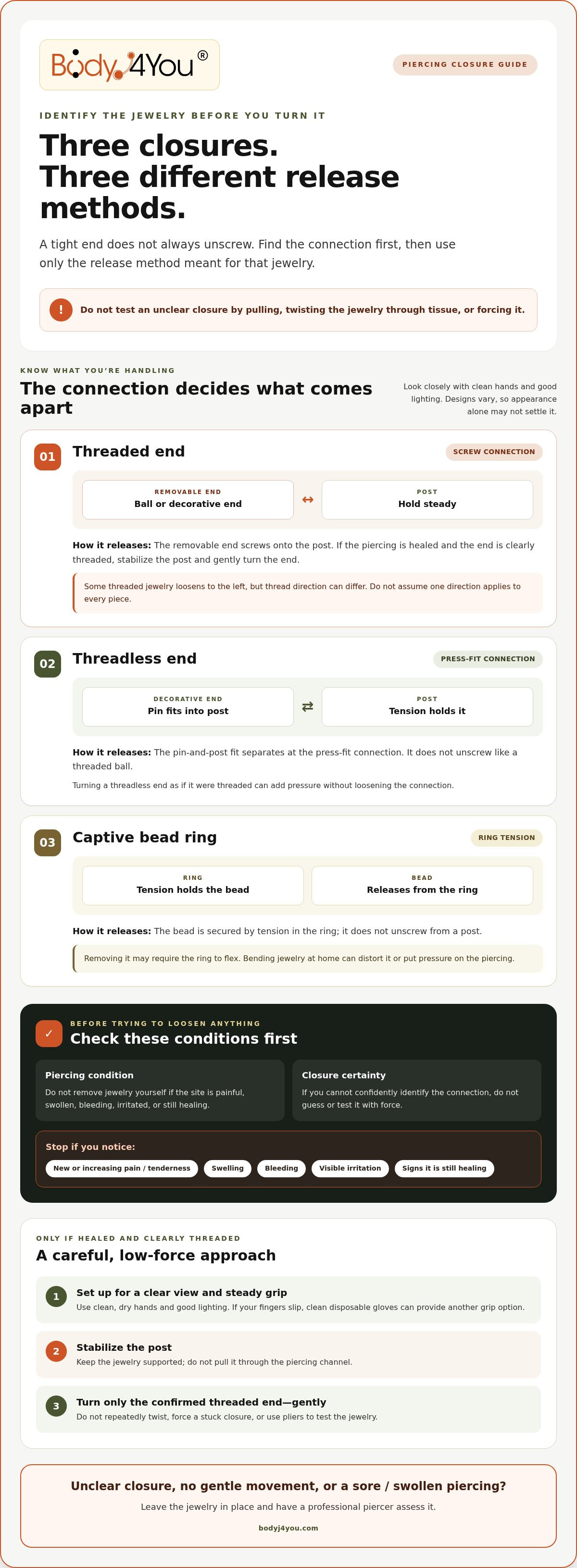
Before trying to loosen an end, identify how it attaches. Three jewelry styles can have a small ball or decorative top, but their connections work differently. A threaded end screws onto a post; a threadless end is held by a push-fit connection; a captive bead is secured by tension in a ring. Knowing which type you have helps you avoid turning a closure that isn’t designed to unscrew.
Use this visual comparison as a starting point. Designs vary, so appearance alone may not settle the question.
- Threaded end: A removable ball or decorative end sits on a post and fastens with a screw connection. Unscrew the removable end while holding the post steady.
- Threadless end: A decorative end meets a hollow post, with a pin held in place by tension. It separates at the push-fit connection; it doesn’t unscrew like a ball.
- Captive bead ring: A bead or decorative piece sits within a ring. The ring’s tension holds it in place, so the bead releases from the ring rather than unscrewing from a post.
BodyJ4You offers both internal threaded labret studs and captive bead rings, examples of why recognizing the closure matters before handling jewelry.
How can you tell if a piercing ball is threaded?
Look for a distinct end joined to a straight post, and inspect where the two pieces meet under good lighting. A threaded end may show a small seam, but the connection can be difficult to see while the jewelry is in place. Don’t pull the post through tissue or twist the jewelry to test it. Thread direction can differ, so don’t assume one turning direction works for every piece.
If the end spins freely, resists movement, or the connection remains unclear, stop. These signs don’t confirm that the jewelry is threaded or ready to come apart. The best way to unscrew a tight piercing ball starts with identifying the removable end, not applying more force. Have a professional piercer assess a closure you can’t confidently recognize.
Why threadless ends and captive beads need different handling
A threadless end is retained by a pin-and-post fit. Its connection separates by releasing that fit, not by turning a ball along threads. A captive bead ring works differently: tension in the ring holds the bead in its opening. Removing it may require the ring to flex, and bending jewelry at home can distort it or put pressure on the piercing.
Don’t use pliers or force to test either closure. If removal seems to require bending, specialized tools, or a firm pull, leave it to a professional piercer. If you still can’t identify the construction, leave the jewelry in place rather than guessing.
Compare Safe Ways to Improve Your Grip on a Tight Ball
If you’ve confirmed the piercing is healed and the removable end is threaded, a better grip may help you use less force. Start with clean, dry hands. If your fingers still slip, clean disposable gloves can provide another option. Neither method makes it safe to force a stuck end, so work slowly and stop if you feel pain or increased resistance.
Choose a comfortable position where you can see the jewelry clearly. Gently steady the post with one hand, then use the other to turn only the confirmed threaded end. Keep the movement small and controlled. Don’t pull the post or push it through the piercing. If you can’t hold it steady, pause rather than compensate with a harder twist.
Which low-force grip method should you try first?
Wash and dry your hands, then try holding the jewelry with your fingertips. Dry skin gives you direct control and makes it easier to notice whether the end starts moving. If your fingers still slide, clean disposable gloves are an optional aid. Keep the post stable and use gentle movements on the removable end only. Don’t try either method on a healing or irritated piercing.
- Clean, dry hands: A simple first choice that lets you feel the jewelry directly.
- Clean disposable gloves: An optional alternative if your fingertips don’t get enough purchase.
- Either method: Use a steady hold, good visibility, and light pressure. Better grip is not a reason to apply more force.
Once you know the closure, choosing jewelry with a familiar construction can make future changes easier to understand. BodyJ4You offers body-piercing jewelry, including internal threaded labret studs and captive bead rings, for readers exploring jewelry options after resolving the immediate issue.
When should you avoid tools or asking someone to force it?
Skip pliers, tweezers, and improvised gripping tools. They can scratch or deform jewelry, slip unexpectedly, or pinch nearby skin. Having someone else pull, twist, or make a sudden effort adds force without improving control. If the closure is uncertain, tools and extra hands make the situation less predictable, not safer.
- Stop if discomfort, irritation, or resistance increases.
- Don’t grip the ball with a sharp or hard-edged tool.
- Don’t let another person tug at the jewelry or turn it forcefully.
The best way to unscrew a tight piercing ball is a controlled attempt on a confirmed threaded end, not a contest of strength. If gentle handling doesn’t work or you can’t stabilize the post, stop and have a professional piercer assess the jewelry. Protecting the piercing and the jewelry matters more than removing it immediately.
How to Loosen a Threaded Piercing Ball Step by Step
Only try removal if you’re confident the piercing is fully healed and the end is threaded. A piercing that looks calm isn’t necessarily healed, so don’t rely on appearance alone if you’re unsure. These steps are for a gentle attempt, not for overcoming a stuck closure. If anything hurts or feels wrong, stop.
A careful sequence for a confirmed threaded ball
Take your time and keep the jewelry supported. Good lighting and a steady position help you see whether the end is moving, so you won’t mistake the post shifting for the ball loosening. Don’t pull the jewelry through the piercing or press the surrounding tissue to brace it.
- Confirm the conditions. Proceed only if the piercing is fully healed, shows no irritation, and the closure is clearly threaded. If you’re uncertain about either, leave it in place.
- Wash and dry your hands. Choose a comfortable position and use a mirror or steady light so you can see the end and post.
- Stabilize the post gently. Hold it steady without squeezing or pressing on the piercing site. If you can’t keep it still, pause rather than pulling harder.
- Turn only the removable end. Use small, controlled movements in the loosening direction for that jewelry. Thread direction can vary, so don’t assume a direction if you’re unsure. Stop if the end doesn’t begin to loosen easily.
What to do if the ball still will not move
Don’t repeat the same attempt if your grip isn’t improving or resistance is increasing. More turns don’t guarantee the end will loosen, and force can irritate tissue or damage jewelry. Pain, new irritation, or a ball that won’t move with a gentle try are clear reasons to stop. Leave the jewelry in place and have a professional piercer assess it.
Keep aftercare separate from jewelry removal. Don’t twist or turn jewelry while cleaning or caring for a piercing; unnecessary movement can irritate the area. If the piercing is still healing, don’t try to change or remove the jewelry yourself. A professional piercer can assess the closure and help with removal without improvised tools or force.
BodyJ4You offers internal threaded labret studs for readers exploring this jewelry style. Understanding how a threaded end connects to its post can help you recognize the closure before a future jewelry change.
When to See a Piercer, and How to Avoid Another Stuck Ball
Stop if removal isn’t straightforward. Don’t keep handling jewelry if you notice pain, swelling, bleeding, increasing redness, or irritation. A piercing that’s still healing, a closure you can’t identify, or a ball that stays stuck after a gentle attempt are also reasons to pause and have a professional piercer assess it. You don’t need to prove you can remove it yourself.
Which symptoms mean you should stop trying?
Set the jewelry down if the area becomes more painful or irritated, or if swelling, bleeding, or increasing redness appears. Don’t try to diagnose the cause or work through the symptom by turning the jewelry again. For severe or worsening symptoms, seek medical advice promptly. For an unhealed piercing, an unclear closure, or a ball that remains stuck, arrange help from a professional piercer.
- Pain or tenderness: Stop if handling the jewelry hurts or discomfort increases.
- Swelling, bleeding, or increasing redness: Avoid further attempts and seek appropriate help.
- Uncertainty: Don’t guess at the closure or try to remove jewelry from a healing piercing.
A professional piercer can assess how the jewelry closes and handle removal with appropriate technique and tools. If the piercing is causing severe or worsening symptoms, medical advice is the right next step rather than continued attempts at home.
How to reduce the chance of a tight ball next time
When a piercing is fully healed and ready for a change, handle jewelry with clean hands and identify its closure before you begin. For threaded jewelry, avoid overtightening the removable end; it should be secure without being forced. Don’t twist or turn jewelry during cleaning or aftercare, since unnecessary movement can irritate a piercing.
Consider the closure as well as the appearance when choosing replacement jewelry. Threaded ends and captive beads attach differently, so choose a style you understand and can handle comfortably. A professional piercer can assess jewelry compatibility with your piercing and assist with a change if you’re unsure. No style can be assumed to fit every person or piercing.
BodyJ4You offers internal threaded labret studs and captive bead rings for readers exploring these closure types. The best way to unscrew a tight piercing ball is still to confirm the closure, handle it gently, and stop if anything feels wrong. Explore body-piercing jewelry if you’re considering a replacement.
Choose Your Next Piece with Confidence
Let this experience guide your next jewelry change: choose a closure you understand, and pause if anything feels uncomfortable. The best way to unscrew a tight piercing ball isn’t about strength. It’s about making a considered choice that respects your piercing and your comfort.
When you’re ready to explore a different piece, BodyJ4You’s jewelry selection includes internal threaded labret studs and captive bead rings. The brand brings over 20 years of expert piercer experience to its focus on body jewelry, giving you a useful starting point as you consider closure styles.
Explore BodyJ4You body jewelry and find a style that feels right for your next step. Shop BodyJ4You online for body jewelry and piercing aftercare products.
Frequently Asked Questions
Which way do you turn a threaded piercing ball to unscrew it?
Usually, a threaded ball loosens by turning it to the left, but thread direction can vary. Hold the post steady and make only a gentle test movement on the removable end. If it doesn’t begin to loosen, don’t keep turning or assume the opposite direction is correct. Confirm that the closure is threaded, and have a professional piercer assess it if you’re unsure.
Can I use pliers to remove a tight piercing ball?
No. Pliers aren’t a safe choice for a tight piercing ball at home. They can slip, scratch or deform the jewelry, and pinch the skin around the piercing. Even a cloth wrapped around a tool doesn’t prevent sudden movement or excess pressure. If a careful attempt with clean hands or disposable gloves doesn’t work, stop and have a professional piercer assess the jewelry.
Is it safe to remove a piercing ball if the piercing is not fully healed?
Don’t remove jewelry yourself while the piercing is still healing unless a qualified professional advises you to do so. The opening can be fragile, and handling or removing jewelry may irritate the tissue. A piercing can look calm before healing is complete, so appearance alone isn’t enough to confirm readiness. If a change seems necessary, have a professional piercer assess it before attempting removal.
What should I do if a piercing ball will not unscrew?
Stop trying if the ball doesn’t loosen with a gentle attempt. Don’t increase pressure, pull on the post, or switch to household tools. Check whether the closure is actually threaded, but don’t move jewelry through the piercing to test it. A professional piercer can identify the construction and help remove a stuck piece safely. Seek medical advice promptly for severe or worsening symptoms.
How can I tell whether my piercing jewelry is threaded or threadless?
Threaded jewelry has a removable end that connects to the post with screw threads. Threadless jewelry has a pin-and-post push-fit connection, so its end doesn’t unscrew. A tiny seam may be hard to see, and designs vary, so don’t rely on appearance alone. If the end spins freely or the connection remains unclear, don’t test it with force. Have a professional piercer identify it.
Can a piercer remove a stuck piercing ball?
Yes. A professional piercer can assess the closure and use appropriate handling to remove stuck jewelry. This can help if the piece needs a specialized approach or you can’t tell how it opens. Don’t assume every decorative end unscrews. BodyJ4You offers body jewelry, including internal threaded labret studs and captive bead rings.
Why does a piercing ball get stuck in the first place?
A ball may feel stuck because it was tightened firmly, your grip is slipping, or the jewelry uses a closure that doesn’t unscrew. Swelling can put pressure on jewelry, and dried natural secretions may collect around a threaded connection. These causes can feel similar, so don’t try to overcome resistance with force. Identify the closure and consider the piercing’s condition before deciding what to do.


