

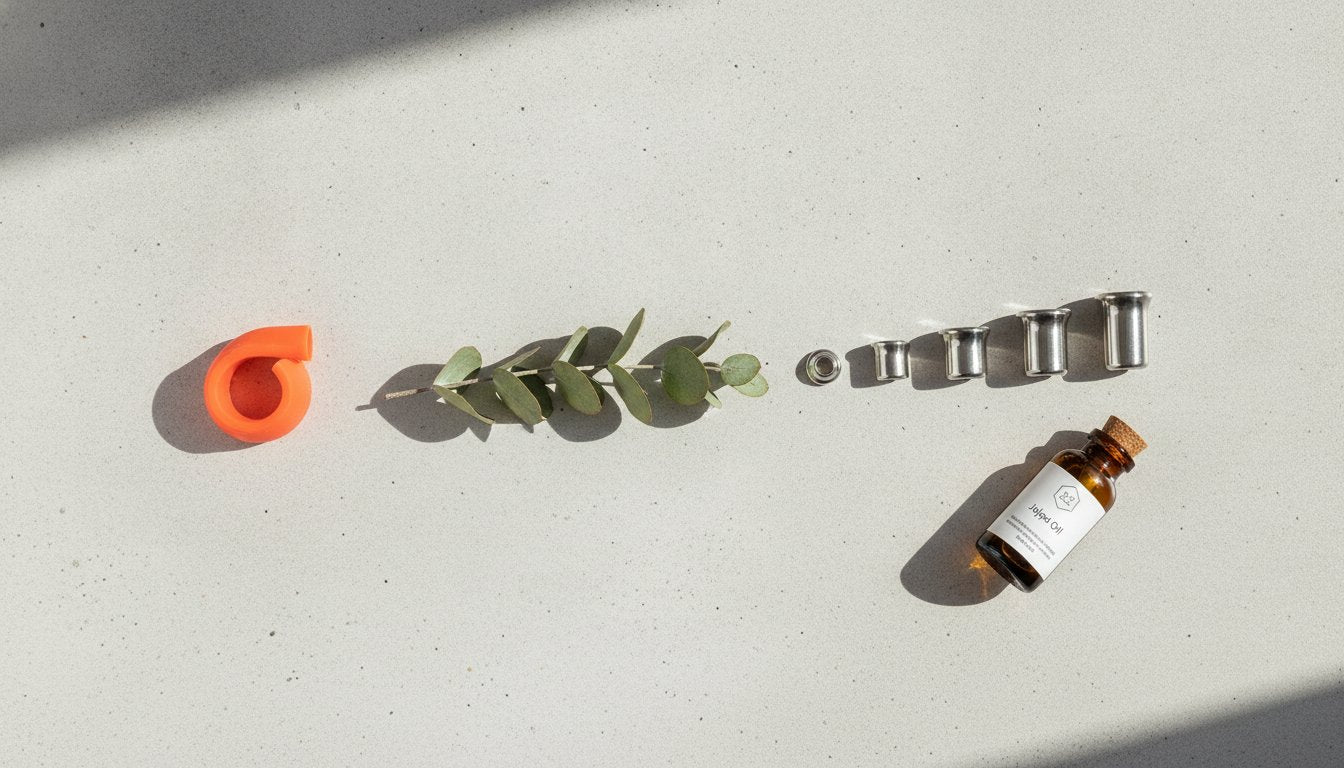
Silicone tunnels are the ultimate reward for a healed stretch, but using them to actually size up is a dangerous shortcut that often leads to permanent damage. The flexibility of the material makes it feel like a gentle tool for an easy transition, yet the biological reality is far more clinical. If you've been wondering can you stretch with silicone tunnels, the professional answer is a definitive no. We understand the desire for a quick, painless journey, especially when conflicting social media advice makes "folding" look like a harmless hack. Your ear lobes deserve more than a risky shortcut; they require a foundation of safety, patience, and precision.
Choosing the right path ensures your self-expression remains a source of pride rather than a medical concern. In this guide, we'll demystify the science of why porous materials fail during the healing process and reveal the professional standards for "dead stretching" using biocompatible materials like surgical steel. You will learn the exact timeline for a healthy stretch, how to use nourishing oils for elasticity, and the specific moment it's finally safe to wear silicone. Let's protect your progress by focusing on the long-term health, thickness, and integrity of your skin.
Key Takeaways
- Understand why silicone’s porous nature makes it a sophisticated reward for healed ears rather than a safe tool for active sizing.
- Discover why the professional answer to can you stretch with silicone tunnels is a firm no, as the "folding method" risks painful blowouts and skin fusion.
- Explore professional-grade alternatives like Surgical Steel Taper and Plug Kits or Acrylic Ear Stretching Kits for a controlled, even transition.
- Learn the essential timing and lubrication techniques, including the use of Jojoba or Rosehip oil, to keep your lobes thick and resilient.
- Master daily aftercare with Saline Piercing Aftercare Spray to maintain hygiene and support the long-term integrity of your skin.
Understanding Silicone: Why It Is Not a Stretching Tool
Silicone is celebrated for its lightweight flexibility and soft texture. It feels like an intuitive companion for the journey of Stretching (body piercing). However, when we address the specific question can you stretch with silicone tunnels, we must look past the surface. Silicone is fundamentally a "healed-wear" material. It is a reward for a mature fistula, not a vehicle for active expansion. As your Wise Guardian, we prioritize the long-term health of your lobes over fleeting aesthetic convenience. Safety isn't just a suggestion; it's the biological foundation of a successful result.
The conflict lies in the material's physical properties. Silicone is high-friction, porous, and reactive. While it feels smooth to the touch, it acts like a sponge for microscopic debris. Using this material during an active stretch introduces unnecessary risks to your personal aesthetics and physical well-being. To achieve a pain-free journey, you must understand the microscopic interaction between your skin and the jewelry you choose.
The Science of Porosity and Friction
Silicone is a porous material. At a microscopic level, its surface is filled with tiny voids that act as magnets for moisture and bacteria. When you perform an active stretch, your skin is essentially an open wound. Healing skin cells are looking for a stable surface to latch onto as they regenerate. Because silicone is porous, these cells can grow into the jewelry itself. This creates a "bonding" effect where the jewelry and the ear lobe fuse together. Removing the tunnel later causes significant trauma, tearing away the new tissue you worked so hard to cultivate. Additionally, silicone has a high coefficient of friction. It grips the skin rather than sliding past it, which causes irritation and micro-tears during insertion. When considering can you stretch with silicone tunnels, remember that a fresh stretch requires a surface that allows the skin to rest, not one that binds to it.
Silicone vs. Biocompatible Materials
Not all silicone is created equal. While medical-grade silicone exists, jewelry-grade options are still unsuitable for the stresses of active stretching. Biocompatible materials like surgical steel or glass offer a non-porous, mirror-finish surface. These materials prevent bacteria from nesting and allow the ear to heal without the risk of adhesion. We believe in providing the right foundation for your self-expression. Our Surgical Steel Taper and Plug Kit is designed to offer the clinical precision your body needs during the transition phase. By choosing non-porous starting materials, you ensure a clean, stable, and predictable healing environment. Once your fistula is fully matured and toughened, you can transition to silicone with confidence. It is about timing, integrity, and respect for your body's natural healing pace.
The Dangers of Silicone Stretching: Blowouts and Skin Fusing
Many enthusiasts are lured by the promise of an effortless transition. They see viral tutorials and ask, can you stretch with silicone tunnels to bypass the patience required for traditional methods. We must be clear: stretching with silicone is unsafe, high-risk, and often painful. This tripartite warning isn't meant to discourage your journey, but to protect the integrity of your skin. Silicone is a magnificent material for healed piercings, but as a stretching tool, it bypasses the body's natural limits and invites unnecessary trauma into your personal aesthetic journey.
How the 'Folding Method' Causes Blowouts
The "folding method" involves collapsing a silicone tunnel, inserting it into a smaller hole, and allowing it to pop open. This creates a physics nightmare for your lobe. The material exerts uneven, explosive pressure against the delicate internal lining of the fistula. Unlike a rigid plug that guides the skin, silicone forces it. This immediate expansion prevents the skin from gradually adapting to the new diameter. When this pressure becomes too great, the tissue has nowhere to go but out. A blowout is the forced displacement of the fistula lining due to excessive, immediate pressure. This condition is one of the most common risks and complications of stretched ears. It results in a ring of raw, irritated flesh protruding from the back of the lobe, which can lead to permanent scarring if not addressed with clinical care.
The Nightmare of Fused Lobe Tissue
Beyond the mechanical pressure, the biological risks are equally severe. During an active stretch, your body is in a state of heightened repair. It is searching for a stable surface to build new skin cells. If you use silicone, your body treats the microscopic pores of the jewelry as a scaffold for new growth. Healing tissue grows into the jewelry, creating a physical bond between your ear and the plug. Removing a fused tunnel is a traumatic event. It requires literally tearing the new skin away from the material, leading to significant bleeding and secondary infections. This cycle of damage causes the ear lobe to thin over time, compromising your ability to reach larger sizes safely. To avoid these setbacks, it is vital to use non-porous materials found in a professional Surgical Steel Taper and Plug Kit during the active phase of your journey. Protecting your lobes today ensures a healthy, thick foundation for the jewelry you'll love tomorrow.
Safe Stretching Alternatives: Choosing the Right Materials
Transitioning to a new size requires more than just a desire for change; it demands the right equipment. While the question of can you stretch with silicone tunnels often arises due to their soft texture, true safety lies in rigid, non-porous materials. As a Supportive Specialist, we guide you toward choices that respect your biology. Selecting the correct material is the first step in a pain-free journey toward healthy, thick ear lobes. By choosing professional-grade tools, you eliminate the guesswork and high-risk variables associated with flexible jewelry. It's about building a foundation of health, integrity, and style.
Success in this journey is measured in millimeters and patience. Before you begin any transition, consult a dedicated ear gauge size chart to understand the precise increments of your progress. Tracking your journey ensures you never rush the process, allowing your skin the necessary time to recover. Professional results come from professional habits. When you know exactly where you are in your journey, you can make informed decisions about when it's safe to move forward.
Surgical Steel: The Professional Choice
Surgical steel is widely considered the gold standard for active stretching. Its weight provides a subtle, constant downward pressure that encourages the ear to adapt naturally over time. This heavy-duty material is non-porous, mirror-smooth, and easy to sterilize. For those with sensitive skin, a Surgical Steel Taper and Plug Kit offers the ultimate reassurance. It minimizes friction during insertion and provides a stable environment for the fistula to mature. Steel is reliable, durable, and clinically sound, making it the most trusted choice for long-term ear health.
Acrylic: Lightweight and Beginner-Friendly
For those seeking a more affordable entry point, an Acrylic Ear Stretching Kit serves as an excellent alternative. Acrylic is exceptionally lightweight. This makes it ideal for individuals who find heavier metal jewelry uncomfortable during the initial stages of a stretch. It allows for creative self-expression without a significant financial investment. However, hygiene is paramount. Because acrylic cannot be autoclaved, you must clean your jewelry daily with mild soap and water. Our focus is on empowering your aesthetic choices through safe, accessible options that prioritize your long-term wellness and skin integrity.
The Safe Path: How to Size Up Without Silicone
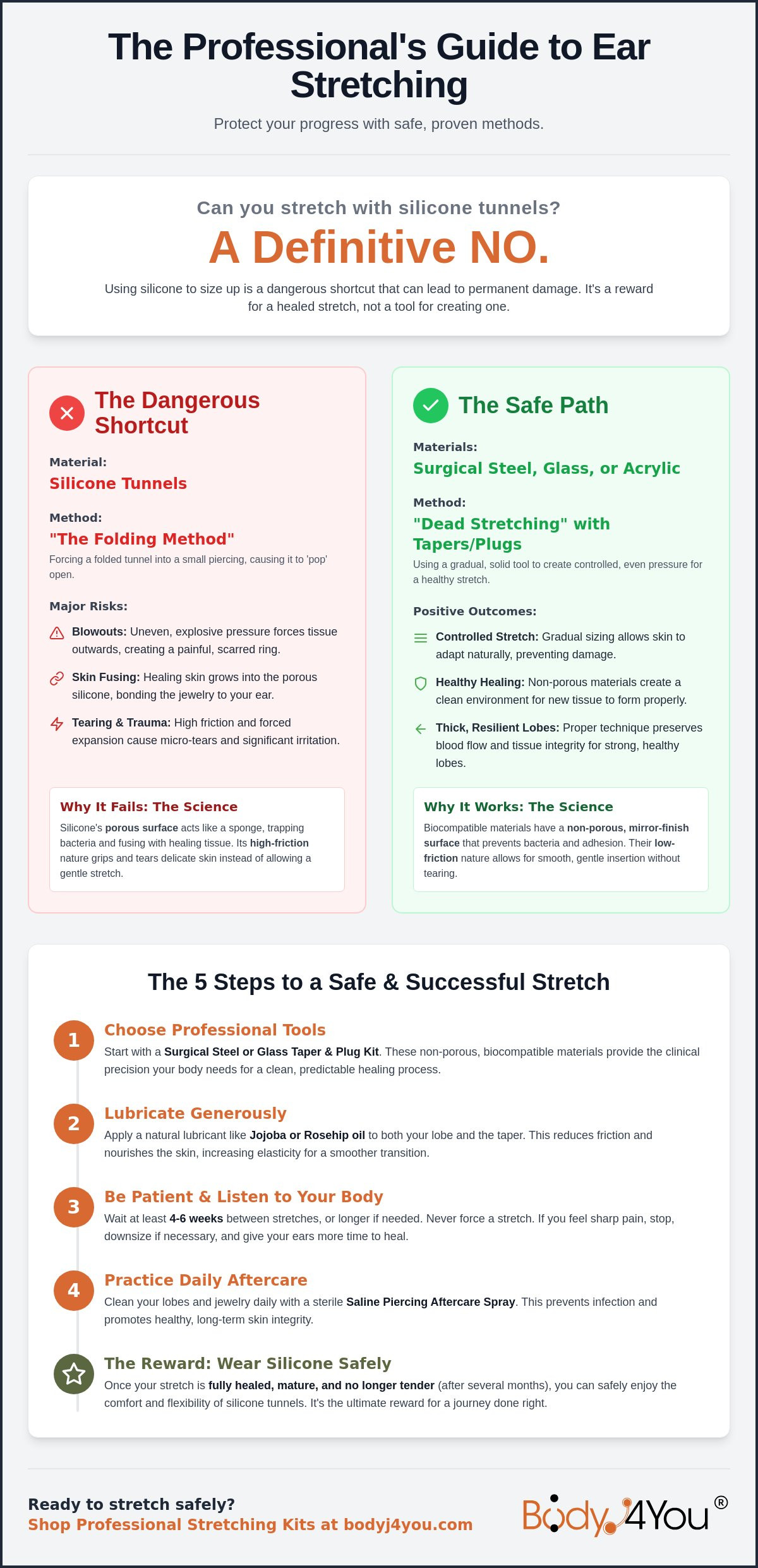
A successful stretch is a slow, methodical ritual that respects the biological limits of your skin. While the shortcut of asking can you stretch with silicone tunnels is tempting, the professional path involves a commitment to patience and precision. Your ear lobes are living tissue, not elastic bands. They require time to regenerate, thicken, and adapt to each new diameter. By following a structured protocol, you ensure your journey is pain-free and your results are permanent. We view this process as an investment in your self-expression, where safety provides the ultimate return on investment. Protecting your lobes today ensures you can wear the styles you love for a lifetime.
- Step 1: The Waiting Period. Allow a minimum of 6 to 8 weeks between sizes. This duration is essential for the fistula to recover its thickness and elasticity before the next transition.
- Step 2: Biological Lubrication. Prepare the tissue by applying Jojoba oil or Rosehip oil to both the lobe and the jewelry. This reduces friction and mimics the skin's natural moisture.
- Step 3: Slow Insertion. Slide the taper or plug through the piercing with a steady, gentle hand. Stop immediately if you feel sharp pain; discomfort is a signal that your body isn't ready.
- Step 4: Secure and Monitor. Use O-rings to hold the jewelry in place. Watch for redness, heat, or unusual swelling over the next 48 hours to ensure a healthy transition.
The Role of Lubrication in Safe Stretching
Lubrication is the most critical factor in preventing micro-tears during the stretching process. Jojoba oil is our preferred choice because its molecular structure is remarkably similar to human sebum. It absorbs deeply, nourishing the skin from within while providing a slick surface for the jewelry. For those experiencing minor irritation during the 'waiting' period, Castor oil offers a soothing, thick barrier that protects the lobe. We recommend the "Rule of Three" for a flawless experience: apply your chosen oil before the stretch to soften the skin, during the stretch to ease passage, and daily after the stretch to maintain health. You can find pure, high-quality Jojoba oil and Rosehip oil specifically formulated for ear care in our collection.
When Can You Finally Wear Silicone?
Silicone is a reward, not a requirement. To ensure your safety, we developed the "Healed Reward" checklist. You should only switch to silicone tunnels when your piercing meets three criteria: there is no lingering redness, "crusties" are absent, and the jewelry moves freely within the ear. Even after a successful stretch, you must wait at least 4 weeks before introducing silicone. This delay allows the internal lining of the fistula to fully mature and toughen. Silicone is designed for style, comfort, and the vibrant world of personal aesthetics, but it belongs only in a healthy, mature stretch. Your patience today prevents the complications of tomorrow. Respecting this timeline is the hallmark of an experienced and disciplined enthusiast.
Aftercare Essentials for Stretched Ears
The journey to perfectly gauged ears does not end once the jewelry is in place. Achieving a sophisticated, high-end aesthetic requires a disciplined commitment to biological maintenance and hygiene. While we have established that the answer to can you stretch with silicone tunnels is a definitive no, the success of your eventual transition to silicone depends entirely on the health of your aftercare routine. Neglecting your lobes during the recovery phase can lead to thinning tissue or persistent irritation. By adopting a professional cleaning ritual, you protect your investment in self-expression and ensure your skin remains resilient, thick, and healthy.
The Daily Cleaning Ritual
Consistency is the hallmark of a supportive specialist. Every day, your ears deserve a rhythmic flow of care: Cleanse, Moisturize, Observe. During your daily shower, remove your jewelry to allow both the lobe and the plug to be cleaned of dead skin cells and natural oils. A Saline Piercing Aftercare Spray is essential for this process. Unlike homemade salt mixtures, which often have incorrect pH levels, sterile saline provides a dermatologically sound environment for healing. For precise hygiene in hard-to-reach areas, use piercing cleaning swabs to gently remove debris without causing mechanical trauma to the fistula. This meticulous attention to detail prevents the accumulation of bacteria and maintains the purity of your piercing.
Maintaining Lobe Thickness and Elasticity
Long-term lobe health is built on the foundation of moisture and blood flow. Nightly massages are a vital habit for anyone serious about their stretching journey. Using Jojoba or Rosehip oil during these massages stimulates circulation, which encourages the tissue to remain thick and elastic. To provide a protective barrier against environmental stressors like cold weather or dryness, apply Gauges Balm. This specialized formula seals in moisture and prevents the dreaded "ear cheese" smell caused by trapped sebum and skin cells. If you encounter minor setbacks, such as localized swelling, a dedicated piercing bump treatment oil can help soothe the area and restore balance.
A healthy stretch is a slow stretch, supported by the right tools and a Wise Guardian's perspective. Your body is a canvas that requires respect and high-quality ingredients to thrive. By prioritizing these aftercare essentials, you move beyond the risks of improper materials and toward a future of safe, beautiful, and empowered self-expression. Remember that your lobes are a reflection of your patience; treat them with the clinical precision and nurturing care they deserve.
Empower Your Aesthetic Transformation
Your journey toward self-expression should be defined by confidence, not complication. We have explored the biological risks of improper materials and established why the answer to can you stretch with silicone tunnels remains a firm no. By prioritizing non-porous alternatives like surgical steel and maintaining a disciplined aftercare ritual with saline and nourishing oils, you protect the long-term health of your lobes. True aesthetic refinement is built on a foundation of safety, patience, and professional-grade tools.
At BodyJ4You, we bring over 20 years of industry experience to your personal transformation. We specialize in providing safe, high-quality, and affordable jewelry designed to support your body's natural healing process. Our locally manufactured skincare and aftercare products ensure your skin stays resilient and healthy at every stage. Don't leave your results to chance. Shop BodyJ4You Safe Ear Stretching Kits and Aftercare today to begin your pain-free journey. You have the vision; we have the expertise to help you achieve it beautifully.
Frequently Asked Questions
Can I use silicone tunnels to stretch my ears if I use a lot of lube?
No, you cannot safely use silicone for stretching regardless of the amount of lubricant used. Lubrication helps the jewelry slide, but it doesn't fix the underlying issue of silicone's porosity. If you are asking can you stretch with silicone tunnels, the answer remains a firm no because the material will still expand unevenly and risk bonding to your internal tissue.
How long do I have to wait after stretching to wear silicone?
You should wait a minimum of 4 weeks after a successful stretch before transitioning to silicone jewelry. This duration allows the fistula to mature and the skin to thicken. Only make the switch when your lobes are free of redness, tenderness, or discharge. Patience is the foundation of a healthy, permanent result.
What are the signs that my ears are reacting badly to silicone?
Look for persistent redness, localized heat, or an intense itching sensation. These are clinical indicators that your skin is reacting to the material or that bacteria is trapped in the pores. If the jewelry feels as though it has bonded to the skin, stop wearing it immediately and return to a non-porous material like surgical steel.
Is there such a thing as 'stretching-grade' silicone?
"Stretching-grade" silicone is a marketing myth that doesn't exist in professional body modification. While medical-grade silicone is safer for healed wear, no silicone is safe for active stretching. Safety precedes aesthetic comfort, and reputable professionals only recommend non-porous materials like surgical steel for sizing up.
What should I do if my silicone tunnel is stuck in my ear?
Apply a generous amount of Jojoba or Castor oil to the area and allow it to soak for several minutes. Use warm water to help soften the skin and gently massage the lobe to break the seal. If the jewelry has fused to the tissue, don't pull forcefully; seek assistance from a professional piercer to avoid permanent trauma.
Can I sleep in silicone tunnels after a fresh stretch?
You shouldn't sleep in silicone tunnels following a fresh stretch because the material shouldn't be in your ear at that stage. Even in healed ears, sleeping in silicone can sometimes cause the jewelry to fold or put uneven pressure on the lobe. Stick to your stretching jewelry until the four-week healing mark is passed.
Why does my ear smell when I wear silicone plugs?
Silicone is a porous material that naturally traps dead skin cells and sebum. When these organic materials are held against the skin without airflow, they break down and create a distinct odor. Daily hygiene, including removing the jewelry in the shower and using a specialized Gauges Balm, is the most effective way to maintain a fresh, clean aesthetic.
What is the safest material to use for the actual stretching process?
Surgical steel is the safest and most reliable material for the stretching process. Its smooth surface and appropriate weight encourage a steady, predictable transition. By choosing a Surgical Steel Taper and Plug Kit, you ensure your journey is supported by materials that prioritize biological integrity and long-term wellness.


