

Is that stubborn bump on your cartilage actually a permanent scar, or just a sign your skin is desperate for regeneration? While a fresh piercing requires clinical precision, the secret to a flawless finish often lies in botanical restoration. You've likely spent weeks dedicated to saline soaks, yet you're still facing a raised, red irritation bump that refuses to flatten. Integrating rosehip oil for piercings at the correct stage of healing is the liquid gold solution for those who demand both safety and aesthetic perfection. It's a common frustration that can make your journey toward self-expression feel like a struggle against your own biology.
You don't have to settle for unsightly textures or the fear of permanent keloids. This 2026 guide reveals how to safely use rosehip oil to eliminate bumps, fade lingering scars, and maintain vibrant skin around your jewelry. We bridge the gap between beauty and biology by exploring the crucial oil versus saline timeline and the specific ways rosehip extract reduces redness. A 2024 review confirmed that this oil effectively treats hyperpigmentation and inhibits the inflammatory cytokines that lead to excessive scarring. It's time to transform your aftercare routine into a sophisticated wellness ritual that protects your skin, your jewelry, and your confidence.
Key Takeaways
- Understand why the high concentration of Vitamin A in Rosehip oil makes it the essential "Liquid Gold" finisher for skin regeneration.
- Discover how applying rosehip oil for piercings at the right stage can eliminate stubborn bumps and significantly reduce localized redness.
- Learn the safety protocols for application, including the importance of using sterile piercing cleaning swabs to maintain a hygienic environment.
- Differentiate between Rosehip, Jojoba, and Tea Tree oils to choose the most effective botanical treatment for your unique piercing site.
- Master the transition from saline-based cleaning to oil-based restoration for a flat, healthy, and aesthetically pleasing result.
What is Rosehip Oil and Why is it Essential for Piercing Care?
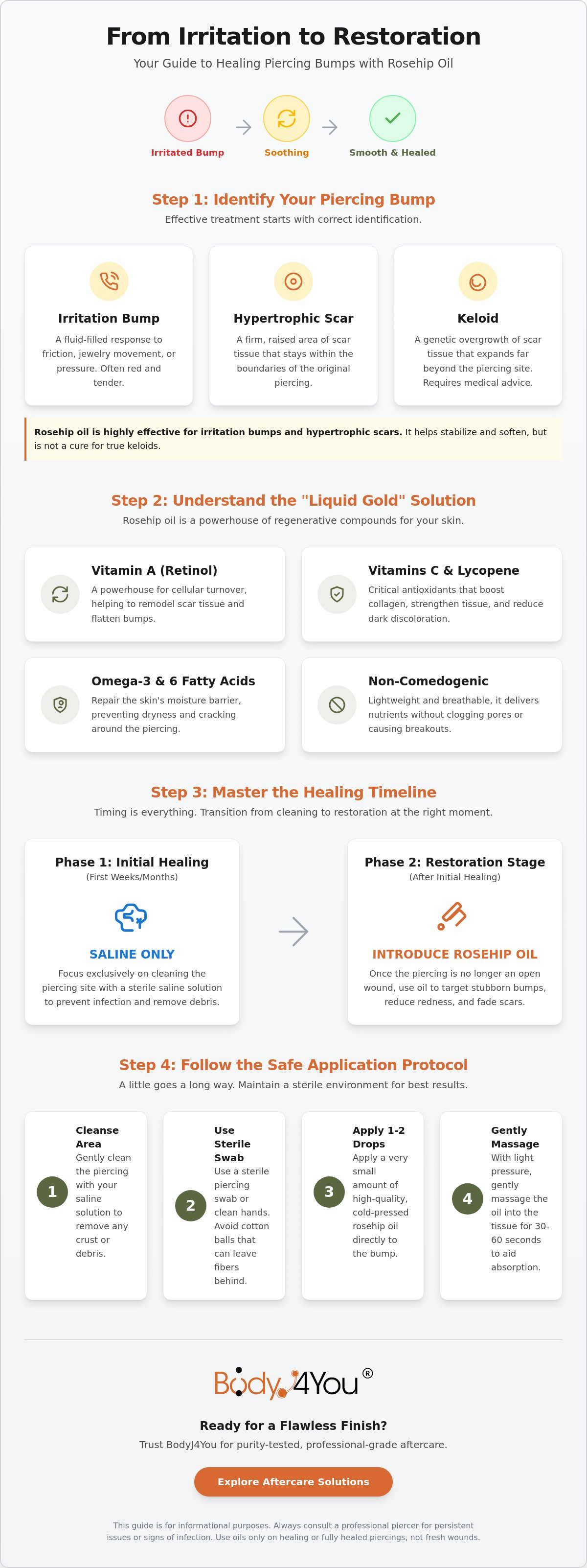
Often referred to as "Liquid Gold" in the wellness community, rosehip oil is a nutrient-dense pressed seed oil harvested from the Rosa canina bush. It has earned its reputation through a high concentration of natural Vitamin A, also known as retinol, which is a powerhouse for cellular turnover. Rosehip oil is a biocompatible lipid that supports skin elasticity by mimicking the natural oils our bodies produce. Using rosehip oil for piercings isn't just about moisture; it's about providing the skin with the raw materials it needs to repair itself after the trauma of a needle. While saline is the undisputed king of the initial healing phase, rosehip oil acts as the sophisticated finisher that ensures your skin remains supple and resilient.
To achieve the best results, sourcing is everything. High-integrity rosehip seed oil must be cold-pressed and organic to preserve its delicate nutrient density. Heat-based extraction methods often destroy the very vitamins that make this oil effective. By choosing a pure, unrefined product, you ensure that every drop contains the biological markers necessary for professional-grade skin restoration.
The Science of Skin Regeneration
The skin around a piercing is under constant stress from jewelry weight, movement, and environmental factors. Rosehip oil delivers a potent blend of Vitamin C and Lycopene, which are critical for collagen production and tissue strength. These antioxidants work together to brighten the skin and reduce the dark discoloration often associated with healing punctures. Additionally, the presence of Omega-3 and Omega-6 essential fatty acids repairs the skin barrier. This is vital for the high-stress skin around a piercing, as these lipids prevent moisture loss and keep the tissue from becoming brittle or prone to cracking.
Purity and Sourcing Standards
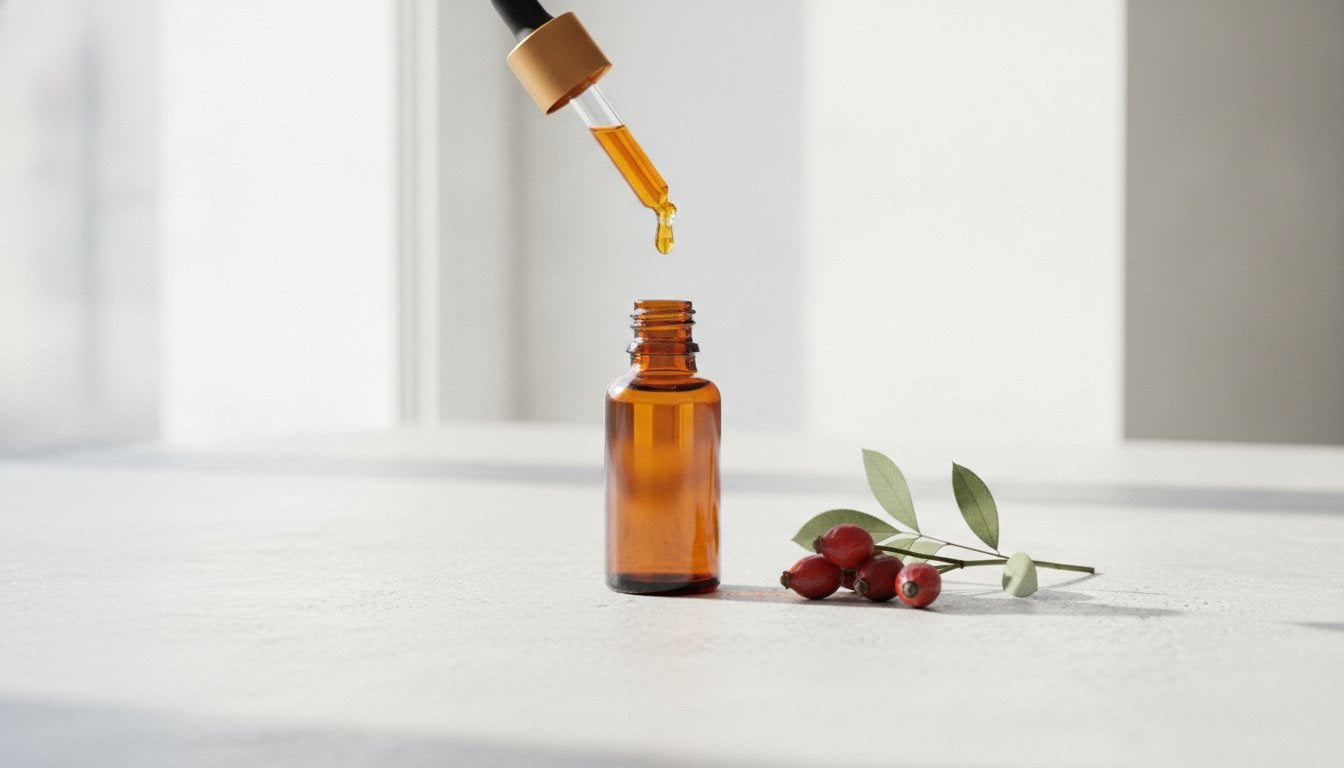
Many commercial oils are refined, a process that strips away the vital nutrients needed for true healing. Refined oils might feel smooth, but they lack the regenerative power of their raw counterparts. High-quality rosehip oil should always be stored in amber glass packaging. This isn't just a design choice; it's a technical necessity to prevent UV degradation, which can turn potent oils rancid and ineffective. BodyJ4You remains committed to locally manufactured, high-integrity skincare that prioritizes these standards. By focusing on purity and ethical production, we act as a wise guardian for your skin, ensuring that your journey toward self-expression is supported by clinical-grade botanical care.
Targeting Piercing Bumps and Scarring with Rosehip Oil
Not all piercing complications are created equal. Distinguishing between an irritation bump, a hypertrophic scar, and a keloid is the first step in effective treatment. Irritation bumps are typically fluid-filled responses to friction or jewelry movement. Hypertrophic scars are firm, raised areas that stay within the boundaries of the piercing site. Keloids, however, are genetic overgrowths of scar tissue that expand beyond the original puncture. While rosehip oil for piercings is highly effective for soothing irritation and remodeling hypertrophic tissue, it serves as a stabilizing force rather than a cure for true keloids. It's a specialized tool for specific needs.
The oil provides a unique softening effect on localized tissue. It improves flexibility, reduces tension, and prevents that restrictive, tight sensation often felt in healing cartilage or navel piercings. A common concern among enthusiasts is whether applying oil will cause breakouts. Rosehip oil is non-comedogenic, meaning it won't clog pores when used in moderation. It allows the skin to breathe while delivering concentrated nutrients. It's safe, effective, and lightweight.
Soothing Irritation and Redness
The secret to calming a red, angry piercing site lies in trans-retinoic acid. This naturally occurring component of rosehip oil accelerates skin renewal and reduces the intensity of localized swelling. By creating a protective moisture seal, the oil shields the vulnerable area from environmental irritants like dust or hair products. This barrier is essential for maintaining the integrity of the healing site. If you are currently struggling with a persistent flare-up, understanding how to get rid of a piercing bump is essential for long-term success. It's about combining the right products with professional techniques.
Fading Post-Piercing Discoloration
Even after a bump subsides, it often leaves behind hyperpigmentation. This dark or purple discoloration is especially common around old nose ring sites where the skin has been repeatedly stressed. The Health Benefits of Rosehip Oil include its ability to remodel scar tissue through consistent application. Visible improvements in skin texture and tone generally require patience. According to a study on post-surgical scars, significant results in reducing redness and discoloration were observed after applying the oil twice daily for 12 weeks. This steady, disciplined approach ensures your skin returns to its natural state. For those ready to begin this restorative journey, our high-purity rosehip oil provides the professional-grade quality your body jewelry deserves.
How to Safely Apply Rosehip Oil to Your Piercing
Precision is the hallmark of professional aftercare. Before you begin using rosehip oil for piercings, you must understand the "Golden Rule" of wound management. Never apply oil to a fresh, bleeding, or weeping piercing. A new puncture is an open channel; introducing lipids too early can trap bacteria and impede the oxygen flow necessary for cellular repair. You should wait until the initial healing phase has stabilized and the wound has closed before introducing botanical oils. To ensure compatibility, always perform a patch test on a neutral area of skin, such as your inner arm, 24 hours before applying it to your piercing site.
Hygiene is not a suggestion; it's a requirement. You must avoid using your fingers to apply products, as they harbor oils and bacteria that can compromise the site. Instead, utilize sterile piercing cleaning swabs to ensure a controlled and hygienic application. Adopting a "less is more" philosophy prevents excess buildup around your jewelry. Over-application can attract debris and lead to the very irritation you're trying to resolve. A single, well-placed drop is more effective than a saturated site.
The 4-Step Application Ritual
Consistency creates results. Follow this structured ritual to maximize the regenerative benefits of rosehip oil for piercings:
- Step 1: Cleanse. Start with a clean canvas by using a sterile saline spray to gently remove any residual debris or crust.
- Step 2: Dry. Pat the area completely dry with a lint-free paper towel; moisture trapped under oil can lead to skin maceration.
- Step 3: Prepare. Apply exactly 1 or 2 drops of oil to the tip of a clean swab rather than dropping it directly onto the piercing.
- Step 4: Massage. Gently massage the skin surrounding the jewelry for 30 seconds. Focus on the raised bump or scar tissue, but avoid forcing the oil into the fistula itself.
When to Stop and Seek Help
Your body is a communicative system that provides immediate feedback. It's vital to recognize the difference between a "healing itch," which is a normal part of tissue knitting, and "product irritation." If you experience intense itching, hives, or a sudden increase in heat around the site, you may be having an allergic reaction. Discontinue use immediately and flush the area with saline. You should also pause oil application if the piercing shows signs of an actual infection, such as yellow or green pus or extreme throbbing. In these instances, the priority shifts from scar remodeling back to clinical wound care.
Rosehip vs. Jojoba and Tea Tree: Which Oil Wins?
Not all botanical extracts serve the same purpose. Rosehip, Jojoba, and Tea Tree are the prominent trio of the piercing world, but they are not interchangeable. Rosehip excels at regeneration. Jojoba provides deep moisture. Tea Tree acts as a potent anti-microbial. While Tea Tree is often touted as a "cure-all" on social media, it's frequently too aggressive for sensitive cartilage piercings. It can cause chemical burns, extreme dryness, and localized peeling if not diluted with extreme precision. You need a solution that balances clinical efficacy with nurturing care.
Jojoba oil is the undisputed gold standard for ear stretching kits because it mimics human sebum and provides the lubrication needed for tapering. However, when you're battling an irritation bump or a stubborn scar, rosehip oil for piercings is the superior choice. It doesn't just sit on the surface to hydrate; it actively encourages the skin to remodel itself. Use this decision framework to guide your care: choose Jojoba for elasticity and maintenance, but reach for Rosehip for restoration and texture correction.
The Cartilage Specialist: Why Rosehip Wins for Nose & Ears
Cartilage is a unique biological environment. It is avascular, meaning it lacks direct blood vessels and relies on nutrient diffusion from surrounding tissue for repair. This slow process requires a specialist. Rosehip oil’s lightweight molecular structure and thin consistency are ideal for these tight, delicate areas. It delivers concentrated Vitamin A directly to the high-stress skin around a nose or helix piercing without the heavy, suffocating residue of thicker oils. This ensures the site remains oxygenated while receiving the biological building blocks necessary for cartilage-site stability.
Mixing and Dilution Myths
Don't be tempted by DIY "healing cocktails" or multi-ingredient serums. Mixing different oils at home can destabilize the pH balance of your skin and introduce impurities that trigger inflammation. BodyJ4You’s pure formulations are safer than complex serums because they eliminate the risk of hidden preservatives or synthetic fragrances. We prioritize ingredient integrity and transparency to protect your self-expression. '100% Pure' is the only acceptable label for professional aftercare. Elevate your restorative ritual with our pure rosehip oil, meticulously sourced to preserve its natural regenerative power.
The BodyJ4You Difference: Ethical Aftercare for Self-Expression
BodyJ4You isn't just a retailer; we are a supportive specialist in your journey toward self-expression. Since our inception over two decades ago, we have prioritized the clinical precision required for safe healing alongside the vibrant world of personal aesthetics. We understand that a piercing is more than a fashion statement. It is a vulnerable physical transformation that requires a protective and stabilizing force. Our commitment to rosehip oil for piercings reflects this philosophy by offering a product that is dermatologically sound and ethically sourced. We act as a wise guardian for your skin, ensuring that your aesthetic choices are supported by long-standing industry expertise.
We operate on a foundational "Rule of Three" that defines our place in the market. Every product we offer is Safe, High-Quality, and Affordable. This ensures that expert-level care is accessible to everyone, from the first-time earlobe piercing to the seasoned collector of complex cartilage work. You shouldn't have to choose between your budget and your biological well-being.
USA-Made Quality Control
Our dedication to your safety begins with regional manufacturing. By producing our aftercare solutions in the USA, we maintain absolute ingredient transparency and rigorous quality control. This local approach allows us to bypass the long transit times associated with international shipping, ensuring the "freshness" of our botanical oils. When you use our rosehip oil for piercings, you are receiving a product at its peak nutrient density. It hasn't spent months sitting in a shipping container; it has been handled with the care that domestic production standards demand.
Ethics are the cornerstone of our production standards. We maintain a strict cruelty-free commitment and prioritize animal welfare in every step of our supply chain. Regional production also means we can verify the integrity of our ingredients, ensuring that what touches your skin is pure, potent, and free from undisclosed synthetic additives. This transparency builds a deep sense of consumer trust, positioning us as a reliable partner in your personal growth.
Your Partner in Piercing Longevity
Self-expression should never come at the cost of your health. We encourage our community to view aftercare not as a temporary chore, but as a long-term wellness habit. Maintaining the skin around your jewelry ensures that your piercings remain vibrant, flat, and comfortable for years to come. Beyond individual oils, we invite you to explore our full range of piercing bump treatment oils, each designed to address specific textural concerns with surgical-grade care. Our role is to provide the guided tour through a curated collection that prioritizes your integrity over fleeting trends.
Your journey is unique, and your skin deserves a specialist who respects that individuality. We are here to provide the expertise, the products, and the reassurance you need to heal with confidence. Nurture your skin with BodyJ4You Rosehip Oil today.
Elevate Your Aftercare Ritual for Lasting Results
Your journey toward self-expression deserves a finish that is as flawless as the jewelry you choose. We have explored how the high concentration of Vitamin A in rosehip oil acts as a biological architect, remodeling scar tissue and calming stubborn irritation bumps. By waiting for the initial healing phase to stabilize and using sterile tools for application, you protect the integrity of your skin while encouraging rapid regeneration. It is about moving beyond basic maintenance into a realm of sophisticated restoration. You don't have to settle for persistent redness or uneven textures.
Integrating rosehip oil for piercings into your daily routine ensures your skin remains as resilient as your spirit. BodyJ4You brings over 20 years of industry experience to every bottle, offering USA-manufactured skincare that is safe, high-quality, and affordable. We are committed to providing the clinical precision your body requires by using cruelty-free and organic ingredients that respect your wellness standards. Shop Premium Rosehip Oil for Piercing Care and experience the difference that professional-grade botanical care makes. Your skin is a canvas; treat it with the expert care it deserves and heal with confidence.
Frequently Asked Questions
Can I use rosehip oil on a brand-new piercing?
No, you should never apply rosehip oil to a brand-new piercing. Fresh piercings are open wounds that require sterile saline solution to prevent infection. Introducing oils too early can trap bacteria and suffocate the healing tissue. Wait until the initial stage of healing is complete and the site no longer bleeds or weeps before starting a restorative botanical regimen.
Will rosehip oil get rid of a keloid?
Rosehip oil won't eliminate a true keloid, as these are genetic overgrowths of scar tissue. However, it's highly effective at flattening irritation bumps and remodeling hypertrophic scarring. If your bump is red, fluid-filled, or localized to the puncture site, rosehip oil for piercings can provide the regenerative support needed to restore a flat, healthy texture.
How many times a day should I apply rosehip oil to my piercing bump?
Apply the oil twice daily, ideally once in the morning and once before bed. Consistency is more important than quantity. Using a sterile swab ensures you don't introduce new bacteria to the site. Over-application can lead to buildup around your jewelry, so stick to one or two drops per session to maintain a clean, breathable environment for your skin.
Can I use rosehip oil if I have oily or acne-prone skin?
Yes, rosehip oil is safe for oily and acne-prone skin because it's non-comedogenic. It's considered a "dry oil," meaning it absorbs quickly without leaving a greasy residue or clogging pores. This makes it an ideal choice for facial piercings, such as nostrils or eyebrows, where traditional heavy ointments might cause localized breakouts or additional irritation.
Does rosehip oil expire, and how should I store it?
Rosehip oil typically has a shelf life of six to twelve months and should be stored in a cool, dark place. Because it's rich in delicate essential fatty acids, exposure to heat and light can cause it to oxidize and lose its potency. Always keep your oil in an amber glass bottle and ensure the cap is tightly sealed after every use to preserve its nutrients.
What should I do if my piercing bump gets worse after using oil?
If your bump increases in size, heat, or redness, discontinue use immediately and flush the area with sterile saline. This reaction could indicate a sensitivity to the oil or a trapped pocket of bacteria. Return to basic aftercare protocols and consult a professional if you notice signs of infection, such as yellow discharge or persistent throbbing that doesn't subside.
Is rosehip oil safe for oral or genital piercings?
You should only use rosehip oil for piercings on external skin sites. It's not formulated for the mucous membranes found in oral or genital piercings. For these sensitive areas, stick to alcohol-free mouthwash or simple saline rinses as directed by your specialist. Using oils on internal tissues can disrupt your body's natural pH balance and lead to significant irritation.
Can I use rosehip oil while wearing acrylic jewelry?
We recommend caution when using oils while wearing acrylic jewelry. Certain oils can cause acrylic to become brittle or crack over time, which may harbor bacteria or cause scratches in the fistula. If you're using a restorative oil, consider switching to surgical steel or titanium jewelry during the treatment phase. This ensures both your skin and your jewelry remain in peak condition.


