

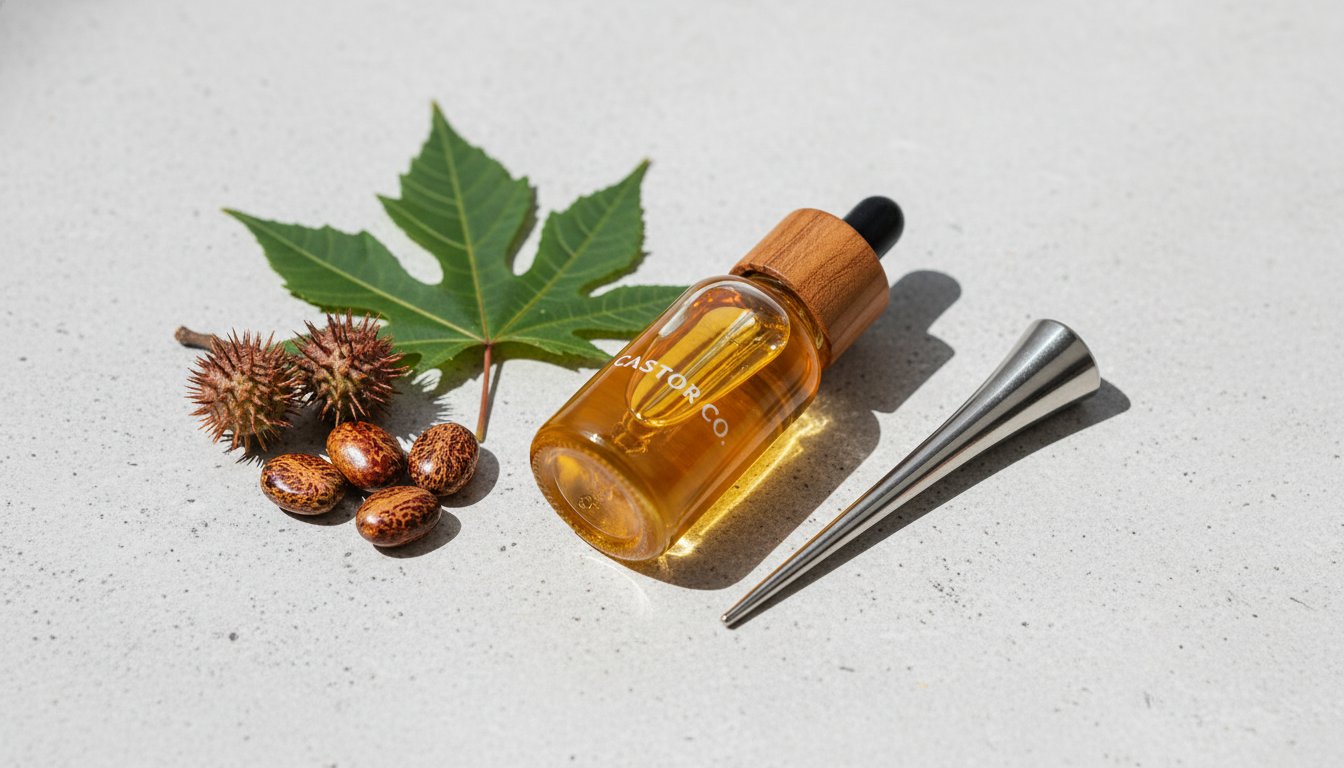
Could a single seed extract be more effective for your ear stretching journey than the most advanced synthetic balms? You've likely felt the sting of a persistent piercing bump or the tightness of a lobe that simply refuses to stay supple. It's frustrating to invest in high-quality jewelry only to be met with irritation, redness, and dryness. We believe your skin deserves a protective, stabilizing force that respects your body’s natural biology, and castor oil provides exactly that. It is safe, natural, and effective.
In this 2026 expert guide, you'll discover how the unique molecular properties of this oil can revolutionize your piercing aftercare. This natural humectant doesn't just sit on the surface. It penetrates deeply to support elasticity, reduce inflammation, and provide a clean alternative to harsh chemical treatments. Recent safety assessments by the CIR Expert Panel confirm its status as a reliable staple for your wellness routine. We will examine the clinical benefits of ricinoleic acid, the best practices for daily application, and the specific steps you can take to achieve the healthy, pliable, and resilient skin your self-expression demands.
Key Takeaways
- Understand how ricinoleic acid provides the deep-tissue hydration necessary for healing delicate piercing sites.
- Learn to manage persistent piercing bumps and redness using the anti-inflammatory properties of high-purity castor oil.
- Discover why increasing skin elasticity is the most effective way to prevent blowouts during your ear stretching journey.
- Master a safe, step-by-step application routine that prioritizes hygiene and prevents clogged piercing channels.
- Identify the importance of domestic quality standards and cold-pressed purity for products used on broken skin.
What is Castor Oil? The Science of Ricinoleic Acid
To understand why this ingredient is a staple in professional aftercare, we must first ask: What is Castor Oil? At its core, it's a nutrient-dense, high-viscosity triglyceride derived from the seeds of the Ricinus communis plant. Unlike lighter botanical extracts that evaporate or absorb instantly, this substance remains on the skin to provide a protective, stabilizing shield. It is heavy, rich, and reliable. This unique physical profile makes it an ideal candidate for managing the delicate environment of a healing piercing or a stretching earlobe.
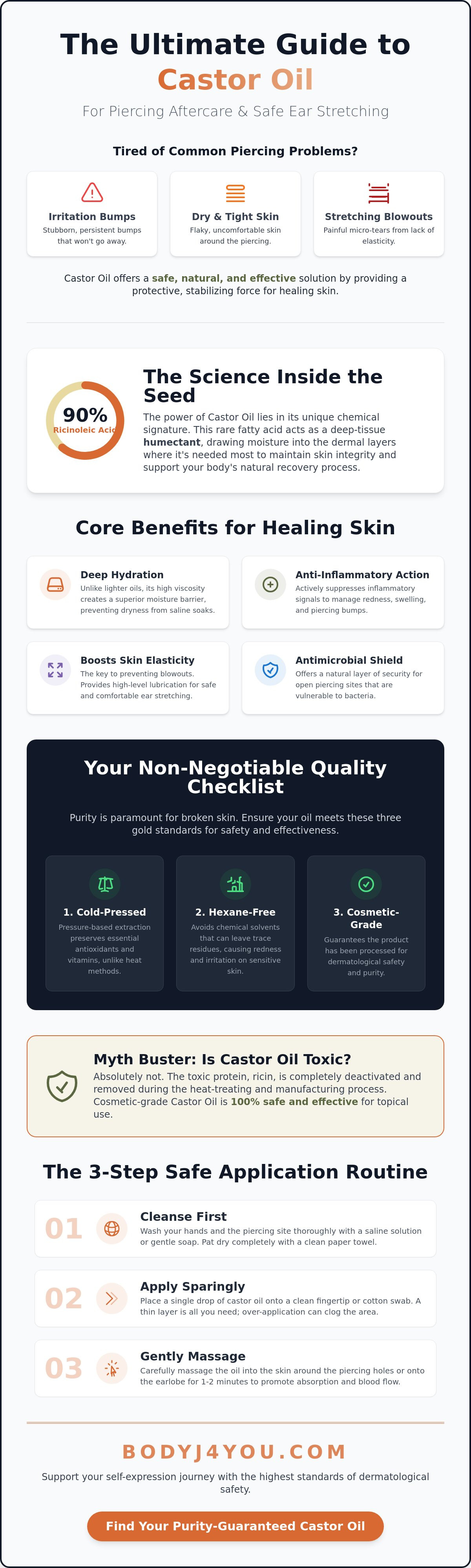
The true power of castor oil lies in its chemical signature, specifically ricinoleic acid. This rare fatty acid makes up approximately 90% of the oil's composition. While most oils provide simple surface hydration, ricinoleic acid acts as a deep-tissue humectant. It draws moisture into the dermal layers where your skin needs it most to maintain its integrity. This isn't just surface-level beauty; it's biological support for your body's natural recovery process.
There is a common myth regarding ricin, a toxin found naturally in the castor bean. It's vital to clear this up for your peace of mind. During the manufacturing of cosmetic-grade oils, the seeds undergo specific heat treatments. This process deactivates the ricin protein entirely, leaving behind a pure, safe, and effective product. You aren't applying a toxin; you're applying a refined botanical solution that has been used for centuries in traditional wellness.
The Molecular Advantage for Skin
The thick consistency of this oil isn't just a texture preference. It provides a superior moisture barrier that guards against environmental irritants. For those practicing "dead stretching," this viscosity is a game-changer. It offers the high-level lubrication needed to prevent micro-tears and painful blowouts. While jojoba oil is excellent for mimicking natural sebum, castor oil provides a more robust physical barrier. It is thicker, stickier, and more protective. It also possesses natural antimicrobial properties, which add an extra layer of security for open piercing sites that are vulnerable to bacteria.
Cold-Pressed vs. Hexane-Free: What to Look For
Purity is non-negotiable when you're dealing with broken skin or stretched tissue. Cold-pressing is the gold standard for extraction. This method uses pressure rather than high heat to pull the oil from the seeds, which preserves the essential antioxidants and vitamins. Many mass-produced oils use hexane extraction to increase yield. This chemical solvent can leave behind trace residues that cause redness and irritation on sensitive skin. To ensure the best results for your piercings, always verify that your oil meets these three criteria:
- Cold-pressed extraction to maintain nutrient integrity.
- Hexane-free processing to avoid chemical irritants.
- Cosmetic-grade certification for guaranteed safety.
Castor Oil Benefits for Piercing Aftercare and Healing
While many general health sources focus on its historical use as a digestive aid, the true modern potential of this botanical lies in topical tissue recovery. The Science of Ricinoleic Acid reveals a fatty acid profile that actively suppresses inflammatory signals within the skin. This isn't just about surface hydration; it's about altering the environment of the piercing to favor healing over irritation. When applied correctly, castor oil helps manage the redness, swelling, and localized heat that often accompany new or troubled piercings. It acts as a stabilizing force for your skin.
Success in aftercare often comes down to synergy. A saline solution is essential for irrigation and removing bacteria, but frequent salt exposure can leave the skin dry and brittle. This is where castor oil becomes indispensable. By applying a thin layer of oil after your saline rinse, you create a breathable moisture seal. This prevents the jewelry from chafing against the delicate fistula and reduces the friction that leads to hypertrophic scarring. It's a simple, two-step approach: cleanse, protect, and stabilize. For the best results, we recommend pairing your routine with a high-quality Saline Piercing Aftercare Spray to ensure the site remains sterile before you seal it.
Soothing Irritation and Piercing Bumps
Stubborn bumps are the most common hurdle in the piercing community. If you're wondering how to get rid of a piercing bump, the answer often lies in reducing localized pressure and inflammation. The ricinoleic acid in the oil penetrates deep enough to soften the hardened tissue of an irritation bump, encouraging it to flatten over time. However, timing is everything. Don't use oil on fresh, bleeding, or weeping piercings. Wait until the initial wound has closed before introducing oils. It's also crucial to distinguish between a simple irritation bump, which is usually flesh-colored and painless, and a true infection that requires medical attention.
Nurturing New Tissue Growth
Healthy skin regeneration requires specific building blocks. This oil is naturally rich in Vitamin E and Omega-6 fatty acids, both of which are essential for skin elasticity and repair. These nutrients support the development of new, resilient tissue within the piercing channel. One of the greatest practical benefits is the prevention of "crusting." By keeping the area lubricated, the natural discharge from the healing piercing won't adhere to the jewelry as aggressively. This prevents the painful "tugging" sensation when the jewelry moves. Always ensure your hands and the piercing site are meticulously clean before application to keep the environment safe for growth.
The Secret Weapon for Safe Ear Stretching
Successful ear stretching is a journey of patience, precision, and protection. While many enthusiasts focus solely on the jewelry, the biological health of the lobe tissue determines the ultimate success of the stretch. We consider castor oil the ultimate lubricant for "dead stretching" methods because of its unique physical properties. It is safe, viscous, and reliable. Unlike lighter oils that absorb too quickly, this oil provides a persistent glide that reduces the risk of micro-tears and painful blowouts during the transition to a larger size.
A 2026 scientific review on castor oil's skin benefits confirms its role as a potent moisturizer and anti-inflammatory agent. For those wearing heavy gauges, maintaining the health of the fistula is a daily commitment. The thick consistency of the oil acts as a cushion, distributing the weight of the jewelry more evenly and preventing the "thinning" of the lobe that often occurs with improper care. It's a stabilizing force that supports your body's ability to adapt to new dimensions without compromising tissue integrity.
Improving Lobe Elasticity and Thickness
Regular massage is the cornerstone of healthy stretching. By dedicating five minutes a day to massaging your lobes with a few drops of oil, you encourage localized blood flow and nutrient delivery. This practice keeps the skin pliable, resilient, and thick. Hydrated skin is significantly more elastic than dry skin, which is the best defense against the dreaded "cat-butt" texture. Before you attempt your next jump, consult our ear gauge size chart to ensure you're following a safe, incremental timeline that respects your skin's healing capacity.
Lubrication for Your Ear Stretching Kit
When it's time to insert new jewelry, the choice of lubricant matters. Water-based options often evaporate before the jewelry is fully seated, leading to friction and irritation. Castor oil stays exactly where you put it. Apply a thin coating to your ear stretching kit tapers or plugs to ensure a smooth, effortless glide. This high-viscosity barrier minimizes the pressure on the inner walls of the piercing. To avoid "jewelry slip," use only a small amount on the jewelry itself and keep your fingertips dry. This balance ensures you maintain control while the jewelry moves into place with clinical precision.
How to Apply Castor Oil: A Step-by-Step Routine
Precision in application is just as vital as the quality of the oil itself. Before you begin any treatment, observe the "Clean Hands, Clean Piercing" rule. Wash your hands thoroughly with antimicrobial soap and ensure the piercing site has been irrigated with saline. This prevents the introduction of new bacteria into the fistula. When using castor oil, remember that less is more. Its high viscosity means a single drop is often sufficient for both earlobes. Over-applying can clog the piercing channel, trapping sweat and debris, which hinders the oxygen flow necessary for cellular repair.
For piercings that are past the initial weeping stage but still healing, a once-daily application is sufficient. Healed, stretched lobes benefit from a twice-daily routine to maintain maximum elasticity and comfort. Before committing to a full routine, perform a patch test on a small area of skin, such as behind the ear. Wait 24 hours to ensure no redness or itching occurs. This simple step protects those with sensitive skin from potential irritation and ensures your body accepts the treatment.
The Daily Lobe Massage Technique
The 5-minute massage method is the gold standard for breaking down stubborn scar tissue and improving skin health. Start by rubbing a drop of oil between your fingertips to warm it; this lowers the viscosity for better penetration into the dermal layers. Gently knead the lobe between your thumb and forefinger using slow, circular motions. This technique encourages blood flow and helps redistribute collagen fibers for a smoother texture. Once finished, use a clean Piercing Cleaning Swab to wipe away any excess oil from the jewelry and the surrounding skin. This prevents the buildup of debris and keeps your setup looking pristine.
Precautions and When to Avoid Use
There are times when you must pause your routine to prioritize safety. If you notice signs of a true infection, such as green discharge, radiating heat, or throbbing pain, stop using oils immediately. Oils can seal in bacteria, potentially worsening an abscess or localized infection. Watch for signs of an allergic reaction, which typically include persistent itching or a bumpy, red rash. Finally, never allow your oil dropper to touch your skin or jewelry directly. Sharing droppers with others is a significant cross-contamination risk that can lead to shared infections. Maintain your bottle's integrity to ensure every drop remains sterile, safe, and effective for your journey.
BodyJ4You Castor Oil: Domestic Quality You Can Trust
BodyJ4You has spent over 20 years as a stabilizing force in the piercing world. Our commitment to your self-expression is backed by clinical precision and nurturing care. We prioritize locally manufactured skincare because we believe domestic production is the only way to guarantee the regulatory trust you deserve. Every bottle of our castor oil undergoes rigorous quality control within our US-based facilities to ensure it meets the highest dermatological standards. This isn't just about selling a product. It's about honoring a heritage of safety, quality, and transparency. We source our ingredients ethically to ensure that your journey toward aesthetic refinement doesn't come at the cost of your values. You deserve a product that is as reliable as it is effective.
The Wise Guardian Standards
We prioritize the integrity of the individual over fleeting beauty trends. Our approach bridges the gap between aesthetic refinement and biological safety. By focusing on ethical sourcing and cold-pressed purity, we provide a product that supports your skin's long-term well-being. This specific formulation is designed for the unique needs of body jewelry users, offering a protective barrier that is both clean and aspirational. We act as a supportive specialist for your skin. Our standards are built on three core pillars: purity, efficacy, and safety. We don't just follow industry standards; we set them. This disciplined approach ensures that every drop of oil you apply is free from contaminants and optimized for tissue recovery. It is a sophisticated blend of nature and science that respects the physical vulnerability of a healing piercing.
Building Your Complete Aftercare Kit
A successful journey requires more than a single product. It requires a steady, logical routine. We recommend pairing our oil with a sterile saline spray for piercings to create a comprehensive defense against irritation. While the saline irrigates and cleanses, the oil seals and protects. This synergy is the foundation of a long-term jewelry maintenance plan that keeps your skin resilient for years to come. The saline handles the immediate need for sterility, while the castor oil manages the long-term need for elasticity and hydration. This "Problem-Solution-Proof" flow has been validated by two decades of feedback from the piercing community. You aren't just buying oil; you're adopting a curated collection of tools designed for your success. Your self-expression is an investment. It deserves the protection of a wise guardian. Shop the BodyJ4You Castor Oil Collection today and take the next step in your stretching or piercing journey with confidence.
Empower Your Body’s Natural Healing
Your journey of self-expression deserves a foundation of clinical health and stabilizing care. By understanding the molecular science of ricinoleic acid, you've gained the tools to manage piercing bumps and maintain lobe elasticity with precision. High-quality castor oil isn't just a moisturizer; it's a protective shield that supports your skin's biological integrity. It is natural, effective, and safe. This simple addition to your routine ensures that your piercings remain as resilient as your personal style. We believe in providing the care your body needs to thrive.
BodyJ4You brings over 20 years of piercing industry expertise to your daily aftercare routine. We prioritize US-based manufacturing for superior quality control, creating a product that is trusted by professional piercers worldwide. Our brand values purity, safety, and efficacy above all else. Don't settle for synthetic alternatives when your skin deserves a wise guardian. Nurture your piercings with BodyJ4You Pure Castor Oil and take the next step in your wellness journey with confidence. Your body is a masterpiece, and we're here to help you protect it every step of the way.
Frequently Asked Questions
Can I put castor oil on a brand new piercing?
You shouldn't apply oils to a brand new piercing until the initial wound has fully closed. Fresh piercings are open wounds that require sterile saline irrigation to heal without trapping bacteria. Wait until the site is no longer bleeding, weeping, or crusting before introducing any oil-based products. This typically takes 6 to 8 weeks for lobes and longer for cartilage. Prioritize sterility during the early stages to ensure a successful long-term result.
Does castor oil help with ear stretching blowouts?
It can certainly assist in the recovery process after a blowout occurs. Once you've downsized your jewelry to relieve pressure, massaging the area with a small amount of oil helps soften the damaged tissue. This encourages the skin to regain its natural elasticity and reduces the appearance of the "lip" caused by the blowout. Consistency is vital for breaking down the thickened scar tissue over several weeks of healing.
Will castor oil clog my piercing and cause an infection?
Castor oil won't cause an infection if you follow a strict "less is more" approach and maintain proper hygiene. Over-application can trap sweat and debris against the skin, which creates an environment where bacteria might thrive. Use only a single drop and wipe away any excess from your jewelry. Always ensure your hands and the piercing site are clean before application to maintain a safe, breathable moisture barrier.
Is castor oil better than jojoba oil for stretched ears?
Neither is "better," as they serve distinct roles in your aftercare routine. Jojoba oil is excellent for daily hydration because it closely mimics your skin's natural sebum. However, castor oil is superior for the actual stretching process and for managing stubborn scar tissue due to its higher viscosity and ricinoleic acid content. Many enthusiasts use both: jojoba for daily wear and castor for active stretching sessions or therapeutic massage.
How often should I massage my ear lobes with castor oil?
You should aim to massage your earlobes once or twice daily for optimal results. For those actively stretching, a twice-daily routine helps keep the skin pliable and resilient against the pressure of new jewelry. If you have a fully healed piercing and just want to maintain skin health, once a day is sufficient. Spend about five minutes per lobe to ensure the oil is fully absorbed and blood flow is stimulated.
Can castor oil help get rid of a keloid or piercing bump?
It is highly effective for flattening irritation bumps and hypertrophic scars, but it cannot remove true keloids. Irritation bumps are usually caused by friction or pressure, which the oil's anti-inflammatory properties can soothe. True keloids are a genetic condition involving overgrowth of scar tissue and typically require professional medical intervention. If your bump is flesh-colored and changes size, it's likely an irritation bump that will respond well to treatment.
What should I do if my skin reacts negatively to castor oil?
Stop using the product immediately if you experience redness, itching, or a burning sensation. Clean the area thoroughly with a sterile saline spray to remove any remaining oil residue. You can also perform a patch test on your inner arm before reintroducing any new product to your routine. If the irritation doesn't subside within 48 hours, consult a professional piercer or a dermatologist to rule out a more serious allergic reaction.
Is BodyJ4You castor oil hexane-free and safe for sensitive skin?
Yes, our product is 100% cold-pressed and hexane-free, making it a safe choice for those with sensitive skin. We maintain rigorous US-based manufacturing standards to ensure every bottle is free from chemical solvents and contaminants. This commitment to purity protects the integrity of your skin and your jewelry. Because we prioritize quality control and ethical sourcing, you can trust that our formulation provides the clinical precision your body needs for recovery.


