

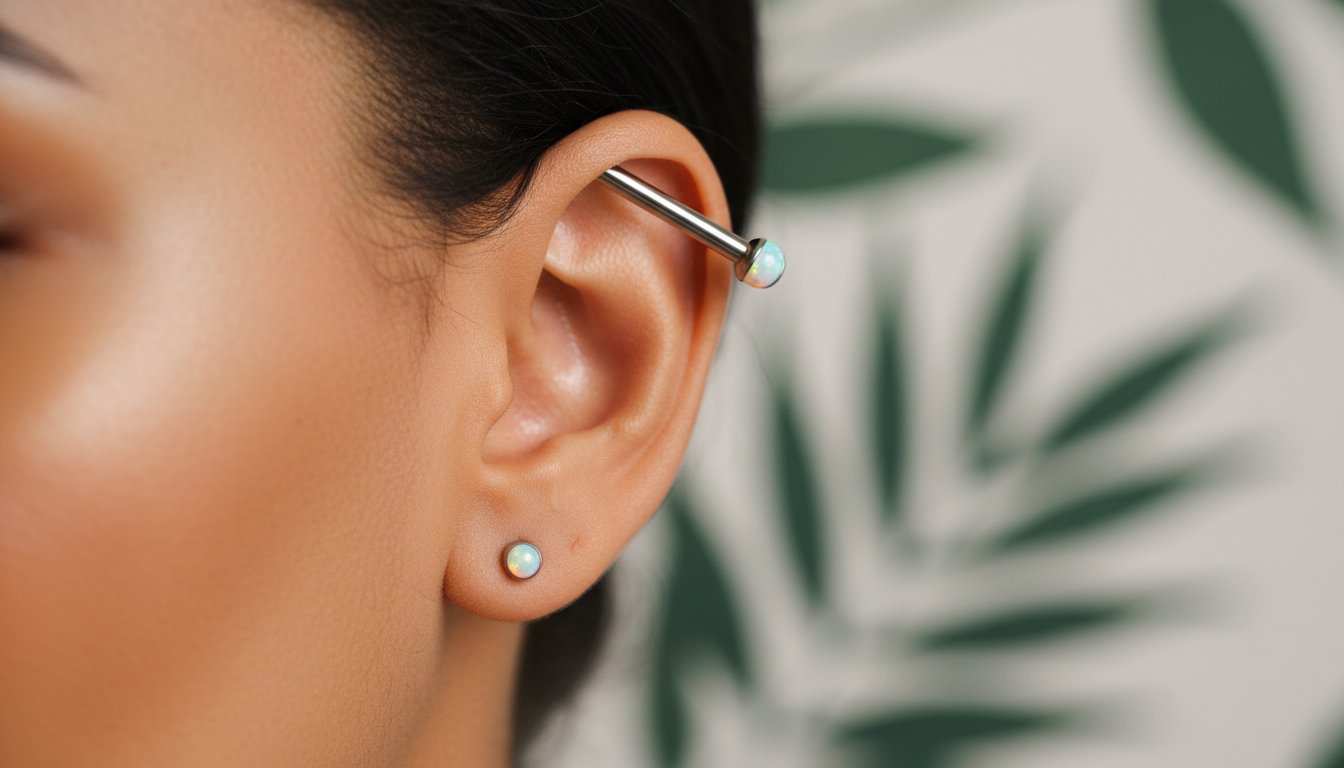
An industrial piercing is a structural commitment that demands more than just an eye for aesthetics. It requires a precise alignment with your ear’s unique architecture to ensure lasting comfort and health. Many enthusiasts choose this look for its striking, bold impact, yet they often face the frustration of barbells that pinch, ends that dig into the skin, or persistent irritation bumps from low-quality metals. Finding the right industrial piercing jewelry is about more than picking a design; it is about honoring your body’s biology with clinical precision and creative care.
You deserve a style that feels as effortless as it looks. We'll show you how to choose a barbell that offers a perfect fit, ensuring your self-expression never comes at the cost of your cartilage health. This guide covers the essential technical details of 14G versus 16G sizing, the safety of implant-grade metals, and creative ways to customize your look with charms or chains. Discover how to build a curated, comfortable, and sophisticated aesthetic that stands the test of time.
Key Takeaways
- Understand the mechanics, respect the anatomy, and protect your ear’s unique structural integrity.
- Ensure your safety, comfort, and well-being by selecting industrial piercing jewelry crafted from 316L surgical steel.
- Measure, fit, and secure; find the perfect length to avoid migration and accidental snagging.
- Elevate your aesthetic with opals, crystals, or charms for a curated, high-end look.
- Wait, wash, and swap; honor the 6-12 month healing threshold to protect your piercing’s long-term stability.
Understanding Industrial Piercing Jewelry: Mechanics and Anatomy
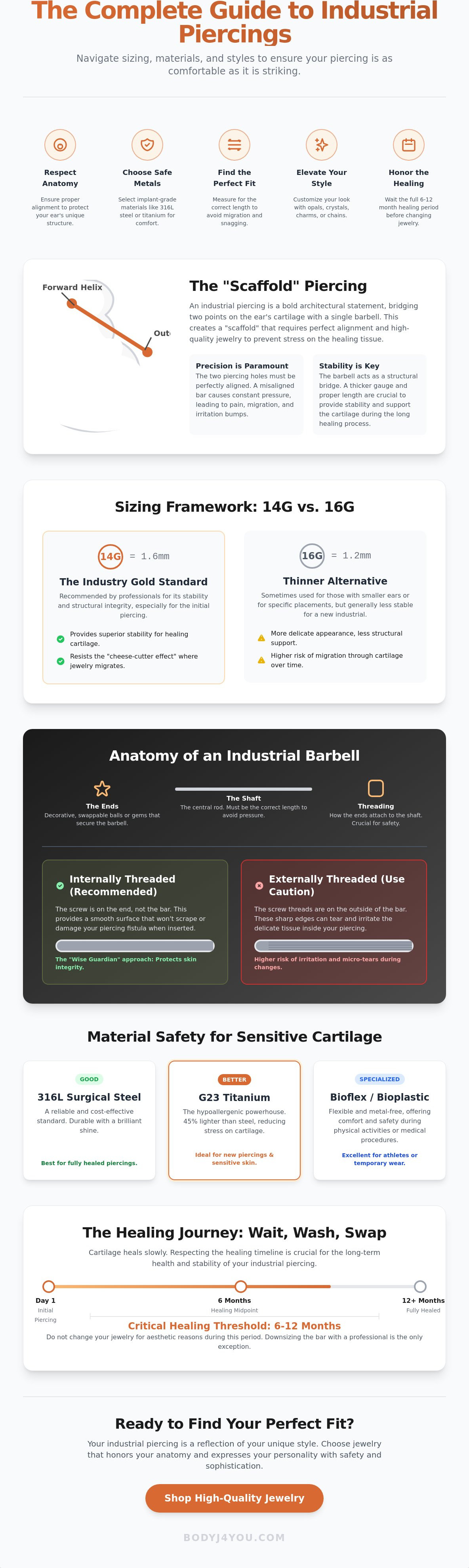
An industrial piercing is a structural masterpiece for the ear. It isn't just a single decoration; it's a bold architectural statement that bridges two distinct points of cartilage. This style typically utilizes a single piece of industrial piercing jewelry to connect a forward helix piercing with an outer helix piercing. Because the jewelry links two separate wounds, it acts as a mechanical bridge that demands absolute precision in both placement and quality. Professionals often refer to this as a "scaffold" piercing. Like the scaffolding on a building, the bar provides a framework that supports and defines the upper ear's aesthetic. This structural role means that the jewelry is under constant, subtle tension from two different directions.
Alignment is the foundation of a healthy industrial. If the bar is too short, it pulls the two piercings toward each other, causing pain and permanent tissue damage. If the angles aren't perfectly synchronized, the metal exerts uneven pressure, which often leads to the development of stubborn irritation bumps. Most experts utilize 14-gauge (1.6mm) needles and bars for this procedure. While 16-gauge options exist for those with smaller ears, 14G remains the industry gold standard. This thicker diameter provides the stability needed to resist the "cheese-cutter effect," where thinner jewelry might slowly migrate through the delicate cartilage over time. Precision, stability, and patience are the three pillars of a successful scaffold.
The Anatomy of an Industrial Barbell
Every industrial barbell consists of three vital components that dictate its performance and comfort. Understanding these parts helps you make an informed choice for your long-term wellness.
- The Shaft: This is the central rod that spans the "flat" area of your ear. It must be long enough to allow for natural swelling during healing without digging into the skin.
- The Ends: These are the threaded spheres or decorative gems that secure the bar. You can swap these to change your look without removing the entire shaft.
- Threading: This refers to how the ends attach. We recommend internal threading, where the screw is hidden inside the ball. This ensures the bar remains smooth as it passes through your ear, preventing internal scratches.
Choosing internally threaded Industrial Barbells is the "Wise Guardian" approach to jewelry. It prioritizes the integrity of your skin and ensures a smoother, more comfortable transition during jewelry changes.
Common Placements and Jewelry Styles
The traditional diagonal helix-to-helix placement is the most recognizable, but your anatomy may allow for more creative expressions. Vertical industrials are a striking alternative, often passing through the conch or the top of the helix in a straight vertical line. These require longer, specialized bars and a deep understanding of ear depth. For those with unique ear shapes that don't have a prominent ridge, "floating" industrials offer a solution by using custom-bent bars that avoid putting pressure on the flat of the ear. For a broader look at the history and procedure of this style, you can consult this Industrial piercing overview. Whether you choose a classic bar or a sculptural vertical piece, the goal is always a perfect harmony between metal and biology.
Material Safety: Choosing Metals for Sensitive Cartilage
Cartilage is a delicate, avascular tissue. It lacks the robust blood supply found in your earlobes, which means it heals slowly and reacts intensely to irritants. Low-quality metals are the primary culprits behind stubborn piercing bumps. These unsightly irritations aren't just a cosmetic nuisance; they are a sign of biological distress. Selecting the proper industrial piercing jewelry acts as a protective barrier for your health. Safe materials ensure stability, purity, and longevity. When your body feels safe, it heals faster.
316L Surgical Steel serves as a reliable, cost-effective standard for those with fully healed piercings. It offers a brilliant shine and exceptional durability. For those with heightened sensitivity, Grade 23 Titanium (G23) is the hypoallergenic powerhouse. It's 45% lighter than steel, which significantly reduces the physical weight on your cartilage. This reduction in mass minimizes the constant tension on the piercing sites. If you're currently struggling with persistent irritation, applying a specialized piercing bump treatment oil can help soothe the tissue while you transition to a safer, high-grade metal.
Flexibility offers another layer of protection. Bioplastic and Bioflex are excellent alternatives for athletes or those undergoing medical procedures. They bend with your body's movements. Conversely, "mystery metals" found in cheap fashion jewelry are a serious risk. Silver-plated pieces often flake or tarnish. These microscopic shards can enter the piercing channel, causing infection or permanent skin discoloration. Stick to certified materials to maintain your ear's health. Pure materials. Precise fit. Permanent style.
Surgical Steel vs. Titanium: Which is Best?
Titanium is the superior choice for long-term wear. It is light, strong, and biocompatible. While surgical steel is more affordable, it contains trace amounts of nickel that can trigger reactions over time. Titanium provides a high-end level of safety for sensitive skin. It resists the corrosive effects of sweat and body oils effortlessly. Investing in titanium is an investment in your ear's future stability.
Coated and Plated Options
Style shouldn't compromise safety. PVD (Physical Vapor Deposition) coating is a modern vacuum-sealing process. It provides vibrant colors like gold, rose gold, or black without the risks of traditional plating. Anodized titanium is even safer. It uses electricity to shift the metal's surface color, meaning no dyes or external chemicals touch your skin. Watch for signs of wear. If your industrial piercing jewelry looks dull or the surface feels rough, it's time for a replacement. Fresh jewelry ensures a healthy environment for your skin.
The Sizing Framework: Finding Your Perfect Barbell Length
Precision is the cornerstone of comfort. While many retailers promote a "standard length" for industrial piercing jewelry, this approach overlooks the organic complexity of human anatomy. Your ear's width, the curvature of the helix, and the depth of the "flat" space are unique variables. A successful fit isn't about following a trend; it's about matching the metal to your biology. Every ear is an individual landscape that requires a tailored solution for long-term health.
The "Goldilocks" Rule provides a simple framework for safety. A bar that's too short acts like a vice. It exerts constant pressure, which can cause the piercing to migrate or leave deep, painful indentations in the skin. A bar that's too long is equally problematic. It becomes a magnet for hair, face masks, and pillowcases. This constant snagging creates micro-trauma at the wound sites. You're looking for that perfect middle ground: a bar that sits flush against the ear with just enough room to breathe.
Most industrial barbells are manufactured in three primary lengths: 32mm (1 1/4"), 35mm (1 3/8"), and 38mm (1 1/2"). Identifying which length of industrial piercing jewelry you need requires a technical approach rather than an estimate. Guesswork often leads to irritation, while measurement leads to confidence.
Measuring Your Ear at Home
The String Method is an accessible way to find your size. Use a piece of dental floss or non-stretch string. Carefully align it between the exit of the first piercing and the entry of the second. Mark the points clearly and measure the distance with a millimeter ruler. Accuracy is essential. Always add 1-2mm to your final measurement. This small buffer provides the necessary clearance for cleaning and accommodates the natural fluctuations in tissue thickness. If you're transitioning from other types of jewelry, check an ear gauge size chart to confirm your gauge-to-millimeter conversions.
Troubleshooting a Poor Fit
Your skin will tell you if the fit is wrong. Redness that doesn't fade, localized swelling, or the bar "sinking" into the tissue are clear signs of a bar that's too tight. If you experience frequent snagging or the bar slides back and forth with every movement, it's likely too long. In cases of extreme irritation or persistent bumps, don't force the connection. It's often safer to wear two separate studs for a few weeks to let the tension dissipate. Protect the tissue. Prioritize health. Pursue beauty.
Styling Your Industrial: Beyond the Basic Bar
Self-expression is the heartbeat of body modification. While the classic straight bar is a timeless choice, modern industrial piercing jewelry offers a vast horizon of creative possibilities. The shift toward "curated ears" means your industrial is no longer an isolated feature. It is a focal point within a larger, intentional collection of jewelry. By integrating textures, colors, and shapes, you transform a technical procedure into a personal gallery. This approach balances the bold nature of the piercing with a sophisticated, high-end aesthetic.
Decorative centerpieces are the most popular way to elevate your look. You can choose barbells featuring lab-grown opals, brilliant crystals, or themed charms like intricate snakes, hearts, and arrows. These elements add a layer of sophistication that standard ends cannot match. If your anatomy is unsuited for a rigid bar, or if you prefer a softer silhouette, chain industrials are the ideal solution. These use two separate studs connected by a delicate drape of metal, offering flexibility and movement. They provide the look of a traditional scaffold without the mechanical tension of a solid shaft.
Customization doesn't stop at the bar itself. Mixing and matching ends allows for a DIY custom look. You might pair a sleek spike on one side with a classic high-polish ball on the other. This asymmetrical approach adds energy and modern flair to your setup. It allows you to adapt your jewelry to your mood or the season. For those looking to upgrade their current style, explore our collection of high-quality Industrial Barbells to find your next statement piece.
Trends in Industrial Jewelry for 2026
The trends for 2026 emphasize minimalism and architectural complexity. "Floating" bars are gaining traction, utilizing ultra-thin 16G shafts to create a subtle, high-end aesthetic that appears to hover across the ear. For those with complex anatomy, industrial chains have moved from a niche fix to a mainstream fashion choice. We are also seeing the rise of multi-point industrials. These advanced setups connect three or more perforations with custom-bent jewelry, creating a truly unique scaffold that follows the natural ridges of your ear. These designs are daring, precise, and deeply personal.
Choosing Jewelry for Your Lifestyle
Your jewelry must perform as well as it looks. If you lead an active lifestyle, smooth, low-profile ends are essential. They prevent snagging during workouts and fit comfortably under helmets or headphones. For special occasions, you can embrace maximum impact with dangles and ornate center-charms that catch the light. In professional environments, a simple, high-polish steel bar provides a clean and disciplined appearance. Choose jewelry that supports your daily life. Pure. Bold. Functional.
Changing and Maintaining Your Industrial Jewelry
Patience is the ultimate guardian of cartilage health. While your piercing may look healed on the surface, the internal tissue often requires 6 to 12 months to reach full maturity. This "Healing Threshold" is the period where the skin channel, or fistula, becomes strong enough to withstand the friction of a jewelry change. Swapping your industrial piercing jewelry too early can cause the delicate channel to collapse or bleed, potentially resetting months of progress. Respect the timeline. Your body will reward your discipline with a lifetime of comfort.
Preparation is your first line of defense against irritation. Start by thoroughly washing your hands with antibacterial soap and ensuring your workspace is pristine. You must also sterilize the new bar before it touches your skin. Even high-end pieces can carry microscopic dust or oils from handling. A clean environment, a calm mind, and sterilized equipment form the foundation of a successful transition. When you are ready, the "Follow-Through" method is the most reliable technique. By keeping the new bar in physical contact with the old one as it slides through, you ensure the alignment remains perfect. This prevents the frustrating scenario where one hole becomes inaccessible while you struggle with the other.
Post-swap care is just as vital as the initial healing phase. Even a fully healed piercing can experience a "reset" of sensitivity when a new material or weight is introduced. A brief return to gentle aftercare ensures the tissue remains calm and stable. Clean. Protect. Sustain.
Step-by-Step Jewelry Change Guide
- Sanitize: Clean the area with sterile saline spray for piercings to remove any crustal buildup or debris.
- Transition: Unscrew one end and gently slide the old bar out while immediately following it with the new one to maintain the scaffold.
- Secure: Check the tightness of the threaded ends daily. This simple habit prevents the accidental loss of your favorite industrial piercing jewelry.
Troubleshooting Irritation After a Change
If you notice a sudden bump or localized redness after a swap, don't panic. This is often a sign of "jewelry rejection" or a reaction to a new fit. Switch back to a simple, high-polish titanium bar and resume saline soaks for several days. For intricate designs, use piercing cleaning swabs for precise cleaning around decorative centerpieces where bacteria can hide. If you see signs of infection or if the bar becomes stuck, consult a professional immediately. Your health is the priority. Style is the reward.
Elevate Your Aesthetic with Clinical Precision
Your journey toward a curated ear is a sophisticated balance of biology and beauty. We have explored the structural mechanics of the scaffold, the importance of biocompatible metals, and the technical precision required for a perfect fit. Choosing the right industrial piercing jewelry is the most significant step you can take to ensure your self-expression remains comfortable and vibrant for years to come. By prioritizing high-grade materials and accurate sizing, you protect your delicate cartilage from unnecessary stress and irritation.
At BodyJ4You, we bring over 20 years of industry experience to every piece in our collection. We offer hypoallergenic materials, high-polish finishes, and a commitment to quality that supports your unique journey. Our US-based manufacturing for aftercare products ensures that you have access to the dermatological standards your body deserves. We act as a supportive specialist, helping you transition from the initial healing phase to a fully realized, high-end aesthetic. You've gained the knowledge to make informed choices for your wellness.
Shop BodyJ4You's Curated Collection of High-Quality Industrial Barbells today to discover jewelry that balances bold style with technical safety. Step forward into your next look with confidence, knowing your health and style are in expert hands.
Frequently Asked Questions
What is the standard gauge for an industrial piercing?
14-gauge (1.6mm) is the standard thickness for an industrial piercing. This specific gauge is chosen because it offers the structural integrity needed to connect two points of cartilage securely. Thicker jewelry is less likely to migrate or cause irritation compared to thinner alternatives. It provides a stable, reliable foundation for your long-term ear health and ensures the scaffold remains secure against daily movement and accidental snags.
Can I use a 16G bar in a 14G industrial piercing?
Yes, but we advise caution before downsizing to a 16G bar. While a thinner bar will fit, your piercing channels will quickly shrink to match the new size. This makes returning to standard 14G industrial piercing jewelry difficult and potentially painful later on. Additionally, thinner bars exert more concentrated pressure on the tissue, which may increase the risk of migration or the "cheese-cutter effect" over time.
How long should an industrial barbell be?
Most industrial barbells range from 32mm (1 1/4") to 38mm (1 1/2") in length. The ideal size depends entirely on the width of your ear's upper ridge and the distance between the holes. You should always ensure there is a 1-2mm buffer of extra space on the shaft. This small clearance accommodates natural swelling and allows for thorough cleaning without placing undue stress on the healing wounds.
Is titanium or surgical steel better for an industrial piercing?
Titanium is the superior choice for initial healing and individuals with sensitive skin. It is lightweight, nickel-free, and highly biocompatible, making it the gold standard for safety. 316L surgical steel is an excellent, cost-effective option for fully healed piercings. Both materials offer the high-polish finish required to prevent bacteria from adhering to the surface. Choose the metal that best supports your current stage of healing and comfort.
Why does my industrial bar hurt when I sleep on it?
Pain while sleeping occurs because the rigid bar compresses your cartilage against the skull. This pressure disrupts blood flow and creates mechanical stress on the piercing sites. To protect your ear, we recommend using a travel pillow or a specialized piercing pillow with a hole. This simple adjustment removes the direct weight from your industrial piercing jewelry, allowing you to rest comfortably while your body continues its natural recovery.
Can I wear two separate earrings in my industrial holes?
You can certainly wear two separate studs or hoops if your anatomy requires a break from a solid bar. This is often a wise strategy if you experience persistent irritation or if the holes were not perfectly aligned by the piercer. Wearing separate pieces allows each piercing to move independently. It reduces the collective tension on your cartilage while maintaining the openness of the channels for a future bar change.
How often should I clean my industrial jewelry?
You should clean your jewelry twice daily during the first six months of healing. For fully matured piercings, a daily rinse with warm water during your shower is usually sufficient to maintain hygiene. Using a sterile saline spray ensures you remove crustal buildup without introducing harsh chemicals. Consistent hygiene prevents the accumulation of oils and skin cells that can lead to irritation, odor, or minor infections.
What should I do if my industrial bar is too short?
You must replace a short bar immediately to prevent permanent tissue damage and discomfort. A bar that lacks sufficient length will pinch the ear, leading to deep indentations, migration, or the development of large irritation bumps. Consult a measurement guide to identify your correct length. Swapping to a bar with a 1-2mm buffer will provide the immediate relief your cartilage needs to recover its structural health.


