

What if the stubborn, yellow debris clinging to your jewelry was actually a sign of success? It is natural to feel a sense of dread when you first notice buildup around your fresh jewelry, but rest assured that seeing crusties on new piercing normal behavior for a body in repair. These small, sometimes itchy formations are your biological liquid bandage. They represent a sophisticated healing process where your body works to stabilize, protect, and seal your new channel of self-expression.
We understand the vulnerability that comes with a new piercing. You want to protect your investment, avoid the sting of irritation, and ensure your healing journey remains on track. This article provides the clarity you need to distinguish between healthy lymph fluid and actual infection. We'll walk through the expert-approved way to manage this buildup using sterile 0.9% saline, explain why you should never pick at the site, and highlight the three specific symptoms that require professional attention.
Key Takeaways
- Recognize that seeing crusties on new piercing normal healing behavior, as this "liquid bandage" of dried lymph fluid protects your skin while it repairs.
- Distinguish between healthy recovery and potential infection by observing three vital indicators: color, odor, and location.
- Protect your delicate new tissue by adopting a "soften, don't pick" routine that prevents micro-tears and unnecessary irritation.
- Follow a structured healing timeline to understand when crusting is expected to peak and when it should naturally subside.
- Optimize your recovery environment by choosing superior jewelry materials and utilizing sterile saline aftercare for a seamless healing journey.
What Are Piercing Crusties? The Science of the 'Liquid Bandage'
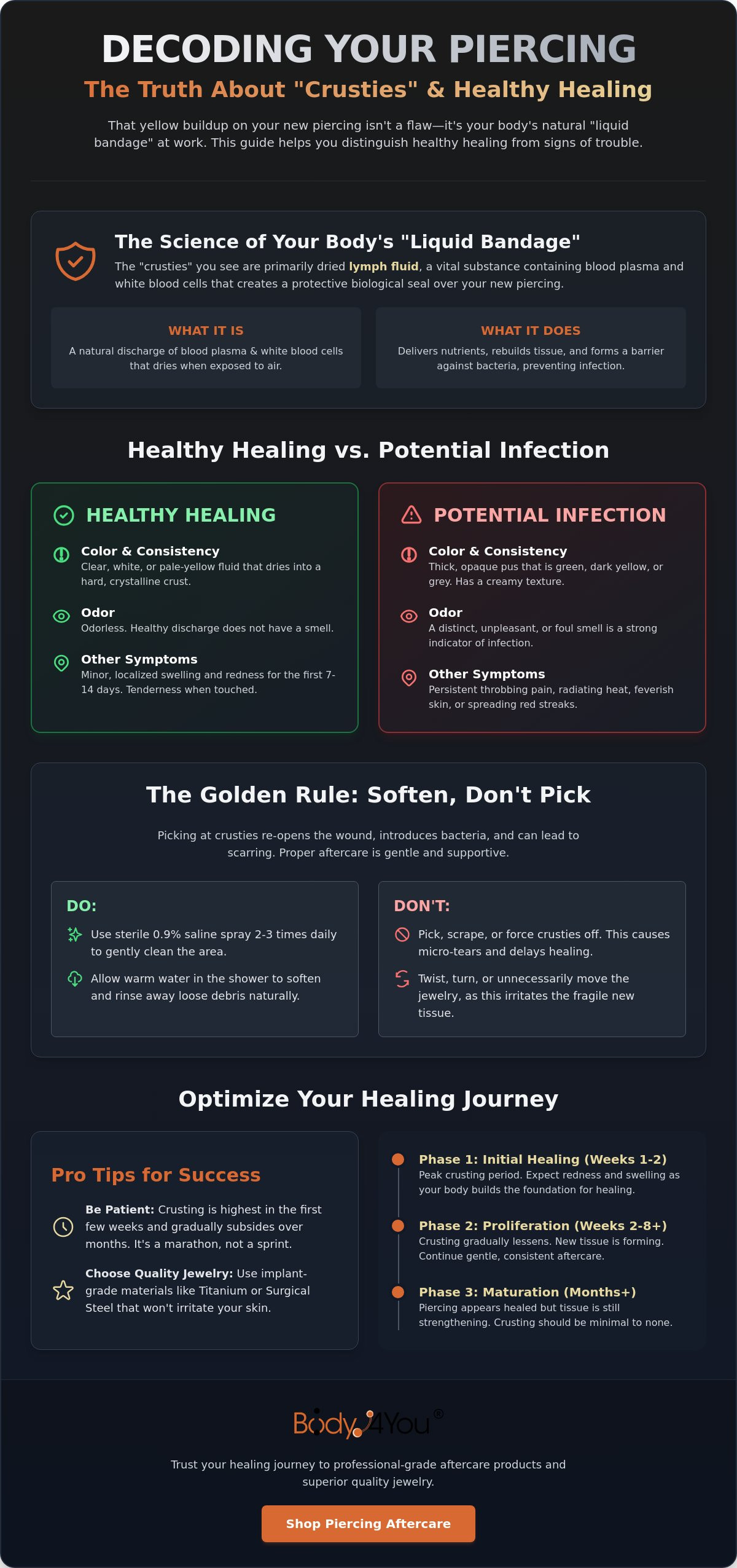
Seeing crusties on new piercing normal behavior is a milestone, not a mistake. It is the physical manifestation of your body’s immune system in motion. These small, crystalline formations are primarily composed of dried lymph fluid, a vital substance containing blood plasma and white blood cells. While it might look like a flaw in your aesthetic, this discharge is a clear indicator that your body is effectively managing the new wound. It is essential to distinguish between this natural buildup and the jewelry itself. High-quality materials like surgical steel or titanium don't shed or peel; any debris you see is almost certainly biological rather than a product defect.
The Role of Lymph Fluid in Wound Healing
Lymph is the unsung hero of your recovery journey. It acts as a specialized transport system, delivering essential nutrients and oxygen to the piercing site to rebuild damaged tissue. When this fluid reaches the surface and is exposed to the air, it begins to evaporate and harden. This drying process creates the characteristic crusty texture that often clings to your jewelry. Lymph fluid is the body’s primary tool for internal wound sanitation. By studying The Science of Wound Healing, we can see how this fluid creates a sterile environment for cellular regeneration. A pale-yellow or clear discharge is a sign of health, vitality, and resilience. It confirms that your white blood cells are actively patrolling the area to keep it clean and stable.
Why Your Body Creates a "Liquid Bandage"
The crust that forms around your jewelry serves a critical protective purpose. It acts as a biological seal, or a liquid bandage, that prevents external bacteria and debris from entering the open fistula. This barrier is your body's first line of defense against the outside world. If you pick or flick these crusties away prematurely, you risk tearing the delicate new skin forming underneath. This unnecessary trauma reopens the wound and resets your healing clock.
While all piercings produce lymph, the intensity of the crusting often depends on the location. Crusting is especially common in cartilage piercings like the helix, tragus, or industrial. Because cartilage has less blood flow than a fleshy earlobe, the body relies more heavily on lymph to facilitate repair. Understanding that crusties on new piercing normal healing signs allows you to approach your aftercare with patience. Your body is a master architect. It knows how to protect, how to clean, and how to heal. Your only job is to provide the right environment for that work to continue uninterrupted.
Normal Crust vs. Infection: How to Spot the Difference
Distinguishing between recovery and risk is the most critical skill for any piercing enthusiast. While it is easy to panic at the first sign of discharge, seeing crusties on new piercing normal behavior is actually a reassuring sign. Your body is performing a complex biological dance to integrate your new jewelry into your anatomy. Many people mistake healthy lymph for a failing piercing, but the truth is that fluid is necessary for cell migration and repair. During the first 7 to 14 days, you should expect some minor swelling, localized redness, and a slight tenderness. These are the hallmarks of a body in transition, not a cry for help. To stay confident in your journey, focus on the three pillars of a healthy piercing: pale color, lack of odor, and localized crusting.
The Color and Consistency Guide
Color is your most reliable narrator. Healthy discharge is typically clear, white, or a very pale yellow. It is thin when wet and dries into a hard, crystalline crust. In contrast, an infection produces pus, which is a collection of dead white blood cells fighting an active bacterial invasion. Pus is thick, opaque, and often appears green, dark yellow, or grey. It is frequently accompanied by a distinct, unpleasant odor that lymph simply does not have. If your buildup feels creamy rather than crusty, it is time to take a closer look at your Cleaning and Healing protocols. Maintaining a sterile environment with a high-quality saline piercing aftercare spray can help keep these fluids in the healthy range.
Physical Red Flags Beyond the Crust
While the crust itself is rarely a problem, your body has other ways of signaling distress. You should monitor the site for persistent, throbbing pain that increases in intensity after the first week. A healthy piercing might feel sore when bumped, but it should not radiate heat or cause a feverish sensation in the surrounding skin. Watch for significant redness that spreads away from the hole or develops into red streaks. These are clear indicators that the issue has moved beyond simple irritation. If you experience localized swelling that completely swallows your jewelry, or if the discharge becomes excessive and dark, consult a professional piercer or healthcare provider immediately. Your safety depends on your ability to observe, assess, and act with precision.
The Golden Rule of Aftercare: Soften, Don’t Pick
The urge to pick at a healing piercing is a common but dangerous instinct. While it is tempting to "flick" away debris to keep the area looking pristine, mechanical force is the primary enemy of a healing fistula. You must internalize the fact that seeing crusties on new piercing normal behavior is a sign of your body's success. These formations are physically bonded to the fragile, raw tissue forming inside the hole. Tearing them away creates micro-tears. These microscopic rips in the skin invite bacteria, trigger inflammatory responses, and prolong your discomfort. According to the Association of Professional Piercers aftercare guidelines, the most effective strategy is one that prioritizes tissue integrity over aggressive cleaning.
The Dangers of Mechanical Irritation
Moving jewelry to reach the back of a piercing or rotating a barbell to "loosen" the crust creates unnecessary friction. This friction irritates the internal channel and often leads to the development of localized irritation. Learning how to get rid of piercing bump issues begins with preventing this trauma in the first place. Every time you pick at a crustie, you risk resetting the biological healing clock by several days. Instead of force, we advocate for a disciplined cycle of care: Soften, Rinse, Pat Dry. This rhythmic approach ensures the site remains clean without the trauma of physical abrasion. Our philosophy is built on three pillars: Purity, Precision, and Protection.
The Safe Removal Protocol
To manage buildup effectively, you must rehydrate the debris until it loses its grip on your jewelry and skin. Never use harsh chemicals like rubbing alcohol, hydrogen peroxide, or concentrated tea tree oil. These substances are far too aggressive; they dehydrate healing cells and cause chemical burns. Instead, consult our sterile saline spray for piercings guide to understand why 0.9% sodium chloride is the only industry standard you should trust for wound irrigation.
Follow these professional steps for a safe cleaning experience:
- Step 1: Saturate a clean piece of non-woven gauze or one of our specialized piercing cleaning swabs with sterile saline solution.
- Step 2: Hold the damp applicator gently against the crust for 2 to 3 minutes. This rehydrates the hardened lymph fluid, allowing it to dissolve naturally.
- Step 3: Once the crust is soft, gently wipe away only the debris that moves without resistance. If a piece remains stubborn, leave it for your next scheduled cleaning.
Patience is the hallmark of a sophisticated piercing journey. By allowing the saline to do the heavy lifting, you protect the fragile new skin cells and ensure a smooth, aesthetic result that lasts a lifetime.
Piercing Healing Timeline: When Will the Crusties Stop?
Patience is a prerequisite for permanent beauty. While you may want your jewelry to look social-media ready immediately, understanding that seeing crusties on new piercing normal behavior is expected on a specific timeline will provide peace of mind. Your body doesn't heal in a linear fashion; it moves through distinct stages of repair. Generally, the most active stage is the Peak Crusting Phase, which occurs between weeks 2 and 6. During this window, your immune system is working at full capacity to seal the fistula. Once this initial work is complete, you move into the Maintenance Phase, where discharge becomes sporadic and less frequent as the internal tissue matures.
Lobe vs. Cartilage: Different Rules
Anatomy dictates the speed of your recovery. Earlobes are highly vascular, meaning they receive a rich supply of blood and nutrients that facilitate rapid repair. Most people find that lobe piercings stop producing significant crust within 4 to 6 weeks. Cartilage, however, is a different biological landscape. Areas like the helix, tragus, or industrial piercings lack a direct blood supply, forcing them to heal from the outside in. It's common to experience "crusty days" for 3 to 6 months in these zones. Industrial piercings are particularly prone to heavy buildup because the single bar connects two separate wounds, which increases the potential for tension and movement between the two sites.
Why Some Piercings Crust More Than Others
Activity levels and environmental factors influence your body's response. High-movement piercings, such as those on the lips or navel, often produce more lymph due to constant friction against clothing or facial expressions. Your internal hydration levels and even seasonal changes can also affect the thickness and frequency of lymph production. To support your skin through these fluctuations, you might consider using a soothing piercing bump treatment oil to keep the surrounding tissue supple and resilient.
External trauma is the most frequent cause of a "crusty relapse." Several factors can prolong the presence of debris:
- Sleeping directly on the piercing, which compresses the tissue and traps heat.
- Snagging jewelry on towels, hairbrushes, or clothing.
- Excessive cleaning or using products that are too harsh for healing cells.
The total healing phase for a new piercing can last anywhere from 1 to 12 months depending on the complexity of the site. If you're still seeing significant buildup after several months, don't panic. Simply return to your core aftercare principles. Stay disciplined, stay patient, and respect the biological rhythm of your recovery.
Professional Solutions for a Clean, Healthy Piercing
Your healing journey is a partnership between your body’s biological resilience and the environment you provide. While we have established that seeing crusties on new piercing normal behavior is a sign of cellular repair, the intensity of that buildup is often dictated by the quality of your tools. Minimalist aftercare is not about doing less; it is about doing better. By choosing professional grade solutions, you eliminate the variables that lead to excessive irritation, prolonged swelling, and aesthetic setbacks. Our approach centers on three core values: Purity, Precision, and Performance.
The Power of Sterile Saline Aftercare
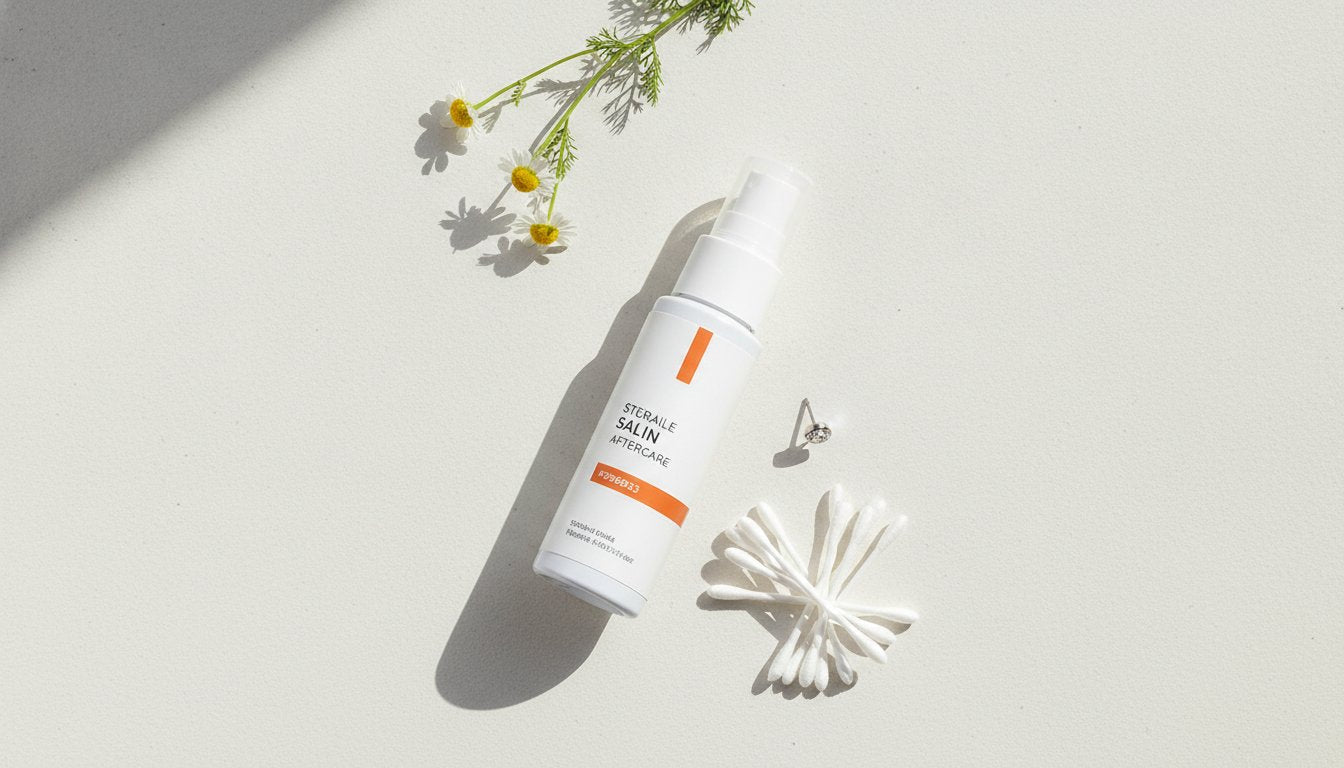
The era of mixing sea salt in a kitchen shot glass is over. Modern standards demand a level of consistency that DIY solutions simply cannot provide. Our Saline Piercing Aftercare Spray is formulated with a precise 0.9% sodium chloride to water ratio, which mirrors the natural chemistry of your body. This isotonic balance ensures that you cleanse the wound without dehydrating the fragile new cells.
The delivery system is just as vital as the ingredients. A pressurized mist allows you to flush out debris and rehydrate crusties from a distance. This reduces the need for physical contact, which minimizes the risk of introducing bacteria or causing mechanical trauma. At BodyJ4You, we prioritize your safety by ensuring our aftercare is manufactured locally. This commitment to domestic production allows for strict quality control and regulatory trust that generic imports often lack. It is a sophisticated, hands-off approach to wellness.
Jewelry Materials That Minimize Irritation
The "mystery crust" that often plagues enthusiasts is frequently caused by low-quality metal alloys. Nickel and other common additives can trigger a low-level allergic response, which causes the body to produce excess lymph as it tries to flush out the irritant. To ensure a seamless recovery, you must prioritize biocompatible materials. Surgical Steel and Internal Threaded Labret Studs are the industry standards for a reason. They provide a smooth, non-porous surface that resists the accumulation of bacteria and reduces friction against the healing fistula.
Internal threading is particularly important during the initial months. Unlike external threads, which can scrape the delicate skin as the jewelry passes through, internal threading ensures that only a smooth post contacts your body. This precision prevents the micro-tears that lead to stubborn crusting and discomfort. Once you have moved through the peak healing phase, we encourage you to browse the BodyJ4You collection for safe, stylish upgrades. Investing in high-quality jewelry is the ultimate act of self-care. It ensures that your journey toward self-expression remains as beautiful as the final result.
Mastering Your Healing Journey
Your body is a master of self-repair. By viewing the "liquid bandage" of lymph as a sign of progress rather than a problem, you align yourself with your body's natural wisdom. Remember that seeing crusties on new piercing normal behavior is the foundation of a successful recovery. You now have the tools to distinguish between healthy healing and true red flags, ensuring your journey remains focused on aesthetic refinement and physical safety. Through consistent patience and the "soften, don't pick" rule, you protect the integrity of your skin and your style.
Protection. Precision. Purity. These are the pillars that support your transformation. With over 20 years of industry expertise, we specialize in providing USA-manufactured aftercare solutions and safe, high-quality materials designed for every skin type. Keep your healing on track with our Saline Piercing Aftercare Spray. By choosing professional-grade support, you empower your skin to heal beautifully and without unnecessary interruption. Trust the process, respect the biological timeline, and wear your new expression with quiet confidence.
Frequently Asked Questions
Is it okay to rotate my piercing to get the crusties out?
No, you should never rotate or twist your jewelry to remove debris. This movement causes mechanical irritation and tears the fragile new skin cells forming inside the fistula. Instead, rehydrate the area using a sterile saline spray. Let the moisture do the work so you don't have to risk your healing progress.
Why is my piercing crusty after 3 weeks if it doesn’t hurt?
Seeing crusties on new piercing normal behavior even after three weeks is expected. This period is often the peak of the healing phase where your body is most active in tissue repair. Lack of pain doesn't mean the work is done; it simply means your immune system is operating efficiently without significant inflammation.
What color should piercing crusties be?
Healthy crusties should be clear, white, or very pale yellow. These colors indicate the presence of dried lymph fluid and blood plasma. If the discharge turns dark yellow, green, or grey, it may indicate a bacterial presence. Always monitor the color to ensure your body remains in a healthy state of recovery.
Can I use a Q-tip to remove the crust around my nose ring?
We recommend using non-woven gauze or specialized Piercing Cleaning Swabs instead of standard cotton swabs. Traditional Q-tips can leave behind tiny, invisible fibers that snag on your jewelry or get trapped in the wound. These irritants can lead to localized inflammation and unnecessarily prolong your healing timeline.
Should I remove the jewelry if the crusting gets heavy?
Never remove your jewelry without professional guidance, even if the crusting feels heavy or unsightly. Removing the post can cause the hole to close rapidly; this can trap bacteria inside and potentially lead to an abscess. Focus on softening the buildup with a Saline Piercing Aftercare Spray to manage the volume safely and effectively.
How often should I clean the crusties off my new piercing?
Clean the area twice daily, or three times at most if you have a high-movement piercing like a navel or lip. Over-cleaning can strip away the natural oils your skin needs to remain supple and resilient. Consistency is better than intensity. A gentle morning and evening routine provides the stability your body requires for long-term success.
What happens if I don’t remove the crusties at all?
Leaving an excessive accumulation of debris can eventually harbor bacteria or cause the jewelry to become stuck in place. While you shouldn't pick at them, you should gently flush them away once they have been softened by saline. Finding the balance between "leaving it alone" and "keeping it clean" is the key to a healthy recovery.
Is yellow crust on a piercing always an infection?
No, a pale yellow crust is usually just dried lymph fluid. This is a vital part of the biological seal your body creates during repair. True infection is marked by a specific trio of red flags: dark yellow or green pus, a foul odor, and radiating heat from the site. If you only see pale crusties on new piercing normal conditions, your body is likely on the right track.


