

That distinct, cheesy odor emanating from your jewelry isn't a sign of poor hygiene; it's a signal that your skin is performing its natural biological functions. If you've found yourself wondering why does my piercing smell even months after it has healed, you aren't alone. This "piercing funk" is a common biological byproduct caused by the accumulation of sebum, dead skin cells, and microscopic bacteria within the piercing channel. It is a natural result of your body's attempt to shed skin in a confined space.
We understand the sudden embarrassment, the confusion regarding healed piercings, and the underlying fear that a lingering scent might indicate a serious infection. It's frustrating to feel like you've followed every rule only to be met with an unwelcome aroma. We promise to help you reclaim your confidence by explaining the biology of your skin barrier and providing the professional steps needed to eliminate odor permanently. In this guide, we will explore the three pillars of piercing health: superior jewelry materials, dermatological standards for cleaning, and the proper use of saline aftercare. You'll learn how to maintain a pristine, healthy, and odor-free piercing through expert guidance and high-quality care.
Key Takeaways
- Recognize that "piercing funk" is a common biological event involving trapped sebum and dead skin cells rather than a sign of poor hygiene.
- Discover the specific environmental factors behind why does my piercing smell and how your jewelry selection influences this natural process.
- Identify why non-porous materials, such as surgical steel, are the professional standard for minimizing odor-causing bacterial buildup.
- Master a sophisticated three-step protocol to cleanse, hydrate, and protect your skin using sterile saline aftercare and pH-balanced solutions.
- Learn how to integrate botanical solutions like jojoba oil and specialized gauges balm to maintain long-term skin integrity and lasting freshness.
Understanding "Piercing Funk": Why Your Jewelry Smells Like Cheese
It often happens during a quiet moment of self-care. You adjust a well-loved earring or rotate a septum ring and catch a faint, pungent aroma. If you've found yourself wondering why does my piercing smell like aged cheese, don't be alarmed. This experience is so common it has its own industry nickname: "piercing funk." It affects everyone from the newly pierced to those with decades-old modifications. This scent isn't a reflection of your hygiene; it's a reflection of your biology.
At our core, we view your skin as a Wise Guardian. It's a protective, resilient, and constantly regenerating barrier. When you introduce jewelry into a piercing, you're creating a tiny, artificial tunnel through that barrier. Your skin continues to perform its natural duties, but the jewelry acts as a physical barrier. This creates a confined space where organic materials accumulate, leading to the distinct scent you've noticed. Understanding this process is the first step toward reclaiming your confidence and maintaining a healthy aesthetic.
The Anatomy of an Odor
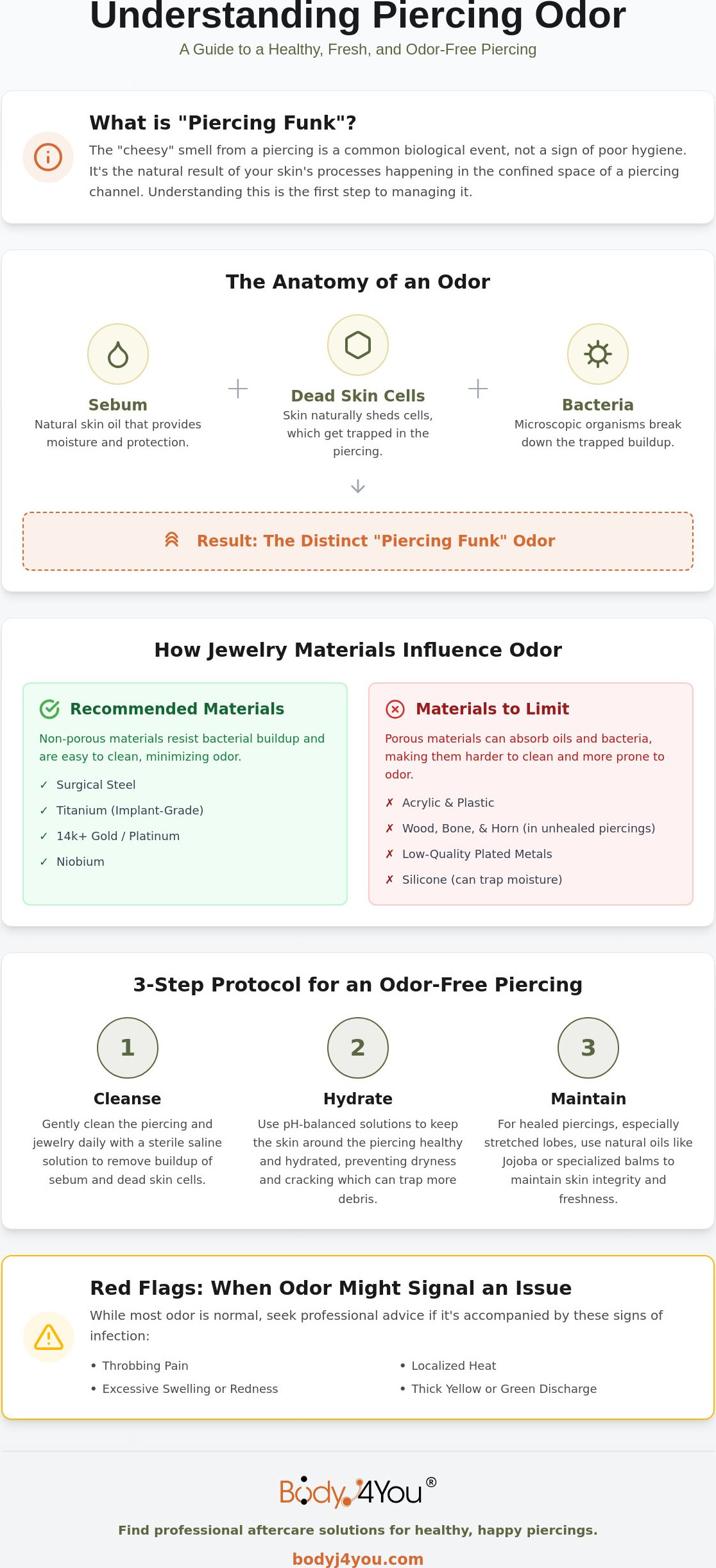
The "cheesy" scent is a complex chemical interaction involving three key players: sebum, dead skin, and bacteria. Your sebaceous glands are constantly producing sebum, a natural oil that maintains skin elasticity, provides a waterproof shield, and prevents dehydration. Simultaneously, your skin undergoes desquamation, the natural process of shedding dead cells. In open areas of the body, these elements simply wash or flake away. Inside a piercing, they become trapped against the jewelry.
When Smell Indicates an Issue
While most "funk" is a routine part of body modification, it's vital to stay vigilant. You should be able to distinguish between a natural scent and clinical Body piercing risks such as infection or tissue distress. A typical piercing odor is mild, localized, and easily resolved with a gentle cleaning. It shouldn't be accompanied by physical discomfort.
There are specific red flags that indicate you've moved beyond simple buildup. If you notice localized heat, throbbing pain, or unusual discharge that is thick and yellow or green, your body is signaling for help. A sudden, drastic change in why does my piercing smell can also be a warning sign. While the Wise Guardian of your skin is strong, it can occasionally be overwhelmed. If the scent is paired with persistent redness or swelling, seeking a professional consultation is the most responsible path toward long-term wellness.
The Science of Scent: Dead Skin, Sebum, and Bacteria
The scent originating from your jewelry is the result of a sophisticated biological interaction. Sebum is a vital component of your skin's health, acting as a natural emollient that provides essential protection and moisture. While this oil is necessary for maintaining your skin's integrity, it becomes problematic when it has nowhere to go. In the context of body modification, your jewelry essentially acts as a physical plug. It seals the piercing channel and prevents the natural shedding of organic matter, creating a micro-environment that is vastly different from the rest of your skin.
When skin cells die, they normally flake away into the environment. Inside a piercing, they are held captive against the surface of your jewelry. Over time, these cells mix with sebum to create a dense, waxy substance. This is the foundation of the odor. If left undisturbed, this mixture can develop into a biofilm, a resilient layer of microorganisms that adheres to both the jewelry and the interior of the skin tunnel. This buildup is often why does my piercing smell more pronounced in piercings that are tight-fitting or rarely moved.
Moisture serves as the primary catalyst for the fermentation process. Sweat, shower water, and high humidity accelerate the chemical breakdown of the trapped organic matter. When oils and skin cells become damp and warm, bacteria begin to ferment the fatty acids, releasing the volatile compounds that create that sharp, distinctive aroma. It is a predictable result of biology, occurring because the jewelry traps the heat and moisture your body naturally produces. Maintaining this balance is easier with a dedicated saline piercing aftercare spray to gently flush the channel without disrupting the skin's delicate pH.
The Role of Sebum and Skin Shedding
Sebum is the complex mixture of lipids that lubricate the skin and maintain its natural barrier. Within the confined space of a piercing, dead skin cells become trapped against the jewelry surface rather than falling away. This accumulation of organic matter creates a thick biofilm if not managed regularly through consistent hygiene.
Bacterial Colonization in Piercings
Your skin is home to a diverse microbiome of harmless bacteria that play a role in your overall health. However, the lack of airflow in tight piercings creates an ideal microbial habitat for these organisms to proliferate. Body temperature and trapped humidity act as an incubator, increasing bacterial growth rates and intensifying the scent profile. Following Professional aftercare guidelines ensures that these bacterial populations remain balanced and the piercing channel stays clear of excessive buildup.
How Jewelry Materials Influence Piercing Odor
Jewelry material is the silent architect of your piercing's health. While we've established that sebum and bacteria are the primary chemical culprits, the surface they inhabit dictates how quickly odor develops. Materials are generally categorized into two groups: porous and non-porous. Non-porous surfaces, such as high-quality metals, provide a smooth landscape that resists the deep infiltration of organic matter. Conversely, porous materials contain microscopic voids that can trap moisture and bacteria, often intensifying the scent profile over time.
Surgical steel remains a preferred baseline for those seeking to minimize bacterial traps. It is non-porous, durable, and highly polished. This smooth finish prevents the "biofilm" mentioned earlier from gaining a strong foothold. When you choose high-polish 316L surgical steel, you are opting for a surface that is easy to sanitize and less likely to harbor the anaerobic bacteria responsible for pungent scents. It's a choice that prioritizes longevity, safety, and hygiene. If you've wondered why does my piercing smell despite regular cleaning, the microscopic texture of your jewelry may be the hidden factor.
Metals vs. Synthetics
The choice between metals and synthetics often involves a trade-off between weight and odor retention. Acrylic is a popular, lightweight option for many, especially during the initial stages of stretching. If you are using an Acrylic Ear Stretching Kit, it's vital to recognize that acrylic is more porous than metal. It can absorb skin oils and moisture more readily, which may lead to a more noticeable "funk" if the jewelry isn't removed and cleaned daily. To minimize debris traps in any piercing, we recommend choosing internal threaded labret studs. The smooth exterior of the post ensures there are no exposed screw threads to collect dead skin cells within the piercing channel.
The Stretched Ear Factor
Stretched lobes present a unique challenge due to their increased surface area. A larger gauge means more skin contact with the jewelry, which naturally results in a higher volume of sebum production. If you are following an ear gauge size chart to advance your stretching journey, remember that each jump in size requires an updated hygiene routine. Rotating your materials can help manage the scent profile. Many enthusiasts find that metal or glass is easier to manage during the day, while allowing for "naked time" at night. Removing your jewelry for a few hours each day allows the skin to breathe, restores blood flow, and prevents the anaerobic environment where bacteria thrive.
How to Eliminate and Prevent Piercing Odor for Good
Eliminating odor requires a shift in perspective. It isn't about aggressive scrubbing or the use of harsh chemicals. It's about intelligent maintenance. At the core of our philosophy is the Cleanse-Hydrate-Protect protocol. This method respects your biological barrier while neutralizing the organic buildup that causes unwanted scents. If you've struggled to understand why does my piercing smell despite your best efforts, the culprit is often a lack of structured hygiene or the use of disruptive products that compromise skin health.
Many individuals reach for traditional antibacterial soaps, yet these are often too abrasive for the delicate skin of a piercing tunnel. These soaps strip essential moisture and disrupt the natural pH balance. This leads to dryness, micro-fissures, and an increased production of sebum as the body overcompensates for the loss of its natural oils. We recommend using sterile, pH-balanced solutions that mirror your body's chemistry. This ensures the piercing remains calm, clean, and resilient.
Consistency is your greatest ally. For healed piercings, a daily ritual is sufficient to manage the "funk." For newer modifications, follow the specific timeline provided by your professional mentor. Above all, you must ensure the area is dry. Moisture is the primary fuel for bacterial fermentation. After every shower or cleaning session, use a clean, disposable material to pat the area until it is bone-dry. This single step significantly reduces the environmental factors that lead to odor. To equip yourself with the right tools, explore our professional piercing aftercare collection.
The Daily Cleaning Ritual
A structured routine is the foundation of a healthy piercing. Follow these three steps to maintain a pristine environment:
- Step 1: Use a sterile saline spray for piercings to flush the channel and loosen trapped debris.
- Step 2: Gently remove softened crustal matter and waxy buildup with saturated piercing cleaning swabs.
- Step 3: Pat the area dry using non-woven gauze or a fresh paper towel to remove all traces of moisture.
Deep Cleaning Your Jewelry
Your jewelry requires its own dedicated care schedule. Over time, a microscopic biofilm of organic matter accumulates on the surface of the material. Once a week, remove your jewelry and soak it in a mild saline solution or a fragrance-free cleanser. While the jewelry is removed, take the opportunity to clean the piercing "tunnel" gently. Use a swab saturated with saline to wipe the interior skin without causing micro-tears or irritation. For those with stretched ears, this weekly deep-clean is essential to prevent the concentrated buildup that larger surface areas naturally attract.
Professional Aftercare: The BodyJ4You Approach to Healthy Piercings
Maintaining a healthy piercing is a continuous commitment to your body's long-term well-being. While understanding why does my piercing smell is the essential first step, the ultimate solution lies in adopting a lifestyle of wellness-oriented maintenance. At BodyJ4You, we act as the Wise Guardian for your aesthetic journey. We bridge the gap between biological necessity and personal style by providing a stabilizing force for your skin. Our approach focuses on high-quality, ethically produced solutions that protect your physical integrity while celebrating your unique self-expression.
High-quality aftercare should never be an afterthought. We prioritize domestic manufacturing and strict quality control to ensure every product meets our rigorous dermatological standards. By choosing locally produced care, you're investing in purity, safety, and regulatory trust. This transparency is the foundation of our personality as a Supportive Specialist. We believe that your jewelry should be a source of pride, not a source of physical vulnerability or social embarrassment.
Moisturizing for Odor Control
Hydration is a critical, yet often overlooked, component of scent management. When the skin within a piercing channel becomes dry or irritated, the sebaceous glands often overcompensate. This creates the exact buildup of oils and dead cells that we've identified as the cause of "piercing funk." Integrating jojoba oil into your routine helps mimic your skin's natural sebum. This signals to your body that it can cease the overproduction loop. It's a natural, elegant solution for maintaining skin elasticity and purity.
For those with larger modifications, a specialized gauges balm creates a thin, protective barrier. This barrier shields the delicate interior skin from environmental stressors and minimizes the waxy accumulation that leads to odor. We advocate for a rhythmic "Rule of Three" to maintain healthy stretched lobes: Massage, Cleanse, Moisturize. This simple, organized flow ensures your skin remains resilient, hydrated, and odor-free. It's a disciplined approach that prioritizes the long-term health of your community over fleeting trends.
Quality You Can Trust
Experience is the most reliable teacher in the world of body modification. With over 20 years of experience in the piercing industry, we've refined our offerings to solve the specific niche problems that enthusiasts face. Our commitment to US-based skincare manufacturing allows us to maintain total oversight of every ingredient. We prioritize ethics, animal welfare, and natural origins in everything we produce. This legacy of expertise ensures you can focus on your growth and aesthetic refinement without the fear of irritation. Your journey is unique. Your aftercare should be just as specialized.
Explore our specialized aftercare collection to keep your piercings fresh and healthy.
Reclaim Your Confidence and Skin Integrity
Your journey of self-expression should always feel empowering rather than embarrassing. We have explored the biological reality of sebum buildup and the critical role of choosing non-porous materials like surgical steel. Understanding why does my piercing smell allows you to move past confusion and into a routine of proactive, dermatological care. By prioritizing jewelry breathability and maintaining a steady Cleanse-Hydrate-Protect rhythm, you ensure your skin remains a healthy, vibrant, and resilient canvas. Scent is simply a biological signal; with the right tools, it's one you can easily manage.
We're here to support your long-term well-being with over 20 years of industry expertise and a commitment to transparency. Our US-manufactured skincare ensures guaranteed purity, offering specialized formulas designed specifically for ear stretching and sensitive skin. We prioritize ethics, ingredient integrity, and domestic quality control to act as a stabilizing force for your community. Shop BodyJ4You Aftercare Solutions to elevate your daily ritual and protect your personal aesthetic. Embrace your modifications with the quiet pride and confidence that comes from expert-backed care.
Frequently Asked Questions
Is it normal for my piercing to smell like cheese?
Yes, catching a cheesy scent is a routine biological event known as "piercing funk." It occurs when your skin sheds dead cells and produces sebum within the confined space of a piercing channel. This waxy accumulation creates a micro-environment where harmless bacteria thrive. It is not a sign of poor hygiene, but rather a signal that your skin is performing its natural protective duties as a Wise Guardian.
Can I use alcohol or peroxide to get rid of the smell?
You should avoid harsh chemicals like alcohol or hydrogen peroxide because they disrupt the skin's delicate moisture barrier. These substances are too abrasive; they cause dryness, lead to micro-tears, and trigger your body to produce even more sebum as a defense mechanism. To resolve the issue of why does my piercing smell, we recommend using a sterile saline spray that respects your body's natural pH and biological integrity.
Why does my ear piercing smell after years of having it?
Healed piercings continue to produce oils and shed skin cells throughout your entire life. Even if the tissue is no longer an open wound, the jewelry remains a physical barrier that traps organic matter against the skin. This waxy buildup occurs regardless of the piercing's age. Consistent maintenance ensures that these natural byproducts are flushed away before they can release the volatile compounds that cause distinctive odors.
Does the material of my jewelry affect the odor?
Material porosity is a primary factor in how much scent your jewelry retains. Non-porous materials, such as high-polish surgical steel, provide a smooth surface that resists the infiltration of bacteria and oils. Conversely, porous materials like acrylic can absorb moisture and organic debris more readily. Choosing high-quality, non-porous jewelry is a stabilizing force in your routine, ensuring a cleaner and more sophisticated aesthetic.
How often should I clean my jewelry to prevent smell?
We recommend a simple daily ritual to maintain a healthy and odor-free environment. A quick flush with saline solution and a gentle wipe with a cleaning swab will prevent daily buildup. For those with larger jewelry, a weekly deep-clean involves removing the piece to soak it in a mild cleanser. This steady, logical rhythm prevents the anaerobic conditions where pungent scents typically begin to develop.
What is the best product to stop piercing odor?
The professional standard for odor control is a sterile saline solution with 0.9% sodium chloride. This specific concentration mirrors your body's internal chemistry, allowing for effective cleansing without irritation. For long-term balance, applying a botanical solution like jojoba oil or a specialized gauges balm helps hydrate the skin. This three-step approach—Cleanse, Hydrate, Protect—remains the most effective strategy for lasting freshness.
Can an infected piercing smell bad?
An infected piercing can produce an unpleasant odor, but it will almost always be accompanied by clinical symptoms. If you notice localized heat, throbbing pain, or a thick, greenish discharge, you may be facing an infection rather than routine "funk." A standard piercing scent is mild and easily managed. If the odor is sudden and paired with physical distress, we recommend seeking a professional consultation immediately.
Why do my stretched ears (gauges) smell worse than standard piercings?
Stretched lobes have a significantly larger surface area, which naturally leads to a higher volume of trapped sebum and dead skin cells. The increased contact between the jewelry and the skin also reduces airflow, creating an ideal habitat for anaerobic bacteria. If you find yourself asking why does my piercing smell more intensely after stretching, it is simply because there is more organic material being held against the skin barrier.


