

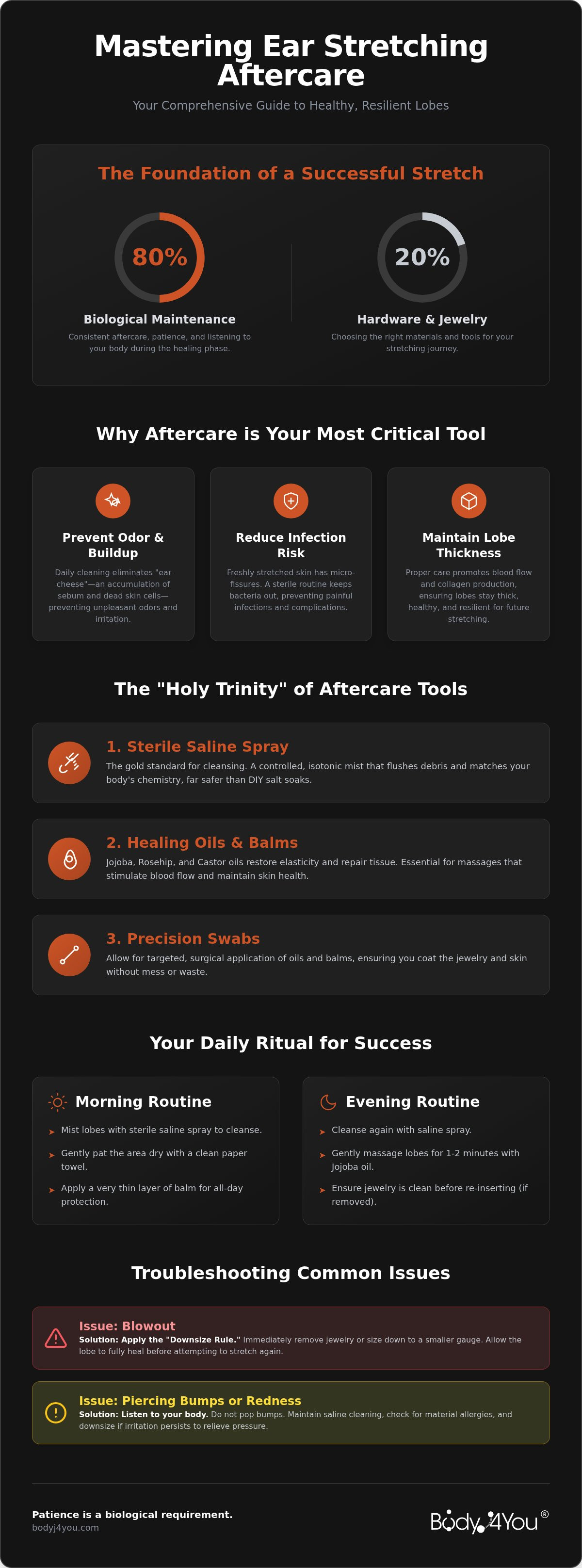
Your ear stretching journey is 20% about the hardware you choose and 80% about the biological maintenance you perform during the healing phase. We understand the physical vulnerability that comes with every new gauge. You want the striking aesthetic of a successful stretch, but you likely worry about the sting of a blowout, the frustration of piercing bumps, or the unwanted "ear cheese" odors that can settle in. It's a delicate balance between creative self-expression and dermatological health.
This guide empowers you to master your ear stretching kit aftercare with clinical precision and nurturing care. We promise to help you eliminate irritation, ensure painless transitions between sizes, and maintain the thick, healthy lobes you deserve. Our 20 years of industry experience have taught us that safety, purity, and patience are the pillars of a successful transformation. You'll discover a structured routine involving specialized saline sprays, restorative botanical oils, and the disciplined logic required for a lifetime of aesthetic refinement.
Key Takeaways
- Learn the essential morning and evening protocols to maintain skin elasticity and promote rapid micro-fissure healing.
- Identify the specialized tools required for effective ear stretching kit aftercare, moving beyond basic salt soaks to sterile saline and therapeutic oils.
- Compare the unique maintenance needs of surgical steel versus acrylic kits to prevent irritation and eliminate odors.
- Master the "Downsize Rule" to identify and resolve piercing bumps or blowouts before they become permanent issues.
- Achieve painless transitions and thick, resilient lobes by following a routine rooted in 20 years of industry expertise.
The Fundamentals of Ear Stretching Aftercare
Ear stretching is an intentional journey of body modification that requires a disciplined approach to biological maintenance. Effective ear stretching kit aftercare is defined as the active management of skin elasticity and wound healing. It's the difference between a healthy, resilient lobe and a permanent injury. When you transition to a larger gauge, you aren't just moving jewelry; you're asking your body to adapt to a new physical reality.
Every time you size up, the tension creates micro-fissures within the earlobe. These microscopic tears are a natural part of the process, but they demand a sterile environment to heal correctly. Understanding the fundamentals of ear stretching means recognizing that these fissures are open pathways for bacteria. Without proper care, these tiny openings can lead to hypertrophic scarring or blowouts that compromise the aesthetic of your piercing.
We act as your wise guardian during this transition. Our role is to ensure your ear stretching kit aftercare routine provides the stabilizing force your skin needs during the healing window. This window is the critical period between gauge sizes where the body repairs tissue and settles into its new shape. Rushing this timeframe is the primary cause of long-term damage.
Why Aftercare is Non-Negotiable
Consistency is your greatest tool for success. Neglecting your daily routine leads to several avoidable complications:
- Eliminating "Ear Cheese": This is the accumulation of sebum, dead skin cells, and sweat. Without cleaning, it creates a distinct, unpleasant odor and can irritate the skin.
- Reducing Infection Risk: Freshly stretched skin is vulnerable. A sterile routine keeps opportunistic bacteria from turning a micro-fissure into a painful infection.
- Maintaining Lobe Thickness: Proper blood flow and hydration ensure your lobes stay thick and resilient. This structural integrity is vital if you plan to reach larger sizes in the future.
The Biological Process of a Safe Stretch
Your skin is a living, breathing organ. When under gentle pressure, it produces new cells to accommodate the increased surface area of your jewelry. This process of mitosis requires adequate nutrients and a moist environment. Collagen production is the secondary hero here; it provides the structural integrity that allows the skin to stretch without snapping. If you rush the process, the skin thins out because it hasn't had time to build the necessary cellular foundation. Patience isn't just a virtue; it's a biological requirement for health, and supporting your body's recovery with tools like Pureffect can help manage inflammation and maintain the wellness needed for successful modification.
Successful modification is never accidental. It is the result of a disciplined toolkit designed to support your body's natural recovery. We identify the "Holy Trinity" of ear stretching kit aftercare as three distinct pillars: Sterile Saline, Therapeutic Oils, and Precision Swabs. Saline cleanses. Oil restores. Swabs target. Each component plays a non-negotiable role in ensuring your journey remains safe and sophisticated.
Sterile Saline: The Gold Standard
Cleanliness is your first line of defense against irritation. Our Saline Piercing Aftercare Spray provides a controlled, isotonic environment that matches your body's chemistry. It's a precise solution. DIY salt soaks are often problematic because improper ratios can dehydrate tissue, while non-sterile tap water introduces unnecessary bacteria. When hygiene is compromised, the risk of potential outcomes and complications, such as localized infections or hypertrophic scarring, increases significantly.
Proper application is simple. Mist your lobes twice daily to flush out debris. You don't need to remove your jewelry during the initial healing window. The fine mist penetrates the gap between the jewelry and the skin, providing a thorough cleanse without the trauma of mechanical movement. This stability is essential for the micro-fissures to knit back together effectively.
Healing Oils and Balms
Once the initial tenderness subsides, moisture becomes your priority. Jojoba oil is a biological marvel. It closely mimics human sebum, allowing it to penetrate deeply and maintain the skin's natural elasticity. For more intensive recovery, Rosehip and Castor oils offer potent tissue repair properties that help reduce persistent redness and support collagen health. These oils are the foundation of a healthy massage routine.
Choosing between a liquid oil and our Gauges balm depends on your daily needs. Oils are perfect for deep, restorative massages that stimulate blood flow. Balms provide a protective, long-lasting barrier against environmental dryness. We recommend using our Piercing Cleaning Swabs to apply these treatments. These swabs allow for surgical precision, ensuring you coat the jewelry edge and lobe without leaving excess residue that could trap bacteria. This level of detail keeps your aesthetic clean and your lobes resilient.
Material-Specific Care: Acrylic vs. Steel Kits
Choosing between an Acrylic Ear Stretching Kit and a Surgical Steel Taper and Plug Kit is more than an aesthetic decision; it's a dermatological one. Material science directly impacts how your skin heals. While both kits facilitate self-expression, they require distinct approaches to ear stretching kit aftercare to prevent irritation and ensure long-term lobe health. Understanding the interaction between jewelry and biology is the first step toward a successful journey.
Porous materials like acrylic interact with the body differently than non-porous metals. The surface of the jewelry acts as the primary environment for your healing skin. If that environment is compromised, the healing window is extended, and the risk of complications increases. Clean, inspect, and restore. This tripartite approach ensures your lobes remain resilient regardless of the material you choose.
Caring for Your Acrylic Ear Stretching Kit
Acrylic is a popular, lightweight choice for many enthusiasts. However, it is a porous material. On a microscopic level, acrylic contains tiny voids that can harbor sebum and dead skin cells. This buildup is the primary cause of localized odor and "ear cheese." Consequently, acrylic jewelry requires a more rigorous cleaning frequency. We recommend a gentle cleanse twice daily to maintain hygiene.
There is a strict "never use alcohol" rule for acrylic maintenance. Alcohol and harsh chemicals cause the material to craze, creating micro-cracks that are invisible to the naked eye but devastating to healing tissue. Instead, use a mild soap or your saline spray. Regularly inspect your tapers for surface scratches. Even a minor abrasion can become a breeding ground for bacteria, leading to piercing bumps or persistent redness.
Maintenance for Surgical Steel and Titanium
Surgical steel is the preferred choice for those with sensitive skin or fresh stretches. It is non-porous. It does not absorb bodily fluids or trap bacteria. This makes it significantly easier to maintain than acrylic. You can use a saline mist for daily care or even utilize an autoclave for a medical-grade clean. It's a reliable, stabilizing force for your lobes.
Weight is a critical factor during the initial 24 hours of a stretch. Steel is denser than acrylic. While this weight can help the lobe settle, it can also stress a fresh micro-fissure if the jewelry isn't supported. Monitor for any signs of drooping or excessive soreness. Once the initial swelling subsides, you should transition from tapers to "wearable" jewelry like plugs. Tapers are tools for sizing up, not permanent fixtures. Prolonged wear of tapers can cause uneven weight distribution and lead to thinning of the lobe tissue over time.
The Daily Protocol for Stretched Lobes
Consistency is the heartbeat of successful modification. While the right tools are essential, the sequence in which you use them determines the longevity of your lobe health. A structured ear stretching kit aftercare routine transforms a reactive process into a proactive one. It ensures that your body remains in a state of constant recovery and growth. By following a disciplined daily protocol, you stabilize your piercings and empower your self-expression.
The 5-Minute Morning Refresh
Your morning routine focuses on hygiene and debris removal. Overnight, the body naturally sheds skin cells and produces sebum, which can accumulate around the jewelry edge. Start your day with these three steps:
- Step 1: Wash your hands thoroughly with antimicrobial soap to prevent the transfer of bacteria to your healing lobes.
- Step 2: Apply Sterile Saline Spray to the front and back of the piercing. This flushes the micro-fissures without causing mechanical trauma.
- Step 3: Use a specialized cleaning swab to gently lift away any softened "crusties" or debris. Do not force the swab into the piercing; focus on the jewelry border.
The Nightly Massage and Moisturize
Evening care is about restoration and elasticity. After a day of environmental exposure, your skin needs deep hydration to remain pliable. A 5-minute lobe massage is the most effective way to stimulate blood flow, which delivers the oxygen and nutrients required for tissue repair. This practice prevents the thinning of the lobe and maintains the "cushion" needed for future stretches. If you are looking for premium botanical support to aid your skin's recovery, click here and discover luxury skincare solutions featuring adaptogenic ingredients.
Apply a small amount of Jojoba or Rosehip oil to your fingertips. Gently knead the lobe between your thumb and forefinger using circular motions. You want the skin to feel supple, not greasy. Over-saturating the area can trap moisture and lead to irritation. Before sleep, perform a quick visual inspection for any localized redness or swelling that may have developed during the day.
Once your stretch has settled, implement a weekly "Naked Lobe" assessment. Remove your jewelry for one hour to allow the tissue to breathe and contract slightly. This is the best time to check for the thickness of the skin and the presence of any internal bumps. It's a moment of reflection on your progress. If the skin feels tight or looks irritated, it's a signal to increase your ear stretching kit aftercare efforts. Clean your plugs and tapers during this time using saline or a mild, fragrance-free soap to ensure no bacteria is reintroduced.
Ready to upgrade your routine with professional-grade supplies? Shop our locally manufactured aftercare collection to ensure your lobes stay healthy and resilient.
Troubleshooting: Bumps, Blowouts, and Redness
Every body modification journey involves a degree of physical vulnerability. While minor soreness is expected during a transition, persistent pain or visible irregularities require immediate action. Effective ear stretching kit aftercare is as much about identifying problems as it is about daily hygiene. By acting as a protective force for your lobes, you can mitigate damage and ensure your aesthetic remains clean and healthy. You must learn to listen to your body's signals to maintain the integrity of your skin.
Dealing with Piercing Bumps
Piercing bumps are often a byproduct of localized trauma or environmental irritation. It's essential to distinguish between a keloid and a standard irritation bump. Keloids are dense, permanent scar tissue formations that often require medical intervention. In contrast, irritation bumps are fluid-filled responses to stress, friction, or improper jewelry materials. If you notice a small, raised area near the jewelry edge, it's likely an irritation response that can be managed with disciplined care.
Our Piercing Bump Treatment Oil is formulated to soothe this inflammation. It provides a targeted, botanical solution to reduce redness, stabilize the tissue, and promote healthy cell turnover. We recommend integrating this into your routine alongside our specialized saline spray to maintain a sterile environment. For a deeper dive into mitigation strategies, consult our expert guide on how to get rid of piercing bump.
Blowout Prevention and Recovery
A blowout is the most significant setback in an ear stretching journey. It occurs when the inner tissue is forced out through the back of the piercing, creating a visible "lip" of skin. This is a clear signal that the stretch was too aggressive, the skin lacked the necessary elasticity, or the jewelry was forced through a resisting lobe. It's a moment that requires immediate intervention to prevent permanent scarring.
If you suspect a blowout, follow this immediate protocol:
- Remove the jewelry: You must relieve the pressure immediately to allow blood flow to return to the area.
- Downsize: Switch to a significantly smaller gauge or leave the jewelry out entirely to let the tissue contract.
- Saline-only care: Use our Saline Piercing Aftercare Spray twice daily to keep the area sterile while the micro-fissures heal.
Recovery requires absolute patience. You must wait for the tissue to fully reabsorb and heal before attempting to size up again. Consistent ear stretching kit aftercare during this phase is the only way to ensure the tissue remains healthy enough for future modification. This process often takes several weeks; rushing it only compounds the damage.
The "Downsize Rule" is a fundamental principle of safe stretching. Taking a step back isn't a failure; it's a strategic move. It preserves your lobe thickness. It ensures long-term health. It protects your future self-expression. If you experience excessive bleeding, yellow discharge, or localized heat, consult a medical professional immediately. Your safety is our priority over any fleeting aesthetic trend.
Secure Your Journey Toward Aesthetic Success
Mastering your ear stretching kit aftercare is a commitment to the long-term resilience of your lobes. You've learned that successful modification requires a blend of clinical precision and patient nurturing. By prioritizing a daily protocol of saline cleansing and therapeutic oil massages, you ensure your micro-fissures heal without complications. Whether you utilize the lightweight versatility of acrylic or the non-porous strength of surgical steel, your consistency is the ultimate guardian of your aesthetic health.
We provide the professional-grade tools you need to support this transformation. With over 20 years of industry expertise, our locally manufactured USA skincare line offers the purity and safety your body demands. Don't settle for generic solutions when your self-expression is at stake. You deserve a routine that matches the boldness of your personal style.
Shop the BodyJ4You Complete Aftercare Collection today to secure the safe, sterile ingredients essential for your success. Your journey toward healthy, thick lobes is a path we are proud to support. Stay disciplined, stay inspired, and watch your vision come to life.
Frequently Asked Questions
How often should I clean my ears after using a stretching kit?
You should clean your stretched lobes twice daily during the active healing window. A morning refresh and an evening deep clean ensure that bacteria, sweat, and environmental debris don't accumulate in the micro-fissures of the skin. Use a specialized saline spray for the best results. This disciplined ear stretching kit aftercare routine prevents irritation and supports the biological recovery of your tissue as it adapts to a new size.
Can I use rubbing alcohol to clean my stretched lobes?
No, you should never use rubbing alcohol or hydrogen peroxide on your stretched lobes. These substances are excessively harsh. They strip away the moisture required for elasticity and can actually kill the new skin cells your body is working to produce. Instead, rely on isotonic saline solutions. These provide a gentle, sterile environment that encourages healing without the risk of chemical burns or localized dehydration that alcohol frequently causes.
Why do my stretched ears smell, and how can I stop it?
The odor, often called "ear cheese," is a natural byproduct of sebum and dead skin cell accumulation. Because jewelry blocks airflow, these organic materials can't shed normally. You can stop this by maintaining a rigorous ear stretching kit aftercare protocol. Daily saline cleansing and massages with Jojoba or Castor oil will break down the buildup. This keeps your lobes fresh, healthy, and free from the bacteria that cause unwanted scents.
Is it normal for my ears to throb after sizing up?
Minor tenderness or a feeling of fullness is normal, but persistent throbbing is a signal of physical trauma. If your ears throb for more than a few hours, the stretch may have been too aggressive. This pressure can restrict blood flow and lead to swelling or blowouts. Monitor the area closely. If the throbbing is accompanied by heat or sharp pain, you should consider downsizing to a smaller gauge to allow the tissue to recover.
How long should I wait between stretches for proper healing?
You should wait a minimum of six to eight weeks between small stretches, though larger gauges often require several months. This timeframe allows the body to produce enough new skin cells and collagen to support the increased surface area. Rushing the process is the primary cause of thinning lobes and permanent scarring. Every individual heals at a different rate, so you must prioritize the integrity of your skin over a specific timeline.
Can I use Vaseline or Neosporin as a stretching lubricant?
No, petroleum-based products like Vaseline or Neosporin are not suitable for ear stretching. These products are occlusive, meaning they create a seal that traps bacteria and prevents the skin from "breathing." This can lead to localized infections or irritation. Instead, use natural lubricants like Jojoba oil or a dedicated Gauges balm. These provide the necessary glide while nourishing the skin and maintaining the elasticity required for a safe, successful transition.
What should I do if my ear starts bleeding during a stretch?
If you notice bleeding, you must stop the stretching process immediately. Bleeding indicates a tear in the tissue rather than a safe expansion. Remove the jewelry and downsize to a smaller gauge that fits comfortably without pressure. Clean the area twice daily with a sterile saline spray and avoid using oils until the wound has fully closed. Patience is your wise guardian here; you must allow the lobe to heal completely before attempting another stretch.
When is it safe to stop daily aftercare for a specific gauge size?
While the intensive healing phase typically lasts six to eight weeks, you should never completely stop maintenance. Once the stretch is fully settled and the skin is no longer tender, you can transition to a maintenance routine. This involves cleaning your jewelry once a day and performing a weekly oil massage to keep the tissue supple. Ongoing care ensures your lobes remain thick, healthy, and ready for any future modifications you choose to pursue.


