

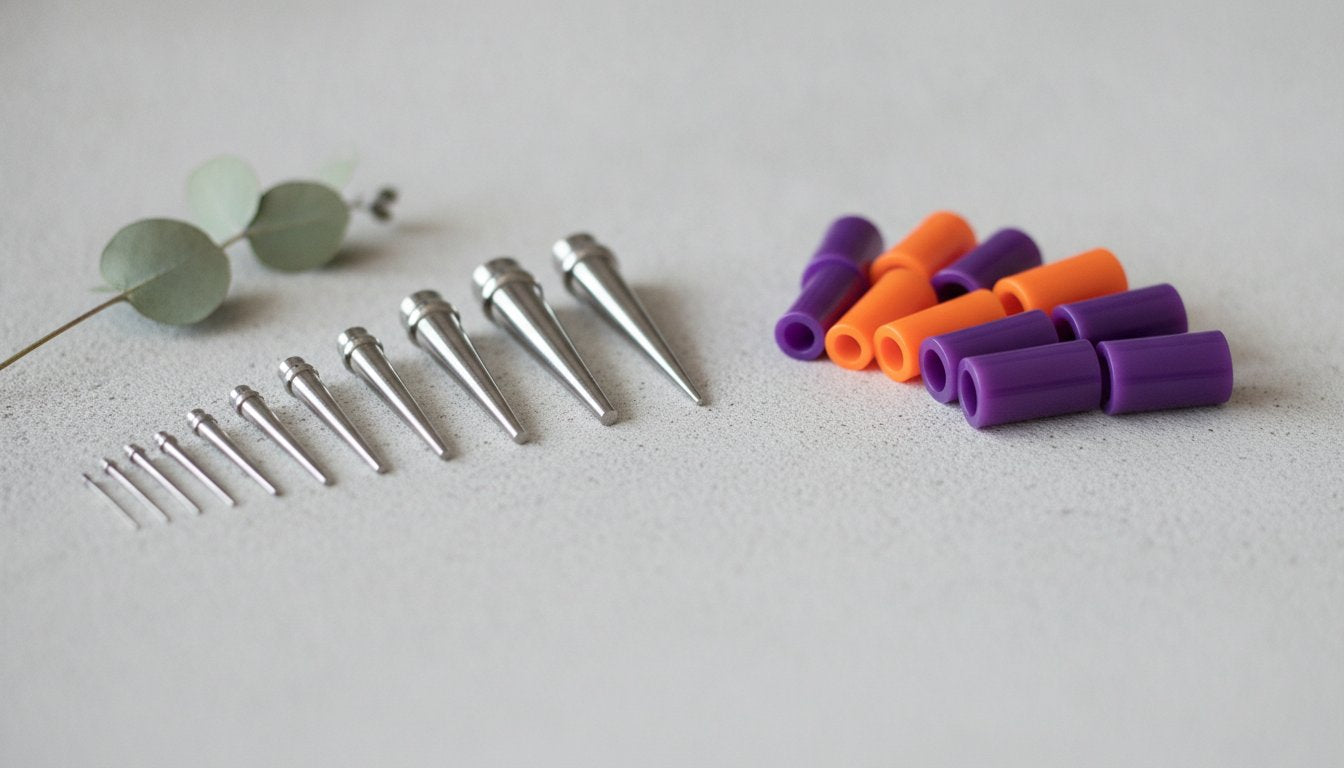
Choosing the wrong material for your ear stretching journey isn't just a matter of aesthetics; it's a decision that can leave a permanent mark on your body. While the lower price tag of plastic is often tempting, the invisible differences between steel vs acrylic ear stretching kits can mean the difference between a smooth transition and a painful blowout. It's natural to want to express your unique style, yet you likely fear the risks of tearing, irritation, or nickel-related reactions that haunt many beginners.
We understand that your skin deserves clinical precision and nurturing care. This guide breaks down the essential science of biocompatibility, safety, and long-term lobe health. You'll learn why non-porous 316L surgical steel is the professional standard for active stretching and how to identify the exact moment your ears are ready for the vibrant world of acrylic. By prioritizing the integrity of your body, you can achieve the look you want without compromising your well-being. Let's build a safe, stylish, and successful stretching plan together.
Key Takeaways
- Understand why 316L surgical steel is the superior choice for initial stretches thanks to its non-porous surface and natural weight.
- Discover the benefits of acrylic as a lightweight, colorful option for healed piercings and active lifestyles.
- Learn the essential hygiene differences in steel vs acrylic ear stretching kits to avoid irritation and ensure long-term lobe health.
- Explore the BodyJ4You hybrid strategy that combines the safety of steel tapers with the expressive style of acrylic plugs.
- Develop a clear, professional stretching plan that avoids permanent damage and supports your personal aesthetic journey.
Understanding the Importance of Material Selection in 2026
A stretching kit acts as a specialized tool for controlled tissue expansion. It's the bridge between where your lobes are and where you want them to be. When you begin the process of ear stretching, your skin enters a delicate "micro-tearing" phase. During this time, the body works to remodel collagen and create space for a larger gauge. The material you place against this vulnerable tissue determines the quality of that repair. If the material is reactive, the body treats it as a threat. If it's biocompatible, the body accepts it as a partner in the transformation.
Biocompatibility refers to the harmony between a foreign material and living tissue, ensuring that the jewelry supports healing rather than triggering a defensive or allergic response from the body.
Why Your Choice Impacts Healing Time
Surface smoothness directly dictates how quickly your skin cell regeneration occurs. A mirror-polished finish allows cells to migrate and settle without unnecessary friction. When you evaluate steel vs acrylic ear stretching kits, you're deciding the trajectory of your recovery. Low-quality materials often create microscopic drag that stalls healing and causes persistent redness. This irritation often leads to the accumulation of sebum and dead skin cells, which produces a distinct odor. Professional 2026 standards emphasize that non-porous materials are essential for active stretches because they minimize biological stress and promote faster closure of micro-tears.
The Porous vs. Non-Porous Debate
Porosity refers to the presence of microscopic voids on a material's surface. You can think of these as tiny, invisible pockets where bacteria and moisture become trapped. Non-porous surfaces, like 316L surgical steel, are impenetrable to these contaminants. This structural integrity makes them significantly easier to sanitize with basic home care routines. Conversely, porous materials can absorb fluids, making them difficult to fully clean once a stretch is underway. To maintain a healthy environment, you must prioritize hygiene and regular irrigation. Utilizing a sterile saline spray for piercings ensures that even the smallest particles are flushed away. Cleanliness. Consistency. Care. These three elements protect your lobes from the risks of infection and permanent scarring.
Surgical Steel Stretching Kits: The Professional Foundation
Surgical steel provides the structural integrity required for a safe transition. Not all metal is created equal, and the 316L surgical steel used in our Surgical Steel Taper and Plug Kit is engineered for high-end biocompatibility. It's dense. It's non-porous. It's enduring. This material serves as the bedrock of your collection because it withstands the rigors of daily wear without pitting or scratching over time. When you invest in steel, you're investing in a tool that remains as smooth on day 1,000 as it was on day one.
The weight advantage of steel is a functional benefit that many beginners overlook. Heavier plugs provide a gentle, constant downward pressure that assists the tissue in relaxing naturally. This "passive stretching" makes the move to the next gauge smoother and more predictable. It's a clinical approach to body modification that respects the limits of your skin.
For those who prioritize clinical standards, steel is the only viable choice. It's autoclave-safe, meaning it can be subjected to high-pressure steam for total sterilization. Adhering to strict health and safety regulations is significantly easier when your jewelry can be professionally cleaned. This level of hygiene is paramount during the early stages of your journey when the skin is most vulnerable to external contaminants.
Benefits of Surgical Steel for Active Stretching
The primary advantage of steel lies in its finish. A mirror-polished surface reduces the friction that occurs during taper insertion, protecting the delicate lining of your lobe. When comparing steel vs acrylic ear stretching kits, steel wins on three fronts: durability, hygiene, and healing support. It's hypoallergenic for the vast majority of users and requires nothing more than mild soap or saline for maintenance. If you're ready to start your journey with professional tools, our Surgical Steel Taper and Plug Kit provides the stabilizing force your body needs.
Potential Drawbacks to Consider
While steel is the industry standard, it's not without its nuances. The weight that assists stretching can sometimes be a burden for those with very thin or compromised lobes. In these rare cases, the jewelry might pull too much, requiring a lighter alternative during the rest periods between stretches. Additionally, 316L steel contains trace amounts of nickel. While it's safe for most, individuals with extreme sensitivities should monitor their skin for persistent redness. Finally, steel is a thermal conductor. It gets cold in the winter and stays warm in the sun. It's a small price to pay for such a high level of protection, but it's a factor to keep in mind as you move through the seasons.
Acrylic Ear Stretching Kits: Lightweight Style and Versatility
Acrylic offers a vibrant, feather-light alternative that surgical steel simply cannot replicate. While metal provides the clinical foundation, our Acrylic Ear Stretching Kit prioritizes lifestyle flexibility and creative expression. These pieces are the ideal companions for sleeping, exercising, or long days where the downward pull of heavier plugs becomes a nuisance. Lightweight. Colorful. Versatile. This material allows your personality to shine through your aesthetic choices.
The visual variety is truly unmatched. Transparent finishes, neon hues, and glow-in-the-dark effects offer a level of customization that remains impossible in metallurgy. Beyond style, the affordability of these kits makes them excellent for keeping multiple backup sizes on hand. When evaluating steel vs acrylic ear stretching kits, many users find that acrylic serves as the perfect "lifestyle" jewelry once the hard work of active stretching is complete.
When is it Safe to Use Acrylic?
The "Healed Only" rule is the most critical safety standard in body modification. You should never use acrylic for an initial stretch or during the micro-tearing phase. Because acrylic is porous, it can harbor bacteria or even fuse to healing skin cells, a risk that violates professional piercing standards. Once your lobes are mature and fully recovered, high-quality medical-grade acrylic is a safe choice. To maintain the health of your skin, use jojoba oil regularly to ensure the material glides comfortably against the lobe without causing friction or "sticking."
The Risks of Improper Acrylic Use
Acrylic requires a different care philosophy than metal. It's heat-sensitive, meaning you must never attempt to autoclave it; the high temperatures will warp the material and compromise its structural integrity. You must also avoid harsh chemical cleaners or alcohol, as these can cause "crazing," which creates tiny surface cracks that trap bio-film. Daily hygiene is non-negotiable for acrylic wearers. A simple routine of mild soap and water prevents the buildup of dead skin cells and moisture, keeping your lobes healthy and odor-free.
Steel vs. Acrylic: The Ultimate Comparison Framework
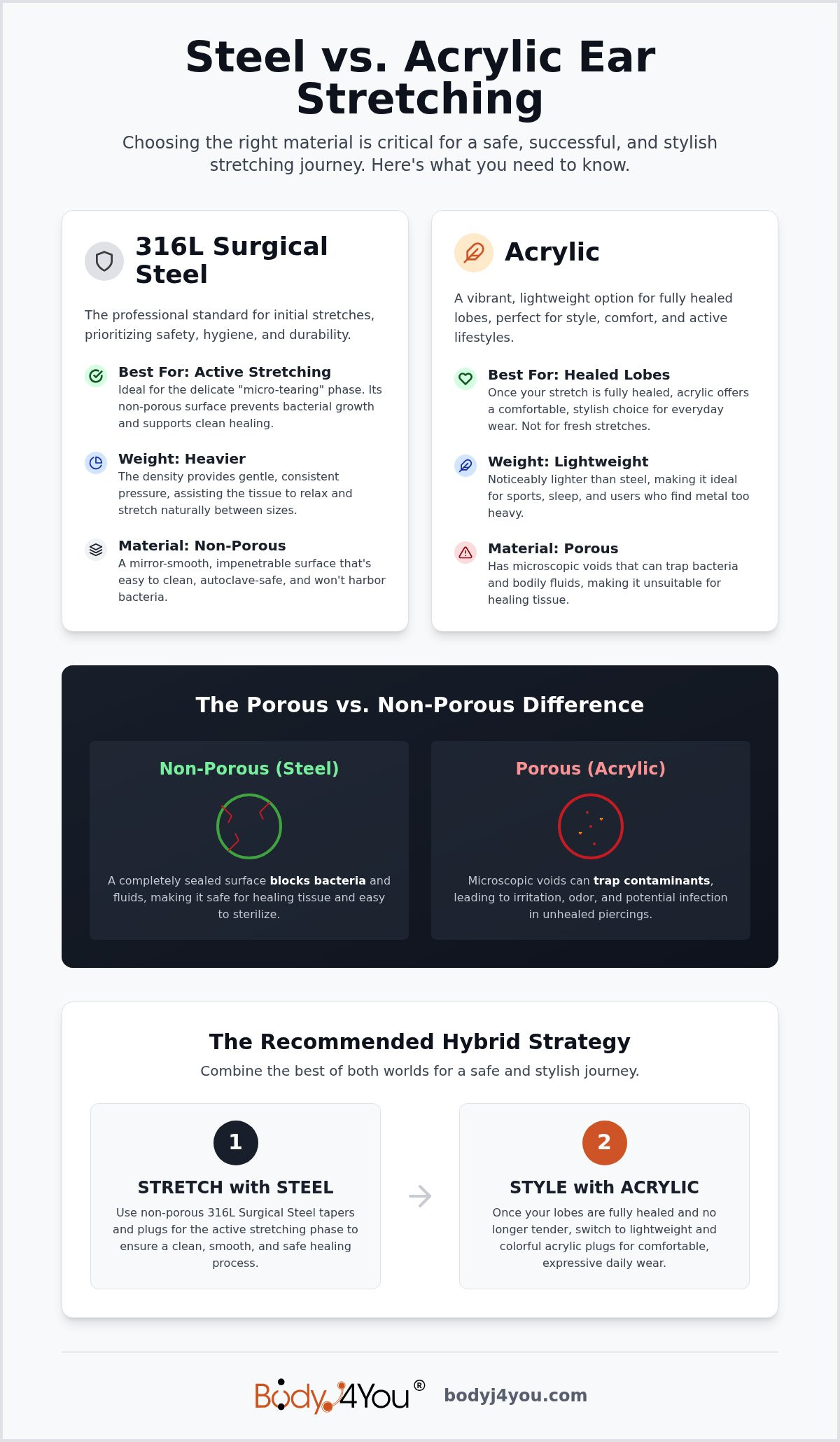
Selecting the right material is a strategic choice. It's a balance of weight, hygiene, and longevity. When comparing steel vs acrylic ear stretching kits, the decision hinges on your current stage of healing. Steel provides the heavy, assisted pressure needed for growth. Acrylic offers the feather-light freedom required for rest. Both have a place in a well-curated journey. One builds the foundation; the other celebrates the lifestyle.
The hygiene rating for steel is excellent because its surface is non-porous. It repels bacteria. It resists bio-film. It stays smooth. Acrylic is porous, meaning it possesses microscopic gaps that can trap moisture and organic matter. This structural difference is why steel is a lifetime investment, while acrylic is often treated as a replaceable or seasonal accessory. BodyJ4You ensures that our Surgical Steel Taper and Plug Kit remains an affordable entry point, so you never have to sacrifice safety for your budget.
Hygiene and Maintenance Requirements
Cleaning frequency varies significantly between these two materials. Acrylic demands a daily ritual to prevent the accumulation of sebum and skin cells. Steel is more forgiving in healed lobes, often requiring only bi-weekly attention to maintain its luster. Sterilization methods also differ. Steel survives the intense heat of an autoclave. Acrylic requires gentle saline irrigation or mild, non-chemical soap. Before you decide to upsize, consult our ear gauge size chart to ensure your progress is measured, safe, and anatomically sound.
Aesthetic and Lifestyle Suitability
Lifestyle suitability is the final piece of the comparison. Professional environments often favor the disciplined, subtle gleam of polished steel. It projects a clean and high-end aesthetic. High-intensity activities or sleep cycles are better suited for the "barely-there" feel of acrylic. We recommend the "Funnel of Choice" strategy. You start with the clinical precision of steel to build your foundation. You transition to the bold versatility of acrylic once your self-expression is no longer limited by the healing process. Begin your journey with confidence by selecting a high-quality Surgical Steel Taper and Plug Kit as your primary tool for expansion.
Selecting Your Kit: BodyJ4You Recommendations for Safe Stretching
We advocate for a hybrid strategy that respects both biology and beauty. When comparing steel vs acrylic ear stretching kits, the most successful users don't choose one forever; they use both at the right time. Our Surgical Steel Taper and Plug Kit provides the clinical precision needed for the initial expansion. Once the lobe is stable and the tissue is mature, our Acrylic Ear Stretching Kit offers the lightweight style you desire. Every BodyJ4You kit includes both tapers and plugs to ensure a complete transition that avoids the uneven weight distribution of wearing tapers as jewelry.
Success depends on what happens after the jewelry is in place. We support your journey with a locally manufactured line of aftercare, including our Saline Piercing Aftercare Spray and organic Jojoba oil. These products maintain the purity of the site and the elasticity of the skin. Before you finalize your choice, run through this final checklist:
- Is my ear currently in an active stretching phase or a healing rest phase?
- Does my skin require the hypoallergenic security of 316L surgical steel?
- Have I secured the proper lubrication to prevent friction during the swap?
The Best Choice for Sensitive Ears
For your very first stretch, surgical steel is the undisputed specialist. It provides a stabilizing force that minimizes the risk of defensive reactions from your body. If you notice persistent redness, itching, or localized heat, your skin might be signaling a nickel sensitivity. In these cases, monitoring the tissue is vital. As you progress toward larger milestones like 0g ears, the integrity of the material becomes even more important to prevent the thinning of the lobe and ensure a healthy, thick fistula.
How to Transition Between Materials Safely
The transition from steel to acrylic should never be hurried. Wait at least 6 to 8 weeks after a successful stretch before introducing a porous material like acrylic. This duration allows the internal skin to become robust enough to handle different surfaces. Lubrication is your best ally during this swap. Applying a small amount of Jojoba oil or Gauges balm creates a protective barrier and eases the jewelry into place without micro-tearing. Ready to begin your transformation? Explore our curated collection of ear stretching kits to find the perfect match for your aesthetic goals.
Empower Your Self-Expression with Confidence
Your journey toward larger gauges is a deeply personal transformation that requires both patience and the right tools. By understanding the nuances of steel vs acrylic ear stretching kits, you've taken the first step toward protecting your body's long-term health. High-quality 316L surgical steel provides the non-porous foundation needed for active stretching. Lightweight acrylic offers the vibrant versatility your healed lobes deserve. Clinical precision. Vibrant aesthetics. Lasting health.
BodyJ4You brings over 20 years of industry expertise to every kit we design. We don't just provide jewelry; we offer a complete wellness ecosystem that includes locally manufactured aftercare like our saline sprays and botanical oils. This commitment to ingredient integrity ensures your skin remains supple and resilient throughout every gauge transition. It's a balance of safety and creative freedom that supports your unique identity.
Ready to begin? Shop BodyJ4You Ear Stretching Kits and start your journey with a brand that prioritizes your safety and style. Your future look is waiting. We're here to guide you every step of the way.
Frequently Asked Questions
Is surgical steel or acrylic better for stretching ears for the first time?
Surgical steel is the superior choice for initial stretching. Its non-porous surface and natural weight provide a stable environment for healing tissue. Acrylic is porous and can harbor bacteria, which increases the risk of infection in fresh micro-tears. 316L surgical steel supports the micro-tearing phase with clinical precision. We recommend using steel for growth and acrylic for healed styling. Safety. Comfort. Success.
Can I develop an allergy to steel ear stretching kits?
Yes, it's possible to develop a sensitivity to the trace amounts of nickel found in 316L surgical steel. While this material is hypoallergenic for the vast majority of users, some individuals with extreme sensitivities may experience redness or itching. If your skin reacts persistently, you should consult a specialist and consider switching to titanium or glass. Monitoring your body's response is a key part of any successful stretching process.
Why does my ear smell when I wear acrylic tapers or plugs?
The odor, often called ear funk, is caused by the accumulation of sebum, dead skin cells, and moisture on the jewelry. Because acrylic is a porous material, it traps these biological elements more easily than metal. This creates a bio-film that emits a distinct smell if not cleaned daily. Maintaining a consistent hygiene routine with mild soap or saline spray is essential for anyone wearing acrylic jewelry in their lobes.
Is acrylic body jewelry safe for long-term wear?
Acrylic is safe for short-term, cosmetic wear in fully healed piercings but isn't recommended for continuous long-term use. Its porous nature can lead to bacterial buildup over time. The material can also degrade or craze with age. For long-term health, it's best to rotate your acrylic pieces with non-porous options like surgical steel. This simple rotation allows the tissue to rest, breathe, and remain healthy. Purity. Ethics. Integrity.
Can I sterilize acrylic stretching kits in boiling water?
No, you should never use boiling water or extreme heat to sterilize acrylic jewelry. Acrylic is heat-sensitive and will warp, melt, or lose its structural integrity when exposed to high temperatures. This material cannot be autoclaved. To clean your acrylic kits safely, use mild, non-chemical soap and lukewarm water. This gentle approach preserves the finish and prevents the material from cracking or becoming brittle during your stretching journey.
Which material is cheaper for a full ear gauge kit?
Acrylic kits are typically the most budget-friendly option for beginners looking for a wide variety of colors. However, surgical steel kits offer greater long-term value because they're more durable and can be sterilized repeatedly. When comparing steel vs acrylic ear stretching kits, consider your health a primary investment. BodyJ4You provides affordable options for both materials, ensuring you don't have to compromise safety or quality for a lower price point.
How long should I wait to switch from steel to acrylic jewelry?
You should wait at least 6 to 8 weeks after a successful stretch before switching to acrylic jewelry. This waiting period ensures that the internal fistula has matured and the micro-tears have fully healed. Swapping materials too early can cause irritation or allow the porous acrylic to fuse with healing skin cells. Patience is the foundation of a safe journey. Always use a lubricant like jojoba oil to ease the transition.
What happens if I stretch my ears too fast with a steel taper?
Stretching too quickly leads to blowouts, where the internal tissue is forced out through the back of the lobe. This causes permanent scarring, thinning of the skin, and painful inflammation. Even when using a high-quality steel taper, you must respect your body's natural healing rhythm. Skipping sizes or forcing jewelry through resistance can cause irreversible damage. Slow, steady progress is the only way to achieve a healthy, aesthetic gauge.


