

According to the Mayo Clinic, as many as 30% of body piercings result in complications that require professional attention. This statistic can feel daunting when you're simply trying to embrace a new aesthetic. You might find yourself hovering over a mirror, wondering if that slight redness is a standard part of the nine to twelve month healing journey or a sign of something more serious. The confusion between normal discharge and infection pus is common, stressful, and entirely valid.
We understand that your navel piercing is an investment in your self-expression. It represents your style, your confidence, and your identity. When pain makes wearing your favorite clothes uncomfortable or the fear of permanent scarring sets in, you need a supportive specialist to guide you back to wellness. This article provides the clarity you deserve. You'll learn to identify specific infected belly button piercing symptoms, discover professional cleaning protocols, and understand the precise steps needed to protect your skin's integrity.
Our guide establishes clear, calm, and informed criteria for your recovery. We will outline a refined aftercare routine using tools like sterile Saline Piercing Aftercare Spray and Piercing Cleaning Swabs. You'll gain the expert knowledge required to save your piercing and maintain your aesthetic vision with absolute confidence.
Key Takeaways
- Distinguish normal healing from true complications by learning the difference between clear lymph and problematic discharge.
- Identify the five primary infected belly button piercing symptoms, such as localized heat and rhythmic pain, to ensure early intervention.
- Uncover whether your discomfort is a clinical infection or a common reaction to low-quality metals and jewelry rejection.
- Master a professional rescue protocol using Saline Piercing Aftercare Spray to flush debris and stabilize irritated tissue.
- Recognize the critical systemic warning signs that indicate when it is time to seek professional medical guidance.
Is My Belly Button Piercing Infected? Normal Healing vs. Warning Signs
A new navel piercing is more than a style choice; it is a deep-tissue wound that requires significant time to stabilize. Unlike a simple earlobe piercing, the midsection is a hub of constant movement, friction, and moisture. This unique environment means your body’s defense system is perpetually active. During the first few weeks, a baseline of mild redness, slight swelling, and clear "crusties" is entirely expected. Understanding this baseline is the first step in identifying infected belly button piercing symptoms before they escalate into serious health concerns.
The navel is particularly prone to irritation because it sits at the fold of the body. High-waisted jeans, seatbelts, and even the natural way you sit can create a cycle of physical stress. When you combine this friction with the dark, moist nature of the belly button, it’s easy to see why the healing process is a marathon rather than a sprint. Maintaining a clean environment with specialized tools like Piercing Cleaning Swabs is essential during this delicate transition.
The Anatomy of a Healing Navel Piercing
Healing occurs through the formation of a fistula. This is a tube of scar tissue that lines the piercing track, effectively creating a skin-lined tunnel for your jewelry. Because this tissue must grow from the outside in, the process typically takes nine to twelve months to complete. During this window, you will notice a "crusty" stage. These are not signs of failure; they are evidence of cellular repair. While you wait for the fistula to mature, your piercing remains vulnerable to navel piercing risks like migration, scarring, or localized trauma.
Normal Irritation vs. Bacterial Infection
It’s common to experience what some call "Piercing Flu." This is simply the body reacting to initial trauma with localized warmth or tenderness. However, the fluid your piercing produces is the ultimate diagnostic tool. Lymph is a natural byproduct of the body’s healing process, appearing as a thin, clear, or white fluid that dries into a pale crust. Use a Saline Piercing Aftercare Spray to gently remove this buildup without disturbing the healing tissue.
In contrast, infected belly button piercing symptoms involve a distinct shift in discharge. If the fluid becomes thick, opaque, and takes on a yellow, green, or brown hue, bacteria have likely taken hold. While lymph is odorless and dries quickly, infection discharge often carries a faint, unpleasant scent and remains wet. Monitoring these subtle shifts allows you to act with precision, ensuring your journey toward self-expression remains safe, healthy, and successful.
5 Critical Infected Belly Button Piercing Symptoms to Watch For
Northwestern University research indicates that approximately 20% of all body piercings result in infection. While some irritation is expected during the first few days, you must recognize when your body is sounding an alarm. True infected belly button piercing symptoms are distinct from the standard healing process. They represent a biological struggle where your immune system is overwhelmed by bacteria. Identify. Stabilize. Heal. These three steps are essential for protecting your aesthetic investment and your physical health.
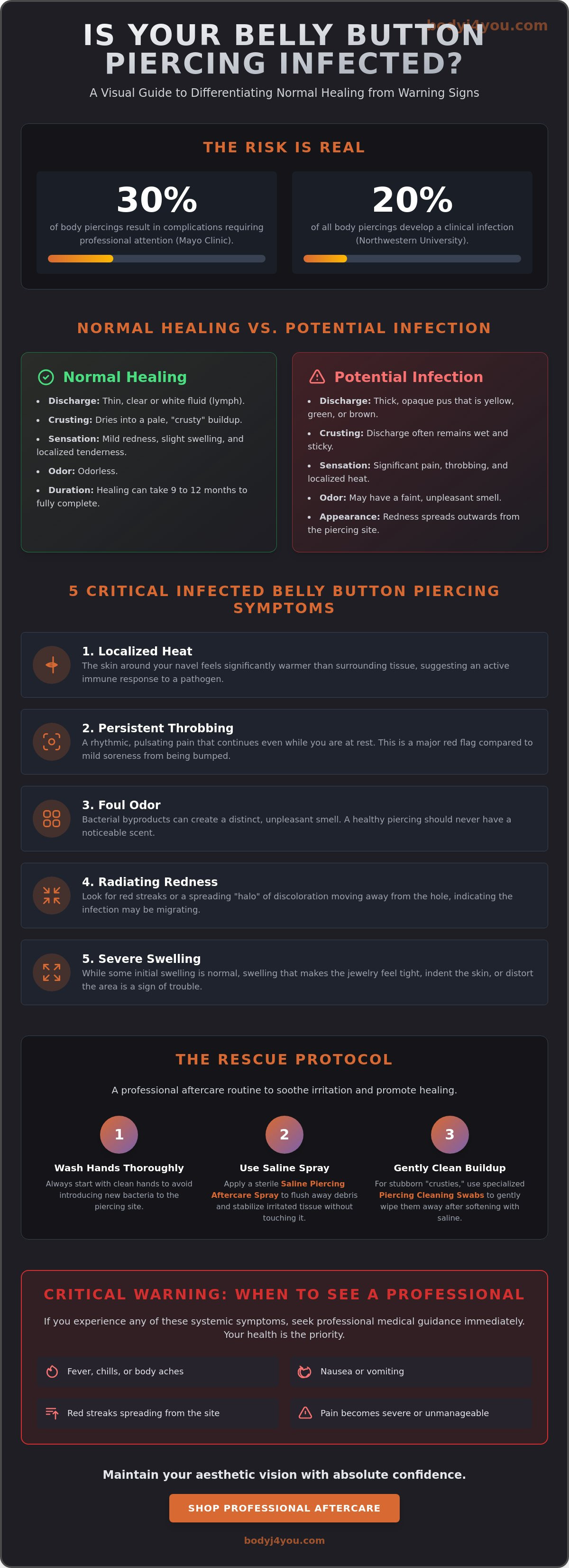
The Mayo Clinic suggests that infection rates could be as high as 30% for certain body placements. To keep your navel healthy, watch for these five specific warning signs:
- Localized Heat: The skin around your navel should not feel like it has a fever. If the area is significantly warmer than the surrounding tissue, it suggests an active immune response to an invasive pathogen.
- Persistent Throbbing: Rhythmic, pulsating pain that continues while you are at rest is a major red flag. This differs from the mild soreness felt only when the jewelry is bumped.
- Foul Odor: Bacterial metabolic byproducts often create a distinct, unpleasant smell at the site. A healthy piercing should never have a noticeable scent.
- Radiating Redness: Look for red streaks or a spreading "halo" of discoloration moving away from the hole. This suggests the infection is attempting to migrate into the surrounding skin.
- Severe Swelling: If the skin feels tight and shiny, or if the jewelry appears to be "swallowed" by the tissue, the inflammation has reached a critical stage.
Discharge Decoded: Color and Consistency
Green or dark yellow fluid is a primary indicator of white blood cells fighting bacteria. While translucent lymph is safe, thick and opaque fluid is a signal for immediate action. Never squeeze the piercing to check for discharge. This pressure can force bacteria deeper into the wound or cause micro-tears in the delicate fistula. Instead, use a proper piercing aftercare protocol to gently irrigate the area without manual interference.
Pain Levels and Physical Sensation
Track your discomfort over a 24-hour period to see if the intensity is increasing. A "burning" sensation is often associated with early-stage infection or chemical irritation. If the pain shifts from "sore when touched" to a deep, pulsating ache while you are lying still, the situation has likely escalated. To soothe minor irritation before it becomes a crisis, consider a gentle Saline Piercing Aftercare Spray to keep the environment sterile and calm. Consistency is your best defense against long-term complications.
Irritation, Rejection, or Allergy? Identifying Non-Infection Issues
Not every red mark signals a bacterial invasion. Often, what appears to be infected belly button piercing symptoms is actually a localized reaction to external stress or material incompatibility. Distinguishing between these issues is vital for the long-term health of your navel. Irritation can stem from friction, low-quality jewelry, or your body's own defensive mechanisms. Understanding the difference prevents unnecessary panic and ensures you apply the correct remedy for your specific situation.
Friction remains a primary culprit for navel complications. High-waisted trousers, heavy belts, and tight waistbands apply constant pressure to the jewelry. This creates a "seesaw" effect, where the bar is pushed up and down, irritating the delicate fistula. Over time, this physical trauma leads to piercing bumps. You might encounter a granuloma, which is a small, red bump of overactive healing tissue, or a keloid, which is raised scar tissue. These are structurally different from an abscess, which is a localized pocket of infection that feels hard and painful to the touch.
The Role of Jewelry Quality
The metal resting inside your body dictates the success of your healing journey. 316L Surgical Steel or Titanium remains the gold standard because they are bio-compatible and highly resistant to corrosion. If your jewelry contains high levels of nickel, you may experience a "pseudo-infection." Symptoms of a metal allergy include persistent itching, localized dryness, and a rash-like appearance that mimics inflammation. If you notice these signs, learning how to get rid of piercing bump formations and switching to high-quality materials like Internal Threaded Labret Studs is the first step toward recovery. Quality. Purity. Integrity. These are the pillars of safe self-expression.
Signs of Migration and Rejection
Sometimes, the body views jewelry as a foreign object to be removed rather than a permanent addition. This process is known as rejection. You can track this by measuring the "bridge" of skin between the two entry points. Is the jewelry becoming more visible? Does the skin look thin or translucent? Migration often leaves a trail of redness that looks like a "pathway" between the holes. If you suspect rejection, don't wait for the skin to break. A professional adjustment is necessary to prevent permanent scarring and ensure your navel retains its aesthetic integrity. Your body is a temple; treat its boundaries with the respect they deserve.
The Rescue Protocol: How to Soothe an Irritated Navel Piercing
Stabilize. Purify. Protect. When you detect the first signs of irritation, your immediate goal is to arrest the inflammatory response before it escalates. Managing infected belly button piercing symptoms requires a disciplined approach that prioritizes the integrity of the healing tissue. This rescue protocol is designed to support your body’s innate recovery mechanisms while minimizing external trauma. By following these five steps, you can often reverse minor irritation and prevent a full-scale bacterial complication.
- Step 1: Sterile Saline Irrigation. Use a pressurized saline spray to flush the area twice daily. The pressure removes debris and cellular waste without the need for physical contact.
- Step 2: Dryness Management. Moisture is the enemy of a healing navel. After irrigation, use non-woven gauze to gently pat the area dry. Avoid sharing towels, which can harbor dormant bacteria.
- Step 3: The LITHA Rule. "Leave It The Hell Alone." Every time you touch, pick, or rotate the jewelry, you introduce new bacteria and cause microscopic tears in the fistula.
- Step 4: Warm Compresses. If the area feels tight, soak non-woven gauze in warm saline and apply it to the site for five minutes. This helps draw out minor irritants and encourages blood flow.
- Step 5: Clothing Adjustments. Switch to loose-fitting, breathable fabrics like cotton. Avoid high-waisted leggings or belts that compress the jewelry against your abdomen.
Why Sterile Saline Beats DIY Salt Water
Precision is the hallmark of professional care. While many online forums suggest mixing sea salt and tap water at home, this practice carries significant risks. Incorrectly measured home mixes often lead to "osmotic shock," where a solution that is too concentrated actually dehydrates and kills the very cells trying to repair your skin. Furthermore, tap water is not sterile and may contain minerals or pathogens that aggravate the wound. A professional solution of 0.9% sodium chloride is the exact balance of the human body. It cleanses effectively without disrupting your biological equilibrium.
Safe Cleaning with the Right Tools
The tools you use are just as important as the solution itself. Many people reach for cotton buds or Q-tips, but these are hazardous for fresh piercings. The tiny fibers can snag on the jewelry or become trapped inside the wound, leading to localized inflammation. For precision cleaning, use piercing cleaning swabs that are designed to be lint-free and gentle. You must also adhere to the "No-Rotate" rule. Older advice suggested turning the jewelry to prevent it from "sticking," but modern dermatological standards confirm that rotating the bar tears the fragile healing fistula and significantly delays recovery. Keep your piercing stabilized and pristine by using a high-quality Saline Piercing Aftercare Spray to ensure a seamless healing journey.
When to See a Professional: Protecting Your Health and Your Piercing
Awareness is your most powerful tool. While many minor irritations resolve with disciplined aftercare, certain infected belly button piercing symptoms require immediate medical intervention. Recognizing the threshold between a localized reaction and a systemic threat is essential for your long-term well-being. If your body begins to signal distress beyond the navel itself, it is time to transition from home care to professional consultation. Act. Consult. Recover. These three steps ensure that a temporary complication does not become a permanent health issue.
Systemic symptoms are the most critical indicators of a spreading infection. If you experience fever, chills, or unexplained nausea, the bacteria may have entered your bloodstream or lymphatic system. These are not standard healing responses. They are clear signals that topical solutions are no longer sufficient. When the infection reaches this stage, a healthcare provider will typically prescribe a course of antibiotics, such as amoxicillin-clavulanate, to address the issue internally.
The "Do Not Remove" Rule
One of the most common mistakes is removing the jewelry when an infection is suspected. This is a dangerous intuition. The jewelry acts as a vital "drain" for the wound, allowing pus and bacteria to exit the body. If you remove the bar, the skin can heal over the entry points, effectively trapping the infection inside. This creates a localized pocket of bacteria known as an abscess, which often requires surgical drainage. Instead of removal, visit a professional piercer who can upsize your jewelry to a longer bar. This accommodates severe swelling and ensures the wound remains open for proper irrigation.
Preparing for Your Doctor’s Visit
Precision in communication leads to better clinical outcomes. When speaking with a medical professional, use specific terminology to describe your infected belly button piercing symptoms. Instead of saying the area "hurts," describe the sensation as "radiating heat" or "persistent throbbing." You should also be prepared to identify your jewelry material. Knowing if you are wearing 316L Surgical Steel or Titanium helps the doctor rule out metal allergies versus bacterial infections.
Your journey toward self-expression should be a source of pride, not a cause for chronic stress. By staying informed and acting decisively, you protect the integrity of your piercing and your health. For those who want to ensure their recovery stays on the right path, explore BodyJ4You Aftercare for a safer healing journey. Professional tools and expert knowledge are the ultimate safeguards for your aesthetic goals.
Secure Your Aesthetic Journey
Your navel piercing is a powerful statement of self-expression. Protecting that investment requires a blend of clinical precision and patient nurturing. You now possess the specialized knowledge to distinguish between standard healing discharge and the more serious infected belly button piercing symptoms. By adhering to the "LITHA" rule and maintaining a sterile environment, you ensure your body has the stability it needs to complete its recovery safely.
Trust in expertise that bridges the gap between beauty and biology. With over 20 years of piercing industry expertise, we provide solutions that prioritize your skin's integrity. Our Made in the USA skincare is formulated to support your journey toward aesthetic refinement without compromise. Shop BodyJ4You Sterile Saline Aftercare Spray to experience an expert-recommended 0.9% sodium chloride formula that works in harmony with your body’s natural chemistry.
Stay disciplined in your routine and confident in your choices. Your path to a perfectly healed navel is well within reach, and we're here to act as your supportive specialist every step of the way.
Frequently Asked Questions
How can I tell if my belly button piercing is infected or just irritated?
You can distinguish infection from irritation by the presence of localized heat, foul odors, and thick, opaque discharge. Irritation typically presents as mild pinkness or clear lymph caused by high-waisted clothing or accidental snags. If you observe infected belly button piercing symptoms like radiating red streaks or rhythmic throbbing, your body is likely fighting a bacterial invasion rather than simple physical stress.
Can I use rubbing alcohol or hydrogen peroxide on an infected piercing?
No, you shouldn't use rubbing alcohol or hydrogen peroxide on any piercing, especially one that's struggling. These substances are excessively harsh; they kill the healthy cells required for tissue repair and significantly delay the healing process. Instead, use a pH-balanced Saline Piercing Aftercare Spray to irrigate the wound. This approach ensures a sterile environment without causing chemical burns or secondary irritation.
Should I take my belly button ring out if I think it is infected?
Don't remove your jewelry if you suspect an infection. The bar serves as a necessary channel that allows discharge and bacteria to drain from the wound. If the jewelry's removed, the skin may close over the active infection, leading to a painful internal abscess. Seek a professional opinion to see if a longer bar is needed to accommodate any localized swelling and ensure proper drainage.
What color is normal discharge for a navel piercing?
Normal discharge, known as lymph, is typically clear, white, or a very pale straw color. This fluid is a natural byproduct of the body's repair system and eventually dries into "crusties" around the jewelry. If the discharge becomes thick, opaque, or shifts toward a green or dark yellow hue, it's a primary indicator of infected belly button piercing symptoms that require immediate attention and care.
How long does it take for a belly button piercing infection to clear up?
Most uncomplicated piercing infections begin to resolve within seven to ten days of consistent, professional aftercare. During this window, you must maintain a disciplined routine of twice-daily saline irrigation and avoid all physical contact with the site. If the symptoms don't show signs of improvement after two weeks, or if the pain intensifies, consult a healthcare provider for a clinical assessment and potential treatment.
Can a belly button piercing infection make me feel sick or give me a fever?
Yes, a localized infection can progress into a systemic issue that causes fever, chills, or general malaise. These symptoms suggest that bacteria have entered your system and are no longer confined to the navel area. If you feel sick or experience a body temperature over 100.4°F, seek medical help immediately. Your health is the ultimate priority during your journey toward self-expression and aesthetic growth.
Is it normal for a new belly button piercing to be red for a week?
It's perfectly normal for a new navel piercing to exhibit redness and slight swelling for the first week or two. This is part of the body's initial inflammatory response to the trauma of the procedure. However, the redness should gradually subside rather than spread. If the discoloration begins to radiate outward or feels hot to the touch, you should transition to a more intensive rescue protocol immediately.
What is the best cream for an infected belly button piercing?
Avoid applying over-the-counter antibiotic creams or thick ointments to your piercing. These products act as a physical barrier that blocks oxygen and traps bacteria inside the wound, which can worsen the situation. The best approach is to keep the area clean with Piercing Cleaning Swabs and sterile saline. If the infection's severe, a doctor may prescribe oral antibiotics to treat the issue from the inside out.


