

What if the bump threatening your new piercing isn't the permanent scar you fear, but a temporary signal from your skin? While the complication rate for cartilage piercings sits at approximately 35%, many enthusiasts immediately panic at the first sign of a raised lesion. Understanding the nuances of a keloid vs irritation bump is the essential first step toward reclaiming your aesthetic journey. You deserve a piercing that reflects your style without the burden of physical vulnerability, redness, or persistent discomfort.
It's completely normal to feel frustrated when your path to self-expression is met with itching or swelling. We know you've likely encountered conflicting aftercare advice that leaves you feeling more anxious than empowered. This guide promises to clarify the critical differences between a permanent keloid and a treatable irritation bump so you can save your piercing and restore your skin's health. We will walk you through a clear diagnosis, a step-by-step healing plan, and the technical insights needed to ensure your piercing remains a source of pride rather than a source of stress. Together, we will prioritize your safety, your style, and your long-term well-being.
Key Takeaways
- Distinguish between permanent genetic overgrowth and temporary inflammatory responses by assessing timing, texture, and growth patterns.
- Master the 5-point self-assessment to accurately identify a keloid vs irritation bump, ensuring you choose the correct path to recovery.
- Eliminate external triggers like nickel-heavy jewelry or mechanical friction to stop the cycle of recurring piercing bumps.
- Implement a professional-grade treatment routine involving sterile saline and targeted oils to restore the integrity of your skin.
- Learn why high-risk zones like the cartilage require specific care and how to protect your aesthetic investment long-term.
Understanding the Bump: Keloid vs. Irritation Explained
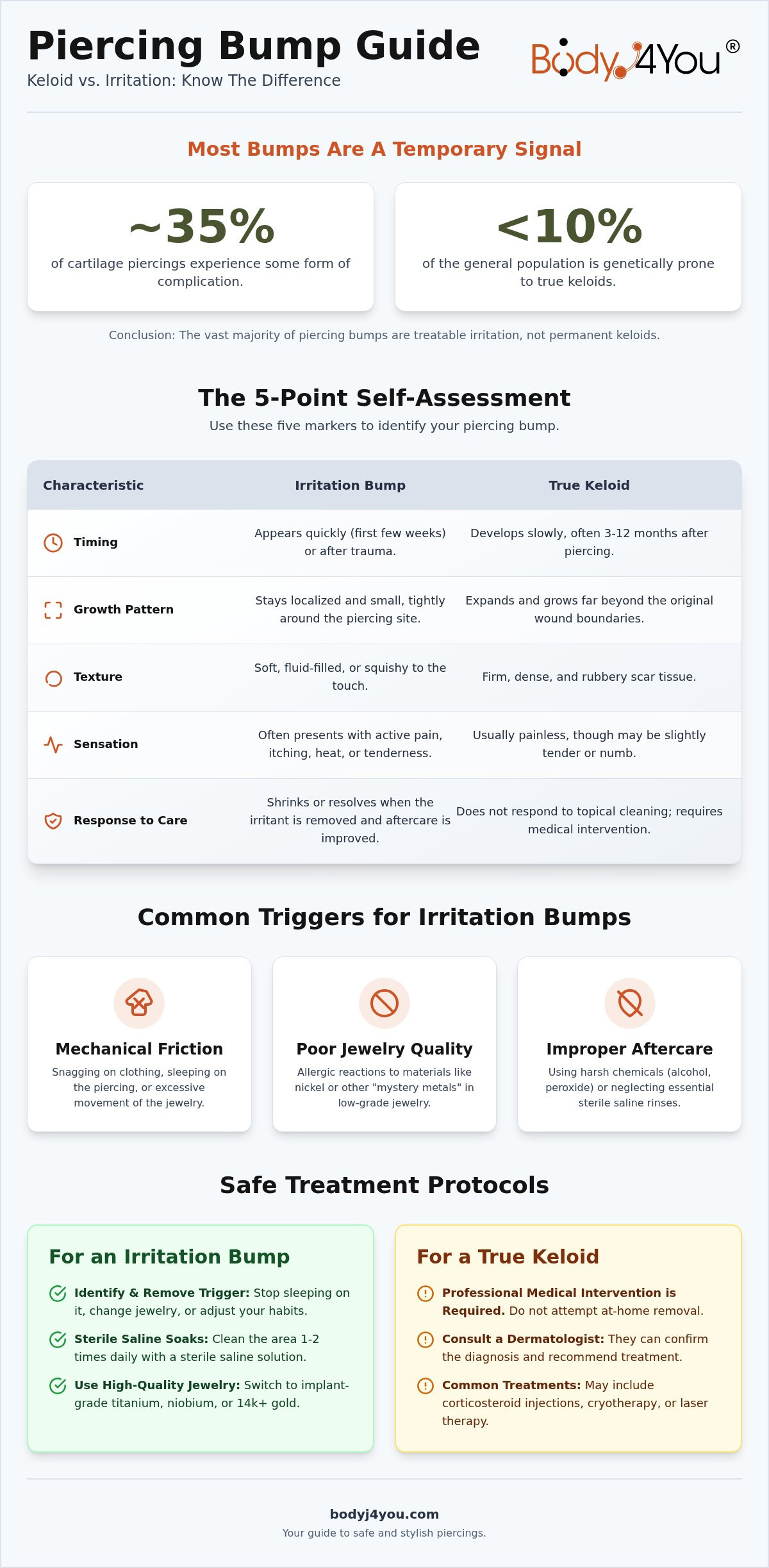
A new piercing is a profound act of self-expression. It's a creative choice that requires biological cooperation to succeed. When a small, raised lesion appears unexpectedly, it's easy to assume the worst. However, data suggests that the vast majority of these issues are manageable and temporary. While the complication rate for cartilage piercings is approximately 35%, most of these bumps are behavioral rather than biological. Distinguishing between a keloid vs irritation bump is the first step toward a successful healing journey.
As your supportive specialist, we want to lower your stress levels immediately. True keloids are statistically rare, with dermatological consensus placing their prevalence in the general population well below 10%. Most visible bumps are simply the body’s way of asking for a change in environment or care. Learning to spot the markers of a keloid vs irritation bump protects your skin from long-term damage and ensures your jewelry remains a point of pride. Early identification is the key to stabilization.
What is an Irritation Bump?
An irritation bump is a localized inflammatory response. In the piercing community, these are often referred to as hypertrophic scars or granulomas. They are typically the result of external stress rather than internal genetics. These bumps are generally small, flesh-colored or red, and stay strictly within the boundaries of the piercing site. They are often triggered by a few specific factors:
- Mechanical friction: Snagging the jewelry on clothing, towels, or hair.
- Poor jewelry quality: Reactions to nickel or "mystery metals" found in low-end products.
- Improper aftercare: Using harsh chemicals or skipping essential saline rinses.
If you accidentally sleep on a fresh piercing, your skin reacts by sending extra fluid to the area. This creates a temporary protrusion that will usually subside once the stressor is removed and a proper care routine is established.
What is a True Keloid?
A Keloid is a significantly different biological event. It occurs when the body's healing mechanism fails to turn off, leading to a permanent overgrowth of dense scar tissue. Unlike a simple irritation bump, a keloid doesn't stay small. It often expands far beyond the original wound, taking on a firm, rubbery, or mushroom-like appearance. This is a genetic predisposition where the body produces excessive collagen. Because they are permanent structures, they don't respond to standard over-the-counter treatments. Instead, they require professional medical intervention, such as corticosteroid injections, cryotherapy, or specialized laser systems like the Fraxel FTX launched in 2025. Knowing this distinction saves you from applying the wrong treatments to a sensitive area.
The 5-Point Self-Assessment: Is It a Keloid or Just Irritated?
Identifying the source of your skin's distress requires a structured approach. You need clarity. You need confidence. You need a plan. Determining the difference in a keloid vs irritation bump involves looking at five specific biological markers that reveal how your body is responding to the piercing. Experts often highlight specific diagnostic criteria for how to tell the difference between piercing bumps and keloids, focusing primarily on the lesion's behavior over time rather than just its immediate appearance.
To begin your self-assessment, evaluate these five critical factors:
- Timing: Irritation bumps usually surface within the first few weeks of a new piercing or immediately after a physical trauma. Keloids are slower. They might not appear for three to twelve months after the initial wound has seemingly healed.
- Growth Pattern: An irritation bump stays localized. It clusters tightly around the jewelry. A keloid expands outward, often doubling or tripling the size of the original piercing site.
- Texture: Irritation bumps feel soft or squishy to the touch. Keloids feel firm, rubbery, and dense.
- Sensation: Irritation often presents with active pain, heat, or itching. Keloids are usually painless, though they may feel tender or even slightly numb as the scar tissue thickens.
- Response to Care: Irritation bumps are reactive. They shrink when you improve your hygiene. Keloids are static and will not diminish with topical cleaning alone.
Visual Cues: Color and Shape
The aesthetic profile of the bump offers vital clues. Irritation bumps often look red and angry. They may contain clear fluid, known as lymph, or white pus if a minor infection is present. Conversely, keloids tend to be flesh-colored, pink, or even darker than the surrounding skin. They often have a shiny, smooth surface. A classic indicator of a true keloid is the "mushroom shape," where the growth expands on a narrow base and spills over the edges of the original piercing hole. Maintaining a clean environment with specialized aftercare solutions is the best way to test your skin's resilience during this assessment phase.
The 'Aftercare Test' for Differentiation
The most definitive way to distinguish between these two issues is the response to a consistent cleaning protocol. If the bump responds to sterile saline spray for piercings, it is likely an irritation bump caused by bacteria or debris. A true keloid is a structural change in your DNA's collagen production. It will not shrink regardless of how well you clean it. We recommend implementing a "perfect care" routine for exactly 14 days. If the bump continues to expand or shows no signs of flattening after two weeks of diligent saline application, it is time to consult a medical professional for a formal diagnosis.
The Truth About Keloids: Genetics, Growth, and Medical Realities
A keloid is more than a simple skin lesion; it's a profound expression of your unique genetic blueprint. While an irritation bump is a reaction to your environment, a keloid is a reaction within your DNA. This distinction is the cornerstone of the keloid vs irritation bump debate. When your body doesn't know how to stop the healing process, it continues to produce dense, thick collagen long after the original wound has closed. This biological overachieving results in a permanent structure that requires specialized medical attention rather than standard home care.
One of the most confusing aspects of keloids is their timeline. Unlike irritation bumps that appear while the piercing is fresh, a keloid often waits. It might surface months or even a year after you've swapped your starter jewelry. This delayed onset often leads to confusion, as many enthusiasts assume they are "safe" once the initial healing period ends. Because these growths are structural and permanent, you should never attempt to "pop," "drain," or home-treat a suspected keloid with DIY methods like tea tree oil or aspirin pastes. These aggressive tactics often cause further trauma, which can actually trigger the keloid to grow faster and larger.
Risk Factors and Epidemiology
Genetics play a dominant role in who develops these scars. If you have a blood relative with keloid scarring, your risk profile increases significantly. Research indicates that individuals of African, Asian, and Hispanic descent are more prone to this condition due to higher melanin levels and specific fibroblast behaviors. Science has identified several major risk factors for keloid formation, specifically noting that high-tension areas like the earlobes and cartilage are primary zones for overgrowth. Even the process of stretching can be a trigger; if you are prone to keloids, choosing the wrong ear gauge sizes or stretching too quickly can create the micro-trauma necessary to spark a keloid response.
Professional Treatment Options
If your keloid vs irritation bump assessment points toward a true keloid, professional intervention is the only path forward. Modern medicine offers several sophisticated options to manage these growths:
- Corticosteroid Injections: These help flatten the tissue and reduce redness by breaking down the excess collagen.
- Advanced Laser Therapy: Systems like the Joule 1064nm or the Fraxel FTX system, launched in 2025, target the blood vessels feeding the scar.
- Cryotherapy: Freezing the tissue from the inside out to kill the overactive cells.
It's vital to manage expectations regarding surgical removal. A 2025 study showed a 65% recurrence rate for surgically excised keloids at a 24-month follow-up. This is why surgeons almost always combine removal with radiation or injections to prevent the "Wise Guardian" of your immune system from overreacting again.
Piercing Irritation Bumps: Causes, Triggers, and Prevention
While the genetic weight of a keloid can feel daunting, the vast majority of piercing complications are purely behavioral. If your keloid vs irritation bump assessment points toward a localized, reactive lesion, the solution usually lies in your daily habits. Irritation bumps are the body's protective response to persistent trauma. They signal that something in the piercing's environment, the jewelry, the angle, or the aftercare, is preventing the skin from stabilizing. Recognizing these triggers is the first step toward a successful recovery.
Mechanical stress is perhaps the most common culprit. Sleeping on a fresh piercing, snagging it on a loose-knit sweater, or the constant friction from hair can create a cycle of inflammation. When a piercing is placed at an improper angle, the jewelry exerts uneven pressure on the fistula. This constant torquing forces the body to produce extra tissue to cushion the site, resulting in a persistent bump that won't resolve until the pressure is alleviated. Understanding these mechanical stressors is essential for long-term health and aesthetic success.
The Role of Jewelry Quality
The integrity of your jewelry material is non-negotiable. Many mystery metals contain high levels of nickel, a common allergen that triggers contact dermatitis and localized swelling. Switching to high-quality surgical steel nose rings or implant-grade titanium can often resolve a stubborn bump in a matter of days. Beyond material, the design matters. Micro-tears caused by external threading, where the screw threads are on the post itself, act as sandpaper on delicate internal tissue, leading to chronic granulomas. Safe self-expression requires materials that respect your biology and promote stability.
Aftercare Mistakes and 'The LITHA Method'
Sometimes, the best care is no care at all. The Leave It The Hell Alone (LITHA) method is a cornerstone of professional piercing advice. Constant twisting, turning, or breaking the crusties only re-opens the wound. Over-cleaning with harsh soaps or using textured Q-tips can leave behind microscopic fibers that trap bacteria. Instead, use specialized piercing cleaning swabs designed for precision and purity. Finally, beware of the moisture trap. Leaving a piercing damp after cleaning encourages bacterial growth. Always pat the area dry with a clean, disposable paper product to maintain a stable environment for healing. For a comprehensive recovery, explore our full collection of piercing care essentials to support your skin's natural resilience.
Treatment Protocols: How to Heal Your Piercing Bump Safely
Healing is a deliberate process. It requires technical precision, consistent discipline, and emotional patience. Once you have navigated the initial confusion of a keloid vs irritation bump, it's time to implement a structured recovery plan. This protocol is designed to stabilize the environment, flush out biological irritants, and nourish the skin's barrier. By following a steady, logical path, you can restore the integrity of your piercing and continue your journey of self-expression with confidence.
In addition to topical care, supporting your body's healing process with nutrient-rich options from Jersey Juice Co. can help manage inflammation and promote overall skin health.
Your healing plan should follow these four essential stages:
- Step 1: Eliminate the stressor. Audit your jewelry material, check for improper angles, and adjust your sleeping habits. If the jewelry is the problem, no amount of cleaning will fix the bump.
- Step 2: Cleanse with saline. Use a sterile saline solution twice daily to clear away debris and bacteria without disrupting the delicate cellular repair underway.
- Step 3: Treat with targeted oils. Introduce specialized blends to soothe inflammation and encourage skin elasticity.
- Step 4: Monitor and adjust. Recovery isn't always linear. Watch for subtle changes in size or color over a 14-day period.
The Saline and Oil Protocol
The synergy between cleansing and treatment is vital. A Saline Piercing Aftercare Spray acts as the gold standard for initial stabilization. It provides a gentle, isotonic rinse that mimics the body's natural fluids. For persistent, non-keloid growths, applying a piercing bump treatment oil offers a targeted solution to reduce redness and soften the tissue. As your Wise Guardian, we must emphasize safety: never use essential oils like tea tree oil undiluted on a fresh bump. Pure oils are too aggressive for open fistulas and can cause chemical burns that exacerbate the very irritation you are trying to resolve.
When to See a Professional
Confidence comes from knowing when to seek expertise. While most irritation bumps respond to diligent home care, certain symptoms signal a need for professional intervention. You should visit your piercer if you suspect your jewelry requires a downsize or a material swap to implant-grade titanium. However, you must distinguish between a simple bump and a serious infection. Seek medical advice immediately if you experience:
- A persistent fever or chills.
- Spreading redness or red streaks moving away from the piercing.
- A foul odor accompanied by thick, green, or yellow discharge.
If your keloid vs irritation bump assessment remains inconclusive after two weeks of perfect aftercare, or if the growth continues to expand like a mushroom, consult a dermatologist. They can provide a formal diagnosis and discuss advanced medical options like corticosteroid injections or laser therapy to ensure your skin remains a healthy canvas for your personal aesthetic.
In the evolving landscape of medical science, the availability of high-quality verified materials is essential; you can explore Direct-to-Consumer E-commerce Product Sales to see how JM Precision Labs supports the scientific community with third-party verified research compounds.
Secure Your Self-Expression and Restore Your Skin
Navigating the nuances of a keloid vs irritation bump doesn't have to be a source of anxiety. Most lesions are simply your body's request for a better environment or more consistent care. By identifying your specific triggers and committing to a structured protocol, you protect both your aesthetic investment and your biological health. Knowledge is your most powerful tool for long-term piercing success.
At BodyJ4You, we bring over 20 years of industry expertise to your recovery process. Our dermatologically tested saline sprays and natural healing oils are manufactured in the USA to ensure the highest standards of purity and ethics. You don't have to settle for persistent discomfort or the fear of permanent scarring. Shop BodyJ4You Piercing Aftercare Solutions today to provide your skin with the professional-grade support it deserves.
Your journey toward self-expression is a marathon, not a sprint. With the right tools and a little patience, your piercing will thrive as a beautiful reflection of your unique style.
Frequently Asked Questions
How can I tell if my piercing bump is a keloid?
A keloid is distinguished by its ability to grow beyond the boundaries of the original piercing and its firm, rubbery texture. While irritation bumps are soft and flesh-colored, keloids are often darker, shiny, or mushroom-shaped. They rarely appear immediately, often surfacing three to twelve months after the initial wound. If the lesion is static and doesn't respond to topical cleaning, it's likely a permanent scar structure.
Will an irritation bump go away on its own?
An irritation bump will typically resolve if the underlying cause of the stress is eliminated. You must identify the trigger, such as low-quality mystery metals or sleeping on the jewelry, to stop the inflammatory cycle. Once the stressor is gone, the localized swelling will subside. Implementing a twice-daily saline routine provides the biological support your skin needs to heal the area completely and prevent recurrence.
Can I pop a piercing irritation bump?
You should never attempt to pop or squeeze a piercing bump under any circumstances. This aggressive action causes micro-trauma to the delicate fistula and introduces harmful bacteria into the wound. Popping often exacerbates the inflammation and can lead to permanent scarring or a severe infection. Instead, focus on gentle irrigation and removing mechanical friction to allow the tissue to flatten naturally over time.
Does saline solution work on keloids?
Sterile saline solution won't shrink or remove a keloid because these are permanent overgrowths of collagen rather than simple inflammation. When evaluating a keloid vs irritation bump, saline is used as a diagnostic tool. If the bump is purely irritated, the saline will flush out debris and reduce swelling. If it's a true keloid, it'll remain unchanged, requiring professional medical interventions like cryotherapy or steroid injections.
How long does it take for a piercing bump to disappear?
Most irritation bumps show visible improvement within 14 days of a consistent aftercare routine. Complete disappearance usually occurs within four to eight weeks, provided the original source of irritation has been removed. If the bump shows no signs of shrinking after two weeks of perfect care, it may indicate a more complex issue, such as an improper piercing angle or a genetic predisposition to scarring.
What happens if I leave a keloid untreated?
If left untreated, a keloid will likely continue to expand slowly beyond the original piercing site. These growths are permanent and don't resolve without medical intervention. While they're generally harmless to your overall health, they can become quite large, causing physical discomfort, itching, or aesthetic distress. Early professional diagnosis is essential to manage the growth before it requires more invasive surgical procedures or advanced laser therapy.
Can jewelry material cause a keloid?
Poor jewelry material is a common trigger for the chronic inflammation that can spark keloid formation in genetically prone individuals. Metals like nickel cause persistent irritation and localized allergic reactions. This state of constant trauma forces the body into an overactive healing mode. Switching to implant-grade titanium or surgical steel is the best way to prevent the chronic stress that triggers excessive collagen production.
Is a piercing bump a sign of infection?
A piercing bump is more often a sign of localized irritation than a full-scale bacterial infection. However, you should monitor the site for specific warning markers. If the bump is accompanied by spreading heat, a fever, or foul-smelling discharge, you may have an active infection. Correctly identifying a keloid vs irritation bump becomes much simpler once you've cleared any potential bacterial issues with a professional saline spray.


