

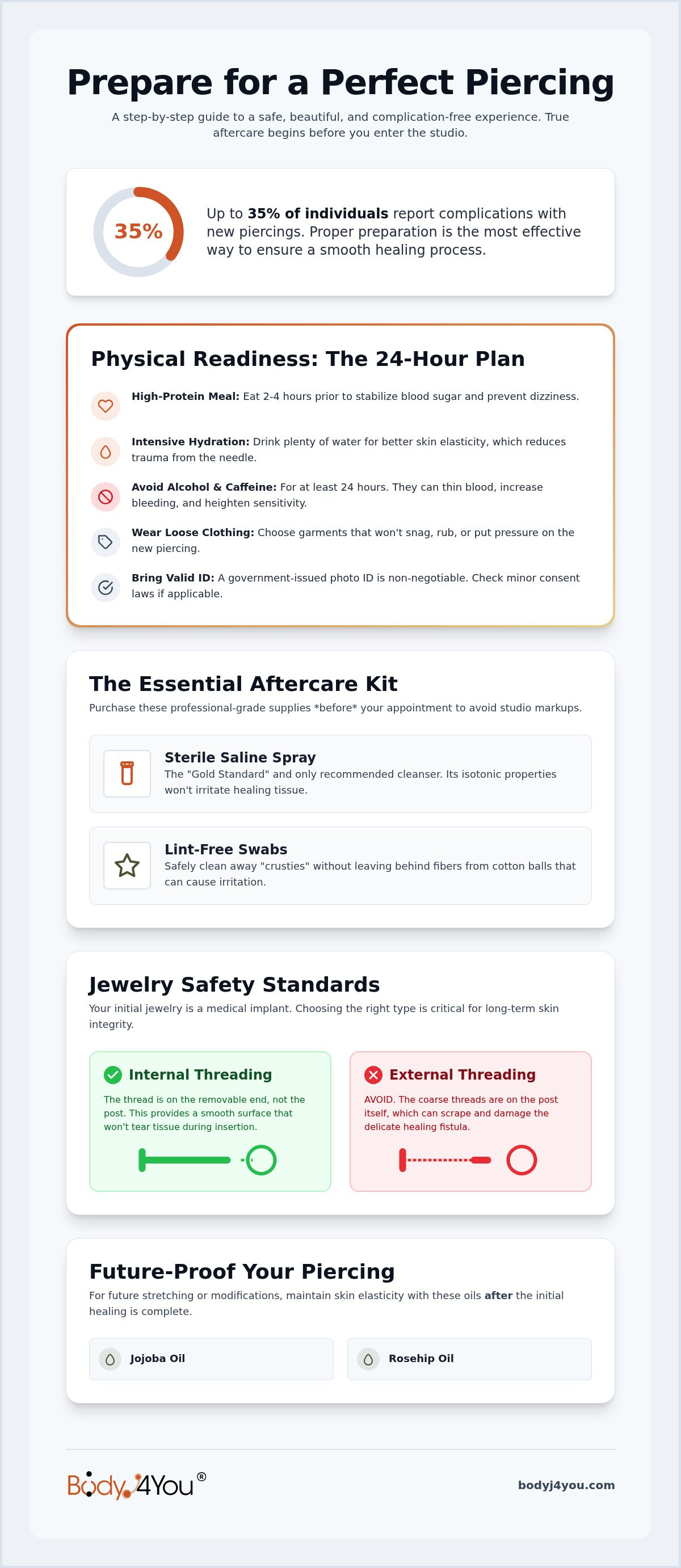
Up to 35% of individuals with new piercings report at least one complication, often involving minor infections or persistent irritation. It's a sobering statistic that highlights a common oversight: true aftercare begins long before you step into the studio. While the excitement of a new aesthetic is natural, your body requires a prepared environment to thrive. Understanding exactly what to buy before getting a piercing is the most effective way to transform anxiety into confidence.
We believe that self-expression should be a journey of empowerment, safety, and refinement. It's normal to feel a sense of vulnerability regarding the healing process or the integrity of your jewelry. This guide provides the clinical precision and nurturing care you need to ensure a complication-free experience. You'll discover how to curate a professional recovery station, why internal threading is the industry standard for 2026, and which dermatological-grade supplies will protect your skin. Let's prepare your body for a safe, beautiful, and successful transformation.
Key Takeaways
- Master the biological essentials of physical readiness, including how high-protein meals and proper hydration facilitate a smoother piercing process.
- Identify exactly what to buy before getting a piercing to secure professional-grade supplies like sterile saline spray without studio markups.
- Navigate the complexities of jewelry biocompatibility to select internal threaded pieces that prioritize your long-term skin integrity and safety.
- Learn to curate a dedicated home recovery station equipped with the specific lighting and tools necessary for meticulous daily maintenance.
- Establish a proactive skincare regimen using Jojoba and Rosehip oils to maintain tissue elasticity and prepare for future aesthetic modifications.
Physical Readiness: Preparing Your Body for the Appointment
Your body is the canvas for your self-expression. To ensure the integrity of your new aesthetic, physical preparation is paramount. A successful session requires more than just showing up. It demands a biological foundation that supports your nervous system and skin health. While you research what to buy before getting a piercing, your first investment should be in your own physiological stability.
Consuming a high-protein meal two to four hours before your appointment is essential. Protein provides a slow release of energy, which stabilizes your blood sugar during the adrenaline spike that often accompanies a piercing. This simple step prevents the dizziness or fainting spells that can cut a session short. Pair this with intensive hydration. Water intake directly influences skin elasticity; hydrated tissue is more resilient and allows the needle to pass through with significantly less resistance. This reduces immediate trauma and minimizes the risk of early-stage swelling.
Strictly avoid alcohol for at least 24 hours prior to your visit. Alcohol acts as a systemic blood thinner, which can lead to excessive bleeding during the procedure and bruising afterward. It also interferes with your body's ability to manage inflammation. Similarly, choose your attire with care. Wear loose-fitting, breathable garments that provide easy access to the piercing site. Avoid high-waisted bands for navel piercings or tight-collared shirts for ear projects to prevent accidental snags on fresh jewelry.
The Biology of Pre-Piercing Nutrition
Fainting during a procedure is rarely about pain; it is almost always a vasovagal response triggered by low blood sugar. A balanced meal acts as a protective barrier for your nervous system. You should also limit caffeine intake on the day of your appointment. Caffeine is a stimulant that can increase your heart rate and heighten your sensitivity to discomfort. Throughout the history of body piercing, practitioners have noted that calm, nourished clients experience the fastest recovery. Pack a small "power snack" in your bag, such as a protein bar or a bottle of fruit juice, to replenish your glucose levels immediately after the needle is withdrawn.
Logistics and Identification
Professionalism requires documentation. A valid, government-issued photo ID is non-negotiable at any reputable studio. If you are under 18, verify the specific minor consent laws in your region. This often requires a parent or legal guardian to be present with their own ID and your original birth certificate. Finally, plan your commute to arrive at least 15 minutes early. Reducing the stress of a rushed arrival keeps your heart rate stable and your mind focused, ensuring a peaceful transition into your new look.
The Essential Aftercare Shopping List: Supplies for Day One
Preparation is the bridge between a new piercing and a lifelong aesthetic. While many focus on the appointment itself, the most critical window for healing begins the moment you leave the studio. Securing your supplies in advance is a strategic move. It allows you to vet ingredient integrity, ensure dermatological standards, and avoid the significant markups often found in retail environments. Knowing what to buy before getting a piercing ensures you aren't scrambling for subpar solutions while your body is in its most vulnerable state.
Why Sterile Saline is Mandatory
The "Gold Standard" of modern aftercare is sterile saline. Many well-meaning individuals attempt to create homemade salt mixtures, but this practice carries high risks. Incorrect salinity can dehydrate delicate tissue, while non-sterile water introduces bacteria directly into an open wound. A pressurized, fine-mist spray provides a controlled application that flushes out debris without the need for physical contact. This reduces cross-contamination, preserves the skin's natural barrier, and promotes steady cellular regeneration. Current industry research confirms that sterile saline spray for piercings is the only recommended cleanser because its isotonic properties mirror the body's natural chemistry without the irritation of additives or scents.
Tools for Precision Cleaning
Standard cotton balls are a liability in a healing environment. They shed micro-fibers that can wrap around jewelry posts, trapping bacteria and causing chronic irritation. Instead, opt for lint-free, specialized cleaning swabs. These tools are designed for the "Wise Guardian" of personal health. Pointed tips allow you to gently remove "crusties", the natural lymph fluid buildup, without disturbing the healing fistula. Adhering to initial piercing jewelry standards requires keeping the area pristine, and precision swabs make this achievable even in hard-to-reach areas like the rook or daith.
For those pursuing cartilage piercings, proactive care is the best defense. Cartilage is avascular and heals slowly, making it prone to irritation bumps and prolonged redness. Keeping a Piercing Bump Treatment Oil in your kit allows you to address early signs of distress before they escalate. Organize these essentials into a dedicated healing station near your bathroom mirror. This organized approach transforms a chore into a ritual of self-care, building trust in your body's ability to heal while ensuring your new jewelry remains a source of pride. You can find these essentials and more in our curated collection of professional aftercare supplies.
Jewelry Standards: What to Look for in Your Initial Jewelry
Biocompatibility isn't just a technical term; it's the foundation of a successful healing journey. While the visual appeal of a piece is important, the biological interaction between the metal and your tissue determines whether your piercing thrives or rejects. When deciding what to buy before getting a piercing, the material of your initial jewelry remains the most consequential decision you'll make. High-quality materials minimize the risk of allergic reactions and chronic inflammation, ensuring your self-expression remains a source of joy rather than distress.
Initial jewelry is intentionally designed to be longer or larger than the pieces you will eventually wear. This "swelling room" is vital. During the first few weeks, your body naturally increases blood flow to the site, causing the tissue to expand. If the jewelry is too short, it can embed into the skin, leading to severe pain and potential infection. A professional choice always prioritizes this temporary physiological need over immediate aesthetics.
Material Science: Steel, Titanium, and Gold
316L Surgical Steel is a sophisticated industry standard. It provides a safe, hypoallergenic environment for the vast majority of individuals. It's durable, highly polished, and resistant to corrosion from body fluids. For those with extreme metal sensitivities or a history of reacting to nickel, Titanium (specifically ASTM F-136) is the superior alternative. Titanium is lighter than steel and completely nickel-free, which often facilitates a faster, more stable healing process. Avoid fashion jewelry made of acrylic or plated base metals until the fistula is fully matured. These materials can harbor bacteria or flake off into the wound, causing significant complications.
Anatomy of a High-Quality Piercing Stud
The "Internal Threading" rule is a non-negotiable standard for modern safety. In these designs, the screw is located on the decorative end or ball, while the post remains perfectly smooth. This ensures that when the jewelry is inserted, no sharp threads pass through the fresh wound. Utilizing internal threaded labret studs is particularly beneficial for oral and ear piercings, as it prevents the "saw-like" trauma associated with external threads.
A mirror-like, hand-polished finish is another marker of quality. This smooth surface reduces the microscopic nooks where bacteria can colonize. Conversely, you should never use "Butterfly Back" earrings for a professional piercing. These traditional backs are notorious for trapping discharge and constricting the wound, which prevents necessary airflow. By choosing precision-engineered jewelry, you act as a wise guardian for your body's health. You can find these professional-grade internal threaded studs in our collection to ensure your journey starts with the highest standards of safety.
Setting Up Your Home Healing Station
Creating a sanctuary for recovery is just as vital as the procedure itself. When you consider what to buy before getting a piercing, don't overlook the environmental factors that influence tissue regeneration. A dedicated healing station serves as your center for daily maintenance. It should be clean, organized, and well-lit. Meticulous hygiene starts with a high-quality antibacterial hand soap. Always wash your hands thoroughly before approaching your piercing to eliminate pathogens. Position your station in front of a clear mirror with bright, direct lighting. You must be able to see the entry and exit points of the jewelry to ensure debris is completely removed.
The Recovery Zone Checklist
Your nightstand is the frontline of your defense. Keep your sterile saline spray and a roll of disposable paper towels within arm's reach for immediate access. Paper towels are superior to cloth because they are single-use and sterile. Cloth towels, even if recently laundered, can trap moisture and fungal spores that irritate a fresh wound. On the evening of your appointment, switch to fresh, clean pillowcases to reduce the microbial load your skin encounters during sleep. For those with new ear projects, a travel pillow is an essential tool. By placing your ear in the center "donut" hole, you can sleep on your side without putting pressure on the healing site. This simple adjustment prevents jewelry migration and reduces morning swelling.
Consistency and Discipline
Stability requires a structured schedule. Set recurring phone reminders for your morning and evening cleaning sessions to establish a rhythm. Consistency is key, but discipline also means avoiding over-cleaning. Excessive manipulation can disrupt the delicate new cells forming in the fistula. Documenting your journey is equally helpful for long-term success. Take a high-resolution "Day 1" photo to serve as a baseline for future comparisons. As you finalize your list of what to buy before getting a piercing, remember that precision tools make the process easier. To ensure precision, use piercing cleaning swabs to gently navigate the intricate folds of the helix or tragus without disturbing the jewelry's placement.
A successful healing process is built on preparation, patience, and the right tools. You can find everything you need for your recovery sanctuary in our professional aftercare collection.
Advanced Preparation: Planning for Future Modifications
Self-expression is a marathon, not a sprint. While your initial checklist focuses on immediate safety, advanced planning ensures your aesthetic goals remain sustainable over the coming years. Thinking about what to buy before getting a piercing should involve a vision for the next six to twelve months of your journey. If you eventually plan to transition into stretched lobes, for instance, starting with a 16g or 14g needle rather than a standard 18g can save you months of progress. This proactive approach prevents unnecessary trauma to the tissue and sets a solid foundation for future growth.
A successful piercing requires a "Wise Guardian" mindset that extends far beyond the first week. You must identify early signs of irritation before they escalate into persistent bumps. Cartilage piercings are particularly sensitive to lifestyle changes, such as new sleeping habits or seasonal allergies. Having a recovery plan in place allows you to respond with clinical precision rather than panic. This includes building a relationship with a professional who can guide you through the technical milestones of healing, such as your first jewelry downsize.
The Role of Natural Oils
Once the fistula is fully matured and no longer an open wound, your focus shifts from sterilization to hydration. Jojoba oil is the industry favorite for long-term maintenance because its molecular structure closely resembles human sebum. It penetrates deep into the tissue to maintain elasticity, which is especially critical for those using an ear gauge size chart to plan a safe stretching journey. For managing minor scar tissue or thickening the skin after the initial healing phase, botanical solutions like Rosehip or Castor oil provide essential fatty acids. These natural origins support the skin's integrity, ensuring the area remains supple and resilient under the weight of decorative jewelry.
Downsizing and Maintenance
The longer jewelry used to accommodate initial swelling becomes a liability once that swelling subsides. You must return to the studio within four to eight weeks to shorten your jewelry posts. Shorter posts prevent the "lever effect," where the jewelry snags on hair or clothing. This snagging is a leading cause of migration and chronic irritation. You'll know it's safe to swap your initial styles for new aesthetics only when the discharge has completely stopped and the tissue feels soft and flexible. Maintain your disciplined aftercare rhythm throughout the entire year of healing. Your patience is rewarded with a piercing that looks as vibrant in five years as it does on day one. Explore our pure Jojoba oil and other specialized treatments to support your skin's long-term health.
Empower Your Aesthetic Journey Through Preparation
Your journey toward self-expression deserves a foundation of safety, clinical precision, and nurturing care. Preparation transforms the piercing process from a moment of vulnerability into an act of empowerment. By prioritizing high-protein nutrition and internal threaded jewelry, you protect your body's long-term integrity. Establishing a dedicated recovery station ensures that your daily maintenance remains disciplined and effective. Mastering the checklist of what to buy before getting a piercing is the first step toward a complication-free healing process.
With over 20 years of body modification expertise, we provide the specialized tools your body requires. Our USA-manufactured aftercare solutions are designed for purity, performance, and reliability. Build your perfect aftercare kit with BodyJ4You's professional supplies and enjoy free shipping on orders over $30. Step into the studio with the confidence of a prepared mind. Your new aesthetic is an investment in yourself; treat it with the care it deserves.
Frequently Asked Questions
Can I use rubbing alcohol or hydrogen peroxide to clean my new piercing?
No, you should never use rubbing alcohol or hydrogen peroxide on a fresh wound. These chemicals are far too aggressive; they destroy the delicate new cells your body is working to produce. This often leads to prolonged healing times and localized irritation. Instead, stick to a sterile saline solution. This provides a gentle, isotonic environment that flushes out debris without compromising the skin's natural moisture barrier or causing chemical burns.
What is the best thing to eat before a piercing appointment?
A balanced meal rich in protein and complex carbohydrates is the ideal choice. Consuming food two to four hours before your session stabilizes your blood sugar and helps prevent the dizziness or fainting associated with a vasovagal response. Think about chicken, eggs, or beans paired with whole grains. Avoid excessive caffeine or heavy, greasy meals that might cause stomach upset. Staying nourished is a key part of your physical preparation for a successful appointment.
Do I need to buy my own jewelry before going to the piercer?
Reputable studios typically require you to use the jewelry they provide to ensure it meets strict sterilization and material standards. However, researching what to buy before getting a piercing is still essential for your aftercare. You should secure your saline sprays and healing oils in advance. While you won't bring your own jewelry to the initial appointment, knowing which materials like Titanium or Surgical Steel work best for your body allows you to make informed decisions at the studio.
How much saline solution should I buy for a single piercing?
Most individuals find that one to two 4oz bottles of sterile saline spray are sufficient for the initial healing phase of a single piercing. Since you'll be cleaning the area twice daily, a standard bottle typically lasts about four to six weeks. It's wise to have a backup on hand so you never miss a session. Consistent application is the most effective way to prevent the buildup of lymph fluid and bacteria during the first month.
What should I do if I feel like I'm going to faint during the piercing?
If you feel lightheaded, alert your piercer immediately. They're trained to handle these common vasovagal responses and will likely have you lie down or elevate your legs. Take slow, deep breaths and try to focus on a fixed point in the room. Most studios keep fruit juice or small snacks on hand to help quickly restore your blood sugar levels. Don't feel embarrassed; your safety and comfort are the specialist's primary concerns.
Is it okay to use a homemade sea salt soak instead of a spray?
Homemade sea salt soaks are no longer the industry standard due to the high risk of contamination and incorrect salinity. If the mixture is too salty, it'll dehydrate the tissue and cause irritation. If it isn't salty enough, it won't be effective. A pre-packaged, sterile saline spray ensures a perfect isotonic balance and a bacteria-free application every time. This precision is vital for protecting the integrity of the healing fistula and avoiding localized infections.
What clothes are best to wear for a belly or nipple piercing?
Opt for loose-fitting, breathable garments that won't exert pressure on the new site. For a belly piercing, avoid high-waisted leggings or tight denim that could snag the jewelry. For nipple piercings, a soft, cotton t-shirt or a loose sports bra is often the most comfortable choice. The goal is to provide easy access for the procedure while ensuring that your clothing doesn't trap heat or moisture against the wound during your commute home.
Can I go swimming immediately after getting a new piercing?
You should avoid swimming in pools, lakes, or oceans for at least four to eight weeks. Standing water is a significant source of bacteria and chemicals like chlorine, both of which can cause severe infections or chemical irritation in a fresh piercing. If you must submerge, use a reliable waterproof bandage to seal the area completely. However, the safest approach is to wait until the initial healing phase is complete to ensure the wound has properly sealed.


