


Yes, you can make your existing piercings look more minimalist without removing any. Minimalist ear piercing setups in 2026 often use one to three pieces per ear, with small hoops or huggies creating a neat, balanced look. The key is choosing jewelry that works with your piercings rather than adding more.
A pared-back setup can still feel personal, and a few considered changes may be all it takes. This guide explains how to style the piercings you already have, compare the factors that shape jewelry costs, and adjust your look for everyday wear or a special occasion.
Explore simple combinations, from mini hoops and huggies to understated studs, plus practical ways to keep a stack cohesive. You’ll find ideas for a subtle refresh that doesn’t require a new piercing.
Key Takeaways
- Build a cleaner-looking stack by working with your existing piercing placements and choosing jewelry that feels visually balanced.
- Compare mini hoops and huggies by how their size and shape sit on your ear, not just by how many pieces you wear.
- Keep everyday styling subtle, then create an occasion-ready look by changing the visual emphasis of your jewelry.
- Think about material and whether your plan involves new piercings when weighing the overall cost of a minimalist setup.
- Let healing piercings settle before changing jewelry for style, so your look supports comfort as well as self-expression.
1. Is a minimalist ear cheaper since it's fewer pieces?
Fewer pieces can mean a lower total spend, but they don’t guarantee a cheaper setup. A minimalist look often uses one to three pieces per ear, so you may buy less jewelry than for a fuller stack. The final cost still depends on each piece’s material, design, and construction. One detailed stud can cost more than several simple pieces, so compare the overall combination rather than counting earrings.
Start with the piercings you already have. Pair a small lobe hoop with a discreet upper-ear stud, for example, or wear matching studs in two lobe piercings. This keeps the look edited without making every placement identical. Vary the shapes to add character: combine a smooth mini hoop with a tiny geometric stud, or place one polished focal piece beside a plain one. Repeating a metal finish helps tie the combination together.
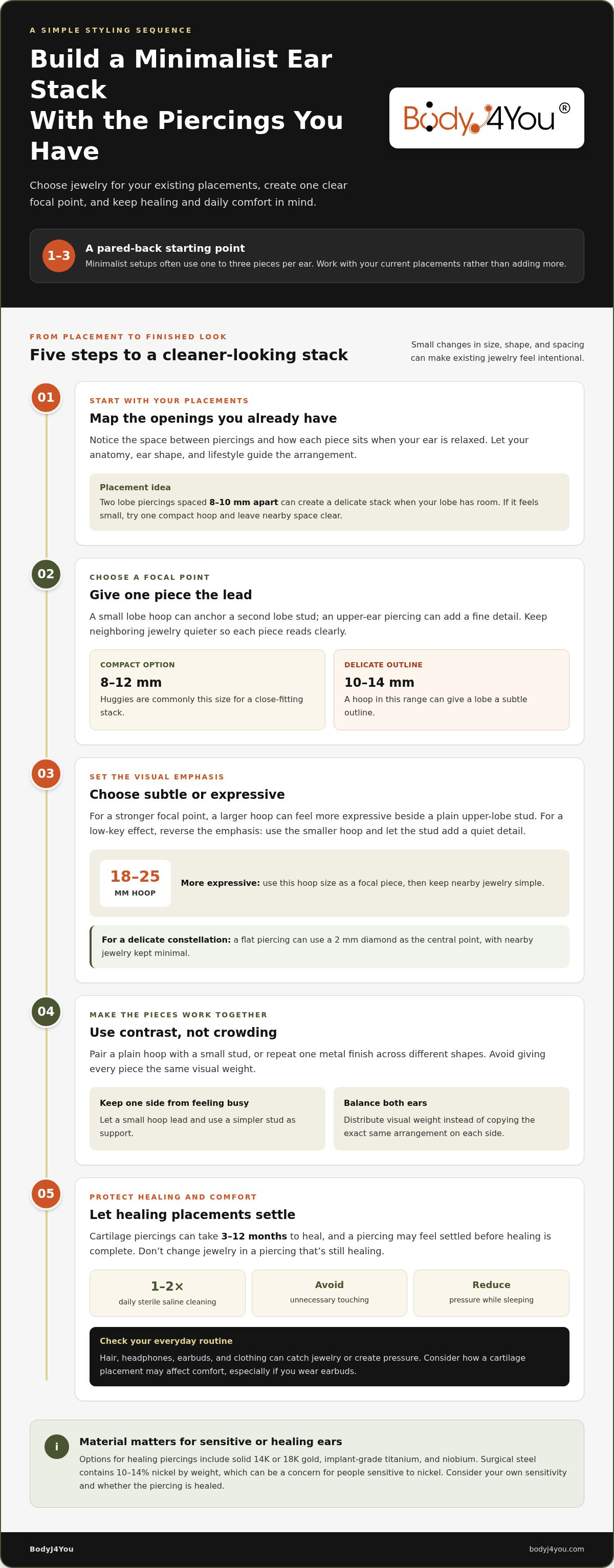
Placement should follow your anatomy, ear shape, and lifestyle. If your lobe has room for a close pair, two lobe piercings spaced 8-10 mm apart can create a delicate stack. For a smaller-looking lobe, try one compact hoop and leave nearby space clear. Cartilage placements can add a fine accent, while the ear’s natural contours help determine which combinations look balanced.
Low-profile jewelry can keep a minimalist setup visually clean. Flat-back studs sit close to the skin and suit placements where a protruding backing would interrupt the outline. An internally threaded labret-style design offers a streamlined appearance; match the post and end to the piercing’s placement and fit. A small, flush stud can also feel more practical with headphones or during a busy daily routine.
Material matters, especially for sensitive ears or a piercing that’s still healing. Jewelry options for healing piercings include solid 14K or 18K gold, implant-grade titanium, and niobium. Surgical steel contains 10-14% nickel by weight, which can be a concern for people sensitive to nickel. Choose jewelry based on your own sensitivity and whether the piercing is healed, rather than treating every metal as interchangeable.
To refresh your setup without overspending, sketch your piercing placements, then choose one focal piece and supporting jewelry. Compare the cost of those specific pieces, including material and construction, before adding anything else. A simple stud-and-hoop combination may suit everyday wear; switching one stud for a more distinctive shape can refine the same arrangement for an occasion. Fewer pieces simplify the look, while thoughtful choices give it character.
2. Minimalist stacking with existing piercings, mini hoops, or huggies
Your existing piercings can form a deliberate cluster without adding another placement. Begin by mapping each opening, then decide which one should draw attention. For example, a small lobe hoop can anchor a second lobe stud, while an upper-ear piercing adds a fine detail. Huggies are commonly 8-12 mm, giving a compact option for a close-fitting stack.
Build a cohesive look through contrast, not crowding. Pair a plain hoop with a small stud, or repeat one metal finish across different shapes. If both ears have several openings, distribute the visual weight instead of copying the same arrangement exactly. One side might have two close lobe pieces, while the other features a single hoop. The result feels balanced but still personal.
Placement matters as much as jewelry size. Notice the space between existing piercings and how each piece sits when your ear is relaxed. A tightly clustered arrangement can look busy if every piece has the same visual weight. Instead, let one small hoop lead and use a simpler stud as support. This creates room for a subtle refresh without changing your piercing plan.
Adding new cartilage piercings brings healing time and care commitments, so consider whether a jewelry change can create the look first. Cartilage piercings can take 3-12 months to heal, and a piercing may feel settled before healing is complete. Don't change jewelry in a piercing that's still healing. For a minimalist cluster, styling healed placements with smaller pieces can offer a lower-commitment alternative to adding openings.
Multiple fresh piercings also mean multiple sites to protect from friction and pressure. Clean piercings with sterile saline 1-2 times daily, avoid unnecessary touching, and keep pressure off them while sleeping. Hair tangles, headphones, and clothing can catch jewelry, so account for those daily habits before choosing placements. If you already wear earbuds, check how a proposed cartilage position may affect comfort.
For a practical stack, lay out the pieces before putting them on. Try a mini hoop in the lowest lobe, a small stud in the next opening, and a subtle cartilage accent if that piercing is healed. Remove any piece that competes with the focal point. If a piercing is new, leave its jewelry in place and follow consistent saline aftercare rather than switching styles to complete the cluster. This keeps the look light while respecting healing and lifestyle needs.
3. Styling existing piercings
Start with the jewelry already in your healed piercings. A 10-14 mm hoop gives a delicate outline in a lobe, while a small stud keeps the look classic. For two lobe piercings, use a hoop in one and a matching-finish stud in the other. That simple contrast looks intentional without requiring another piercing or a crowded cluster.
For a stronger focal point, choose one statement piece and keep its neighbors quiet. A 18-25 mm hoop can make a lobe piercing feel more expressive, especially when paired with a plain upper-lobe stud. If you prefer a natural, low-key effect, reverse the emphasis: wear the smaller hoop and let the stud provide a subtle detail. One focal point helps each piece read clearly.
A flat piercing can support a delicate constellation effect. Try a 2 mm diamond as the central point, then keep nearby jewelry minimal. If your existing placements sit close together, vary the shapes rather than adding more sparkle. For example, combine a tiny round stud with a smooth hoop. This creates a beautiful composition while preserving breathing room between pieces.
Let your ear shape guide the arrangement. On a compact lobe, a small stud near the center may look more balanced than a wide hoop. On a longer lobe, a hoop can frame the edge, while a second stud adds vertical interest. Check the full ear from the front and side: a piece that looks balanced straight on may catch on hair or clothing from another angle.
Daily habits matter, too. If headphones press against your ear, favor jewelry that sits comfortably in its placement, especially around the tragus or conch. Before sleeping, consider whether a hoop or raised decorative end catches on bedding. A flat-backed stud offers a lower-profile look, but fit and comfort still depend on the piercing’s position and the jewelry’s dimensions.
Use this quick styling sequence for a deliberate refresh. First, choose the piece you want people to notice, such as a 10-14 mm hoop. Next, add one quieter companion, like a plain stud in an existing upper-lobe piercing. Finally, check both ears together and remove any piece that competes with the focal point. For an occasion, swap one accessory in a healed piercing for a brighter or more detailed design, while keeping the rest of the arrangement consistent.
Keep healing in mind before changing your look. Don’t change jewelry in a piercing that’s still healing for styling; a cartilage piercing can feel fine before it has fully healed. Leave the existing jewelry in place until healing is complete, then plan a refresh around the placement, comfort, and finish you want.
4. Adapting a minimalist ear look to different occasions
A minimalist setup can shift with your outfit without changing your piercings. For a workday, try a small lobe hoop and a discreet stud above it. Coordinate the metals and shapes, then let clean lines complement a blazer or crisp shirt. The result feels curated, not overdone.
For a formal event, make one piece the focal point. A polished hoop can frame a simple dress, while a tiny stud keeps a second placement understated. If your outfit has a detailed neckline, choose smoother earrings that won’t compete. With a plain neckline, a subtly textured piece can add detail near your face.
An evening look can feel more expressive without losing its minimalist character. Keep your everyday lobe jewelry, then add a brighter finish or distinctive shape in another healed placement. For example, pair a classic hoop with a small, light-catching stud. Repeating one metal across both pieces keeps the combination cohesive.
For casual plans, choose pieces that suit the activity as well as the outfit. A compact hoop and simple stud can work with a sweater, denim, or a relaxed weekend look. If you wear headphones, consider whether jewelry near the tragus or conch presses against them. Comfort can help determine which placement to emphasize.
Make the transition between occasions intentional. Before leaving, look at your earrings alongside your hairstyle and neckline. Hair worn up may reveal upper-ear details; loose hair can soften a hoop’s outline. If you’re moving from the office to dinner, changing one decorative piece in a healed piercing can refresh the same arrangement.
Let your existing placements do the work. A stacked lobe can look polished with matching metals, while a single cartilage stud adds a quieter accent. For a celebration, shift the focus to one more distinctive piece instead of adding jewelry to every opening. That keeps the overall look light while making the change feel deliberate.
Plan around healing, not the event calendar. Don’t swap jewelry in a piercing that’s still healing just to match an outfit; cartilage piercings can take 3-12 months to heal. Keep its current jewelry in place, and style healed placements around it. Aftercare remains part of the look: avoid unnecessary handling when dressing or arranging hair.
A useful approach is to create two combinations from the same earrings. Keep a restrained pairing for everyday wear, then replace one piece with a more noticeable design for an occasion. Brands like Lumaré offer tarnish-free gold and silver pieces tailored for everyday elegance, making it simple to build a durable core rotation. This small styling change preserves a familiar arrangement while giving your look a different mood.
5. Which ear piercings work best for a minimalist look?
Lobe piercings are a natural starting point for a minimalist arrangement. They suit simple studs, compact hoops, and close pairs without requiring a complex visual plan. Upper-lobe and lower-helix placements are also beginner options. Choose based on your existing jewelry, preferred silhouette, and how much visible detail you want.
For a light cartilage accent, consider the helix, tragus, or flat. Each can add a precise point of interest while leaving the lobe as the main focus. A small flat stud, for example, can balance a simple lobe hoop. In 2026, double-ear, helix, conch, tragus, and daith placements are among the described trends.
Pain ratings can help compare placements, though the experience varies between people. Lobe piercings rate 3-4 out of 10; helix, forward helix, and tragus piercings rate 5-6. Conch, rook, and daith piercings rate 6-7, while industrial, snug, and anti-tragus piercings rate 7-8. These comparisons can help you weigh the look against the commitment.
A flat piercing can create a refined focal point with a 2 mm diamond. Its placement depends on the ear’s shape and available flat area. Some ears have a “hidden” flat, where the outer rim curls over the area. A faux rook offers another restrained option: it uses one piercing in the upper inner cartilage.
More intricate placements may involve more than one opening. A faux snug uses two separate piercings, typically a conch and helix or a double helix. A snakebite helix also consists of two closely placed piercings. These can still look minimal with small, coordinated jewelry, but each opening adds healing and aftercare to your routine.
Consider everyday comfort before choosing cartilage. Earbuds can press near a tragus piercing, so that placement may not suit every listening habit. A helix or lobe may be easier to style around headphones, hair, and daily activities. For an understated plan, choose one placement that complements your ear shape rather than combining several new ideas at once.
Compare options by appearance, comfort, and care. Lobe jewelry keeps the look classic; one cartilage stud adds a fine accent; paired placements create more detail and commitment. Keep jewelry in a healing piercing unchanged, and clean according to consistent aftercare guidance. For a practical routine, explore piercing aftercare essentials alongside your styling plan.
BodyJ4You: Acrylic Ear Stretching Kit
The Acrylic Ear Stretching Kit from BodyJ4You is relevant if your minimalist style includes stretched lobes rather than additional piercings. For a different jewelry option, the Surgical Steel Taper and Plug Kit also fits an ear-stretching setup. These products serve a specific aesthetic; they aren’t necessary for a clean look built with existing lobe or cartilage piercings.
For piercing care, BodyJ4You also offers Saline Piercing Aftercare Spray and Piercing Bump Treatment Oil. Keep aftercare separate from styling choices, and don’t change jewelry in a piercing that’s still healing. Choose the product category that matches your goal, whether that’s exploring stretched-lobe jewelry or caring for piercings.
Visit bodyj4you.com to explore these options.
Make your next styling choice your own
The most considered minimalist ear piercing setups in 2026 aren’t defined by a fixed formula. Let your preferences guide the next step: refine a familiar arrangement, explore stretched-lobe jewelry, or focus on caring for your piercings. A small change can bring a fresh point of expression without making your style feel less like you.
BodyJ4You offers the Acrylic Ear Stretching Kit and Surgical Steel Taper and Plug Kit for ear-stretching jewelry choices, plus Saline Piercing Aftercare Spray for piercing care. Choose according to your goal, and keep care separate from styling decisions.
Explore BodyJ4You’s piercing jewelry and care options, then shape a look that feels natural for your everyday life and special occasions. Your next choice can be simple, considered, and entirely your own.
Frequently Asked Questions
Can I make my existing piercings look more minimalist without removing any?
Yes. Keep every piercing and simplify your jewelry choices. If you have several lobe openings, for example, wear small studs in some and leave others empty. You can also keep jewelry in all healed piercings while choosing understated shapes and a consistent metal finish. Arrange your current pieces on a flat surface first to spot combinations that feel balanced.
Does minimalist jewelry still need to be quality metal?
Yes, a pared-back look doesn’t make material choice less important. For healing piercings, jewelry material options include solid 14K or 18K gold, implant-grade titanium, and niobium. Surgical steel contains 10-14% nickel by weight, which matters if you’re sensitive to nickel. For an everyday refresh, assess both the metal and whether the piercing is healed before choosing decorative jewelry.
Is a minimalist ear cheaper since it's fewer pieces?
Not necessarily. A setup with fewer earrings may cost less overall, but the total depends on the pieces’ materials, construction, and design. One intricate stud can cost more than a few simple pieces. To compare options, decide which placements you want to style, then compare the jewelry you’d actually use in each. This gives you a clearer picture than counting pieces alone.
What counts as a minimalist ear?
A minimalist ear is a restrained jewelry arrangement with a small number of pieces and deliberate visual balance. One to three pieces per ear is a common approach, but the layout can vary. A single lobe hoop with an upper-ear stud, for instance, creates a different effect from two coordinated lobe studs. The key is keeping the overall composition clean and considered.
Why is it popular?
The appeal is flexibility: a few thoughtfully chosen earrings can express personal style without requiring a full stack. A simple lobe stud can suit daily routines, while a more distinctive piece can shift the mood for an event. This approach also lets you experiment with existing piercings before deciding whether you want additional placements. The look can be subtle, personal, and easy to adapt.
What are popular minimalist ear piercing setups for 2026?
Current minimalist ideas include a double-lobe arrangement, a small helix accent, or one subtle piece at the conch, tragus, or daith. You can keep the focus on existing piercings by pairing a mini hoop with a simple stud. A flat piercing with a 2 mm diamond is another delicate option. Choose placements around your ear’s shape and your comfort, rather than copying a layout exactly.
How many piercings are ideal for a minimalist ear stack?
One to three pieces per ear can create a minimalist look, whether they sit in one piercing or across existing placements. There’s no single ideal number of piercings; visual balance depends on spacing, jewelry size, and your ear shape. A lobe hoop and an upper-ear stud, for example, can feel complete. You can also style fewer openings and leave the rest of your ear bare.
Which jewelry styles and metals suit minimalist ear piercings?
Small hoops, huggies, flat-back studs, and simple decorative studs all suit a pared-back arrangement. Huggie hoops are commonly 8-12 mm, while flat-back studs sit close against the skin. For healing piercings, solid 14K or 18K gold, implant-grade titanium, and niobium are jewelry material options. If you have nickel sensitivity, account for surgical steel’s 10-14% nickel content when selecting pieces.


