


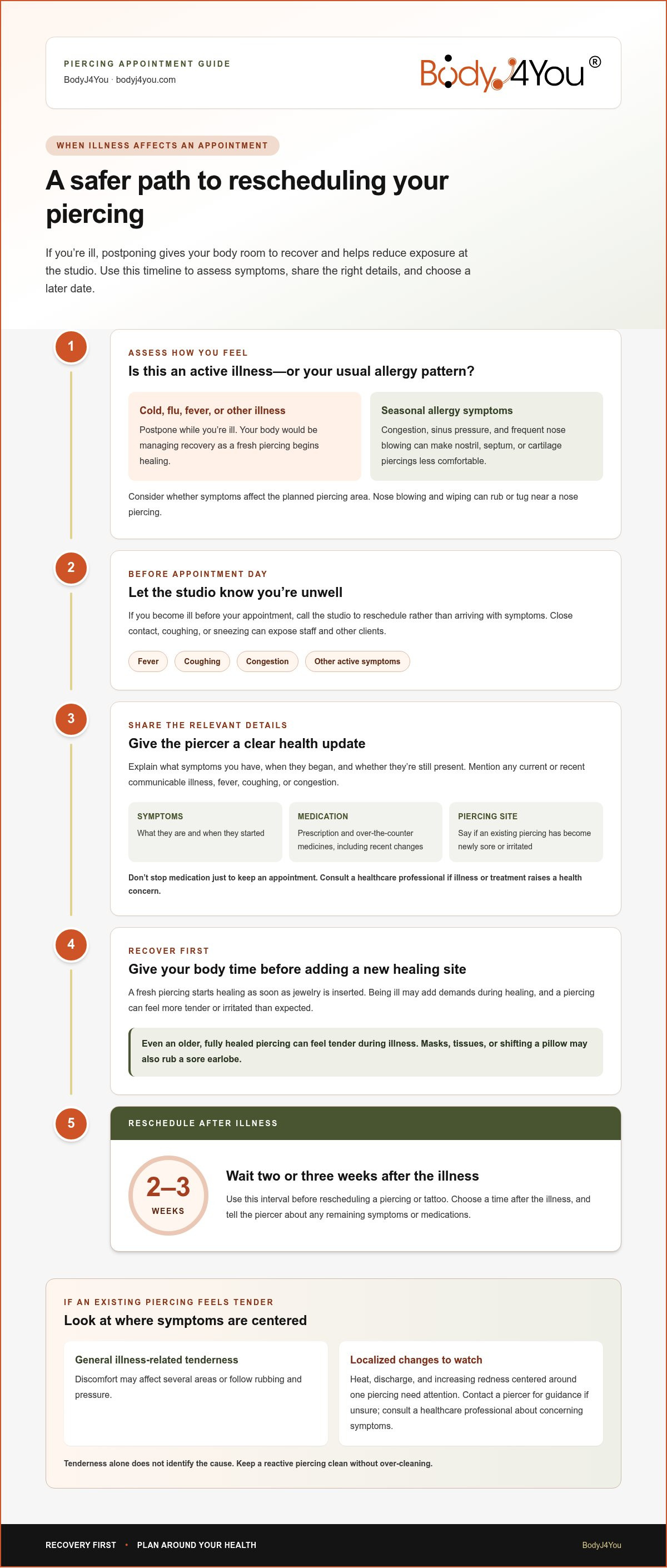
A piercing appointment can wait; recovery comes first. If you’re wondering whether you can get a piercing if you’re sick, postpone it. Wait two or three weeks after an illness before rescheduling a piercing or tattoo. Being unwell can expose others in the studio and add demands on your body as healing begins as soon as the jewelry is inserted.
It’s understandable to want to keep an appointment you’ve been looking forward to. A mild allergy may affect your comfort differently from an illness, but congestion, sinus pressure, and frequent nose blowing can still irritate certain piercing sites.
This guide explains when illness or seasonal allergies can affect an appointment, what to watch for if an existing piercing feels tender, and how rest, hydration, nourishing food, and gentle aftercare can support recovery. You’ll also learn how to distinguish general irritation from signs that need professional attention, so you can make an informed choice about your appointment and healing.
Key Takeaways
- Learn how to distinguish irritation that may accompany illness from localized signs that could indicate a piercing infection.
- See why congestion, sinus pressure, and frequent nose blowing can make some ear and nose piercings more uncomfortable.
- Find out how rest, hydration, nourishing food, and gentle saline care can support a reactive piercing while you recover.
- Understand why changing jewelry yourself or over-cleaning can add unnecessary irritation when you’re sick.
- Explore how to assess symptoms and decide when to postpone an appointment or seek professional guidance.
Is it Okay to Get a Piercing or Tattoo While I'm Sick?
It’s generally better to postpone a piercing or tattoo while you’re ill. Wait two or three weeks after the illness before rescheduling, and tell the piercer about your symptoms and medications before the appointment.
Illness and Piercing Healing
A fresh piercing starts healing as soon as jewelry is inserted, and illness can delay that process. Your body is managing both recovery from illness and a new wound, so a healing piercing may feel more tender or irritated than expected.
Even an earlobe piercing can feel sore during a cold. Masks, tissues, or shifting your pillow may rub the area and add discomfort. If you’re already unwell, postponing lets you focus on recovery before adding a new healing site. An older, fully healed piercing can also feel tender during illness, even without a new piercing.
Illness Symptoms and Piercing Infection
Illness-related tenderness may affect several areas, while piercing infection symptoms tend to stay localized around the piercing. For example, feeling generally sore with a cold differs from heat, discharge, and increasing redness centered on one piercing.
Watch for changes around the jewelry rather than assuming every ache means infection. A healing piercing can become irritated or develop a bump, but worsening localized heat or discharge needs attention. If you’re unsure whether the reaction is an infection, contact a piercer for guidance; consult a healthcare professional about concerning symptoms. Don’t diagnose the cause from tenderness alone.
Reducing Illness Exposure at the Studio
Postponing while sick helps reduce the chance of spreading illness to studio staff and other clients. A piercing appointment involves close contact, so coughing or sneezing in the studio can expose people nearby. Rescheduling is a considerate choice, regardless of how mild your symptoms feel.
If you become ill before your appointment, call the studio to reschedule instead of arriving and hoping your symptoms pass. This gives staff notice and helps prevent exposure in shared spaces. Wait until you’ve recovered before booking again, then use the two-or-three-week guidance after illness to choose a new date.
Sharing Health Details Before an Appointment
Tell the piercer what symptoms you have, when they began, and whether you’re still experiencing them. Share the names of prescription and over-the-counter medications you’re taking, including any changes since booking. These details help the piercer understand what may affect your comfort and whether to proceed or reschedule.
Mention any current or recent communicable illness, fever, or symptoms such as coughing and congestion. Also explain whether an existing piercing has become newly sore or irritated. Be direct about medication rather than stopping it to keep an appointment. If illness or treatment raises a health concern, consult a healthcare professional before getting pierced or tattooed.
Can seasonal allergies affect an ear-piercing appointment?
Yes. Allergy or cold symptoms can make an appointment less comfortable, especially if congestion or frequent nose blowing affects the planned piercing site.
Assessing Symptoms Before an Appointment
Assess symptoms by considering what they are, where they affect you, and whether they involve the planned piercing area. Congestion and sinus pressure matter more for a nostril or septum piercing than for an earlobe appointment.
Frequent nose blowing can cause rubbing near the nose, while repeated wiping may irritate nearby skin. If symptoms are active or you feel unwell, postponing protects your comfort and gives your body time to recover. A piercing starts healing immediately, so getting pierced while sick can add demands during recovery.
Mild Symptoms and Seasonal Allergies
Seasonal allergies can affect appointment comfort, even when they don’t make you feel generally ill. Congestion, sinus pressure, and frequent nose blowing may interfere with nostril, septum, or cartilage piercings.
Consider what the appointment involves. If you’re having an ear piercing and allergies mainly cause a runny nose, the nose may not be directly touched; however, repeated wiping and congestion can still be distracting. Tell the piercer what symptoms you have and where they occur. If they feel like an illness rather than your usual seasonal pattern, prioritize recovery over the appointment.
Piercing Irritation and Symptoms
Symptoms can irritate a healing piercing through pressure, rubbing, or repeated contact. For example, blowing your nose can tug at a new nostril piercing, while congestion may make a septum piercing feel tender.
Notice whether discomfort follows a clear physical trigger, such as wiping near the jewelry, or remains centered on the piercing. Illness-related tenderness or swelling may affect more than one area; infection symptoms are more localized and can include heat and discharge. If an existing piercing becomes reactive, keep it clean without over-cleaning. A saline piercing aftercare spray can support routine saline care.
Reasons to Postpone a Piercing
Postpone if you have a cold, flu, fever, or another active illness. Attending while sick can expose studio staff and clients, and healing may be harder while your body recovers.
Symptoms affecting the piercing site are another practical reason to wait. Nose blowing and rubbing can aggravate a healing nostril piercing and make irritation bumps more likely. Reschedule after illness, then allow two or three weeks before the new appointment. If you have a communicable disease or infection, consult a healthcare provider before getting pierced. Choose an appointment when you feel healthy enough to focus on comfort and aftercare.
Getting a piercing or tattoo while sick
If you’re asking whether you can get a piercing if you’re sick, postpone the appointment. A cold, flu, fever, or other illness can leave your body managing recovery as a new piercing begins healing. The same concern applies to a tattoo appointment. Resting and rescheduling lets your body focus on recovery instead of adding a fresh wound to the demands of illness.
Sometimes symptoms seem mild, but the decision isn’t only about how uncomfortable you feel. An appointment involves close contact with the artist and time in a shared studio. Coughing, sneezing, or wiping a runny nose can spread illness to staff and clients. Call to reschedule if you’re sick rather than arriving and managing symptoms during the appointment. If you’re still wondering, “Can I get a piercing if I’m sick?”, active symptoms are a reason to wait.
Recovery matters after the appointment, too. A new piercing begins healing as soon as jewelry is inserted, and illness can delay healing. Rest and hydration support your body while you’re sick, and relaxing at home in comfortable clothing—such as casual layers from Sasshole® | Premium Graphic Apparel for Women with Attitude—can make your downtime more restful. Nutrient-dense food also helps maintain nourishment when your appetite or energy is low. If fever or fatigue makes normal meals and daily routines difficult, prioritize recovery before booking again.
Use these practical points to decide what to do with an upcoming appointment:
- Call the studio if you develop a cold, flu symptoms, fever, or another illness before your visit. Give a brief, honest description of your symptoms.
- Reschedule instead of attending when coughing, sneezing, or other symptoms could expose people nearby.
- Rest and drink fluids during illness rather than treating the appointment as a reason to push through fatigue.
- Consult a healthcare provider before a piercing or tattoo if you have a communicable disease or infection.
A tattoo also creates a healing area, so the decision isn’t limited to jewelry placement. If you’re sick on the day of a tattoo appointment, the same priorities apply: reduce exposure to others and allow your body to recover. Don’t treat a brief improvement in symptoms as proof that the illness has passed. Consider whether you’re still coughing, sneezing, feverish, or struggling with ordinary activities.
Once you’ve recovered, choose a new appointment when you can focus on the session and the aftercare that follows. If illness returns before then, call again rather than going in. Asking, “Can I get a piercing if I’m sick?” is a useful prompt to pause, consider your symptoms, and make room for recovery before your next appointment.
Piercing care while sick
An existing piercing can feel more tender during illness, even if it was healing normally before. Coughing, sneezing, congestion, and frequent nose blowing can bring hands, tissues, or masks into contact with jewelry. Pillow movement may also rub an ear piercing overnight. Notice which activities make the area uncomfortable, then reduce friction where practical, such as keeping a tissue from dragging across a nostril piercing.
Prioritize recovery. Rest, drink fluids, and eat nutrient-dense food while your body responds to illness. Cold and flu medications can dry body tissues, which may leave a piercing itchy or flaky. Hydration can help limit dryness, but avoid adding extra cleaning or products to compensate. More cleaning isn’t automatically better, and repeated handling can irritate the area further.
Keep care simple and consistent. Use sterile saline to clean a reactive piercing, following the product directions and your established aftercare routine. Don’t scrub, twist, or over-clean the jewelry. Avoid harsh products such as alcohol or tea tree oil, which can aggravate irritated skin. If a medication seems to coincide with new dryness or itchiness, note when it began and mention it when seeking guidance.
- Reduce rubbing: adjust a mask or tissue so it doesn’t catch on an ear or nose piercing.
- Keep hands clean: wash them often while sick, especially before routine piercing care.
- Leave jewelry in place: don’t change it yourself during illness, and don’t remove it unless a professional recommends removal.
- Watch for changes: note whether swelling and tenderness affect several areas or remain centered around one piercing.
General illness-related aches or swelling may affect multiple sites, while infection signs are more localized. Heat and discharge around a piercing deserve attention. Monitor a reactive area rather than assuming every change comes from your cold. If you’re unsure whether symptoms suggest infection, contact a piercer for guidance; consult a healthcare professional about health concerns. A professional can examine an irritated piercing and suggest care suited to the reaction.
For mild swelling, a warm compress may soothe the area only when the piercing isn’t infected. Don’t use one to manage heat or discharge that could signal infection. If swelling increases, symptoms become localized, or discharge appears around the jewelry, seek professional guidance instead of changing jewelry or adding oils. While you recover, keep care gentle: clean with sterile saline, avoid friction, and give your body rest, fluids, and nourishing food.
Should you postpone a piercing if you have a cold, flu, fever, or other illness?
Yes. Postpone a piercing or tattoo appointment while you’re sick, including with a cold or flu. Illness can expose people in the studio and add demands as a new piercing starts healing. If symptoms begin before your visit, call the studio to reschedule instead of attending and trying to manage them there.
Consider both your symptoms and how they affect ordinary activities. A cough or runny nose can spread illness during close contact, while fever or fatigue can make sitting through an appointment harder. Managing a mile walk without getting winded is one sign your body may be ready for normal activity, but it isn’t a substitute for recovery or a reason to attend while contagious.
A communicable disease or infection calls for extra care. Consult a healthcare provider before getting pierced or tattooed if either applies to you. Also share relevant symptoms and medications with the piercer before the appointment. That conversation can help clarify whether the illness is still active and whether postponing is the sensible choice.
After illness, allow two or three weeks before rescheduling a piercing or tattoo. Use that time to recover, rest, stay hydrated, and eat nourishing food. These basics support your body as it returns to normal and help you prepare for the healing period after a new piercing. Don’t use a single better day as your only measure; consider whether symptoms have resolved and daily activities feel manageable.
- Reschedule if you have active cold or flu symptoms, fever, or feel too unwell for the appointment.
- Call the studio when symptoms appear before your visit, so staff know you won’t attend while sick.
- Consult a healthcare provider before booking if you have a communicable disease or infection.
- Wait two or three weeks after illness before choosing a new appointment, and prioritize rest and hydration during recovery.
Postponing protects more than your appointment. It reduces the chance of exposing studio staff and other clients, and gives you space to focus on getting well before managing a fresh piercing or tattoo. If you already have a piercing, keep its care gentle during recovery; sterile saline can support routine cleaning. Explore a saline piercing aftercare spray for that care once you’re ready to focus on healing.
BodyJ4You: Acrylic Ear Stretching Kit
BodyJ4You’s Acrylic Ear Stretching Kit is a product option for readers exploring ear stretching after they’ve recovered. It isn’t a substitute for healing care or a reason to stretch an irritated piercing. Wait until you’re well, and avoid changing jewelry in a reactive piercing while sick.
For routine piercing care, BodyJ4You also offers Saline Piercing Aftercare Spray. The Surgical Steel Taper and Plug Kit is another ear-stretching option. Choose based on your needs, and keep recovery and gentle aftercare separate from decisions about stretching.
For product questions, contact BodyJ4You.
Make Your Next Piercing Decision With Care
If you’re still wondering whether you can get a piercing if you’re sick, let your recovery guide the timing. Give yourself time to feel well and prepare for the care a new piercing requires. Your next step can be planning the jewelry and aftercare you’ll want when you’re ready.
BodyJ4You offers an Acrylic Ear Stretching Kit and a Surgical Steel Taper and Plug Kit for ear stretching, plus Saline Piercing Aftercare Spray for routine piercing care. Choose products that fit your plans, and keep stretching separate from caring for a piercing that feels irritated.
Questions about these products or which option suits your needs? Contact BodyJ4You with your questions. Take the time you need, then move forward with care and confidence when you’re ready.
Frequently Asked Questions
Can you get pierced while taking antibiotics?
Taking antibiotics is a reason to discuss the appointment with your healthcare provider, especially if you’re being treated for an infection. Tell the piercer what medication you’re taking and why, rather than stopping or changing treatment to keep the appointment. The underlying illness matters too: an active communicable infection calls for medical guidance before piercing. Share relevant symptoms and medication details before deciding on a date.
Can you get your ears pierced if you have a cold?
It’s better to postpone an ear piercing while you have a cold. Coughing, sneezing, or wiping your nose can expose people at the studio, and a new piercing starts healing immediately. If the cold also causes frequent nose blowing, that movement can irritate nearby nose or cartilage piercings. Call the studio to reschedule, and choose a new date after you’ve recovered.
Should I cancel an ear-piercing appointment if I have a fever?
Yes. Call the studio and reschedule if you have a fever on appointment day. Fever can accompany an illness, and attending may expose staff and other clients. Focus on resting and recovering rather than sitting through a piercing appointment. After illness, wait two or three weeks before rescheduling. If the fever occurs with a diagnosed infection or communicable disease, consult a healthcare provider before booking again.
What Are the Signs a Piercing is Affected by Illness?
Illness may coincide with tenderness, irritation, or increased secretions around a healing piercing. Dryness, itchiness, or flaking can also appear, particularly when cold or flu medication dries body tissues. Compare the piercing with other areas: illness-related soreness may affect multiple sites, while infection signs are more localized. Heat and discharge around the piercing deserve attention. Don’t assume every change is an infection, but monitor new or worsening symptoms.
What if symptoms feel mild?
Even mild symptoms can affect the decision, especially if they include coughing, sneezing, or a runny nose. Compare them with your usual seasonal allergy pattern: familiar allergy symptoms differ from a new cold, but congestion and repeated nose wiping can still irritate nose or cartilage piercings. Consider whether symptoms could expose others or interfere with comfort. If you’re sick, call the studio to reschedule rather than arriving.
Which symptoms are a clear reason to pause?
Pause and reschedule for fever, flu or cold symptoms, active coughing or sneezing, or a known communicable infection. Also postpone if you feel too unwell to manage an appointment comfortably. These signs matter both for close contact in the studio and for your body’s recovery. If you have an infection or communicable disease, consult a healthcare provider before getting pierced or tattooed, and tell the piercer about relevant symptoms.
How does being sick affect piercing healing and infection risk?
A new piercing starts healing as soon as jewelry is inserted, and illness can delay healing or make a healed piercing feel tender. Rubbing from tissues, masks, or pillow movement can add irritation. Being sick doesn’t by itself mean a piercing is infected. Watch for localized heat or discharge, and wash your hands before touching the area. Avoid extra cleaning or changing jewelry without professional guidance.
Can a piercing studio refuse service if you are sick?
A studio may decide to postpone an appointment when a client arrives with illness symptoms, particularly coughing, sneezing, or a known communicable infection. Practices can differ, so call before travelling if symptoms develop. Describe what you’re experiencing and ask to reschedule rather than arriving unwell. This gives the studio a chance to plan and helps reduce exposure for staff and other clients in shared spaces.


