

What if the lubricant you use is more than just a temporary slide for your jewelry? For many, the transition to a larger gauge is a moment of vulnerability, yet it should be a process of empowerment and aesthetic refinement. Finding the best oil for stretching ears is not just about avoiding friction; it's about providing the biological building blocks your skin needs to remain thick, supple, and healthy. You deserve a journey that prioritizes safety, integrity, and long-term wellness.
We understand the fear of blowouts and the frustration of itchy, dry lobes during the healing phase. You want a process that is painless, reliable, and backed by expert standards. This guide reveals which professional-grade oils, from jojoba to rosehip, ensure a tear-free experience while maintaining skin elasticity. By following our curated maintenance routine, you will gain the clarity needed to size up with confidence. We have analyzed the latest 2026 FDA standards and MoCRA regulations to ensure every recommendation meets the highest benchmarks for purity, safety, and quality.
Key Takeaways
- Learn why choosing the best oil for stretching ears is the critical first step to preventing friction-induced trauma and maintaining lobe thickness.
- Discover why biocompatible options like Jojoba and Castor oil are safer than kitchen staples that don't meet cosmetic-grade standards.
- Master the technique of the daily lobe massage to stimulate blood flow and ensure your skin remains supple through every gauge transition.
- Understand the difference between cold-pressed purity and low-quality blends to protect your piercing from harmful chemical additives.
- Get a step-by-step guide on lubricating your jewelry for a seamless, tear-free insertion every time you size up.
Why Lubrication is the Foundation of Safe Ear Stretching
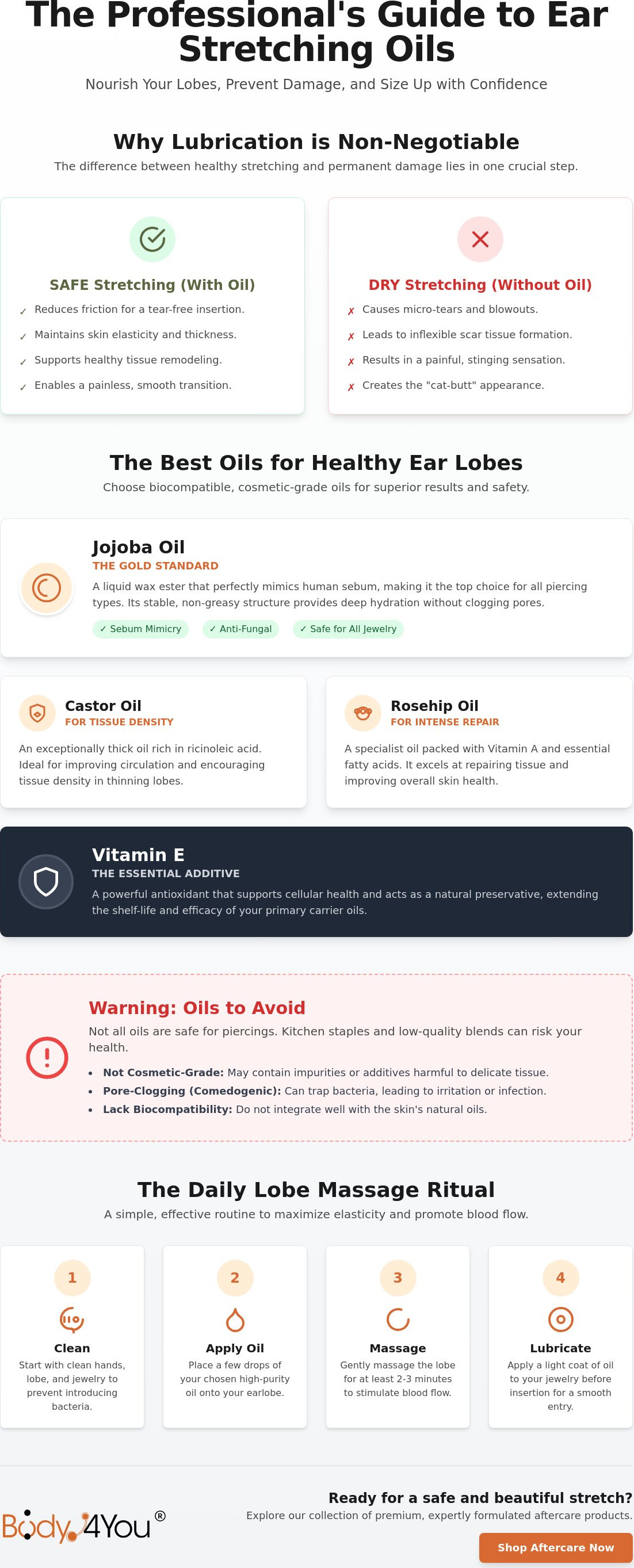
Safe ear stretching is a slow, deliberate art. It requires patience, precision, and protection. Without proper lubrication, you aren't just stretching; you are risking the structural integrity of your skin. Lubrication acts as a vital buffer between your jewelry and the delicate fistula, reducing friction-induced trauma that leads to swelling or tears. When you use the best oil for stretching ears, you ensure that the jewelry slides into place without dragging or snagging the tissue. This reduces the mechanical stress on the skin, allowing for a transition that feels natural rather than forced.
Dry stretching is the primary cause of permanent blowouts and scarring. When the skin is dry, it lacks the flexibility to accommodate a larger gauge. Instead of expanding, the tissue resists, leading to micro-tears or the dreaded "cat-butt" appearance. Consistent moisture is a non-negotiable requirement for anyone serious about their aesthetic journey. Even between active stretching sessions, maintaining the stratum corneum with high-purity oils keeps the skin prepared for the next step. It is a commitment to wellness, safety, and long-term elasticity.
The Biology of the Earlobe and Sebum Mimicry
The skin on your earlobe expands through a process of cellular mitosis and tissue remodeling. For this to happen safely, the skin must remain hydrated at a deep level. The most effective oils are those that achieve sebum mimicry. Sebum mimicry is the ability of an oil to integrate with human skin oils without clogging pores. By mimicking the body's natural oils, these products penetrate deep into the tissue rather than sitting on the surface. This deep hydration supports the history of ear stretching practices that prioritize long-term health over immediate results.
Preventing Micro-Tears and Scar Tissue
Lubrication is the secret behind successful "dead stretching." This method relies on the weight of the jewelry and the natural elasticity of the lobe to move up a size. It requires zero mechanical force. If you feel resistance, heat, or a sharp stinging sensation, you are experiencing a dry stretch. These are the early warning signs of potential damage. Scar tissue is the enemy of progress; it is tougher, thicker, and less flexible than healthy skin. Once scar tissue forms, reaching larger gauges becomes significantly more difficult. By prioritizing the best oil for stretching ears, you protect your lobes, preserve your progress, and ensure a future of beautiful self-expression.
The Best Oils for Stretching Ears: A Comparative Analysis
Selecting a lubricant involves more than picking a bottle off a shelf. It requires an understanding of ingredient integrity, shelf stability, and dermatological impact. Finding the best oil for stretching ears is a personal decision that should align with your skin's current health and your long-term aesthetic goals. Each choice represents a commitment to purity, efficacy, and safety.
Jojoba Oil: The Universal Choice for Piercings
Jojoba oil stands as the undisputed gold standard. Technically, it is a liquid wax ester rather than a true oil. This distinction is vital because its molecular structure nearly mirrors human sebum. It provides a non-greasy barrier, maintains skin elasticity, and remains stable for years. Its natural anti-fungal properties help prevent the bacterial buildup often called "ear cheese." It is perfectly compatible with all jewelry materials, including porous wood and acrylic. Many professionals consider Jojoba the best oil for stretching ears due to this high level of biocompatibility.
Castor and Rosehip: Specialized Care for Problem Lobes
Castor and Rosehip oils offer targeted solutions for unique challenges. Castor oil is exceptionally thick and rich in ricinoleic acid, which helps improve localized circulation. This makes it an ideal choice for individuals with thinning lobes who need to encourage tissue density. Rosehip oil focuses on intense repair with high concentrations of Vitamin A and essential fatty acids. Following safe gauging practices requires selecting the oil that matches your skin's specific needs. For a balanced approach, you might explore our specialized aftercare collection which features expertly formulated blends.
Vitamin E: The Essential Additive
Vitamin E serves as a powerful supportive agent in any stretching routine. It acts as a natural preservative by preventing the oxidation of other carrier oils, ensuring your products remain fresh. On a cellular level, it supports skin regeneration during the critical rest periods between stretches. Pure Vitamin E is often too thick and should be used in a carrier oil blend. When combined with Jojoba or Rosehip, it creates a potent synergy that protects the skin from environmental stressors while accelerating the healing process.
Gauges balm offers a modern, sophisticated solution for those who prioritize convenience. These balms typically blend high-purity oils with a base of natural beeswax. This creates a solid state that is easy to carry and apply without the risk of spills. The beeswax provides an additional protective layer, sealing in moisture and shielding the lobe from harsh weather or dryness. It represents the perfect marriage of clinical care and portable design.
Oils to Avoid: Why Kitchen Staples Can Risk Your Health
Convenience should never compromise your safety. While it is tempting to reach for a bottle in your pantry, kitchen staples are rarely the best oil for stretching ears. Food-grade oils are manufactured for digestion, not dermatological application. They often lack the purity standards required for cosmetic-grade products, potentially introducing impurities to a healing fistula. Using the wrong lubricant can lead to localized acne, persistent irritation, or even infection. Purity is the cornerstone of safe body modification. Cosmetic-grade oils undergo rigorous filtration to remove allergens and particulate matter. Food-grade oils do not meet these specific standards.
The "kitchen stretch" myth suggests that olive, vegetable, or canola oils are suitable alternatives. This is a dangerous misconception. These oils can go rancid quickly when exposed to air and body heat. This decomposition creates a breeding ground for bacteria. Additionally, many of these oils have high comedogenic ratings. A high rating indicates that the oil is likely to clog pores, leading to painful bumps that can be mistaken for piercing complications. Identifying the signs of oil-induced irritation early can save your progress:
- Red, itchy bumps around the piercing site.
- A persistent, unpleasant odor that returns quickly after cleaning.
- Excessive oiliness that feels heavy or sticky on the skin.
The Problem with Coconut Oil
Coconut oil is a frequent subject of debate. Despite its popularity in hair care, its high comedogenic rating makes it risky for earlobes. It sits on the surface of the skin rather than penetrating the tissue. This creates a film that can trap bacteria, especially in unrefined versions. While it might be acceptable for long-healed lobes, it is far from the best oil for stretching ears during an active stretching phase. You need a stabilizer that supports cellular health, not a heavy wax that blocks it.
Petroleum and Mineral Oils: The No-Go Zone
Petroleum jelly and mineral oils represent the ultimate no-go zone. These products are occlusives. They create a total seal over the skin, preventing it from breathing or shedding dead cells. This lack of oxygen slows down the healing process and traps sweat against the jewelry. This environment is perfect for bacterial growth and can lead to significant inflammation. Professional alternatives, such as Jojoba or Castor oil, provide a protective barrier without suffocating the tissue. They support the natural shedding of skin cells, keeping the fistula clean and healthy. When you are expanding your lobes, you are dealing with physical vulnerability. You need a supportive specialist, not a product that hinders your body's natural recovery.
How to Use Stretching Oils for Maximum Results
Hygiene is the first step toward a successful gauge transition. Before touching your lobes, wash your hands thoroughly with a mild, fragrance-free soap. Use a saline solution to gently clear any sebum buildup from the piercing site. This sterile foundation ensures that the best oil for stretching ears can penetrate the skin effectively without carrying bacteria into the fistula. Cleanliness, preparation, and patience are your best tools. By establishing a ritual of care, you transform a physical process into a journey of self-expression.
The Lobe Massage Protocol
The lobe massage is a structural necessity. It stimulates the production of collagen and elastin, the two proteins responsible for skin strength and flexibility. Start with a warm compress for three to five minutes to increase localized blood flow and open your pores. Apply a few drops of oil and use firm, circular motions with your thumb and forefinger to break down any existing tension. Gently pull the lobe outward to encourage tissue expansion. Perform this ritual for at least five minutes per ear. Maintaining healthy lobes is easier when you track your progress against our Ear Gauge Size Chart, which provides the technical roadmap for your aesthetic growth.
Lubricating Your Stretching Kit
Precision matters during insertion. You need enough oil to provide a smooth glide but not so much that you lose your grip. While surgical steel is non-porous, an Acrylic Ear Stretching Kit requires a meticulous application to ensure the surface is entirely slick. Apply a drop of the best oil for stretching ears to your fingertips and coat the entire length of the taper, focusing on the widest transition point. This ensures a seamless entry and reduces the risk of the "stuck" sensation that often causes panic in beginners. Once the jewelry is seated, use a clean swab to remove excess oil. This prevents jewelry slippage and keeps your skin from becoming overly greasy.
Massage daily. Even when you aren't actively sizing up, your lobes need consistent nourishment. Applying oil once or twice a day during the rest phase keeps the tissue supple and ready for the next gauge. It's a simple act of self-care that yields professional-grade results. To start your journey with the right tools, explore our full range of stretching kits and oils today.
Choosing Quality: Why Sourcing Matters for Your Skin
Quality is never an accident. It is the result of high intentions, sincere effort, and intelligent execution. When you search for the best oil for stretching ears, you are looking for more than a lubricant; you are selecting a biological partner for your skin's recovery. Purity is the standard that separates professional-grade aftercare from generic alternatives. High-quality oils should be cold-pressed and unrefined. This mechanical extraction process ensures that the vital nutrients, vitamins, and fatty acids remain intact rather than being stripped away by chemical solvents or high heat. In light of the 2026 MoCRA regulations, verifying that your oils come from facilities registered with the FDA is essential for ensuring your safety and long-term wellness.
Consistency is the final ingredient for success. Reaching larger gauges requires a disciplined daily routine that supports the skin's natural healing cycle. By choosing ethically sourced, locally manufactured oils, you ensure that every application provides a predictable and potent dose of nourishment. This commitment to quality control is what allows you to size up with confidence and pride.
Material Compatibility: Steel vs. Acrylic
The relationship between your oil and your jewelry material is a critical factor in maintaining a healthy piercing. While surgical steel is non-porous and highly resistant to buildup, materials like acrylic or wood require more attention. Jojoba oil is the universal choice because it is safe for all materials. It won't degrade the surface of an Acrylic Ear Stretching Kit nor will it cause irritation when paired with a Surgical Steel Taper and Plug Kit. To prevent the accumulation of debris, follow these steps:
- Apply oil only to clean, dry lobes and jewelry.
- Wipe away excess oil after insertion to prevent the jewelry from sliding.
- Clean your jewelry weekly using Piercing Cleaning Swabs to remove any residual oil or skin cells.
The BodyJ4You Wise Guardian Promise
For over 20 years, we have acted as a wise guardian for the body modification community. We believe that self-expression should never come at the cost of physical integrity. This is why we prioritize local manufacturing and regional production for our healing oils. By maintaining domestic quality control, we ensure that every bottle of Jojoba, Castor, or Rosehip oil meets the highest dermatological standards. We are here to support your journey toward aesthetic refinement with products that are safe, reliable, and transparent. Your lobes are a canvas for your identity. Protect them with the best oil for stretching ears and enjoy a lifetime of healthy, beautiful stretches. Stay patient, stay consistent, and stay inspired.
Empower Your Aesthetic Evolution
Your journey toward self-expression deserves the foundation of biological integrity. By prioritizing biocompatible lubricants and rejecting hazardous kitchen staples, you protect your skin from the risks of blowouts and permanent scarring. Integrating a daily massage ritual with the best oil for stretching ears ensures your lobes remain thick, supple, and ready for the next gauge transition. Consistency is the bridge between a painful stretch and a seamless transformation. It's about patience, precision, and protection.
At BodyJ4You, we combine clinical precision with 20 years of industry heritage to support your goals. Our US-manufactured skincare line is trusted by professional piercers worldwide for its purity, efficacy, and safety. We're proud to act as your wise guardian throughout every step of your modification journey. Don't settle for anything less than professional-grade care for your skin.
Shop BodyJ4You Professional Stretching Oils and Balms
You're now equipped with the tools to succeed. Size up with confidence, embrace your unique style, and enjoy the process of becoming your most authentic self.
Common Questions About Safe Ear Stretching
Can I use olive oil to stretch my ears if I'm in a hurry?
No, you should avoid olive oil even when in a hurry. Food-grade kitchen staples lack the dermatological purity required for safe body modification. These oils can go rancid quickly when exposed to body heat, creating a breeding ground for bacteria within the fistula. Stick to professional-grade lubricants to ensure your journey remains sterile, safe, and successful.
How often should I massage my stretched ears with Jojoba oil?
You should massage your ears daily for at least five minutes per lobe. Consistency is the primary driver of tissue health and elasticity. Performing this ritual once or twice a day with the best oil for stretching ears stimulates the production of collagen. This regular maintenance keeps the skin supple and prepared for the next gauge transition.
Is Jojoba oil safe for new piercings or only stretched ones?
Jojoba oil is safe for piercings once the initial healing phase is complete. While you should stick to saline spray for the first few weeks, introducing Jojoba after approximately six weeks can help manage dryness. It mimics natural sebum, making it an excellent choice for maintaining long-term skin health without clogging pores or causing irritation.
What should I do if my ears get itchy after using a new stretching balm?
Stop using the product immediately if you experience itching or redness. This is often a sign of a localized allergic reaction to a fragrance or a specific ingredient. Clean the area thoroughly with a saline piercing aftercare spray to remove any residue. If the irritation persists, consult a professional piercer or a dermatologist to ensure no infection has occurred.
Can I use oil with silicone tunnels or acrylic plugs?
You can safely use oil with acrylic plugs and surgical steel, but you must be cautious with silicone. While Jojoba is generally safe for high-quality medical-grade silicone, some lower-quality materials can degrade over time when exposed to oils. Always wipe away excess lubricant after insertion to maintain the integrity of your jewelry and prevent slippage.
Does using oil actually help my earlobes get thicker?
Yes, regular oil massages significantly contribute to lobe thickness. The mechanical action of the massage combined with the nutrient-rich properties of the oil stimulates localized blood flow. This encourages cellular regeneration and collagen synthesis. Over time, this process builds the resilient, healthy tissue required for reaching larger gauges without thinning or tearing.
What is the difference between Jojoba oil and Gauges Balm?
Jojoba oil is a pure liquid wax, whereas Gauges Balm is a curated blend of oils and beeswax. Jojoba offers deep penetration and high biocompatibility for daily use. The balm provides a thicker protective barrier and superior portability. Both are excellent choices; the balm is simply a more convenient, spill-proof option for those with active lifestyles.
Can I mix different oils like Castor and Rosehip for my ears?
You can certainly mix different oils like Castor and Rosehip to create a customized care routine. Mixing allows you to benefit from the high ricinoleic acid in Castor oil for circulation and the Vitamin A in Rosehip for tissue repair. Combining these with a Jojoba base creates a powerful, synergistic blend that is often considered the best oil for stretching ears due to its comprehensive benefits.


