

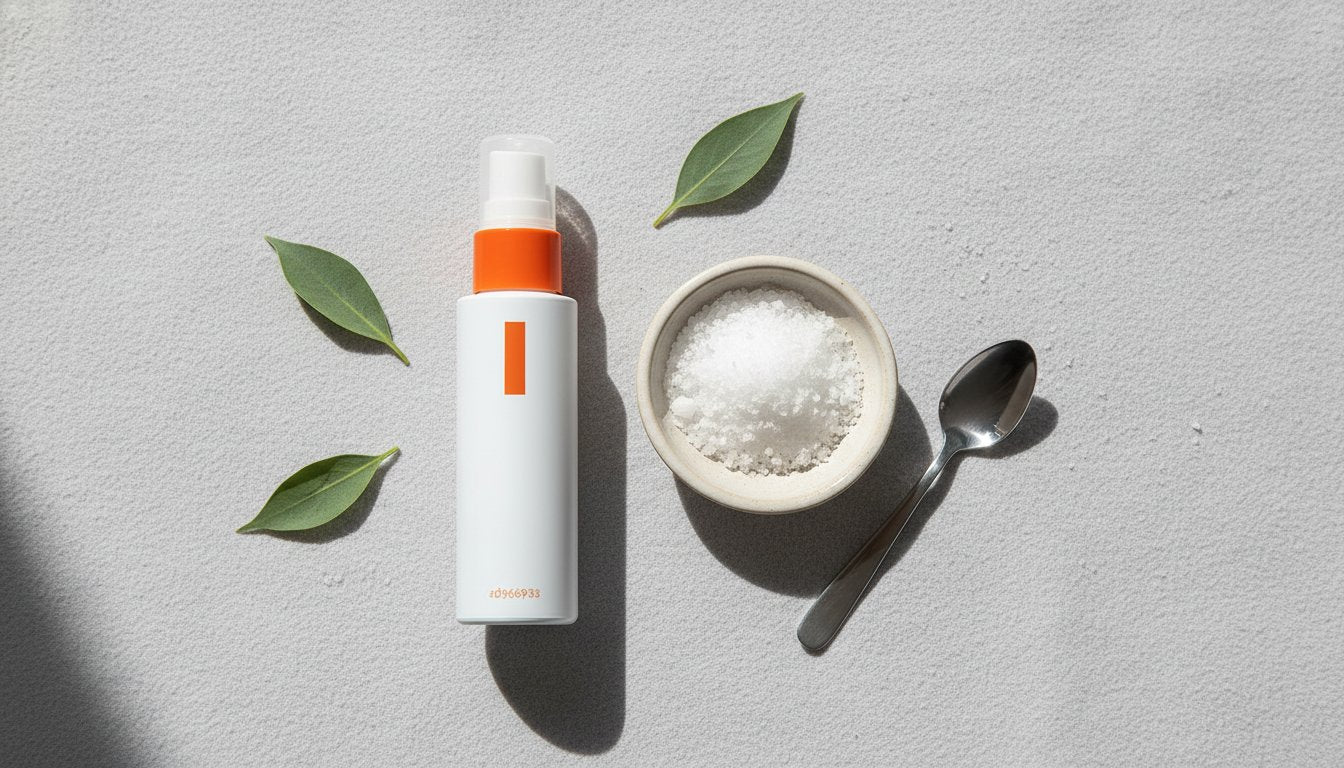
What if your kitchen-made salt water rinse is actually the reason your tongue remains swollen and sore? For decades, the standard advice for tongue piercing aftercare salt water routines involved mixing sea salt in a mug, but modern biology suggests a more refined approach. You've likely spent the last few days navigating intense swelling, difficulty eating, and the nagging fear of a piercing bump. It's frustrating to receive conflicting DIY advice when you're simply seeking a safe, predictable path to healing.
We believe in the power of self-expression, but we also prioritize the integrity of your health. You deserve a recovery process that is clean, professional, and nurturing. This article reveals the modern science of oral recovery and why your daily routine needs an upgrade for faster, safer results. We'll explore the shift toward isotonic precision, the importance of sterile formulations, and the exact steps to ensure your new aesthetic remains a source of pride. Discover how to minimize pain, eliminate infection risks, and master a simple routine that supports your body's natural healing environment.
Key Takeaways
- Move beyond the guesswork of DIY mixtures to understand how isotonic saline mimics your body’s natural fluids for optimal cell recovery.
- Discover why the 0.9% sodium chloride ratio is the essential "magic number" for tongue piercing aftercare salt water routines to effectively reduce swelling.
- Protect your healing piercing by identifying the bacterial risks found in non-sterile kitchen environments and unrefined salts.
- Implement a refined daily schedule that clears debris after meals and soothes the tongue without the harshness of traditional mouthwashes.
- Learn how to choose high-purity, professional solutions that prioritize both your aesthetic goals and your biological safety.
Tongue Piercing Aftercare: The Evolution of the Salt Water Rinse
For decades, the humble salt water rinse has served as the cornerstone of body modification recovery. It's a tradition born from necessity. It's simple. It's accessible. It's effective. In the early days of professional piercing, sea salt was the only reliable antimicrobial tool available to the public. However, as we move through 2026, the science of tongue piercing aftercare salt water routines has undergone a significant transformation. We've moved away from the "sterilization" mindset of the past and toward a philosophy of "isotonic precision."
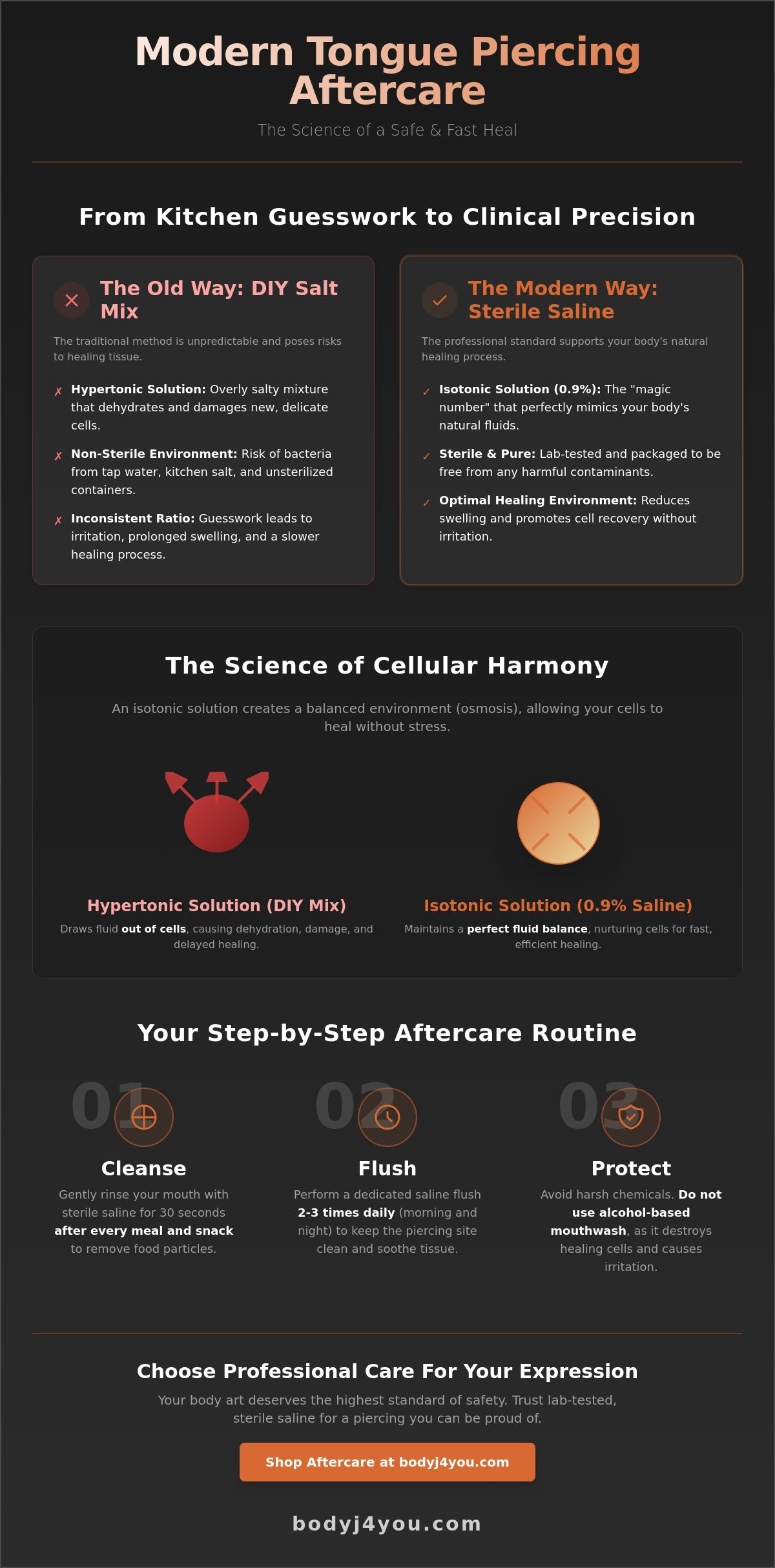
Understanding the difference between an isotonic saline solution and a hypertonic DIY mixture is vital for your recovery. An isotonic solution contains exactly 0.9% sodium chloride, which perfectly mimics the salinity of your body’s own fluids. When you mix salt in a kitchen mug, you almost certainly create a hypertonic solution. These overly salty mixtures are aggressive. They don't just kill bacteria; they dehydrate delicate new cells and cause unnecessary irritation. This is the "Salinity Trap" that many well-meaning enthusiasts fall into, unknowingly slowing their own progress.
The tongue requires a much more disciplined approach than a standard earlobe or nostril piercing. Because the tongue is a highly vascular muscle constantly exposed to the bacteria of the oral cavity, the tongue piercing healing process is uniquely susceptible to external variables. It's a wet environment that moves every time you speak or swallow. We view ourselves as your wise guardian during this vulnerable phase, prioritizing purity and clinical standards to ensure your self-expression doesn't come at the cost of your health.
Why Salt Water Was the Original Standard
In the 1990s and early 2000s, sea salt became the global standard because it was a low-cost, natural antiseptic. Sodium chloride naturally inhibits bacterial growth through a process called osmosis, drawing moisture out of harmful microbes. These old-school methods paved the way for the industry, teaching us that harsh chemicals like alcohol or peroxide are far too traumatic for healing tissue. While the spirit of the salt rinse remains valid, the delivery method has finally caught up with modern dermatological standards.
The Shift to Sterile Solutions in 2026
By May 2026, the rise of antibiotic-resistant bacteria has made sterility a non-negotiable requirement for oral care. There is a critical distinction between "clean" and "sterile." Even if you boil your water, the salt in your pantry and the cup in your cabinet aren't free from contaminants. Modern aftercare focuses on maintaining the delicate oral microbiome rather than nuking it with unpredictable DIY solutions. New state-level regulations on ingredient integrity, such as those taking effect in Maine and Vermont this year, underscore the importance of using high-purity, laboratory-tested products for your recovery.
The Science of Healing: How Saline Supports Oral Recovery
Your body is a master of self-repair. When you introduce a piercing, you aren't just adding jewelry; you're creating a biological wound that requires a specific environment to close. Saline solution is effective because it's bio-mimetic. It mirrors the salinity of your interstitial fluids, which are the liquids surrounding your cells. By using a solution that matches your body's natural chemistry, you reduce cellular stress and allow the healing process to proceed without interference. According to current professional piercing aftercare guidelines, the goal is to assist the body's natural defenses rather than attacking the wound with harsh chemicals.
A successful recovery follows the Rule of Three: Cleanse, Flush, and Protect. First, you must cleanse the site of external bacteria. Second, you must flush away food particles and oral debris that accumulate throughout the day. Finally, you must protect the emerging tissue from trauma and irritation. An alcohol-free environment is non-negotiable during this phase. While traditional mouthwashes feel "clean" because they sting, that sensation is actually the sound of new, fragile cells being destroyed. For those seeking clinical-grade purity, our saline piercing aftercare spray provides the exact 0.9% concentration needed for cellular harmony.
Osmosis and Swelling Management
The tongue is a highly vascular muscle. When pierced, it naturally responds with edema, or swelling, as blood and lymph fluid rush to the site. Osmosis is the scientific mechanism that helps manage this. A perfectly balanced saline solution draws excess fluid out of the swollen tissue through a semi-permeable membrane. However, when your tongue piercing aftercare salt water mixture is too salty, it creates a hypertonic environment. This doesn't just reduce swelling; it aggressively dehydrates the mucous membranes. This "tissue thirst" leads to cracking, prolonged soreness, and a white, leathery appearance on the tongue's surface.
Protecting the Healing Fistula
The goal of aftercare is the successful formation of a fistula. This is the tunnel of skin that grows from the inside out to line the piercing hole. It's a delicate, microscopic structure. During the first few weeks, the body produces "crusties," which are actually dried lymph fluid and dead cells. While these are a sign of healing, they can become abrasive. Proper tongue piercing aftercare salt water rinsing softens these deposits, allowing them to wash away without tearing the fragile new fistula lining. A gentle, pressurized flush is always superior to mechanical picking or jewelry manipulation, which only introduces new trauma to the site.
DIY Salt Water vs. Sterile Saline Spray: Why Precision Matters
The allure of a kitchen-made solution is understandable. It's cheap. It's immediate. It's traditional. However, for a modern tongue piercing aftercare salt water routine, precision is your greatest ally. The specific concentration of 0.9% sodium chloride isn't a suggestion; it's a biological requirement. When you deviate from this ratio, you move from a healing aid to a potential irritant. In 2026, the industry has moved toward laboratory-grade standards to ensure that every flush supports, rather than stresses, your body's recovery phase.
Kitchen-made solutions carry hidden risks that many enthusiasts overlook. Tap water, even when boiled, can contain minerals or residual bacteria that are harmless to drink but problematic for an open wound. Salt from a pantry often contains anti-caking agents or iodine, which can trigger sensitivities in delicate oral tissue. The Association of Professional Piercers aftercare guidelines highlight that pre-packaged sterile saline removes these variables. It ensures that every application is as pure as the first, protecting the integrity of your new piercing from the microscopic contaminants found in a typical home environment.
Investing in a professional spray isn't just about convenience; it's a cost-benefit calculation for your long-term health. A single bottle provides hundreds of controlled applications without the mess of mixing. When you compare the price of a dedicated aftercare product to the hidden cost of a prolonged infection or the discomfort of a chemical burn, the choice becomes clear. We believe in providing tools that offer safety, purity, and results.
The Danger of Hypertonic DIY Mixes
There is a common myth that "more salt equals more cleaning power." In reality, an overly concentrated solution is hypertonic. It creates a chemical burn on the tongue’s surface. If you notice persistent redness, peeling, or a leathery texture on your tongue, you've likely over-cleaned or over-salted your piercing. This aggressive approach destroys the very cells responsible for building the new fistula. It leads to a cycle of irritation that can stall your progress for weeks, making it harder to eat and speak comfortably.
The Sterile Advantage of BodyJ4You Saline
Sterility is the ultimate shield for your new expression. Our pressurized cans are designed to prevent cross-contamination by ensuring that no outside air or bacteria can enter the bottle. This maintains the solution’s integrity from the first spray to the last drop. The fine-mist application is specifically engineered for delicate oral tissue, providing a gentle flush that removes debris without mechanical trauma. For a deeper look at why this technology is the gold standard, explore our sterile saline spray for piercings guide. It breaks down the technical specs of how we prioritize your long-term well-being through clinical-grade aftercare.
Your Step-by-Step Tongue Piercing Aftercare Routine
Precision is the path to beauty. A successful tongue piercing aftercare salt water routine isn't about intensity; it's about consistency. Your mouth is a dynamic environment that requires a structured schedule to balance oral hygiene with the body's natural healing pace. By following a rhythmic daily protocol, you ensure that your new expression heals with clinical precision and minimal discomfort.
- The Morning First Flush: Your mouth remains stagnant while you sleep, allowing bacteria to accumulate. Begin your day with a gentle saline flush to awaken the tissue and clear away overnight secretions.
- The Post-Meal Protocol: Every snack or meal introduces debris. Rinse immediately after eating to remove food particles without using mechanical force. This prevents the jewelry from trapping irritants against the healing fistula.
- The Evening Preparation: Before retiring, perform a final, thorough rinse. This prepares the oral environment for the long overnight heal, ensuring the site is clean and stabilized.
Adhering to the "Do Not Disturb" rule is equally vital. While it's tempting to clean the site constantly, over-cleaning can strip away the beneficial enzymes your mouth produces. Limit your active saline rinses to five times daily. Beyond this, your body needs rest to complete the intricate work of cellular repair.
The Internal Rinse Protocol
Internal care requires a delicate touch. While traditional mouthwashes are often too aggressive, an alcohol-free saline rinse provides a soothing, neutral environment. Follow the 30-second rule: swish the solution gently, ensuring it reaches both the top and bottom of the piercing, then expel. During the first 48 hours, integrate cold water rinses into your routine. The cold acts as a natural vasoconstrictor, which is essential for managing the initial peak of tongue swelling and edema.
External Care for Labret and Tongue Piercings
The exit points of your jewelry require specific attention to prevent "crusties" from causing friction. For the external skin or the visible surfaces of the jewelry, precision tools are superior to bulky cotton balls. We recommend using piercing cleaning swabs to reach tight spaces around the balls or flat backs. These allow you to remove lymph buildup with surgical accuracy, protecting the fragile new skin from tearing. Avoid "playing" with the jewelry or clicking it against your teeth during the first two weeks. Mechanical trauma is the leading cause of piercing bumps and prolonged inflammation. To support your journey with professional-grade tools, explore our curated collection of aftercare essentials designed for the modern enthusiast.
Choosing BodyJ4You: Professional Care for Your Expression
For over two decades, we've stood at the intersection of aesthetic creativity and biological safety. Our presence in the industry isn't just about providing jewelry; it's about acting as a stabilizing force for your self-expression. We've witnessed the transition of tongue piercing aftercare salt water routines from unrefined kitchen mixtures to the clinical-grade standards of 2026. This long-standing heritage allows us to serve as your Wise Guardian, ensuring that every step of your recovery is backed by experience and regional manufacturing you can trust.
We believe that true empowerment comes from knowledge and high-purity tools. Our commitment to domestic production means our solutions meet rigorous regulatory standards, providing a shorthand for quality in a crowded market. By choosing professional care, you aren't just buying a product; you're investing in a predictable, organized path to healing. We prioritize the integrity of your body, offering a steady and logical approach that moves from immediate relief to long-term aesthetic refinement.
The BodyJ4You Quality Guarantee
Integrity is the foundation of our brand. We maintain strict quality control and dermatological standards for every solution we offer. Our products are crafted with a focus on purity and ethics, utilizing vegan and cruelty-free ingredients that respect both your body and the environment. We don't just support your initial healing phase; we're here for your entire journey. Whether you're seeking a gentle flush for a fresh piercing or preparing for your first jewelry upgrade, our formulations provide the protective care your body requires to thrive.
Next Steps for a Healthy Heal
Healing is a process of stages. Once the initial peak of swelling has subsided, typically within the 2-4 week window, it's essential to visit your professional piercer to downsize your initial barbell. A shorter post reduces mechanical friction and protects your oral health. During this time, continue to monitor the site for any unusual changes. If you notice localized irritation or the emergence of piercing bumps, early intervention with targeted treatment oils can restore balance to the tissue.
Your journey toward a fully healed, vibrant piercing should be as seamless as possible. By replacing unpredictable DIY methods with structured, professional care, you eliminate the risks of contamination and incorrect salinity. Take control of your recovery with tools designed for the modern enthusiast. To secure the health of your new expression, shop our complete aftercare collection and experience the difference that twenty years of expertise brings to your daily routine.
Master Your Recovery with Clinical Precision
Transitioning from a traditional tongue piercing aftercare salt water routine to a sterile, isotonic solution is a vital commitment to your long-term health. We've explored how biological precision supports the delicate fistula and why clinical-grade purity prevents the irritation caused by hypertonic mixtures. By choosing structured care over the guesswork of DIY solutions, you prioritize safety, efficiency, and aesthetic refinement. It's about nurturing your body's natural healing environment with the respect it deserves.
With over 20 years of industry experience, we provide USA-manufactured quality that acts as a protective shield for your self-expression. Our dermatologist-tested formulas ensure your journey from the initial piercing to your first jewelry upgrade is stable, predictable, and pure. Secure your healing journey with our Sterile Saline Aftercare Spray. Your new look is a reflection of your personality. Keep it vibrant by trusting the science of professional care.
Common Questions on Tongue Piercing Recovery
Can I use regular table salt to make a piercing rinse?
No, you should avoid using regular table salt for your rinse. Table salt typically contains iodine and anti-caking agents that can chemically irritate a fresh wound. These additives interfere with the delicate oral environment. For a safe tongue piercing aftercare salt water routine, we recommend using only non-iodized sea salt or, preferably, a sterile saline spray to ensure purity and clinical safety.
How many times a day should I rinse my tongue piercing with salt water?
You should rinse your piercing three to five times per day. This usually includes a flush after every meal and a final rinse before sleep. Consistency is vital, but over-rinsing can lead to excessive dryness. By sticking to this rhythmic schedule, you maintain a clean environment without stripping away the beneficial enzymes your mouth naturally produces to aid in cellular repair.
Is it normal for my tongue piercing to have a white discharge?
Yes, a thin, white or clear discharge is a normal part of the healing process. This fluid is known as lymph, and it indicates that your body is actively building new tissue. However, if the discharge becomes thick, yellow, or green, or if it's accompanied by a foul odor, you should consult a professional. Normal lymph is a sign of a healthy, stabilizing wound.
Can I use sea salt spray inside my mouth?
Yes, you can use a sterile sea salt spray inside your mouth. In fact, a pressurized saline spray is often superior to a DIY mix because it guarantees a precise 0.9% sodium chloride concentration. This clinical precision ensures that you are nurturing the tissue rather than irritating it. Simply spray the solution onto the piercing site and swish gently for thirty seconds before expelling.
What happens if I make my salt water solution too strong?
Making your solution too strong creates a hypertonic environment that can cause chemical burns. An excess of salt draws too much moisture out of your cells, leading to tissue dehydration and a leathery texture on the tongue. This aggressive approach stalls the healing process and increases discomfort. Precision is the key to a safe, predictable recovery without unnecessary trauma to the mucous membranes.
Should I use mouthwash or salt water for a tongue piercing?
Sterile salt water or saline is generally superior to mouthwash for a healing piercing. Most commercial mouthwashes contain alcohol or hydrogen peroxide, which are far too harsh for new tissue. If you choose to use mouthwash, it must be a dedicated alcohol-free formula. Saline provides a bio-mimetic environment that supports the body's natural defenses without the risk of chemical interference or stinging.
How long do I need to continue the salt water routine?
You should maintain your cleaning routine for at least six to eight weeks. While the initial swelling often subsides within the first month, the internal fistula takes longer to stabilize completely. Full healing can take three to six months depending on your individual biology. Continuing your tongue piercing aftercare salt water protocol through the initial phase ensures the tissue remains protected during jewelry downsizing and daily activity.
Can I use contact lens saline for my tongue piercing?
No, you should never use contact lens saline for a piercing. Contact lens solutions are formulated with preservatives, buffers, and enzymes specifically designed for ocular health and protein removal. These ingredients are not intended for open wounds and can cause significant irritation or allergic reactions in a healing fistula. Always choose a sterile saline spray specifically labeled for wound wash or piercing aftercare.


