

External stillness is not internal maturity. While your jewelry may sit quietly against your skin, true healing is a complex biological sequence that happens deep within the tissue. It's common to feel frustrated by a recovery window that can span a full year, especially when you're anxious about potential infection. Identifying the correct nipple piercing healing signs is the first step toward reclaiming your peace of mind. We believe in a journey defined by patience, precision, and protection.
You deserve to feel empowered by your choice of self-expression rather than burdened by the confusion between healthy lymph and problematic pus. This guide provides the visual confirmation you need to move through your recovery with absolute certainty. You'll explore the five essential markers of a healthy recovery, clarify the ideal timeline for safe jewelry changes, and receive expert reassurance on the aftercare steps that ensure long-term stability. Let's transform your uncertainty into a documented path of aesthetic refinement and physical wellness.
Key Takeaways
- Understand why nipple piercings require a full 12-month commitment and what to expect during the critical first four weeks of cellular repair.
- Learn to identify the five clinical nipple piercing healing signs, including the transition from localized swelling to natural tissue flexibility.
- Gain the confidence to distinguish between healthy translucent lymph and the warning signs of infection, such as persistent heat or opaque discharge.
- Discover how to optimize your recovery environment using a disciplined aftercare routine that balances clinical cleaning with the "Leave It Alone" philosophy.
- Master the "30-day rule" to determine exactly when your body is biologically ready for a jewelry downsize or aesthetic swap.
The Nipple Piercing Healing Timeline: A 12-Month Journey
Nipple piercings represent a profound commitment to body art and biological resilience. They're among the slowest piercings to reach full stability. Unlike a simple lobe piercing, this area involves dense, glandular, and highly sensitive tissue. Understanding the stages of Nipple Piercing Healing allows you to monitor your progress without unnecessary anxiety. The journey is not a linear path but a series of overlapping biological phases that require specific care at every turn.
The healing process generally follows three distinct stages of maturation:
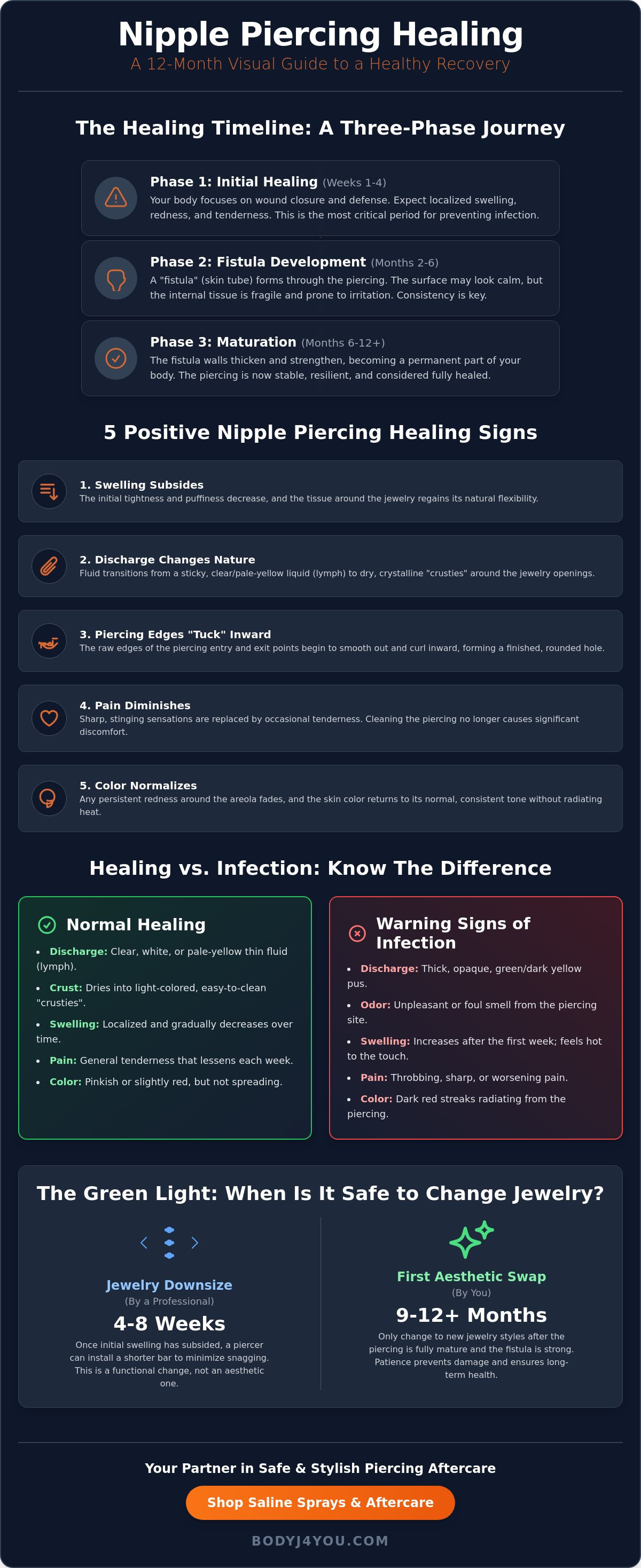
- Initial Phase (Weeks 1-4): Your body prioritizes wound closure and defense. During this time, the focus is on managing localized inflammation and establishing a clean environment for the new jewelry.
- Secondary Phase (Months 2-6): This is the critical stage of fistula development. A specialized "tube" of skin begins to form around the jewelry. While the surface may appear calm, the internal tissue remains fragile and prone to micro-tears.
- Maturation Phase (Months 6-12): The internal walls of the piercing channel thicken and strengthen. This phase ensures the fistula becomes a permanent, resilient part of your anatomy.
Why Nipple Piercings Require Extra Patience
The nipple is a hub of sensory nerves and vascular activity. It's deeply connected to the endocrine system, meaning your body’s internal chemistry directly affects the site. Daily movement and clothing friction can restart the biological "rest" phase if the jewelry is snagged. It's a delicate balance of protection, hygiene, and patience. Many people assume a lack of pain means the process is finished. In reality, observing positive nipple piercing healing signs requires a long-term perspective, as internal stability lags behind surface appearance.
Setting Realistic Expectations for 2026
The average healing window for full stability typically ranges from 9 to 12 months for most individuals. Your personal health, sleep quality, and aftercare consistency act as the primary variables in this equation. Hormonal cycles can also cause temporary regression in nipple piercing healing signs, leading to minor swelling even months into the journey. This is a normal part of the body's rhythmic response. Stay disciplined, stay observant, and trust the process.
5 Positive Nipple Piercing Healing Signs to Look For
Observing your body's progress in the mirror is a vital part of the recovery journey. Positive nipple piercing healing signs are often subtle markers of cellular success, indicating that your immune system is successfully managing the new jewelry. One of the most immediate indicators is a visible reduction in localized swelling. As the initial inflammation subsides, you will notice the return of natural tissue flexibility. The nipple should no longer feel tight or rigid; instead, it should move naturally with the surrounding skin.
As the weeks progress, the nature of your piercing discharge will shift. You should see a transition from "wet" or sticky fluid to dry, translucent "crusties." This is a hallmark of healthy progress. Additionally, the edges of the piercing site should begin to appear "tucked" or rounded inward. Rather than looking like a raw, open wound, the entrance and exit points will start to look like smooth, finished holes. This visual change is accompanied by a lack of sharp, stinging sensations when you gently move the jewelry during your cleaning routine. Finally, the surrounding areola tissue should remain a consistent color, free from persistent redness or radiating heat.
Understanding Lymph: The "Good" Discharge
Lymph is a clear or pale yellow fluid that acts as a vital component of the body's repair system. It is not a sign of failure. It is a sign of active defense. This fluid eventually dries into small "crusties" around the jewelry bars. While it is tempting to pick these off with your fingernails, doing so can cause micro-tears in the delicate new skin. A "Wise Guardian" approach involves softening these deposits with a sterile saline spray for piercings before gently wiping them away. Adhering to professional piercing aftercare standards ensures that you support the body without interrupting its natural rhythm. Maintaining a clean environment is effortless when you use a dedicated Saline Piercing Aftercare Spray to flush out debris twice daily.
Fistula Maturation: The "Tucked" Appearance
The visual maturation of the fistula is perhaps the most reassuring of all nipple piercing healing signs. This occurs when the skin grows inward to line the piercing track, creating a protective tube of tissue. A healthy site will lose the "donut" effect of early swelling and settle into a relaxed, recessed state. It is vital to remember that a healed-looking exterior often hides a fragile, developing interior. Even when the skin looks perfect on the outside, the internal walls of the fistula are still gaining the structural integrity needed for long-term stability. Observe. Clean. Protect.
Healing vs. Infection: Distinguishing Normal Progress from Warning Signs
Anxiety often stems from a lack of visual literacy. When you're looking in the mirror, the line between a healthy inflammatory response and a developing complication can feel incredibly thin. Developing a keen eye for nipple piercing healing signs requires you to look past the surface. You must learn to interpret the language of your body's immune system. Healthy healing is a quiet, rhythmic process. Infection, by contrast, is loud, persistent, and aggressive.
One of the most vital distinctions involves discharge. As established previously, clear or pale yellow lymph is a sign of repair. However, if you notice thick, opaque fluid that appears green, gray, or dark yellow, this is pus. This is a primary indicator of infection. Temperature and sensation provide further clues. Localized warmth and a dull ache are standard during the first week of recovery. If you experience persistent heat in the areola after the first month, or if the pain shifts from a dull ache to a throbbing, radiating sensation, your body is signaling a red flag. A minor irritation bump might feel tender, but a true abscess is typically accompanied by significant swelling and systemic symptoms like fever.
The Red Flags of Piercing Rejection
Rejection is a biological process where the body identifies the jewelry as a foreign object and attempts to push it out. You may notice the barbell moving closer to the surface of the skin over several weeks. The tissue between the entrance and exit holes will begin to look "thin" or translucent. In extreme cases, the metal of the barbell may even become visible through the skin. If you suspect rejection, don't wait for the skin to break. Consult a professional immediately to discuss removing the jewelry before permanent scarring occurs.
Managing Irritation Bumps Safely
Not every lump is an infection. Most "piercing bumps" are localized granulomas or pockets of irritation caused by friction, moisture, or improper jewelry angles. These are common setbacks, but they are manageable with the right approach. Avoid harsh chemicals or unverified home remedies that can strip the skin of its natural defenses. Instead, focus on stabilizing the area. We recommend learning how to get rid of piercing bump formations using disciplined hygiene and specialized botanical support. Applying a dedicated Piercing Bump Treatment Oil can help soothe the tissue and encourage the return of healthy nipple piercing healing signs without causing further trauma.
Optimizing Your Healing Environment
Success in recovery is rarely accidental. It's the result of a curated environment that prioritizes stability, hygiene, and biological rest. To witness consistent nipple piercing healing signs, you must establish a routine that is clinical but nurturing. This balance ensures you're supporting the body's natural defenses without introducing new irritants. The gold standard of this approach is the "LITHA" method: Leave It The Hell Alone. Every time you twist, slide, or touch the jewelry, you risk breaking the fragile new cells forming the fistula. Patience. Protection. Precision.
The Role of Sterile Saline in 2026 Aftercare
Medical-grade saline is the modern guardian of the healing fistula. It offers a precise pH balance that traditional "sea salt soaks" simply cannot match. Home-mixed solutions are often too harsh, leading to tissue dehydration and delayed cellular repair. A sterile spray provides a fine mist that flushes out debris without the need for physical contact. This "Wise Guardian" philosophy supports the body’s repair rather than forcing it. By using a gentle misting technique, you prevent the physical trauma that often leads to irritation bumps. Clearer signs of progress emerge when the tissue isn't constantly fighting against salt-heavy, unsterile solutions. Cleanse. Flush. Dry.
Clothing and Lifestyle Adjustments
Your daily choices dictate the speed of your recovery. Fabric choice, sleep position, and hydration levels all play a role in how your body manages the new jewelry. Cotton is king because it offers breathability, softness, and hypoallergenic properties. Lace, conversely, is a high-risk hazard. The small loops in lace bras or loofahs can easily snag jewelry, causing painful micro-tears that reset the healing clock. Consider these disciplined adjustments to your lifestyle:
- Supportive Sleep: Wear a clean sports bra or tight cotton tank top to bed to keep jewelry secure and prevent snagging on sheets.
- Hydration and Health: Maintain high hydration levels to ensure skin elasticity and rapid cellular turnover.
- Hygiene Evolution: Swap loofahs for gentle, fragrance-free cleansers applied by hand, and follow a strict post-gym hygiene protocol to eliminate bacteria from sweat.
- Fabric Awareness: Stick to 100 percent cotton layers during the first six months to allow the skin to breathe.
A disciplined environment leads to a predictable recovery. To maintain this clinical standard and support healthy nipple piercing healing signs, we recommend integrating a dedicated Saline Piercing Aftercare Spray into your daily ritual. By removing the guesswork from your aftercare, you empower your body to focus entirely on the art of healing.
The "Green Light" Phase: When is it Safe to Change Jewelry?
The "green light" phase is the ultimate goal of your recovery. It represents the moment your body stops treating the jewelry as a wound and starts treating it as a permanent feature. Reaching this milestone requires a documented history of stability. You should observe consistent nipple piercing healing signs for 30 consecutive days before assuming you're fully healed. This means zero crusties, zero redness, and zero tenderness. Only when this internal maturity is reached can you safely transition from active aftercare to long-term maintenance or submerge the area in pools and oceans. Bacteria in public water can easily compromise a developing piercing, so wait for that 30-day window of perfect stillness before taking the plunge.
Downsizing: The Forgotten Healing Step
Initial jewelry is intentionally long. Piercers use extra length to accommodate the significant swelling that occurs in the first weeks of recovery. Once that swelling subsides, usually around month four, that extra length becomes a liability. A barbell that is too long will slide back and forth, causing micro-tears, irritation bumps, or even migration. This is why a professional downsize is critical. Unlike a style swap you might perform at home, a downsize is a functional adjustment to ensure the jewelry fits the now-stable tissue perfectly. We strongly recommend visiting a professional for this first change. They can verify the internal health of the track before inserting shorter, high-quality bars.
Long-term Maintenance for Healed Piercings
A healed piercing is a living part of your anatomy. It requires ongoing care to remain supple and secure. We suggest integrating natural oils into your routine to maintain skin elasticity and prevent the tissue from becoming brittle or dry. This is especially important in the delicate nipple area where skin can be prone to seasonal changes.
- Hydrate the Tissue: Apply a small amount of Jojoba oil or Rosehip oil to the entrance and exit points. These oils mimic the skin's natural sebum, keeping the fistula resilient and comfortable.
- Check Your Hardware: Get into the habit of checking your threaded jewelry ends every week. Vibrations from daily movement can loosen the beads, leading to accidental loss of your favorite pieces.
- Material Integrity: For long-term wear, prioritize biocompatible materials. High-quality Surgical Steel offers the purity and durability needed to prevent late-stage reactions and maintain a polished aesthetic.
Your journey through the recovery of a nipple piercing is a testament to your patience and discipline. By honoring the 12-month timeline and watching for consistent nipple piercing healing signs, you've transformed a physical vulnerability into a stable form of self-expression. The reward is a beautiful, healthy piercing that feels like a natural part of your identity. Wear it with pride. You've earned the result.
Mastering Your Aesthetic Recovery
The journey to a fully matured fistula is defined by patience, precision, and protection. You've learned to distinguish healthy lymph from warning signs and understood why the 12-month maturation phase is non-negotiable for long-term stability. Monitoring your nipple piercing healing signs with a disciplined eye is the most effective way to prevent setbacks and ensure a seamless recovery. By honoring the biological timeline and maintaining a "clinical but nurturing" environment, you transform a simple procedure into a lasting statement of personal style.
We're here to act as your supportive specialist at every stage of the process. Support your healing journey with BodyJ4You’s Sterile Saline Aftercare Spray. Our dermatologically tested saline solutions are built on over 20 years of piercing expertise. Whether you're in the initial weeks of inflammation or ready to transition to high-quality surgical steel and titanium jewelry, we provide the tools for a safe and aspirational experience. Your commitment to proper aftercare is an investment in your well-being. Trust your body's rhythm and enjoy the lasting reward of your self-expression.
Frequently Asked Questions
How can I tell if my nipple piercing is healing or infected?
You can distinguish healing from infection by observing the consistency of discharge and the presence of persistent heat. Healthy healing presents as clear or pale yellow lymph that dries into small crusts. Infection manifests as thick, opaque green or gray pus, often accompanied by radiating heat and throbbing pain. If you experience systemic symptoms like fever or if the redness spreads beyond the immediate site, consult a professional immediately.
Is it normal for my nipple piercing to still have "crusties" after 6 months?
It is perfectly normal to see crusties at the six-month mark because these piercings often require a full 12-month window for internal maturation. These deposits are simply dried lymph, which is a byproduct of your body’s active tissue repair process. As long as the surrounding skin is not red, swollen, or painful, this is a positive indicator that your body is still diligently building the internal fistula. Consistency in your aftercare remains vital.
What color should the discharge be on a healthy healing nipple piercing?
Healthy discharge should be clear, white, or a very pale yellow translucent fluid known as lymph. This substance is a vital component of the body’s natural defense and repair mechanism. It eventually dries into the small crusts you see on your jewelry bars. If the color shifts to a dark yellow, green, or gray, it no longer represents healthy nipple piercing healing signs and may indicate a bacterial presence that requires attention.
Can I change my nipple jewelry after 3 months if it doesn't hurt?
You should avoid changing your jewelry for aesthetic reasons at the three-month mark, even if the site feels comfortable. While the exterior might appear stable, the internal fistula is still incredibly fragile and prone to micro-tears. Changing jewelry too early can cause significant trauma and reset your progress. The only exception is a professional downsize to a shorter barbell, which helps prevent snagging and migration as initial swelling subsides.
Why is one of my nipple piercings healing faster than the other?
Variations in healing rates are common and typically result from differences in local blood flow or daily physical irritation. One side may experience more friction from clothing or be subjected to more pressure during sleep. Additionally, accidental snags on one side can cause micro-tears that delay progress. Focus on maintaining a uniform aftercare routine for both sites to support a balanced and healthy recovery environment throughout the year.
Is redness around the piercing site normal after the first week?
Mild redness is a standard part of the initial inflammatory response during the first few weeks of recovery. However, if the redness persists or begins to spread toward the areola after the first month, it may indicate localized irritation or a developing infection. Healthy nipple piercing healing signs include a gradual return to your natural skin tone. Monitor the area for radiating heat or increased tenderness, which are often paired with problematic redness.
How do I know if my body is rejecting my nipple piercing?
Rejection is characterized by the jewelry physically moving closer to the surface of the skin over several weeks. You may notice the "bridge" of tissue between the entrance and exit holes becoming thinner, tighter, or even translucent. If the barbell becomes visible through the skin or the holes appear significantly larger, your body is likely pushing the jewelry out. Consult a specialist immediately to discuss removal before permanent scarring or tissue cleavage occurs.
Can I go swimming if my nipple piercing shows positive healing signs?
You should avoid swimming in pools, lakes, or oceans for at least six to nine months, regardless of surface appearance. All bodies of water harbor bacteria that can easily enter the developing fistula and cause severe infection. Even if you observe positive nipple piercing healing signs, the internal channel remains vulnerable to chemical and biological irritants. If you must swim, use a waterproof breathable bandage to seal the area completely, though total avoidance is safest.


