

What if your journey to self-expression was defined by biology rather than just force? A 2026 study published in The Laryngoscope found that 25.4% of earlobe piercings result in complications, proving that common ear stretching mistakes carry real risks. We understand the frustration of waiting months for a heal only to face the dreaded cat-butt texture or a painful blowout. It's natural to feel confused by conflicting advice on tapers and materials while you're just trying to reach your goal size safely.
This guide will teach you the biological logic behind these errors and provide a clear roadmap to achieving thick, healthy lobes without permanent damage. You'll learn how to treat your stretching journey as a wellness practice rather than a mechanical race. We will break down the ten critical errors to avoid, the science of skin elasticity, and the precise signs that your body is ready for the next gauge. Your self-expression should be safe, disciplined, and beautiful.
Key Takeaways
- View stretching as a biological process of cell mitosis rather than a mechanical pull to ensure long-term lobe thickness.
- Prevent common ear stretching mistakes by never wearing tapers as jewelry and strictly following the standard gauge progression.
- Prioritize non-porous materials like surgical steel for active stretches to minimize irritation and support the healing fistula.
- Recognize the red flags of blowouts and "cat-butt" ears early to stop permanent damage before it requires surgical intervention.
- Master the gold standard routine of heat preparation and oil-based lubrication to achieve your goal size with clinical precision.
The Biology of Stretching: Why Your Lobes Aren’t Just Rubber
Your ear lobes are living tissue. They are not inanimate rubber. Successful prevention of ear stretching mistakes starts with understanding that Stretching (body piercing) is actually a controlled induction of mitosis. This is the biological process of skin cell proliferation where your body creates new tissue to accommodate a larger gauge. It is a sophisticated physiological response that relies on three pillars: hydration, circulation, and time. When you treat your lobes with clinical care, you support a transformation that is both resilient and aesthetic.
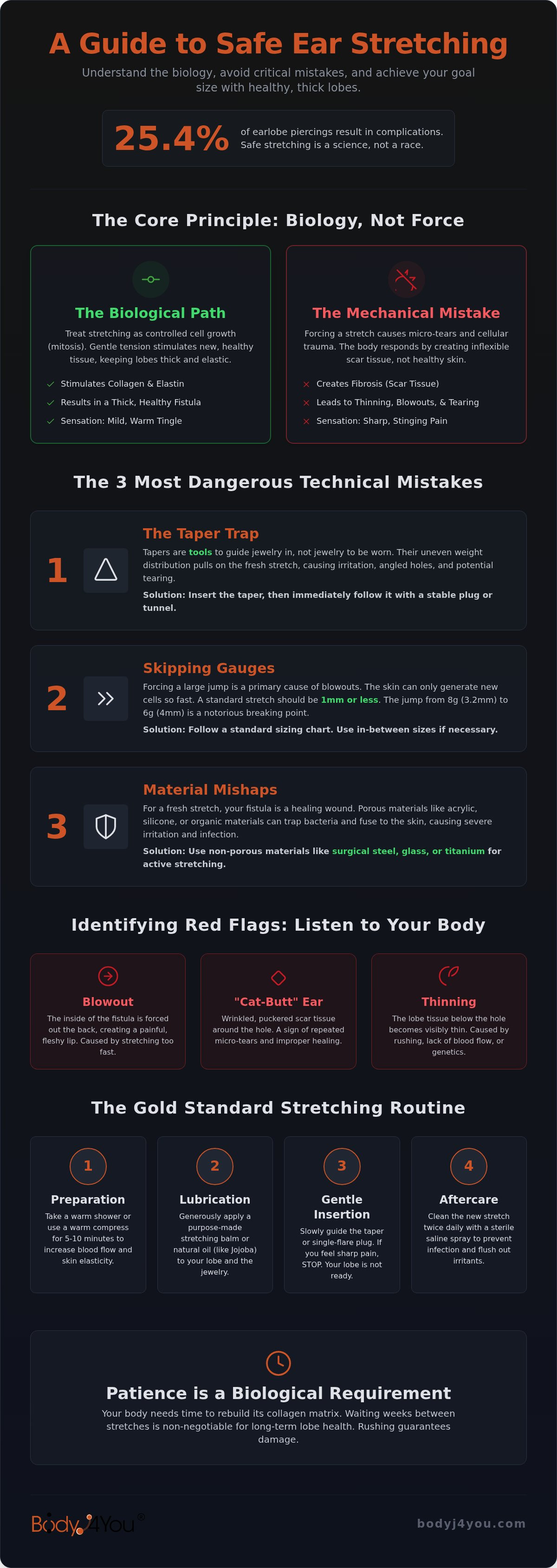
When you apply gentle tension, you stimulate the production of collagen and elastin. Collagen provides the structural integrity needed for thick, healthy lobes, while elastin allows the skin to maintain its flexibility. Forcing a stretch causes the body to skip this growth phase entirely. Instead of healthy skin, the body produces fibrosis, which is a dense, inflexible scar tissue. This "mechanical" approach leads to thinning, tearing, and permanent damage. Healthy tension should feel like a mild, warm tingle. Destructive pressure, however, manifests as a sharp, stinging pain that signals cellular trauma.
Collagen Remodeling and the Waiting Game
Patience is a biological requirement, not just a suggestion. Your body must dismantle and rebuild its internal collagen matrix to support new jewelry without losing volume. This remodeling phase takes weeks to stabilize and reinforce the fistula. Wait times are non-negotiable because the new cells need to mature before they can handle further tension. Age and blood flow play critical roles in this timeline. Younger skin naturally possesses higher regenerative speed, while consistent localized circulation provides the oxygen and nutrients necessary for rapid cellular turnover. A disciplined approach ensures your lobes remain thick and viable for years to come.
The Micro-Tear Cycle
Many ear stretching mistakes happen when invisible damage goes unnoticed. A micro-tear is a microscopic breach in the fistula lining that invites bacteria. These tiny fissures trigger an inflammatory response that can lead to a blowout or the dreaded "cat-butt" texture. To protect your progress, use a sterile saline spray for piercings twice daily during the healing phase. This gold-standard aftercare flushes pathogens from micro-fissures, keeping the environment clean while the skin remodels itself. By managing these microscopic breaches, you prevent the cycle of infection and scarring that halts your journey.
The 3 Most Dangerous Technical Mistakes in 2026
Technical precision is the difference between a lifetime of self-expression and a permanent medical complication. Many common ear stretching mistakes stem from a misunderstanding of how tools interact with the body's delicate fistula. While the biology discussed previously sets the stage, your choice of technique determines the final outcome. The most fundamental rule is simple: pain is a warning, not a milestone. If you experience sharp stinging, heat, or resistance, your body is communicating that the tissue hasn't fully remodeled yet. Ignoring these signals often leads to Complications of Body Piercing such as localized trauma, swelling, and hypertrophic scarring.
The Taper Trap: Tools vs. Jewelry
Tapers are designed as transition devices. They are graduated tools intended to guide jewelry into place, not to be worn as decorative items. Wearing them for extended periods creates a dangerous leverage effect that can cause long-term damage. Because tapers are back-heavy, they exert uneven weight distribution that pulls the piercing into an "angled" hole. This ruins the symmetry of your lobes and causes constant irritation against the healing skin. When you use a Surgical Steel Taper and Plug Kit, the transition should be immediate. You slide the taper through and follow it instantly with a stable, balanced plug to maintain the new size without the risk of uneven pressure.
The Danger of Skipping Gauges
Skipping sizes is a recipe for disaster that often results in a torn fistula. The jump from 8g to 6g is a notorious breaking point for many beginners because it marks the first full 2mm increase in diameter. For most people, this is far too much for the skin to accommodate in a single session. To avoid tearing, you must consult an ear gauge size chart to ensure you're only moving up by 1mm or less at a time. Using a comprehensive gauge kit that includes every incremental step provides the safety net your lobes need. If your ears feel particularly stubborn, look for kits that offer half-sizes, such as 7g, to bridge the gap safely. Investing in a comprehensive gauge kit allows you to follow these safety protocols with professional-grade precision.
Material Mishaps: Choosing the Wrong Jewelry for a Fresh Stretch
Selecting the wrong material is one of the most common ear stretching mistakes that can stall your progress for months. Many enthusiasts are drawn to the aesthetic of organic materials like wood, bone, or horn. While beautiful, these materials are naturally porous. They contain microscopic pits that act as a breeding ground for bacteria. In a fresh stretch, your skin is delicate and prone to adhesion. If the healing tissue grows into the pores of organic jewelry, removing it can cause significant tearing. Save the organics for your fully healed, established lobes.
For the active stretching phase, you need non-porous surfaces. Surgical steel remains the hypoallergenic gold standard for those with sensitive skin. It provides a smooth, high-polish finish that prevents skin from sticking to the jewelry. Avoid "mystery metals" or cheap alloys often found in unverified retail outlets. These often contain high levels of nickel, which is the most common contact allergen. According to 2026 dermatological data, nickel sensitivity affects 17.5% of the population. Choosing verified materials ensures you avoid the swelling and contact dermatitis that often follows poor material choices.
When to Use Acrylic vs. Steel
Choosing between materials often comes down to your body's specific needs and your current stage. An Acrylic Ear Stretching Kit serves as an excellent, lightweight starting point for beginners. Acrylic is incredibly affordable and puts minimal stress on the lobes due to its low density. However, it cannot be autoclaved and requires diligent daily maintenance. Surgical steel, on the other hand, is a denser material that provides a "weighty" feel some prefer for natural stretching. It's autoclave-safe and ideal for individuals prone to recurring irritation. Both materials are viable, provided they feature a mirror-like finish to minimize friction.
The "Ear Cheese" Factor: Hygiene and Material
Every person with stretched ears eventually encounters "ear cheese." This is a natural buildup of sebum and dead skin cells that accumulates within the fistula. Different materials interact with this buildup in various ways. Non-porous materials like steel and acrylic allow sebum to sit on the surface, making it easier to clean but also more noticeable. Skipping your daily hygiene routine is the fastest way to invite irritation and odor. Using specialized piercing cleaning swabs allows you to reach behind the flares of your plugs. This ensures a thorough cleanse without removing the jewelry prematurely. Consistent cleanliness is the hallmark of a disciplined, healthy stretching journey.
Identifying Red Flags: Blowouts, Tears, and Thinning
Recognizing a mistake early can save your lobes from permanent disfigurement. A blowout occurs when the internal fistula tissue is forced through the back of the lobe, creating a visible ring of displaced scar tissue. This is often accompanied by the "Cat-Butt" effect, where excessive scarring creates a wrinkled, unattractive texture that ruins the aesthetic of your gauges. If your lobes appear transparent when held to light or feel significantly colder than the rest of your ear, you are facing critical thinning. These are the physical consequences of the ear stretching mistakes discussed earlier, signaling that the tissue's blood supply is compromised. If you notice persistent redness, heat, or yellow discharge, your body is signaling a state of emergency that requires immediate, disciplined attention.
The Blowout Recovery Protocol
Recovery is a process of stabilization and patience. When a blowout occurs, the tissue is under extreme distress and requires an environment conducive to healing. Your priority is to reduce pressure and invite oxygen back into the cells. Follow this tripartite protocol for the best results:
- Downsize immediately by at least two sizes, or leave the piercing "naked" to restore vital blood flow to the traumatized area.
- Cease all oil-based massages; while oils are beneficial for maintenance, they can trap bacteria in broken skin and worsen inflammation.
- Apply saline solution for piercing aftercare twice daily to flush the area and maintain a sterile environment.
This routine should be maintained until the tissue has retracted and the swelling has vanished. Rushing back to your previous size before the skin has fully remodeled is a common error that leads to chronic scarring and permanent loss of elasticity.
Managing Piercing Bumps
Not all tissue reactions are blowouts. An irritation bump is typically a localized inflammatory response to pressure or friction. Unlike a blowout, which involves displaced tissue, these bumps are often localized to the entry or exit point of the piercing. They act as a protective but problematic barrier that signals the need for better jewelry stability or cleaner habits. Once the skin has fully closed and the initial irritation has subsided, you can introduce piercing bump treatment oil to soothe the area and encourage tissue softening. This targeted approach ensures you address the specific needs of your skin without further trauma. To protect your journey, browse our professional aftercare line for the tools you need to heal safely.
The 2026 Gold Standard: A Professional Stretching Routine
Transitioning from awareness to action requires a disciplined, repeatable routine. While avoiding common ear stretching mistakes is the foundation, your daily habits determine the long-term thickness and vitality of your lobes. The most effective routine begins with heat. A hot shower is a mandatory preparation step because it increases localized blood flow and softens the skin's collagen matrix. This thermal preparation maximizes tissue elasticity, making the transition between gauges significantly smoother. Once the tissue is warm and pliable, lubrication becomes your primary safeguard against friction and micro-tears.
Lubrication is never optional. Using vitamin-rich oils like jojoba oil or castor oil provides the necessary "slip" to guide jewelry through the fistula without causing trauma. Jojoba is particularly effective because its molecular structure closely mimics human sebum, allowing it to penetrate and hydrate deeply. To lock in this moisture throughout the day, apply a specialized gauges balm. This creates a protective barrier that prevents the skin from becoming brittle, which is a leading cause of accidental tearing during jewelry changes.
The Daily Lobe Massage
Massaging your lobes for five minutes each day is a non-negotiable wellness practice. Use rosehip or jojoba oil to perform small, circular motions across the entire lobe. This technique serves three purposes: it breaks down minor adhesions, stimulates cellular regeneration, and encourages healthy blood flow. For those seeking extra nourishment, using a natural tallow balm like Bee You Skin Care helps maintain the skin's barrier and elasticity. Consistent circulation is the only way to prevent the thinning of the bottom of the lobe, a common issue for those reaching larger sizes. A well-massaged lobe remains plush, resilient, and ready for future growth.
Before you even consider moving to the next gauge, you must objectively assess your readiness. This prevents the impulsive ear stretching mistakes that lead to setbacks. Use this clinical checklist to verify that your tissue has fully remodeled:
- The Gap Test: Is your current jewelry loose enough that you can see a visible gap when gently pulling the plug downward?
- Skin Health: Is the fistula completely free of redness, tenderness, and discharge?
- The Timeline: Has it been at least 6-8 weeks since your last size up? For larger gauges, this wait should extend to 3-6 months.
If you meet every criterion, you can proceed with confidence. Self-expression is a journey that rewards the patient and the prepared. Ready for your next size? Explore our safe, expert-vetted stretching kits.
Master Your Transformation with Clinical Care
Achieving your goal size is a journey of biological remodeling, not a race of mechanical force. By understanding the cellular science of mitosis and collagen growth, you can bypass the most common ear stretching mistakes that lead to permanent scarring. Success requires a commitment to non-porous materials and a disciplined routine of heat and vitamin-rich lubrication. When you prioritize the integrity of your tissue over the speed of the stretch, you ensure a lifetime of beautiful, resilient self-expression.
BodyJ4You acts as the specialist mentor for your aesthetic journey. With over 20 years of industry expertise and a trusted community of over 1 million customers, we provide the tools you need for success. Our locally produced sterile aftercare and professional-grade kits are designed to support your body's natural healing process every step of the way. Shop the BodyJ4You Collection for Safe Stretching Results and take the next step in your curated look with confidence. Your path to unique self-expression deserves the highest standards of safety, quality, and care.
Frequently Asked Questions
Is it normal for my ears to bleed during stretching?
Bleeding is never normal during the stretching process. It is a definitive sign of a tear or a blowout, indicating that the tissue has been forced beyond its biological limit. If you see blood, you have likely made one of the common ear stretching mistakes. You should downsize immediately, clean the area with saline, and wait for full recovery. Never attempt to "push through" a bleed, as this leads to permanent fibrosis.
How long should I wait between ear stretches in 2026?
In 2026, the professional gold standard for healing is a minimum of 6 to 8 weeks for smaller gauges. As you reach larger sizes, this window should extend to 3 or 6 months. Your body requires this time to dismantle and rebuild the collagen matrix within the lobe. Rushing this biological timeline is a frequent error. Always perform the "gap test" to ensure your skin is loose, healthy, and resilient.
What is the "point of no return" for ear gauges?
The "point of no return" is generally reached between 2g (6mm) and 0g (8mm). Beyond 00g (10mm), the changes to the earlobe are almost certainly permanent and would likely require surgical intervention to close. Every individual possesses different skin elasticity, but staying below 6mm offers the highest probability that your lobes will shrink back to a standard piercing size if you eventually choose to stop wearing jewelry.
Can I use Vaseline or Neosporin to stretch my ears?
You should avoid using petroleum-based products like Vaseline or medicated ointments like Neosporin for stretching. These products are occlusive, meaning they trap bacteria and prevent the skin from breathing during the remodeling phase. Instead, use high-purity oils like jojoba or castor oil. These natural lubricants provide the necessary slip while nourishing the tissue. Medicated ointments are intended for active infections, not as a lubricant for healthy skin expansion.
Why do my stretched ears smell, and how do I fix it?
The odor is caused by a buildup of sebum and dead skin cells, often called "ear cheese." This is a natural occurrence, but it becomes more prominent with porous materials. To fix this, maintain a daily hygiene routine by cleaning your lobes and jewelry with warm water and mild soap. Using non-porous materials like surgical steel can help. For a deeper cleanse, use specialized piercing cleaning swabs to reach behind the flares.
What should I do if my ear gets stuck on a taper?
If your ear gets stuck on a taper, do not apply force. This resistance is a clear warning that the tissue is not ready to expand. Apply a generous amount of jojoba oil to the area and try to gently slide the taper back out. Forcing it through will cause a blowout or a severe tear. It is better to wait another few weeks than to risk permanent damage caused by common ear stretching mistakes.
Can I stretch my ears if I have scar tissue from a previous piercing?
You can stretch ears with existing scar tissue, but the process requires extra patience. Scar tissue, or fibrosis, is less elastic than healthy skin and resists expansion. To succeed, you must perform daily lobe massages with vitamin-rich oils for at least 5 minutes. This helps break down the dense tissue over time. You may need to wait twice as long between stretches to ensure the skin doesn't tear under added pressure.
Is acrylic or surgical steel better for sensitive ears?
Surgical steel is significantly better for sensitive ears. It is a non-porous, hypoallergenic material that can be sterilized, making it the safest choice for active stretching. While acrylic is lightweight and affordable, it cannot be autoclaved and may cause irritation for those with nickel sensitivities or reactive skin. For the highest level of safety and clinical precision, prioritize 316L surgical steel to ensure your lobes remain healthy, calm, and stable.


