

That $7 acrylic kit might be the most expensive mistake you ever make for your ear health. While the urge to reach your goal gauge quickly is strong, the material you choose dictates whether your journey is a success or a struggle with irritation. When weighing the options of an acrylic vs steel gauges stretching kit, the decision involves more than just price points. It's a choice between long-term tissue health and immediate, low-cost gratification. We know you value safety, style, and self-expression above all else.
This guide will help you navigate the technical world of 316L surgical steel and material porosity with ease. You'll discover the critical differences between these kits to ensure a safe, healthy, and stylish journey to your final size. We'll break down the science of biocompatibility, explain the risks of porous materials, and provide a clear timeline for your transition. By following this expert-led path, you can achieve the thick, resilient lobes you desire without the fear of infection or pain. Your journey toward self-expression should be empowering, safe, and beautiful.
Key Takeaways
- Identify the distinct roles of 316L surgical steel for active stretching and acrylic for healed piercings to maintain long-term lobe integrity.
- Decode the science of porosity to prevent bacterial irritation and ensure your stretching journey remains clean and comfortable.
- Make an informed decision on an acrylic vs steel gauges stretching kit based on your personal skin sensitivity and ultimate gauge goals.
- Prioritize essential aftercare with Jojoba oil and saline spray to support healthy tissue regeneration and prevent common stretching complications.
- Master a structured stretching routine that prioritizes safety and patience to achieve the thick, resilient earlobes you desire.
Understanding the Material Debate: Acrylic vs. Steel Gauges
An ear stretching kit serves as the foundation for your journey toward self-expression. These kits typically include tapers, which are graduated tools designed to gently expand the piercing, and plugs, which hold the new size in place while the tissue stabilizes. The ear stretching process is a delicate balance of biology and aesthetics. Deciding between an acrylic vs steel gauges stretching kit is the single most important safety factor you'll face. Your choice impacts how your body heals, how it responds to foreign materials, and how healthy your lobes remain over time. We believe that personal growth and style should never come at the cost of your physical health.
What is an Acrylic Ear Stretching Kit?
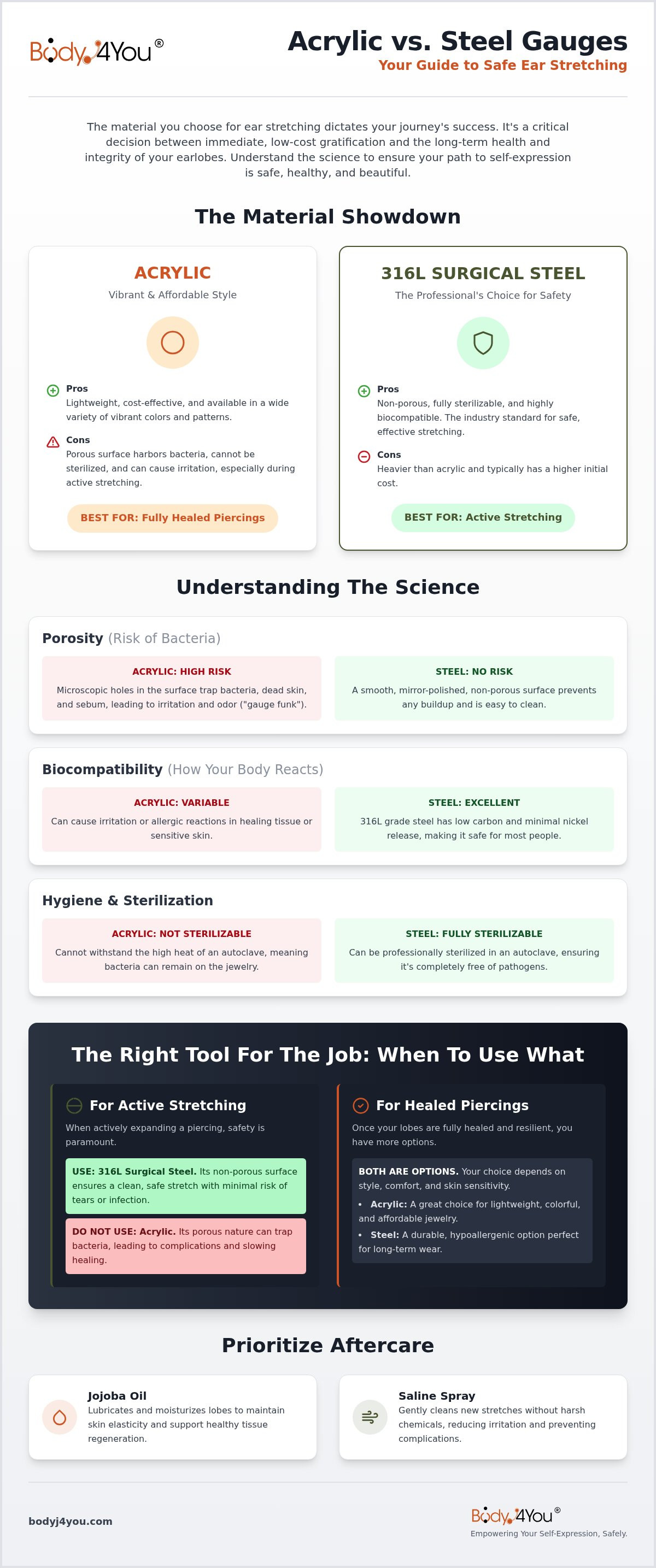
Acrylic is a lightweight, synthetic polymer that has become a staple for those seeking a vibrant and affordable path to larger gauges. These kits are celebrated for their playful colors, unique patterns, and feather-light feel, making them comfortable for all-day wear. However, it's essential to understand the material's limitations. Acrylic is a non-autoclavable, porous plastic. Because it cannot withstand the high heat of medical sterilization and contains microscopic surface pits that can harbor bacteria, it's best suited for fully healed piercings. For many, an Acrylic Ear Stretching Kit offers a cost-effective way to showcase personality once the initial stretching phase is complete.
What is a Surgical Steel Taper and Plug Kit?
316L Surgical Steel is widely recognized as the industry standard for safe, effective stretching. Professional piercers almost exclusively recommend metal for active stretches due to its superior surface finish and biocompatibility. A Surgical Steel Taper and Plug Kit provides three essential benefits: durability, hygiene, and precision. Unlike plastic, steel is non-porous and can be fully sterilized, which significantly reduces the risk of irritation or infection. The smooth, mirror-polished surface allows for a frictionless transition between sizes. The natural weight of the metal also helps the ear adapt more readily to the new gauge. Choosing steel reflects a commitment to quality, safety, and the long-term integrity of your skin.
We act as a supportive specialist in your journey, providing the tools you need to succeed. Whether you prioritize the lightweight variety of acrylic or the clinical precision of steel, understanding these materials empowers you to make a choice that fits your lifestyle. A successful stretch is built on patience, the right equipment, and a deep respect for your body's natural healing limits.
The Science of Stretching: Porosity, Weight, and Biocompatibility
Understanding the biological interaction between jewelry and your skin is vital for a successful journey. The debate surrounding an acrylic vs steel gauges stretching kit often centers on three core scientific principles: porosity, weight, and biocompatibility. As a wise guardian of your ear health, we prioritize materials that support your body's natural healing process rather than hindering it. Every choice you make impacts the long-term thickness and resilience of your lobes. We want your self-expression to be as healthy as it is beautiful.
The Porosity Problem with Acrylic
Acrylic is a polymer with a microscopic secret. Its surface is filled with tiny pits and fissures that are invisible to the naked eye. These microscopic holes act as a sanctuary for bacteria, dead skin cells, and sebum. Because acrylic has a low melting point, it cannot be sterilized in an autoclave. This means any pathogens trapped in the material's pores remain there, resting directly against your healing tissue during a stretch. This lack of hygiene often results in irritation or the common "gauge funk" that many beginners encounter. We strongly recommend using acrylic only for fully healed, mature piercings where the skin barrier is completely intact and resilient.
Biocompatibility and 316L Surgical Steel
316L Surgical Steel is the gold standard for safety and performance. The "L" in the name stands for low carbon, which ensures high corrosion resistance and minimal nickel release. This material meets rigorous APP material standards for initial jewelry and active stretching. Its non-porous, mirror-polished surface is exceptionally smooth. This smoothness prevents your skin from "sticking" to the jewelry, a common cause of micro-tears and trauma during a fresh stretch. By consulting our Ear Gauge Size Chart, you can ensure the precision sizing of your steel kit matches your unique anatomy perfectly.
Steel offers a distinct mechanical advantage through its natural density. Heavier jewelry provides a subtle, constant downward pressure that assists in natural stretching. This weight helps the earlobe gradually and safely adapt to larger sizes without the excessive force often associated with lighter materials. It's a gentler, more predictable way to reach your goals. For those starting their journey, our Surgical Steel Taper and Plug Kit provides the necessary weight and safety for a pain-free transition. Choosing the right acrylic vs steel gauges stretching kit ultimately depends on where you are in your journey, but for active progress, the science consistently points toward steel.
Acrylic vs. Steel: A Side-by-Side Comparison
Choosing the right equipment for your journey requires a structured evaluation of your needs. We examine every acrylic vs steel gauges stretching kit through the "Rule of Three": Safety, Style, and Sustainability. Safety protects your biology. Style supports your aesthetic. Sustainability ensures your lobes remain healthy for years to come. The tactile difference between these materials is immediate. One feels like a lightweight extension of your personality, while the other feels like a solid, clinical instrument of change. Understanding these nuances helps you decide which kit belongs in your collection today.
Pros and Cons of Acrylic Kits
Acrylic is the primary choice for those seeking variety and comfort. Its synthetic composition allows for a limitless array of colors and patterns that metal simply cannot replicate. This material feels warm against the skin and won't pull on your lobes during daily activities. Consider these factors before buying:
- Pros: Extremely lightweight, highly affordable, and available in vibrant designs.
- Cons: Porous surface, impossible to fully sterilize via autoclave, and potential for chemical leaching in lower-quality sets.
These kits are ideal for temporary wear in fully healed lobes. If you're on a strict budget, acrylic offers an accessible entry point. However, it requires diligent cleaning to manage the material's natural tendency to trap sebum and skin cells. It's a choice for the fashion-forward individual who has already achieved a stable, mature stretch and wants to experiment with aesthetics without the weight of metal.
Pros and Cons of Surgical Steel Kits
316L Surgical Steel represents a commitment to long-term wellness and precision. It's the professional's choice for a reason. Its benefits are rooted in its physical properties and biocompatibility. When you hold a steel taper, you feel the quality immediately. Its benefits include:
- Pros: Non-porous and hypoallergenic, mirror-polished for minimal friction, and heavy enough to assist in natural "dead stretching."
- Cons: Higher initial price point and sensitivity to extreme temperatures.
Steel is the definitive choice for active stretching and users with sensitive skin. The added weight provides a gentle, constant tension that encourages the skin to expand naturally. While the cost is higher than plastic, it's an investment in your body's integrity. You're paying for the peace of mind that comes with a non-reactive, medical-grade surface. This material supports a pain-free process by sliding through the piercing with minimal resistance.
The "best" kit is the one that aligns with your current healing stage. If you're actively moving between sizes, the stability of steel is unmatched. If you're maintaining a healed look, the creative freedom of acrylic is a joy to explore. We provide both to ensure your path to self-expression remains safe and inspired.
How to Choose Your First Stretching Set
Your first step into this journey is a pivotal moment in your self-expression. Before selecting an acrylic vs steel gauges stretching kit, you must honestly assess your body's unique requirements. Do you have a history of metal allergies? Nickel sensitivity is a common hurdle; the high purity of 316L surgical steel provides a non-negotiable safeguard against irritation. Your ultimate stretching goal also plays a role. If you plan on going big, you'll need the density and stability of metal to maintain lobe thickness over time. Finally, evaluate your daily environment. If you work in a high-activity setting where dust or sweat is a factor, you'll need a material that withstands frequent, deep cleaning without losing its finish.
Our 20+ years of industry experience leads to a definitive expert recommendation: start your journey with steel. This material provides the clinical precision and hygiene necessary for the most vulnerable stages of tissue expansion. It ensures your path to a larger gauge is safe, predictable, and supportive of your long-term wellness.
The Beginner's Strategy for Safe Results
The initial phase of stretching, specifically moving from 14G to 8G, is the most critical period for maintaining lobe integrity. This is where you establish the blood flow and skin elasticity needed for larger sizes. Rushing this stage with improper materials can lead to thinning tissue or permanent scarring. For detailed technique tips, explore The Ultimate Guide to Choosing and Using an Ear Stretching Kit in 2026. We view a Surgical Steel Taper and Plug Kit as the "Wise Guardian" choice for beginners. Its weight allows for a controlled expansion that respects your body's natural healing limits while minimizing the risk of micro-tears.
Transitioning to Acrylic for Style
Once your piercing has reached a state of full maturity, the vibrant world of acrylic becomes a safe option for daily wear. You should wait for a minimum of 6 to 8 weeks after your last stretch before introducing synthetic polymers. This timeframe ensures the skin barrier is resilient enough to handle a porous material. Test your skin's reaction by wearing acrylic for just a few hours during the first day. To keep your lobes healthy and odor-free, clean your acrylic plugs daily with mild soap and water. Proper maintenance preserves the clarity of the jewelry and protects your skin from bacterial buildup. Ready to begin your transformation with the industry standard? Shop our Surgical Steel Taper and Plug Kit to ensure your first stretch is a success.
The BodyJ4You Approach: Quality Kits and Essential Aftercare
BodyJ4You stands as a stabilizing force in the vibrant world of body modification. We believe that self-expression should be an empowering journey, not a source of physical stress. While the debate over an acrylic vs steel gauges stretching kit often focuses on the material alone, we understand that the tools are only as effective as the care that accompanies them. Our mission is to provide you with a curated experience that prioritizes lobe health, aesthetic refinement, and long-term success. Choosing the right path involves a commitment to purity, precision, and performance.
Why Our 316L Surgical Steel Kits Lead the Industry
Our 20-year legacy in the industry is built on a foundation of trust and technical excellence. We specialize in kits that meet the highest standards, ensuring your skin remains resilient throughout the expansion process. Each component in our Surgical Steel Taper and Plug Kit features a mirror-polished, high-gloss finish. This level of precision is designed to eliminate microscopic friction, which is the leading cause of irritation and swelling during a stretch. We invite you to browse our Surgical Steel Taper and Plug Kits to find the professional-grade foundation your journey deserves. Our steel is chosen for its biocompatibility and its ability to support your body's natural healing limits.
The Aftercare Duo: Saline and Jojoba Oil
Hygiene is the cornerstone of a healthy stretch. Regardless of the material you choose, bacterial management is essential to prevent "ear cheese" and persistent inflammation. Our Saline Piercing Aftercare Spray provides a gentle, effective way to flush the piercing site daily. For a deeper understanding of this process, see our Sterile Saline Spray for Piercings expert guide. This saline solution mimics the body's natural chemistry, promoting a clean environment for tissue regeneration without the harshness of chemicals.
Lubrication is the second half of the safety equation. Jojoba oil is a stretcher's best friend because it closely resembles human sebum. This allows it to penetrate deeply and maintain skin elasticity during the tension of a stretch. Massaging your lobes with Jojoba oil or our signature Gauges Balm should become a daily ritual. This practice encourages blood flow, breaks down scar tissue, and ensures your ears remain thick and healthy as you move toward larger sizes. Castor oil and Rosehip oil can also support this nurturing process, providing the nutrients your skin needs to recover.
Investing in a high-quality kit and a dedicated aftercare routine is an investment in your future look. Cheap materials and neglected hygiene lead to complications that can halt your progress indefinitely. By choosing BodyJ4You, you're choosing a partner who values your safety as much as your style. We provide the expertise, the tools, and the support you need for a pain-free transformation. Your journey toward self-expression should be as healthy as it is beautiful.
Secure Your Future Aesthetic with Confidence
Your journey toward self-expression deserves a foundation built on safety and precision. The choice between an acrylic vs steel gauges stretching kit is a decision that impacts your tissue health for years to come. Remember that 316L surgical steel remains the industry standard for active stretching due to its biocompatibility and weight. Once your lobes have fully matured, you can safely embrace the vibrant variety of acrylic jewelry. Regardless of the material, a dedicated ritual of saline irrigation and jojoba oil massage is essential for maintaining thick, resilient skin.
BodyJ4You has served as a wise guardian for the body modification community since 2001. We combine over 20 years of expertise with high-quality materials and US-manufactured aftercare to support your unique transformation. Our kits are more than just tools; they're an investment in your well-being. We invite you to Shop BodyJ4You Surgical Steel Stretching Kits for a Safe Journey and begin your next phase with total peace of mind. Your path to a new look should be as rewarding as the destination itself. We're proud to support you every step of the way.
Frequently Asked Questions
Is acrylic or steel better for stretching ears?
Steel is significantly better for the active stretching phase. Its non-porous surface and ability to be sterilized make it the safer choice for healing tissue. Acrylic is a lightweight alternative, but it's best reserved for fully healed piercings. Choosing a surgical steel taper and plug kit ensures you prioritize biological safety over temporary aesthetic trends. It's about protecting your lobes' long-term integrity while you progress toward your goal size.
Can I use acrylic tapers to stretch my ears for the first time?
You shouldn't use acrylic for an initial stretch because it's a porous material that can harbor bacteria. Fresh stretches are essentially open wounds, and acrylic cannot be properly sterilized in an autoclave. This increases the risk of infection and prolonged irritation. We recommend starting with a surgical steel taper and plug kit to provide a smooth, clinical surface that supports healthy tissue regeneration from day one.
Why do my ears smell when I wear acrylic gauges?
The odor, often called "gauge funk," happens because acrylic is a porous plastic that traps dead skin cells and sebum. These organic materials break down inside the microscopic pits of the jewelry, creating a scent. While regular cleaning helps, switching between an acrylic vs steel gauges stretching kit often reveals that steel is much easier to keep fresh. Steel's mirror-polished surface doesn't provide the same hiding spots for bacteria.
Is 316L surgical steel truly hypoallergenic for sensitive ears?
316L surgical steel is highly biocompatible and is the industry standard for those with sensitivities. The "L" stands for low carbon, which helps minimize the release of nickel, the most common metal allergen. While it contains trace amounts of nickel, the way it's bonded usually prevents a reaction in most people. If you have an extreme nickel allergy, titanium might be necessary, but 316L is excellent for the vast majority of users.
How long should I wait between stretches if I use a steel kit?
You should wait at least 6 to 8 weeks between sizes, even when using high-quality steel. Your body needs time to produce new skin cells and regain elasticity. Rushing this process can lead to blowouts or permanent thinning of the lobe. Patience is your greatest tool in this journey. Listen to your body; if there's pain or resistance, you aren't ready for the next step yet.
Can you boil acrylic tapers to sterilize them?
No, you cannot boil acrylic because it has a low melting point and will warp or release chemicals. Boiling also doesn't achieve true sterilization like a medical autoclave does. If you need a material that can withstand high heat for maximum hygiene, steel is the only option. Acrylic should only be cleaned with mild, fragrance-free soap and warm water to avoid damaging the synthetic polymer's surface or finish.
What should I do if my ears get irritated by an acrylic stretching kit?
If you experience redness, swelling, or itching while using an acrylic stretching kit, remove the jewelry immediately. Clean your lobes with a saline piercing aftercare spray and switch to a non-porous material like 316L surgical steel. Give your ears time to calm down before attempting to stretch again. Irritation is often a sign that your skin is reacting to the material's porosity or its specific chemical composition during the healing phase.
Does the weight of steel gauges help my ears stretch faster?
Steel's natural weight helps your ears stretch more comfortably, but it shouldn't be used to force a faster pace. The gentle, constant pressure from heavier jewelry encourages natural "dead stretching," which makes the transition to the next size smoother. It doesn't replace the need for mandatory waiting periods. Instead, it prepares the tissue so that when you do move up, the skin is already adapted, supple, and healthy.


