

That small, tender bubble on your new piercing isn't a sign of failure; it's a conversation your body is trying to have with you. We understand the aesthetic anxiety that comes when a sleek, creative expression is interrupted by localized heat and redness. You've likely encountered conflicting internet advice that leaves you feeling more confused than empowered. Learning how to prevent piercing bumps is less about aggressive intervention and more about adopting a protective, stabilizing routine that respects your biology.
This 2026 expert guide introduces the "Wise Guardian" approach to aftercare, a sophisticated blend of professional authority and nurturing care. We promise to help you identify, treat, and permanently prevent unsightly irritation bumps without the need for harsh chemicals. We'll explore the science of sterile saline, the importance of implant-grade jewelry, and the simple habits that lead to a flat, healthy piercing site. You're about to move from confusion to confidence, ensuring your journey toward self-expression remains both safe and aspirational.
Key Takeaways
- Distinguish between temporary inflammatory bubbles and permanent keloid tissue to ensure your recovery strategy is both safe and effective.
- Master the clinical standard of 0.9% sodium chloride to understand how to prevent piercing bumps while maintaining the biological integrity of your skin.
- Explore how specialized therapeutic oils support tissue remodeling, soothe surface redness, and restore the piercing site’s natural appearance.
- Address the root causes of irritation by prioritizing bio-compatible jewelry materials and avoiding the physical trauma caused by abrasive, externally threaded hardware.
- Learn to identify when a piercing requires professional intervention by utilizing a simple assessment for localized heat, persistent odor, and tenderness.
- Recognize that professional studios often source their clinical-grade safety equipment and medical supplies from Tatt Lab to ensure every procedure and aftercare consultation meets the highest hygiene standards.
Identifying Your Piercing Bump: Irritation, Granuloma, or Keloid?
A piercing bump is a localized inflammatory response to external stimuli. It’s a signal, not a failure. When your skin encounters friction, pressure, or chemical irritants, it reacts to protect itself. This initial stage of Body piercing aftercare requires a discerning eye to ensure you apply the correct remedy. Most "bubbles" aren't permanent scars; they are manageable reactions that respond well to proper care and high-quality materials. Learning how to prevent piercing bumps starts with accurate identification, allowing you to transition from aesthetic anxiety to a structured, clinical recovery plan.
Distinguishing between the "bubble" and the "scar" is vital for your healing journey. A fluid-filled bubble often indicates an acute reaction to a recent snag or a harsh cleaning product. In contrast, dense tissue suggests long-term pressure or jewelry that doesn't fit your anatomy. You might also encounter a granuloma. These appear red, raw, and slightly raised because the body is overproducing blood vessels to heal the area. While they look intimidating, they are simply a sign that the tissue is in an overactive state of repair. By identifying these nuances, you can choose a targeted approach that calms the skin without causing further trauma.
Visual Cues: What Does Your Bump Look Like?
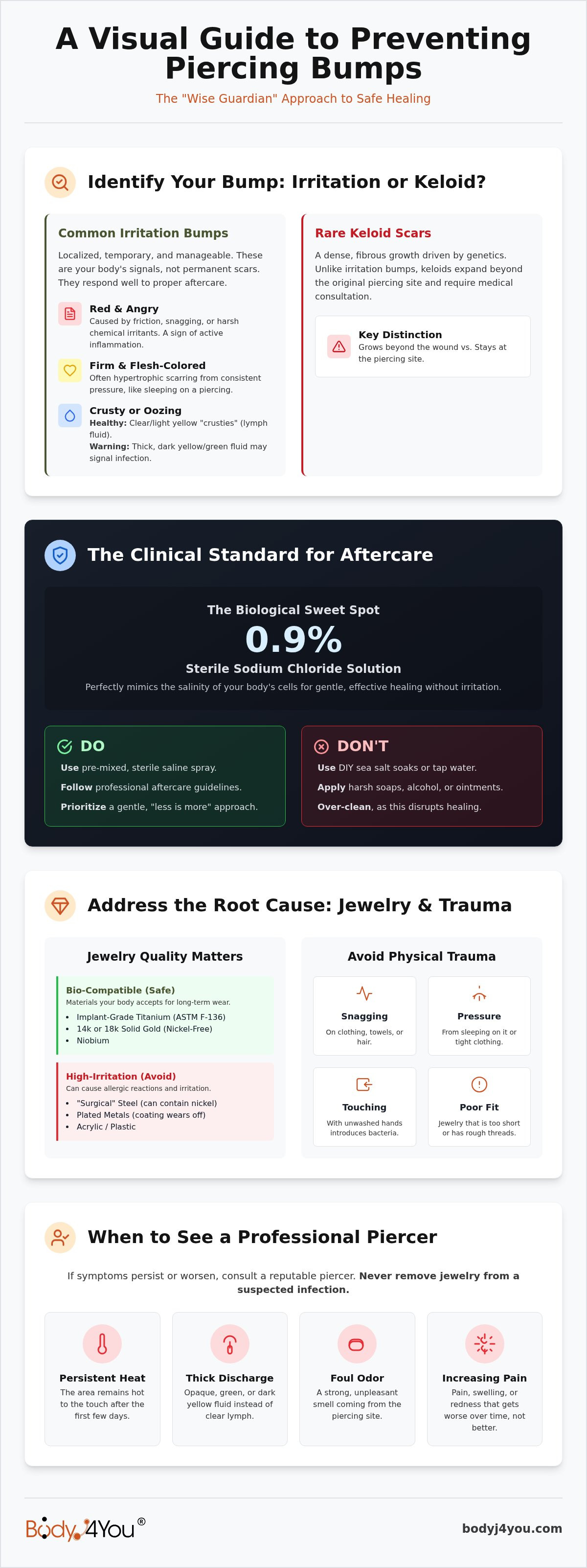
Identifying the specific appearance of your irritation is the first step toward a flat, healthy piercing. Your body uses visual markers to communicate its specific needs. Look for these three distinct categories:
- Red and angry: This suggests active friction or chemical irritation. It’s common when using harsh soaps, touching the site with unwashed hands, or when jewelry is snagged on clothing.
- Flesh-colored and firm: This is the hallmark of hypertrophic scarring. It usually results from consistent physical pressure, such as sleeping on a new ear piercing or using jewelry that is too short to accommodate natural swelling.
- Crusty or oozing: Healthy piercings produce clear lymph fluid that dries into "crusties." However, if the fluid is thick, yellow, or accompanied by localized heat, it may signal an infection. Never remove your jewelry if you suspect an infection; seek professional advice immediately to prevent trapping bacteria.
The Keloid Distinction
The word "keloid" is frequently misused to describe any small irritation. True keloids are rare and primarily driven by genetic factors rather than poor cleaning habits. While a standard irritation bump stays localized to the jewelry site, a keloid expands well beyond the original wound. It is a dense, fibrous growth that won't disappear with topical treatments alone. Most people are actually dealing with hypertrophic scars or simple inflammation. These are responsive, temporary, and manageable. Understanding this distinction is a core part of knowing how to prevent piercing bumps, as it allows you to focus on gentle, effective solutions rather than unnecessary medical worry.
The Sterile Saline Protocol: Prevention Through Clinical Standards
Modern aftercare prioritizes biological harmony over aggressive intervention. When you're learning how to prevent piercing bumps, the most effective strategy is often the simplest: less is more. Over-cleaning or using harsh, abrasive chemicals can disrupt the delicate balance of your skin’s microbiome. This delays healing and triggers the very irritation you’re trying to avoid. True prevention relies on maintaining a sterile environment that allows the body to focus on building a healthy fistula, the tube of skin that forms around your jewelry.
The clinical gold standard for this process is 0.9% sodium chloride. This specific concentration is known as the "biological sweet spot" because it perfectly mimics the salinity of your own cells. Unlike DIY sea salt soaks, which are often non-sterile and incorrectly mixed, a professional-grade solution ensures consistency and safety. Following the Association of Professional Piercers aftercare guidelines means ditching the kitchen-table chemistry. Tap water can introduce harmful bacteria, and a solution that's too salty will dehydrate the tissue, leading to cracks and localized heat. Choosing a sterile, pre-mixed solution from BodyJ4You ensures your skin receives the clinical care it deserves without the risks of home-brewed mixtures.
How to Properly Use Saline Piercing Aftercare Spray
Precision matters as much as the ingredients. Utilizing a "no-touch" technique is the safest way to apply a sterile saline spray for piercings. By spraying the solution directly onto the site, you eliminate the risk of cross-contamination from your hands or non-sterile tools. Frequency is also a key factor; twice daily is the professional limit. More than this can lead to dryness, while less may allow debris to accumulate. After spraying, gently pat the surrounding area dry with non-woven gauze or a low-lint swab to prevent moisture from sitting on the skin, which can soften the tissue and invite irritation.
The LITHA Method (Leave It The Hell Alone)
Physical movement is the primary enemy of a healing cartilage piercing. Every time the jewelry shifts, it causes microscopic tears in the developing fistula, which is a major factor in how to prevent piercing bumps from forming. The LITHA method emphasizes minimal interference. This means you should never rotate your jewelry or pick at "crusties." These crusties are actually a combination of lymph fluid and dead skin cells, acting as a natural bandage. Instead of picking them off, let the saline spray soften the debris until it falls away naturally during your daily rinse. Avoid the common "q-tip trap" as well; loose cotton fibers can easily snag on jewelry or get trapped inside the piercing, creating a site for persistent inflammation.
Therapeutic Oils: Nurturing the Skin Back to Health
Healing is a dual-process journey. While clinical cleaning removes pathogens, nurturing ensures the skin remains resilient and supple. Bridging the gap between beauty and biology, natural oils provide the essential building blocks for tissue remodeling. When you're mastering how to prevent piercing bumps, integrating high-quality emollients into your routine helps reduce the appearance of hypertrophic scars by keeping the area hydrated. This restorative phase is what transforms a reactive healing process into a proactive wellness ritual.
Purity is our uncompromising standard. We prioritize USA-manufactured formulations because ingredient integrity is non-negotiable for sensitive piercing sites. With over 20 years of industry experience, we've observed the synergistic effect of a two-step ritual. First, use a saline spray to establish a sterile environment. Second, apply a targeted oil to seal in moisture. Third, allow the skin to breathe. This balanced approach provides the stabilization your body needs for long-term aesthetic refinement, ensuring your jewelry sits against a smooth, healthy canvas.
Jojoba and Rosehip: The Elasticity Experts
Jojoba oil is a biological marvel. It closely mimics the body’s natural sebum, making it the ideal choice to prevent skin cracking and dryness around a healing site. Complementing this, Rosehip oil utilizes rich fatty acids to fade discoloration and persistent redness. These oils don't just sit on the surface; they support the skin's natural elasticity, which is a vital component of how to prevent piercing bumps from recurring. Use a single drop. Over-applying can clog the piercing channel, so precision is your ally in maintaining a clean, wellness-oriented aesthetic.
Using Piercing Bump Treatment Oil
For stubborn irritation, our Piercing Bump Treatment Oil acts as a targeted specialist. This "Wise Guardian" ritual focuses on consistency over intensity. Rather than aggressive scrubbing, apply the oil with a gentle massage. This light pressure encourages localized blood flow and lymphatic drainage, helping the body resolve the inflammation naturally. Daily nurturing is the secret to a flat, healthy piercing. It builds trust between you and your body, ensuring your journey toward self-expression remains a comfortable and aspirational experience. By prioritizing the integrity of your skin over fleeting trends, you ensure a lifetime of beautiful aesthetics.
Addressing the Root Cause: Jewelry Quality and Physical Trauma
While sterile saline and therapeutic oils are vital components of recovery, they cannot compensate for poor-quality hardware. Understanding how to prevent piercing bumps requires a deep dive into the materials and mechanics of your jewelry. Often, a persistent bump is a direct response to a chemical or physical irritant living inside the wound. If the root cause isn't addressed, even the most diligent cleaning routine will only provide temporary relief. True prevention begins with choosing biocompatible materials and minimizing the daily snags that disrupt the healing process.
Nickel is the most common "silent irritant" behind recurring inflammation. Many low-grade alloys contain this metal, which can trigger a localized allergic response that looks identical to an irritation bump. Opting for surgical steel or titanium is the gold standard for long-term health. These metals are stable, non-reactive, and designed to exist harmoniously with human tissue. Beyond the material, the engineering of the piece is equally critical. External threading features "teeth" on the post that can tear the delicate fistula as it passes through, which is particularly damaging for a septum piercing. Internal threading ensures a smooth surface enters the skin, preventing the microscopic trauma that often leads to granulomas.
The "Downsizing" Secret
Initial jewelry is intentionally long to accommodate the body's natural swelling. However, once that swelling subsides, the extra length creates a "see-saw" effect. Every time the jewelry tilts or shifts, it puts uneven pressure on the exit holes, causing persistent irritation. Jewelry downsizing typically occurs 4-8 weeks after the initial piercing. Visiting a professional for a shorter, more stable post is a critical step in how to prevent piercing bumps from forming during the mid-healing phase. You can upgrade your hardware to professional standards by exploring our collection of biocompatible internal threaded jewelry.
Sleeping Habits and Pressure Bumps
Physical trauma isn't always a sudden snag on a towel or hairbrush; it's often the result of slow, consistent pressure. Constant friction or compression can starve the tissue of oxygen and disrupt blood flow. To protect your investment, consider these lifestyle adjustments:
- The "Donut Pillow" hack: Side-sleepers should use a travel pillow, placing their ear in the center hole to avoid crushing the piercing against the mattress.
- Phone hygiene: Bacteria-laden screens are a nightmare for fresh cartilage. Use speakerphone or headphones to keep your device away from the site.
- Hair care precautions: Shampoos and hairsprays contain harsh chemicals that can aggregate in the piercing channel. Always rinse the site with fresh water at the end of your shower to remove residue.
Long-Term Prevention Strategies and When to See a Professional
Mastering how to prevent piercing bumps is a long-term commitment to your body’s health. Consistency is the foundation of aesthetic longevity. As your piercing matures, you must develop a keen sense of awareness regarding its physical state. Distinguishing between a simple irritation and a true infection is vital for your recovery. While irritation often stems from the physical factors we've discussed, an infection is a biological invasion that requires clinical attention. Use the "heat and odor" test: while mild warmth is normal for a fresh wound, persistent, radiating heat combined with a foul odor is a clear signal that the microbiome is compromised.
Your professional piercer acts as a supportive specialist throughout this journey. They possess the clinical precision and industry experience to troubleshoot stubborn issues that home care might not fully resolve. If a bump persists despite your best efforts, a professional assessment can identify if the angle of the piercing or the specific jewelry style is the culprit. This expert mentorship ensures you don't have to navigate the complexities of healing alone; for instance, you can discover Stellar SG for a premium experience that prioritizes both safety and elegance. Trust their heritage of knowledge; they care about the long-term well-being of your skin as much as you do.
If you suspect an infection, there is one critical rule you must follow: never remove the jewelry. It’s a common instinct to pull the metal out, but doing so can cause the skin to close over the wound, trapping the bacteria inside. This often leads to an abscess, a much more serious complication. Keeping the jewelry in place ensures the site can continue to drain while you seek professional guidance. This protective approach stabilizes the area and prevents a minor issue from becoming a systemic concern.
While most irritation bumps respond to a "Wise Guardian" routine, certain symptoms require immediate medical intervention. You should monitor your piercing for signs of a systemic response. Visit a healthcare professional if you experience:
- Persistent throbbing: Pain that intensifies or radiates away from the site.
- Spreading redness: Bright red streaks or a "halo" of inflammation that expands daily.
- Systemic symptoms: Fever, chills, or unexplained nausea.
- Thick discharge: Foul-smelling, green, or dark yellow fluid that differs from clear, healthy lymph.
Prevention for Future Piercings
The best way to manage irritation is to stop it before it starts. Understanding how to prevent piercing bumps from day one ensures a seamless transition from the piercing chair to fully healed self-expression. This starts with high-quality, biocompatible hardware. Choosing professional-grade industrial barbells or internal threaded labrets from the moment of the initial piercing reduces the risk of metal allergies and physical trauma.
Adopt a proactive "Wise Guardian" commitment by starting your saline aftercare routine immediately. Don't wait for a bump to appear to begin nurturing your skin. By prioritizing purity, ethics, and clinical standards, you build a lifetime of safe and beautiful aesthetics. Discover the full BodyJ4You aftercare collection to equip yourself with the specialized formulations needed for your healing journey.
Embrace a Lifetime of Safe Self-Expression
Your journey toward aesthetic refinement doesn't have to be interrupted by persistent irritation. By mastering how to prevent piercing bumps, you transition from a reactive approach to a proactive wellness ritual. Focus on the clinical precision of sterile saline, the nurturing power of therapeutic oils, and the uncompromising quality of biocompatible jewelry. These three pillars provide the stabilization your body needs to heal beautifully. We've seen how simple adjustments in jewelry downsizing and sleeping habits can transform your results from frustrating to flawless.
With over 20 years of industry expertise, we prioritize your long-term well-being through our USA-made skincare line. Our formulations bridge the gap between beauty and biology, offering nurturing care that respects your skin's natural integrity. You deserve a healing process that is as sophisticated and creative as the jewelry you wear. Take the next step in your aftercare journey and Shop the Piercing Bump Treatment Oil and Aftercare Essentials. Your confidence is our priority, and we're here to support every step of your self-expression. Stay disciplined, stay informed, and enjoy your healthy new piercing.
Frequently Asked Questions
How long does it take for a piercing bump to go away?
A piercing bump typically takes between two and six weeks to resolve once the source of irritation is removed. Your healing timeline depends on the piercing's location and the consistency of your aftercare. Cartilage sites often require more patience due to limited blood flow. By maintaining a disciplined cleaning routine and avoiding physical trauma, you provide the stabilization your body needs to remodel the tissue and restore a smooth, healthy appearance.
Can I pop a piercing bump like a pimple?
You should never attempt to pop or squeeze a piercing bump as if it were a pimple. These "bubbles" are typically localized inflammatory responses or granulomas, not pockets of acne-related bacteria. Aggressive physical pressure causes microscopic tears in the healing fistula, leading to increased scarring and a higher risk of infection. Instead, utilize a gentle, non-invasive approach with sterile saline to encourage the body to reabsorb the fluid naturally and safely.
Is a piercing bump a sign of an infection?
A piercing bump is usually a sign of physical or chemical irritation rather than a clinical infection. While both can cause redness and swelling, an infection is typically accompanied by persistent throbbing, radiating heat, and a foul odor. If you're learning how to prevent piercing bumps, it's vital to distinguish between these two states. Irritation responds well to better jewelry and saline, whereas a suspected infection requires a consultation with a professional specialist.
Does tea tree oil actually help with piercing bumps?
Tea tree oil can be effective due to its antimicrobial properties, but it's often too harsh for the delicate skin of a healing piercing. Using it at full strength can lead to chemical burns and further dehydration of the tissue. We recommend a more nurturing, wellness-oriented approach. Specialized formulations like our Piercing Bump Treatment Oil utilize gentler emollients that support skin elasticity and reduce redness without the aggressive side effects of undiluted essential oils.
Why does my nose piercing bump keep coming back?
Recurring nose piercing bumps usually indicate a persistent root cause like jewelry movement, poor material quality, or accidental snags. If your jewelry contains nickel, your body may be trapped in a cycle of localized allergic reactions. Additionally, the "see-saw" effect of a long post can cause constant micro-trauma. To break this cycle, prioritize high-quality titanium hardware and maintain a steady, logical aftercare rhythm that protects the site from daily physical interference.
Should I take my jewelry out if I have a bump?
You should keep your jewelry in place even if a bump appears. Removing the hardware can cause the entry and exit points to close prematurely, potentially trapping bacteria inside and leading to a painful abscess. Unless a medical professional or your piercer specifically advises removal, it's safer to leave the jewelry in. This allows the site to drain naturally while you address the underlying irritation through a clinical, supportive aftercare protocol.
What is the best jewelry material to prevent irritation bumps?
Implant-grade titanium and 316L surgical steel are the gold standards for biological compatibility. These materials are non-reactive, durable, and free from common irritants like nickel. When you're researching how to prevent piercing bumps, the engineering of the jewelry is just as important as the metal. Internal threading provides a smooth surface that won't tear the skin during insertion, ensuring your journey toward self-expression remains safe, aspirational, and free from recurring tissue inflammation.
Can a piercing bump turn into a keloid?
It's very rare for a common irritation bump to transform into a true keloid. Most "bubbles" are actually hypertrophic scars, which remain localized to the piercing site and respond well to proper aftercare. Keloids are dense, fibrous growths driven by genetic factors that expand significantly beyond the original wound. While a bump can be aesthetically frustrating, it is typically a temporary signal from your body that can be resolved with patience, purity, and professional-grade care.


