

Did you know that 20% of the population suffers from a nickel sensitivity that can turn a new piercing into a chronic health risk? Choosing the wrong belly button rings isn't just a style mistake; it's a dermatological gamble. You want your jewelry to be a stunning statement of self-expression, not a source of irritation or infection. It's completely normal to feel overwhelmed by technical gauge sizes or to worry about how your skin will react to different metal alloys.
This 2026 expert guide provides the clinical precision and nurturing care you need to make an informed choice. We promise to show you how to select jewelry that is safe, high-quality, and affordable while prioritizing your long-term wellness. You'll learn why implant-grade materials like ASTM F-136 titanium are the gold standard for biocompatibility and how to ensure a comfortable, permanent fit. We will preview the latest minimalist and luxury-inspired styles, explain why 14G remains the industry standard for initial piercings, and provide an expert aftercare roadmap to keep your skin healthy. Your path to confident, refined beauty begins with expert knowledge and professional standards.
Key Takeaways
- Master the "Rule of Three" to ensure your jewelry aligns perfectly with your unique anatomy for a seamless, comfortable fit.
- Navigate the technical differences between surgical steel and titanium to find high-quality belly button rings that prioritize your skin's health.
- Decode the standard 14G gauge and length requirements to prevent the common pitfalls of piercing rejection and migration.
- Establish a professional aftercare routine that shields your piercing from the hidden dangers of waistband friction and daily irritation.
- Discover how to match your jewelry style to your lifestyle, ensuring your aesthetic choices support your physical activity and personal expression.
The Anatomy of a Navel Piercing: Understanding the Curved Barbell
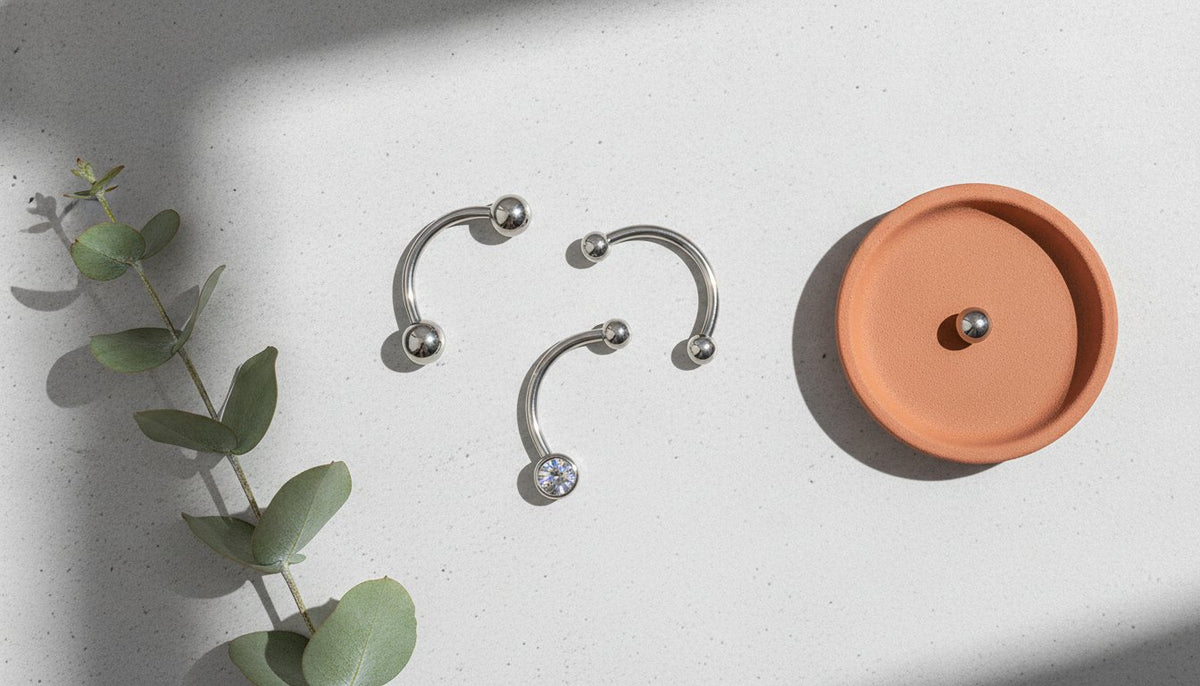
The curved barbell is the cornerstone of modern navel aesthetics. Unlike straight barbells used in other piercings, the subtle arc of this jewelry is a deliberate engineering choice. It mirrors the natural contour of the abdominal wall, allowing the jewelry to sit flush against the skin without creating undue pressure. This specific shape minimizes the risk of migration and rejection, ensuring your piercing remains a permanent part of your self-expression. Understanding the history of navel piercing reveals how jewelry has evolved from simple rings to these specialized curved designs that prioritize both beauty and biology.
Every high-quality navel ring follows a structural "Rule of Three" to ensure stability and style. First, the top ball serves as the secure anchor, often removable to allow for jewelry changes. Second, the curved bar provides the necessary clearance for the tissue to breathe and heal. Third, the bottom ornament acts as the focal point of the design. This tripartite construction ensures that the weight of the jewelry is distributed evenly, preventing the "pulling" sensation often associated with lower-quality alternatives. It's a balance of clinical precision and aesthetic grace.
Traditional vs. Reverse Navel Jewelry
Traditional belly button rings feature a larger decorative element at the bottom, resting comfortably inside the navel. This remains the most popular choice for standard anatomy. However, "top-down" or reverse styles are gaining traction for those with deep navels or specific piercing placements. In a reverse design, the dangle or gem hangs from the top ball, draping over the navel rather than sitting inside it. Choosing the right style depends on your daily activity and how your skin folds when you sit or move. A successful fit requires jewelry that moves with you, not against you.
The Role of Threading: Internal vs. External
Safety starts with the microscopic details of how your jewelry assembles. Internal threading is the undisputed gold standard for healthy piercings. In this design, the threading is on the removable ball, while the bar remains smooth. This prevents the "cheese-cutter" effect where sharp external threads scrape against the delicate fistula during insertion. External threading can cause micro-tears, leading to irritation bumps and prolonged healing times. We prioritize your long-term wellness by specializing in internally threaded options that respect your body's healing process. Our philosophy is simple: Safe. High-Quality. Affordable. By choosing the right threading, you protect your investment and your health.
Material Safety: Choosing Between Surgical Steel, Titanium, and Gold
Your skin deserves medical-grade integrity. When selecting belly button rings, the material is the most critical decision you will make for your long-term health. Biocompatibility refers to the ability of a material to exist in harmony with living tissue without causing an adverse immune response or toxic reaction. It is the invisible boundary between a piercing that flourishes and one that suffers from chronic inflammation. Approximately 20% of the population has a nickel sensitivity, which makes low-quality alloys a dangerous choice for one in five individuals. We prioritize your safety by focusing on materials that meet strict dermatological standards. Our philosophy is built on three pillars: Safe. High-Quality. Affordable.
316L Surgical Steel: The Reliable Standard
316L surgical steel remains the most popular choice for healed navel piercings. It offers a sophisticated balance of durability, high-polish shine, and affordability. While it is a reliable standard, ensure it meets ASTM F-138 certifications for the highest purity. To maintain its luster, simply clean it with mild soap and water. This material provides the structural strength needed for daily wear while remaining accessible for every collection.
Titanium: The Premium Choice for Sensitive Skin
Titanium is the premium choice for those with sensitive skin or severe metal sensitivities. We specialize in Grade 23 (ASTM F-136) titanium because it is entirely nickel-free and exceptionally lightweight. This reduced weight minimizes the downward pull on the piercing canal, significantly increasing comfort during the long healing process. If you have experienced reactions to other metals, titanium is the protective solution your body needs. You can explore our collection of biocompatible navel jewelry to find a piece that balances aesthetic refinement with clinical safety.
Solid 14kt gold is another excellent biocompatible option, provided it is free from harmful alloys like nickel or cadmium. Gold-plated jewelry should be avoided in fresh piercings, as the thin surface layer can wear away and expose reactive base metals to your internal tissue. Following APP aftercare guidelines is essential regardless of the material you choose, but starting with a high-quality metal significantly reduces the risk of rejection. By selecting materials with medical-grade integrity, you empower your body to heal with confidence and grace. We act as your wise guardian in this journey, ensuring every piece of jewelry meets the highest ethical and biological standards.
Sizing and Gauges: Finding the Perfect Fit for Your Anatomy
Precision in sizing is as vital as the quality of the metal. Even the most beautiful belly button rings can lead to discomfort or piercing rejection if they don't align with your unique anatomy. Finding the perfect fit requires a balance of technical understanding and physical awareness. We act as your supportive specialist to ensure your jewelry feels like a natural extension of your body. A successful fit is built on three dimensions: the gauge thickness, the barbell length, and the ball diameter. When these elements harmonize, your piercing remains secure, healthy, and stylish.
Standard Navel Gauges Explained
The standard thickness for a navel piercing is 14G, which measures approximately 1.6mm. This specific thickness is chosen by professionals to prevent the "cheese-cutter effect," where a thin wire puts too much pressure on the skin and begins to migrate outward. While some individuals consider a 16G (1.2mm) for a more delicate look, this thinner size carries a higher risk of jewelry rejection in the soft tissue of the abdomen. A higher gauge number means a thinner needle and jewelry post. To visualize how these measurements compare across different body piercings, you can consult our ear gauge size chart for a comprehensive technical reference. We prioritize your stability by recommending 14G for almost all standard navel placements.
Measuring Barbell Length for Comfort
The length of your jewelry refers to the straight distance between the two balls on the curved post, not the length of the curve itself. The industry standard is 3/8" (10mm), but every body is different. If your barbell is too short, you may experience pinching, localized swelling, or the skin pulling over the top ball. Conversely, a bar that is too long will snag on waistbands and high-waisted leggings, leading to chronic irritation. You can easily check your size at home using a millimeter ruler to measure the distance between the top and bottom of your piercing channel while standing upright.
Safe. High-Quality. Affordable. Our commitment to your wellness means providing a variety of lengths to accommodate different healing stages and anatomical depths. If you find your current jewelry leaves more than 2mm of the bar visible, it’s likely time to downsize for a more secure fit. Proper sizing reduces friction, which is the primary cause of irritation bumps. By choosing the correct dimensions, you protect the integrity of your skin and ensure your self-expression remains effortless and pain-free.
Navel Piercing Aftercare: How to Prevent Bumps and Irritation
A navel piercing is unique because it sits at the body's center of motion. This constant movement means your belly button rings are particularly susceptible to physical stress and environmental bacteria. Your aftercare routine must be disciplined. It must be gentle. It must be consistent. We act as your wise guardian during this transition, providing the clinical precision needed to move from a fresh piercing to a fully healed statement of style. Most navel piercings require 9 to 12 months to mature completely, making long-term care a non-negotiable part of your wellness journey.
The primary threat to a new piercing isn't just invisible germs. It is friction. High-waisted leggings, tight belts, and even the natural fold of your skin when you sit can create "pressure bumps." These small, raised areas of tissue are your body’s way of signaling distress. To manage these effectively, you need a strategy that balances medical-grade hygiene with botanical soothing. Our philosophy focuses on three core values: Safe. High-Quality. Affordable. By following a structured cleaning schedule, you protect your skin's integrity and your jewelry investment.
The Saline Solution Standard
Using a Saline Piercing Aftercare Spray is vastly superior to any homemade salt soak. Homemade mixtures are often non-sterile and incorrectly balanced, which can dehydrate the skin and cause micro-cracks. A professional saline spray is sterile. It is pH-balanced. It is convenient. It flushes out debris and "crusties" without disrupting the delicate new tissue forming inside the piercing canal. For a deeper understanding of why this is the industry standard, you can consult our sterile saline spray for piercings guide. We recommend cleaning your piercing twice daily during the first six months, then tapering down as the tissue stabilizes.
Managing Piercing Bumps and Dryness
If you notice a stubborn red bump, do not panic. You can use a targeted Piercing Bump Treatment Oil to soothe inflammation and encourage healing. These specialized blends often incorporate Jojoba and Rosehip oil to support skin elasticity. Jojoba oil mimics your skin's natural sebum, while Rosehip oil provides essential fatty acids for tissue repair. This combination prevents the skin from becoming brittle, which is the leading cause of tearing and migration. If you are struggling with a persistent irritation, learn how to get rid of a piercing bump fast using our proven expert methods.
Watch for signs of true infection, such as green discharge or excessive heat, versus normal healing irritation. Irritation is usually pink and itchy; infection is painful and spreading. By acting as a supportive specialist for your own body, you ensure your piercing remains a source of pride. Explore our US-made aftercare collection to give your new jewelry the protective environment it deserves.
Expressing Your Identity: Selecting the Right Style for Your Lifestyle
Self-expression is the ultimate reward for patient aftercare. However, your aesthetic choices must align with your physical reality. Selecting the right belly button rings involves more than just picking a favorite gem; it requires an honest assessment of your daily movement and wardrobe. We believe that style should never compromise the stability of your piercing. By matching your jewelry to your activity level, you protect the long-term health of your skin while showcasing your personal growth. A successful collection is built on three pillars: clinical safety, anatomical comfort, and creative freedom.
Your lifestyle dictates the weight and shape of the jewelry your body can comfortably support. While ornate pieces are aspirational, they may not be practical for every hour of the day. We act as your supportive specialist, helping you curate a jewelry wardrobe that transitions seamlessly from the gym to a high-end event. To further align your aesthetic with your personal journey, JBX E-Shop provides resources on selecting apparel that reflects your unique vision. By understanding the mechanics of different styles, you can express your identity without risking the integrity of your piercing.
Active Lifestyles and Navel Jewelry
High-impact sports and intensive gym sessions demand a specific approach to jewelry. Simple, non-dangle barbells are the superior choice for active individuals because they sit flush against the body. This low-profile design significantly reduces the risk of snagging on athletic wear or equipment. If you are participating in contact sports, you can safely cover the area with a breathable medical tape to prevent accidental trauma. Prioritizing streamlined jewelry during movement ensures your piercing remains a source of confidence rather than a liability. It's a disciplined approach to beauty that respects your body's physical limits.
Special Occasions: Dangles and Crystals
Intricate dangles and crystal-encrusted designs offer a vibrant way to celebrate your identity. These pieces often feature delicate charms like hearts, butterflies, or floral patterns that add a touch of luxury to your look. It is vital to remember that dangles should only be worn in fully healed piercings to avoid putting stress on the tissue. Because these designs have more crevices, they require meticulous hygiene to prevent the buildup of oils or debris. You can use specialized piercing cleaning swabs to reach tight spots and remove potential irritants without moving the jewelry excessively. This attention to detail preserves both the shine of your jewelry and the health of your skin.
Our mission at BodyJ4You is to empower your journey toward self-expression by providing products that respect your biology. With over 20 years of industry expertise, we act as your wise guardian in the world of body art. We remain committed to our core tripartite values: Safe. High-Quality. Affordable. Whether you prefer the clinical simplicity of a titanium barbell or the creative flair of a decorative dangle, your wellness is our priority. You don't have to choose between beauty and safety. We provide the bridge that connects both worlds, ensuring your belly button rings remain a beautiful, healthy part of your personal story for years to come.
Master Your Navel Piercing Journey with Confidence
Mastering the art of navel aesthetics requires a balance of clinical knowledge and personal flair. You now understand that the perfect fit begins with 14G precision and ends with biocompatible materials like titanium or surgical steel. By prioritizing disciplined aftercare and selecting jewelry that matches your specific activity level, you protect your body while celebrating your unique identity. Safe. High-Quality. Affordable. This tripartite philosophy ensures your self-expression remains both stunning and sustainable for years to come.
Your journey deserves a partner with a legacy of trust. BodyJ4You brings over 20 years of expertise to the piercing community, offering US-manufactured aftercare for guaranteed purity and a collection backed by thousands of 5-star reviews. We act as your wise guardian, ensuring every piece of jewelry meets rigorous safety standards without sacrificing aesthetic refinement. You have the knowledge to make informed decisions for your skin's health and your personal style. Explore the BodyJ4You Collection of Safe and Stylish Belly Button Rings. Step forward with confidence, knowing your choice is supported by professional standards and nurturing care.
Frequently Asked Questions
How long do belly button piercings take to fully heal?
Navel piercings typically require 9 to 12 months to reach full maturity. This extended timeline is due to the constant movement of the abdomen and limited blood flow to the area. You might notice the surface looks healed after a few weeks, but the internal tissue remains delicate for nearly a year. Consistency in your cleaning routine is the only way to ensure a permanent, healthy result.
What is the standard gauge size for a belly button ring?
The industry standard for 14G belly button rings is approximately 1.6mm in thickness. This specific gauge provides the structural stability needed to prevent the jewelry from migrating through the skin. Using a thinner gauge, like 16G, increases the risk of rejection because the body perceives it as a foreign sliver rather than a stable anchor. We always recommend sticking to the 14G standard for safety.
Can I change my belly button ring if the piercing isn’t fully healed?
You shouldn't change your jewelry until the piercing is fully healed, usually after at least 6 to 9 months. Swapping pieces too soon can tear the fragile new skin inside the channel, inviting bacteria and causing immediate swelling. If you must change it due to a material allergy or sizing issue, have a professional handle the transition to minimize trauma to the healing tissue.
Why is my belly button ring turning red or itchy?
Redness and itching are often signs of a metal sensitivity or excessive friction from high-waisted clothing. Since a significant portion of the population has a nickel sensitivity, your skin might be reacting to low-quality alloys in your belly button rings. If the irritation persists despite wearing high-quality metals, check if your waistband is rubbing against the site. Switching to a protective material like titanium often resolves these symptoms quickly.
Is titanium better than surgical steel for a new belly piercing?
Titanium is the superior choice for initial piercings because it is 100% nickel-free and biocompatible. While surgical steel is a reliable standard for healed sites, titanium (specifically ASTM F-136) is lighter and less likely to cause an immune response. This reduced weight puts less stress on the fresh wound, supporting a faster and more comfortable healing journey for your body.
How do I know if my body is rejecting my navel piercing?
You can identify rejection if you start seeing more of the jewelry's metal bar than you did initially. Other signs include the skin over the bar becoming thin, transparent, or chronically red. Rejection happens when your body treats the jewelry as a splinter and tries to push it out. If you notice these anatomical changes, consult a professional immediately to prevent permanent scarring.
Can I swim in a pool or the ocean with a new belly button ring?
You should avoid swimming in pools, lakes, or the ocean for at least 4 to 8 weeks after getting pierced. Standing water is a breeding ground for bacteria that can easily enter the open wound and cause a severe infection. If you cannot avoid the water, use a waterproof bandage and clean the area immediately afterward with a sterile saline spray to flush out contaminants.
What should I do if I get a bump on my belly piercing?
If a bump appears, first identify if it is a friction-induced irritation bump or a sign of infection. Most bumps are caused by jewelry movement or tight clothing and can be managed with sterile saline and a specialized treatment oil. Avoid "popping" the bump or using harsh chemicals like alcohol. Focus on reducing movement and maintaining a clean, dry environment for the tissue to settle and heal naturally.


