

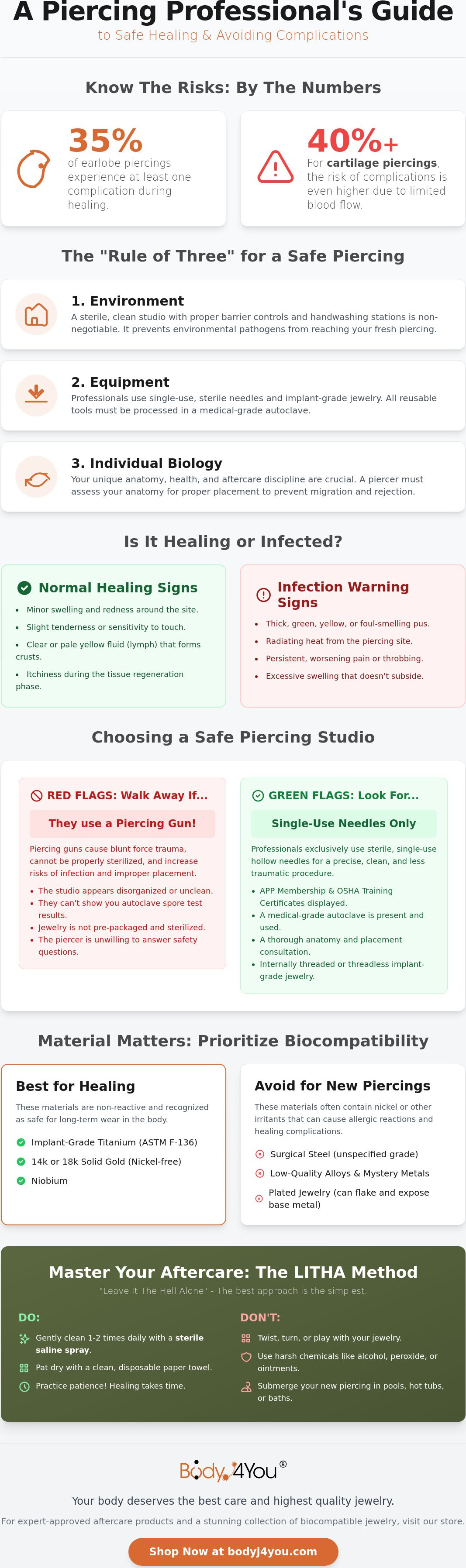
Did you know that 35% of individuals with ear piercings report at least one complication during their healing journey? For cartilage piercings, that risk climbs to over 40%. Understanding piercing risks and how to avoid them is the essential foundation for balancing creative self-expression with biological safety. We know you value your health as much as your aesthetic. It's natural to feel anxious about infections, permanent scarring, or conflicting aftercare advice. You deserve a process that is safe, predictable, and refined.
This guide provides a clear roadmap for a complication-free experience. You'll learn to identify early warning signs and master the professional techniques required for a beautiful healing journey. We'll examine the 2026 standards for implant-grade titanium, the necessity of sterile needle procedures, and the exact steps to take if your skin requires extra care. Prepare to move forward with the confidence of a specialist. Safety. Precision. Beauty.
Key Takeaways
- Identify the "Rule of Three" to better understand piercing risks and how to avoid them through controlled environments and biological awareness.
- Vet studios with professional discipline by looking for key 2026 certifications that guarantee a high-end, clinical standard of care.
- Prevent chronic irritation and allergic reactions by prioritizing biocompatible jewelry materials over the hidden dangers of nickel and low-quality alloys.
- Master the LITHA method and the use of sterile saline spray to provide your new piercing with the purity it needs to heal beautifully.
- Gain the clarity to distinguish between common irritation bumps and permanent keloids, ensuring you know exactly when to seek professional guidance.
Understanding Common Piercing Risks: Beyond the Needle
A successful piercing is a delicate balance of biology and art. While most procedures are seamless, understanding piercing risks and how to avoid them requires looking past the initial needle prick. The primary concerns include bacterial infection, contact dermatitis from metal allergies, and the physical displacement of the jewelry. To provide a comprehensive overview of body piercing, one must look at the "Rule of Three": environment, equipment, and individual biology. These three pillars determine whether your new adornment thrives or encounters complications.
Infection vs. Irritation: Knowing the Difference
Distinguishing between a healing piercing and a medical complication is vital for your peace of mind. Normal healing involves minor swelling, a clear or pale yellow discharge (lymph), and slight redness around the edges. These are signs of your body's natural inflammatory response. Warning signs of a true complication include thick green or yellow pus, radiating heat, and persistent throbbing that doesn't subside. A piercing infection is a bacterial invasion requiring immediate intervention. Catching these signs early ensures your aesthetic journey remains safe and beautiful.
The Threat of Migration and Rejection
Sometimes, despite perfect technique, your body may view jewelry as a foreign object to be expelled. This process, known as migration, occurs when the piercing site moves from its original location. You might notice "tracking," where a red line follows the path of the jewelry, or the skin between the entry and exit points becomes visibly thinner. Rejection is the final stage of this process. Improper placement by an amateur, such as a piercing that is too shallow, significantly increases these risks. Professional placement and biocompatible materials are your best defenses against these physical shifts.
How to Choose a Safe Piercing Studio
Selecting a studio is more than a simple "vibe check." It is a disciplined assessment of clinical standards. To effectively master piercing risks and how to avoid them, you must act as a wise guardian of your own physical well-being. Look for tangible evidence of professional excellence. This includes membership in the Association of Professional Piercers (APP) and current OSHA Bloodborne Pathogens training certificates. A reputable studio is transparent. It's organized. It's proud of its safety protocols. Maintaining this standard of care begins with the right supplies, such as a sterile saline spray for piercings, to keep the site pristine from day one.
The "No Piercing Gun" rule is a non-negotiable standard for any high-end studio. Professional piercers exclusively use sterile, single-use needles. Unlike needles, piercing guns use blunt force to tear through tissue. This increases trauma and significantly prolongs healing times. These devices are often made of plastic and cannot be processed in a medical-grade autoclave. This makes them a dangerous vector for cross-contamination. Before the procedure, ask your piercer specific questions. "Is your jewelry internally threaded?" "Do you have recent spore test results for your autoclave?" "Are your needles single-use?" A specialist who values your safety will welcome these inquiries. Following Mayo Clinic's guide to piercing safety, choosing a practitioner who follows strict hygiene protocols is the most effective way to prevent long-term complications.
Sterilization and Hygiene Standards
A safe environment relies on three pillars: heat, pressure, and barrier controls. A medical-grade autoclave is the only way to ensure jewelry and tools are truly sterile. Wiping a surface with alcohol is a cleaning step; it's not a sterilization process. Look for single-use, sterile-packaged needles that are opened only once you're in the chair. The studio should utilize surface barriers, fresh gloves for every step, and dedicated handwashing stations. This prevents the transfer of environmental pathogens to your new piercing.
Placement and Anatomy Consultation
Your unique anatomy dictates the success of a piercing. A professional specialist will perform a thorough consultation before marking your skin. For example, finding the precise "sweet spot" is crucial for a successful septum piercing. They will verify angles, check for underlying veins, and ensure the placement won't be compromised by your daily movements. If your anatomy isn't suited for a specific style, such as certain industrial barbells, a trustworthy piercer will be honest with you. Integrity over profit is the mark of a true expert. Safe, beautiful, and precise.
The Role of Jewelry Materials in Preventing Complications
Your jewelry is a long-term guest in your body. Selecting the right material is not merely a matter of aesthetic preference; it is a clinical decision that directly impacts your healing success. When considering piercing risks and how to avoid them, the conversation must start with biocompatibility. Low-quality "fashion jewelry" often contains high levels of nickel, a common allergen that triggers contact dermatitis and chronic inflammation. This irritation can lead to jewelry rejection, where the body physically pushes the metal toward the surface. Understanding the medical concerns of body piercing helps illustrate why material purity is the foundation of a safe healing journey.
The mechanical design of the jewelry is equally critical. For initial piercings, we prioritize internal threaded labret studs to minimize tissue trauma. Unlike external threading, where the "screw" is on the post and can scrape the delicate fistula during insertion, internal threading keeps the post smooth. This protection is vital. It's a commitment to the "Rule of Three" for jewelry quality: purity, polish, and threading. By choosing materials that respect your biology, you empower your body to heal without the distraction of metallic toxins or physical abrasion.
Biocompatible Metals: The Gold Standard
To ensure safety, look for specific medical-grade certifications. We recommend these three primary options for initial healing:
- Titanium (ASTM F-136): The ultimate hypoallergenic choice. It is lightweight, durable, and completely nickel-free, making it ideal for those with sensitive skin.
- Surgical Steel (ASTM F-138): This specific grade is biocompatible and vacuum-melted to ensure a high level of purity. Avoid generic "surgical steel" that lacks this ASTM certification.
- 14k Gold or Higher: Gold must be solid and free of nickel or cadmium. Plated jewelry should never be used in a fresh piercing, as the thin layer can wear off and expose reactive base metals.
Threading and Surface Polish
The finish of your jewelry is just as important as the metal itself. A mirror-finish polish is essential. When jewelry has microscopic scratches or pits, it provides a "hiding spot" for bacteria and cellular debris. This can lead to persistent irritation or localized infections. A high-polish finish reduces friction and promotes faster epithelialization. Furthermore, the transition between the jewelry components must be seamless. Internal threading ensures that the smooth part of the bar passes through the skin, while the decorative end screws into the post. This design protects the new skin cells forming inside the piercing channel, allowing for a stable and comfortable recovery.
Mastering the Aftercare Routine: A Step-by-Step Guide
The healing phase represents a period of physical vulnerability. Your body is working to create a fistula, a channel of new skin that protects your internal tissue from the jewelry. The LITHA method, or "Leave It The Hell Alone," is the most underrated safety step in modern body art. It means no rotating the jewelry, no picking at crusties, and no unnecessary touching. Constant movement irritates the delicate tissue, introducing bacteria and increasing the likelihood of migration. Understanding piercing risks and how to avoid them requires a commitment to this hands-off philosophy. Discipline leads to beauty.
For cleaning, we prioritize clinical precision. Using a sterile saline spray for piercings is significantly superior to any homemade sea salt solution. DIY mixtures are often non-sterile and improperly balanced, leading to osmotic shock and skin dehydration. Harsh chemicals like alcohol, peroxide, or scented soaps are equally dangerous. They destroy the very cells your body is trying to build. A rhythmic, twice-daily cleaning schedule provides the perfect balance of hygiene and healing. Maintain your healing momentum by choosing our Saline Piercing Aftercare Spray for a pure, clinical standard of care.
The Proper Cleaning Protocol
Consistency is the foundation of safety. Follow these three steps twice daily to ensure a stable environment for your piercing:
- Step 1: Wash your hands thoroughly with antimicrobial soap. Never touch a healing piercing with unwashed hands, as this is the primary cause of bacterial transfer.
- Step 2: Mist the entry and exit points with saline spray. For delicate or hard-to-reach spots, use piercing cleaning swabs to gently remove softened debris without disturbing the jewelry.
- Step 3: Gently pat the area dry with a clean, non-woven gauze or a disposable paper towel. Avoid cloth towels, as they harbor bacteria and can snag on your jewelry.
Lifestyle Adjustments for Healing
Troubleshooting: When to Act on Piercing Bumps
Discovering a small protrusion near your jewelry can be a source of immediate anxiety. However, most localized reactions are manageable with the right expertise. Distinguishing between a common irritation bump and a keloid is essential for your peace of mind. While keloids are permanent, genetic overgrowths of scar tissue that often require medical intervention, irritation bumps are typically reactive. They are your body's way of signaling that something is wrong with the environment. Understanding piercing risks and how to avoid them means recognizing these signals early and responding with clinical discipline rather than panic.
If you notice a fluid-filled or fleshy bump, the first step is a "Problem-Solution-Proof" assessment. Is the jewelry too tight? Is the material causing a reaction? Often, the solution lies in soothing the localized inflammation. Using a targeted piercing bump treatment oil provides the biological support your skin needs to recover. These formulations are designed to reduce redness and soften the tissue, allowing the body to reabsorb the bump naturally. You'll also encounter "crusties," which are simply dried lymph fluid. Never pick at these while they're dry. Instead, soften them with saline and gently wipe them away to avoid causing micro-tears in the healing fistula.
Managing Irritation Bumps
Identifying the source of irritation is the key to resolution. Often, the culprit is a poor jewelry angle, low-quality metal, or the habit of sleeping on the piercing. We recommend using botanical-grade Jojoba oil or Rosehip oil to soothe hypertrophic scarring and encourage skin elasticity. These natural lipids mirror your skin's sebum, providing a protective barrier without clogging the site. One absolute rule remains: never "pop" or squeeze a piercing bump. Doing so introduces bacteria deep into the wound and can turn a minor irritation into a serious infection. Patience is your most powerful tool.
Long-Term Maintenance and Stretching Safety
A piercing is only truly "healed" once the internal fistula has fully matured and toughened. This process often takes months longer than the external skin suggests. Wait for this maturation before transitioning to new jewelry styles to ensure the channel doesn't collapse or tear. If your journey involves personal growth through stretching, safety remains the priority. Always move in small, incremental steps. Refer to our ear gauge size chart to ensure you're following a safe timeline. Knowing when to call your piercer for a jewelry adjustment versus when to visit a doctor for systemic signs like fever or radiating heat is the final mark of a responsible enthusiast. Stay informed. Stay safe. Stay beautiful.
Empower Your Aesthetic Journey
A successful piercing is a sophisticated partnership between your creative expression and your body's biological needs. By prioritizing professional studio vetting, selecting surgical-grade biocompatible metals, and adhering to a rhythmic aftercare routine, you have mastered the essentials of piercing risks and how to avoid them. True beauty is never a product of chance. It's the result of disciplined care, expert guidance, and the highest clinical standards. You now possess the roadmap to navigate your healing journey with absolute certainty.
BodyJ4You brings over 20 years of industry expertise to your recovery process, acting as a wise guardian for your skin. Our USA-manufactured clinical skincare line and surgical-grade jewelry standards are specifically formulated to protect your physical integrity. We bridge the gap between beauty and biology, ensuring your self-expression is supported by purity and ethical manufacturing. When you choose quality, you choose a future of radiant, healthy piercings.
Secure your healing journey with BodyJ4You Aftercare and Jewelry.
Move forward with the confidence of a specialist. Your body is a masterpiece, and you now have the tools to keep it safe, beautiful, and thriving.
Frequently Asked Questions
Is it normal for a new piercing to bleed or swell?
Minor bleeding and localized swelling are standard physiological responses during the first 48 to 72 hours. Your body is reacting to a controlled puncture by initiating the natural healing cascade. If the swelling becomes excessive or the bleeding doesn't stop with light pressure, consult your specialist immediately. Stay calm, stay clean, and stay observant.
How can I tell if my piercing is infected or just irritated?
Irritation typically presents as pink skin and minor tenderness caused by physical friction or poor jewelry. Infection involves radiating heat, persistent throbbing, and thick green or yellow discharge. Learning to distinguish between these states is key to understanding piercing risks and how to avoid them through timely intervention. Trust your instincts and the clinical evidence.
Can I use Neosporin or Bacitracin on my piercing?
You should never use petroleum-based ointments like Neosporin or Bacitracin on your piercing. These products create an occlusive barrier that prevents vital oxygen from reaching the wound. This traps moisture and bacteria, which can lead to delayed healing or localized infections. Stick to a sterile saline routine for the best results.
What should I do if my jewelry falls out of a fresh piercing?
Contact a professional piercer immediately if your jewelry falls out of a fresh piercing. A new fistula can close within minutes; you don't want to lose the placement. Don't attempt to force the jewelry back in yourself, as this causes significant tissue trauma. Use a sterile saline spray to keep the area clean until you reach the studio.
How long do I need to wait before swimming in a pool?
Wait at least eight weeks before submerged swimming in pools, lakes, or hot tubs. Standing water harbors diverse bacterial colonies that pose a high risk to open wounds. If you must swim, use a waterproof bandage to seal the site, though complete avoidance is the safest protocol for a beautiful, complication-free result.
Why is my piercing still crusty after several months?
Persistent "crusties" are dried lymph fluid and are a normal sign that internal healing is still active. This is common in cartilage piercings, which can take up to a year to fully mature. Continue your twice-daily saline routine and ensure your jewelry material is biocompatible to prevent any chronic irritation. Patience is a virtue in the healing world.
Is a "piercing gun" really that much more dangerous than a needle?
Piercing guns are significantly more dangerous because they use blunt force to tear through tissue. This causes unnecessary trauma and increases the risk of permanent scarring or keloids. Additionally, plastic guns cannot be sterilized in an autoclave, making them a potential vector for bloodborne pathogens. Professional, single-use needles are the only clinical standard.
What are the signs of a metal allergy from my jewelry?
Metal allergies usually manifest as intense itching, persistent redness, or a dry, flaky rash around the site. You might also notice clear fluid weeping from the skin. This is common with nickel-heavy "fashion jewelry." Switching to implant-grade titanium is the most effective way to resolve these piercing risks and how to avoid them in the future.


