

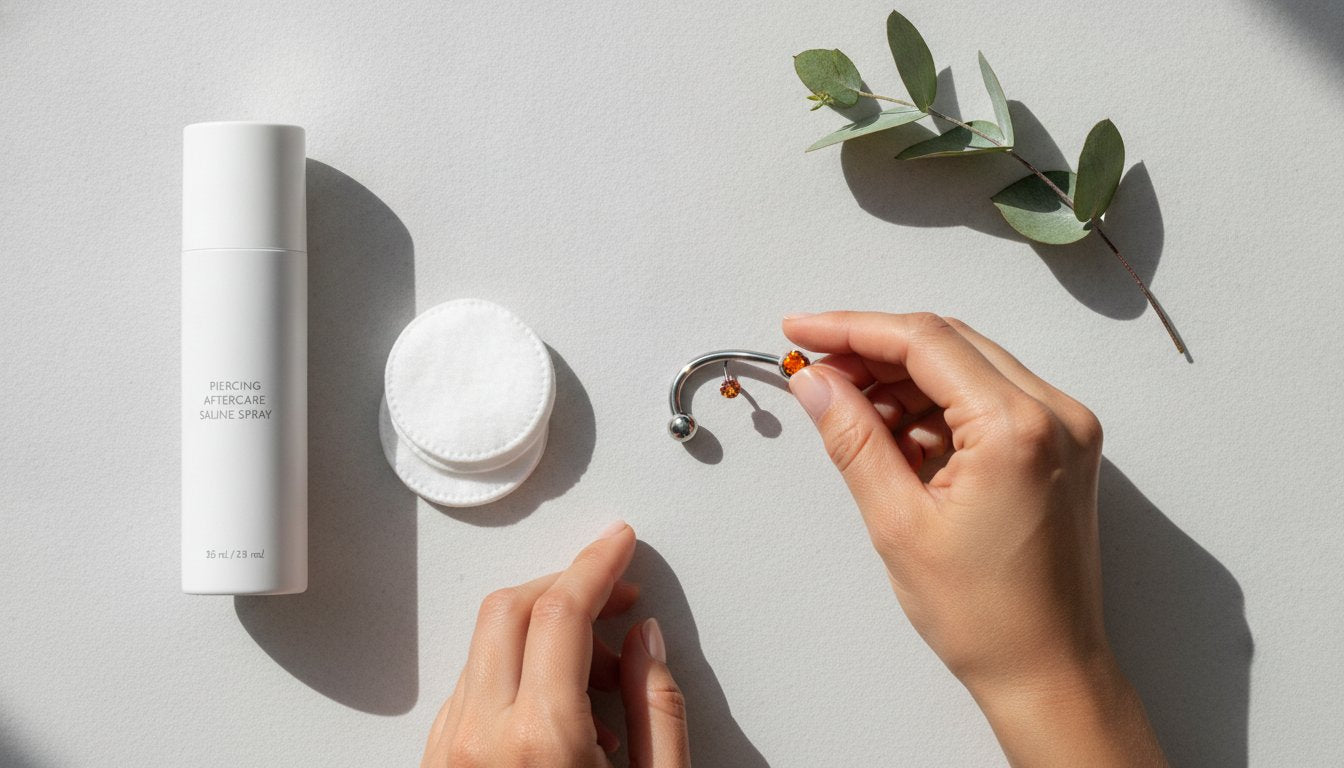
That shimmering new barbell in your drawer is more than just an accessory; it represents a significant reward for months of biological patience. You've likely spent the last six to twelve months meticulously cleaning your navel, perhaps feeling a mix of excitement and apprehension as you consider changing your belly ring for the first time. It's common to fear the piercing hole closing instantly or to feel unsure if your skin is truly ready for a swap. We understand that this transition involves physical vulnerability, and our brand serves as your protective, stabilizing force during this aesthetic milestone.
You deserve a jewelry change that is seamless, sterile, and empowering. By following expert timing and professional techniques, you can avoid the common risks of piercing bumps, migration, or irritation. This 2026 safety guide provides a clear, logical path to mastering your first swap with confidence. You'll learn how to confirm your healing status, select the highest quality materials, and implement a sophisticated aftercare routine. Let's transform your creative vision into a painless, high-end reality that prioritizes your long-term wellness.
Key Takeaways
- Identify your piercing's biological markers. Ensure your transition is painless, safe, and perfectly timed.
- Master the technical "In-and-Out" rule. Learn the safest methods for changing belly ring for the first time without the hole closing.
- Establish a clinical-grade environment. Use Saline Piercing Aftercare Spray to protect your skin from post-swap irritation or infection.
- Prioritize material integrity. Select internally threaded jewelry and surgical steel to support your journey toward refined, healthy self-expression.
The Readiness Checklist: Is Your Navel Piercing Truly Healed?
The journey to a new aesthetic begins with biological respect. While you might be eager to swap your starter jewelry for a sparkling new design, your body operates on a strict, internal timeline. A navel piercing is not a standard surface wound; it is a complex channel of tissue that requires months of stabilization. For a complete Navel Piercing Overview, it is helpful to recognize that this specific area is prone to unique stressors that other piercings simply don't face.
Most enthusiasts believe they are ready far too soon. You must understand that "looking healed" is often a deceptive indicator. The skin on the surface may appear calm and smooth while the internal tissue remains fragile, thin, and incomplete. Changing belly ring for the first time before this internal tunnel is fully mature can lead to immediate trauma, localized swelling, or the rapid closure of the piercing channel. True readiness is about the health of the tissue you cannot see.
The 12-Month Rule: Why Navel Piercings Are Slow Healers
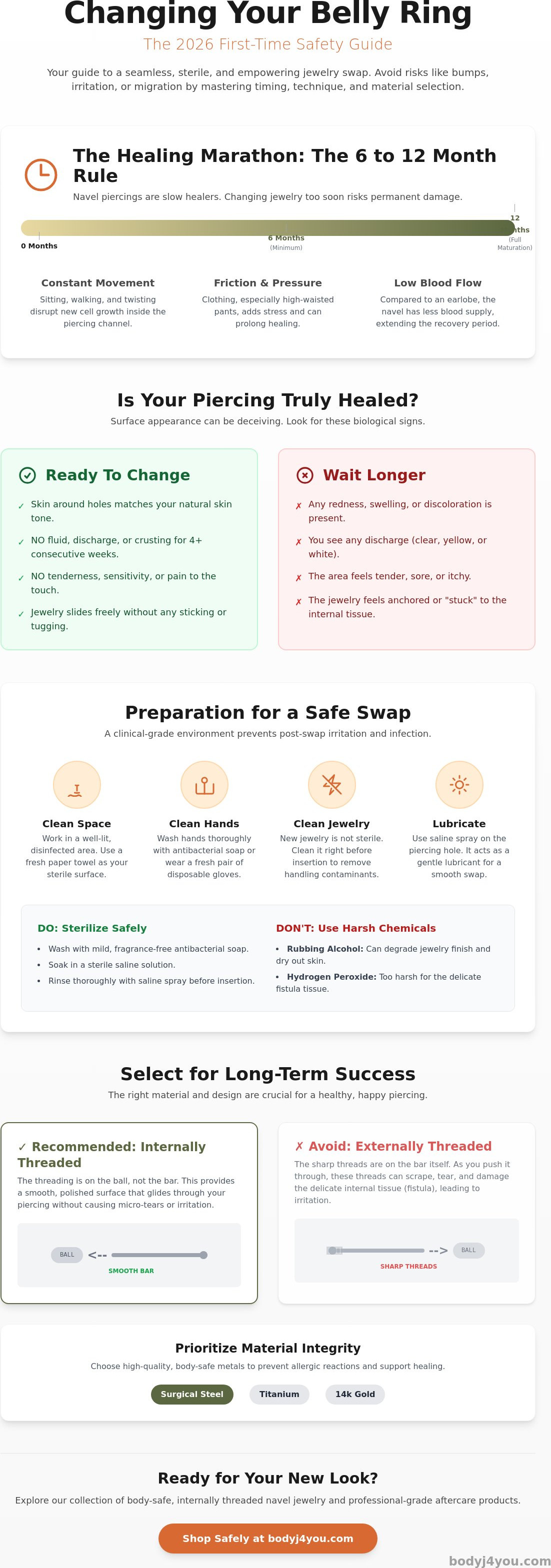
Healing is a marathon, not a sprint. Navel piercings are notoriously slow healers because the midsection is a hub of constant movement, friction, and pressure. Every time you sit, walk, or twist, the jewelry shifts slightly. This constant motion can disrupt the delicate new cells forming inside the wound. Unlike an earlobe, the navel has relatively low blood flow, which naturally extends the biological recovery period to a 6-to-12-month window.
If you attempt a swap too early, you risk migration or rejection. This occurs when the body views the jewelry as a foreign object and physically pushes it toward the surface. It's a permanent and often scarring process. If you feel any lingering tenderness or see "no-go" signs like redness and discharge, your body is still in the protective phase. When in doubt, consult a professional to ensure your skin is resilient enough for a transition.
Signs of Biological Readiness
A fully matured piercing has distinct physical signatures that signal it's safe to proceed. The skin around the entry and exit points should appear soft, slightly indented, and perfectly matched to your natural skin tone. There should be no crusting, no fluid, and no sensitivity for at least four consecutive weeks. The fistula is the skin tunnel that must be fully formed and toughened before a jewelry swap is considered safe.
You can test this readiness by gently sliding your current jewelry; it should move freely without any "tugging" or "sticking" sensations. If the barbell feels anchored to the internal tissue, your body is still building its protective barrier. Changing belly ring for the first time requires this biological confirmation to ensure your long-term wellness and aesthetic refinement. Patience is your greatest tool for a painless, successful transition.
Preparation Protocol: Sterile Tools and a Clean Environment
Preparation is the bridge between a nervous attempt and a successful, sterile transition. Before you begin changing belly ring for the first time, you must curate a dedicated environment. Choose a well-lit mirror in a space that has been thoroughly cleaned and disinfected. This "Piercing Station" is your clinical sanctuary. Lay out a fresh sheet of paper towel rather than a cloth one. Cloth fibers can trap bacteria, moisture, and microscopic debris, whereas paper towels provide a clean, disposable surface for your tools.
Your toolkit should include a pair of disposable gloves, your new jewelry piece, and a high-quality Saline Piercing Aftercare Spray. This spray is not just for cleaning; it acts as a gentle lubricant for the fistula. It softens the entry and exit points, ensuring the jewelry glides through without snagging or causing micro-tears. Following established professional piercing aftercare standards ensures your skin remains calm, resilient, and protected throughout the swap.
Sterilizing Your New Jewelry
Never assume that jewelry arriving in a sealed bag is biologically sterile. It has been handled, packaged, and shipped. You must treat your new piece with the same discipline as your initial piercing site. Soak the jewelry in a sterile saline solution or wash it with mild, fragrance-free antibacterial soap. Avoid harsh chemicals like rubbing alcohol or hydrogen peroxide. These substances can degrade the finish of your jewelry and irritate the sensitive skin of your navel. For the best results, ensure you have a dedicated saline piercing spray ready to rinse your jewelry before insertion.
Hand and Site Hygiene
Hygiene is a two-part process involving both your hands and the piercing site. Start with a rigorous 20-second scrub using warm water and soap. Once your hands are clean, apply a generous mist of saline spray to your navel. This softens any microscopic "crusties" or debris that might have accumulated around the barbell. Using disposable gloves provides a significant mechanical advantage. They offer the necessary grip for tight threading while maintaining a barrier between your skin and potential contaminants. This disciplined approach eliminates the fear of infection and supports your journey toward aesthetic refinement.
Step-by-Step: Changing Your Belly Ring for the First Time
The moment of transition has arrived. This is a milestone of personal expression, yet it requires a rhythmic, disciplined approach to ensure your comfort. Changing belly ring for the first time is not a task to be rushed; it is a guided process of replacing one support structure with another. Maintain a steady breath. Focus on your movements. Begin only when you feel completely calm and prepared.
Patience is your strongest ally during this swap. You must adhere to the "In-and-Out" rule: never leave the piercing channel empty for more than a few seconds. Even a matured fistula is highly dynamic. Without the internal support of a barbell, the tissue can begin to contract or shift, making insertion difficult. Your goal is a seamless exchange where the new jewelry follows the path of the old piece almost instantly.
Removing the Starter Jewelry
Most professional navel jewelry utilizes a standard threading pattern. To begin, identify the top ball, which is typically the smaller bead located above the navel. Grip the bottom of the barbell firmly with your gloved fingers to steady the skin. Apply gentle torque to the top bead, turning it to the left to loosen. If the jewelry feels "stuck" to the internal skin, don't pull. This sensation usually indicates minor biological adhesion. Apply a fresh mist of saline to the area to soften the tissue, wait thirty seconds, and try again. The jewelry should slide out with zero resistance.
Inserting the New Piece
Success lies in the glide. Before insertion, apply a single drop of saline spray to the tip of your new jewelry. This provides a "hydro-glide" effect, allowing the metal to pass through the fistula without friction or micro-tears. Use the "Follow-Through" method: as you slide the old jewelry out through the bottom, immediately place the tip of the new piece against the exit hole and follow the track upward. This ensures you never lose the path of the piercing channel.
Finding the exit hole at the top can sometimes require a subtle adjustment of your posture. If you meet resistance, stop. Do not use force. Instead, gently wiggle the jewelry or adjust the angle of your skin. Patience is always better than pressure. Once the barbell is through, perform a final security check. Ensure the beads are locked, seated, and tightened. A well-secured piece is the final step in a successful transition, leaving you empowered to showcase your new style with absolute confidence.
Troubleshooting: What to Do If Things Don’t Go as Planned
Even with meticulous preparation, the biological reality of your body can sometimes present hurdles. If you encounter resistance, pain, or unexpected swelling, you must immediately adopt the "Stop and Assess" protocol. This is not a failure; it is a moment of protective discipline. Your primary goal is to preserve the integrity of the fistula. If the transition feels forced, it's always safer to pause and seek professional guidance rather than risking permanent tissue damage. Stay calm. Breathe. Assess.
The most common anxiety when changing belly ring for the first time is the fear of the channel closing instantly. While a fully matured piercing won't disappear in seconds, the internal tissue is highly reactive. If you find yourself struggling, remember that tension causes the muscles around the navel to tighten. This physical stress only makes insertion more difficult. Stay calm. Relax your core. Use your breath to signal safety to your body. Most "closures" are actually just minor shifts in the tissue that a professional can easily navigate.
If the Jewelry Won’t Go In
Within the first year of healing, a fistula can "shrink" or contract almost the moment jewelry is removed. This isn't a full closure, but rather a temporary loss of volume in the skin tunnel. Never attempt to force the jewelry through. Applying excessive pressure can cause internal tearing, localized trauma, and significant scarring. If the new piece won't seat properly, attempt to re-insert your original starter jewelry. This piece is a familiar shape for your body and acts as a placeholder until you can visit a professional piercer for a guided insertion.
Handling Minor Bleeding or Swelling
A small amount of localized trauma is a normal biological response during your first jewelry change. You may notice slight redness or a few drops of blood as the new metal passes through the sensitive channel. Adopt the "Guardian" approach to calm the site: apply a clean, cold compress followed by a thorough mist of saline. However, you must monitor the area closely. If minor irritation evolves into persistent throbbing, radiating heat, or thick yellow discharge, these are signs of a potential infection that requires medical attention. Discipline in observation is your best defense.
For those who experience persistent irritation or the appearance of a small, raised node, using a specialized Piercing Bump Treatment Oil can provide immediate, nurturing relief. This formula supports the skin's natural recovery process, helping to flatten bumps and soothe inflammation before they become a permanent concern. If you are struggling with post-swap sensitivity, you can shop professional piercing treatments to ensure your navel remains healthy, vibrant, and beautiful.
Selecting Your First Style: Materials for Long-Term Success
Selecting the perfect jewelry is the final act of your aesthetic transition. While the visual appeal is paramount, the biological compatibility of the material remains your highest priority. Changing belly ring for the first time requires a commitment to quality over fleeting trends. You aren't just choosing a style; you're choosing the environment in which your fistula will continue to mature and stabilize. This choice defines your long-term success. Safety. Style. Stability.
Your navel anatomy is unique, and your jewelry should reflect that individuality. Beyond the material, the physical dimensions of the piece play a critical role in your comfort. A barbell that is too short can pinch the skin and restrict blood flow, while an overly long piece is prone to snagging on waistbands. Finding the "Goldilocks" length ensures the jewelry sits flush against the skin without applying pressure. This precision prevents the irritation that often leads to piercing bumps or migration during the first year of wear.
The Surgical Steel Advantage
Surgical steel is a celebrated standard in the piercing community for its remarkable biocompatibility and resilience. It offers a sophisticated balance of durability and a high-polish finish. This smooth surface is essential for your wellness. It prevents microscopic bacterial traps from forming on the metal, which is a common cause of post-swap infections. For those seeking aesthetic refinement without compromising safety, 316L surgical steel remains a reliable, high-end choice. It is affordable. It is ethical. It is enduring.
Internal vs. External Threading
The architecture of your jewelry matters just as much as the metal itself. Internal threading is the hallmark of quality craftsmanship and the "Wise Guardian" choice for your skin. Unlike external threads, which can act like a saw against your delicate internal tissue, internal threading ensures a smooth, scrape-free insertion. When the threads are on the removable ball rather than the post, the part passing through your body is perfectly smooth. This design minimizes trauma and supports a painless experience when changing belly ring for the first time.
Consider the weight of your new piece before making a final decision. While heavy, dangling styles are alluring for festivals or special events, they can place unnecessary stress on a fistula that has only recently stabilized. We recommend sticking to classic, lightweight curved barbells for at least the first three months post-change. This allows the internal tissue to toughen up without the constant "pull" of a heavy charm. By prioritizing material integrity and anatomical fit, you empower yourself to enjoy your new look with absolute confidence and health.
Embracing Your New Aesthetic with Confidence
Mastering the transition from your starter jewelry to a personal style is a significant achievement in your wellness journey. By respecting the biological window of six to twelve months, you ensure your body is resilient enough for a change. Success relies on three fundamental pillars: sterile preparation, rhythmic technique, and high-quality materials. Successfully changing belly ring for the first time requires a blend of clinical discipline and creative vision. You've now mastered the signs of a matured fistula and the "In-and-Out" rule for a seamless swap.
Your self-expression deserves the protection of expert craftsmanship. With over 20 years of industry presence, we provide biocompatible materials designed to support your skin's long-term health. Our locally manufactured skincare products offer the strict quality control your body requires. Explore our collection of Surgical Steel Belly Rings for a safe and stylish first swap. Trust in your preparation and celebrate the refined look you've worked so patiently to achieve. Safe. Stylish. Empowered.
Frequently Asked Questions
How long should I wait before changing my belly ring for the first time?
You should wait a minimum of 6 to 12 months for a complete biological recovery before changing belly ring for the first time. Navel piercings are notoriously slow healers because they reside in a high-movement area with relatively low blood flow. Waiting for this full window ensures the internal skin tunnel is resilient enough to handle a new material without the risk of migration or localized trauma.
Does it hurt to change your belly button ring for the first time?
A jewelry swap should be entirely painless if the piercing is fully matured and the fistula is stable. You might feel a slight pressure or a sliding sensation as the metal passes through the channel, but sharp pain is a warning sign. If you feel any significant discomfort, your body is telling you that the internal tissue hasn't finished its repair process. Stop the swap immediately.
What happens if I change my belly ring too early?
Changing your jewelry prematurely risks introducing bacteria into an unsealed wound, which can lead to infections or stubborn piercing bumps. It also increases the likelihood of migration, where your body physically pushes the jewelry toward the surface. This often results in permanent scarring and can ruin the aesthetic of your piercing. Patience is your best defense against these long-term complications.
Can I change my belly ring if it still has "crusties" around it?
No, you should never attempt a jewelry change while your piercing is still producing crust or discharge. These are clear biological indicators that your body is still in an active phase of healing. Forcing jewelry through a channel that isn't calm can cause micro-tears and trap debris inside the fistula. Wait until the skin is perfectly clear and calm for at least four consecutive weeks.
What should I do if I can’t get the ball off my starter jewelry?
The most effective solution for a stuck bead is to wear disposable gloves to increase your mechanical grip. Starter jewelry is often tightened with professional tools, making it nearly impossible to loosen with bare, slippery fingers. If the threading remains stubborn after several attempts, visit a professional piercer. They have the expertise to loosen the piece without applying unnecessary pressure or trauma to your navel.
Is it normal for my belly piercing to be sore after changing the jewelry?
Minor, localized soreness is a common response to the physical manipulation involved in changing belly ring for the first time. Your skin is adjusting to a new weight, shape, and material. This sensitivity should be very mild and disappear within 24 to 48 hours. If the soreness turns into throbbing pain or is accompanied by radiating heat, you may be experiencing an allergic reaction or early infection.
Can I use tap water to clean my new belly ring?
Tap water is not a sterile solution and often contains minerals or chemicals that can irritate a sensitive piercing channel. You should only use a dedicated saline spray or a mild, fragrance-free soap to clean your jewelry before insertion. Maintaining clinical-grade hygiene is the only way to protect your skin from post-swap complications. Purity in your aftercare routine supports a faster, more comfortable transition to your new style.
How do I know if my belly piercing hole is closing up?
You will know the channel is closing if you encounter immediate, firm resistance when attempting to slide your jewelry through. The tissue inside a navel piercing is highly dynamic and can contract quickly if left empty for more than a few seconds. If the barbell won't glide through with gentle guidance, don't use force. The hole has likely begun to shrink to protect itself, requiring a professional to safely reopen it.


