

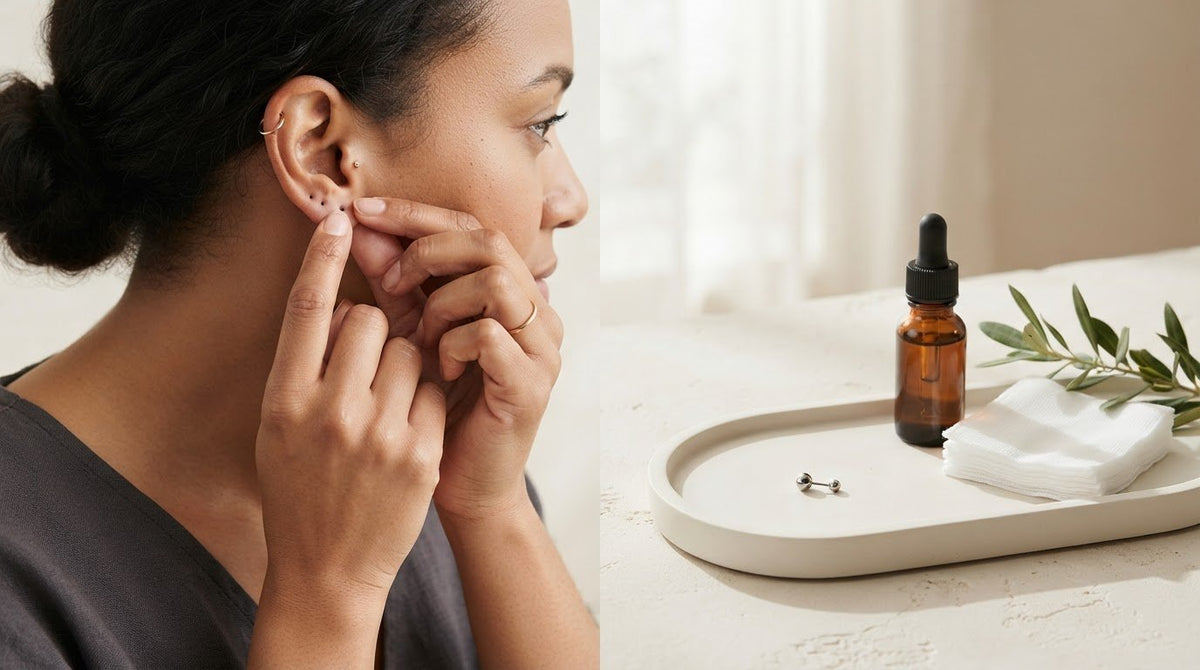
What if the safest way to learn how to save a closing piercing hole is to stop before pushing jewelry through it? A piercing that looks closed may only be narrowed, but its appearance can’t tell you whether the channel is still open. Forcing jewelry can injure the tissue and make irritation worse.
If you’re worried about losing a piercing you value, it’s natural to want to act quickly. But a careful check is safer than a rushed attempt, especially if reinserting jewelry feels painful or meets resistance.
This guide explains what narrowing and closure can look like, what you may be able to do gently at home if the piercing has only been without jewelry briefly, and what to avoid. You’ll also learn when to stop and contact a professional piercer, and which signs of possible infection call for medical care. The goal is a clear, safe next step, without turning a small concern into a bigger injury.
Key Takeaways
- A small or hard-to-see opening doesn’t prove the piercing is fully closed. Learn what signs may suggest narrowing instead.
- Discover how to save a closing piercing hole by assessing it gently and choosing a next step based on whether jewelry slides in, meets resistance, or the opening isn’t visible.
- Use a simple check-in sequence: wash your hands, inspect without probing, and note when the jewelry came out and whether you have symptoms.
- Find out what to ask a professional piercer about suitable jewelry, leaving the area alone, or discussing repiercing later.
- Learn when irritation or possible infection means you should stop handling the area and seek appropriate help.
How to Tell Whether a Piercing Hole Is Closing or Already Closed
A tiny or hard-to-see opening doesn’t, by itself, mean your piercing has closed completely. The channel through the tissue may have narrowed while remaining partly open, or the surface may look sealed even though its status isn’t clear from appearance alone. There’s no need to test it by pushing jewelry through.
A piercing creates an opening through body tissue, but each person’s healing can change how that opening looks over time. The Body piercing overview offers broader background on the practice. For your immediate concern, the key is to assess the area gently rather than assume the hole can or can’t be saved. If you’re unsure, a professional piercer can help assess it.
What does a closing piercing hole look or feel like?
A narrowing channel may have an opening that looks smaller or is less noticeable than before. Jewelry might not line up with the entrance as easily, or it may meet resistance. These clues aren’t a diagnosis, and appearance alone can’t confirm whether the channel is open. Don’t insert a needle, earring post, or other object to probe it. That can irritate or injure the tissue.
Pain, bleeding, swelling, warmth, or unusual discharge can point to irritation or another concern, not simply a narrowing hole. Avoid further manipulation. If symptoms are pronounced or you notice signs that could suggest infection, such as increasing redness or yellow or green discharge, seek medical advice.
Why do some piercing holes close faster than others?
The channel is living tissue, so its appearance can change after jewelry is removed. How it changes depends on factors including how well established the piercing is, how long the jewelry has been out, its location, and your individual healing. A newer or still-healing piercing may behave differently from one that has been healed for a long time.
Location matters, too. Earlobe and cartilage piercings shouldn’t be assumed to narrow or close at the same pace, and one person’s experience won’t reliably predict another’s. There isn’t a single visual sign or universal timeline that settles the question. If you’re deciding how to save a closing piercing hole, treat uncertainty as a reason to pause and get an experienced piercer’s assessment, not as a reason to force jewelry back in. No one can guarantee that a narrowed or closed channel can be reopened safely.
Why Piercing Holes Narrow, and Why Forcing Jewelry Can Make Things Worse
A piercing channel isn’t a permanent, empty tunnel. It’s living tissue, and after jewelry comes out, the opening and the channel beneath it can contract or become less accessible. That change may be gradual or more noticeable, depending on the piercing and the person. A tiny opening isn’t proof that it can safely be stretched open at home.
What changes after jewelry is removed?
A recently healed piercing may still be settling, so removing its jewelry can affect it differently than removing jewelry from a long-established piercing. Even with an older piercing, the channel may narrow or become harder to find. How quickly this happens varies with healing, location, and individual factors, so a fixed closure timeline can’t predict what’s happening in your case.
This is why the question of how to save a closing piercing hole shouldn’t be answered by appearance alone. A professional can assess whether the channel appears suitable for further attention. No at-home method can guarantee that it will remain open or be safely reopened.
Why should you avoid pushing jewelry through?
An earring post meeting resistance doesn’t mean you should apply more pressure. Forcing jewelry through a narrowed channel can irritate or injure the tissue, and may cause pain, bleeding, or swelling. Repeated attempts can add friction and discomfort, even if they don’t cause further injury every time.
Never force jewelry through resistance, pain, or bleeding. If it doesn’t slide in gently through an open channel, stop. Don’t use household needles or improvised tools, and don’t keep trying from different angles. These aren’t safe substitutes for a trained assessment and can damage delicate tissue.
Give the area a break rather than treating it like a hole that needs to be stretched. If it’s sore, swollen, bleeding, or showing unusual discharge, avoid further handling and seek appropriate medical advice. If there are no concerning symptoms but the channel’s status is unclear, ask a professional piercer to assess it before attempting reinsertion.
Once the piercing question has been addressed, routine, gentle aftercare can help you care for the surrounding skin. A saline piercing aftercare spray may be an option for routine cleaning. It isn’t a way to reopen or preserve a narrowing channel. Follow the product’s directions, and don’t use aftercare as a substitute for an assessment.
Can a Closing Piercing Hole Be Saved? Compare Safe Next Steps
There isn’t one safe answer for every piercing. The opening may still be usable, may need an in-person assessment, or may no longer be visible. Use this comparison to choose a cautious next step, not to diagnose the channel yourself.
| What you notice | Safer next step |
|---|---|
| Jewelry slides through easily and without pain | Don’t keep adjusting or removing and reinserting it. Leave it in place if appropriate for the piercing, and follow established aftercare guidance. |
| Jewelry meets resistance, or insertion causes pain or bleeding | Stop trying. Don’t push harder or make repeated attempts. Ask a reputable professional piercer to assess the area. |
| The opening is no longer visible, or you can’t tell whether the channel is open | Don’t probe it or try to create an opening. Arrange an assessment with a professional piercer. Reopening or reuse can’t be guaranteed. |
This is a decision guide, not a test. Even if jewelry passes through easily, repeated movement can irritate the tissue. If you’re weighing how to save a closing piercing hole, prioritize comfort and tissue health over trying to preserve it at any cost.
When is a professional piercer the right first call?
Contact a reputable piercer if jewelry won’t pass easily, the channel is difficult to locate, or you’re unsure whether the piercing has narrowed or closed. A piercer can assess the area in person and discuss appropriate options, but can’t promise that it can be reopened safely. Share where the piercing is, when the jewelry came out, whether it was fully healed, and any symptoms you’ve noticed.
When should you contact a healthcare professional?
Ask a healthcare professional for advice if pain is worsening, redness is spreading, swelling is marked, you develop a fever, or you notice unusual discharge. These symptoms need medical assessment, rather than treatment with a piercing product. Don’t assume you should remove jewelry in every situation. Ask a healthcare professional what to do based on your symptoms and piercing.
Seek prompt professional care if symptoms are urgent or worsening rapidly. When there are no concerning symptoms but the channel’s status remains unclear, avoid further attempts and choose an in-person assessment. A careful pause can protect the tissue while you decide what comes next.
How to Save a Closing Piercing Hole: A Safe Step-by-Step Plan
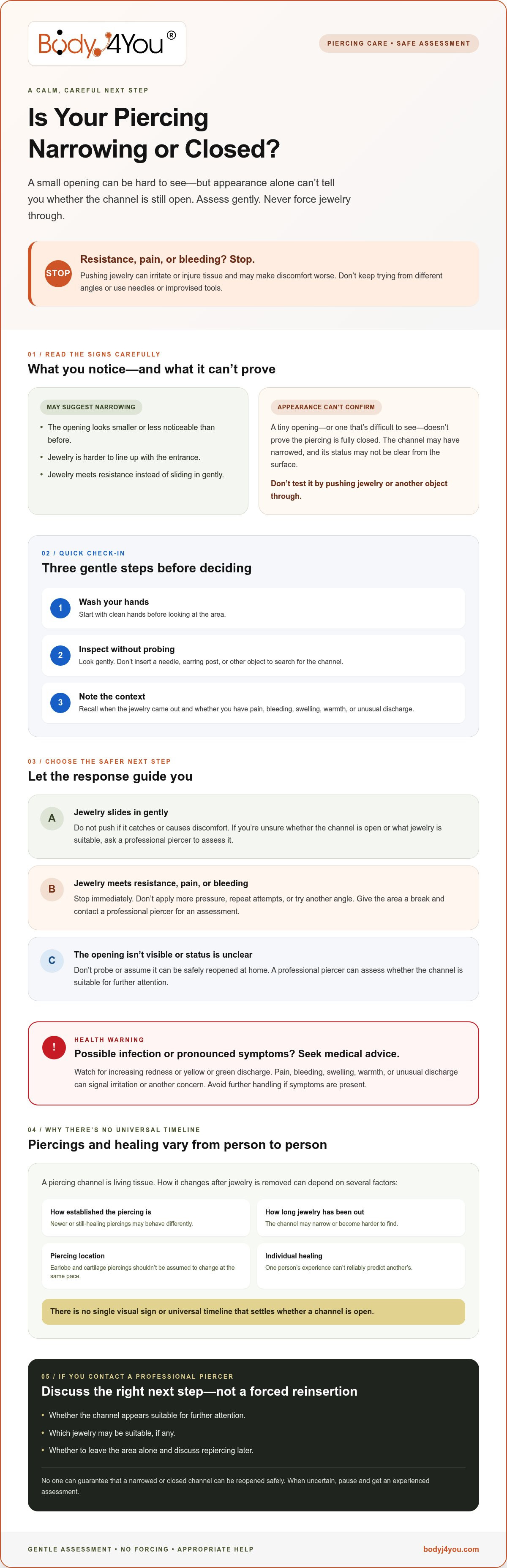
A calm assessment helps you avoid turning uncertainty into extra irritation. If you’re considering how to save a closing piercing hole, focus first on observing the area and gathering useful details, not on testing how far jewelry can go.
- Wash your hands. Clean hands reduce the chance of transferring dirt or germs if you need to look closely.
- Inspect without probing. Check the opening in good light, but don’t insert jewelry, a needle, or another object to see whether the channel is open.
- Stop at resistance. If jewelry won’t slide in gently, or you feel pain or see bleeding, don’t push or repeat the attempt.
- Choose the right professional. Ask a reputable piercer to assess a narrowing or hard-to-find channel. Contact a healthcare professional for concerning symptoms such as worsening pain, marked swelling, spreading redness, fever, or unusual discharge.
What information should you prepare before asking for help?
Make a short note of the piercing’s location, approximately how long you’ve had it, when the jewelry came out, and whether the piercing was fully healed. Describe symptoms plainly, including pain, bleeding, swelling, redness, or discharge. These details can help a piercer or clinician understand the situation. Bring the jewelry only if they ask you to. Don’t keep trying to reinsert it while you wait.
How should you care for the area while arranging assessment?
Keep handling to a minimum and follow any relevant aftercare instructions from a qualified professional. Avoid harsh cleaners, homemade mixtures, oils, and unverified remedies, particularly on irritated tissue. Don’t use a product to try to force the channel open.
Sterile saline may support routine, gentle care around a piercing, but it can’t reopen a closed channel or guarantee that a narrowing one will stay open. Use it only as directed, and don’t treat it as a substitute for assessment if the area is painful or inflamed. For routine aftercare, you can explore saline piercing aftercare spray, but first check the product’s current directions and ingredients.
There’s no need to rush into repeated attempts. A piercer can assess the channel and discuss possible next steps. A clinician is the appropriate contact for concerning health symptoms. Protecting the tissue comes first, even if the piercing can’t be preserved.
After the Assessment: Protect Healing and Decide What Comes Next
An assessment gives you a safer basis for deciding what to do, but it can’t guarantee that a narrowed or closed piercing can be reopened or reused. A piercer may recommend leaving the area alone, discuss suitable jewelry if the channel is open, or suggest talking about repiercing later. The right option depends on the piercing and how the tissue looks and feels.
That’s the key to how to save a closing piercing hole: protect the tissue first, then make a decision with informed guidance. If a piercer advises against reinsertion, don’t try another method at home. A pause can be disappointing, but it helps avoid adding irritation to an already sensitive area.
If the piercing cannot be preserved, what are your options?
Ask a qualified piercer whether repiercing may be appropriate and what needs to happen before considering it. If the skin is irritated, let it settle and follow professional guidance rather than booking based on a fixed waiting period. Timing depends on individual healing and assessment. If you have symptoms that concern you, consult a healthcare professional before making plans to repierce.
How can you support a calm, consistent aftercare routine?
Keep your hands clean, avoid unnecessary touching, and follow aftercare recommendations from a qualified professional. Gentle, consistent care is preferable to adding several products or home remedies. Don’t use saline as a way to reopen a channel, prevent closure, or treat a suspected infection. It doesn’t replace medical care when symptoms call for it.
BodyJ4You saline piercing aftercare spray may be an optional part of routine care. Check and follow the current label directions, and use it only for its intended aftercare purpose. It can’t guarantee that a piercing will stay open or become suitable for jewelry again.
Choose the next step that supports your comfort and healing, even if it means letting the piercing close. If routine aftercare essentials would be useful, explore BodyJ4You piercing aftercare essentials.
Choose a Safe Next Step for Your Piercing
A small opening doesn’t always mean a piercing is fully closed, and appearance alone can’t tell you whether the channel is safe to reuse. If jewelry meets resistance or causes pain, stop and ask a professional piercer to assess it. For worsening pain, marked swelling, spreading redness, fever, or unusual discharge, contact a healthcare professional.
The safest approach to how to save a closing piercing hole is gentle assessment, not force. A piercer can discuss suitable next steps, but reopening or preserving the piercing can’t be guaranteed. If it can’t be kept, ask whether repiercing may be appropriate once the area has settled and a professional has assessed it.
For routine aftercare, BodyJ4You brings more than two decades of industry experience, and its skincare line is manufactured in the United States. Saline spray may support gentle aftercare when used as directed, but it won’t reopen a closed channel or replace medical care. Explore BodyJ4You piercing aftercare essentials for an option to consider as part of a simple routine.
Take your time, protect your skin, and choose the next step that feels right for your healing and self-expression.
Frequently Asked Questions
How quickly can a piercing hole close after removing jewelry?
It varies with the piercing’s age, location, and your individual healing. A new piercing may start narrowing within hours, while a recently healed one may change over a few days. Older, well-established piercings may shrink rather than close fully, but this isn’t guaranteed. Tongue piercings can narrow quickly, and cartilage and earlobe piercings may behave differently. Don’t rely on a timeline to decide whether jewelry can be reinserted safely.
Can I save a piercing hole that is starting to close?
Possibly, but no one can guarantee that a narrowing piercing can be preserved or reopened. If jewelry slides through easily without pain, avoid repeated adjustments and follow appropriate aftercare guidance. If it meets resistance, stop and ask a reputable piercer to assess the area. For anyone wondering how to save a closing piercing hole, the safest first move is gentle assessment, not force or probing.
Should I push jewelry through a piercing hole that has narrowed?
No. Don’t push jewelry through resistance, pain, or bleeding. Force can irritate or injure tissue and may cause bleeding or swelling. Household needles and improvised tools aren’t safe alternatives. If jewelry doesn’t pass easily, stop trying and contact a reputable piercer for an assessment. If you also have significant inflammation or symptoms such as fever or unusual discharge, seek medical advice instead of trying to treat the area with a piercing product.
Can a piercer reopen a closed piercing hole?
A piercer can assess whether a channel that has narrowed may be suitable for gentle reopening, but a fully closed piercing may not be reusable. The result depends on the tissue and the individual piercing, so reopening can’t be promised. Don’t attempt to push jewelry through at home while deciding what to do. If the opening is difficult to locate or jewelry meets resistance, ask a reputable piercer to examine it.
Does saline spray keep a piercing hole from closing?
No. Saline spray is for routine, gentle aftercare. It can’t keep a channel open, reopen a closed hole, or guarantee that jewelry can be worn again. Follow the spray’s current label directions, and don’t use it instead of an assessment if jewelry meets resistance. Saline also isn’t a treatment for a suspected infection or a replacement for medical care when symptoms are concerning.
What should I do if my piercing hole is painful, swollen, or bleeding?
Stop trying to insert jewelry and avoid unnecessary handling. Pain, swelling, or bleeding can signal irritation or another concern, so don’t probe the channel or apply unverified remedies. Seek medical advice for worsening pain, marked swelling, spreading redness, fever, or unusual discharge. Urgent or rapidly worsening symptoms need prompt professional care. Don’t assume jewelry should always be removed. Ask a healthcare professional for guidance based on your situation.
Can a closed piercing hole be pierced again?
Repiercing may be an option, but a qualified piercer should assess the area and discuss whether and when it’s appropriate. The decision depends on the tissue, healing, and piercing location. There’s no universal waiting period. Let irritation settle and follow professional advice before making plans. If pain, swelling, redness, fever, or unusual discharge is present, consult a healthcare professional before considering another piercing.


