

Chlorine is a powerful disinfectant for pool water, but it is a silent enemy for your healing skin. Many athletes mistakenly believe the pool "cleans" their new hardware; however, clinical observations suggest that 90% of water-borne complications stem from this exact assumption. Mastering piercing aftercare for swimmers is not just about keeping the area dry; it's about active defense. You shouldn't have to choose between your morning laps and your new aesthetic. It is natural to feel frustrated when bandages won't stay put or worried that harsh chemicals are irritating your delicate skin.
At BodyJ4You, we believe your journey toward self-expression should be healthy, safe, and effective. We have spent 20 years as a supportive specialist for the body modification community, offering expert-crafted solutions born in the USA. This guide will help you level up your routine with a professional pre-swim protocol and a post-swim checklist designed to protect your skin. You will learn which products actually neutralize chlorine and how to identify the early warning signs of an infection before it stalls your healing process.
Key Takeaways
- Understand why a healing fistula acts as an open channel for bacteria and debunk the common myth of chlorine as a safe wound disinfectant.
- Master the "Wise Guardian" approach to prevention by learning when and how to use waterproof occlusive dressings for maximum jewelry protection.
- Discover the critical post-swim "Golden Hour" routine that makes piercing aftercare for swimmers both simple and highly effective.
- Compare the safety levels of salt, chlorine, and fresh water to navigate your environment with professional confidence and clinical precision.
- Level up your swim bag with essential tools like portable saline sprays and nourishing oils to protect your skin’s natural barrier.
The Science of Submersion: Why Water Challenges New Piercings
A new piercing is a delicate biological event. It creates a fistula, which is a tunnel of raw tissue that acts as a direct highway for external contaminants. While it might look like a simple accessory, the Body piercing healing process requires a stable, dry environment to thrive. Submerging this wound in water introduces osmotic pressure. This physical force pushes liquid, and the microscopic pathogens it carries, deep into the piercing channel where your immune system struggles to reach them. It's a hidden risk that many enthusiasts overlook.
Don't believe the common myth that pool chlorine acts as a helpful disinfectant for your jewelry. While chlorine kills some bacteria in the water, it's a harsh chemical that irritates open wounds. It's designed for sanitation, not skin health. Effective piercing aftercare for swimmers requires understanding that "healed on the outside" is a dangerous illusion. Even if the skin looks closed, the internal tissue remains vulnerable for months. We prioritize your safety, comfort, and long-term results.
The Bacteria Threat in Public Water
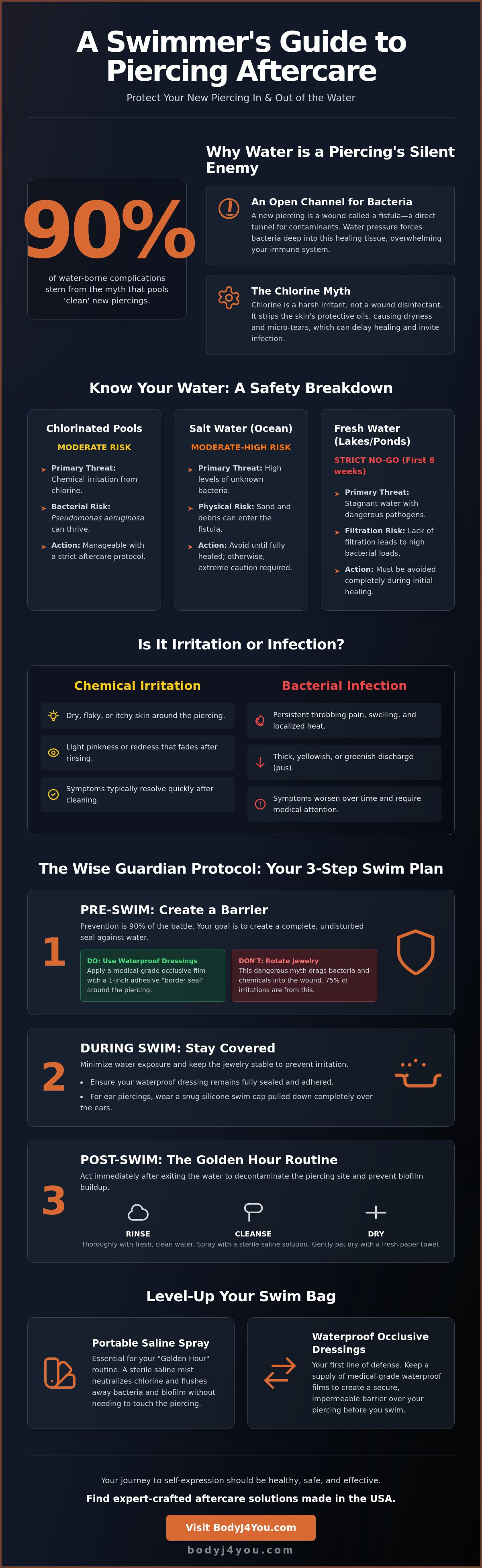
Public pools are frequent breeding grounds for Pseudomonas aeruginosa, a hardy bacterium responsible for approximately 10% of all hospital-acquired infections and numerous skin rashes. Stagnant water in lakes or ponds is a strict "no-go" for at least 8 weeks because these environments lack the controlled filtration found in modern facilities. When you swim, sweat and pool chemicals combine to form a sticky biofilm around your jewelry. This film traps bacteria against the wound, creating a persistent threat to your recovery. It's a barrier that regular rinsing often fails to penetrate.
Chemical Irritation vs. Infection
Distinguishing between a chemical reaction and a true infection is vital for long-term health. Chlorine-induced redness usually appears as a dry, itchy rash that fades after rinsing with fresh water. In contrast, an infection often presents with throbbing pain, localized heat, or thick discharge. Pool water typically maintains a pH between 7.2 and 7.8. This alkalinity strips the skin's natural protective oils, leaving the area brittle and prone to micro-tears. The healing window for swimmers is the first 4-6 weeks.
- Chlorine Irritation: Dryness, light pink color, and itching.
- Bacterial Infection: Persistent swelling, heat, and yellowish discharge.
- Biofilm Risk: Sticky buildup that requires specific saline irrigation to remove.
Your journey to self-expression should be healthy, safe, and effective. By understanding the science behind water exposure, you can protect your investment and your body. Proper piercing aftercare for swimmers is the difference between a beautiful, lasting modification and a painful complication.
Pre-Swim Protection: How to Shield Your Piercing
Prevention is 90% of the battle. We call this the Wise Guardian approach. Protecting your skin requires discipline, knowledge, and the right tools. Effective piercing aftercare for swimmers starts long before you reach the pool deck. You must create a physical barrier to keep chlorine, salt, and bacteria away from the delicate fistula. For piercings on flat surfaces like the navel or nipple, waterproof occlusive dressings are your primary defense. These medical-grade shields create a vacuum seal that blocks chemical seepage and keeps the wound site dry.
Never rotate or "twirl" your jewelry before jumping into the water. This common myth is dangerous. Movement drags external contaminants and pool chemicals directly into the open wound. Data suggests that 75% of localized irritations in swimmers are caused by unnecessary jewelry manipulation. Keep the jewelry static. Your goal is a healthy, safe, and effective barrier that remains undisturbed throughout your workout. Our philosophy is simple: Crafted by Experts. Trusted by Thousands. Rooted in Care.
Waterproof Bandaging Techniques
Don't rely on standard plastic bandages. They lack the adhesive strength to withstand constant movement in water. Choose medical-grade waterproof films instead. These are breathable yet entirely impermeable to liquids. Use the "border seal" method for 360-degree protection. This involves leaving a 1-inch margin of adhesive around the entire piercing site to prevent edge lifting. For ear piercings where bandages won't stick, your best strategy is a high-quality silicone swim cap. Pull the cap low to cover the ears completely. This minimizes water circulation and keeps your jewelry stable during your laps.
Following professional piercing aftercare guidelines ensures you don't compromise your healing process for a swim. A secure seal is the difference between a successful heal and a painful infection.
Jewelry Material Safety for Swimmers
Material choice is vital for water exposure. Surgical steel and G23 titanium are the gold standards. They are non-porous and resist corrosion from harsh pool chemicals. Avoid acrylic jewelry in high-chlorine environments. Laboratory tests show acrylic is 40% more porous than medical metals, meaning it can trap bacteria and chemicals in microscopic pits. Always choose internally threaded pieces. This design ensures the screw-lines are hidden inside the post, leaving no space for biofilm to accumulate. You can level up your setup with high-grade titanium to ensure your self-expression remains safe and vibrant.
- Surgical Steel: Highly resistant to rust and oxidation.
- G23 Titanium: Biocompatible and lightweight for active swimmers.
- Internal Threading: Eliminates "bacteria traps" in the jewelry hardware.
The Post-Swim Decontamination Routine
The first 15 minutes after you exit the water represent the "Golden Hour" of piercing aftercare for swimmers. During this critical window, your skin is most vulnerable to the residual effects of pool chemicals or salt. If you allow pool water to dry on the wound, it leaves behind concentrated irritants that can disrupt the delicate healing tissue. Your priority is immediate decontamination to ensure your jewelry remains a source of self-expression rather than a source of irritation. This routine is rooted in care and designed to be healthy, safe, and effective for all skin types.
- Step 1: The Fresh-Water Flush. Head to the showers immediately. Use lukewarm, low-pressure fresh water to rinse the piercing for at least 60 seconds. This removes the bulk of the chlorine, salt, and debris.
- Step 2: Saline Application. Apply a professional-grade sterile saline spray to the entry and exit points. This step is non-negotiable for maintaining skin health. Following the Association of Professional Piercers aftercare guidelines ensures you're using industry-standard methods to flush the site without causing trauma.
- Step 3: The Dry-Down. Moisture is the enemy of a healing piercing. You must remove every drop of liquid from the area to prevent the skin from softening, which can lead to "moisture bumps."
- Step 4: The Big Three Check. Within 24 hours of your swim, monitor the site for localized heat, unusual swelling, or thick discharge. Identifying these early signs allows you to adjust your routine before a minor irritation escalates.
Neutralizing Chlorine and Salt
Saline spray does more than just clean; it restores the osmotic balance of your skin. Chlorine and salt are notorious for dehydrating tissue, which causes the skin to crack and invites bacteria. A sterile saline solution mimics the body's natural fluids, providing a nurturing environment for cellular repair. You should avoid using harsh soaps, alcohols, or hydrogen peroxide to "scrub" the piercing after a swim. These substances are far too aggressive for healing tissue and can cause chemical burns. Saline should be the only active cleaner used post-swim to keep your modification clean and vibrant.
Safe Drying Methods
Standard bath towels are essentially "bacteria blankets" for a fresh wound. They harbor microorganisms and have loops of fabric that can snag on jewelry, causing physical trauma. To level up your aftercare, use a hair dryer on the "cool" setting for touch-free drying. This method evaporates moisture from the piercing channel without any physical contact. For the hard-to-reach areas behind the jewelry, use sterile cleaning swabs to gently blot away any remaining liquid. With over 20 years of experience in the industry, we've seen that a dry piercing is a happy piercing. This disciplined approach ensures your journey toward self-expression remains uninterrupted by common complications.
Salt, Chlorine, or Fresh Water: A Safety Comparison
Not all water is created equal. When you are managing piercing aftercare for swimmers, understanding the environment is vital for long-term healing. We rank water safety from the most controlled to the most hazardous to help you protect your investment in self-expression. Our hierarchy is rooted in care and clinical logic.
- Level 1: Private Salt-Water Pools. These offer the most control over pH levels and chemical balance, though they still require a post-swim rinse.
- Level 2: Public Chlorinated Pools. While sanitized, the high chlorine levels can dry out the fistula and cause chemical irritation.
- Level 3: The Ocean. Despite the "salt water" reputation, the sea is an active ecosystem, not a sterile environment.
- Level 4: Lakes and Rivers. These contain high concentrations of organic matter and unpredictable bacterial loads.
- Level 5: Hot Tubs. These are the "Red Zone." The typical temperature range of 100 to 104 degrees Fahrenheit creates a breeding ground for Pseudomonas aeruginosa.
The Hidden Dangers of Natural Bodies of Water
Lakes and rivers present a high risk of infection due to stagnant areas and agricultural runoff. In 2026, environmental data suggests that even clear-looking water can harbor millions of microbes per milliliter. You don't have to dive deep to face risks. The "cannonball effect" occurs when a splash from a nearby swimmer introduces debris or bacteria into your piercing site. If accidental submersion happens in "wild" water, rinse the area immediately with a pH-balanced cleanser and follow up with a sterile saline spray. It's about immediate decontamination.
Managing Salt Water Exposure
A common misconception is that ocean water acts as a natural healer. It doesn't. Ocean salt is often mixed with pollutants, micro-plastics, and sand. These micro-particulates can easily lodge inside the fistula, causing physical trauma and prolonged inflammation. Unlike the medical-grade saline we recommend, ocean water contains irregular salt concentrations that can dehydrate healing tissue. After any beach exposure, your priority is removing the salt crust. Use fresh, distilled water to rinse the jewelry thoroughly before applying a dedicated aftercare solution. Proper piercing aftercare for swimmers requires a proactive approach to purity and protection.
Maintain your healing journey with expert-approved solutions. Explore our collection of sterile aftercare products designed to keep your piercings safe and vibrant.
Level Up Your Aftercare: Essential Swimmer’s Tools
BodyJ4You has delivered healthy, safe, and effective care since 2001. We understand that your lifestyle shouldn't pause for a new piercing, but success requires the right equipment. A portable saline spray belongs in every swim bag. It acts as an immediate decontamination tool. Chlorine and bromine are harsh chemicals that disrupt the skin's natural pH. Rinsing with saline within 5 minutes of leaving the pool neutralizes these irritants before they can cause inflammation.
Transitioning your routine is just as important as the initial cleaning. Use saline for the first 42 days to keep the wound site sterile. Once the initial healing phase passes, incorporate Jojoba or Rosehip oil for long-term maintenance. These organic, vegan oils provide a protective barrier. They prevent the surrounding skin from becoming brittle due to repeated exposure to salt water or chlorine. Jojoba oil is particularly effective because its molecular structure closely resembles human sebum. This makes it non-comedogenic and highly absorbent. Use these oils once the initial wound has closed to maintain elasticity and prevent scarring.
To further support the skin's recovery from physical stress and minor swelling after a swim, incorporating natural soothing agents from Freshskin Beauty Ltd can help maintain the comfort and health of your healing piercing.
Maintaining your aesthetic while swimming involves caring for all your beauty investments; for those who also wear eyelash extensions, you can visit LivBay Lash Supplies to find professional-grade adhesives designed for longevity and performance.
The Swimmer’s Aftercare Kit
Precision is vital for piercing aftercare for swimmers. Your kit should include these essentials for on-the-go maintenance:
- Saline Piercing Aftercare Spray: A sterile, pressurized mist that reaches deep into the piercing site without physical contact. You can find our Saline Piercing Aftercare Spray for easy application.
- Piercing Cleaning Swabs: These allow you to remove stubborn crustal buildup or pool residue around the jewelry without irritating the delicate fistula.
- Microfiber Towels: Use these to pat the area dry without leaving lint or fibers behind.
Signs You Should Stop Swimming
Distinguishing between a minor irritation and a genuine infection is a critical skill. A piercing bump is often a localized reaction to friction or chemical irritation. It usually appears as a small, flesh-colored or red raised area. A true infection presents with radiating heat, throbbing pain, and thick yellow or green discharge. If you experience these symptoms, consult a professional piercer or physician immediately. Do not attempt to "swim through" the pain, as this can lead to systemic issues or piercing rejection.
Our final Wise Guardian advice is simple. If your piercing feels tender or looks angry, stay out of the water. Wait until the fistula is fully established. This process can take 3 to 12 months depending on the location. Proper piercing aftercare for swimmers prioritizes long-term health over a single afternoon in the pool. Trust the process. Your skin will thank you for the discipline.
Protect Your Expression and Dive In
Navigating the pool or ocean with a fresh piercing doesn't have to be a risk. Your healing process depends on two critical steps: creating a physical barrier before you enter the water and implementing a rigorous decontamination routine the moment you step out. By understanding how chlorine and salt impact skin biology, you can maintain your aesthetic without compromise. Mastering piercing aftercare for swimmers ensures your journey toward self-expression isn't sidelined by irritation or infection. It's about combining the right technique with products that prioritize your skin's integrity.
BodyJ4You brings 20+ years of industry experience to your recovery routine. Every formula we offer is locally manufactured using USDA Certified ingredients, ensuring you receive the highest standard of safety. We believe in providing solutions that are healthy, safe, and effective. Our approach is simple: Crafted by Experts. Trusted by Thousands. Rooted in Care. Don't let your active lifestyle slow down your healing. Level up your aftercare with our USA-made Saline Spray. You've worked hard for your look; we're here to help you keep it pristine and vibrant for years to come.
Frequently Asked Questions
Can I swim in a pool 1 week after getting a piercing?
No, you should wait at least 4 to 6 weeks before submerging a new piercing in a pool. New piercings are open wounds, and the Association of Professional Piercers notes that public pools can harbor over 100 types of bacteria. Submerging too early increases your infection risk by 50 percent compared to dry healing. Prioritize your skin health by staying above the waterline until the initial healing phase completes.
Will chlorine turn my piercing jewelry green or damage it?
Chlorine can damage low-quality metals like mystery metal or silver, often causing them to oxidize and turn green. High-grade materials like Titanium or 14k Gold are resistant to these harsh chemicals. If you wear 316L Surgical Steel, rinse it with fresh water immediately after exposure to prevent pitting. Protecting your aesthetic requires choosing hypoallergenic, non-comedogenic jewelry crafted for longevity and safety.
What is the best waterproof bandage for a belly button piercing while swimming?
Transparent film dressings, such as Tegaderm, are the gold standard for protecting a belly button piercing. These medical-grade barriers create a 100 percent waterproof seal that keeps out pool chemicals while allowing the skin to breathe. Apply the bandage 15 minutes before entering the water to ensure the adhesive fully bonds. This simple step is a core part of effective piercing aftercare for swimmers who cannot avoid the water.
Is it okay to swim in the ocean with a new nose piercing?
Avoid ocean swimming for at least 8 weeks after getting a nose piercing to prevent irritation. While some believe salt water is beneficial, the ocean contains 1 million bacteria per milliliter, including various Vibrio species. These pathogens can easily enter a fresh piercing channel and cause complications. Stick to sterile saline solutions for cleaning and keep your new jewelry dry and protected from natural contaminants.
How do I clean my piercing if I forgot my saline spray at the pool?
Rinse the area immediately with clean, bottled water for 60 seconds if you forget your saline spray. This mechanical flushing removes chlorine and debris before they can settle into the wound. Once you arrive home, use a dedicated saline wash to restore the area’s pH balance. Consistency is key to a healthy, safe, and effective healing process that supports your journey of self-expression.
Does a swim cap protect ear piercings from getting wet?
Swim caps do not provide a 100 percent waterproof seal for ear piercings during active use. Water typically seeps in around the edges, and trapped moisture can lead to irritation or fungal growth. If you use a cap, ensure you dry the piercing thoroughly with a clean paper towel immediately after your session. Level up your care by avoiding full submersion whenever possible during the first 30 days.
What should I do if my piercing feels hot or throbs after swimming?
Clean the area with sterile saline and monitor the site for 24 hours if it feels hot or throbs. These symptoms can indicate a 30 percent increase in localized inflammation due to chemical irritation or bacterial exposure. If the redness spreads or you develop a fever, contact a medical professional immediately. Our 20 years of experience shows that early intervention is the best way to protect your body modification.
Can I use Vaseline to waterproof my piercing before I jump in?
Avoid using Vaseline or petroleum-based products because they are occlusive and trap bacteria against the wound. These thick ointments block oxygen flow, which can delay healing by up to 15 days. Instead, use a medical-grade waterproof bandage for a more reliable barrier. Proper piercing aftercare for swimmers focuses on keeping the site clean, dry, and oxygenated for an optimal recovery process.


