


What if the most intimidating part of a septum piercing isn't the needle, but a misunderstanding of your own anatomy? Most people fear a painful "crunch" through cartilage, yet experts with 20 years of experience know the procedure should only pass through the "sweet spot," a thin, fleshy membrane. It's natural to feel anxious about the initial sting or that notorious "piercing funk" that often occurs during the first eight weeks of healing. You want a bold look that feels as good as it looks, rooted in safety and precision.
We're here to ensure your journey is healthy, safe, and effective. This guide will help you master everything from locating your unique anatomy to following a clinical aftercare protocol that prevents irritation. You'll gain the confidence to level up your aesthetic by selecting high-quality, hypoallergenic jewelry that matches your exact sizing requirements. From the first sterile needle to your final jewelry swap, we've crafted this guide to be your supportive specialist for a stylish and successful transformation.
Key Takeaways
- Locate the anatomical "sweet spot" to ensure your procedure is precise, safe, and avoids unnecessary cartilage damage.
- Prepare for your septum piercing by learning why professional techniques prioritize a quick "sharp pinch" over a cartilaginous "crunch."
- Adopt the clinical gold standard for aftercare to ensure a healthy, safe, and effective healing journey for your skin.
- Choose high-quality, hypoallergenic materials like G23 Titanium to level up your aesthetic while protecting sensitive tissue.
- Master long-term maintenance techniques to eliminate "septum funk" and effectively manage common irritation bumps.
Understanding Septum Anatomy: Finding the "Sweet Spot"
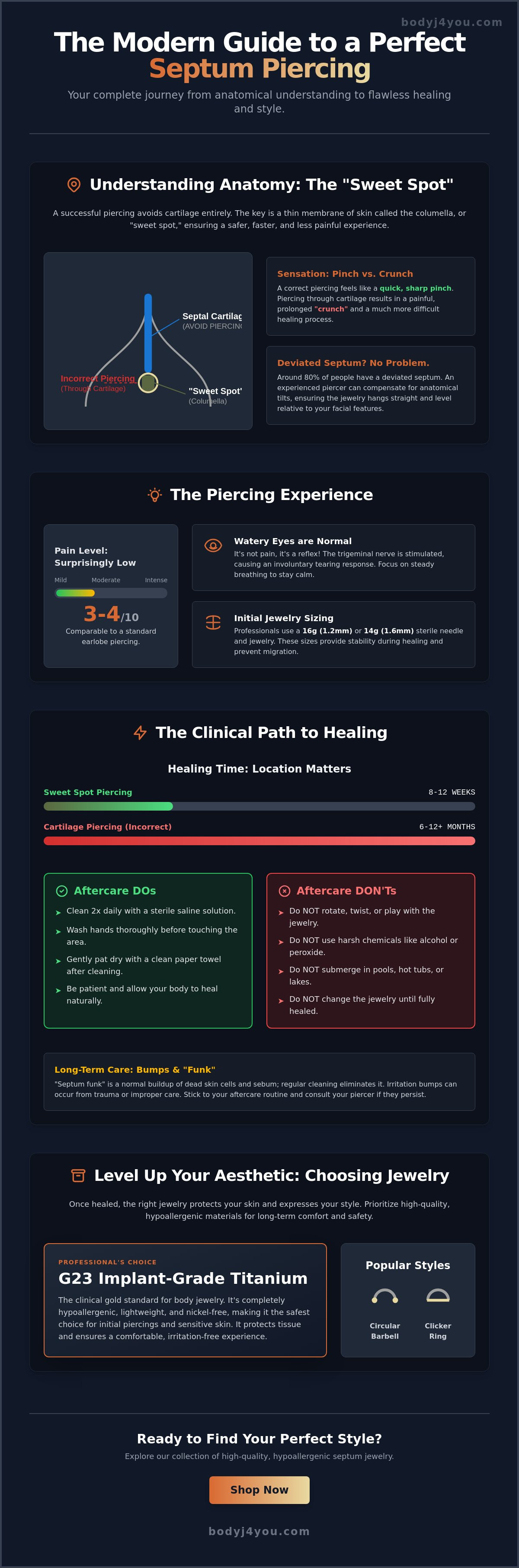
A successful Septum Piercing relies on more than just aesthetic choice; it requires a clinical understanding of your nasal structure. Your septum is a wall of bone and cartilage that divides your nostrils, but the needle shouldn't actually touch those hard structures. Instead, a professional piercer targets a specific, fleshy area known as the "sweet spot." This tiny window of skin makes the difference between a smooth, five-minute procedure and a painful, complicated recovery. It's the foundation of a healthy, safe, and effective body modification journey.
Piercing through the dense nasal cartilage is a significant error that leads to prolonged inflammation and increased discomfort. Cartilage lacks the vascularity of skin, meaning it heals at a much slower rate. While a standard piercing in the correct location takes 8 to 12 weeks for initial healing, a cartilage piercing can take 6 to 12 months to stabilize. Expert piercers use their collective industry knowledge to ensure the needle passes through the soft tissue only, preserving the integrity of your nasal health. Choosing a piercer who understands this biological nuance is essential for your long-term wellness.
The Role of the Columella
You can identify your own anatomy with a simple self-check. Gently pinch the center of your nose with your thumb and forefinger, feeling for the thin skin just below the hard tip. This area is the columella. The thickness of this skin determines your healing ease, as thinner tissue typically experiences less swelling during the first 14 days of recovery. The sweet spot is the membranous gap between the lower and upper cartilage. This area is naturally hypoallergenic and responsive to high-quality aftercare, making it the ideal site for jewelry placement.
Anatomy and Deviated Septums
A deviated septum occurs in approximately 80% of people, though the severity varies significantly. You can still get a septum piercing with a deviated septum, but it requires a specialist's touch to achieve a balanced look. Professional piercers use specialized surgical clamps to stabilize the tissue and compensate for any natural tilt in your anatomy. This technique ensures the jewelry sits level and straight relative to your face, rather than following the curve of the internal bone. If your anatomy is highly irregular, seek a second opinion from a piercer who has at least 5 years of experience with complex placements. Your self-expression should never compromise your physical comfort. Level up your look by prioritizing a piercer who treats your unique anatomy with the respect it deserves.
The Piercing Experience: Pain, Process, and Professional Standards
Your journey toward a successful septum piercing begins with understanding the physical sensation. Many clients fear a "crunch" through cartilage, but a professional piercer targets the columella. This is the thin, fleshy "sweet spot" located between the tip of your nose and the hard septal cartilage. Because the needle avoids the dense cartilage itself, the sensation is typically a sharp, fleeting pinch rather than a deep ache. Most people rate the pain at a 3 or 4 out of 10, making it comparable to a standard lobe piercing but slightly more intense than a nostril piercing.
The procedure is fast, sterile, and precise. After a thorough cleaning of the area, your piercer will use a single-use, hollow needle to create the channel. Following the needle, they immediately slide the jewelry into place. Industry standards dictate using 16g (1.2mm) or 14g (1.6mm) jewelry for initials. These sizes provide the necessary stability to prevent migration and allow for healthy swelling. Once you've healed, you can level up your style with a variety of clickers or circular barbells.
Pain Levels and What to Expect
Your eyes will water. This isn't a sign of distress or crying; it's an involuntary biological reflex. The trigeminal nerve, which supplies sensation to the face, is stimulated during the process, triggering the tear ducts. To manage pre-piercing anxiety, focus on a steady breathing rhythm. Take a deep breath in as the piercer prepares and a slow, controlled exhale as the needle passes through. This simple technique keeps your body still and your heart rate stable.
Choosing the Right Professional
Safety is non-negotiable. When vetting a studio, prioritize those that follow the guidelines set by the Association of Professional Piercers. A reputable piercer will always show you a portfolio of healed work and explain their aseptic technique. This ensures every tool, from the needle to the jewelry, has been processed in a medical-grade autoclave. Avoid any establishment that uses a piercing gun; these devices are impossible to sterilize and cause unnecessary tissue trauma.
Symmetry is the hallmark of a skilled professional. During your initial consultation, the piercer should examine your anatomy closely. Septum shapes vary significantly from person to person, and a deviated septum requires a specific angle to look straight. Ask your piercer how they plan to align the jewelry with your facial features. A professional who values your long-term health will be transparent about whether your anatomy is suited for the procedure, ensuring a result that is safe, balanced, and beautiful.
Septum Aftercare: The Clinical Path to Rapid Healing
The 2026 gold standard for septum piercing recovery focuses on clinical precision rather than guesswork. We have moved away from the era of DIY sea salt soaks mixed in kitchen glass. These homemade solutions are often non-sterile and improperly balanced, leading to localized dehydration or bacterial irritation. Modern aftercare prioritizes isotonic solutions that mirror the body's natural chemistry to foster a stable environment for cellular repair.
The Power of Sterile Saline
BodyJ4You Saline Aftercare Spray is the cornerstone of a sophisticated recovery kit. It delivers a pressurized, sterile mist that flushes the wound without the need for physical contact. This is healthy, safe, and effective. To reach the internal "sweet spot" where the jewelry rests, we recommend using piercing cleaning swabs. These specialized tools allow for pinpoint accuracy without leaving behind the irritating fibers often found in cotton balls or swabs.
While cleaning is vital, the "LITHA" method remains a pillar of professional advice. This stands for "Leaving It The Hell Alone." Your body is a master of regeneration; your primary role is to provide a clean environment and then step out of the way. According to the Association of Professional Piercers aftercare guidelines, excessive manipulation of the jewelry can tear the delicate new tissue forming inside the channel. Level up your healing by resisting the urge to flip or rotate the ring during the first few weeks.
Managing the Healing Phase
The primary healing window for a septum piercing typically spans a full 3-month duration before the internal fistula is considered stable. During the initial 8 to 12 weeks, you will likely encounter "crusties." This is dried lymph fluid and is a normal part of the biological cleanup process. Do not pick these with your fingernails. Instead, saturate the area with saline until they soften and rinse away naturally.
External factors play a massive role in your success. Smoking, heavy facial makeup, and aggressive non-comedogenic cleansers can introduce chemical irritants that stall the healing process. Our products are Born in the USA and designed to respect your skin's integrity, but they work best when you avoid external contaminants. Watch for the signs of a healthy transition versus early warning signals:
- Healthy Healing: Minor swelling, clear or white discharge, and localized tenderness that fades after 14 days.
- Warning Signs: Persistent radiating heat, thick yellow or green discharge, or a throbbing sensation that prevents sleep.
By following a disciplined ritual, you empower your body to heal with speed and symmetry. Trust the process. Crafted by Experts. Trusted by Thousands. Rooted in Care.
Septum Jewelry: Materials, Styles, and Professional Versatility
Selecting the right jewelry for your septum piercing is a balance of biology and personal expression. Your choice impacts how your skin reacts and how long the healing process takes. We prioritize jewelry that is healthy, safe, and effective to ensure your self-expression remains a positive journey. Crafted by experts and trusted by thousands, our collection focuses on precision and purity.
Material Safety and Hypoallergenic Options
316L Surgical Steel remains the reliable choice for thousands of users because of its durability and high polish. It's a standard in the industry for a reason. For those with heightened sensitivities or nickel allergies, G23 Titanium provides a medical-grade, hypoallergenic alternative. This material is lighter than steel and promotes faster recovery by minimizing irritation.
We emphasize the importance of internally threaded jewelry. In this design, the threading is on the removable ball, leaving the bar smooth. This prevents internal micro-tears when the jewelry passes through your skin. Our commitment to these standards ensures your septum piercing stays healthy and free from common complications like irritation bumps.
- 316L Surgical Steel: Durable, affordable, and highly resistant to corrosion.
- G23 Titanium: The gold standard for sensitive skin and initial piercings.
- Internal Threading: Essential for protecting delicate internal tissue during jewelry changes.
Choosing Your Aesthetic Style
You shouldn't swap your initial jewelry until the primary healing phase is complete, which typically takes 6 to 8 weeks. Once you reach this milestone, you can level up your look with different styles. Horseshoe barbells are the ultimate choice for versatility. They offer a "stealth mode" where you can flip the jewelry up into your nostrils to hide it for work or formal events. This "Secret Septum" technique makes the piercing one of the most professional-friendly modifications available.
If you prefer a classic, bold look, captive bead rings (CBR) provide a perfectly centered aesthetic. For those seeking more intricate designs, clickers feature a hinged bar that snaps into place. These are popular for their decorative edges and ease of use. Sizing is also a critical factor. A 16-gauge bar is standard, but the inner diameter determines the fit. An 8mm (5/16") diameter offers a snug, subtle look, while a 10mm (3/8") diameter provides more visibility and "hang."
Your jewelry should reflect your identity without compromising your skin's integrity. Whether you need a discreet horseshoe for the office or a shimmering clicker for a night out, quality manufacturing is the foundation of your style. Rooted in care and 20 years of experience, we help you find the perfect fit for your lifestyle.
Ready to find your perfect fit? Shop our collection of hypoallergenic septum jewelry and express yourself with confidence.
Long-Term Maintenance: Troubleshooting Bumps and "Funk"
Your septum piercing journey doesn't end once the initial redness fades. Maintaining a healthy piercing requires consistent care and an understanding of how your body reacts to jewelry. You might notice a distinct scent, often called "septum funk," which is a common occurrence. This odor is simply a buildup of dead skin cells and sebum, the natural oil your skin produces. It's a sign that your piercing needs a more thorough cleaning routine. Regular irrigation with a sterile saline solution prevents this accumulation, keeping your piercing fresh, clean, and comfortable.
Eliminating Piercing Odors and Bumps
Localized irritation often manifests as small, raised bumps near the piercing site. These are usually irritation bumps caused by friction or jewelry movement rather than keloids, which are rare genetic scar tissues. To manage these, apply Piercing Bump Treatment Oil to soothe the area and reduce swelling. This targeted approach provides the precise care needed for delicate mucosal tissue.
- Jojoba oil: This natural oil mimics human sebum, keeping the skin supple and preventing the "crusties" that lead to odors.
- Saline washes: Continue using a 0.9% sodium chloride spray even after the six-month healing mark to clear away debris.
- Jewelry quality: Ensure you wear hypoallergenic materials like titanium or surgical steel to minimize inflammatory responses.
A well-maintained septum piercing should feel like a natural part of your body. If you experience persistent yellow discharge, localized heat, or throbbing pain, consult your piercer immediately. They can troubleshoot jewelry fit or placement issues. However, if you develop a fever or see red streaks spreading from the site, seek medical attention from a doctor, as these are signs of a systemic infection.
Introduction to Septum Stretching
Many enthusiasts eventually choose to "level up" their look through stretching. The septum is a premier location for "dead stretching," a method that relies on time and the natural elasticity of the skin rather than force. You must wait at least 6 months, though 9 months is safer, before attempting your first stretch. This ensures the fistula is completely mature and strong enough to handle increased tension.
Moving from a standard 16G to a 14G requires patience and the right tools. BodyJ4You stretching kits provide a systematic way to transition between sizes safely. Using a lubricant like jojoba oil during the process is essential to prevent micro-tears. Never skip sizes and always listen to your body; stretching should feel like pressure, not sharp pain. Proper stretching is a slow process that rewards the patient wearer with a healthy, expanded piercing that lasts a lifetime.
Mastering Your Septum Expression with Confidence
A septum piercing is more than a trend; it's a bold statement of identity rooted in proper anatomy and clinical care. Success begins by understanding your "sweet spot" to ensure a smooth procedure and rapid healing. Once the initial process is complete, a disciplined aftercare routine becomes your best defense against irritation bumps and unwanted odors. By prioritizing high-quality, hypoallergenic materials, you protect your skin's health while showcasing your unique aesthetic.
BodyJ4You has supported the body modification community with professional authority for over 20 years. Our Born in the USA skincare line features USDA Certified healing oils that provide the clinical precision your skin deserves. We believe that self-expression should be healthy, safe, and effective. You've done the research and understood the process; now it's time to give your piercing the expert-level care it requires for a lifetime of style. Level up your self-expression with BodyJ4You’s premium septum jewelry and aftercare. Your journey toward a perfectly healed and curated look starts with products you can trust. Wear your confidence with pride.
Frequently Asked Questions
How much does a septum piercing usually hurt on a scale of 1-10?
Most enthusiasts rank the pain of a septum piercing at a 3 or 4 on a 10 point scale. Since the needle passes through the sweet spot, a thin membrane of skin between the cartilage and the tip of your nose, the sensation is a quick, sharp sting that subsides in under 60 seconds. You might experience a temporary watery eye reflex, but the procedure is typically less painful than a cartilage or nostril piercing.
Can I hide my septum piercing immediately after getting it done?
You can hide your piercing immediately if you're pierced with a circular barbell or a retainer. Simply flip the jewelry upward into your nostrils after the procedure is complete. It's vital to decide this before the needle enters, as you shouldn't flip the jewelry back and forth during the first 8 weeks of healing. This stability protects the delicate tissue and prevents irritation bumps from forming.
How do I know if my septum piercing is infected or just healing?
Distinguishing between normal healing and infection requires observing three specific symptoms: color, temperature, and swelling. Normal healing involves clear or white discharge that hardens into crusties within the first 14 days. An infection typically presents with thick yellow or green pus, a persistent heat sensation, and swelling that doesn't subside after 72 hours. If you notice these signs, consult your piercer or a medical professional immediately.
Why does my septum piercing smell, and how can I get rid of it?
The distinct odor, often called septum funk, occurs when dead skin cells and natural sebum accumulate on the jewelry. This is a common biological process that affects 100% of healing piercings at some point. To eliminate the scent, clean the area twice daily with a sterile saline solution. Once healed, rotating the jewelry during your daily wash routine ensures your self-expression remains fresh, healthy, and hygienic.
Is it possible to get a septum piercing with a small nose or deviated septum?
You can successfully get a septum piercing with a small nose or a deviated septum, provided you visit a highly skilled professional. Statistics from the American Academy of Otolaryngology show that 80% of people have some degree of septal deviation. An expert piercer will manually locate your unique sweet spot to ensure the jewelry sits level and straight, even if your internal structure is slightly asymmetrical.
How long do I have to wait before I can change my septum jewelry?
Wait at least 6 to 8 weeks before changing your initial jewelry for the first time. While the edges of the wound may feel stable after 60 days, the internal tissue remains fragile for up to 6 months. Changing jewelry too early can cause micro-tears and prolong the healing process. For the best results, have your piercer perform the first swap to ensure your new piece is safe and effective.
What is the best material for a new septum piercing?
Implant grade titanium (ASTM F-136) is the gold standard material for a new septum piercing. It's 100% hypoallergenic and nickel free, which prevents the allergic reactions that occur in 15% of the population. Surgical steel is also a popular, durable choice for those without sensitivities. Choosing high quality materials ensures your modification journey is rooted in care and clinical safety, allowing you to level up your aesthetic without compromise.
Can I blow my nose with a new septum piercing?
You can blow your nose, but you must use extreme caution during the first 14 days of healing. Avoid putting direct pressure on the tip of your nose or the jewelry itself. Instead, use a soft tissue or a saline soaked cotton swab to gently clear your nostrils. This mindful approach protects the new piercing from trauma and keeps the area clean, supporting a healthy and efficient recovery.


