

The most effective way to reach your goal gauge isn't through force, but through the quiet power of patience. While tapers offer immediate gratification, they often come at the cost of micro-tears, permanent scarring, and painful blowouts. Dead stretching is a sophisticated alternative that treats your ear lobes as a living canvas rather than a stubborn obstacle. By understanding the pros and cons of dead stretching, you can transform your journey into a safe, predictable, and aesthetic refinement.
We understand the frustration of feeling stuck between sizes or the fear that one wrong move might ruin your progress. It's time to replace that anxiety with a disciplined, wellness-oriented approach. This 2026 guide provides the clarity you need to cultivate thick, healthy lobes and a pain-free timeline for sizing up. We'll examine the technical benefits of passive expansion, the essential role of high-quality materials, and how to listen to your body's natural rhythm for a seamless transition. Safety, integrity, and expression are the pillars of a successful stretch.
Key Takeaways
- Master the art of passive expansion by leveraging your body’s natural elasticity for a seamless, trauma-free transition between sizes.
- Evaluate the pros and cons of dead stretching to determine if this disciplined, patient-first strategy fits your unique body modification journey.
- Protect your aesthetic integrity by learning how slow, weighted stretching preserves vital lobe thickness and prevents permanent scarring.
- Refine your routine with professional preparation techniques, utilizing heat therapy and Jojoba oil to ensure maximum skin pliability.
- Select the optimal materials for your journey, balancing the functional weight of surgical steel with the breathable comfort of acrylic for healed piercings.
The Stretching Dilemma: Why Dead Stretching is Trending in 2026
The culture of ear expansion has fundamentally shifted toward a philosophy of longevity. We have moved past the era of aggressive, forced expansion. Today, the focus is on tissue health, long-term lobe thickness, and the biological integrity of the skin. Dead stretching is at the center of this movement. It is the process of allowing the natural weight of jewelry to expand the piercing over time without the use of external force. When you evaluate the pros and cons of dead stretching, the primary advantage is clear. It respects the body's pace and prioritizes the health of your lobes over immediate results.
To achieve professional, aesthetic results, we follow a simple tripartite philosophy. Patience. Purity. Protection. Patience ensures the skin has sufficient time to generate new cells. Purity involves choosing high-quality, non-porous materials that won't harbor bacteria. Protection means safeguarding the fistula from the trauma of rapid sizing. This disciplined approach is why the community is moving away from "quick fixes" and toward a health-first body modification journey.
Passive vs. Forced Stretching
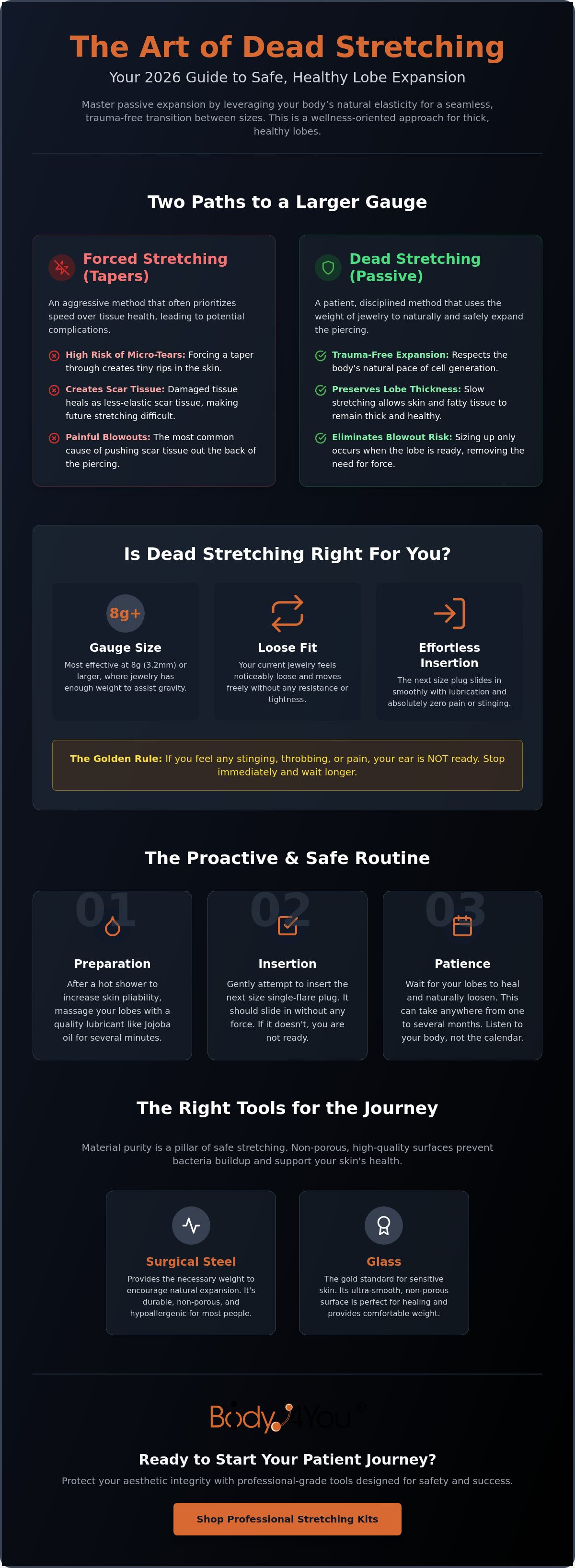
The mechanics of Stretching (body piercing) are rooted in cellular biology. When a fistula is under gentle, consistent tension, skin cells begin to replicate. This is a slow, natural expansion. Forced methods, such as using tapers with too much pressure, often lead to micro-tears. These tiny rips in the tissue create scar tissue, which is significantly less elastic and harder to stretch in the future. Dead stretching avoids this by relying on gravity. The consistent weight of the plug encourages the skin to relax and grow without the risk of structural damage.
Identifying the Ideal Candidate
Not every stage of the journey is suited for passive methods. Dead stretching is typically most effective once you reach 8g or larger. At these sizes, the jewelry has enough physical mass to exert the necessary pressure on the tissue. You'll know your ears are ready when your current jewelry feels noticeably loose and slides in with zero resistance. If you are still at the beginning of your journey, the weight of the jewelry is often insufficient to create a natural gap. In these early, smaller-gauge stages, using a Surgical Steel Taper and Plug Kit provides the guided assistance needed to move through the initial jumps safely. Understanding the pros and cons of dead stretching allows you to choose the right tool for your specific gauge size.
The Pros: Why Your Lobes Love Passive Stretching
Choosing a passive path is more than just a preference; it's a commitment to the biological integrity of your skin. When weighing the pros and cons of dead stretching, the most immediate benefit is the elimination of physical trauma. By allowing the lobe to expand naturally through the consistent weight of jewelry, you bypass the inflammatory response triggered by forced insertion. This method creates a stable environment where the skin remains supple, healthy, and resilient. It's a strategy that prioritizes long-term aesthetics over short-term gratification.
A primary concern for many enthusiasts is the risk of a blowout, where forced pressure pushes a ring of scar tissue through the back of the piercing. Dead stretching effectively removes this threat. Because you only size up when the skin has already loosened, there's no force to cause tissue displacement. This approach also ensures a zero-pain threshold. If you feel stinging or throbbing, the ear isn't ready. A successful stretch should feel effortless, maintaining the beauty of your lobes while avoiding the common risks and complications of stretched ears.
Material purity is another pillar of this method. To succeed, you need non-porous, high-quality surfaces that won't harbor bacteria or cause irritation. Surgical steel and glass are the gold standards for this process. They provide the necessary weight to encourage expansion while remaining hypoallergenic. Investing in professional stretching jewelry ensures your materials support your skin’s health throughout the transition. When you understand the pros and cons of dead stretching, you realize that quality tools are non-negotiable for a safe journey.
Preserving Tissue Density
Rapid expansion often results in thinning at the base of the lobe. This happens because the skin is stretched faster than it can produce new cells. Dead stretching preserves your natural fatty tissue by moving at the speed of biology. This is vital for anyone aiming for 00g or larger. Thick lobes provide a stable, healthy foundation for heavier jewelry. Tissue density is the foundation of a safe 00g journey.
Reduced Healing Time
One of the most overlooked benefits is the reduction in recovery time. In a forced stretch, you're essentially managing a new wound. With dead stretching, the ear is technically healed from day one because the jewelry only enters a space that has already opened. To keep the area pristine, using a sterile saline spray for piercings ensures that no debris or bacteria interferes with your progress. This proactive care keeps the fistula clean and supported.
The Cons: The Reality of the Waiting Game
While the biological advantages are significant, a balanced view of the pros and cons of dead stretching requires an honest look at the challenges. This method is not a shortcut. It is a long-term commitment to tissue health that demands a high level of personal discipline. For those used to the immediate gratification of active methods, the transition to a passive approach can feel like a lesson in extreme patience. You are no longer in control of the timeline; your body's cellular replication speed is the sole deciding factor.
One of the most common frustrations is the "stuck" plateau. There will be moments where your skin seems to lose its elasticity temporarily, and a size that should fit simply won't budge. This is often influenced by external factors such as hydration levels, age, and the presence of previous scar tissue from less careful methods. During these periods, it is vital to follow established safe stretching guidelines. Forcing a plug during a plateau defeats the entire purpose of the passive method and can lead to the very trauma you are trying to avoid.
Material choice also becomes more restrictive during the active expansion phase. Lightweight options, such as an Acrylic Ear Stretching Kit, are excellent for healed piercings because they offer comfort and variety. However, they lack the necessary mass to encourage a dead stretch. For the expansion itself, you must stick to heavier, non-porous materials. This means your aesthetic options might feel limited until you reach your goal size and can switch back to lighter decorative pieces.
Managing the Timeline
Expectations must remain grounded in reality. For larger gauges, it is common to wait 3 to 6 months between sizes. This isn't a sign of failure; it is your body ensuring the fistula is strong and thick. To stay organized, we recommend using a professional ear gauge size chart. Tracking your progress in millimeters rather than gauge numbers provides a more accurate picture of your journey and helps you celebrate the small, incremental wins that lead to long-term success.
The Investment in Quality
The financial aspect is another factor when considering the pros and cons of dead stretching. Unlike a single kit that might take you through several sizes, passive expansion often requires purchasing single-flare plugs in half-millimeter increments. Skipping these small steps is the most frequent cause of injury. To balance your budget and ensure you're never tempted to rush, many enthusiasts choose to invest in a comprehensive gauge kit. Having every size ready in advance removes the impulse to skip a step when you're "almost" there, keeping your lobes safe and your progress steady.
How to Dead Stretch Safely: A Proactive Routine
Safe ear expansion is an active process of skin cultivation. It is not merely the absence of force; it is the presence of meticulous preparation. To master the pros and cons of dead stretching, you must view your lobes as a living tissue that requires specific environmental conditions to thrive. A successful routine transforms a passive wait into a proactive strategy for lobe health. By following a disciplined daily protocol, you ensure that your skin remains resilient and ready for the next incremental jump.
The foundation of every stretch is the "Hot Shower" prep. Heat is a natural vasodilator. It increases blood flow, relaxes the muscle fibers, and significantly improves skin pliability. We recommend attempting a jewelry transition only after a ten-minute warm shower. This ensures the tissue is at its most elastic state. Once the skin is prepared, lubrication becomes the next vital step. Jojoba oil is the industry standard because its molecular structure closely mimics human sebum, allowing it to penetrate deeply without clogging pores. Lubrication reduces friction, prevents micro-abrasions, and provides a protective barrier for the fistula.
The "No-Force" rule is the ultimate safeguard for your aesthetic journey. If the jewelry does not slide in with the same ease as a button through a well-worn buttonhole, the ear is not ready. There should be no stinging, no pressure, and certainly no blood. This disciplined boundary is what separates a professional expansion from a traumatic injury. If you encounter resistance, stop immediately. Your body is communicating that the cellular replication process is not yet complete.
The Daily Lobe Massage
Consistency is the key to maintaining long-term elasticity. A five-minute daily massage with Jojoba or Rosehip oil is essential for breaking down potential scar tissue and stimulating local circulation. This practice keeps the lobes thick and healthy by encouraging fresh oxygen to reach the tissue. For those who need deeper hydration, using a specialized Gauges Balm helps lock in moisture and provides a protective seal against environmental stressors. This simple habit ensures your skin remains soft and receptive to future expansion.
Monitoring Your Progress
A successful stretch is defined by three markers: no redness, no throbbing, and no resistance. If you experience "the sting," it is a sign of a micro-tear. The correct protocol is an immediate down-size to your previous gauge to allow the tissue to knit back together without scarring. Hygiene is equally important during this phase. We recommend using piercing cleaning swabs to keep the back of your jewelry free from buildup. To ensure your journey remains trauma-free, explore our full range of professional aftercare and stretching tools designed for long-term lobe health.
The BodyJ4You Solution: Tools for the Patient Journey
Navigating the pros and cons of dead stretching requires more than just patience; it requires a partnership with a brand that understands the biology of the lobe. For over 20 years, we have acted as a supportive specialist for the body modification community. Our approach is built on three pillars. Quality. Safety. Expression. By prioritizing regional manufacturing and domestic production standards, we ensure that every piece of jewelry meets the rigorous safety expectations of the modern consumer. You aren't just buying a tool; you're investing in two decades of expertise designed to protect your aesthetic integrity.
The weight of your jewelry is the engine of a passive stretch. Our Surgical Steel sets are engineered with the specific mass required to encourage natural expansion without the need for forced tapers. These sets provide the steady, gentle tension your skin needs to trigger cellular replication. Conversely, once your fistula has matured and reached a stable state, our Acrylic kits offer a comfortable, lightweight alternative for daily wear. This balance allows you to switch between functional expansion tools and lifestyle-oriented comfort seamlessly. Understanding the pros and cons of dead stretching means knowing which material serves your current stage of growth.
Curating Your Stretching Kit
Choosing the correct path starts with the right equipment. When selecting an ear stretching kit, prioritize single-flare designs for all active transitions. The flat back of a single-flare plug prevents unnecessary irritation during insertion and allows for easy cleaning. Save the double-flare jewelry for a later stage. You should only transition to flared designs once the fistula is fully matured and the skin has regained its full elasticity. This disciplined progression ensures a lifetime of healthy, beautiful lobes.
Nurturing the Result
Even with a patient approach, occasional irritation can occur due to environmental factors or sleep habits. If you notice localized redness or minor sensitivity, our Piercing Bump Treatment Oil provides the soothing, botanical support needed to calm the tissue. We embrace the role of the "Wise Guardian," guiding you through every plateau and milestone with professional authority. Your journey toward self-expression deserves a foundation of purity and care. Explore our curated stretching collections at BodyJ4You and begin your trauma-free expansion today.
Cultivating Your Aesthetic Future
Your journey to self-expression is a marathon, not a sprint. By prioritizing the biological needs of your skin, you ensure that your lobes remain thick, healthy, and resilient for years to come. We've explored how the pros and cons of dead stretching center on the vital balance between extreme patience and superior tissue integrity. Success in passive expansion relies on three core elements. Biological respect. Material purity. Proactive maintenance. When you listen to your body, you achieve an aesthetic result that's both safe and aspirational.
BodyJ4You stands as your Wise Guardian throughout this transformation. With over 20 years of industry experience and a dedicated commitment to US-based skincare manufacturing, we provide the nurturing and professional expert support you deserve. We're here to stabilize your journey and empower your personal growth. Your body is a living canvas; treat it with the clinical precision and care it requires for long-term health.
Shop BodyJ4You Stretching Kits & Aftercare
Step forward with confidence and discipline. Your most beautiful, healthy stretch is waiting just beyond the horizon of your next patient moment.
Frequently Asked Questions
Is dead stretching better than tapers?
Dead stretching is widely considered superior for maintaining lobe thickness and preventing scar tissue. While tapers are useful for small gauge jumps, they often lead to over-stretching and blowouts in larger sizes. This passive method relies on gravity and time. Patience. Purity. Protection. It is the gold standard for those prioritizing long-term aesthetic integrity over immediate, forced results.
How long should I wait between dead stretches?
You should wait a minimum of 3 to 6 months between sizes for larger gauges. This timeline allows your body to generate new skin cells and regain elasticity. Rushing the process is the primary cause of injury. Growth. Recovery. Resilience. By respecting this biological rhythm, you ensure your lobes remain thick and strong enough to support heavier jewelry as you progress.
Does dead stretching hurt?
A successful dead stretch should be entirely pain-free. If you experience stinging, throbbing, or resistance, your ear is not ready for the next size. The goal is for the new jewelry to slide in as easily as your current pair. Pain is a signal of micro-tearing. This can compromise your results and lead to permanent scarring or thinning of the lobe.
What materials are best for dead stretching?
Non-porous, weighted materials like surgical steel and glass are the ideal choices. These materials provide the necessary mass to encourage tissue expansion while remaining hypoallergenic and easy to clean. Safety. Purity. Precision. When evaluating the pros and cons of dead stretching, material purity is a non-negotiable factor. High-quality surfaces prevent bacterial buildup and ensure a smooth, irritation-free transition between sizes.
Can I dead stretch my septum?
Yes, you can dead stretch a septum, though the process is significantly slower than lobe expansion. Septal tissue is less elastic and often involves very small incremental jumps or stacking. Because the cartilage is nearby, the timeline is even more critical. Always prioritize comfort and listen to your body’s unique limits to avoid unnecessary pressure on the sensitive nasal structure.
What should I do if my ear won’t dead stretch to the next size?
If your ear resists the next size, you must wait longer and increase your daily massage frequency. Using half-millimeter increments can also bridge the gap for stubborn piercings. Never force the jewelry. Heat. Hydration. Patience. Focus on improving skin pliability through warm showers and consistent care. This disciplined approach prevents blowouts and ensures your lobes stay healthy.
Is Jojoba oil necessary for dead stretching?
Jojoba oil is essential for reducing friction and maintaining skin elasticity during the expansion process. Its molecular structure mimics human sebum, allowing it to penetrate deeply and nourish the fistula. Regular application keeps the skin supple and resilient. When considering the pros and cons of dead stretching, proper lubrication is the most effective way to ensure a trauma-free and comfortable experience.
Can I use acrylic plugs for dead stretching?
Acrylic plugs are not suitable for the active stretching phase because they are too lightweight and porous. They cannot provide the necessary weight to encourage natural expansion and may harbor bacteria in fresh stretches. Save your acrylic jewelry for fully healed piercings. For the active stretching process, stick to surgical steel or glass to ensure safety, purity, and effective expansion.


