

That stubborn, red bump on your cartilage isn't a permanent mark of a failed modification; it's simply a cry for biological intervention. We understand the frustration of seeing a beautiful piece of jewelry overshadowed by persistent granulomas, dry skin, or the confusion over using rosehip oil for piercings. It's discouraging when your journey toward self-expression feels blocked by irritation or fear of permanent scarring. You deserve a healing process that is safe, effective, and sophisticated.
This guide reveals how to utilize rosehip oil for piercings to eliminate bumps, fade discoloration, and restore your skin’s health with professional precision. While sterile saline remains the gold standard for the initial cleaning phase, rosehip oil acts as the ultimate botanical skin-finisher for established modifications. Our locally manufactured, high-purity oils leverage natural trans-retinoic acid to bridge the gap between a closed wound and a perfectly aesthetic site. We will explore the science of skin regeneration, the importance of ingredient integrity, and the three-step method for achieving a flat, healthy, and hydrated piercing.
Key Takeaways
- Learn why rosehip oil is categorized as a "skin-finisher" and why it must only be applied once the initial wound closure stage is complete.
- Understand the biological mechanism that allows rosehip oil for piercings to inhibit collagen overproduction and flatten persistent hypertrophic bumps.
- Master the professional application protocol that prioritizes the "less is more" rule to prevent clogged pores while maximizing tissue hydration.
- Distinguish between the repair properties of rosehip oil and the maintenance benefits of jojoba to choose the right specialist for your skin's needs.
- Discover the importance of therapeutic-grade purity and domestic manufacturing in ensuring your aftercare is both safe and ethically produced.
What is Rosehip Oil for Piercings? The Biological Finisher
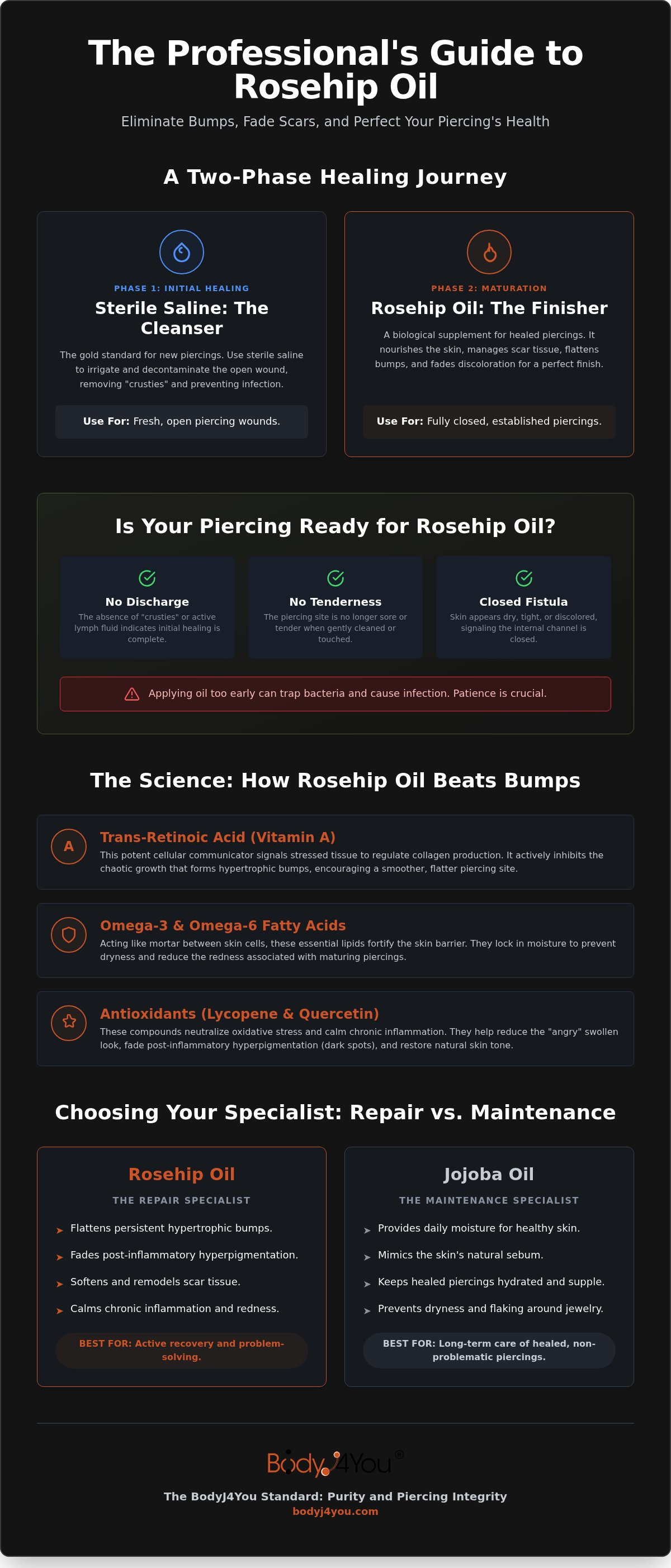
Rosehip oil is a concentrated, cold-pressed lipid extracted from the seeds of the Rosa canina plant. In the context of body modification, it serves as a biological finisher rather than a primary cleanser. While sterile saline remains the essential tool for irrigating new wounds, rosehip oil for piercings provides the targeted nourishment required to transition from a healed hole to a refined, healthy modification. It’s a therapeutic supplement designed to support the skin's natural architecture during the final stages of recovery.
The efficacy of this botanical powerhouse lies in the complex composition of rosehip oil, which is rich in trans-retinoic acid (Vitamin A), Omega-3, and Omega-6 fatty acids. These nutrients work in harmony to bridge the gap between initial wound closure and long-term aesthetic perfection. By introducing these lipids at the correct physiological moment, you provide your body with the specific resources it needs to manage scar tissue and prevent the formation of unsightly bumps.
The Chemistry of Piercing Recovery
Vitamin A, specifically in its natural trans-retinoic acid form, is a potent cellular communicator. It signals to stressed tissue that it’s time to regulate collagen production, ensuring the skin remains supple rather than developing thick, raised scars. Essential fatty acids, the Omegas, act as the mortar between your skin cells. They fortify the skin barrier, lock in moisture, and reduce the redness often associated with maturing piercings. We prioritize cold-pressed extraction because heat destroys these delicate molecules. A high-quality oil must retain its nutrient integrity to be effective. For those looking to complement this topical care with a deeper approach to skin health, Face Up offers specialized facial sculpting and somatic bodywork to support the body's natural regenerative processes.
When to Introduce Rosehip Oil
Timing is everything. You should never apply oil to a fresh, open piercing wound. During the early stages of healing, your focus must remain on decontamination using sterile saline. You're ready to introduce rosehip oil only once the fistula, the internal tube of the piercing, has completely closed. Look for these specific signs of readiness:
- The absence of "crusties" or active lymph discharge.
- A lack of tenderness when the jewelry is gently cleaned.
- Skin that appears dry, tight, or slightly discolored around the site.
Applying oils too early can trap bacteria inside the healing channel, leading to irritation or infection. Patience is a virtue in piercing aftercare. Wait for the skin to close, then use rosehip oil to refine the result. This disciplined approach ensures the integrity of your modification remains uncompromised.
The Science of Regeneration: Why Rosehip Oil Beats Bumps
The persistent hypertrophic bump is the ultimate frustration for any piercing enthusiast. It’s a raised, firm, and often red protrusion that seems to defy standard cleaning routines. Most people assume it’s an infection. In reality, it’s often a localized overproduction of collagen caused by mechanical stress or irritation. Using rosehip oil for piercings offers a biological solution to this structural problem. It doesn't just mask the surface irritation; it actively modulates the skin's regenerative cycle to encourage a smoother, flatter site.
The oil’s high concentration of trans-retinoic acid works to inhibit the chaotic collagen growth that characterizes these bumps. While the body tries to protect the site by building excessive tissue, rosehip oil signals for a more controlled and organized repair. This prevents the bump from becoming a permanent fibrotic mass. This process is supported by potent antioxidants like quercetin and lycopene. These compounds neutralize oxidative stress and reduce the chronic inflammation that keeps the site looking "angry" and swollen. By calming the underlying vascular response, the redness begins to recede, allowing the skin to return to its natural tone.
Beyond the texture, there is the issue of "piercing shadows." This post-inflammatory hyperpigmentation can leave a dark or purple mark even after a bump has flattened. Rosehip oil’s unique lipid profile encourages the fading of these discolorations by promoting healthy cell turnover. It ensures the final result is as aesthetic as the jewelry itself, restoring the skin's integrity without leaving a trace of past irritation.
Taming Hypertrophic Scars and Granulomas
For those seeking a holistic approach to recovery, Yahreah Skin provides natural skincare and supplements designed to nourish your skin from the inside out and support its long-term health.
Distinguishing between a bump and an infection is the first step toward recovery. Infections typically involve heat, throbbing pain, and yellow discharge, while a hypertrophic bump or granuloma is usually painless but persistent. The lipids in rosehip oil work to soften this hardened scar tissue, making it more pliable and easier for the body to reabsorb over time. Remodeling is the physiological process where the body replaces disorganized scar tissue with structured, functional skin cells. Consistent application during this phase is key to achieving a flat, healthy piercing site.
Restoring Elasticity to Stretched Lobes
Maintaining skin health is paramount for those using an Acrylic Ear Stretching Kit. As the tissue expands, it becomes thinner and more prone to micro-tears. If the skin loses its elasticity, you risk the dreaded "blowout" look, where the fistula is pushed outward. Applying rosehip oil for piercings daily during the stretching process ensures the lobes remain supple and hydrated. Massage the oil into the lobe for at least two minutes to stimulate blood flow. This increased circulation strengthens the tissue against the pressure of larger tapers and plugs, making your transition to the next gauge size safer and more comfortable. For the highest standard of care, explore the professional-grade botanical oils available at BodyJ4You to support your stretching journey.
How to Safely Apply Rosehip Oil: A Professional Protocol
Safety isn't just a suggestion; it's the foundation of aesthetic success. Before you begin, ensure your piercing is ready for botanical enrichment. The primary prerequisite for using rosehip oil for piercings is a stable, closed fistula. This means the area must be clean, calm, and free of any active discharge. We follow a disciplined approach to aftercare: cleanse, dry, and nourish. By following this sequence, you ensure that the oil acts as a protective finisher rather than a potential irritant.
The "Golden Rule" of piercing maintenance is simple: never apply oil to a site that is still bleeding, crusting, or weeping. These symptoms indicate an active wound that requires the clinical precision of saline, not the regenerative properties of lipids. Applying oil too early can trap opportunistic bacteria inside the channel, which may lead to inflammation or infection. Additionally, we advocate for the "Less is More" philosophy. Your skin only needs a microscopic amount of nutrient-dense oil to trigger remodeling. Excessive application can clog pores and suffocate the tissue, slowing down the very recovery you're trying to accelerate.
Before your first application, perform a patch test on your inner arm. Apply a single drop and wait 24 hours to ensure your skin welcomes the botanical. This small step is a hallmark of the supportive specialist, prioritizing your long-term well-being over a quick fix.
The Step-by-Step Application Process
- Step 1: Cleanse. Start by using a sterile saline spray for piercings to remove environmental debris and soften any residual buildup.
- Step 2: Dry. Thoroughly dry the site using a disposable paper product. Avoid cloth towels, which can harbor bacteria or snag on your jewelry.
- Step 3: Apply. Place 1-2 drops of Rosehip Oil onto a clean swab or a freshly washed fingertip.
- Step 4: Massage. Gently massage the tissue surrounding the jewelry for 30 seconds. This physical action stimulates local blood flow, delivering essential oxygen and nutrients to the stressed area.
Targeted Care for Nose and Cartilage Bumps
Niche modifications require specialized attention. The tight angles of a septum piercing can make application tricky. Use a precision swab to reach the irritated tissue without flooding the internal channel. Similarly, the high-pressure environment of industrial piercing sites often results in irritation bumps at the entry and exit points. Focus the rosehip oil for piercings specifically on the raised scar tissue. Be careful to avoid getting the oil inside the piercing channel itself; the goal is to treat the surrounding skin, allowing the internal fistula to remain clear and unobstructed.
Rosehip vs. Jojoba vs. Tea Tree: Choosing Your Specialist
Selecting an aftercare oil requires an understanding of your skin's specific biological needs. You shouldn't treat a persistent bump with the same product you use for daily stretching maintenance. Each botanical oil possesses a unique chemical signature that dictates its role in your healing journey. While rosehip oil for piercings is our premier choice for structural repair, other oils serve as vital members of the support team. Understanding these distinctions prevents the common mistake of using a caustic agent on delicate, recovering tissue.
A significant danger in the piercing community is the misuse of tea tree oil. While it is a potent antimicrobial, it is also highly caustic. Applying undiluted tea tree oil to a piercing can cause chemical burns, extreme dryness, and further irritation. If you require the antiseptic properties of tea tree, it must be diluted. Rosehip oil for piercings serves as an exceptional carrier oil for these intensive treatments. Its nutrient-dense profile cushions the skin against the harshness of essential oils while delivering the vitamins necessary for recovery.
Rosehip Oil: The Repair Specialist
Rosehip is your primary specialist for established issues. If you are dealing with hypertrophic scars, old bumps, or post-inflammatory hyperpigmentation, this is your solution. Its high concentration of natural Vitamin A facilitates rapid cellular turnover. This process allows the body to shed damaged, discolored skin and replace it with healthy, flat tissue. Choose rosehip when your goal is to "erase" the evidence of past irritation and restore a refined skin texture. It acts as the stabilizing force your skin needs to return to its aesthetic peak.
Jojoba and Castor Oil: The Support Team
Jojoba oil is technically a liquid wax ester, making it the closest biological match to human sebum. This makes it the gold standard for daily maintenance and lubrication. It doesn't clog pores and keeps the skin supple without the risk of over-nourishing established tissue. Castor oil, by contrast, is a heavy-duty humectant. It is best reserved for severely dry or "cracked" lobes that need a protective barrier against the elements. If you are currently in a dead stretching process, jojoba is your daily companion, while rosehip should be used between stretches to repair any micro-stress. To ensure you're using only the highest purity botanical extracts, shop our curated collection of piercing-safe oils to support your self-expression journey.
The BodyJ4You Standard: Purity and Piercing Integrity
BodyJ4You isn't just a jewelry provider; we act as a protective and stabilizing force in your modification journey. Our rosehip oil for piercings is a therapeutic-grade solution designed with the clinical precision your skin requires for long-term health. We prioritize domestic manufacturing to ensure every bottle meets our stringent quality standards. This local production is our method for maintaining absolute regulatory trust and transparency throughout the supply chain. Our heritage in regional manufacturing allows us to oversee every stage of the production cycle, from seed to bottle. Our commitment to ethical, animal-welfare-conscious production ensures you can refine your aesthetic without compromising your personal values. We believe in purity, integrity, and safety.
This specialized oil is a core component of our comprehensive how to get rid of piercing bump master protocol. It provides the final, biological step in a workflow that prioritizes skin integrity over fleeting trends. With two decades of industry experience, we understand that the recovery process is just as important as the initial piercing. Our formulations are built to bridge the gap between beauty and biology, offering a sophisticated path to long-term wellness and self-expression.
Why Quality Control Matters for Aftercare
Generic oils often contain hidden "filler" ingredients or are processed with harsh chemicals like hexane. These impurities are a primary source of irritation for recovering tissue, often causing more harm than good. Our rosehip oil is unrefined and cold-pressed to preserve its biological potency and nutrient density. By choosing a specialized piercing brand over a general beauty shop, you're opting for a product formulated specifically for the vulnerability of body modifications. We ensure hexane-free purity so your skin receives only the vitamins and fatty acids it needs. Quality control is the difference between persistent irritation and a smooth, aesthetic recovery.
Completing Your Aftercare Kit
A professional result requires a complete, organized system that addresses every stage of healing. Pair our rosehip oil for piercings with our Saline Piercing Aftercare Spray for a robust 2-step protocol. Cleanse with the saline to remove environmental debris, then finish with the oil to remodel the tissue. Use our specialized Piercing Cleaning Swabs for precision application to avoid flooding the site or clogging the channel. Investing in high-quality aftercare is an investment in the longevity of your body art. It prevents the need for future corrective measures and keeps your skin as vibrant as your jewelry. Proper maintenance ensures your jewelry remains the focal point, supported by skin that is flat, healthy, and hydrated. Your journey toward aesthetic refinement deserves nothing less than professional-grade precision.
Refine Your Aesthetic Healing Journey
Your path toward self-expression shouldn't be stalled by persistent bumps or the fear of permanent scarring. We have explored how rosehip oil for piercings acts as a sophisticated biological finisher, providing the essential lipids required to transform stressed tissue into a flat, healthy site. By waiting until the initial wound has closed and utilizing the regenerative power of natural trans-retinoic acid, you provide your skin with the precise tools it needs for structural remodeling. Purity remains the most critical factor in your aftercare regimen.
We bring over 20 years of industry expertise and a commitment to locally manufactured skincare to every formulation we offer. Our products are trusted by professional piercers worldwide because they prioritize clinical safety, ingredient integrity, and ethical production. You deserve a modification that reflects your personal growth and aesthetic refinement without the distraction of past irritation. Take the final step in your skin-finishing protocol with a brand that understands the intersection of beauty and biology.
Shop BodyJ4You Pure Rosehip Oil for Professional Aftercare and ensure your piercing receives the specialized care it requires to thrive. Your skin is a canvas; treat it with the stabilizing force it deserves.
Frequently Asked Questions
Can I put rosehip oil on a fresh piercing?
You should never apply rosehip oil to a fresh piercing. During the initial healing stage, the site is an open wound that requires irrigation with sterile saline spray. Applying oils too early can trap opportunistic bacteria inside the channel, potentially leading to infection or prolonged inflammation. Wait until the fistula is fully closed and discharge has ceased before introducing rosehip oil for piercings as a refined skin-finishing treatment.
Does rosehip oil get rid of piercing bumps permanently?
Rosehip oil can permanently eliminate irritation bumps if you also address the underlying cause of the mechanical stress. It works by inhibiting chaotic collagen overproduction and encouraging organized tissue remodeling. Once the hypertrophic scar tissue is flattened and the skin’s integrity is restored, the bump is unlikely to return unless the site is subjected to new trauma. Consistency during the repair phase is the deciding factor for permanent success.
How long does it take for rosehip oil to fade a piercing scar?
Visible results typically emerge within four to eight weeks of daily application. Fading a piercing scar is a biological process that relies on your skin’s natural cellular turnover rate. While newer discolorations may respond more quickly, older or more fibrous scar tissue requires persistent nourishment to soften and remodel. Patience is essential; the vitamins and fatty acids in the oil work gradually to restore the skin’s original texture and tone.
Will rosehip oil clog my pores or cause more bumps?
Rosehip oil is considered non-comedogenic, meaning it is unlikely to clog pores when applied sparingly. It has a low comedogenic rating of two, making it safe for most skin types around a modification site. However, applying excessive amounts can suffocate the tissue. We advocate for the "less is more" rule. One or two drops are sufficient to provide the necessary nutrients without causing the congestion that might lead to secondary skin issues.
Is rosehip oil better than tea tree oil for nose piercing bumps?
Rosehip oil is a superior choice for those prioritizing skin health and safety. Tea tree oil is a caustic antiseptic that can cause chemical burns or extreme dryness if used undiluted on nose piercings. Rosehip oil for piercings offers a gentle, regenerative alternative that calms inflammation without damaging the surrounding tissue. If you prefer the antimicrobial benefits of tea tree, use rosehip as a protective carrier oil to buffer the skin against potential irritation.
Can I use rosehip oil on a septum piercing?
Yes, you can use rosehip oil on a septum piercing to manage irritation or dryness around the entry and exit points. Because the septum is located in a tight, mucosal area, precision is necessary. Use a clean, specialized swab to apply the oil specifically to the irritated tissue rather than flooding the entire nasal cavity. This targeted approach ensures the botanical lipids support the skin without obstructing the healing channel or causing unnecessary buildup.
How often should I apply rosehip oil to my piercing?
We recommend applying the oil once or twice daily after your primary saline cleaning routine. This frequency provides a steady supply of trans-retinoic acid and essential fatty acids to the site without overwhelming the skin. Establishing a rhythmic schedule morning and night ensures the tissue remains hydrated and pliable throughout the day. Over-application doesn't accelerate the healing process; instead, it risks clogging the pores and slowing down natural remodeling.
Is rosehip oil safe for people with sensitive skin?
Rosehip oil is generally safe and nurturing for sensitive skin due to its natural, botanical origin. It lacks the harsh synthetic fragrances and preservatives found in many generic drugstore products. However, we always advise performing a patch test on your inner arm 24 hours before applying it to a piercing. This simple precaution ensures your skin welcomes the oil’s nutrient profile, allowing you to proceed with your aesthetic recovery with absolute confidence and peace of mind.


