

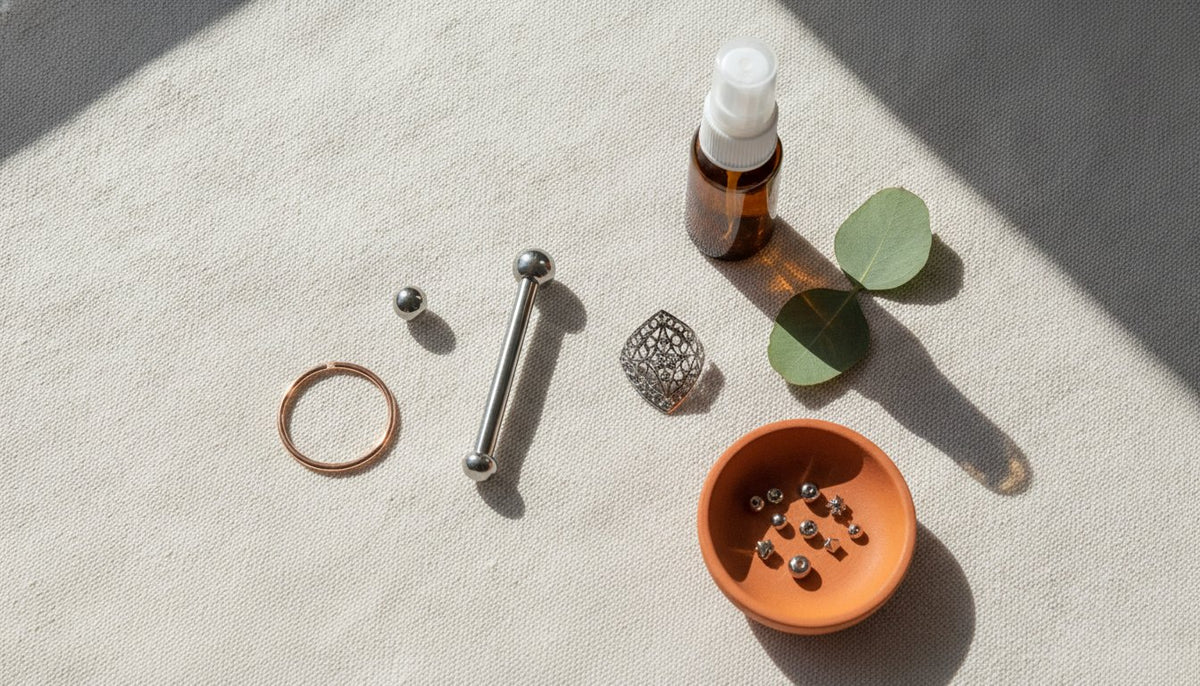
Your nipple rings should never be a compromise between personal expression and physical safety. While the visual appeal of a new look is exciting, the reality of metal allergies, sizing confusion, and daily discomfort can quickly turn a moment of empowerment into a source of stress. You deserve a curated look that respects your anatomy, supports your lifestyle, and elevates your aesthetic.
We understand that navigating gauge sizes and material certifications feels daunting. This guide simplifies the process, offering expert guidance on choosing the safest materials, perfect sizes, and most comfortable styles for your jewelry. BodyJ4You acts as your supportive specialist, providing the technical clarity needed to make informed decisions for your long-term well-being.
You'll learn how to identify biocompatible metals that prevent irritation, determine the exact barbell length for your unique shape, and master the aftercare routines that ensure lasting comfort. We'll explore the essential balance of safety, sizing, and style to help you move with confidence every day. By the end of this guide, you'll have the knowledge to select pieces that feel as good as they look.
Key Takeaways
- Master the "Rule of Three"—Safe, Biocompatible, and Polished—to select materials that protect your physical integrity and skin health.
- Eliminate sizing confusion by learning how to measure gauge and length for nipple rings that provide a secure, irritation-free fit.
- Evaluate the functional differences between barbells, rings, and shields to find a style that balances your aesthetic with daily comfort.
- Adopt clinical aftercare standards using professional-grade saline spray to ensure seamless jewelry transitions and long-term piercing stability.
The Anatomy of Style: Understanding Nipple Piercing Jewelry
Nipple jewelry is an intimate form of self-expression. It blends personal aesthetics with biological reality. While the term nipple rings serves as a broad category, it encompasses three distinct formats: barbells, captive rings, and ornate shields. Choosing the right style isn't just about the look; it's about the long-term stability of your piercing. A well-chosen piece ensures the tissue remains healthy, the placement stays secure, and the aesthetic remains refined.
Understanding the history of nipple piercing reveals a long tradition of body adornment that prioritizes both form and function. BodyJ4You approaches this tradition as a Wise Guardian. We believe high-quality jewelry should be accessible, affordable, and safe. Our philosophy centers on three pillars: clinical precision, aesthetic variety, and nurturing care. By prioritizing comfort alongside visual appeal, you create a look that feels as good as it looks.
Why Jewelry Shape Matters for Your Anatomy
Your anatomy dictates the jewelry, not the other way around. Straight barbells are the industry standard for a reason. They support the natural resting state of the tissue and minimize internal stress. Curved jewelry, while visually interesting, can create uneven pressure on the healing channel. This often leads to irritation or migration. When choosing your first few pieces, consider a minimalist barbell. It's clean, professional, and stable. Ornate statement pieces are beautiful, but they require a fully matured piercing to support their weight and complexity. Don't rush into heavy designs that might compromise your comfort.
The Healing Timeline: When to Switch Styles
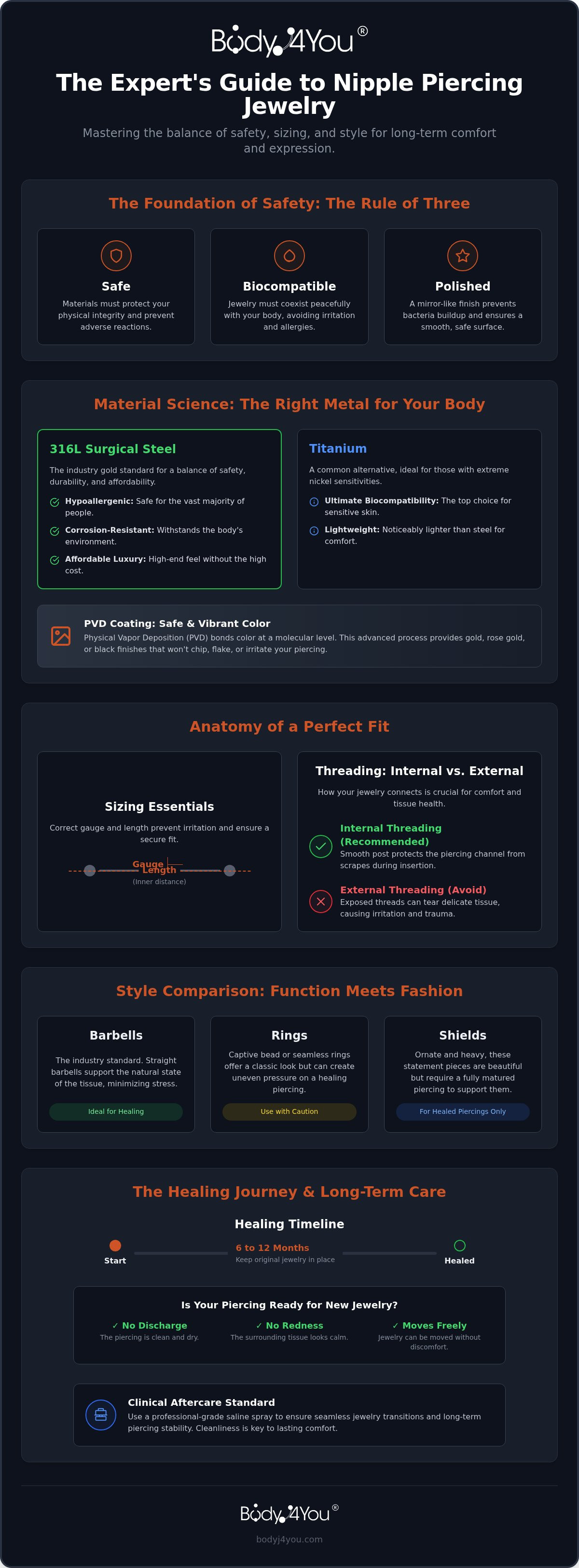
Patience is the foundation of piercing health. The initial healing period requires nurturing care, typically lasting between six to twelve months. It's vital to keep your original jewelry in place during this time to allow the fistula to strengthen. You'll know you're ready for an upgrade when the piercing shows three key signs: a total absence of discharge, no residual redness, and jewelry that moves freely without discomfort. Switching to heavy shields or intricate designs too early is a common mistake. Excessive weight can pull on a fragile healing channel, causing the nipple rings to reject or sit crookedly. Start light, stay patient, and prioritize the integrity of your skin.
Material Science: Choosing Biocompatible Nipple Rings
Quality materials are the bedrock of piercing longevity. When you choose biocompatible nipple rings, you're investing in your body's ability to thrive. We follow a strict "Rule of Three" for every piece we recommend: it must be Safe, Biocompatible, and Polished. This triple standard ensures that your jewelry supports biological health while providing an aspirational aesthetic. Choosing the wrong metal can lead to persistent irritation, migration, or allergic reactions that compromise your self-expression.
Surgical Steel vs. Titanium: What You Need to Know
316L Surgical Steel is the industry gold standard for durability and safety. It's hypoallergenic. It's corrosion-resistant. It's affordable. This specific grade of steel is engineered to withstand the unique environment of a body piercing. A high-polish finish is equally critical to your success. A mirror-like surface eliminates microscopic pits where bacteria might hide, significantly reducing the risk of localized infections. While titanium is a common alternative for those with extreme nickel sensitivities, 316L Surgical Steel remains the reliable choice for the vast majority of enthusiasts seeking a balance of luxury and safety. You can find a curated selection of high-quality surgical steel jewelry that meets these rigorous standards.
Self-expression shouldn't stop at a silver finish. PVD (Physical Vapor Deposition) coatings allow for vibrant colors like gold, rose gold, and deep black without the risks associated with traditional plating. This advanced process bonds a thin layer of safe material to the steel at a molecular level. It won't chip. It won't flake. It won't irritate the delicate tissue of your piercing channel. This technology bridges the gap between clinical safety and creative style.
Understanding Threading and Comfort
The way your jewelry connects matters deeply for your daily comfort. Internal threading is the superior choice for nipple tissue. In this design, the post is perfectly smooth, and the screw is located on the decorative end. External threading, by contrast, has exposed threads that can scrape the internal piercing channel during every jewelry change. By choosing internal threaded labret studs or barbells, you protect the fragile fistula from unnecessary trauma. Secure, snug-fitting ends are the final piece of the puzzle. They prevent accidental loss and ensure your look stays secure during physical activity. Precision engineering meets aesthetic refinement to keep your nipple rings safe and stylish for years to come.
Barbells, Rings, and Shields: A Style Comparison
Choosing your jewelry format is a decision that bridges the gap between your lifestyle and your aesthetic goals. It's about finding a balance that supports your body's needs while celebrating your personal growth. Your daily activities, from high-intensity workouts to your sleep cycle, should dictate the jewelry you wear. We believe in a tripartite approach: anatomy-first sizing, biocompatible materials, and lifestyle-appropriate styling. By understanding the functional differences between barbells, rings, and shields, you can curate a collection that feels secure and looks aspirational.
Straight Barbells: The Reliable Classic
Straight barbells are the quintessential choice for active individuals. They solve the common problem of jewelry catching on sports bras or heavy bedding. Because they sit flush against the tissue, they offer a low-profile solution that minimizes movement and friction. The proof of their efficacy is found in their status as the industry standard for initial and long-term wear. You don't have to sacrifice style for stability. You can choose from simple polished ends, colorful PVD-coated balls, or sparkling synthetic gems. A snug fit is essential; a barbell that is too long will slide, while one that is too short will pinch. Precision is comfort.
Nipple Shields and Dangles: Making a Statement
Nipple shields provide a bold, ornate frame for your anatomy. They're perfect for those who view their nipple rings as a centerpiece of artistic self-expression. However, the weight and complexity of these pieces can present a challenge for daily wear. The problem of snagging on lace or knit fabrics is real. The solution is a disciplined approach to styling: use shields for special occasions or specific outfits. This "Wise Guardian" strategy protects your piercing from accidental trauma while allowing you to enjoy a high-end look. Always ensure your piercing is fully matured before introducing the additional weight of a shield.
Captive Bead Rings and Circular Barbells
The hoop is a classic staple that signals confidence and heritage. Captive bead rings (CBRs) are valued for their secure closure; the tension of the ring holds the bead in place, making it nearly impossible for the jewelry to fall out accidentally. Circular barbells, or "horseshoes," offer a similar aesthetic with the added benefit of easier maintenance. They solve the problem of difficult jewelry changes by using threaded ends instead of tension. Both styles offer incredible versatility for different anatomical shapes. Whether you prefer the clean lines of a CBR or the modern edge of a circular barbell, these hoops remain a favorite for those seeking a timeless body modification aesthetic.
Sizing and Fit: The Expert Measurement Guide
Understanding Gauge Sizes (14g vs. 12g)
Standard nipple rings are typically 14g (1.6mm), which provides the ideal balance of strength and comfort. Some professionals prefer 12g (2.0mm) for larger anatomy to increase stability and prevent the "cheese-cutter effect" where thin jewelry migrates through the skin. You should never downsize to a thinner gauge. Thinner jewelry puts concentrated pressure on the fistula, which can lead to the body rejecting the piece entirely. To better visualize these dimensions, you can reference our ear gauge size chart, which offers a detailed look at how gauge thicknesses are standardized across the industry.
How to Measure Your Barbells and Hoops
Measuring for new jewelry requires a steady hand and a metric ruler. Accuracy is the difference between a piercing that thrives and one that struggles with constant irritation. Follow these three steps to ensure your next piece feels like a second skin:
- Step 1: Measure the distance between the entry and exit holes of your piercing while the tissue is in a relaxed, warm state. Using a caliper or a small ruler, find the "wearable length" of the post.
- Step 2: Add exactly 1-2mm of "breathing room" to your measurement. This essential gap allows for the natural expansion of the tissue during arousal or temperature changes without causing the jewelry ends to press painfully into the skin.
- Step 3: For captive bead rings or circular barbells, focus on the internal diameter. This is the measurement across the widest part of the inside of the ring. If the diameter is too small, the curve of the ring will put constant upward pressure on the piercing channel, which often leads to migration or unsightly bumps.
Once you have your measurements, browse our precision-engineered jewelry collection to find your next favorite style. Don't settle for "close enough" when it comes to your body's comfort.
Maintenance and Aftercare: Protecting Your Investment
Clinical precision is the silent partner of aesthetic refinement. While choosing the right nipple rings is a creative act, maintaining them is a biological necessity. Proper aftercare acts as a stabilizing force for your piercing, ensuring that your transition between styles is seamless and secure. We position a professional-grade sterile saline spray for piercings as the gold standard for long-term health. It provides the purity, consistency, and ease of use required to protect your physical investment and support your journey toward self-expression.
The Daily Cleaning Ritual
Consistency creates safety. Your daily routine should focus on nurturing care rather than aggressive intervention. Use a saline solution to gently soften and remove "crusties," which are the natural lymph fluid deposits that accumulate around the jewelry. This prevents debris from being pulled into the piercing channel where it can cause internal micro-tears. We advocate for the LITHA rule: Leave It The Hell Alone. Beyond your twice-daily cleaning, avoid rotating the jewelry or touching it with unwashed hands. For those seeking deeper technical details, our guide on nipple piercing care using salt solutions offers a structured approach to maintaining hygiene without compromising skin integrity.
Troubleshooting Irritation and Bumps
Physical vulnerability requires a vigilant eye. You must be able to distinguish between a minor irritation bump and a clinical infection. A healing bump is often a localized response to friction, improper sizing, or low-quality materials. By contrast, an infection typically presents with persistent heat, throbbing pain, and discolored discharge. If you notice a persistent protrusion, a piercing bump treatment oil can act as a soothing agent to reduce inflammation and stabilize the tissue.
Prevention remains the most effective strategy for long-term success. As discussed in our material science section, using 316L Surgical Steel is your first line of defense against dermatological distress. High-quality materials, precise sizing, and disciplined aftercare form the tripartite foundation of a piercing that lasts a lifetime. By acting as your own supportive specialist, you ensure your nipple rings remain a source of pride rather than a source of irritation. Trust the process, respect the biology, and enjoy the aesthetic refinement of a healthy piercing.
Elevate Your Aesthetic with Clinical Confidence
BodyJ4You brings over 20 years of industry expertise to your collection. We focus on safe, high-quality, and affordable pieces that meet the highest standards of purity. Our locally manufactured aftercare line supports your healing with nurturing care. You don't have to choose between a vibrant aesthetic and dermatological safety. We're here to act as your supportive specialist through every jewelry change and aftercare ritual, prioritizing your comfort above all else.
Shop BodyJ4You’s Curated Nipple Jewelry Collection to discover the perfect blend of safety and style. You deserve a look that feels as secure as it is beautiful. Step forward with the empowerment that comes from expert guidance and premium materials.
Frequently Asked Questions
What is the standard gauge size for nipple rings?
The standard gauge size for nipple jewelry is 14g (1.6mm). This thickness provides the necessary stability to prevent the jewelry from migrating through the tissue over time. While 12g (2.0mm) is occasionally used for larger anatomy to increase surface area and comfort, 14g remains the most versatile choice for most enthusiasts. You should avoid downsizing to thinner gauges like 16g, as they increase the risk of irritation and the "cheese-cutter effect" on delicate tissue.
Can I use surgical steel nipple rings if I have sensitive skin?
316L Surgical Steel is specifically engineered to be hypoallergenic and safe for the majority of individuals with sensitive skin. This biocompatible material is corrosion-resistant and features a high-polish finish that prevents bacterial buildup. If you have a severe nickel allergy, you might consider titanium as an alternative. However, for most people, our high-quality surgical steel nipple rings offer a reliable and affordable balance of clinical safety and aesthetic refinement without causing dermatological distress.
How long should I wait before changing my nipple jewelry for the first time?
You should wait a minimum of six to twelve months before changing your jewelry for the first time. Nipple piercings heal from the outside in, meaning the internal channel remains fragile long after the surface appears healthy. Changing pieces too early can cause micro-tears in the fistula, leading to swelling, bleeding, or infection. Patience is a form of nurturing care; wait until all redness and discharge have subsided before introducing new styles.
Should I choose a straight barbell or a ring for a new piercing?
A straight barbell is the superior choice for a new piercing. Rings and hoops can rotate freely, which pulls bacteria and crusties into the healing channel. This constant movement irritates the tissue and significantly extends the healing timeline. Barbells remain stable, supporting the natural resting state of your anatomy. Once the piercing is fully matured, usually after twelve months, you can confidently switch to circular styles or captive bead rings for a different aesthetic.
How do I know if my nipple ring is too tight?
Your jewelry is too tight if the ends are pressing into the skin or creating visible indentations. You should always see a small amount of the post on either side of the nipple, providing about 1-2mm of "breathing room." If the tissue looks pinched, feels throbbing, or remains persistently red, the jewelry is likely too short. Nipple tissue expands during arousal or temperature shifts, so a restrictive fit can cause significant pain and localized inflammation.
Are nipple shields comfortable for everyday wear?
Nipple shields are primarily designed as statement pieces rather than everyday jewelry. While they offer a bold and artistic look, their increased weight and larger profile can make them uncomfortable for long-term wear or sleep. They also carry a higher risk of snagging on fabrics like lace or knits. We recommend using shields for special occasions and switching back to a reliable straight barbell for your daily activities to maintain the long-term stability of the piercing.
What is the best way to clean my nipple jewelry without removing it?
The most effective way to clean your jewelry is by using a sterile saline spray twice daily. Simply mist the entry and exit points of the piercing and allow the solution to sit for a minute to soften any debris. Gently pat the area dry with a clean paper towel. Avoid using cotton balls or swabs that can leave fibers behind. This method ensures clinical precision in your hygiene routine without the trauma of removing the jewelry prematurely.
Can I wear my nipple rings during an X-ray or MRI?
You can typically wear surgical steel jewelry during a standard X-ray, but you must remove it for an MRI. The powerful magnets in an MRI machine can interact with even high-quality metals, posing a safety risk. If you have a medical procedure scheduled, it's best to consult your technician beforehand. You can use a non-metallic retainer to keep the piercing open, ensuring your nipple rings don't interfere with the imaging results or your safety.


