

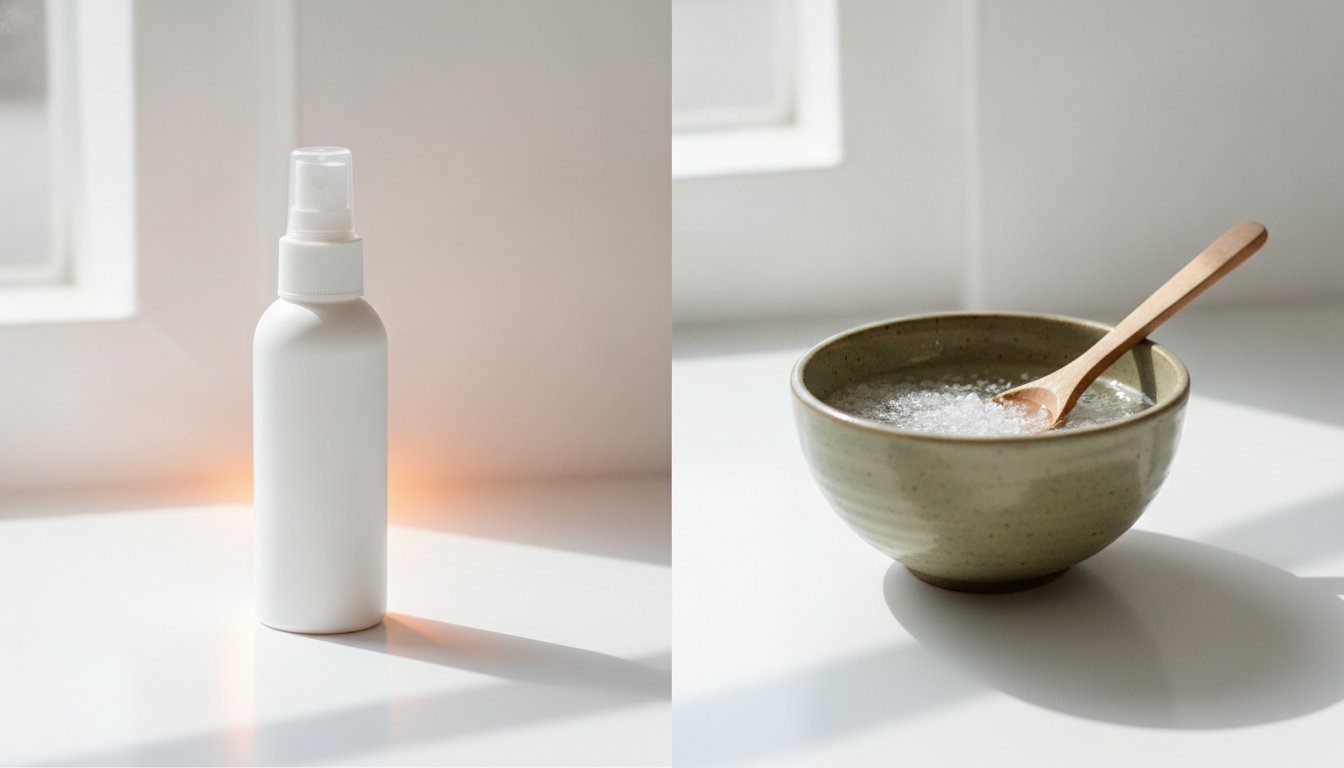
That artisanal sea salt soak you’ve been mixing in your kitchen might actually be the very thing stalling your piercing’s progress. When evaluating saline spray vs sea salt soaks for piercings, the science in 2026 is clear: precision matters. While the ritual of a warm soak feels traditional, the margin for error with DIY ratios is high. Mixing too much salt often leads to dehydration, redness, and persistent irritation.
We know you want the best for your body and your new aesthetic. It’s normal to feel overwhelmed by conflicting advice or the fear of a brewing infection from a non-sterile container. You deserve a routine that is safe, precise, and effortless. This expert comparison reveals why sterile saline has become the definitive professional gold standard for modern aftercare.
You will learn how to simplify your daily ritual while supporting your skin's natural healing process. We are going to break down the science of isotonic solutions, explain why convenience leads to better consistency, and show you how to protect your investment with confidence. Discover why the modern approach to healing prioritizes purity, safety, and cellular health over outdated traditions.
Key Takeaways
- Understand the biological necessity of 0.9% isotonic saline for supporting cellular regeneration without dehydrating delicate healing tissue.
- Compare saline spray vs sea salt soaks for piercings to see why sterile, pressurized mists have replaced traditional DIY methods for safety and precision.
- Discover how the "no-touch" irrigation method prevents cross-contamination and irritation during the most vulnerable stages of your healing journey.
- Learn the professional protocol for transitioning from sterile cleaning to moisture-rich botanical oils to maintain skin elasticity and long-term health.
The Science of Piercing Aftercare: What Is Isotonic Saline?
Healing is a delicate biological process. It requires an environment that respects the body's internal chemistry. When choosing between saline spray vs sea salt soaks for piercings, the most critical factor is maintaining "isotonic" balance. Isotonic saline is a bio-compatible solution that supports cellular migration and wound closure. By mimicking the natural salinity of your own blood and tears, it provides a safe harbor for new tissue to grow.
Every new piercing produces lymph, a clear fluid that eventually hardens into "crusties." While these are a normal part of the inflammatory response, they can trap bacteria if left to accumulate. Saline serves as a gentle irrigator. It softens and lifts these deposits without the chemical trauma associated with alcohol or peroxide. It is the gold standard for three reasons: it is non-toxic, non-irritating, and highly effective.
Why 0.9% Sodium Chloride is the Magic Number
Precision is the foundation of safety. A solution of 0.9% sodium chloride is considered isotonic saline because it perfectly matches the salt concentration of human cells. This balance is vital for the fistula, the small tunnel of skin forming around your jewelry. Through the process of osmosis, water moves toward higher salt concentrations. When weighing saline spray vs sea salt soaks for piercings, the chemical consistency of the spray ensures you never accidentally create a hypertonic environment.
If your solution is too salty, it physically pulls moisture out of your healing cells. This results in localized dehydration, stinging, and prolonged redness. Many enthusiasts mistakenly believe that "more salt equals more clean," but this approach often kills the very tissue trying to heal. Professional piercers have moved away from harsh antiseptic chemicals because they prioritize cellular integrity over aggressive sterilization. They understand that a healthy body knows how to heal if it isn't being constantly attacked by its own aftercare.
Irrigation vs. Scrubbing: The Gentle Approach
Your body is performing a quiet miracle. Inside the piercing site, specialized cells called fibroblasts are working to build a new layer of skin. These cells are fragile. Scrubbing the area with Q-tips, harsh soaps, or abrasive cloths can tear this microscopic progress. This mechanical friction creates micro-tears that invite bacteria and prolong the healing timeline. You don't need to force the wound to be clean; you simply need to support its natural defenses.
Instead of friction, we recommend gentle irrigation. A steady stream of saline flushes out debris and bacteria through fluid movement alone. This "Wise Guardian" approach ensures your piercing stays clean while the delicate new tissue remains undisturbed. It is about working with biology, not against it. By choosing irrigation over scrubbing, you protect the integrity of your skin and ensure a smoother path to self-expression.
Sea Salt Soaks: The Traditional DIY Method
For decades, the piercing community relied on the kitchen-table ritual of the sea salt soak. It was a rite of passage. This traditional method involves mixing warm distilled water with non-iodized sea salt to create a homemade solution. While it remains a cost-effective option, the modern understanding of wound care has evolved. When evaluating saline spray vs sea salt soaks for piercings, we must acknowledge that while the warmth of a soak can increase localized blood flow and soothe discomfort, the risks associated with DIY preparation are significant.
The primary appeal of the soak is its simplicity, yet this simplicity is deceptive. Even "pure" sea salt can contain trace minerals, anti-caking agents, or environmental impurities that irritate a fresh wound. Modern APP aftercare guidelines have largely moved away from this practice because the home environment is not a sterile laboratory. What was once considered the standard is now viewed as a fallback method for those who cannot access professional-grade products.
The Pitfalls of the 'Pinch and Pour' Method
Accuracy is the enemy of the home-made soak. Most people use the "pinch and pour" method, but kitchen measurements are rarely precise enough for medical-grade aftercare. If your solution is too concentrated, it becomes hypertonic. This excess salt pulls moisture from your cells, leading to localized dehydration, peeling skin, and the dreaded "piercing bump." These bumps are often just the body's way of screaming that its environment is too harsh.
Contamination is another invisible threat. Your favorite coffee mug or a "clean" bowl can harbor biofilm and bacteria that thrive in warm, salty environments. By submerging your new piercing into an unsealed container, you risk introducing pathogens into the fistula. If your piercing is already showing signs of stress or dryness from improper salt ratios, a soothing Piercing Bump Treatment Oil can help restore the skin's natural barrier and calm the irritation.
When a Warm Soak Actually Makes Sense
There are specific scenarios where the heat of a soak provides genuine therapeutic value. For an "angry" piercing or significant localized swelling, a warm compress can encourage drainage and relax the surrounding tissue. However, this should be a targeted intervention rather than a daily habit. We recommend the following precautions to protect your skin:
- Limit the duration: Never soak for longer than 5 to 10 minutes. Prolonged exposure leads to maceration, which is the softening and breaking down of skin due to over-hydration.
- Rinse thoroughly: Always flush the area with fresh, distilled water after a soak. This removes any salt residue that could crystallize and cause micro-scratches on the healing tissue.
- Use sterile tools: If you must soak, use disposable gauze or a single-use paper towel rather than a cloth that has been sitting in your bathroom.
While the tradition of the soak has historical weight, the margin for error is simply too high for most collectors. Consistency is the key to healing, and consistency is nearly impossible to achieve with a measuring spoon and a tea kettle.
Saline Piercing Aftercare Spray: The Modern Gold Standard
The evolution of aftercare has reached a definitive peak with the introduction of sterile mists. When comparing saline spray vs sea salt soaks for piercings, the spray offers a level of scientific precision that home-made solutions cannot match. Every canister contains a perfectly balanced 0.9% sodium chloride solution. It is reliable. It is sterile. It is effective. By removing the guesswork of kitchen chemistry, you ensure your body receives exactly what it needs for cellular repair without the risk of human error or irritation.
Consistency is the heartbeat of successful healing. With a pre-packaged spray, you don't have to worry about whether your salt ratio is too high or your water is too hot. You simply point and spray. This reliability builds a deep sense of trust between you and your healing process, allowing you to focus on the joy of your new aesthetic rather than the stress of potential complications.
The Pressurized Mist: More Than Just Convenience
The pressurized delivery system is more than a luxury; it is a functional tool for irrigation. Unlike a soak, which simply bathes the area, a fine mist provides the gentle mechanical force necessary to dislodge debris. This is crucial for complex placements like a daith, conch, or industrial barbell where "crusties" can hide in tight crevices. Utilizing a sterile saline spray for piercings allows you to clean these hard-to-reach areas without the need for physical contact. The 360-degree nozzle ensures you can reach every angle of your ear curation with ease, maintaining a "no-touch" policy that is vital for the first 12 weeks of healing.
This "no-touch" advantage is a game changer for sensitive skin. Every time you touch your piercing with a Q-tip or a cloth, you risk introducing hand bacteria or causing micro-tears. The spray eliminates this friction. It flushes, cleanses, and protects in one swift motion.
Avoiding Cross-Contamination
Sterility is the ultimate shield against complication. A DIY soak begins to attract airborne bacteria the moment it is mixed in an open container. In contrast, a sealed, pressurized can remains sterile from the first use to the last drop. This follows the NHS advice on preventing piercing infections, which emphasizes the need for clean, salt-based irrigation to keep the wound site healthy. Our locally manufactured spray acts as a "Wise Guardian" for your skin, protecting the physical vulnerability of a new wound while you navigate your daily life.
Portability also plays a major role in hygiene. Life doesn't stop for a new piercing. Whether you are at work, the gym, or traveling, a travel-friendly spray ensures you never skip an aftercare session. You don't need a kitchen, a kettle, or a measuring spoon. You only need a few seconds to maintain your protocol, ensuring your journey toward self-expression remains uninterrupted and safe.
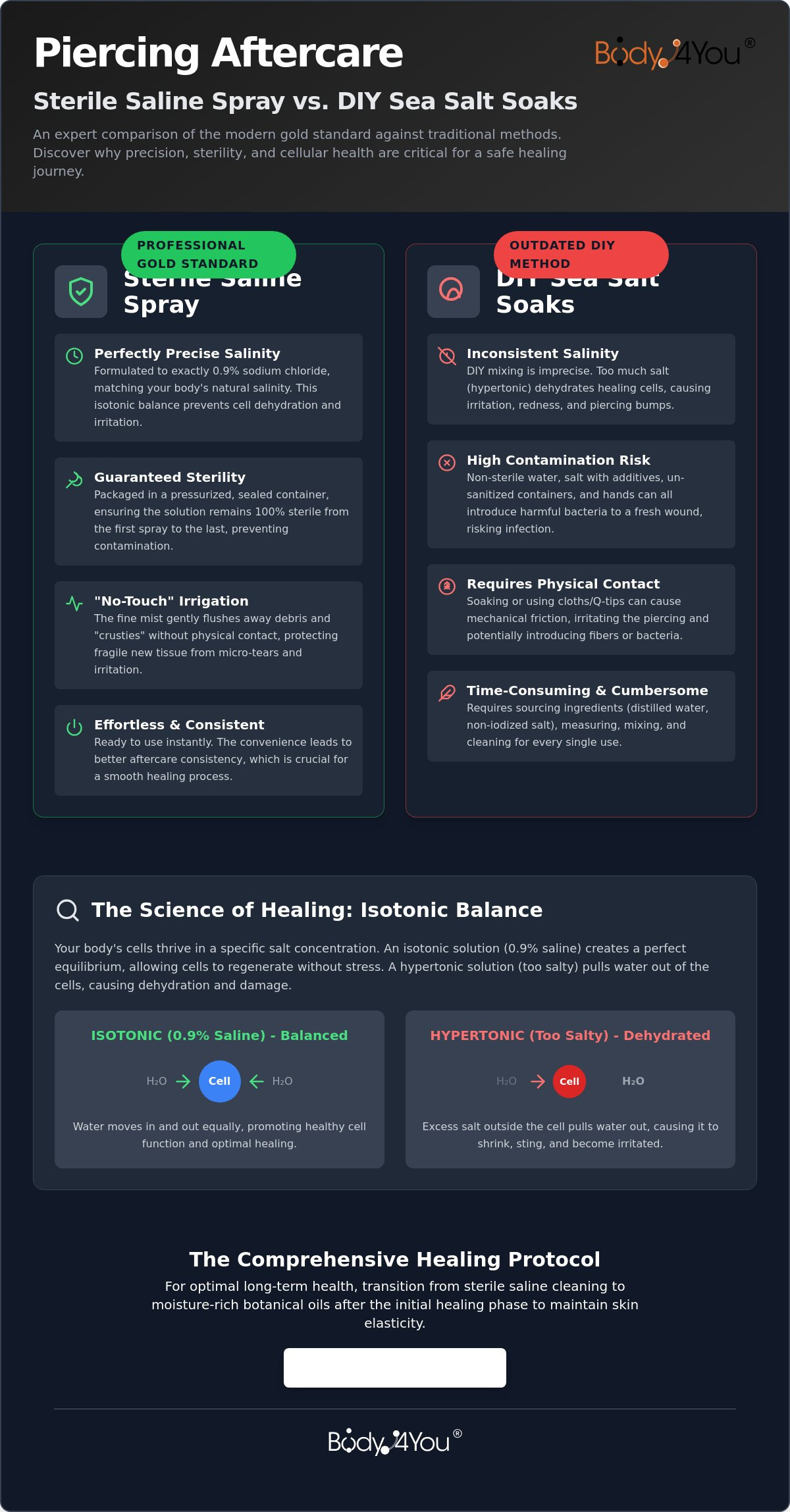
Saline Spray vs. Sea Salt Soaks: The Comparison
Choosing your aftercare method is the first step in protecting your investment. While both options aim to cleanse, the execution differs fundamentally. Healing is not a matter of chance; it is a matter of choice. When we weigh saline spray vs sea salt soaks for piercings, we look at four pillars: Sterility, Accuracy, Cost, and Ease of Use. Sterility is the shield that prevents infection. Accuracy is the precision that prevents irritation. Ease of use is the consistency that ensures you actually finish the healing journey.
We believe in the Rule of Three for successful aftercare: Material, Moisture, and Management. You must start with high-quality jewelry material. You must maintain the correct moisture balance. Finally, you must have a management routine that is sustainable. Sprays offer a sealed environment and a guaranteed 0.9% concentration every time. Soaks, while cost-effective, introduce the variable of human error. For 95% of piercings, a sterile saline spray is the superior choice.
Choosing the Right Method for Your Piercing Type
Different anatomy requires different care. Cartilage piercings, such as the helix or tragus, have notoriously low blood flow. These areas are prone to "piercing bumps" and require the high-pressure irrigation of a spray to stay clean without being touched. Oral piercings are the exception where a sea salt rinse, rather than a soak, remains appropriate to manage the unique bacteria of the mouth. For those with stretched ears, the challenge is balancing saline irrigation with moisture management. Saline cleanses the fistula, but you must eventually transition to oils to prevent the skin from becoming brittle.
If you are looking for the most reliable way to protect your new curation, our Saline Piercing Aftercare Spray provides the clinical precision your body deserves. It eliminates the mess of the kitchen and the risk of the mug.
The Verdict: Why Professionals Recommend Sprays
The piercing industry has undergone a massive shift in standards over the last decade. We have moved away from "home remedies" toward evidence-based wound care. This evolution is driven by a desire to reduce the human error factor. When you mix salt at home, you are guessing. When you use a pressurized spray, you are applying a medical-grade solution designed for cellular harmony. This shift protects the physical vulnerability of the client and ensures that the artist's work remains pristine.
Modern collectors value their time and their health. A spray takes five seconds; a soak takes ten minutes. By choosing the modern gold standard, you are choosing a path of less resistance and higher safety. It is the most supportive specialist you can have in your corner during the first 12 weeks of your healing journey.
Beyond Saline: The BodyJ4You Comprehensive Healing Protocol
Healing is a journey, not a single event. While the debate of saline spray vs sea salt soaks for piercings often focuses on the first few weeks, true tissue health requires a long-term strategy. We believe in a three-stage approach: Cleanse, Nourish, and Protect. This protocol ensures your piercing doesn't just survive the initial healing phase but thrives as a permanent part of your aesthetic.
The foundation of this routine is consistency. During the first 12 weeks, irrigate the site with our Saline Piercing Aftercare Spray twice daily. This removes debris without disturbing the delicate fibroblasts. For intricate jewelry or hard-to-reach crevices, utilize our piercing cleaning swabs. These tools provide the precision necessary to maintain hygiene without the blunt force of a standard cotton ball.
Once the fistula has stabilized, it's time to support the skin's barrier. Prolonged use of saline can eventually lead to dryness in some skin types. To maintain elasticity, transition to Jojoba oil. Its molecular structure closely mimics human sebum, making it the perfect botanical match for your body. For those looking to support long-term tissue regeneration, Rosehip oil offers essential fatty acids that help the skin remain supple and vibrant.
Maintaining Healthy Stretched Lobe Skin
Stretched ears require a specialized hygiene protocol that lasts well beyond the initial stretch. Even after the tissue has healed, sebum and dead skin cells can accumulate within the piercing. Regular irrigation with saline remains essential for keeping the area fresh and odor-free. After cleansing, apply Gauges balm to create a protective barrier against environmental stressors like cold air or wind.
Irritation in stretched ears is often a result of improper fit rather than poor hygiene. We recommend consulting our ear gauge size chart to ensure your jewelry is not exerting unnecessary pressure on the lobe. A correct fit combined with daily moisture is the secret to thick, healthy lobes that stand the test of time.
Troubleshooting Bumps and Redness
When irritation occurs, identifying the cause is the first step toward a solution. Many "salt burns"-characterized by dry, peeling skin-are the direct result of the incorrect ratios found in DIY sea salt soaks. If you are dealing with a true piercing bump, you need a targeted intervention. These bumps are often inflammatory responses to minor trauma or jewelry movement.
In cases of stubborn inflammation, Castor oil acts as a supportive specialist. Its thick consistency and ricinoleic acid content help calm the skin and reduce redness. If the area feels chronically dry or tight, it may be time to stop saline irrigation and switch to 100% moisture-based care. Listen to your body. It will tell you when it has moved from the need for sterilization to the need for deep, botanical nourishment.
Master the Art of Healing
Healing is a deliberate act of self-care. When you evaluate saline spray vs sea salt soaks for piercings, the choice represents a commitment to your body's integrity. You now understand that while traditions have their place, modern mists offer the sterility and precision required for flawless results. By choosing isotonic balance over kitchen-table chemistry, you eliminate the variables of irritation and infection. Your body deserves a routine that is as sophisticated as the jewelry you wear.
At BodyJ4You, we bring over 20 years of expertise in body modification to every bottle. Our locally manufactured, dermatologically-minded formulas are trusted by professional piercers worldwide. We prioritize purity, safety, and your long-term wellness. Shop BodyJ4You Saline Aftercare Spray for Precision Healing to ensure your new curation receives the clinical care it deserves. Our specialist approach supports your skin from the first irrigation to the final stage of botanical nourishment.
Your journey of self-expression is a masterpiece in progress. Stay consistent, stay informed, and let your unique aesthetic shine with confidence. We are honored to be the guardian of your healing process.
Frequently Asked Questions
Is it okay to use contact lens solution instead of piercing saline spray?
No, you should never use contact lens solution to clean a fresh piercing. These products often contain preservatives, buffers, and protein removers that are safe for eyes but highly irritating to an open wound. For safe healing, use only a sterile 0.9% sodium chloride solution with no added chemicals.
Can I make my own saline spray at home to save money?
You cannot replicate the sterility or precision of a professional spray in a domestic kitchen. While mixing salt and water is possible, it is impossible to keep the solution sterile once it is exposed to the air. Professional sprays are pressurized and sealed to prevent contamination from the first use to the last.
How many times a day should I spray my piercing with saline?
We recommend a protocol of twice daily. Cleaning once in the morning and once before bed provides the perfect balance of hygiene and rest. Over-cleaning can lead to localized dryness, while skipping sessions allows bacteria and lymph to accumulate around the jewelry.
Why does my piercing feel dry after using sea salt soaks?
Dehydration occurs when the salt-to-water ratio is too high, a frequent pitfall when choosing saline spray vs sea salt soaks for piercings. A DIY solution that is too salty becomes hypertonic, which physically pulls moisture out of your healing cells. Switching to a pre-mixed isotonic spray ensures your skin stays hydrated and happy.
Can I use table salt or Epsom salt for my piercing soak?
Table salt and Epsom salt are unsuitable for piercing aftercare. Table salt contains iodine and anti-caking agents that can cause chemical trauma to the fistula. Epsom salt is magnesium sulfate, which is intended for muscle aches rather than wound irrigation. Only non-iodized sea salt or medical-grade saline should ever touch your piercing.
Do I need to rinse off the saline spray after applying it?
Rinsing is generally unnecessary because isotonic saline matches your body's natural chemistry. However, if you have extremely sensitive skin, you can gently rinse the area with distilled water after a few minutes. Always ensure you pat the surrounding skin dry with a clean, disposable paper towel to prevent moisture from sitting against the wound.
How long should I continue using saline spray on a new piercing?
Continue your saline protocol throughout the entire initial healing phase. For lobe piercings, this typically lasts 6 to 8 weeks. Cartilage piercings require a much longer commitment, often spanning 6 to 12 months. Consistency is the foundation of a stable, healthy piercing.
What should I do if my piercing is still 'crusty' after spraying?
Let the saline mist sit on the area for one minute to soften the hardened lymph. Once the "crusties" are saturated, use a specialized piercing cleaning swab to gently wipe away the debris. Never pick at the area with your fingernails or force a dry crust to move, as this causes micro-tears and irritation.


