

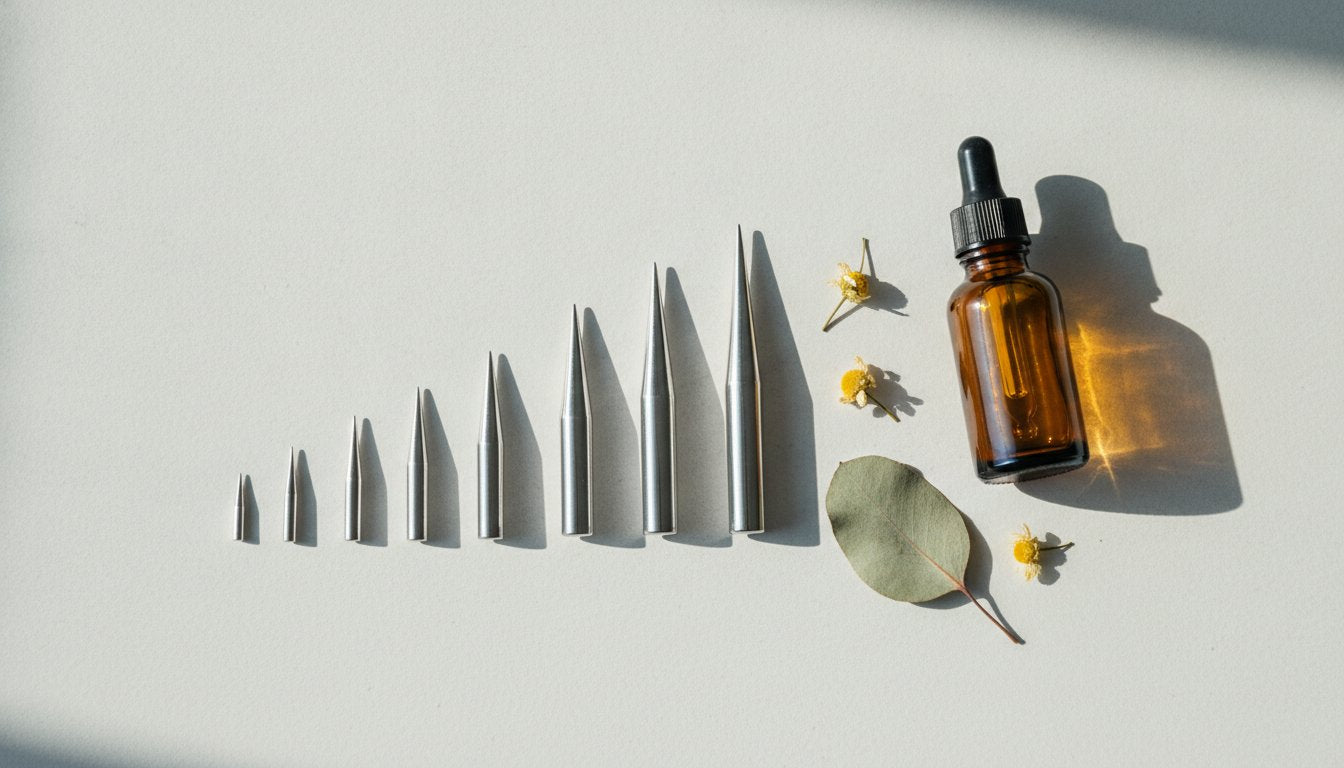
Patience is a biological requirement, not a suggestion. Your earlobes need time to grow new skin cells, maintain blood flow, and preserve tissue elasticity. If you've ever wondered how long to wait between ear stretches, the answer is rarely as fast as your social media feed suggests. Rushing the process often leads to thinning, scarring, or the irreversible "cat-butt" effect that every enthusiast fears.
We understand the excitement of reaching your goal size and the frustration of staring at a "slow" timeline. You want results that look professional, feel comfortable, and stay healthy for a lifetime. It's common to feel lost in a sea of forum myths and conflicting anecdotes. This guide replaces that confusion with the definitive 2026 safety standards, blending clinical precision with nurturing care.
You'll master the exact gauge-by-gauge timeline needed to protect your lobes. We'll explore the science of skin regeneration, the specific waiting periods for larger jumps, and the aftercare rituals that ensure a pain-free transition. By the end, you'll have a clear roadmap to the aesthetic you desire without compromising your body's integrity.
Key Takeaways
- Understand how the fistula strengthens through collagen remodeling to prevent permanent tissue damage and maintain lobe thickness.
- Master the definitive 2026 timeline to learn exactly how long to wait between ear stretches based on your specific gauge size.
- Identify the physical signs of readiness, such as the "Gap Test" and effortless jewelry rotation, before attempting your next transition.
- Learn professional aftercare rituals, including daily lobe massages and sterile saline applications, to ensure a pain-free healing process.
- Discover why high-quality surgical steel or acrylic kits provide the structural integrity needed for a safe, successful stretch.
The Biology of Ear Stretching: Why Your Lobes Need Time
Stretching is more than a style choice; it's a deliberate physiological transformation. When you increase the size of your jewelry, you aren't just pulling on skin. You're asking your body to create new tissue. This process centers on the fistula, the internal tunnel of skin that lines your piercing. For a stretch to be successful, this fistula must thicken and strengthen to support the new weight. Many people ask how long to wait between ear stretches because they want to avoid damage, but the answer lies in the cellular cycle of collagen remodeling.
Collagen is the structural protein that gives your skin its integrity. When you move up a size, the existing collagen fibers are stretched and slightly displaced. Your body then begins a complex remodeling phase where it breaks down old fibers and weaves new, stronger ones. This biological "construction work" takes several weeks to complete. If you rush this cycle, the fistula remains thin and fragile. Over time, this cumulative neglect leads to thinning lobes, where the skin becomes dangerously translucent and prone to tearing. Remember: the absence of pain is not a signal that your tissue is ready. Pain is a late-stage warning, but biological maturity happens silently in the weeks following a transition.
The Role of Skin Elasticity and Blood Flow
Healthy stretching relies on robust vascularity. Blood flow is the delivery system for oxygen and the essential nutrients required for new skin cell production. Certain areas of your lobe may have less blood flow than others, which explains why one ear often heals slower than its "easy" counterpart. Hydration plays a massive role here too. Well-hydrated skin cells are more pliable and resilient. When you maintain high moisture levels, your skin can expand without losing its structural density. You can find more detailed historical and technical context on this process in this overview of Stretching (body piercing).
Micro-Tears vs. Healthy Stretching
There is a narrow line between stretching skin and tearing it. Rushing the process creates microscopic fissures in the fistula. These tiny wounds might not bleed, but they trigger the production of "fibrosis" or scar tissue. Scar tissue is a problem for two reasons. First, it's significantly less elastic than healthy skin. Second, it restricts blood flow. If you develop too much scar tissue, future stretches become increasingly difficult and painful. True stretching is a gentle expansion of healthy cells; tearing is a traumatic event that your body struggles to repair. Understanding how long to wait between ear stretches ensures you stay on the side of healthy expansion rather than permanent scarring.
The Ear Stretching Timeline: Recommended Wait Times by Size
One of the most common mistakes in body modification is applying a universal deadline to every size increase. Biology doesn't work on a flat schedule. As your gauges grow, the surface area of the fistula increases, meaning your body must work harder to produce the necessary skin cells. The logic is simple: the larger the jump, the longer the wait. Understanding how long to wait between ear stretches requires a nuanced approach that respects the physical limits of your tissue.
Small Gauges: Establishing the Foundation
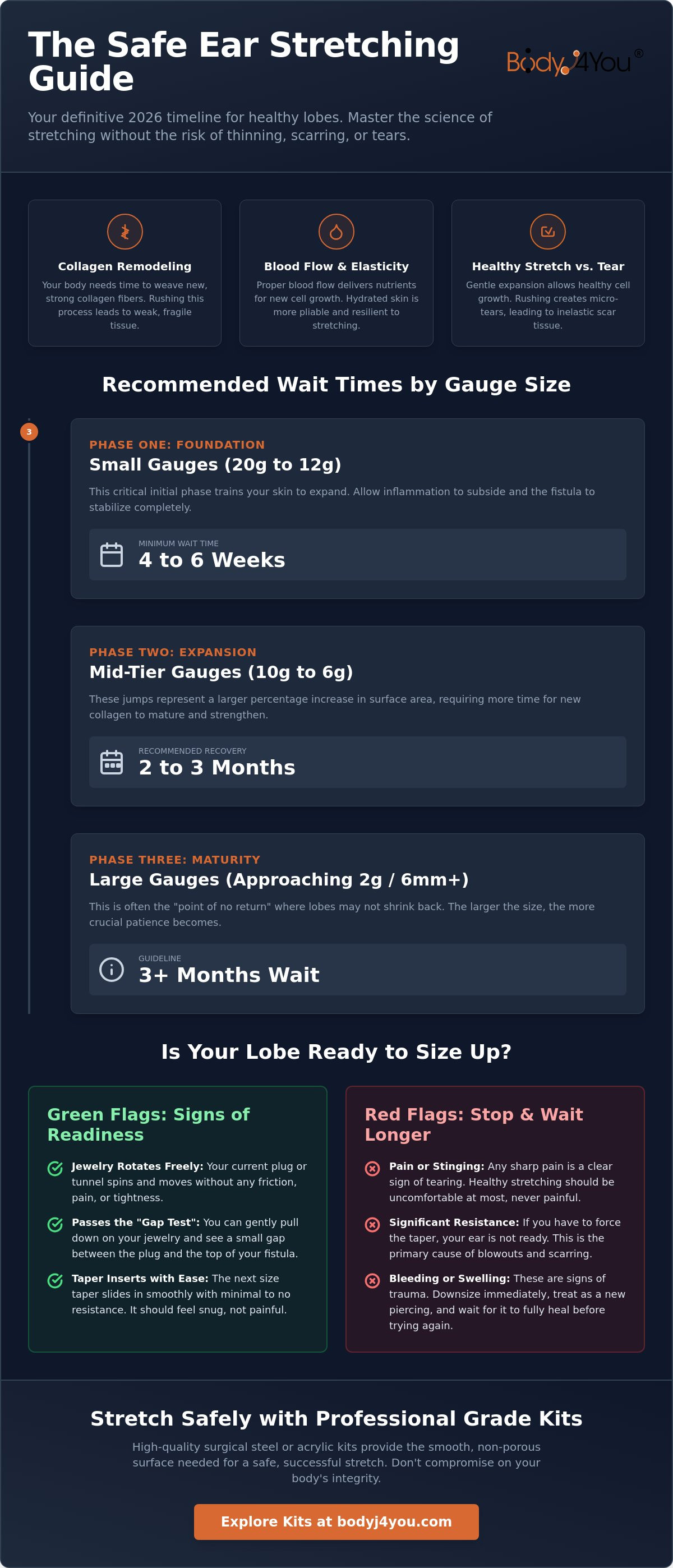
The journey from a standard piercing to the initial gauges is the most critical phase for long-term health. During these first steps, you are training your skin to expand. For the 20g to 12g range, a minimum wait of 4 to 6 weeks is the standard. This allows the initial inflammation to subside and the skin to stabilize. You can easily track these early transitions using a professional ear gauge size chart to ensure you aren't skipping vital steps.
Once you reach the middle-tier sizes, specifically from 10g to 6g, your body requires more recovery time. These jumps represent a larger percentage of your lobe's total surface area. We recommend a healing period of 2 to 3 months between these sizes. This duration ensures the new collagen fibers have matured enough to handle the next level of tension without tearing. If you notice any resistance, it's a sign that your body needs another few weeks of rest before you introduce a Surgical Steel Taper and Plug Kit for the next size.
The "Point of No Return" and Large Gauges
As you approach the 2g (6mm) threshold, you enter a new phase of stretching. This is often considered the "point of no return," where the lobes may no longer shrink back to a standard piercing size if the jewelry is removed. Because of this permanent change, the jumps become more taxing on your skin. The transition from 2g to 0g is particularly notorious because it involves a full 2mm increase, double the size of previous jumps. This "wall" requires at least 3 to 4 months of healing to avoid the health risks of ear stretching such as blowouts or permanent thinning.
For these larger sizes, "dead stretching" becomes the preferred method. This involves waiting until the ear naturally loosens enough to accept the next size without the assistance of a taper. It's the safest way to ensure you aren't forcing a transition your body isn't ready for. When determining how long to wait between ear stretches at this level, patience is your greatest asset. Rushing a 2mm jump can cause trauma that takes years to correct, so listen to your body and prioritize the long-term integrity of your lobes.
Signs You Are Ready to Size Up (and Critical Red Flags)
Biological timelines provide the framework, but your body provides the final authority. While you now understand the general rule for how long to wait between ear stretches, individual healing rates can fluctuate based on health, hydration, and local blood flow. Transitioning to a larger gauge should never be a struggle of force. Instead, it should feel like a natural progression where the ear essentially "invites" the new size. By observing specific physical markers, you can ensure your fistula is sufficiently matured to handle increased tension.
The "Gap Test" is your first visual indicator. Gently pull down on your plug or tunnel; if you see a visible daylight gap between the jewelry and the top of your lobe, the skin has likely loosened enough to accommodate a size increase. This should be paired with effortless jewelry movement. Your plug should rotate freely within the ear without any "sticking" or resistance. If the jewelry feels glued to the skin, the internal lining is still healing. Finally, perform a "Tug Test" by gently pulling the jewelry forward. Healthy, ready lobes will show a distinct elasticity without any discomfort. The tissue should feel soft, thick, and pliable to the touch, rather than tight, hard, or thin. Following these safe stretching guidelines ensures you are making decisions based on data rather than impatience.
Red Flags: When to Stop Immediately
Pain is an immediate signal of failure. If you experience a "stinging" or "burning" sensation during a transition, stop. These sensations indicate that you are tearing the delicate skin of the fistula rather than stretching it. Watch for the early warning signs of a blowout, such as localized redness, significant swelling, or the appearance of a small "lip" of skin pushing out from the back of the piercing. If you see blood or clear fluid (lymph), you have caused a wound. In these cases, the best course of action is to downsize immediately and allow the ear to recover fully before attempting to size up again.
The Dangers of Rushing the Process
Impatience often leaves permanent marks. Rushing the process leads to "cat-butt" ears, a condition characterized by permanent wrinkling and scarring around the piercing. This happens when the skin is forced to expand faster than it can produce new cells. Even more serious is the risk of lobe necrosis, where restricted blood flow from excessive tension causes tissue death. To maintain the health of your aesthetic, a professional ear stretching kit must be used with a disciplined schedule. By respecting the biological limits of your body and understanding how long to wait between ear stretches, you protect the long-term thickness and vitality of your lobes.
How to Accelerate Healing and Maintain Lobe Health
Healing is an active process, not a passive one. While you are monitoring how long to wait between ear stretches, your primary goal is to optimize the environment for tissue regeneration. You can significantly improve the quality of your fistula by incorporating daily lobe massages into your ritual. These massages serve three purposes: they break down restrictive scar tissue, increase localized blood flow, and maintain the thickness of the lobe. By stimulating the area, you ensure that nutrients reach the cells working to remodel your collagen structure.
Material choice is equally vital during the recovery phase. While an Acrylic Ear Stretching Kit is excellent for healed ears or short-term wear, surgical steel is the superior choice for the actual healing period. Surgical steel is non-porous, biocompatible, and resistant to body fluids. Unlike acrylic, which can harbor bacteria in microscopic surface fissures, steel provides a sterile, stable environment that minimizes the risk of irritation. When you transition to a new size, use a Surgical Steel Taper and Plug Kit to ensure the smoothest possible recovery for your delicate tissue.
Essential Oils and Balms for Stretching
Topical support is the cornerstone of a sophisticated aftercare routine. Jojoba oil is a liquid wax that penetrates the skin to improve elasticity. Because its chemical structure closely mimics the skin's natural sebum, it is absorbed deeply without clogging pores or trapping harmful bacteria. For a more intensive treatment, Gauges balm provides a protective barrier that locks in moisture while delivering botanical nutrients. This deep hydration is what prevents the tightness and "crustiness" often associated with fresh stretches. Regular application keeps the skin pliable, making your next transition much more comfortable.
The Saline Soak Method
Cleanliness is the guardian of health. For the first 2 weeks after a size increase, you must use a sterile saline spray for piercings to flush the fistula. Many enthusiasts make the mistake of using "sea salt soaks" mixed at home. These are often too harsh, too salty, or made with non-sterile water, leading to further irritation. A 0.9% sodium chloride spray provides the exact isotonic balance your body needs to heal without drying out the skin.
Proper hygiene also addresses the common issue of sebum buildup, often referred to as "stinky gauges." This natural accumulation of dead skin cells and oils is normal, but it requires consistent management. We recommend cleaning your lobes and jewelry at least once a day with Piercing Cleaning Swabs. This prevents the buildup from becoming an irritant that could delay your progress. When you prioritize purity and precision, you reduce the uncertainty of how long to wait between ear stretches by ensuring every day is a day of healthy growth. Protect your investment in self-expression by using a professional Saline Piercing Aftercare Spray to maintain a pristine healing environment.
Safe Stretching Strategies with BodyJ4You
Success in body modification is a partnership between your biology and your equipment. While the question of how long to wait between ear stretches is ultimately answered by your body's healing rate, the quality of your tools determines the safety of that transition. Using a professional Surgical Steel Taper and Plug Kit ensures that every increment is precise. These kits are designed to respect the structural integrity of your fistula by providing smooth, non-porous surfaces that won't harbor bacteria. They offer safety, precision, and longevity.
Tapers are precision instruments, not jewelry. A common mistake is wearing tapers for extended periods, which puts uneven weight on the lobe and can lead to thinning or lopsided holes. They should only be used as a transition tool to guide the plug into place. For those at larger sizes who find the standard jumps difficult, the "Tape Method" offers a sophisticated solution. By wrapping a single layer of PTFE or bondage tape around your current jewelry every few days, you achieve gradual, micro-stretches that minimize trauma. This method is particularly effective for the 2mm jumps between 2g and 00g.
Setbacks are a natural part of the journey. If you encounter significant irritation, swelling, or redness, the most professional response is to downsize immediately. Removing the tension allows blood flow to return to the area, facilitating faster cellular repair. Once the tissue is thick, healthy, and pliable again, you can resume your progress with a renewed understanding of how long to wait between ear stretches for your unique body. Listening to your skin is the mark of an experienced enthusiast.
Choosing Your First Kit
A complete kit is your best defense against the temptation to skip sizes. BodyJ4You kits include every incremental gauge, ensuring you never have to force a jump that your skin isn't ready for. Skipping sizes is the leading cause of blowouts and permanent scarring. If you do notice a persistent bump or localized irritation during your journey, using a piercing bump treatment can help soothe the tissue and prevent permanent fibrosis. Our kits are reliable, transparent, and crafted for your safety.
Your Long-Term Stretching Partner
We believe in empowerment through education and quality. Our commitment to high-end, biocompatible materials means you can focus on your aesthetic journey with total confidence. You're never alone in this process; our community resources and expert guides are here to support you at every gauge. Whether you are starting at 14g or aiming for the 1-inch milestone, we provide the stabilizing force your body needs to reach its goal. Shop our complete selection of stretching kits and aftercare.
Your Path to Perfect, Healthy Lobes
Achieving your desired aesthetic is a long-term commitment to your body's health. You now understand that collagen remodeling and fistula maturity are the real drivers of your timeline. By respecting the specific gauge-by-gauge waiting periods and monitoring for biological readiness, you avoid the permanent damage of blowouts and thinning. True self-expression shouldn't come at the cost of your physical integrity. Your lobes deserve a foundation built on patience, care, and quality.
Determining how long to wait between ear stretches is a balance of science and intuition. We support that balance with over 20 years of industry experience and a USA-manufactured aftercare line. BodyJ4You provides the clinical precision, nurturing care, and high-end aesthetics required for a successful stretch. From dermatologist-standard saline solutions to biocompatible steel kits, our tools provide the stabilizing force your lobes require. You have the knowledge; now, equip yourself with the professional standards your body deserves.
Start your journey safely with a BodyJ4You Ear Stretching Kit and achieve your goal size with confidence. Your transformation is a masterpiece in progress. We're proud to be part of your story.
Frequently Asked Questions
How long should I wait between ear stretches if it doesn’t hurt?
You must still wait the full recommended period, typically 6 to 8 weeks minimum, even in the absence of pain. Pain is an unreliable indicator because the internal remodeling of collagen happens silently over several weeks. Rushing the process just because your ears feel "fine" leads to cumulative thinning of the lobe and fragile tissue that may fail during larger jumps later in your journey.
Can I stretch my ears every 2 weeks?
No, stretching every 2 weeks is dangerous and will almost certainly lead to permanent damage. Your skin cells require a full cycle to regenerate, strengthen, and stabilize. When you ignore the standard guidelines for how long to wait between ear stretches, you risk creating significant scar tissue. This fibrosis makes your lobes less elastic, eventually halting your progress entirely and causing aesthetic irregularities.
What happens if I stretch my ears too fast?
Rapid stretching causes traumatic micro-tears, painful blowouts, and the irreversible "cat-butt" effect. When the skin is forced to expand before it has produced enough new cells, blood flow is often restricted. This lack of oxygen and nutrients can lead to tissue thinning or even necrosis in severe cases. Patience is a biological requirement that protects the long-term vitality and thickness of your earlobes.
Why is my ear not ready to stretch after 3 months?
Individual healing factors such as hydration, local blood flow, and your unique genetic makeup can extend the recovery timeline. If your ear lacks a visible "daylight gap" or the jewelry feels tight, your body simply needs more time to produce the necessary skin cells. Listen to these signals; forcing a transition when your body isn't ready will only set your progress back by months.
Is it normal for a new stretch to throb or ache?
Minor tenderness for the first 24 to 48 hours is common, but intense throbbing or sharp pain is a critical red flag. These symptoms suggest the stretch was too aggressive or the jewelry material is causing irritation. Use a Saline Piercing Aftercare Spray to keep the area pristine and calm. If the discomfort persists beyond two days, you should consider downsizing to prevent a blowout.
How do I know if I have a blowout in my ear?
A blowout is identified by a ring of irritated skin or a "lip" pushing out from the back of the piercing. This occurs when the internal fistula is forced outward by excessive pressure. If you notice this protrusion, downsize your jewelry immediately. Consistent massages with Jojoba oil can help encourage the displaced tissue to reabsorb, but only if you act quickly to remove the tension.
Should I take my plugs out to sleep while healing a stretch?
You should keep your plugs in while a stretch is fresh to maintain the stability of the new fistula. Removing jewelry too early can cause the hole to shrink or close overnight, leading to trauma when you attempt to reinsert it. Wait until the ear is fully matured and the skin is thick and pliable, usually after 12 weeks, before practicing "naked" sleeping routines.
Does Jojoba oil really help ears stretch faster?
Jojoba oil improves skin health and elasticity, but it does not override the biological timeline for how long to wait between ear stretches. It acts as a liquid wax that mimics your skin's natural sebum, keeping the tissue soft and resilient. While it makes the eventual transition smoother and safer, your body still requires the same amount of time to grow the new skin cells needed for size increases.


