

Your jewelry material isn't just a style choice; it's a decision that impacts the biological health of your skin. If you've been browsing affordable kits, you've likely asked: is acrylic good for stretched ears? You want to express your unique aesthetic without the fear of infections, blowouts, or permanent damage. We understand the need for balance between a limited budget and the desire for high-end care.
It's common to feel overwhelmed by conflicting online advice, especially when 72% of piercing complications in 2025 occurred in non-specialized retail settings. This guide serves as your protective resource, bridging the gap between beauty and biology. You'll discover the specific circumstances where acrylic is safe to wear, how to identify medical-grade alternatives, and how to maintain the long-term integrity of your lobes. We'll provide a clear rule for your journey, instructions on safe maintenance, and the confidence to choose jewelry that supports your personal growth.
Key Takeaways
- Learn why PMMA (Polymethyl Methacrylate) offers a lightweight, high-end aesthetic for those seeking variety and comfort in their jewelry collection.
- Understand the biological impact of material porosity to help you decide is acrylic good for stretched ears based on your current stage of healing.
- Identify when to prioritize surgical steel for its non-porous surface during the stretching process versus using acrylic for established piercings.
- Protect your skin and your jewelry by mastering the "Daily Cleanse" routine, avoiding harsh chemicals that cause irritation and material damage.
- Gain the confidence to progress safely using precision-sized kits that bridge the gap between affordable self-expression and dermatological safety.
Understanding Acrylic Jewelry for Stretched Ears
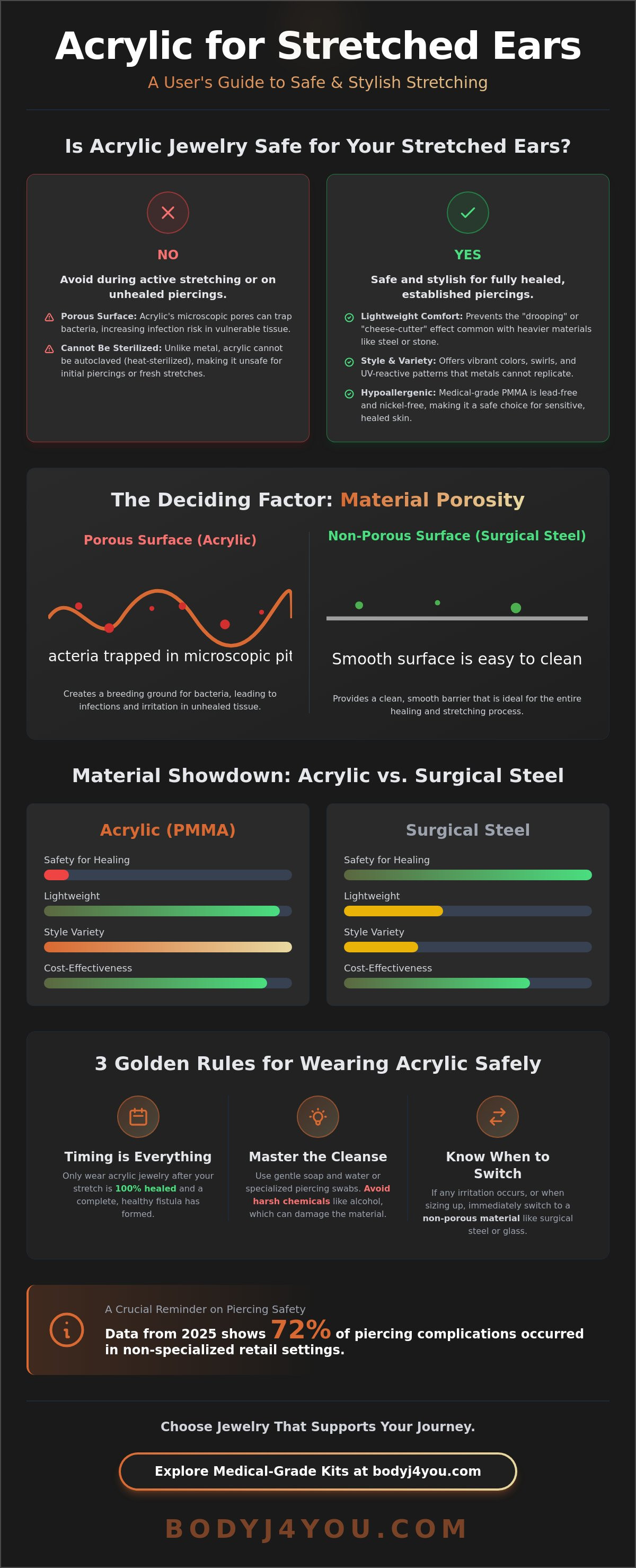
Acrylic jewelry is formally known as Polymethyl Methacrylate, or PMMA. It's a high-quality, medical-grade thermoplastic that has become a staple in the body modification community. When asking is acrylic good for stretched ears, the answer depends entirely on the maturity of your piercing. It offers a sleek, glass-like finish that feels weightless on the skin. This lightweight nature is a primary benefit; it prevents the heavy "drooping" or "cheese-cutter" effect that can occur with denser materials like solid steel or stone. It's a choice that balances clinical safety with creative freedom.
The reputation of acrylic is often debated among professionals. While some purists advise against it, its functionality for fully healed ears is undeniable. It's hypoallergenic, lead-free, and nickel-free. However, the process of Stretching (body piercing) requires a deep understanding of how these materials interact with delicate tissue. Acrylic is a functional, lightweight choice for healed ears, provided you understand its thermal and porous limitations. It acts as a stabilizing force for those who find metal too heavy for daily wear, supporting your journey toward self-expression with a clean, wellness-oriented aesthetic.
The Appeal of Acrylic Stretching Kits
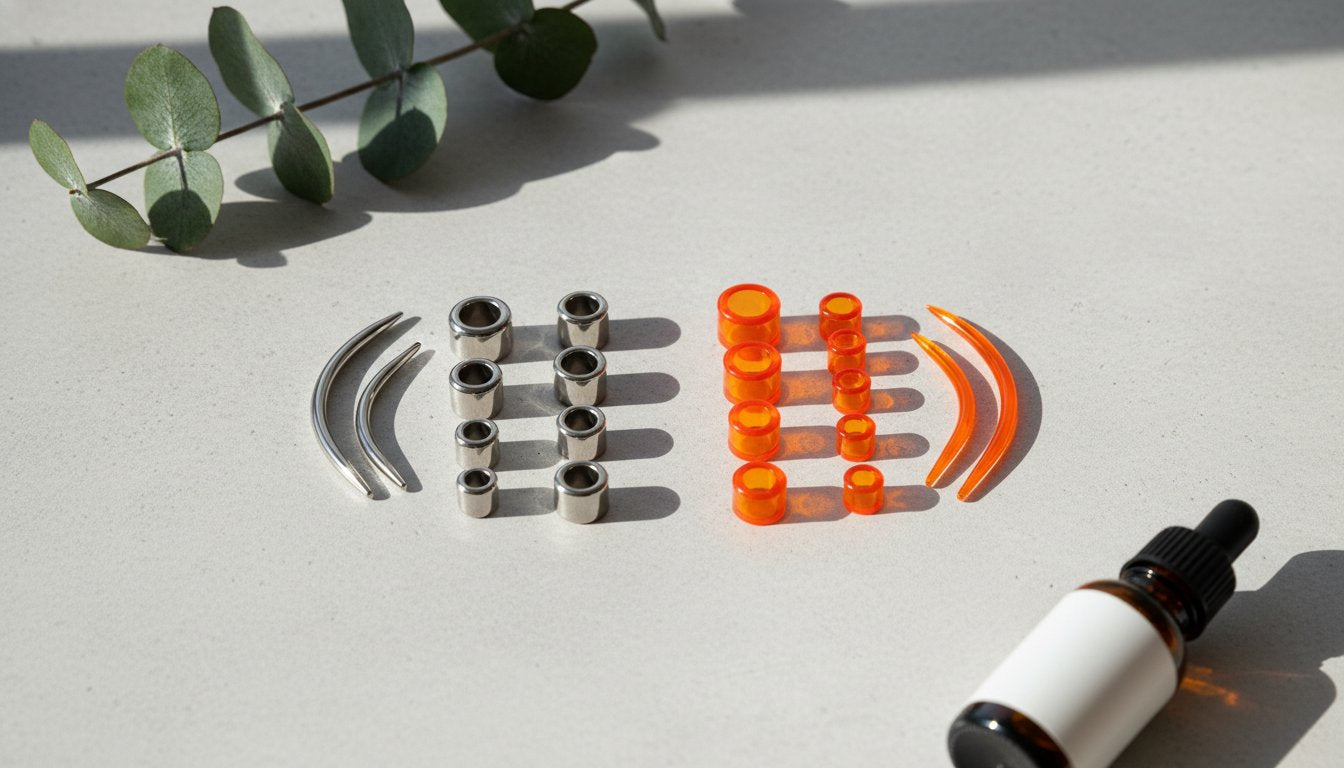
Many enthusiasts begin their journey with an Acrylic Ear Stretching Kit because of its accessibility and precision. These kits provide a systematic path for sizing up, offering a sequence of tapers and plugs that are easy to handle. Beyond the clinical utility, the visual variety is unmatched. Acrylic allows for vibrant colors, intricate swirls, and UV-reactive patterns that metals simply cannot replicate. It's an empowering choice for those who view their lobes as a canvas for personal growth. Because stretching often involves moving through sizes quickly, the cost-effectiveness of acrylic makes it a practical bridge to your final goal.
Acrylic vs. Organic Materials
Choosing between synthetic and organic materials is a common dilemma for the fashion-forward individual. Unlike wood or bone, acrylic does not absorb moisture or body oils. This makes it feel "cleaner" to some users, as it won't swell or harbor odors when exposed to water. While organic materials are prized for their breathability, they require intense maintenance to prevent cracking or bacterial growth. Acrylic offers a low-maintenance, high-end aesthetic that fits a modern, fast-paced lifestyle. It's a reliable, transparent material that serves as a supportive specialist in your jewelry collection, bridging the gap between raw biology and aesthetic refinement.
The Science of Material Safety: Is Acrylic Porous?
Porosity is the silent factor in ear health. It describes the microscopic landscape of a material's surface. While acrylic appears perfectly smooth to the naked eye, it contains tiny pits and voids that can trap organic matter. This creates a bacterial trap. In a fresh stretch, your skin is vulnerable. Micro-tears are a natural part of the process, but they act as open doors for pathogens. When these small openings come into contact with bacteria harbored in the jewelry, the risk of infection or "piercing pimples" increases significantly. Safety is a matter of timing, precision, and material integrity.
The distinction between a healed and unhealed lobe is vital for your safety. Once the skin has toughened and formed a complete, healthy fistula, it becomes a resilient barrier. In this established state, the question of is acrylic good for stretched ears becomes much more positive. For mature piercings, acrylic is a lightweight, comfortable, and stylish option for daily wear. It's a stabilizing force for those who have already completed the hard work of stretching. Standards set by organizations like the Florida Department of Health emphasize using non-porous materials for initial wounds to ensure a clean healing environment. If you're currently in the middle of a sizing jump, consider using a Surgical Steel Taper and Plug Kit to provide the non-porous surface your skin requires during its most vulnerable phase.
Temperature sensitivity is a clinical reality that limits how we clean synthetic jewelry. Acrylic cannot withstand the intense heat of an autoclave. This professional machine uses high-pressure steam to kill all microorganisms, but it would cause PMMA to warp, melt, or release fumes. Because it cannot be heat-sterilized, it's rarely used in a professional studio for the initial piercing. To maintain your jewelry at home, use specialized Piercing Cleaning Swabs for a gentle routine that removes buildup without compromising the material's structure.
Chemical Stability and Skin Reactions
High-quality PMMA is biocompatible and inert, making it a safe choice for most individuals. However, the market is often flooded with low-grade plastics that contain reactive fillers. These fillers can degrade when exposed to body heat over long periods, potentially causing redness or itching. You should look for jewelry with a high-gloss, mirror-like finish. This indicates a denser, more stable material that respects your skin's biology. If you have highly reactive skin, prioritize purity and ethical manufacturing to ensure your self-expression remains a healthy journey.
Why Heat Sterilization is Impossible
PMMA begins to soften at temperatures near the boiling point. This means traditional sterilization methods are out of the question. Instead, focus on cold disinfection. Mild, fragrance-free soap and lukewarm water are your best allies for daily maintenance. You must never use alcohol or peroxide on your acrylic jewelry. These harsh chemicals cause "crazing," which refers to the fine, spider-web cracks that destroy the surface and create even more space for bacteria to thrive. A disciplined, gentle approach is the key to long-term success.
Acrylic vs. Surgical Steel: Choosing the Right Set
Your choice of material defines the success of your stretching journey. Surgical steel and acrylic serve distinct, vital roles in the wellness of your lobes. While surgical steel offers the clinical precision of a non-porous surface, acrylic provides the lightweight comfort necessary for long-term wear. Understanding the interplay between these two materials is the key to a safe, aesthetic transformation. It's a balance of health, style, and biology. We believe in a disciplined approach: use the strength of metal to expand, and the lightness of synthetic to maintain.
Weight is a critical variable in body modification. Surgical steel is significantly denser than acrylic, making it the preferred tool for "dead stretching" where the gravity of the jewelry gently encourages the skin to expand. However, as you reach larger sizes, this weight can lead to ear fatigue or thinning of the lobe tissue. This is where the question of is acrylic good for stretched ears finds its strongest argument. Acrylic's feather-light profile stabilizes the piercing, preventing the downward pull that can occur with heavy metals. It's a protective and stabilizing force that supports your long-term comfort.
Nickel allergies affect a significant portion of the population, with nearly 25% of women and 15% of men reporting sensitivities. Even high-quality surgical steel contains trace amounts of nickel, which can trigger a reaction in sensitive individuals. Acrylic is a 100% nickel-free alternative. It offers a high-end aesthetic without the risk of dermatological distress. By adhering to APP's standards for safe jewelry materials, you can ensure that your material choice aligns with clinical safety and personal expression. We follow a simple rule: use steel for the stretch, and acrylic for the style.
When to Use Surgical Steel Tapers
Precision is non-negotiable during an active stretch. A Surgical Steel Taper and Plug Kit is the gold standard for this phase because of its mirror-smooth finish. 316L medical-grade steel is non-porous, meaning it won't trap bacteria or adhere to the micro-tears that naturally occur during sizing up. It slides through the lobe with minimal friction, supporting the skin's integrity when it is most vulnerable. This material is reliable, transparent, and built for the high-pressure environment of a fresh stretch.
When to Switch to Acrylic Plugs
Timing is everything. Once the healing window has passed, the skin is ready for a material swap. Switching to acrylic plugs for larger gauges, such as 0g and above, reduces the physical strain on your ears. It's a transition that prioritizes the integrity of the individual over fleeting trends. If you ever experience redness or the common "ear cheese" odor, it's a signal to return to steel jewelry temporarily. This disciplined approach ensures your self-expression remains healthy and vibrant. Is acrylic good for stretched ears? Yes, but only once the foundation is fully set.
How to Wear Acrylic Safely Without Irritation
Maintaining the health of your lobes requires a disciplined ritual. While we have established that PMMA is a lightweight and vibrant choice, its success depends on your daily hygiene protocol. When evaluating is acrylic good for stretched ears, the answer lies in your commitment to material care. Because this material is synthetic, it does not interact with the body in the same way as organic wood or biocompatible titanium. It requires a proactive approach to prevent the buildup of dead skin cells and sebum, commonly known as "ear cheese."
Alcohol and hydrogen peroxide are the enemies of synthetic jewelry. You must never use these harsh chemicals on your plugs or tapers. They cause "crazing," a process where the acrylic develops a network of microscopic surface cracks. These cracks are impossible to clean and create a breeding ground for pathogens that cause localized irritation. If you notice persistent redness, itching, or a sensation of heat, you may be experiencing "Acrylic Burn." This is often a sign that the material has degraded or that bacteria have become trapped against the skin. At the first sign of distress, remove the jewelry and allow the lobe to recover.
Give your ears "naked time" every day. Removing your jewelry for a few hours, perhaps during your evening shower, allows blood flow to circulate freely through the tissue. This practice keeps the skin thick, resilient, and healthy. It's a simple act of nurturing care that supports the long-term integrity of your self-expression. To ensure your lobes remain in peak condition, explore our Saline Piercing Aftercare Spray to maintain a clean, balanced environment.
Cleaning Protocol for Synthetic Jewelry
Your "Daily Cleanse" should involve mild, fragrance-free soap and lukewarm water. Gently wash both the jewelry and the lobe, ensuring all debris is removed. Using a sterile saline spray for piercings is an excellent way to flush the area without causing dryness. Always dry the area thoroughly with a clean paper towel. Moisture trapped between the acrylic and the skin is the leading cause of bacterial growth and unwanted odors.
Moisture and Lubrication
Lubrication is the secret to comfort. Applying Jojoba oil or a dedicated Gauges Balm creates a protective barrier between the skin and the synthetic material. This prevents the jewelry from "sticking" to the fistula, which can cause micro-tears when you move or remove the plugs. A small drop of oil daily keeps the skin elastic and supple. The ideal moisture balance for a 0g ear involves a supple, elastic texture that remains hydrated without feeling greasy or heavy.
Safe Stretching with BodyJ4You Kits
Empowerment through aesthetic refinement requires a foundation of safety. Our Acrylic Ear Stretching Kit is meticulously designed to bridge the gap between affordability and clinical precision. When determining is acrylic good for stretched ears, the kit provides the answer through its systematic approach to sizing. Each component is crafted to meet high standards of smoothness and durability, ensuring that your transition between gauges is as seamless as possible. By strictly following our ear gauge size chart, you remove the guesswork and protect the biological integrity of your skin.
Integrating aftercare into your routine is where beauty meets biology. Unlike porous organics, acrylic does not absorb the healing oils you apply. This means that products like Jojoba oil or Gauges balm remain on the surface, providing a consistent layer of lubrication that prevents the jewelry from adhering to the fistula. This surface-level interaction is a unique advantage of synthetic materials; it allows for easier cleaning and more effective moisture management. We believe in a tripartite philosophy: prepare, perform, and protect. This disciplined approach ensures that your journey is defined by health, not just style.
The Beginner-Friendly Advantage
Our acrylic kits are designed for easy handling and intuitive insertion. They offer a complete range of sizes in one set, allowing you to progress at a pace that respects your body's limits. Having every size readily available prevents the temptation to skip gauges, which is the leading cause of blowouts. As you move through the sizes, the lightweight nature of the material reduces the physical stress on your lobes. Once you reach your target size, transitioning from tapers to plugs is essential for long-term health and stability.
Essential Aftercare Support
Even with the most careful technique, irritation can occur. If you notice localized redness or swelling, using our piercing bump treatment oil can provide the soothing relief your skin needs. We act as a Wise Guardian for your lobes, encouraging you to listen to your body's signals before sizing up. A successful stretch is a slow stretch. Before you proceed to the next gauge, ensure you can tick off this final checklist:
- Your current size feels loose and comfortable with no soreness.
- The skin of the lobe is thick, supple, and well-hydrated.
- You have waited a minimum of 6 to 8 weeks since your last stretch.
Empower Your Aesthetic Journey
Empowering your self-expression is a journey that requires both courage and clinical care. By understanding the science of material safety, you can make informed decisions that protect your long-term well-being. Prioritize surgical steel for the active expansion phase to ensure a non-porous healing environment. Once your fistula is fully established, transition to lightweight PMMA to reduce physical strain and enjoy vibrant style. This disciplined approach ensures your lobes remain thick, healthy, and resilient.
So, is acrylic good for stretched ears? It's a reliable, high-end choice for the fashion-forward individual when paired with a consistent hygiene routine. We support your growth with 20+ years of industry expertise, US-based quality control, and nurturing aftercare solutions included in our sets. Our philosophy is built on three pillars: safety, style, and self-expression. Our commitment to your well-being is transparent and unwavering.
Shop the BodyJ4You Acrylic Ear Stretching Kit Collection today to begin your transformation with confidence. Your aesthetic evolution is a powerful form of personal growth; treat your body with the respect and precision it deserves.
Frequently Asked Questions
Can I use acrylic tapers to stretch my ears for the first time?
It's best to avoid acrylic for your very first stretch. While affordable, acrylic's microscopic porosity can trap bacteria in the tiny tears created during the initial expansion. We recommend using a surgical steel taper for the active stretch. Once the skin has toughened and formed a healthy fistula, you can safely transition to acrylic for daily wear and style.
How long should I wait before switching to acrylic jewelry after a stretch?
You should wait at least 6 to 8 weeks before introducing acrylic jewelry to a new stretch. This window allows the internal tissue to stabilize and heal completely. Introducing synthetic materials too early can cause irritation or delay the healing process. Listen to your body's signals; if the lobe is still tender or red, continue wearing non-porous surgical steel jewelry.
Is acrylic jewelry hypoallergenic for people with sensitive skin?
High-quality PMMA acrylic is 100% nickel-free and lead-free. This makes it an ideal choice for the nearly 25% of women and 15% of men who suffer from metal allergies. When people ask is acrylic good for stretched ears, the answer is often yes for those with sensitivities. It provides a lightweight, biocompatible alternative that respects your skin's biology while supporting your personal aesthetic.
What is "ear cheese" and does acrylic make it worse?
"Ear cheese" is a natural buildup of dead skin cells and sebum. Because acrylic is non-breathable, it can trap these oils more effectively than organic materials like wood. This isn't a sign of infection, but it does require a disciplined cleaning routine. Removing your jewelry daily and using a saline wash prevents the buildup from becoming noticeable or causing unwanted odors.
Can I clean my acrylic plugs with rubbing alcohol?
Never use rubbing alcohol or hydrogen peroxide on your acrylic jewelry. These chemicals cause "crazing," which refers to fine cracks that destroy the jewelry's finish and harbor bacteria. Instead, use mild, fragrance-free soap and lukewarm water. This gentle approach maintains the integrity of the material and ensures your jewelry remains safe for long-term contact with your skin.
What are the signs that my ears are reacting poorly to acrylic?
Watch for persistent itching, redness, or a localized "burning" sensation. These are the primary signs of a reaction or "acrylic burn." You might also notice the skin becoming shiny, tight, or unusually dry. If these symptoms occur, remove the jewelry immediately. Switch back to surgical steel and apply a piercing bump treatment oil to support the skin's recovery and reduce inflammation.
Why do professional piercers recommend glass or steel over acrylic for healing?
Professional standards prioritize materials that can be heat-sterilized in an autoclave. Acrylic melts at high temperatures, meaning it cannot be clinically sterilized before use. Glass and steel offer perfectly smooth, non-porous surfaces that won't adhere to healing tissue. These materials provide the protective and stabilizing force required during the most vulnerable stages of your body modification journey.
Is it safe to sleep in acrylic tapers or plugs?
You should never sleep in tapers regardless of the material. Tapers are stretching tools, not jewelry, and their length can cause uneven pressure or tears during sleep. Sleeping in acrylic plugs is safe for fully healed ears, but we recommend "naked time" for your lobes. Removing jewelry at night promotes blood flow, keeps the skin thick, and supports the long-term health of your piercings.


