

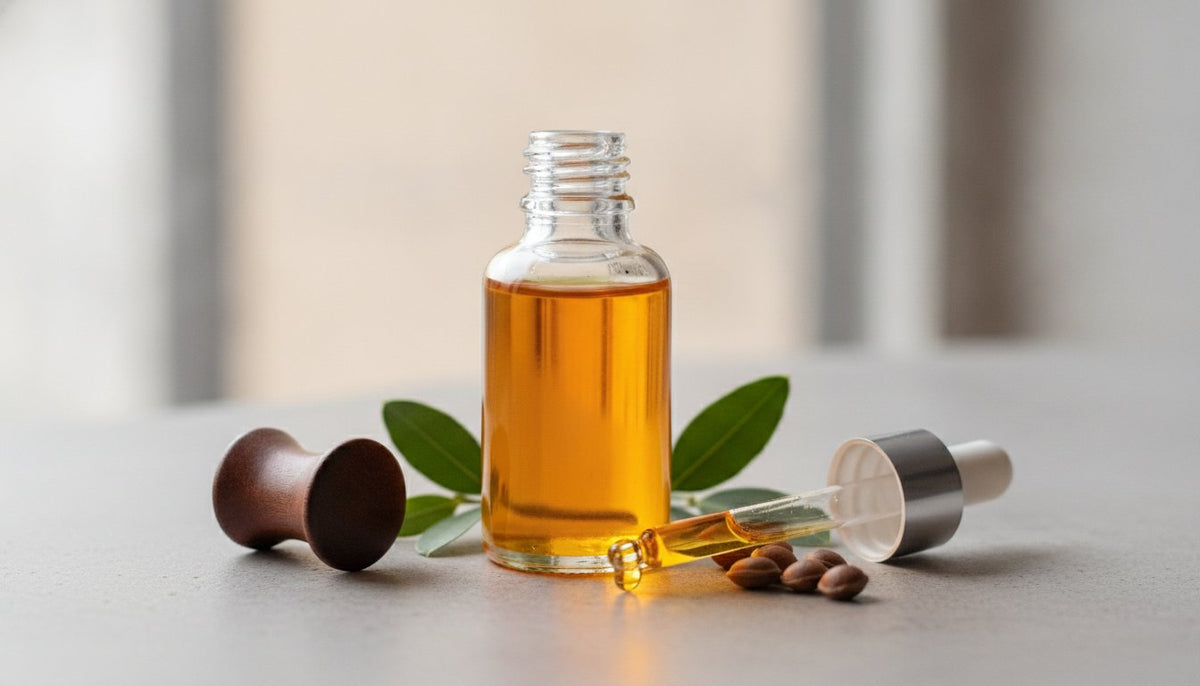
Your skin doesn't recognize jojoba oil as an external lubricant. It recognizes it as itself. Because it's a bio-mimetic wax ester that mirrors your body's natural sebum, using jojoba oil for stretching ears is the most effective way to maintain skin integrity and health. You deserve a stretching journey free from the fear of blowouts, the frustration of "ear cheese" odors, and the discomfort of irritated skin. We believe your piercings are a vital form of self-expression, and protecting that canvas requires a blend of patience, safety, and high-end wellness standards.
This guide reveals why pure, cold-pressed jojoba is the gold standard for maintaining thick, elastic, and resilient lobes. You'll learn the professional techniques required for a pain-free transition between gauge sizes while keeping your piercings clean, moisturized, and healthy. We'll explore the science of skin elasticity, specific massage methods, and the essential aftercare steps that ensure long-term success. Our goal is to provide the expert mentorship you need to move toward your desired aesthetic with confidence, precision, and care.
Key Takeaways
- Understand why the unique molecular structure of a liquid wax ester provides superior skin penetration compared to traditional triglyceride oils.
- Learn how to use jojoba oil for stretching ears to maintain tissue elasticity and prevent the formation of permanent blowout scar tissue.
- Master the professional ear massage technique to stimulate blood flow and prepare your lobes for a seamless transition between gauge sizes.
- Discover why common kitchen staples can lead to irritation and why cold-pressed golden jojoba is the superior choice for dermatological safety.
- Establish a consistent maintenance routine that eliminates unpleasant odors while keeping your piercings clean, moisturized, and healthy.
Why Jojoba Oil is the Gold Standard for Stretching Ears
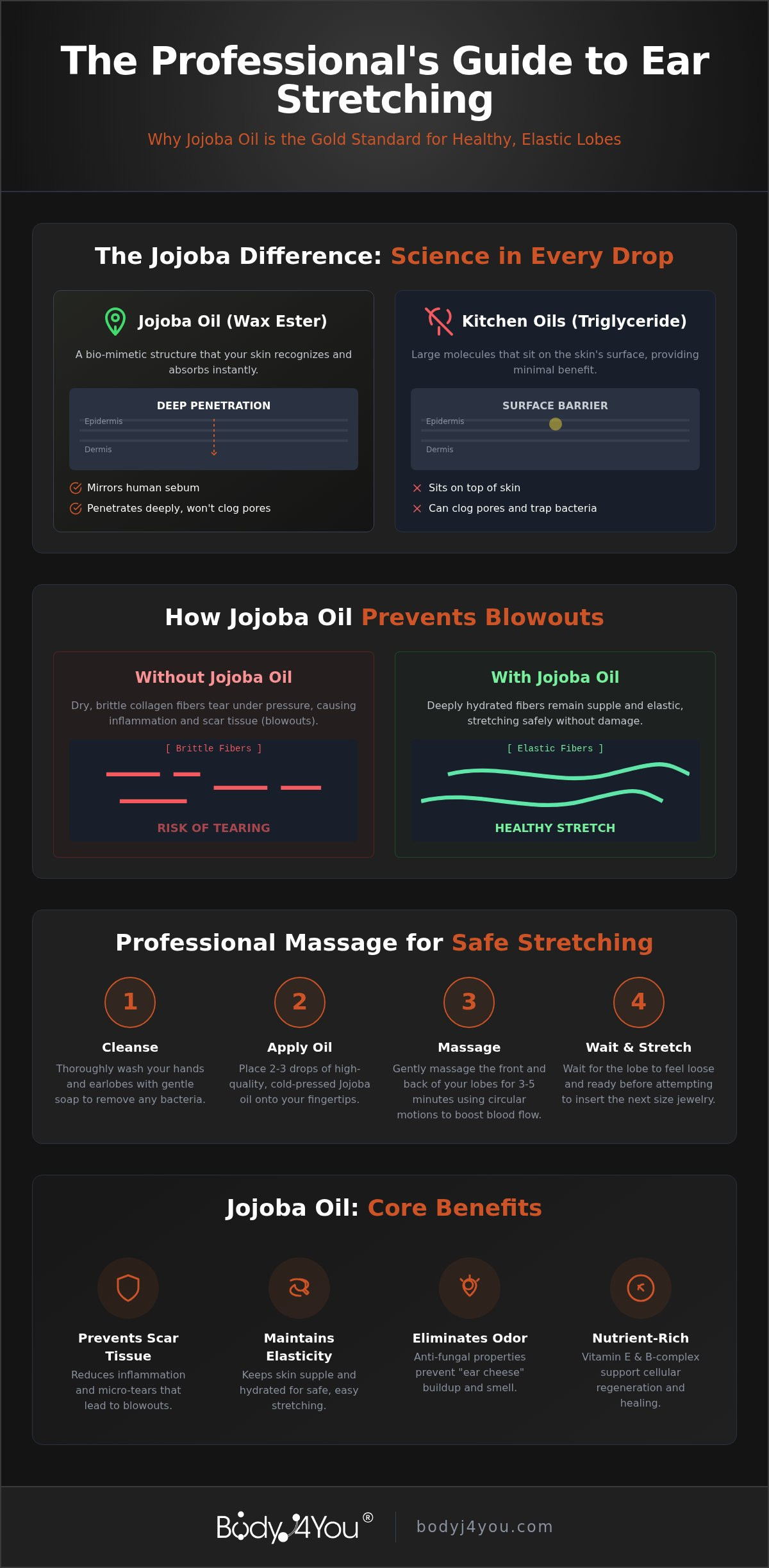
Jojoba oil is not an oil in the traditional sense. It's a liquid wax ester. Understanding What is Jojoba Oil? reveals why it's the industry standard; its chemical distinction is the reason why professionals recommend jojoba oil for stretching ears over any other lubricant. While common kitchen oils consist of triglycerides that sit atop the skin, jojoba's unique structure allows it to penetrate deep into the dermal layers without clogging pores. This deep absorption creates a protective barrier. It reduces friction during the insertion of tapers and plugs; it prevents micro-tears; it accelerates the skin's natural recovery process.
Beyond lubrication, jojoba offers powerful anti-fungal properties. Stretched piercings often suffer from "ear cheese," a buildup of dead skin cells and bacteria that creates an unpleasant odor. Jojoba helps mitigate this by balancing the skin's micro-environment. It keeps the piercing site clean, moisturized, and fresh. This proactive approach to hygiene ensures your journey is as clean as it is creative.
The Sebum Connection: A Bio-Identical Solution
Your skin is a sophisticated organ that values consistency. Jojoba oil chemically mimics human sebum, the natural oil your body produces to protect itself. When you apply it to a stretching piercing, your skin recognizes the molecular match. This bio-identical nature prevents your body from overproducing oil in response to dryness or underproducing due to irritation. It provides stability. It offers protection. It ensures comfort. Jojoba oil is the most skin-compatible lubricant for body modification because it functions as a seamless extension of your own biology.
Essential Nutrients for Skin Repair
High-quality jojoba oil is a powerhouse of nutrition. It contains high concentrations of Vitamin E and B-complex vitamins, which are essential for cellular regeneration. These nutrients support the collagen production required to maintain thick, healthy lobes during the stretching process. Regularly using jojoba oil for stretching ears ensures the skin remains supple enough to handle increasing gauge sizes. To ensure these delicate compounds remain active, we prioritize cold-pressed extraction methods. Heat-processed oils often lose their therapeutic value, leaving you with a product that lubricates but does not heal. Pure. Ethical. Effective. Using a cold-pressed golden variety ensures your skin receives the full spectrum of vitamins needed for long-term elasticity.
The Science of Elasticity: How Jojoba Prevents Blowouts
Skin stretching is a biological process of tissue expansion. It happens primarily in the dermis. This middle layer contains collagen and elastin fibers that provide your skin with its structural integrity. When skin is dry, these fibers lose their ability to slide past one another. They become brittle. They snap. This creates micro-tears. These tiny injuries are the precursors to blowouts, where the body produces excess scar tissue that pushes through the piercing. It creates a permanent, visible ring of damage that can halt your progress entirely.
Consistent application of jojoba oil for stretching ears provides the deep hydration needed to keep these fibers supple. It increases the "give" of the tissue. This enhanced elasticity is vital for "dead stretching," a method that relies on the ear naturally loosening over time to accommodate the next size. Without proper lubrication and moisture, the skin resists the jewelry's weight, leading to tension and potential tearing. It protects. It stabilizes. It empowers.
Maintaining Lobe Thickness During Sizing
Thinning lobes occur when the skin is stretched too quickly or without adequate blood flow. It's a common concern as you progress through the ear gauge size chart, especially at the larger intervals where the jumps in diameter become more significant. Massage is your best defense against this aesthetic compromise. Combining a manual massage with jojoba oil stimulates local circulation. This brings oxygen and nutrients directly to the lobe. It encourages the skin to grow thicker rather than just stretching thinner. It promotes health. It builds resilience. It ensures longevity.
Reducing Inflammation and Scar Tissue
Jojoba oil is unique because it contains high levels of myristic acid. This compound is a natural anti-inflammatory agent. According to a scientific review of jojoba oil's properties, its ability to soothe skin while promoting repair is unmatched by other plant-based waxes. By keeping inflammation low, you ensure the skin remains soft and ready for the next jump in size. If you've had difficult stretches in the past, regular oiling can even help soften existing minor scar tissue. This restores a degree of flexibility to previously damaged areas. It heals. It softens. It prepares.
For those starting a new journey or moving to a larger size, incorporating a premium jojoba oil into your daily routine is the first step toward professional-grade results and healthy, beautiful lobes.
Step-by-Step: How to Perform an Ear Massage for Safe Stretching
Cleanliness is your first priority. Before you touch your piercings, wash your hands thoroughly with antibacterial soap. Ensure your jewelry is equally pristine. A manual massage is a dedicated ritual that transforms your lobe health, but it requires a disciplined approach. When using jojoba oil for stretching ears, remember that a little goes a long way. Excessive oil can attract dust and debris; one or two drops are sufficient to provide the necessary slip and saturation. This practice fits seamlessly into your routine when using an ear stretching kit. Daily massages prepare the tissue for the next gauge size, while a more intensive session immediately before a stretch ensures the skin is at its most pliable. It's about preparation. It's about patience. It's about precision.
The Daily Maintenance Technique
Follow this structured protocol once or twice a day to maintain optimal lobe health:
- Step 1: Remove your jewelry. Clean the lobe and the piercing channel using a sterile saline spray for piercings to remove any biological buildup.
- Step 2: Dispense 1-2 drops of pure jojoba oil onto your fingertips.
- Step 3: Gently knead the lobe between your thumb and forefinger for 3-5 minutes. Use circular motions and varying pressure to stimulate deep tissue circulation.
This rhythmic stimulation breaks down tension and encourages cell turnover. It feels soothing. It builds thickness. It ensures your skin remains resilient. By integrating this into your morning or evening routine, you create the foundation for a successful transition to larger sizes.
When NOT to Use Jojoba Oil
Safety is non-negotiable. Never apply jojoba oil for stretching ears to a fresh tear, a raw piercing, or an open wound. While jojoba is bio-identical, applying it to broken skin can trap bacteria inside the healing channel. This creates an environment ripe for infection or localized irritation. If you notice redness, swelling, or unusual discharge, stop the oil massages immediately. Switch back to a sterile saline solution until the tissue is fully closed and calm. Your body knows how to heal; your job is to provide the right environment at the right time. Listen to your lobes. Prioritize health over speed. Stay disciplined.
Jojoba vs. Other Oils: Why Kitchen Staples Aren’t for Piercings
The temptation to reach for a kitchen staple is understandable. It's convenient. It's inexpensive. It's right there. However, using jojoba oil for stretching ears is a clinical choice based on molecular biology, not just convenience. Most common oils are triglycerides. They're heavy, greasy, and designed for digestion rather than dermal absorption. Jojoba stands alone as a liquid wax ester. This distinction is critical because while triglycerides can sit on the skin and trap bacteria, jojoba breathes. It protects. It heals. It lasts. Choosing the wrong lubricant can lead to "clogged" lobes, where the skin becomes congested, irritated, and prone to the very "ear cheese" odors you're trying to avoid.
The Problem with Coconut and Olive Oil
Coconut oil is a favorite in the wellness community, but it's highly comedogenic. This means it has a high likelihood of clogging pores. On a stretched ear, where the skin is already under tension, clogged pores can lead to painful pimples or localized infections. Olive oil presents a different challenge. Its molecular structure is too large to penetrate the skin effectively. Instead of moisturizing from within, it creates a sticky film on the surface. This film acts as a magnet for dust, lint, and dead skin cells. Furthermore, food-grade oils have a limited shelf life. They oxidize. They turn rancid. They become acidic. Applying rancid oil to a sensitive piercing is a direct path to contact dermatitis and persistent itching.
Vitamin E and Bio-Oil: Synthetic vs. Natural
Many commercial "aftercare" products are actually complex blends of mineral oils, synthetic vitamins, and fragrances. Stretched skin is exceptionally sensitive. Fragrances and chemical stabilizers are frequent triggers for inflammation. While pure Vitamin E oil is beneficial, it's often too thick to use as a primary stretching lubricant. Jojoba oil for stretching ears provides a naturally balanced concentration of Vitamin E without the need for synthetic additives. It's pure. It's ethical. It's stable.
If you have already experimented with kitchen oils or synthetic blends and noticed a negative reaction, you aren't alone. Irritation can quickly escalate into more serious issues. If you're dealing with redness or localized swelling, refer to our expert guide on how to get rid of piercing bump to help soothe the tissue and get your journey back on track. For a safe, irritation-free experience, stick to ingredients that your body recognizes. You can browse our collection of 100% pure jojoba oil to ensure your lobes receive the high-end care they deserve.
Choosing High-Quality Jojoba Oil for Your Journey
Selection is as vital as technique. Choosing the right jojoba oil for stretching ears determines whether your skin thrives or merely survives the process. You're looking for purity. You're looking for potency. You're looking for integrity. Not all oils are created equal, and understanding the nuances of processing can save your lobes from unnecessary irritation. Your choice of aftercare is a direct reflection of the respect you have for your body's ability to heal and adapt.
Prioritize cold-pressed extraction. This method uses mechanical pressure rather than high heat to extract the oil from the jojoba seed. Heat destroys the heat-sensitive vitamins and antioxidants that your skin relies on for repair. Similarly, choose "golden" over "clear" jojoba oil. Clear oil has been refined, bleached, or filtered to remove its natural color and scent. While it looks clean, this process strips away the very wax esters that make jojoba effective. Golden jojoba remains in its raw, bio-active state. It's potent. It's natural. It's effective. It ensures your skin receives the full spectrum of nutrients needed for long-term health.
At BodyJ4You, we emphasize USA-based manufacturing. This isn't just about heritage; it's about regulatory trust. Domestic production ensures strict quality control and adherence to ethical standards that many imported oils lack. Our jojoba oil is a specialized tool. It's a foundational element of your stretching arsenal that bridges the gap between biological health and aesthetic growth. We position ourselves as your specialist mentor, providing the pure ingredients required for a professional-grade experience.
What to Look for on the Label
Reading the fine print is a fundamental form of self-care. A high-quality product should list 100% pure jojoba as the only ingredient. Avoid anything with "fragrance," "parfum," or "fillers." These additives are common irritants for sensitive, stretched skin. Additionally, examine the packaging. Jojoba is remarkably stable, but UV light can still degrade its quality over time. Always opt for amber or dark glass bottles. This protects the liquid wax from light exposure. It ensures the last drop is as effective as the first. Verify the origin to ensure ethical and safe production standards; for those who value a broader approach to personal care, you can learn more about SVNAP to find a curated collection of wellness and beauty essentials.
Your routine should be a balance of hygiene and hydration. Use your jojoba oil for stretching ears alongside a specialized gauges balm for maximum protection. While the oil penetrates deeply to nourish the dermis, a balm provides an external seal that locks in moisture and provides a barrier against the elements. This combination is especially effective during colder months when skin is prone to cracking. Alternate between cleaning with saline and moisturizing with oil. Your ears are a canvas. Treat them with professional-grade care. Respect the process. Trust the results.
Your Journey Toward Resilient, Beautiful Lobes
This commitment to professional-grade care is essential for all skin types; for high-quality wellness products that prioritize hydration, Body 'N' Balance provides excellent options to support your self-care journey.
Achieving your aesthetic goals requires more than just the right jewelry; it demands a commitment to your skin's biological health. You now understand that jojoba oil is a unique wax ester that mirrors your body's natural sebum to maintain dermal integrity. By choosing the right jojoba oil for stretching ears and mastering the daily massage ritual, you build the thick, elastic foundation necessary to prevent blowouts and thinning. Safe sizing is a marathon, not a sprint. It relies on the synergy of patience, technique, and high-end wellness standards.
With 20+ years of industry expertise, we provide the specialized tools trusted by professional piercers to support your self-expression. Our cold-pressed golden oil is nutrient-rich, ethically produced, and locally manufactured in the USA. Don't settle for kitchen staples when your skin deserves the gold standard. It's time to invest in the health of your canvas. Shop Pure Golden Jojoba Oil for Safe Stretching and experience the difference that professional-grade care makes. Your ears are a reflection of your journey. Treat them with the respect and precision they deserve.
Frequently Asked Questions
Can I use jojoba oil on a brand new ear piercing?
No, you should not use jojoba oil on a fresh piercing. New wounds require sterile saline to heal without interference. Jojoba is a wax ester that can trap bacteria if applied to an open channel. Wait until the initial healing phase is complete, typically 6 to 8 weeks, before incorporating oils. Once the tissue is stable, you can safely use jojoba oil for stretching ears to improve elasticity and long-term health.
How often should I massage my ears with jojoba oil?
You should massage your lobes once or twice daily for optimal results. Consistency is the foundation of healthy tissue expansion. A 3 to 5 minute session each day stimulates blood flow, encourages collagen production, and breaks down minor tension. If you are preparing for a new jump in size, consider increasing the frequency of your massages for several days prior. This proactive ritual ensures your skin remains thick, supple, and resilient.
Will jojoba oil help my ears stretch faster?
Jojoba oil does not accelerate the biological timeline of healing, but it does facilitate a smoother transition. It prepares the dermis by increasing tissue "give" and elasticity. While you must still follow the industry consensus of waiting 3 to 4 months between stretches, jojoba oil for stretching ears ensures your skin is physically ready when the time comes. It minimizes resistance, reduces the risk of micro-tears, and promotes a pain-free experience during the stretch.
Why does my jojoba oil look cloudy or solid in cold weather?
Cloudiness or solidification is a natural characteristic of pure, high-quality jojoba. Because jojoba is chemically a liquid wax ester rather than a vegetable oil, it has a relatively high freezing point of approximately 50°F (10°C). This change in state does not damage the oil or reduce its efficacy. Simply move the bottle to a warmer room or hold it between your hands for a few minutes to restore its golden, liquid consistency.
Can I use jojoba oil to treat an ear blowout?
You should only use jojoba oil once the blowout has transitioned from an open wound to closed scar tissue. Applying oil to a raw, bleeding, or weeping blowout can trap bacteria and worsen the inflammation. Once the skin has fully healed, regular massages with jojoba can help soften the raised tissue and restore flexibility to the lobe. However, significant blowouts may require downsizing and professional consultation to ensure the structural integrity of the ear.
Does jojoba oil expire or go bad over time?
Jojoba oil is remarkably stable and has one of the longest shelf lives of any natural carrier oil. Unlike triglyceride-based oils that go rancid quickly, jojoba's wax ester structure resists oxidation for several years if stored correctly. To maximize its longevity, keep your oil in a cool, dark place and ensure the cap is tightly sealed. Look for signs of a sharp, acidic odor or a significant change in color as indicators that the oil has finally expired.
Is jojoba oil safe for all skin types, including sensitive skin?
Yes, pure jojoba oil is generally safe for all skin types, including those with extreme sensitivity. Because it closely mimics the molecular structure of human sebum, the body rarely perceives it as a foreign irritant. It is non-comedogenic and hypoallergenic, making it an ideal choice for the delicate tissue of the earlobe. If you have a known history of plant-based allergies, we recommend performing a small patch test on your forearm before applying it to your piercings.
Can I use jojoba oil with silicone or acrylic jewelry?
You should exercise caution when using oils with certain jewelry materials. While jojoba is perfectly safe for surgical steel, titanium, and glass, it can cause silicone to swell or degrade over time. Some acrylics may also react poorly to consistent oil exposure. For the best results, perform your oil massages with your jewelry removed. Allow the oil to absorb fully into the skin before reinserting your plugs to protect both your jewelry and your piercing.


