

Nearly 20% of the global population lives with a nickel allergy. For many, this statistic isn't just a number; it's the reason behind itchy piercings, unexpected swelling, and the disappointment of jewelry that loses its luster within weeks. Finding the right surgical steel body jewelry shouldn't feel like a gamble with your health. You deserve pieces that are beautiful, biocompatible, and built to last through every stage of your piercing journey.
It's natural to feel overwhelmed by the technical jargon of the industry. You want the brilliance of high-polish steel without the risk of irritation or the confusion of misleading marketing labels. We understand that your jewelry is an extension of your identity. It must be safe. It must be durable. It must be refined. This guide bridges the gap between clinical standards and personal aesthetics, helping you navigate the specifics of 316L composition and professional-grade certifications.
You'll learn how to identify genuine 316L surgical steel, why internal threading is a non-negotiable marker of quality, and how to use specialized aftercare to protect your skin. By the end of this guide, you'll have the confidence to select high-performance jewelry that balances professional safety with your unique creative vision.
Key Takeaways
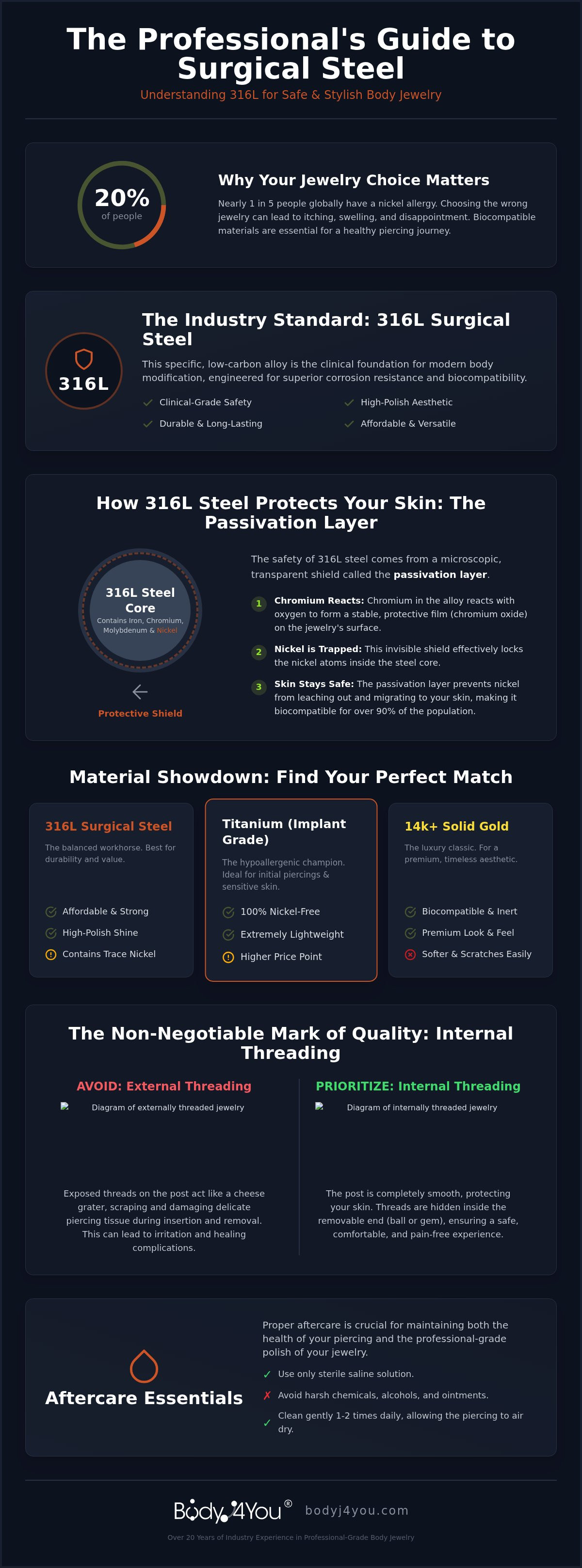
- Identify 316L as the definitive industry standard to ensure your jewelry meets clinical-grade safety and biocompatibility requirements.
- Understand how the microscopic passivation layer in surgical steel body jewelry acts as a protective shield against irritation and nickel migration.
- Compare the unique benefits of steel, titanium, and gold to find the perfect balance of weight, price, and aesthetic for your personal collection.
- Prioritize internal threading as a non-negotiable marker of quality that protects delicate tissue and ensures long-term comfort.
- Master the essential role of sterile saline aftercare in maintaining the integrity and professional-grade polish of your jewelry.
What is Surgical Steel Body Jewelry? Defining the Industry Standard
Surgical steel body jewelry serves as the clinical foundation for modern self-expression. It belongs to a specific category of stainless steel alloys engineered for medical environments and body modification. While "surgical steel" is often used as a broad marketing term, savvy collectors look for the technical designation: 316L. This specific grade ensures the metal meets the rigorous standards required for prolonged skin contact and biological safety. 316L surgical steel is a low-carbon alloy specifically designed for superior corrosion resistance and biocompatibility.
This material has earned its place as the industry workhorse because it is durable, affordable, and versatile. It maintains its structural integrity through years of daily wear. It offers a high-end, high-polish aesthetic without the premium cost of solid gold or platinum. It adapts seamlessly to almost any piercing style, from delicate studs to bold industrial bars. By choosing 316L, you're opting for a material that balances the precision of science with the creativity of personal style.
The Evolution of 316L in Body Modification
The transition of steel from the operating room to the jewelry box reflects a growing demand for both safety and style. Historically, practitioners experimented with various Body piercing materials, but many lacked the purity needed for healing tissue. 316L became the preferred choice over lower grades, such as 304, because it contains molybdenum. This element significantly boosts resistance to moisture and pitting, which is essential for jewelry worn inside the body. BodyJ4You has spent over two decades refining this standard. Our 20+ years of industry experience ensures that every piece of surgical steel body jewelry provides the stabilizing force needed for a healthy piercing journey.
Common Uses: From Ear Stretching to Septum Rings
The inherent strength and smoothness of 316L steel make it the primary choice for complex modification paths. It's the reliable standard found in our ear stretching kits, where material weight and surface finish are critical for gradual, safe expansion. Beyond stretching, its versatility shines in septum piercing jewelry, industrial barbells, and captive bead rings. The metal's ability to hold a mirror-like high polish makes it ideal for clicker-style rings, offering a brilliant shine that won't tarnish or dull over time. Whether you're beginning a stretching journey or selecting a new septum piece, the precision of 316L steel remains the professional choice for lasting beauty.
The Science of 316L: Composition, Biocompatibility, and the Nickel Question
Quality surgical steel body jewelry is a masterpiece of metallurgical engineering. It's not a single element but a complex synergy of iron, chromium, nickel, and molybdenum. Iron provides the structural foundation. Chromium ensures the metal remains stainless. Molybdenum adds a layer of defense against pitting and moisture. While nickel is present, its role is to stabilize the crystalline structure, making the metal both strong and workable. For those seeking the absolute peak of purity, 316LVM (Vacuum Melted) steel offers an even cleaner profile by removing gaseous impurities during the melting process.
The safety of 316L relies on a phenomenon known as the passivation layer. When chromium in the alloy reacts with oxygen, it forms a microscopic, transparent shield on the surface of the jewelry. This shield effectively traps nickel atoms inside the metal, preventing them from leaching into your skin. This chemical bond is the reason why 316L remains a reliable choice for over 90% of the population. It follows the APP jewelry standards for initial piercings by prioritizing a finish that is smooth, non-porous, and biologically stable.
Is Surgical Steel Hypoallergenic?
Hypoallergenic is a term that means "less likely to cause a reaction," not "allergy-proof." For the vast majority of people, 316L steel is a protective and stabilizing force. However, if you have a severe nickel sensitivity, your body might react even to trace amounts. Watch for signs like persistent itching, localized redness, or the development of piercing bumps. These symptoms often signal that your skin needs a different material or a higher polish. A mirror-like finish is essential because it reduces bacterial adhesion and minimizes friction against healing tissue.
Internal vs. External Threading in Steel Jewelry
The way your jewelry is constructed matters as much as the metal itself. At BodyJ4You, we prioritize internal threaded labret studs for anyone serious about their piercing health. In internally threaded pieces, the screw is on the decorative top, while the post is a smooth, hollow tube. This design prevents the "cheese-cutter" effect, where external threads scrape the delicate fistula during insertion. It's a technical benefit that ensures a smoother transition, faster healing, and a more secure fit for the life of your jewelry. Choosing internal threading is a simple way to elevate your safety standards while maintaining a high-end aesthetic.
Surgical Steel vs. Titanium vs. Gold: A Comparison Framework
| Feature | 316L Surgical Steel | G23 Titanium | 14K Gold |
|---|---|---|---|
| Relative Cost | Highly Accessible | Mid-Range | Premium Investment |
| Biocompatibility | High (90%+) | Excellent (99%+) | High (Nickel-Free) |
| Physical Weight | Satisfying Heft | Ultra-Lightweight | Heavy and Dense |
| Style Variety | Extensive | Moderate | Specialized |
When to Choose Steel Over Titanium
Steel is the premier choice for healed piercings where you desire maximum brilliance and a professional-grade finish. Its density is particularly beneficial for those following an ear gauge size chart for safe stretching. The extra weight of surgical steel body jewelry helps larger gauges hang naturally, which can aid in the stretching process for mature piercings. It's also the most cost-effective way to build a diverse wardrobe. You can swap styles frequently without the financial commitment required by precious metals. If you value a high-polish aesthetic and a noticeable physical presence, steel is your standard.
When to Opt for Titanium or Gold
Biology must always lead the way. If you have a confirmed severe nickel allergy, titanium or high-karat gold are your essential safeguards. These materials are often recommended for initial piercings in highly sensitive areas like the nipples or genitals where the risk of irritation is higher. Adhering to Oregon's official body jewelry standards ensures that regardless of the material, the manufacturing meets strict ISO or ASTM guidelines for safety. Gold remains the ultimate choice for long-term luxury. It's an investment in both your health and your personal legacy. Use these premium metals for healing stages or permanent signature pieces, then transition to steel for your daily creative rotations.
Selection Guide: Matching Steel Jewelry to Your Piercing Stage
Your jewelry selection must evolve alongside your body's healing process. Choosing the wrong piece at the wrong time can lead to irritation, migration, or prolonged recovery. We advocate for a disciplined, four step approach to ensure your safety and comfort. It's about precision. It's about patience. It's about protection.
- Step 1: Identify your healing stage. Fresh piercings are open wounds and require longer posts to accommodate swelling. Mature piercings allow for tighter fits and more decorative styles.
- Step 2: Demand internal threading. This design ensures that the smooth part of the post passes through your skin, protecting the delicate fistula from the "cheese-cutter" effect of external threads.
- Step 3: Verify your dimensions. Use our standard size chart to match the gauge and diameter to your anatomy. An incorrect fit is the leading cause of piercing bumps.
- Step 4: Prioritize high-polish finishes. A mirror-like surface on your surgical steel body jewelry prevents bacteria from nesting in microscopic scratches, keeping the site sterile and calm.
Steel for Ear Stretching: Tapers and Plugs
Professional ear stretching requires materials that respect the skin's elasticity. Surgical steel tapers are significantly superior to acrylic options because they are non-porous and can be fully sterilized. They provide a smooth, weighted transition that minimizes resistance. For those practicing "dead stretching," weighted steel plugs are the ideal tool. They use gravity to encourage the skin to expand naturally and safely over time. Always support this process by applying a specialized Gauges balm or Jojoba oil to keep the tissue supple and resilient.
Steel for Facial and Body Piercings
Facial piercings demand a balance of durability and refined aesthetics. When selecting captive bead rings for a septum, finding the correct diameter is essential to prevent the jewelry from resting too heavily on the "sweet spot." Industrial barbells require even more precision. You must measure the exact distance between your piercing holes to find a custom fit that won't migrate or put uneven pressure on the cartilage. For belly rings, 316L surgical steel body jewelry is the gold standard. It stands up to the constant friction of waistbands and movement without losing its luster or causing irritation. It is a material that works as hard as you do.
Ready to start your stretching journey with the right tools? Explore our Surgical Steel Taper and Plug Kits for a safe and professional experience.
Maintaining Your Steel: Aftercare and Longevity
High-quality surgical steel body jewelry is designed for endurance, but its longevity depends on your commitment to hygiene. Aftercare is the stabilizing force that protects your investment and your health. It keeps the site sterile. It prevents the accumulation of biofilm. It ensures the metal's passivation layer remains intact. To maintain the professional-grade polish, you must treat your jewelry with the same care you give your skin.
Using a sterile saline spray is the most effective way to remove daily crust and biological buildup without causing trauma. Avoid harsh chemicals or abrasive cloths. These can scratch the mirror finish, creating microscopic valleys where bacteria can hide. Store your pieces in a dry, cool environment when not in use. While 316L is exceptionally resistant to corrosion, rare oxidation can occur if jewelry is left in standing water or high-humidity environments for extended periods.
The Daily Cleaning Ritual
Irritation doesn't always mean an allergy. It's vital to distinguish between a reaction to nickel and a piercing bump caused by physical trauma or improper sizing. If you experience localized swelling or a persistent red bump, apply a piercing bump treatment oil to soothe the inflammation and support the skin's natural barrier. However, if the itching persists despite proper care and the absence of trauma, it may be time to swap your steel for titanium. This diagnostic step helps you rule out metal sensitivity and ensures your body remains in a state of healing rather than conflict.
Elevate Your Aesthetic with Clinical Precision
BodyJ4You brings over 20 years of expert craftsmanship to every collection. We provide dermatologist-tested, locally made aftercare trusted by professional piercers worldwide. Our commitment to quality control ensures that every taper, plug, and labret stud meets the highest standards of purity and comfort. Your safety is our priority. Your style is our inspiration. Your confidence is our goal.
Ready to upgrade your collection with pieces built to last? Shop the BodyJ4You Surgical Steel Jewelry Collection and invest in jewelry that reflects your unique creative vision. Wear your story with pride and let your aesthetic reflect the expert care you deserve.
Common Questions About Surgical Steel Jewelry
Is surgical steel safe for a new piercing?
Yes, provided it is 316L grade and meets recognized standards like ASTM F138. These designations ensure the metal is biocompatible and highly resistant to corrosion. While titanium is often preferred for those with extreme sensitivities, high-grade steel is a reliable standard for the majority of new piercings. Its smooth, non-porous surface facilitates easier cleaning and prevents the tissue from adhering to the jewelry during the critical initial healing phase.
Does surgical steel contain nickel?
Yes, 316L surgical steel typically contains 10% to 14% nickel to maintain its crystalline structure and durability. However, the chromium in the alloy creates a protective passivation layer that effectively traps the nickel molecules inside. This microscopic barrier prevents the nickel from leaching into your skin under normal conditions. This is why most people don't experience a reaction despite the technical presence of the metal within the alloy's composition.
Can surgical steel turn my skin green?
Genuine 316L surgical steel won't turn your skin green because it doesn't contain copper. The green discoloration often associated with costume jewelry is a result of copper oxidation reacting with skin acids. High-quality steel is inert and highly resistant to corrosion. If you notice discoloration, it's a sign the jewelry is likely a lower-grade mystery metal or a plated base metal rather than professional-grade surgical steel body jewelry.
How can I tell if my jewelry is real 316L surgical steel?
Verifying the quality of surgical steel body jewelry requires checking for specific markers like a mirror-like high polish and the absence of surface pits. Authentic 316L is non-magnetic or only very weakly magnetic. You should also look for a reputable seller who provides technical specifications. Lower-quality steels often feel lighter, look duller, or show visible scratches. Purchasing from established specialists with decades of industry experience ensures you receive genuine materials.
Can I shower or swim with surgical steel body jewelry?
You can safely shower with 316L steel, but swimming in chlorinated or salt water requires extra caution. While the metal is highly resistant to rust, prolonged exposure to harsh chemicals can eventually weaken the protective chromium layer. Always rinse your jewelry with fresh water and apply a saline irrigation after swimming to remove any residual salt or chlorine. This simple ritual preserves the high-shine finish and prevents localized irritation to the piercing site.
Is surgical steel better than sterling silver for piercings?
Surgical steel is far superior to sterling silver for any piercing that hasn't fully matured. Sterling silver oxidizes quickly when it comes into contact with body fluids, creating silver sulfide which can lead to permanent skin staining called argyria. Steel is inert, non-porous, and significantly more durable. It doesn't tarnish or react with the body. For long-term wear and biological safety, professional-grade steel is the clear, protective choice for your health.
What happens if I have an allergic reaction to surgical steel?
An allergic reaction typically manifests as persistent itching, localized redness, or a clear discharge from the piercing site. If these symptoms occur, you should immediately consult a professional piercer to swap the jewelry for a nickel-free alternative like G23 titanium. Use a saline aftercare spray to keep the area clean while the irritation subsides. Identifying the difference between a material allergy and simple physical trauma is essential for long-term piercing success.
How long does surgical steel jewelry last?
With proper maintenance, high-quality steel jewelry can last a lifetime. The material is incredibly resilient, scratch-resistant, and won't tarnish like silver or copper-based alloys. Its structural integrity remains stable through daily wear and repeated sterilization. By following a consistent cleaning routine and storing your pieces in a dry environment, you ensure your jewelry maintains its professional-grade brilliance and safety for decades to come. It's a permanent investment in your personal style.


